

English Collocations in Use: Essential Combinations by Level
English collocations are word combinations that native speakers use naturally: make a decision, heavy rain, and take responsibility. Learning them by level helps you choose phrases you can understand, remember, and use now instead of collecting advanced expressions too early.
This guide organizes essential English collocations from A2 to C2. Each level adds a new kind of control: first everyday combinations, then clearer opinions, then academic precision, and finally nuanced formal language.
- Levels: A2 to C2
- Focus: useful verb–noun, adjective–noun, and adverb–adjective combinations
- Best for: learners who know individual words but want their English to sound more natural
- Study goal: learn a whole phrase, a meaning, and one personal example together
Why Learn Collocations by Level?
You do not need rare expressions to communicate well. At A2, catch a bus and do homework are more useful than formal academic phrases. At B2, you need combinations that help you explain an opinion accurately, such as raise awareness or draw a conclusion. At C1–C2, collocations make complex writing more concise: have far-reaching implications says more than “have effects in many areas.”
Level-based study also prevents a common mistake: using a difficult word with the wrong partner. You may know strong, but English says strong coffee and strong argument, not usually strong rain. We say heavy rain. For the full system behind these patterns, start with the English Collocations Guide.
A2 Collocations: Everyday Routines and Needs
At A2, learn combinations that help you manage daily life: food, travel, home, work, and simple feelings. These phrases are short, frequent, and easy to reuse in conversations.
| Collocation | Meaning | Example |
|---|---|---|
| have breakfast | eat the first meal of the day | I usually have breakfast at home. |
| make dinner | prepare a meal | We can make dinner after work. |
| do homework | complete school work | My son does his homework in the kitchen. |
| take a bus | travel by bus | She takes a bus to the station. |
| catch a train | get on a train before it leaves | Hurry, or we will not catch the train. |
| ask a question | request information | Please ask a question if you do not understand. |
| make a mistake | do something incorrectly | Everyone makes mistakes when learning. |
| heavy rain | rain that falls hard | The match stopped because of heavy rain. |
At this stage, do not translate word by word. Notice the complete chunk: you take a bus, but you ride a bike. Say each phrase aloud in a sentence about your real routine.
B1 Collocations: Opinions, Work, and Relationships
B1 learners start discussing experiences, giving reasons, and handling more responsibility. The collocations below make your conversations and emails clearer.
| Collocation | Meaning | Example |
|---|---|---|
| make a decision | choose after thinking | We need to make a decision today. |
| take responsibility | accept that something is your duty | He should take responsibility for the error. |
| pay attention | listen or look carefully | Pay attention to the word order. |
| keep in touch | continue communicating | Let’s keep in touch after the course. |
| solve a problem | find an answer to a difficulty | We worked together to solve the problem. |
| give advice | offer a helpful opinion | My teacher gave me advice about the exam. |
| make progress | improve over time | You will make progress with regular review. |
| save money | keep money instead of spending it | They are saving money for a trip. |
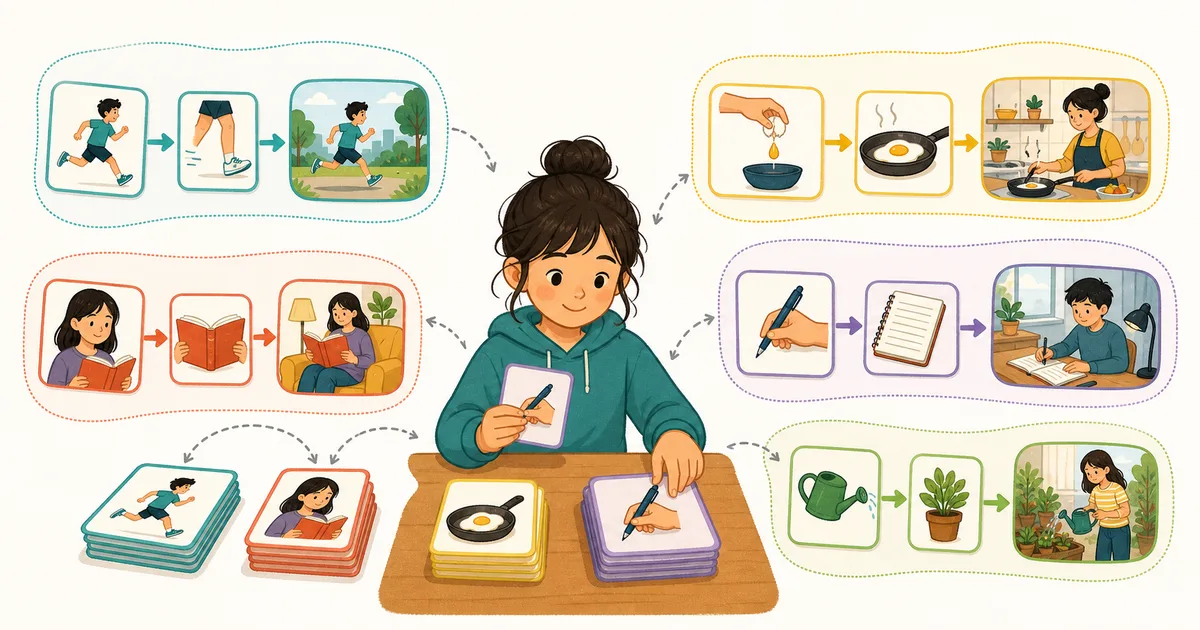
These phrases are especially useful because they connect easily to many topics. You can make a decision about work, make a decision about travel, or make a decision about your studies. Build variation around one reliable frame.
B2 Collocations: Precise Discussion and Writing
At B2, you need language for articles, presentations, discussions, and essays. These collocations help you move beyond vague phrases such as “a big problem” or “think carefully.”
| Collocation | Meaning | Example |
|---|---|---|
| draw a conclusion | form an opinion from facts | We cannot draw a conclusion from one study. |
| raise awareness | help people notice an issue | The campaign aims to raise awareness of road safety. |
| pose a threat | create a possible danger | Plastic waste poses a threat to marine life. |
| meet a requirement | satisfy a necessary condition | Applicants must meet the requirements. |
| play a role | have an effect or function | Parents play a key role in learning. |
| address an issue | deal with a problem | The report addresses the issue of housing costs. |
| gain experience | get knowledge through doing something | Graduates need to gain experience in the workplace. |
| take into account | consider an important fact | We must take cost into account. |
Use B2 collocations to add precision, not decoration. A clear sentence with one accurate phrase is stronger than a sentence crowded with advanced vocabulary. For more B2 vocabulary in context, visit the B2 vocabulary library.
C1–C2 Collocations: Nuance, Formality, and Impact
Advanced collocations often appear in reports, formal discussions, academic writing, and high-level news. They express relationships between ideas efficiently, but they need careful context.
| Collocation | Meaning | Example |
|---|---|---|
| have far-reaching implications | create important effects in many areas | The ruling may have far-reaching implications for schools. |
| take precedence | be more important than something else | Safety must take precedence over speed. |
| give rise to | cause something, often a problem | The change could give rise to new concerns. |
| come to fruition | become successful after planning | Years of research finally came to fruition. |
| keep abreast of | stay informed about changes | Managers need to keep abreast of market trends. |
| categorically deny | deny completely and clearly | The company categorically denied the claim. |
| inextricably linked | connected so closely that they cannot be separated | Health and housing are inextricably linked. |
| wholly inadequate | completely not enough | The response was wholly inadequate. |
At C1–C2, register matters. Categorically deny sounds formal and strong; it belongs in a report or news-style statement, not in every casual conversation. If you are working toward advanced accuracy, continue with Advanced English Collocations: C1–C2 Word Combinations.
How to Turn a Collocation into Active Vocabulary
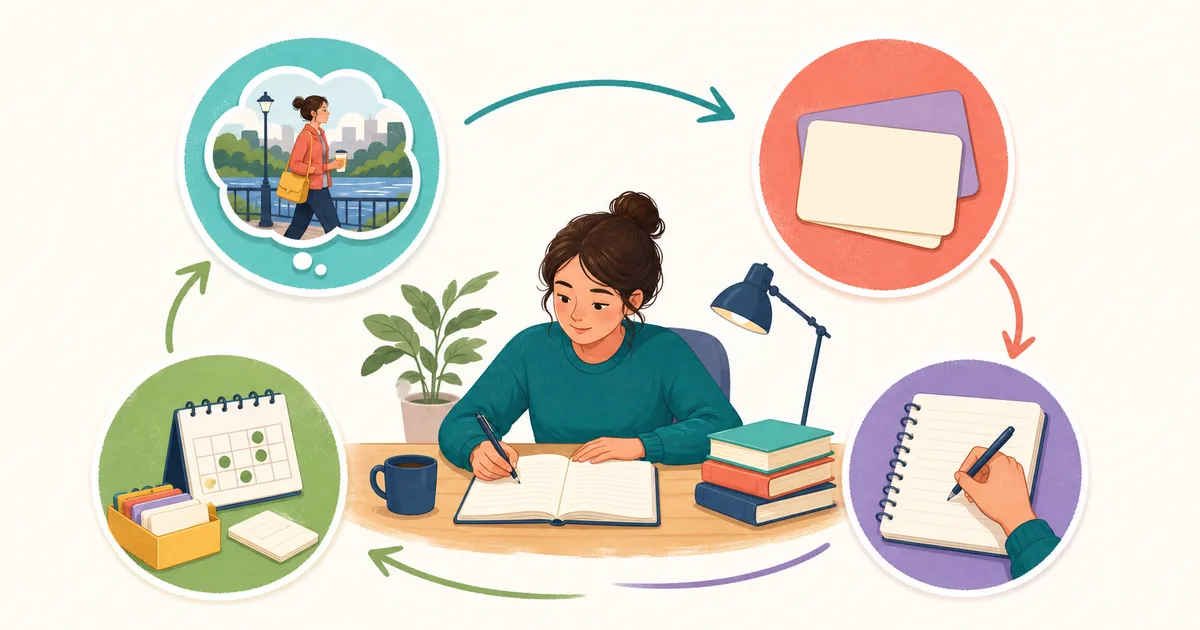
Use a short four-step cycle for each new phrase:
- Notice the whole phrase. Highlight take responsibility, not only responsibility.
- Attach a situation. Imagine a missed deadline, a group project, or a family task.
- Write one true sentence. “I take responsibility for planning our meetings.”
- Review with a change. Tomorrow, replace one detail: “Our team took responsibility for the delay.”
This method teaches both meaning and grammar. You see which nouns can change, which prepositions follow, and how formal the phrase feels. Avoid learning fifty new collocations in one sitting; five useful phrases with several reviews will stay with you longer.
Vocabulary to Practice
Add these words to your Linglify dictionary, then use them to rebuild the collocations from this guide in your own sentences. The review schedule helps you return to them before you forget them.
affordable
adjective
Able to be bought or reached at a reasonable price.
Examples
- The government is working to provide affordable housing for low-income families.
- This restaurant offers delicious and affordable meals for college students.
commute
verb
To travel regularly between two places, especially to work.
Examples
- Public transportation helps people commute efficiently reducing traffic congestion.
- Workers commute daily between suburban homes and downtown offices.
conservation
noun
The protection and preservation of natural resources or the environment.
Examples
- Water conservation becomes increasingly important during periods of severe drought.
- Wildlife conservation is essential for protecting endangered species from extinction.
demanding
adjective
Requiring a lot of effort, patience, or skill; often demanding more than expected.
Examples
- Medical school is very demanding and requires years of intensive study.
- She has a demanding boss who expects perfection in all tasks.
DJ
noun
A person who plays and mixes recorded music, A person who plays music or mixes sounds on a radio or at events.
Examples
- The DJ played my favorite song.
- The DJ took song requests all night.
heritage
noun
The traditions, achievements, and qualities of a particular group or nation.
Examples
- She inherited a rich heritage of family traditions from her grandparents.
- The ancient castle is an important part of our cultural heritage.
leisure
noun
Free time when someone can relax or do leisure activities.
Examples
- People enjoy various leisure activities during weekends and holidays.
- Reading books is popular leisure pursuit for many educated people.
luxurious
adjective
Extremely comfortable, elegant, or opulent; very fancy.
Examples
- She dreams of owning luxurious car with leather seats and sunroof.
- The luxurious hotel suite includes marble bathroom and ocean view.
memorable
adjective
Causing a strong impression or worth remembering.
Examples
- Graduation day was memorable occasion for entire family.
- The memorable speech inspired students to pursue their dreams.
nutritious
adjective
Providing good health benefits and nutrition.
Examples
- Fresh vegetables are nutritious and support overall health.
- Nutritious breakfast provides energy for productive school day.
passionate
adjective
Having or showing strong feelings or enthusiasm.
Examples
- Passionate speech moves audience to take action.
- Passionate teacher inspires students to learn more.
pollution
noun
The introduction of harmful substances into the environment.
Examples
- Air pollution affects public health in cities.
- Ocean pollution threatens marine life worldwide.
privacy
noun
The right or ability to keep personal matters or information secret.
Examples
- Hotel guests expect privacy during their stay.
- Internet privacy becomes increasingly important issue nowadays.
scenic
adjective
Related to beautiful natural views or landscapes.
Examples
- Scenic overlook provides perfect spot for photographs.
- Scenic route takes longer but offers beautiful.
traditional
adjective
Following the customs or ways of the past; not new or different.
Examples
- Traditional cooking methods preserve authentic flavors perfectly.
- Traditional music reflects cultural history and values.
uneven
adjective
Not level or smooth; uneven.
Examples
- Uneven ground makes walking difficult and dangerous.
- Uneven performance shows inconsistent skill level development.
volunteer
verb
To offer to do a service or task willingly, often without being asked.
Examples
- Citizens volunteer time for community improvement projects.
- Students volunteer at local charity organizations regularly.
substantially
adverb
To a large extent or degree; significantly.
Examples
- Her performance substantially improved after additional training and practice.
- Prices have increased substantially over the past few months.
liaison
noun
A close working relationship or communication link between people or organizations.
Examples
- Military liaison officers coordinate operations between allied forces.
- She serves as liaison between different departments.
sustainable
adjective
This adjective describes something that can be maintained or continued without depleting resources.
Examples
- Company implements sustainable business model for long-term success.
- Sustainable farming practices protect soil and water resources.
acclaimed
adjective
Describing someone or something that has been publicly praised or recognized.
Examples
- His performance was acclaimed by critics.
- The acclaimed author received many awards for her novel.
cancellation
noun
The act of stopping or calling off an event, activity, or arrangement.
Examples
- Due to weather, the flight cancellation was inevitable.
- The concert's cancellation disappointed many fans.
discretion
noun
The ability to judge what is appropriate or prudent in a particular situation.
Examples
- He exercised discretion in his decisions.
- Use your discretion when sharing information.
indication
noun
A sign or signal that points to or suggests something.
Examples
- The indication of his illness was clear after the tests.
- There was no indication that she was unhappy.
serenity
noun
A state of calm, peacefulness, and mental clarity.
Examples
- She maintained her serenity despite the chaos.
- The serenity of the lake was calming.
What to Do Next
- Practise words at your current stage in the CEFR vocabulary library.
- Read Advanced English Collocations when B2 phrases feel comfortable.
- Preparing for a test? Study Collocations for PTE and IELTS.
- Add five phrases to Linglify today and make one new sentence for each tomorrow.
FAQ
What are the most important collocations for beginners?
Begin with daily combinations you can use repeatedly: have breakfast, make dinner, do homework, take a bus, and ask a question. They give you useful sentence patterns, not just isolated vocabulary.
Should I learn collocations from A2 to C2 in order?
Start with the level that matches your current ability, then add a few phrases from the next level when you can use your current list reliably. You do not need to finish every A2 phrase before noticing a useful B1 expression.
How many collocations should I learn each week?
Five to ten is a realistic target if you create personal examples and review them. Quality matters more than a long list that you only recognise.
Can I use advanced collocations in IELTS or PTE?
Yes, but only when they fit the idea and your grammar is accurate. One natural advanced collocation is better than several forced phrases. See the dedicated PTE and IELTS collocations guide for exam-focused practice.