Las 1000 Palabras más Comunes del Inglés: La Lista Esencial
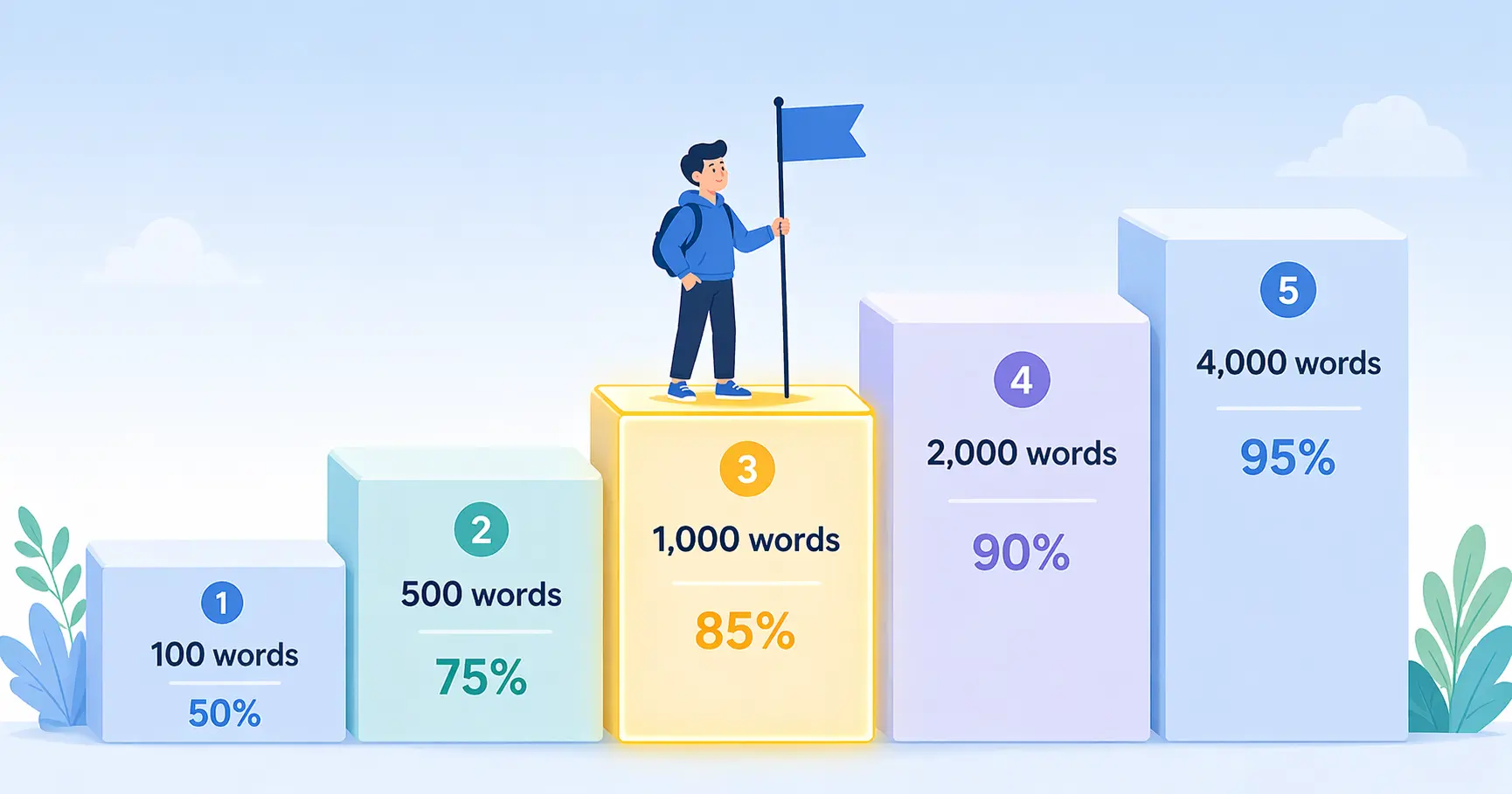
Las 1000 palabras más comunes del inglés cubren aproximadamente el 85% del habla cotidiana y el 75% de los textos escritos. Eso significa que si realmente conoces estas 1000 palabras —no solo las reconoces, sino que entiendes sus significados, las usas en frases y las escribes correctamente— puedes seguir la mayoría de las conversaciones en inglés, leer artículos de noticias básicos y comunicarte en situaciones del día a día.
Este artículo te ofrece una lista seleccionada de las palabras más comunes del inglés con sus significados, organizadas de la A a la Z. También encontrarás frases de ejemplo, un desglose por categoría gramatical y un plan de estudio realista.
Por qué importan tanto las primeras 1000 palabras
La investigación sobre vocabulario muestra de forma consistente que un pequeño número de palabras hace la mayor parte del trabajo en inglés:
| Palabras conocidas | Habla comprendida | Texto comprendido |
|---|---|---|
| 100 | ~50% | ~45% |
| 500 | ~75% | ~65% |
| 1000 | ~85% | ~75% |
| 2000 | ~90% | ~80% |
| 4000 | ~95% | ~90% |
Las primeras 1000 palabras ofrecen el mayor retorno de inversión. Cada palabra que aprendes después de las 1000 añade una comprensión adicional cada vez más pequeña. Aprender la palabra «available» (posición ~400) mejora tu comprensión mucho más que aprender «ambivalent» (posición ~8000).
Por eso funciona el aprendizaje basado en frecuencia: estudias primero las palabras que aparecen con más frecuencia, de modo que cada hora de estudio te da la máxima comprensión real.
Las 1000 palabras más comunes del inglés de A a Z
A continuación encontrarás una selección de las palabras más esenciales de cada letra, con significados y ejemplos. La lista completa de 1000 palabras está organizada por frecuencia dentro de cada grupo alfabético.
A
| Palabra | Categoría | Significado | Ejemplo |
|---|---|---|---|
| about | preposición/adverbio | acerca de; aproximadamente | The book is about Japanese history. There were about 50 people. |
| above | preposición | más alto que; más de | The temperature rose above 30 degrees. |
| accept | verbo | aceptar; estar de acuerdo | She accepted the job offer immediately. |
| across | preposición | de un lado al otro | He walked across the bridge in the rain. |
| actually | adverbio | en realidad; de hecho | The test was actually easier than I expected. |
| add | verbo | añadir; sumar | Add two tablespoons of sugar to the mixture. |
| affect | verbo | influir en; afectar | The weather affects my mood every winter. |
| afraid | adjetivo | con miedo; asustado | She is afraid of flying. |
| after | preposición/conjunción | después de; tras | We went for a walk after dinner. |
| again | adverbio | otra vez; de nuevo | Can you say that again, please? |
| age | sustantivo | edad; época | Children start school at the age of five in most countries. |
| agree | verbo | estar de acuerdo | I agree with everything you said. |
| ahead | adverbio | delante; en el futuro | The road ahead was completely empty. |
| allow | verbo | permitir; dejar | The teacher does not allow phones in class. |
| almost | adverbio | casi; por poco | We have almost finished the project. |
| along | preposición/adverbio | a lo largo de; junto a | We walked along the river for an hour. |
| already | adverbio | ya; todavía | I have already seen that movie twice. |
| also | adverbio | también; además | She speaks French and also a little German. |
| always | adverbio | siempre; en todo momento | He always arrives early for meetings. |
| among | preposición | entre; en medio de | She was among the best students in her class. |
| amount | sustantivo | cantidad; suma | The recipe requires a small amount of salt. |
| appear | verbo | aparecer; parecer | Stars appear in the sky after sunset. |
| apply | verbo | solicitar; aplicar | She applied for three jobs last week. |
| area | sustantivo | zona; área; región | This area is known for its excellent restaurants. |
| around | preposición/adverbio | alrededor; aproximadamente | There are trees all around the house. |
| arrive | verbo | llegar a un destino | The train arrives at 6:45 PM. |
| ask | verbo | preguntar; pedir | Can I ask you a question? |
| attention | sustantivo | atención; concentración | Pay attention — this part is important. |
| available | adjetivo | disponible; libre | The doctor is available on Tuesday afternoon. |
| avoid | verbo | evitar; esquivar | I avoid eating sugar before bed. |
B
| Palabra | Categoría | Significado | Ejemplo |
|---|---|---|---|
| back | sustantivo/adverbio | la parte trasera; volver | He sat at the back of the room. |
| bad | adjetivo | malo; desagradable | The weather was bad all week. |
| base | sustantivo/verbo | la base o fundamento | The company is based in London. |
| beautiful | adjetivo | hermoso; muy atractivo | The sunset over the ocean was beautiful. |
| because | conjunción | porque; ya que | She left early because she felt sick. |
| become | verbo | convertirse en; llegar a ser | He became a doctor after years of study. |
| before | preposición/conjunción | antes de | Finish your homework before dinner. |
| begin | verbo | empezar; comenzar | The concert begins at 8 PM. |
| behind | preposición | detrás de | The car park is behind the building. |
| believe | verbo | creer; confiar | I believe she is telling the truth. |
| below | preposición/adverbio | por debajo de | The temperature dropped below zero last night. |
| best | adjetivo/adverbio | el mejor; de mayor calidad | This is the best restaurant in the city. |
| better | adjetivo/adverbio | mejor; mejorado | Your English is getting better every week. |
| between | preposición | entre dos cosas | The meeting is between 2 and 4 PM. |
| beyond | preposición | más allá de; más que | The view beyond the mountains was incredible. |
| big | adjetivo | grande en tamaño | They live in a big house near the park. |
| body | sustantivo | el cuerpo | Exercise is good for your body and mind. |
| book | sustantivo/verbo | libro; reservar | I booked a hotel room for Friday night. |
| both | determinante/pronombre | ambos; los dos | Both answers are correct. |
| bring | verbo | traer; llevar | Please bring your laptop to the meeting. |
| build | verbo | construir; crear | They are building a new hospital downtown. |
| business | sustantivo | negocio; empresa | She started her own business at 25. |
| buy | verbo | comprar | I need to buy a new phone. |
C
| Palabra | Categoría | Significado | Ejemplo |
|---|---|---|---|
| call | verbo/sustantivo | llamar; nombrar | I will call you tomorrow morning. |
| care | verbo/sustantivo | preocuparse; cuidar | She cares about the environment. |
| carry | verbo | llevar; cargar | He carried the boxes up the stairs. |
| case | sustantivo | caso; situación | In that case, we should leave early. |
| cause | sustantivo/verbo | la causa; provocar | What caused the delay? |
| certain | adjetivo | seguro; cierto | I am certain the answer is correct. |
| change | verbo/sustantivo | cambiar; un cambio | The city has changed a lot in ten years. |
| check | verbo | comprobar; verificar | Check your email — I sent the document an hour ago. |
| child | sustantivo | niño; menor | Every child in the school receives free lunch. |
| choose | verbo | elegir; decidir | You can choose any color you like. |
| city | sustantivo | ciudad | Tokyo is the largest city in Japan. |
| claim | verbo/sustantivo | afirmar; reclamación | He claims he was at home all evening. |
| clear | adjetivo/verbo | claro; transparente | The instructions were clear and simple. |
| close | verbo/adjetivo | cerrar; cercano | Please close the door. The shop is close to my house. |
| come | verbo | venir; llegar | Come here — I want to show you something. |
| common | adjetivo | frecuente; compartido | Spelling mistakes are very common among beginners. |
| community | sustantivo | comunidad; grupo | The local community organized a cleanup day. |
| company | sustantivo | empresa; compañía | She works for a technology company. |
| compare | verbo | comparar | Compare the two products before you buy. |
| complete | adjetivo/verbo | completo; finalizar | The project is now complete. |
| concern | sustantivo/verbo | preocupación; concernir | Safety is our main concern. |
| consider | verbo | considerar; pensar | We should consider all the options before deciding. |
| continue | verbo | continuar; seguir | She continued reading despite the noise. |
| control | sustantivo/verbo | control; gestionar | You need to control your spending. |
| cost | sustantivo/verbo | precio; costar | The cost of living has increased by 8%. |
| could | verbo modal | podría; capacidad pasada | She could speak three languages by age 12. |
| country | sustantivo | país; zona rural | Japan is a beautiful country. |
| couple | sustantivo | un par; dos | We stayed for a couple of hours. |
| course | sustantivo | curso; dirección | She is taking an online course in marketing. |
| cover | verbo/sustantivo | cubrir; incluir | Snow covered the entire city overnight. |
| create | verbo | crear; hacer | The artist created a stunning painting. |
| current | adjetivo/sustantivo | actual; corriente | What is the current population of London? |
| cut | verbo | cortar; reducir | The government plans to cut taxes next year. |
D–F
| Palabra | Categoría | Significado | Ejemplo |
|---|---|---|---|
| deal | sustantivo/verbo | acuerdo; gestionar | We made a deal with the supplier. |
| decide | verbo | decidir; elegir | Have you decided where to go for dinner? |
| describe | verbo | describir | Can you describe the apartment? |
| develop | verbo | desarrollar; crecer | The company developed a new product. |
| different | adjetivo | diferente; distinto | The two brothers have very different personalities. |
| difficult | adjetivo | difícil; complicado | The exam was more difficult than expected. |
| discover | verbo | descubrir | Scientists discovered a new species of fish. |
| drive | verbo/sustantivo | conducir; un viaje | She drives to work every morning. |
| drop | verbo/sustantivo | caer; dejar caer | Be careful not to drop the glass. |
| during | preposición | durante; a lo largo de | I fell asleep during the movie. |
| each | determinante | cada uno | Each student receives a textbook. |
| early | adjetivo/adverbio | temprano | We arrived early to get good seats. |
| easy | adjetivo | fácil; sencillo | The first questions were easy. |
| effect | sustantivo | efecto; resultado | The new law had an immediate effect on traffic. |
| enough | determinante/adverbio | suficiente | We have enough food for everyone. |
| enter | verbo | entrar | Please enter through the main door. |
| entire | adjetivo | entero; completo | She ate the entire pizza by herself. |
| especially | adverbio | especialmente; sobre todo | I love all fruits, especially strawberries. |
| even | adverbio/adjetivo | incluso; plano/igual | Even the teacher made a mistake. |
| ever | adverbio | alguna vez; jamás | Have you ever been to Australia? |
| every | determinante | cada; todo | I go to the gym every morning. |
| example | sustantivo | ejemplo | Can you give me an example? |
| expect | verbo | esperar; anticipar | I expect the results tomorrow. |
| experience | sustantivo/verbo | experiencia | She has ten years of experience in marketing. |
| explain | verbo | explicar; aclarar | The teacher explained the grammar rule again. |
| face | sustantivo/verbo | cara; enfrentarse a | We need to face the problem directly. |
| fact | sustantivo | hecho; dato real | It is a fact that the Earth orbits the Sun. |
| far | adjetivo/adverbio | lejos; a gran distancia | The station is not far from here. |
| fast | adjetivo/adverbio | rápido | The train is very fast — it reaches 300 km/h. |
| feel | verbo | sentir; notar | I feel much better today. |
| few | determinante/pronombre | pocos; un número pequeño | Only a few students passed the test. |
| fill | verbo | llenar; rellenar | She filled the glass with water. |
| finally | adverbio | finalmente; por fin | We finally found the restaurant after walking for 20 minutes. |
| find | verbo | encontrar; hallar | I cannot find my keys. |
| finish | verbo | terminar; acabar | What time does the class finish? |
| follow | verbo | seguir; obedecer | Follow the instructions on the screen. |
| force | sustantivo/verbo | fuerza; obligar | The wind was strong enough to force the door open. |
| foreign | adjetivo | extranjero; de otro país | She is learning two foreign languages. |
| form | sustantivo/verbo | formulario; forma; crear | Please fill in the application form. |
| free | adjetivo/verbo | gratis; libre | Admission to the museum is free on Sundays. |
| friend | sustantivo | amigo | She has been my best friend since school. |
| full | adjetivo | lleno; completo | The bus was completely full. |
| future | sustantivo/adjetivo | el futuro | Nobody knows what the future will bring. |
G–L
| Palabra | Categoría | Significado | Ejemplo |
|---|---|---|---|
| general | adjetivo | general; no específico | The general opinion is that the plan will work. |
| give | verbo | dar; entregar | She gave me her phone number. |
| government | sustantivo | gobierno | The government announced new education policies. |
| great | adjetivo | excelente; grande | The concert was great — we had an amazing time. |
| group | sustantivo | grupo | A group of students visited the factory. |
| grow | verbo | crecer; desarrollarse | The company has grown rapidly in three years. |
| half | sustantivo/determinante | la mitad | Half the class was absent due to illness. |
| happen | verbo | ocurrir; suceder | What happened at the meeting yesterday? |
| hard | adjetivo/adverbio | difícil; con esfuerzo | She works hard to support her family. |
| head | sustantivo/verbo | la cabeza; dirigir | He is the head of the marketing department. |
| help | verbo/sustantivo | ayudar; ayuda | Can you help me carry these bags? |
| high | adjetivo/adverbio | alto; elevado | The price of petrol is very high right now. |
| hold | verbo | sostener; organizar | She held the baby carefully. The event is held every June. |
| home | sustantivo/adverbio | hogar; casa | I usually get home at 6 PM. |
| hope | verbo/sustantivo | esperar; esperanza | I hope you feel better soon. |
| however | adverbio | sin embargo; no obstante | The hotel was expensive. However, the service was excellent. |
| human | adjetivo/sustantivo | humano; persona | Human memory is surprisingly unreliable. |
| idea | sustantivo | idea; pensamiento | That is a great idea — let us try it. |
| important | adjetivo | importante; significativo | Sleep is important for learning. |
| include | verbo | incluir; contener | The price includes breakfast and parking. |
| increase | verbo/sustantivo | aumentar; un aumento | Sales increased by 15% last quarter. |
| information | sustantivo | información; datos | For more information, visit our website. |
| interest | sustantivo/verbo | interés; interesar | She has a strong interest in science. |
| issue | sustantivo | tema; problema | Climate change is a critical issue today. |
| job | sustantivo | trabajo; tarea | He got a new job at a bank. |
| join | verbo | unirse; conectar | She joined the company last month. |
| just | adverbio | solo; hace un momento; exactamente | I just arrived — give me one minute. |
| keep | verbo | conservar; guardar | Keep the receipt in case you need to return it. |
| kind | sustantivo/adjetivo | tipo; amable | What kind of music do you like? She is a very kind person. |
| know | verbo | saber; conocer | I know the answer to that question. |
| large | adjetivo | grande en tamaño o cantidad | They need a large conference room for 50 people. |
| last | adjetivo/verbo | último; durar | The meeting lasted two hours. I saw her last week. |
| late | adjetivo/adverbio | tarde; después de lo previsto | Sorry I am late — the traffic was terrible. |
| lead | verbo/sustantivo | liderar; estar al frente | She leads a team of 20 people. |
| learn | verbo | aprender | She learned to speak English in two years. |
| leave | verbo | marcharse; salir | I leave the house at 7:30 every morning. |
| less | determinante/adverbio | menos; en menor cantidad | I try to spend less money on things I do not need. |
| level | sustantivo | nivel; posición en una escala | Her English is at an intermediate level. |
| life | sustantivo | vida; existencia | She lived a long and happy life. |
| likely | adjetivo/adverbio | probable; probablemente | Rain is likely this afternoon. |
| line | sustantivo | línea; fila de personas | There was a long line outside the store. |
| list | sustantivo/verbo | lista | Make a list of everything you need to buy. |
| live | verbo/adjetivo | vivir; estar vivo | They live in a small town near the coast. |
| long | adjetivo/adverbio | largo; durante mucho tiempo | The journey was long but enjoyable. |
| look | verbo | mirar; parecer | Look at this photo — is that your friend? |
| lose | verbo | perder; no ganar | I always lose my keys. |
| low | adjetivo | bajo; cerca del suelo | The price is surprisingly low. |
M–P
| Palabra | Categoría | Significado | Ejemplo |
|---|---|---|---|
| main | adjetivo | principal; más importante | The main reason I moved was the job. |
| make | verbo | hacer; crear | She made dinner for the whole family. |
| matter | sustantivo/verbo | asunto; importar | It does not matter — either day works for me. |
| may | verbo modal | posibilidad; permiso | It may rain later. You may leave early today. |
| mean | verbo/adjetivo | significar; mezquino | What does this word mean? |
| meet | verbo | encontrarse; satisfacer | Nice to meet you. The product meets all safety standards. |
| mind | sustantivo/verbo | la mente; importarle algo | She changed her mind at the last minute. |
| miss | verbo | fallar; echar de menos | I miss my family when I travel. |
| money | sustantivo | dinero | She saves money by cooking at home. |
| most | determinante/adverbio | la mayoría; el más | Most students passed the exam. |
| move | verbo | moverse; mudarse | We moved to a new apartment in January. |
| much | determinante/adverbio | mucho | How much does this cost? |
| must | verbo modal | deber; probabilidad fuerte | You must wear a seatbelt. She must be tired after the flight. |
| name | sustantivo/verbo | nombre; nombrar | My name is Anna. Can you name three countries in Africa? |
| natural | adjetivo | natural; normal | It is natural to feel nervous before an interview. |
| near | preposición/adjetivo | cerca de | The school is near the train station. |
| need | verbo/sustantivo | necesitar; necesidad | I need to finish this report by tomorrow. |
| never | adverbio | nunca; jamás | I have never been to South America. |
| new | adjetivo | nuevo; reciente | She bought a new laptop for work. |
| next | adjetivo/adverbio | siguiente; próximo | The next train leaves in 10 minutes. |
| nothing | pronombre | nada | There is nothing in the fridge. |
| notice | verbo/sustantivo | notar; darse cuenta | Did you notice anything strange? |
| now | adverbio | ahora; en este momento | We need to leave now or we will be late. |
| number | sustantivo | número; cantidad | A large number of people attended the event. |
| offer | verbo/sustantivo | ofrecer; una oferta | They offered her a higher salary. |
| often | adverbio | a menudo; frecuentemente | How often do you exercise? |
| only | adjetivo/adverbio | solo; único | There are only two tickets left. |
| open | adjetivo/verbo | abierto; abrir | The store is open from 9 to 6. |
| order | sustantivo/verbo | orden; pedir | I ordered a coffee and a sandwich. |
| other | adjetivo/pronombre | otro; diferente | Do you have any other questions? |
| outside | preposición/sustantivo | fuera; el exterior | It is cold outside — take a jacket. |
| own | adjetivo/verbo | propio; poseer | She has her own apartment now. |
| part | sustantivo | parte; porción | This is the hardest part of the exam. |
| pay | verbo/sustantivo | pagar; salario | How much do they pay you? |
| people | sustantivo | personas; gente | About 500 people work in this building. |
| place | sustantivo/verbo | lugar; poner | This is a nice place for a picnic. |
| plan | sustantivo/verbo | plan; planear | What are your plans for the weekend? |
| point | sustantivo/verbo | punto; señalar | That is a good point. She pointed at the map. |
| possible | adjetivo | posible | Is it possible to change the date? |
| power | sustantivo | poder; energía | Solar power is becoming cheaper every year. |
| present | adjetivo/sustantivo/verbo | actual; un regalo; presentar | All members were present at the meeting. |
| problem | sustantivo | problema; dificultad | The main problem is the lack of funding. |
| produce | verbo | producir; fabricar | The factory produces 500 cars per day. |
| program | sustantivo | programa; software | The training program lasts six weeks. |
| provide | verbo | proporcionar; suministrar | The hotel provides free breakfast for guests. |
| public | adjetivo/sustantivo | público; para todos | Public transport is free for children under 5. |
| put | verbo | poner; colocar | Put your bag on the table. |
Q–S
| Palabra | Categoría | Significado | Ejemplo |
|---|---|---|---|
| question | sustantivo | pregunta | Can I ask a question? |
| quite | adverbio | bastante; completamente | The movie was quite good, actually. |
| reach | verbo | llegar a; alcanzar | We reached the hotel at midnight. |
| read | verbo | leer | She reads for 30 minutes before bed every night. |
| ready | adjetivo | listo; preparado | Dinner is ready — come to the table. |
| real | adjetivo | real; genuino | Is that a real diamond? |
| reason | sustantivo | razón; motivo | What is the reason for the delay? |
| receive | verbo | recibir | I received your email this morning. |
| record | sustantivo/verbo | registro; récord | She broke the world record in the 100 meters. |
| remain | verbo | quedarse; seguir siendo | Please remain seated until the plane stops. |
| remember | verbo | recordar | I remember the first day I arrived in London. |
| report | sustantivo/verbo | informe; informar | The report shows a 10% increase in sales. |
| require | verbo | requerir; necesitar | This job requires three years of experience. |
| result | sustantivo | resultado | Hard work leads to good results. |
| return | verbo/sustantivo | regresar; volver | She returned to work after two weeks. |
| right | adjetivo/sustantivo/adverbio | correcto; un derecho; dirección | That is the right answer. Turn right at the corner. |
| run | verbo | correr; gestionar | He runs 5 kilometers every morning. She runs a small business. |
| same | adjetivo | igual; idéntico | We take the same bus every day. |
| say | verbo | decir; hablar | She said she would call me back. |
| seem | verbo | parecer | He seems tired today. |
| send | verbo | enviar | I sent the package yesterday. |
| serious | adjetivo | serio; importante | This is a serious problem that needs attention. |
| serve | verbo | servir; atender | The restaurant serves breakfast from 7 to 10 AM. |
| set | verbo/sustantivo | poner; un conjunto | She set the alarm for 6 AM. |
| several | determinante | varios; algunos | I have visited that city several times. |
| share | verbo/sustantivo | compartir; una parte | She shared her lunch with her colleague. |
| short | adjetivo | corto; bajo | It was a short meeting — only 15 minutes. |
| should | verbo modal | debería; se espera | You should see a doctor about that. |
| show | verbo/sustantivo | mostrar; un espectáculo | Can you show me how to do this? |
| similar | adjetivo | similar; parecido | The two houses are very similar in design. |
| simple | adjetivo | simple; fácil | The recipe is simple — only five ingredients. |
| since | preposición/conjunción | desde; ya que | I have lived here since 2019. Since you asked, I will tell you. |
| situation | sustantivo | situación; circunstancias | The situation is improving slowly. |
| small | adjetivo | pequeño | They live in a small village in the mountains. |
| social | adjetivo | social; relativo a la sociedad | Social media has changed how we communicate. |
| some | determinante | algo; un poco de | Can I have some water, please? |
| soon | adverbio | pronto; en breve | The bus should arrive soon. |
| speak | verbo | hablar; decir | Do you speak English? |
| special | adjetivo | especial; diferente de lo habitual | Today is a special day — it is her birthday. |
| spend | verbo | gastar; pasar tiempo | How much time do you spend studying? |
| stand | verbo | estar de pie; ubicarse | Please stand up when the teacher enters. |
| start | verbo/sustantivo | empezar; inicio | The movie starts at 8 PM. |
| state | sustantivo/verbo | estado; declarar | The building is in a poor state. He stated his opinion clearly. |
| stay | verbo | quedarse; permanecer | We stayed at a small hotel near the beach. |
| still | adverbio/adjetivo | todavía; sin moverse | She still lives with her parents. |
| stop | verbo | parar; dejar de | The bus stops right in front of the school. |
| strong | adjetivo | fuerte; poderoso | She has a strong opinion about education. |
| suggest | verbo | sugerir; proponer | I suggest we meet at 10 AM instead. |
| support | verbo/sustantivo | apoyar; respaldo | Her family supports her decision to study abroad. |
| sure | adjetivo | seguro; convencido | Are you sure about that? |
| system | sustantivo | sistema; conjunto | The education system needs reform. |
T–Z
| Palabra | Categoría | Significado | Ejemplo |
|---|---|---|---|
| take | verbo | tomar; llevar; requerir | Take an umbrella — it might rain. |
| talk | verbo/sustantivo | hablar; una conversación | We need to talk about the project. |
| tell | verbo | decir; informar | Can you tell me the time? |
| test | sustantivo/verbo | examen; comprobar | She passed her driving test on the first attempt. |
| thing | sustantivo | cosa; objeto | I have a few things to finish before I leave. |
| think | verbo | pensar; creer | I think this is the right decision. |
| through | preposición | a través de; por | We walked through the park. |
| together | adverbio | juntos; al mismo tiempo | We worked together on the project. |
| top | sustantivo/adjetivo | la cima; el mejor | She graduated at the top of her class. |
| total | adjetivo/sustantivo | total; completo | The total cost was $450. |
| toward | preposición | hacia; en dirección a | She walked toward the exit. |
| turn | verbo/sustantivo | girar; cambiar de dirección | Turn left at the traffic lights. |
| type | sustantivo/verbo | tipo; categoría | What type of phone do you have? |
| understand | verbo | entender; comprender | I understand the instructions now. |
| until | preposición/conjunción | hasta que | Wait here until I come back. |
| use | verbo/sustantivo | usar; emplear | May I use your phone? |
| usually | adverbio | normalmente; por lo general | I usually wake up at 7 AM. |
| value | sustantivo/verbo | valor; importancia | The value of the house has doubled. |
| very | adverbio | muy; en alto grado | The test was very difficult. |
| view | sustantivo/verbo | vista; opinión | The view from the top floor is amazing. |
| voice | sustantivo | voz | She has a very calm voice. |
| wait | verbo | esperar | Please wait here — I will be right back. |
| walk | verbo/sustantivo | caminar; un paseo | I walk to work every day — it takes 20 minutes. |
| want | verbo | querer; desear | What do you want for dinner? |
| watch | verbo/sustantivo | mirar; un reloj | We watched a documentary about space last night. |
| water | sustantivo | agua | Drink at least 2 liters of water per day. |
| way | sustantivo | manera; ruta | This is the easiest way to solve the problem. |
| week | sustantivo | semana | I go to the gym three times a week. |
| whole | adjetivo | entero; completo | She read the whole book in one day. |
| without | preposición | sin; a falta de | She left without saying goodbye. |
| word | sustantivo | palabra | What does this word mean? |
| work | verbo/sustantivo | trabajar; trabajo | She works for an international organization. |
| world | sustantivo | el mundo; la Tierra | English is spoken all over the world. |
| write | verbo | escribir | Write your name at the top of the page. |
| wrong | adjetivo | incorrecto; equivocado | Something is wrong with my computer. |
| year | sustantivo | año | She lived in Berlin for three years. |
| yet | adverbio/conjunción | todavía; pero | I have not finished yet. The hotel is small, yet very comfortable. |
| young | adjetivo | joven | Young people are increasingly interested in sustainability. |
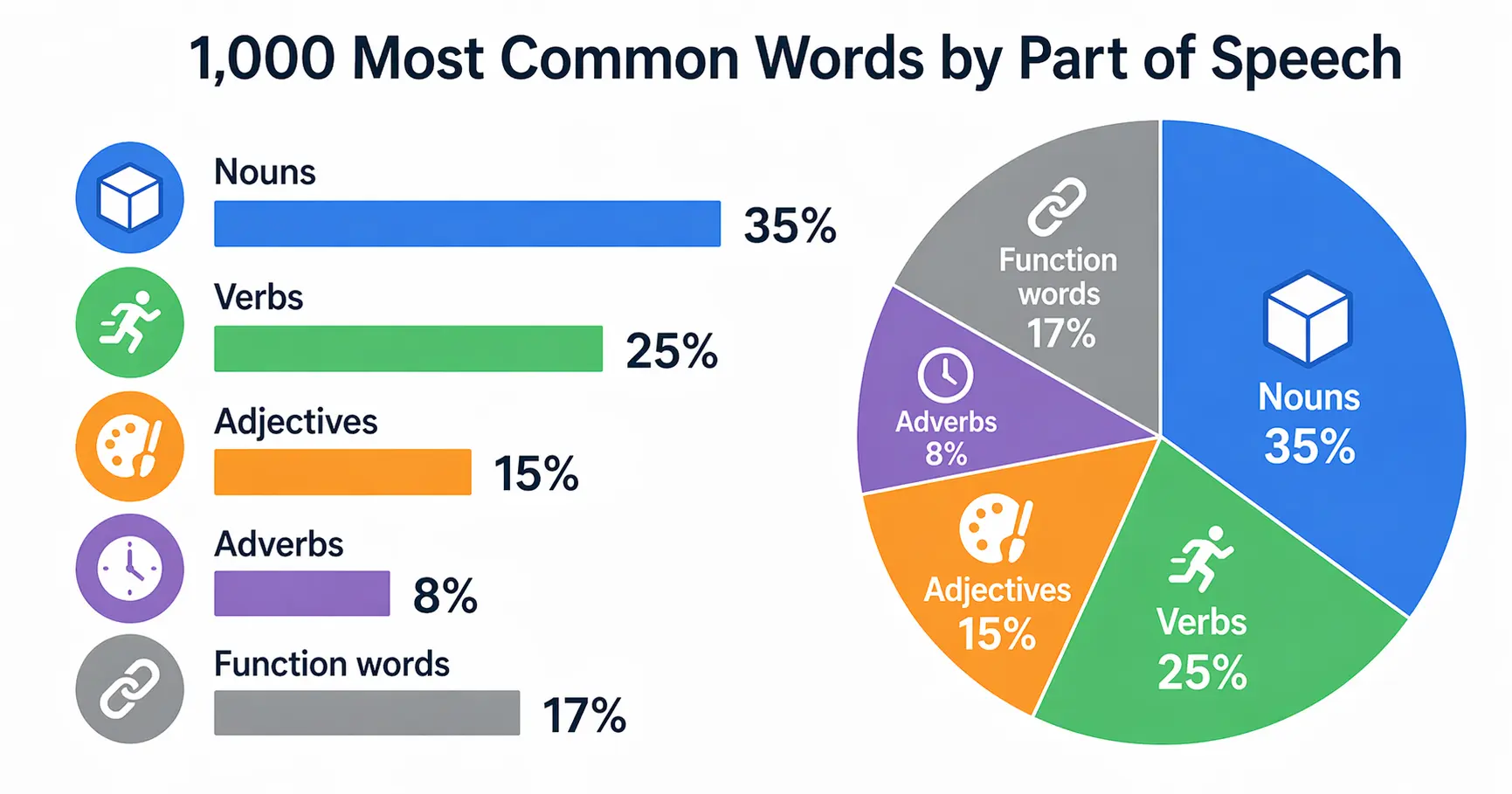
Cómo se distribuyen estas 1000 palabras por categoría gramatical
Entender la distribución te ayuda a estudiar de forma más eficaz:
| Categoría gramatical | % aproximado | Cantidad | Función |
|---|---|---|---|
| Sustantivos | 35% | ~350 | Nombran cosas: problem, area, information, government |
| Verbos | 25% | ~250 | Describen acciones: provide, include, continue, require |
| Adjetivos | 15% | ~150 | Describen cualidades: important, different, possible, strong |
| Adverbios | 8% | ~80 | Modifican cómo/cuándo/dónde: already, however, often, usually |
| Palabras funcionales | 17% | ~170 | Conectan ideas: the, in, with, because, which, although |
Las palabras funcionales (preposiciones, conjunciones, determinantes, pronombres) son las palabras individuales más frecuentes, pero la categoría más pequeña en número total. Ya conoces la mayoría. El mayor déficit de los estudiantes suele estar en verbos y adjetivos: palabras como require, previous, significant y maintain que aparecen constantemente en el inglés real pero se omiten en los cursos básicos.
Tu plan de estudio: 1000 palabras en 8 semanas
No necesitas aprender las 1000 palabras desde cero. La mayoría de los estudiantes ya conocen entre 400 y 600. El objetivo es cubrir tus lagunas de forma eficiente.
Semanas 1–2: Evaluación y base
- Repasa las listas de arriba. Marca cada palabra de la que no estés completamente seguro: ni su significado ni su uso.
- Haz balance. La mayoría de los estudiantes encuentran entre 200 y 400 palabras desconocidas o que conocen solo parcialmente.
-
Agrúpalas en tres montones:
- Sé bien — puedes usarla en una frase sin pensarlo
- Reconozco pero no estoy seguro — la entiendes al leer pero no la usas con confianza
- No la sé — desconocida o muy poco clara
Dedica tu tiempo de estudio al grupo «Reconozco pero no estoy seguro» y al de «No la sé».
Semanas 3–6: Aprendizaje activo (25 palabras al día)
| Momento | Actividad | Tiempo |
|---|---|---|
| Mañana | Repaso rápido de las palabras de ayer | 5 min |
| Tarde | Aprende 25 palabras nuevas: lee la definición y el ejemplo, escribe tu propia frase para 5 de ellas | 15 min |
| Noche | Repasa las palabras de hoy + las de hace 3 días | 10 min |
A un ritmo de 25 palabras al día, 5 días a la semana, cubres 500 palabras en 4 semanas. Muchas de ellas son palabras del grupo «Reconozco pero no estoy seguro» que solo necesitan unos pocos repasos para consolidarse.
Semanas 7–8: Repaso y uso activo
- Para de aprender palabras nuevas. Céntrate exclusivamente en el repaso y en el uso.
- Autoevalúate con todas las palabras de las semanas 3–6.
- Escribe 10 frases al día usando las palabras que te cuestan.
- Lee un artículo en inglés al día y fíjate en cuántas de estas 1000 palabras encuentras.
Después de la semana 8
Sube al siguiente nivel. Nuestra guía de las 4000 palabras esenciales del inglés recoge donde lo deja esta lista y cubre las palabras 1001–4000 en un plan estructurado de 6 meses.
Palabras para practicar ahora mismo
Estas son 25 palabras esenciales de esta lista. Añádelas a tu diccionario con un clic: los repasos de repetición espaciada empiezan automáticamente.
experience
sustantivo
experiencia, vivencia, conocimiento
Ejemplos
- Her previous work experience made her an ideal candidate for the position.
- Traveling to different countries provides valuable cultural experience.
meeting
sustantivo
reunión, encuentro
Ejemplos
- The business meeting discussed budget plans for next fiscal year.
- Town meeting allows residents to voice concerns about local issues.
reply
sustantivo
respuesta, contestación, réplica
Ejemplos
- Quick reply shows professional customer service quality.
- Written reply confirms agreement terms and conditions.
create
verbo
crear, producir
Ejemplos
- Artists create beautiful works that inspire and move people emotionally.
- The new policy will create opportunities for economic growth.
mention
verbo
mencionar, referir
Ejemplos
- Please mention my name when you call about job opening.
- The report fails to mention important environmental concerns.
describe
verbo
describir, explicar, relatar
Ejemplos
- Can you describe what the suspect looked like to police officers?
- The travel guide describes many interesting places to visit in Europe.
impact
sustantivo
impacto, choque, efecto
Ejemplos
- Climate change has a significant impact on global weather patterns.
- The impact of the collision damaged both cars severely.
exam
sustantivo
examen, prueba, evaluación
Ejemplos
- Students study hard for weeks before taking their final exams.
- The driving exam tests both knowledge and practical skills behind wheel.
powerful
adjetivo
poderoso, fuerte, influyente
Ejemplos
- Powerful computer processes data very quickly.
- Powerful speech moves audience to take action.
wonderful
adjetivo
maravilloso, fantástico
Ejemplos
- The restaurant serves wonderful food with excellent service.
- We had a wonderful time at the beach during summer vacation.
confident
adjetivo
seguro, confidente, firme
Ejemplos
- She felt confident about passing the difficult examination successfully.
- The confident speaker delivered an inspiring presentation to the audience.
favor
sustantivo
favor, agrado, preferencia
Ejemplos
- Could you do me a favor and pick up my dry cleaning?
- The proposal gained favor among the committee members after lengthy discussion.
ambition
sustantivo
ambición, aspiración, meta
Ejemplos
- Her ambition is to become a successful doctor and help people worldwide.
- Sometimes ambition can drive people to work too hard and neglect family.
tourist
sustantivo
turista, visitante, viajero
Ejemplos
- Foreign tourist visits famous landmarks and museums.
- Tourist season brings economic benefits to region.
student
sustantivo
estudiante, alumno, estudioso
Ejemplos
- Diligent student completes homework assignments on time.
- Graduate student conducts research for doctoral degree.
relaxed
adjetivo
relajado, tranquilo, despreocupado
Ejemplos
- Relaxed atmosphere encourages open discussion among participants.
- Relaxed person handles pressure situations more effectively.
hot
adjetivo
caliente, ardiente, caluroso
Ejemplos
- Summer weather is extremely hot in desert regions around the world.
- The coffee is too hot to drink right now - let it cool down.
cool
verbo
enfriar, refrescar
orange
sustantivo
naranja, mandarina, color
Ejemplos
- Fresh orange juice contains vitamin C and natural sugar.
- The sunset painted sky in beautiful shades of orange.
meat
sustantivo
carne, pollo, res
Ejemplos
- Fresh meat should be stored in refrigerator for food safety.
- Vegetarians choose not to eat meat for ethical reasons.
football
sustantivo
fútbol, balompié, soccer
Ejemplos
- Football is the most popular sport in many countries around the world.
- The children play football in the school yard during their lunch break.
sustantivo
correo
Ejemplos
- Check mail every day for important bills and official documents.
- Electronic mail has largely replaced traditional postal letters today.
father
sustantivo
padre, papá, progenitor
Ejemplos
- His father taught him how to ride a bicycle in the park.
- The young father proudly carried his baby daughter in his arms.
rush
sustantivo
prisa, afán, emoción
Ejemplos
- Last-minute rush creates stress and mistakes often.
- Morning rush causes traffic jams in city.
result
sustantivo
resultado, efecto, consecuencia
Ejemplos
- Election result surprises political analysts and voters.
- Test result shows significant improvement in performance.
Cómo usar esta lista de forma eficaz
No te limites a leer: ponté a prueba. Tapa la columna «Significado» e intenta definir cada palabra de memoria. Tapa la columna «Palabra» e intenta recordar la palabra en inglés a partir de la definición. La recuperación activa es mucho más eficaz que la lectura pasiva.
Presta atención a las palabras con varios significados. Muchas de las 1000 palabras más comunes tienen entre 3 y 5 significados. «Right» significa correcto, un derecho y una dirección. «Run» significa correr, gestionar una empresa y hacer funcionar una máquina. Aprende primero el significado más común y añade los demás después.
Fíjate en las colocaciones. Las palabras comunes tienen compañeras naturales: make a decision (no «do» a decision), take a photo (no «make» a photo), do homework (no «make» homework). Aprender las colocaciones correctas es lo que distingue el inglés natural del inglés de libro de texto.
Registra las palabras que no conoces. Cada palabra de esta lista que no sepas es un objetivo de aprendizaje prioritario. Estas palabras aparecen en inglés con más frecuencia que cualquier otra; cuanto antes las aprendas, más rápido mejorará tu comprensión.
Qué leer a continuación
-
Sube a las 4000 palabras. Las primeras 1000 palabras te dan el 85% de comprensión. Las siguientes 3000 te llevan al 95%. Sigue nuestra guía de las 4000 palabras esenciales del inglés para un plan estructurado.
-
Aprende palabras en frases. Consulta nuestras frases sencillas en inglés para el día a día: más de 200 frases preparadas con vocabulario común.
-
Construye un sistema de memorización. Lee cómo memorizar vocabulario para conocer 8 técnicas respaldadas por la ciencia que hacen que las palabras queden grabadas de forma permanente.
-
Mejora tu método general. Nuestra guía sobre cómo mejorar tu vocabulario te ofrece 10 estrategias probadas para un crecimiento a largo plazo.
-
Estudia por nivel. Explora las listas de vocabulario de nivel A2 y B1 organizadas por nivel CEFR.
Preguntas frecuentes
¿Cuáles son las 1000 palabras más comunes del inglés?
Las 1000 palabras más comunes del inglés son las que aparecen con mayor frecuencia en el habla y la escritura cotidianas. Incluyen palabras funcionales (the, is, in), verbos básicos (make, take, give, know), sustantivos comunes (time, people, way, day) y adjetivos esenciales (new, good, different, important). Juntas cubren aproximadamente el 85% de las conversaciones cotidianas en inglés. Este artículo las lista de la A a la Z con significados y ejemplos.
¿Son suficientes 1000 palabras para hablar inglés?
1000 palabras te proporcionan el vocabulario suficiente para conversaciones básicas: saludos, rutinas diarias, opiniones sencillas, compras y situaciones de viaje. Puedes desenvolverte en un país de habla inglesa con 1000 palabras. Sin embargo, para comunicarte con comodidad en el trabajo, entender las noticias o pasar exámenes como el IELTS, necesitas entre 3000 y 5000 palabras. Piensa en las 1000 palabras como una base sólida, no como la línea de llegada.
¿Cuánto tiempo lleva aprender 1000 palabras en inglés?
Si ya sabes algo de inglés, es probable que ya reconozcas entre 400 y 600 de estas palabras. Aprender las 400–600 restantes lleva unas 6–8 semanas a un ritmo de 15–25 palabras nuevas al día con repaso diario. Los principiantes completos que empiezan desde cero necesitan entre 10 y 12 semanas. La clave no es la velocidad sino la constancia: 15 minutos de estudio cada día supera a 2 horas una vez a la semana.
¿Cuál es la mejor forma de aprender las palabras comunes en inglés?
Aprende en contexto, no de forma aislada. Para cada palabra, lee la definición, estudia 2–3 frases de ejemplo y escribe la tuya propia. Usa la repetición espaciada para repasar a intervalos crecientes (1 día, 3 días, 7 días, 14 días). Céntrate primero en las palabras que casi conoces: convertir el conocimiento parcial en uso confiado es más rápido que aprender palabras completamente nuevas.
¿Debo aprender las 1000 palabras más comunes en orden alfabético o por frecuencia?
Para estudiar, el orden de frecuencia es más eficiente: aprendes primero las palabras de mayor impacto. La organización de A a Z de este artículo está pensada para consultar y encontrar palabras rápidamente. Cuando estudies activamente, empieza por las palabras que encuentras con más frecuencia: verbos básicos (be, have, do, say, get, make, go, know, take, see), sustantivos comunes (time, year, people, way, day) y adjetivos de alta frecuencia (good, new, first, last, long, great, little, own, other, old).
¿Qué viene después de las primeras 1000 palabras?
El siguiente paso es ampliar a 2000–4000 palabras, lo que te lleva del 85% de comprensión al 95%: el nivel en el que puedes aprender palabras nuevas por contexto sin necesitar un diccionario. Nuestra guía de las 4000 palabras esenciales del inglés ofrece un plan estructurado nivel a nivel. También puedes centrarte en vocabulario específico por tema: tecnología, trabajo o preparación de exámenes con nuestra guía de vocabulario para el IELTS.