1000 Kata Bahasa Inggris Paling Umum: Daftar Penting
Seribu kata bahasa Inggris yang paling umum mencakup kira-kira 85% percakapan sehari-hari dan 75% teks tertulis. Artinya, jika Anda benar-benar menguasai 1.000 kata ini—bukan hanya mengenalinya, tetapi memahami arti, memakainya dalam kalimat, dan mengejanya dengan benar—Anda dapat mengikuti sebagian besar percakapan bahasa Inggris, membaca berita dasar, dan berkomunikasi dalam situasi sehari-hari.
Artikel ini memberi Anda pilihan kata bahasa Inggris paling umum beserta arti, disusun menurut abjad dari A sampai Z. Anda juga akan menemukan kalimat contoh, gambaran menurut kelas kata, dan rencana belajar yang realistis.
Mengapa 1.000 Kata Pertama Sangat Penting
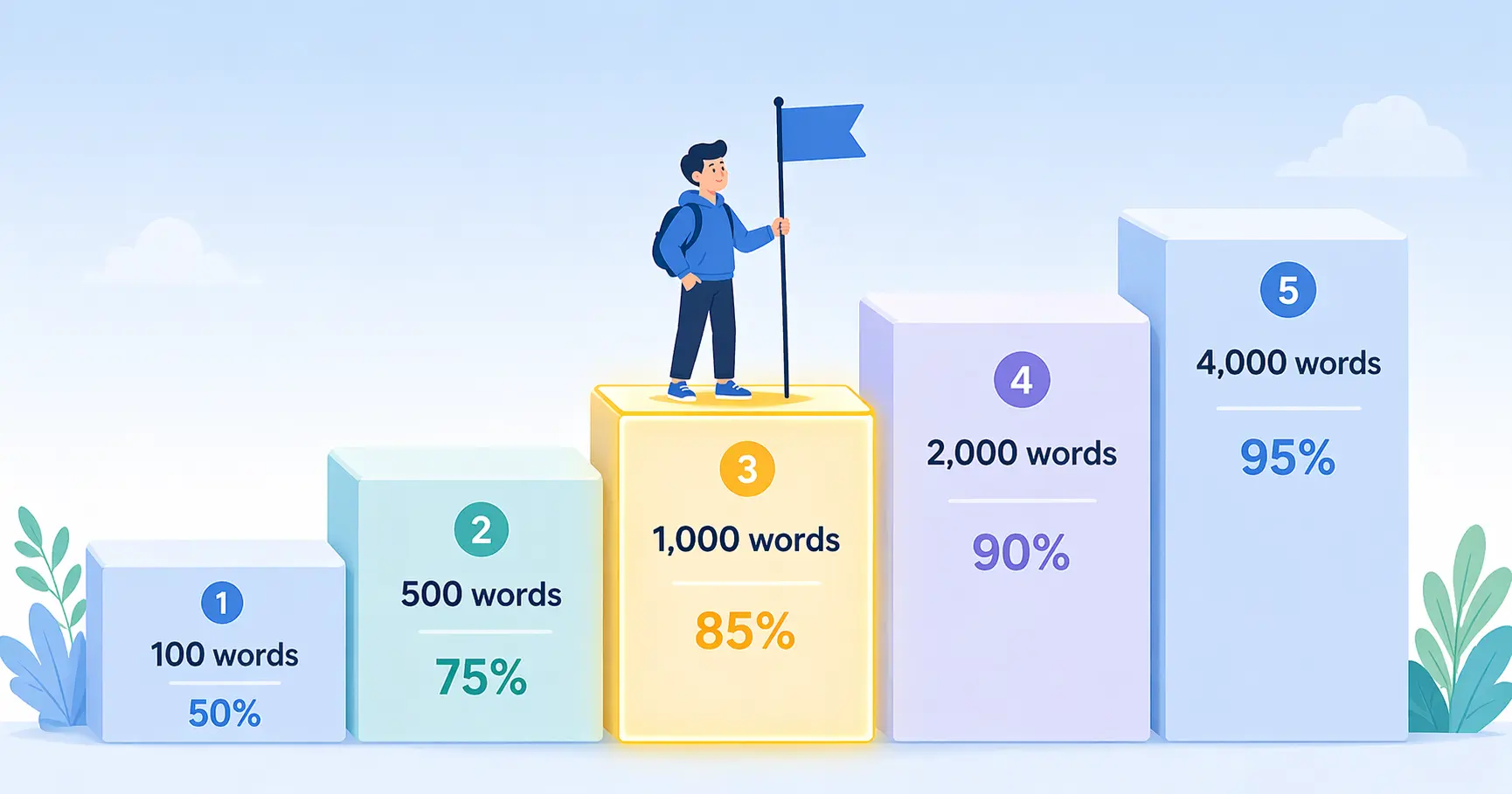
Penelitian kosakata secara konsisten menunjukkan bahwa sejumlah kecil kata mengerjakan sebagian besar tugas dalam bahasa Inggris.
| Kata yang diketahui | Ujaran yang dipahami | Teks yang dipahami |
|---|---|---|
| 100 | ~50% | ~45% |
| 500 | ~75% | ~65% |
| 1.000 | ~85% | ~75% |
| 2.000 | ~90% | ~80% |
| 4.000 | ~95% | ~90% |
Seribu kata pertama memberi hasil terbesar untuk waktu belajar Anda. Setiap kata yang dipelajari setelah 1.000 memberi tambahan pemahaman yang semakin kecil. Mempelajari available yang berada kira-kira di peringkat 400 meningkatkan pemahaman jauh lebih besar daripada mempelajari ambivalent yang berada sekitar peringkat 8.000.
Inilah alasan belajar berdasarkan frekuensi berhasil: Anda mempelajari kata yang paling sering muncul terlebih dahulu, sehingga setiap jam belajar memberi pemahaman dunia nyata sebanyak mungkin.
1.000 Kata Bahasa Inggris Paling Umum dari A sampai Z
Di bawah ini adalah pilihan kata paling esensial pada setiap kelompok huruf, dengan arti dan contoh kalimat. Daftar 1.000 kata lengkap disusun berdasarkan frekuensi di dalam setiap kelompok huruf; gunakan tabel sebagai titik awal untuk mengecek arti dan penggunaan kata yang paling sering Anda jumpai.
A
| Kata | Kelas kata | Arti | Contoh |
|---|---|---|---|
| about | preposisi/adverbia | tentang; kira-kira | The book is about Japanese history. There were about 50 people. |
| above | preposisi | lebih tinggi dari; lebih dari | The temperature rose above 30 degrees. |
| accept | verba | setuju menerima atau melakukan | She accepted the job offer immediately. |
| across | preposisi | dari satu sisi ke sisi lain | He walked across the bridge in the rain. |
| actually | adverbia | sebenarnya; sungguh | The test was actually easier than I expected. |
| add | verba | menambahkan | Add two tablespoons of sugar to the mixture. |
| affect | verba | memengaruhi | The weather affects my mood every winter. |
| afraid | adjektiva | merasa takut | She is afraid of flying. |
| after | preposisi/konjungsi | setelah; lebih lambat dari | We went for a walk after dinner. |
| again | adverbia | sekali lagi | Can you say that again, please? |
| age | nomina | umur seseorang atau sesuatu | Children start school at the age of five in most countries. |
| agree | verba | memiliki pendapat yang sama | I agree with everything you said. |
| ahead | adverbia | di depan; di masa depan | The road ahead was completely empty. |
| allow | verba | memberi izin | The teacher does not allow phones in class. |
| almost | adverbia | hampir; belum sepenuhnya | We have almost finished the project. |
| along | preposisi/adverbia | bergerak sepanjang; di sisi | We walked along the river for an hour. |
| already | adverbia | sebelum sekarang; pada saat ini | I have already seen that movie twice. |
| also | adverbia | sebagai tambahan; juga | She speaks French and also a little German. |
| always | adverbia | selalu | He always arrives early for meetings. |
| among | preposisi | di tengah; bagian dari kelompok | She was among the best students in her class. |
| amount | nomina | jumlah sesuatu | The recipe requires a small amount of salt. |
| appear | verba | menjadi terlihat; tampak | Stars appear in the sky after sunset. |
| apply | verba | mengajukan permohonan; berlaku | She applied for three jobs last week. |
| area | nomina | wilayah atau bagian suatu tempat | This area is known for its excellent restaurants. |
| around | preposisi/adverbia | mengelilingi; kira-kira | There are trees all around the house. |
| arrive | verba | tiba di tujuan | The train arrives at 6:45 PM. |
| ask | verba | mengatakan sesuatu untuk mendapat jawaban | Can I ask you a question? |
| attention | nomina | memusatkan pikiran pada sesuatu | Pay attention — this part is important. |
| available | adjektiva | dapat digunakan; bebas untuk melakukan sesuatu | The doctor is available on Tuesday afternoon. |
| avoid | verba | menjauhi; mencegah | I avoid eating sugar before bed. |
B
| Kata | Kelas kata | Arti | Contoh |
|---|---|---|---|
| back | nomina/adverbia | bagian belakang; kembali | He sat at the back of the room. |
| bad | adjektiva | berkualitas buruk; tidak menyenangkan | The weather was bad all week. |
| base | nomina/verba | dasar; mendasarkan | The company is based in London. |
| beautiful | adjektiva | sangat menarik atau menyenangkan | The sunset over the ocean was beautiful. |
| because | konjungsi | karena | She left early because she felt sick. |
| become | verba | mulai menjadi; tumbuh menjadi | He became a doctor after years of study. |
| before | preposisi/konjungsi | sebelum | Finish your homework before dinner. |
| begin | verba | memulai | The concert begins at 8 PM. |
| behind | preposisi | di belakang | The car park is behind the building. |
| believe | verba | menganggap sesuatu benar; percaya | I believe she is telling the truth. |
| below | preposisi/adverbia | lebih rendah dari | The temperature dropped below zero last night. |
| best | adjektiva/adverbia | kualitas tertinggi; paling baik | This is the best restaurant in the city. |
| better | adjektiva/adverbia | lebih baik; meningkat | Your English is getting better every week. |
| between | preposisi | di ruang antara dua hal | The meeting is between 2 and 4 PM. |
| beyond | preposisi | lebih jauh dari; lebih dari | The view beyond the mountains was incredible. |
| big | adjektiva | berukuran besar | They live in a big house near the park. |
| body | nomina | struktur fisik manusia atau hewan | Exercise is good for your body and mind. |
| book | nomina/verba | buku; memesan | I booked a hotel room for Friday night. |
| both | penentu/pronomina | dua hal bersama-sama | Both answers are correct. |
| bring | verba | membawa sesuatu ke suatu tempat | Please bring your laptop to the meeting. |
| build | verba | membangun; menciptakan | They are building a new hospital downtown. |
| business | nomina | kegiatan komersial; perusahaan | She started her own business at 25. |
| buy | verba | mendapatkan sesuatu dengan membayar | I need to buy a new phone. |
C
| Kata | Kelas kata | Arti | Contoh |
|---|---|---|---|
| call | verba/nomina | menelepon; menyebut nama | I will call you tomorrow morning. |
| care | verba/nomina | peduli; merawat | She cares about the environment. |
| carry | verba | memegang dan memindahkan sesuatu | He carried the boxes up the stairs. |
| case | nomina | keadaan; wadah | In that case, we should leave early. |
| cause | nomina/verba | penyebab; menyebabkan | What caused the delay? |
| certain | adjektiva | yakin; tertentu | I am certain the answer is correct. |
| change | verba/nomina | mengubah atau menjadi berbeda | The city has changed a lot in ten years. |
| check | verba | memeriksa; memverifikasi | Check your email — I sent the document an hour ago. |
| child | nomina | anak | Every child in the school receives free lunch. |
| choose | verba | memilih dari pilihan | You can choose any color you like. |
| city | nomina | kota besar | Tokyo is the largest city in Japan. |
| claim | verba/nomina | menyatakan sesuatu benar | He claims he was at home all evening. |
| clear | adjektiva/verba | mudah dipahami; jernih | The instructions were clear and simple. |
| close | verba/adjektiva | menutup; dekat | Please close the door. The shop is close to my house. |
| come | verba | bergerak mendekat; tiba | Come here — I want to show you something. |
| common | adjektiva | sering terjadi; dimiliki banyak orang | Spelling mistakes are very common among beginners. |
| community | nomina | kelompok orang dalam wilayah yang sama | The local community organized a cleanup day. |
| company | nomina | organisasi bisnis | She works for a technology company. |
| compare | verba | membandingkan perbedaan dan persamaan | Compare the two products before you buy. |
| complete | adjektiva/verba | selesai; lengkap | The project is now complete. |
| concern | nomina/verba | kekhawatiran; berkaitan dengan | Safety is our main concern. |
| consider | verba | mempertimbangkan dengan hati-hati | We should consider all the options before deciding. |
| continue | verba | terus melakukan; tidak berhenti | She continued reading despite the noise. |
| control | nomina/verba | kuasa untuk mengarahkan; mengelola | You need to control your spending. |
| cost | nomina/verba | harga sesuatu | The cost of living has increased by 8%. |
| could | verba modal | kemampuan masa lalu; kemungkinan | She could speak three languages by age 12. |
| country | nomina | negara; daerah pedesaan | Japan is a beautiful country. |
| couple | nomina | dua; sepasang orang | We stayed for a couple of hours. |
| course | nomina | rangkaian pelajaran; arah | She is taking an online course in marketing. |
| cover | verba/nomina | menutupi; mencakup | Snow covered the entire city overnight. |
| create | verba | membuat sesuatu yang baru | The artist created a stunning painting. |
| current | adjektiva/nomina | sedang terjadi; arus | What is the current population of London? |
| cut | verba | memotong; mengurangi | The government plans to cut taxes next year. |
D–F
| Kata | Kelas kata | Arti | Contoh |
|---|---|---|---|
| deal | nomina/verba | kesepakatan; menangani | We made a deal with the supplier. |
| decide | verba | membuat pilihan | Have you decided where to go for dinner? |
| describe | verba | mengatakan seperti apa sesuatu | Can you describe the apartment? |
| develop | verba | tumbuh; menciptakan seiring waktu | The company developed a new product. |
| different | adjektiva | tidak sama | The two brothers have very different personalities. |
| difficult | adjektiva | sulit dilakukan atau dipahami | The exam was more difficult than expected. |
| discover | verba | menemukan untuk pertama kali | Scientists discovered a new species of fish. |
| drive | verba/nomina | mengemudikan kendaraan; perjalanan | She drives to work every morning. |
| drop | verba/nomina | jatuh; menjatuhkan sesuatu | Be careful not to drop the glass. |
| during | preposisi | selama suatu periode | I fell asleep during the movie. |
| each | penentu | setiap satu dari dua atau lebih | Each student receives a textbook. |
| early | adjektiva/adverbia | sebelum waktu yang diharapkan | We arrived early to get good seats. |
| easy | adjektiva | tidak sulit | The first questions were easy. |
| effect | nomina | hasil atau perubahan yang disebabkan sesuatu | The new law had an immediate effect on traffic. |
| enough | penentu/adverbia | sebanyak yang dibutuhkan | We have enough food for everyone. |
| enter | verba | masuk ke dalam | Please enter through the main door. |
| entire | adjektiva | seluruh; lengkap | She ate the entire pizza by herself. |
| especially | adverbia | khususnya; lebih dari biasanya | I love all fruits, especially strawberries. |
| even | adverbia/adjektiva | untuk penekanan; rata | Even the teacher made a mistake. |
| ever | adverbia | kapan pun | Have you ever been to Australia? |
| every | penentu | semua; setiap | I go to the gym every morning. |
| example | nomina | sesuatu yang menunjukkan seperti apa yang lain | Can you give me an example? |
| expect | verba | mengira sesuatu akan terjadi | I expect the results tomorrow. |
| experience | nomina/verba | pengetahuan dari melakukan sesuatu | She has ten years of experience in marketing. |
| explain | verba | menjelaskan agar jelas | The teacher explained the grammar rule again. |
| face | nomina/verba | wajah; menghadapi | We need to face the problem directly. |
| fact | nomina | sesuatu yang benar | It is a fact that the Earth orbits the Sun. |
| far | adjektiva/adverbia | jarak yang jauh | The station is not far from here. |
| fast | adjektiva/adverbia | bergerak cepat | The train is very fast — it reaches 300 km/h. |
| feel | verba | mengalami emosi atau sensasi fisik | I feel much better today. |
| few | penentu/pronomina | sejumlah kecil | Only a few students passed the test. |
| fill | verba | membuat penuh | She filled the glass with water. |
| finally | adverbia | akhirnya; setelah waktu lama | We finally found the restaurant after walking for 20 minutes. |
| find | verba | menemukan; mencari lokasi | I cannot find my keys. |
| finish | verba | menyelesaikan; berakhir | What time does the class finish? |
| follow | verba | pergi setelah; mematuhi | Follow the instructions on the screen. |
| force | nomina/verba | kekuatan; memaksa seseorang melakukan sesuatu | The wind was strong enough to force the door open. |
| foreign | adjektiva | dari negara lain | She is learning two foreign languages. |
| form | nomina/verba | bentuk; menciptakan | Please fill in the application form. |
| free | adjektiva/verba | tidak berbayar; tidak dibatasi | Admission to the museum is free on Sundays. |
| friend | nomina | orang yang dikenal dan disukai | She has been my best friend since school. |
| full | adjektiva | berisi sebanyak mungkin | The bus was completely full. |
| future | nomina/adjektiva | waktu yang akan datang | Nobody knows what the future will bring. |
G–L
| Kata | Kelas kata | Arti | Contoh |
|---|---|---|---|
| general | adjektiva | melibatkan semua; tidak spesifik | The general opinion is that the plan will work. |
| give | verba | menyerahkan sesuatu kepada seseorang | She gave me her phone number. |
| government | nomina | kelompok yang memerintah negara | The government announced new education policies. |
| great | adjektiva | sangat baik; besar | The concert was great — we had an amazing time. |
| group | nomina | sejumlah orang atau benda bersama | A group of students visited the factory. |
| grow | verba | bertambah besar; berkembang | The company has grown rapidly in three years. |
| half | nomina/penentu | satu dari dua bagian yang sama | Half the class was absent due to illness. |
| happen | verba | terjadi | What happened at the meeting yesterday? |
| hard | adjektiva/adverbia | sulit; dengan usaha besar | She works hard to support her family. |
| head | nomina/verba | kepala; memimpin | He is the head of the marketing department. |
| help | verba/nomina | membuat sesuatu lebih mudah; bantuan | Can you help me carry these bags? |
| high | adjektiva/adverbia | tinggi; pada tingkat tinggi | The price of petrol is very high right now. |
| hold | verba | memegang; menyelenggarakan | She held the baby carefully. The event is held every June. |
| home | nomina/adverbia | tempat tinggal; pulang | I usually get home at 6 PM. |
| hope | verba/nomina | ingin sesuatu terjadi; harapan | I hope you feel better soon. |
| however | adverbia | meskipun begitu; sebaliknya | The hotel was expensive. However, the service was excellent. |
| human | adjektiva/nomina | berkaitan dengan manusia | Human memory is surprisingly unreliable. |
| idea | nomina | pikiran atau saran | That is a great idea — let us try it. |
| important | adjektiva | memiliki arti penting | Sleep is important for learning. |
| include | verba | mengandung sebagai bagian dari sesuatu | The price includes breakfast and parking. |
| increase | verba/nomina | menjadi lebih besar atau lebih banyak | Sales increased by 15% last quarter. |
| information | nomina | fakta tentang sesuatu | For more information, visit our website. |
| interest | nomina/verba | rasa ingin tahu; bunga uang | She has a strong interest in science. |
| issue | nomina | topik; masalah | Climate change is a critical issue today. |
| job | nomina | pekerjaan berbayar; tugas | He got a new job at a bank. |
| join | verba | menjadi bagian kelompok; menyambung | She joined the company last month. |
| just | adverbia | hanya; baru saja; tepat | I just arrived — give me one minute. |
| keep | verba | terus memiliki; menyimpan | Keep the receipt in case you need to return it. |
| kind | nomina/adjektiva | jenis; baik dan peduli | What kind of music do you like? She is a very kind person. |
| know | verba | memiliki informasi dalam pikiran | I know the answer to that question. |
| large | adjektiva | besar dalam ukuran atau jumlah | They need a large conference room for 50 people. |
| last | adjektiva/verba | paling akhir; berlangsung | The meeting lasted two hours. I saw her last week. |
| late | adjektiva/adverbia | setelah waktu yang diharapkan | Sorry I am late — the traffic was terrible. |
| lead | verba/nomina | menunjukkan jalan; memimpin | She leads a team of 20 people. |
| learn | verba | mendapatkan pengetahuan atau keterampilan | She learned to speak English in two years. |
| leave | verba | pergi dari; membiarkan tetap ada | I leave the house at 7:30 every morning. |
| less | penentu/adverbia | jumlah yang lebih kecil | I try to spend less money on things I do not need. |
| level | nomina | posisi pada suatu skala | Her English is at an intermediate level. |
| life | nomina | keadaan hidup; kehidupan | She lived a long and happy life. |
| likely | adjektiva/adverbia | mungkin; kemungkinan besar | Rain is likely this afternoon. |
| line | nomina | garis panjang; barisan orang | There was a long line outside the store. |
| list | nomina/verba | daftar; membuat daftar | Make a list of everything you need to buy. |
| live | verba/adjektiva | tinggal; hidup | They live in a small town near the coast. |
| long | adjektiva/adverbia | berjarak jauh; berlangsung lama | The journey was long but enjoyable. |
| look | verba | menggunakan mata untuk melihat; tampak | Look at this photo — is that your friend? |
| lose | verba | tidak lagi memiliki; gagal menang | I always lose my keys. |
| low | adjektiva | dekat tanah; kecil jumlahnya | The price is surprisingly low. |
M–P
| Kata | Kelas kata | Arti | Contoh |
|---|---|---|---|
| main | adjektiva | paling penting | The main reason is the high cost. |
| make | verba | membuat; menyebabkan | She made a cake for the party. |
| matter | nomina/verba | hal/topik; menjadi penting | It does not matter — either day works for me. |
| may | verba modal | kemungkinan; izin | It may rain later. You may leave early today. |
| mean | verba/adjektiva | bermakna; berniat; tidak baik | What does this word mean? |
| meet | verba | bertemu; memenuhi | Let’s meet outside the station. |
| mind | nomina/verba | bagian yang berpikir; keberatan | She changed her mind at the last minute. |
| miss | verba | gagal mengenai; merasa kehilangan saat tidak hadir | I miss my family when I travel. |
| money | nomina | alat untuk membeli barang | She saves money by cooking at home. |
| most | penentu/adverbia | jumlah terbesar; paling | Most students passed the exam. |
| move | verba | mengubah posisi atau tempat | We moved to a new apartment in January. |
| much | penentu/adverbia | jumlah besar | How much does this cost? |
| must | verba modal | keharusan; kemungkinan kuat | You must wear a seatbelt. She must be tired after the flight. |
| name | nomina/verba | sebutan seseorang atau sesuatu; menyebut | My name is Anna. Can you name three countries in Africa? |
| natural | adjektiva | ada di alam; wajar | It is natural to feel nervous before an interview. |
| near | preposisi/adjektiva | dekat dengan | The school is near the train station. |
| need | verba/nomina | membutuhkan; kebutuhan | I need to finish this report by tomorrow. |
| never | adverbia | tidak pernah | I have never been to South America. |
| new | adjektiva | belum ada sebelumnya; baru dibuat | She bought a new laptop for work. |
| next | adjektiva/adverbia | datang tepat setelah ini | The next train leaves in 10 minutes. |
| nothing | pronomina | tidak ada apa pun | There is nothing in the fridge. |
| notice | verba/nomina | menyadari sesuatu | Did you notice anything strange? |
| now | adverbia | pada saat ini | We need to leave now or we will be late. |
| number | nomina | nilai matematika; jumlah | A large number of people attended the event. |
| offer | verba/nomina | menawarkan; tawaran | They offered her a higher salary. |
| often | adverbia | sering kali | How often do you exercise? |
| only | adjektiva/adverbia | tidak lebih dari; satu-satunya | There are only two tickets left. |
| open | adjektiva/verba | tidak tertutup; membuat dapat diakses | The store is open from 9 to 6. |
| order | nomina/verba | susunan; pesanan untuk membeli | I ordered a coffee and a sandwich. |
| other | adjektiva/pronomina | tambahan; berbeda | Do you have any other questions? |
| outside | preposisi/nomina | tidak di dalam; bagian luar | It is cold outside — take a jacket. |
| own | adjektiva/verba | milik sendiri; memiliki | She has her own apartment now. |
| part | nomina | bagian dari sesuatu yang lebih besar | This is the hardest part of the exam. |
| pay | verba/nomina | membayar; bayaran | How much do they pay you? |
| people | nomina | manusia pada umumnya | About 500 people work in this building. |
| place | nomina/verba | lokasi; menaruh | This is a nice place for a picnic. |
| plan | nomina/verba | rencana rinci; berniat | What are your plans for the weekend? |
| point | nomina/verba | gagasan; menunjuk | That is a good point. She pointed at the map. |
| possible | adjektiva | dapat terjadi atau dilakukan | Is it possible to change the date? |
| power | nomina | kemampuan mengendalikan; energi | Solar power is becoming cheaper every year. |
| present | adjektiva/nomina/verba | saat ini; hadiah; menunjukkan | All members were present at the meeting. |
| problem | nomina | kesulitan; sesuatu yang perlu dipecahkan | The main problem is the lack of funding. |
| produce | verba | membuat; menghasilkan | The factory produces 500 cars per day. |
| program | nomina | rencana; acara TV; perangkat lunak | The training program lasts six weeks. |
| provide | verba | memberi; menyediakan | The hotel provides free breakfast for guests. |
| public | adjektiva/nomina | untuk semua orang; masyarakat umum | Public transport is free for children under 5. |
| put | verba | memindahkan sesuatu ke posisi tertentu | Put your bag on the table. |
Q–S
| Kata | Kelas kata | Arti | Contoh |
|---|---|---|---|
| question | nomina | sesuatu yang ditanyakan | Can I ask a question? |
| quite | adverbia | cukup; sepenuhnya | The movie was quite good, actually. |
| reach | verba | tiba di; mencapai | We reached the hotel at midnight. |
| read | verba | melihat dan memahami kata tertulis | She reads for 30 minutes before bed every night. |
| ready | adjektiva | siap | Dinner is ready — come to the table. |
| real | adjektiva | benar-benar ada; asli | Is that a real diamond? |
| reason | nomina | alasan sesuatu terjadi atau dilakukan | What is the reason for the delay? |
| receive | verba | menerima | I received your email this morning. |
| record | nomina/verba | informasi tersimpan; pencapaian terbaik | She broke the world record in the 100 meters. |
| remain | verba | tetap ada; terus ada | Please remain seated until the plane stops. |
| remember | verba | menyimpan dalam ingatan | I remember the first day I arrived in London. |
| report | nomina/verba | laporan; melaporkan | The report shows a 10% increase in sales. |
| require | verba | memerlukan; menuntut | This job requires three years of experience. |
| result | nomina | sesuatu yang terjadi karena hal lain | Hard work leads to good results. |
| return | verba/nomina | kembali | She returned to work after two weeks. |
| right | adjektiva/nomina/adverbia | benar; hak; arah kanan | That is the right answer. Turn right at the corner. |
| run | verba | berlari; mengelola | He runs 5 kilometers every morning. She runs a small business. |
| same | adjektiva | identik; tidak berbeda | We take the same bus every day. |
| say | verba | mengucapkan kata | She said she would call me back. |
| seem | verba | tampak seperti | He seems tired today. |
| send | verba | mengirimkan ke tempat lain | I sent the package yesterday. |
| serious | adjektiva | penting; tidak bercanda | This is a serious problem that needs attention. |
| serve | verba | menyediakan makanan atau layanan | The restaurant serves breakfast from 7 to 10 AM. |
| set | verba/nomina | menaruh di posisi; satu set | She set the alarm for 6 AM. |
| several | penentu | lebih dari dua tetapi tidak banyak | I have visited that city several times. |
| share | verba/nomina | memberi sebagian; bagian | She shared her lunch with her colleague. |
| short | adjektiva | tidak panjang; tidak tinggi | It was a short meeting — only 15 minutes. |
| should | verba modal | saran; harapan | You should see a doctor about that. |
| show | verba/nomina | memperlihatkan; tampilan | Can you show me how to do this? |
| similar | adjektiva | mirip tetapi tidak sama persis | The two houses are very similar in design. |
| simple | adjektiva | mudah dipahami atau dilakukan | The recipe is simple — only five ingredients. |
| since | preposisi/konjungsi | sejak waktu lalu; karena | I have lived here since 2019. Since you asked, I will tell you. |
| situation | nomina | keadaan pada waktu tertentu | The situation is improving slowly. |
| small | adjektiva | kecil | They live in a small village in the mountains. |
| social | adjektiva | berkaitan dengan masyarakat atau interaksi | Social media has changed how we communicate. |
| some | penentu | jumlah yang tidak ditentukan | Can I have some water, please? |
| soon | adverbia | dalam waktu dekat | The bus should arrive soon. |
| speak | verba | berbicara | Do you speak English? |
| special | adjektiva | lebih baik atau berbeda dari biasanya | Today is a special day — it is her birthday. |
| spend | verba | menggunakan uang atau waktu | How much time do you spend studying? |
| stand | verba | berdiri; berada | Please stand up when the teacher enters. |
| start | verba/nomina | memulai | The movie starts at 8 PM. |
| state | nomina/verba | keadaan; menyatakan dengan kata-kata | The building is in a poor state. He stated his opinion clearly. |
| stay | verba | tinggal di suatu tempat | We stayed at a small hotel near the beach. |
| still | adverbia/adjektiva | masih berlanjut; diam | She still lives with her parents. |
| stop | verba | berhenti bergerak atau melakukan | The bus stops right in front of the school. |
| strong | adjektiva | memiliki kekuatan atau kemampuan besar | She has a strong opinion about education. |
| suggest | verba | mengusulkan gagasan | I suggest we meet at 10 AM instead. |
| support | verba/nomina | membantu; dukungan | Her family supports her decision to study abroad. |
| sure | adjektiva | yakin; percaya diri | Are you sure about that? |
| system | nomina | kumpulan bagian yang terhubung dan bekerja bersama | The education system needs reform. |
T–Z
| Kata | Kelas kata | Arti | Contoh |
|---|---|---|---|
| take | verba | memegang; membawa; membutuhkan | Take an umbrella — it might rain. |
| talk | verba/nomina | berbicara; percakapan | We need to talk about the project. |
| tell | verba | mengatakan kepada seseorang; memberi tahu | Can you tell me the time? |
| test | nomina/verba | ujian; menguji sesuatu | She passed her driving test on the first attempt. |
| thing | nomina | benda; fakta atau keadaan | I have a few things to finish before I leave. |
| think | verba | menggunakan pikiran; percaya | I think this is the right decision. |
| through | preposisi | dari satu sisi ke sisi lain; karena | We walked through the park. |
| together | adverbia | bersama; pada waktu yang sama | We worked together on the project. |
| top | nomina/adjektiva | bagian tertinggi; yang terbaik | She graduated at the top of her class. |
| total | adjektiva/nomina | lengkap; jumlah keseluruhan | The total cost was $450. |
| toward | preposisi | ke arah | She walked toward the exit. |
| turn | verba/nomina | mengubah arah; berputar | Turn left at the traffic lights. |
| type | nomina/verba | jenis atau kategori | What type of phone do you have? |
| understand | verba | mengetahui arti; memahami | I understand the instructions now. |
| until | preposisi/konjungsi | sampai waktu ketika | Wait here until I come back. |
| use | verba/nomina | memakai untuk tujuan tertentu | May I use your phone? |
| usually | adverbia | dalam kebanyakan kasus; biasanya | I usually wake up at 7 AM. |
| value | nomina/verba | nilai atau pentingnya sesuatu | The value of the house has doubled. |
| very | adverbia | pada tingkat yang tinggi; sangat | The test was very difficult. |
| view | nomina/verba | apa yang terlihat; pendapat | The view from the top floor is amazing. |
| voice | nomina | bunyi saat seseorang berbicara | She has a very calm voice. |
| wait | verba | tinggal sampai sesuatu terjadi | Please wait here — I will be right back. |
| walk | verba/nomina | bergerak dengan kaki; berjalan | I walk to work every day — it takes 20 minutes. |
| want | verba | menginginkan | What do you want for dinner? |
| watch | verba/nomina | melihat dalam waktu tertentu; jam tangan | We watched a documentary about space last night. |
| water | nomina | cairan jernih di sungai, danau, dan hujan | Drink at least 2 liters of water per day. |
| way | nomina | cara; rute | This is the easiest way to solve the problem. |
| week | nomina | periode tujuh hari | I go to the gym three times a week. |
| whole | adjektiva | seluruh; lengkap | She read the whole book in one day. |
| without | preposisi | tanpa; tidak memiliki | She left without saying goodbye. |
| word | nomina | satuan bahasa | What does this word mean? |
| work | verba/nomina | melakukan pekerjaan; usaha | She works for an international organization. |
| world | nomina | Bumi; semua orang | English is spoken all over the world. |
| write | verba | menulis kata di kertas atau layar | Write your name at the top of the page. |
| wrong | adjektiva | tidak benar; tidak tepat secara moral | Something is wrong with my computer. |
| year | nomina | periode 365 hari | She lived in Berlin for three years. |
| yet | adverbia/konjungsi | sampai sekarang; namun | I have not finished yet. The hotel is small, yet very comfortable. |
| young | adjektiva | tidak tua; muda | Young people are increasingly interested in sustainability. |
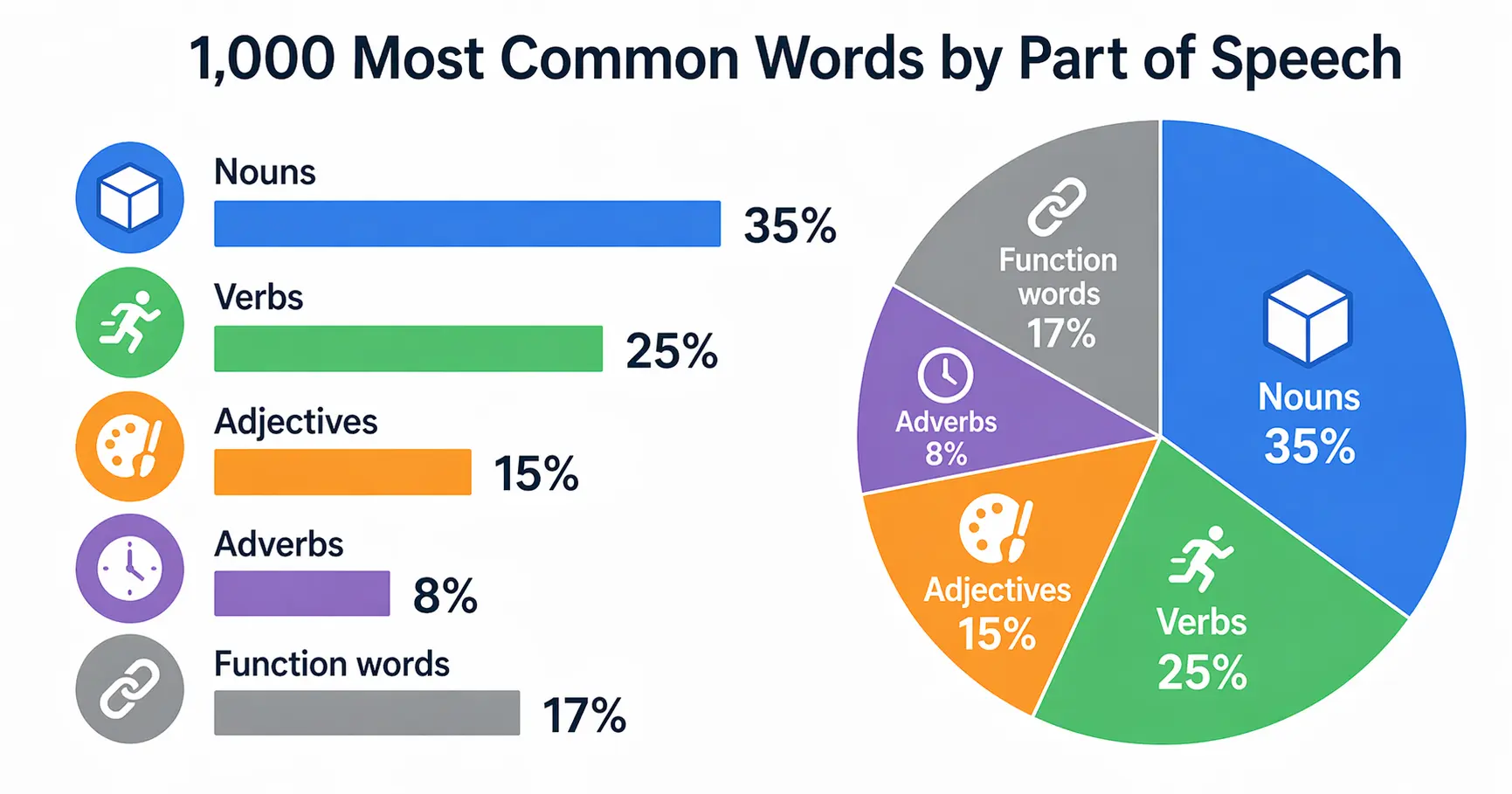
Pembagian 1.000 Kata Menurut Kelas Kata
Memahami pembagiannya membantu Anda belajar lebih efektif.
| Kelas kata | Persentase kira-kira | Jumlah | Fungsinya |
|---|---|---|---|
| Nomina | 35% | ~350 | Menamai sesuatu: problem, area, information, government |
| Verba | 25% | ~250 | Menjelaskan tindakan: provide, include, continue, require |
| Adjektiva | 15% | ~150 | Menjelaskan sifat: important, different, possible, strong |
| Adverbia | 8% | ~80 | Mengubah cara, waktu, atau tempat: already, however, often, usually |
| Kata fungsi | 17% | ~170 | Menghubungkan gagasan: the, in, with, because, which, although |
Kata fungsi—preposisi, konjungsi, penentu, dan pronomina—adalah kata individual yang paling sering muncul, tetapi kategorinya paling kecil berdasarkan jumlah keseluruhan. Anda mungkin sudah mengenal sebagian besar di antaranya. Celah terbesar pelajar biasanya ada pada verba dan adjektiva, seperti require, previous, significant, dan maintain, yang terus muncul dalam bahasa Inggris nyata tetapi sering dilewati kursus dasar.
Rencana Belajar: 1.000 Kata dalam 8 Minggu
Anda tidak perlu mempelajari semua 1.000 kata dari nol. Kebanyakan pelajar sudah mengetahui 400–600 di antaranya. Tujuannya adalah mengisi celah secara efisien.
Minggu 1–2: Penilaian dan Dasar
- Pindai tabel di atas. Tandai setiap kata yang belum Anda yakini sepenuhnya—baik arti maupun penggunaannya.
- Hitung posisi Anda. Kebanyakan pelajar menemukan 200–400 kata yang belum dikenal atau hanya sebagian dipahami.
-
Pisahkan menjadi tiga kelompok:
- Sudah dikuasai — Anda dapat menggunakannya dalam kalimat tanpa berpikir.
- Mengenali tetapi ragu — Anda mengerti saat membaca, tetapi belum yakin menggunakannya.
- Belum tahu — tidak familier atau sangat tidak jelas.
Fokuskan waktu belajar pada kelompok “mengenali tetapi ragu” dan “belum tahu”.
Minggu 3–6: Pembelajaran Aktif (25 Kata per Hari)
| Waktu | Kegiatan | Durasi |
|---|---|---|
| Pagi | Tes ingatan cepat untuk kata kemarin | 5 menit |
| Siang | Pelajari 25 kata baru; baca arti dan contoh, lalu tulis kalimat sendiri untuk lima kata | 15 menit |
| Malam | Ulangi kata baru hari ini serta kata dari tiga hari lalu | 10 menit |
Dengan 25 kata per hari selama lima hari seminggu, Anda mencakup 500 kata dalam empat minggu. Banyak di antaranya adalah kata yang “dikenali tetapi ragu”, sehingga cukup beberapa kali ulasan untuk menjadi mantap.
Minggu 7–8: Ulang dan Gunakan Secara Aktif
- Berhenti menambah kata baru. Fokus sepenuhnya pada ulasan dan penggunaan.
- Uji diri pada semua kata dari minggu 3–6.
- Tulis 10 kalimat per hari dengan kata yang terasa sulit.
- Baca satu artikel bahasa Inggris setiap hari dan perhatikan berapa banyak dari 1.000 kata ini yang Anda temui.
Setelah Minggu Kedelapan
Lanjutkan ke tingkat berikutnya. Panduan 4000 Kata Bahasa Inggris Esensial melanjutkan daftar ini dengan kata 1.001–4.000 dalam rencana terstruktur selama enam bulan.
Kata untuk Dipraktikkan Sekarang
Berikut 25 kata penting dari daftar ini. Tambahkan ke kamus Anda dengan satu klik; ulasan pengulangan berspasi akan dimulai otomatis.
experience
nomina
pengalaman
Contoh
- Her previous work experience made her an ideal candidate for the position.
- Traveling to different countries provides valuable cultural experience.
meeting
nomina
rapat, pertemuan
Contoh
- The business meeting discussed budget plans for next fiscal year.
- Town meeting allows residents to voice concerns about local issues.
reply
nomina
jawaban, tanggapan
Contoh
- Quick reply shows professional customer service quality.
- Written reply confirms agreement terms and conditions.
create
verba
menciptakan, membuat
Contoh
- Artists create beautiful works that inspire and move people emotionally.
- The new policy will create opportunities for economic growth.
mention
verba
menyebutkan, menyinggung
Contoh
- Please mention my name when you call about job opening.
- The report fails to mention important environmental concerns.
describe
verba
menggambarkan, menjelaskan
Contoh
- Can you describe what the suspect looked like to police officers?
- The travel guide describes many interesting places to visit in Europe.
impact
nomina
dampak, pengaruh
Contoh
- Climate change has a significant impact on global weather patterns.
- The impact of the collision damaged both cars severely.
exam
nomina
ujian, tes
Contoh
- Students study hard for weeks before taking their final exams.
- The driving exam tests both knowledge and practical skills behind wheel.
powerful
adjektiva
kuat, berpengaruh
Contoh
- Powerful computer processes data very quickly.
- Powerful speech moves audience to take action.
wonderful
adjektiva
sangat bagus, menyenangkan, luar biasa
Contoh
- The restaurant serves wonderful food with excellent service.
- We had a wonderful time at the beach during summer vacation.
confident
adjektiva
percaya diri, yakin
Contoh
- She felt confident about passing the difficult examination successfully.
- The confident speaker delivered an inspiring presentation to the audience.
favor
nomina
dukungan, persetujuan
Contoh
- Could you do me a favor and pick up my dry cleaning?
- The proposal gained favor among the committee members after lengthy discussion.
ambition
nomina
ambisi, cita-cita
Contoh
- Her ambition is to become a successful doctor and help people worldwide.
- Sometimes ambition can drive people to work too hard and neglect family.
tourist
nomina
wisatawan, turis
Contoh
- Foreign tourist visits famous landmarks and museums.
- Tourist season brings economic benefits to region.
student
nomina
pelajar, siswa, mahasiswa
Contoh
- Diligent student completes homework assignments on time.
- Graduate student conducts research for doctoral degree.
relaxed
adjektiva
santai, rileks
Contoh
- Relaxed atmosphere encourages open discussion among participants.
- Relaxed person handles pressure situations more effectively.
hot
adjektiva
panas
Contoh
- Summer weather is extremely hot in desert regions around the world.
- The coffee is too hot to drink right now - let it cool down.
cool
verba
mendinginkan
orange
nomina
jeruk
Contoh
- Fresh orange juice contains vitamin C and natural sugar.
- The sunset painted sky in beautiful shades of orange.
meat
nomina
daging
Contoh
- Fresh meat should be stored in refrigerator for food safety.
- Vegetarians choose not to eat meat for ethical reasons.
football
nomina
sepak bola
Contoh
- Football is the most popular sport in many countries around the world.
- The children play football in the school yard during their lunch break.
nomina
surat, pos
Contoh
- Check mail every day for important bills and official documents.
- Electronic mail has largely replaced traditional postal letters today.
father
nomina
ayah, bapak
Contoh
- His father taught him how to ride a bicycle in the park.
- The young father proudly carried his baby daughter in his arms.
rush
nomina
serbuan, gerakan tergesa-gesa
Contoh
- Last-minute rush creates stress and mistakes often.
- Morning rush causes traffic jams in city.
result
nomina
hasil, akibat
Contoh
- Election result surprises political analysts and voters.
- Test result shows significant improvement in performance.
Cara Menggunakan Daftar Ini Secara Efektif
Jangan hanya membaca—uji diri Anda. Tutup kolom “Arti” dan coba jelaskan setiap kata dari ingatan. Tutup kolom “Kata” dan coba ingat kata bahasa Inggris dari definisinya. Mengambil kembali dari ingatan jauh lebih efektif daripada membaca pasif.
Perhatikan kata yang memiliki banyak makna. Banyak dari 1.000 kata umum mempunyai tiga hingga lima arti. Right berarti benar, hak moral, dan arah. Run berarti bergerak cepat, mengelola bisnis, dan mengoperasikan mesin. Pelajari makna yang paling umum lebih dulu, lalu tambahkan makna lain.
Perhatikan kolokasi. Kata umum memiliki pasangan alami: make a decision, bukan do a decision; take a photo, bukan make a photo; dan do homework, bukan make homework. Mempelajari kolokasi yang benarlah yang membedakan bahasa Inggris alami dari bahasa buku teks.
Lacak kata yang belum Anda kuasai. Setiap kata pada daftar ini yang belum Anda ketahui adalah target belajar berprioritas tinggi. Kata-kata ini muncul lebih sering daripada kata bahasa Inggris lainnya; semakin cepat Anda menguasainya, semakin cepat pemahaman Anda meningkat.
Bacaan Selanjutnya
- Naikkan ke 4.000 kata. Seribu kata pertama memberi 85% pemahaman; 3.000 kata berikutnya membawa Anda ke 95%. Ikuti panduan 4000 Kata Bahasa Inggris Esensial untuk rencana terstruktur.
- Pelajari kata dalam kalimat. Lihat kalimat bahasa Inggris sederhana untuk penggunaan sehari-hari, berisi lebih dari 200 kalimat siap pakai dengan kosakata umum.
- Bangun sistem menghafal. Baca cara menghafal kosakata untuk delapan teknik berbasis sains agar kata melekat lebih lama.
- Tingkatkan metode Anda secara menyeluruh. Panduan cara meningkatkan kosakata berisi 10 strategi terbukti untuk pertumbuhan jangka panjang.
- Belajar menurut tingkat. Jelajahi daftar kosakata A2 Elementary dan B1 Intermediate yang disusun menurut tingkat CEFR.
FAQ
Apa saja 1.000 kata bahasa Inggris yang paling umum?
Seribu kata bahasa Inggris yang paling umum adalah kata yang paling sering muncul dalam percakapan dan tulisan sehari-hari. Kata-kata ini mencakup kata fungsi seperti the, is, dan in; verba dasar seperti make, take, give, dan know; nomina umum seperti time, people, way, dan day; serta adjektiva penting seperti new, good, different, dan important. Bersama-sama, kata ini mencakup sekitar 85% percakapan bahasa Inggris sehari-hari.
Apakah 1.000 kata cukup untuk berbicara bahasa Inggris?
Seribu kata memberi kosakata yang cukup untuk percakapan dasar—salam, rutinitas harian, pendapat sederhana, belanja, dan perjalanan. Anda dapat bertahan di negara berbahasa Inggris dengan 1.000 kata. Namun, untuk komunikasi kerja yang nyaman, memahami berita, atau lulus ujian seperti IELTS, Anda memerlukan 3.000–5.000 kata. Anggap 1.000 kata sebagai fondasi yang kuat, bukan garis akhir.
Berapa lama waktu yang diperlukan untuk mempelajari 1.000 kata bahasa Inggris?
Jika Anda sudah mengetahui sedikit bahasa Inggris, kemungkinan Anda telah mengenali 400–600 kata ini. Mempelajari 400–600 sisanya memerlukan sekitar enam hingga delapan minggu dengan kecepatan 15–25 kata baru per hari dan ulasan harian. Pemula total membutuhkan 10–12 minggu. Kuncinya bukan kecepatan, melainkan konsistensi: 15 menit setiap hari lebih baik daripada dua jam sekali seminggu.
Apa cara terbaik untuk mempelajari kata bahasa Inggris umum?
Belajarlah dalam konteks, bukan secara terpisah. Untuk setiap kata, baca definisinya, pelajari dua atau tiga kalimat contoh, lalu tulis kalimat Anda sendiri. Gunakan pengulangan berspasi dengan interval yang meningkat: satu hari, tiga hari, tujuh hari, dan 14 hari. Fokus dahulu pada kata yang hampir Anda kuasai; mengubah pengetahuan sebagian menjadi penggunaan yang yakin lebih cepat daripada mempelajari kata yang sepenuhnya baru.
Sebaiknya saya mempelajari 1.000 kata paling umum berdasarkan abjad atau frekuensi?
Untuk belajar aktif, urutan frekuensi lebih efisien karena Anda mempelajari kata yang paling berdampak terlebih dahulu. Susunan A–Z dalam artikel ini dibuat untuk rujukan dan pencarian cepat. Saat belajar, mulailah dari verba dasar seperti be, have, do, say, get, make, go, know, take, dan see; nomina umum seperti time, year, people, way, dan day; serta adjektiva berfrekuensi tinggi seperti good, new, first, last, long, great, little, own, other, dan old.
Apa yang dipelajari setelah 1.000 kata pertama?
Langkah berikutnya adalah memperluas ke 2.000–4.000 kata. Itu membawa Anda dari 85% ke 95% pemahaman, tingkat ketika Anda dapat mempelajari kata baru dari konteks tanpa kamus. Panduan 4000 Kata Bahasa Inggris Esensial menyediakan rencana tingkat demi tingkat. Anda juga dapat fokus pada kosakata bertopik seperti teknologi, pekerjaan, atau persiapan ujian melalui panduan kosakata IELTS.