
Palabras Básicas del Inglés para Principiantes: Construye tu Primer Vocabulario
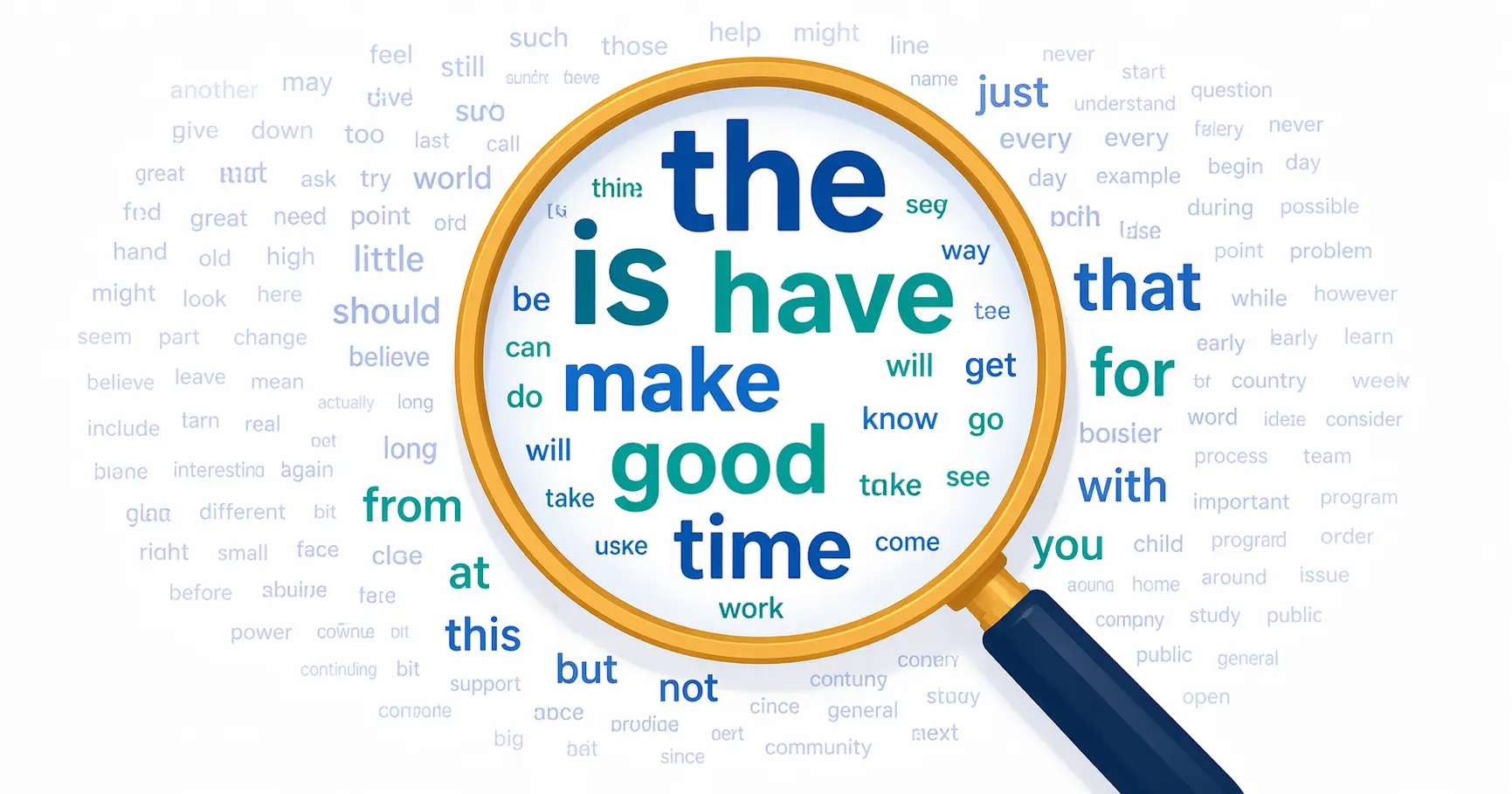
Cuando empiezas con el inglés, es tentador descargarte una lista de mil palabras aleatorias. Eso rara vez es el camino más rápido hacia la comunicación. Los principiantes necesitan un vocabulario básico pequeño: palabras que se combinen fácilmente para describir personas, hacer preguntas, hacer planes y entender las frases del día a día.
Esta es una guía de palabras, no un libro de frases. Si quieres frases listas para usar en viajes y conversaciones, lee Inglés para principiantes: palabras y frases esenciales. Aquí aprenderás los bloques de construcción que te permiten crear tus propias frases.
- Nivel: A1–A2
- Objetivo: entender y construir frases básicas del día a día
- Enfoque: sustantivos de uso frecuente, verbos, palabras descriptivas y palabras gramaticales
- Regla de estudio: aprende las palabras en grupos cortos, nunca como un volcado alfabético
Empieza con palabras que forman frases
La oración «My friend works in a small café» (Mi amigo trabaja en una cafetería pequeña) usa cuatro tipos de vocabulario:
- personas y cosas: friend (amigo), café
- acciones: works (trabaja)
- palabras descriptivas: small (pequeño)
- palabras gramaticales: my (mi), in (en), a (un/una)
Aprende estos grupos juntos. Un sustantivo solo es útil, pero un sustantivo más un verbo y una palabra descriptiva se convierte en comunicación.
Personas, lugares y cosas esenciales
| Palabra | Parte de la oración | Significado | Oración de ejemplo |
|---|---|---|---|
| family | sustantivo | personas que tienen parentesco contigo | My family lives near the city centre. (Mi familia vive cerca del centro de la ciudad.) |
| friend | sustantivo | una persona que conoces bien y te gusta | Her friend speaks English very clearly. (Su amiga habla inglés muy claramente.) |
| child | sustantivo | una persona joven | The child is reading a book. (El niño está leyendo un libro.) |
| home | sustantivo | el lugar donde vives | I am at home today. (Estoy en casa hoy.) |
| room | sustantivo | una parte de un edificio | Their room has two windows. (Su habitación tiene dos ventanas.) |
| school | sustantivo | un lugar para la educación | The school opens at eight. (El colegio abre a las ocho.) |
| work | sustantivo | un trabajo o la actividad de trabajar | He has a lot of work this week. (Tiene mucho trabajo esta semana.) |
| shop | sustantivo | un lugar donde la gente compra cosas | The shop is next to the station. (La tienda está al lado de la estación.) |
| food | sustantivo | cosas que la gente come | This food smells good. (Esta comida huele bien.) |
| time | sustantivo | minutos, horas o un período | We do not have much time. (No tenemos mucho tiempo.) |

Verbos esenciales: lo que hacen las personas
Los verbos dan movimiento a tu frase. Aprende primero la forma base, luego observa las formas comunes como work / works / worked.
| Palabra | Significado | Oración de ejemplo |
|---|---|---|
| be | existir; usado para describir | They are happy today. (Están contentos hoy.) |
| have | poseer o experimentar | I have a new phone. (Tengo un teléfono nuevo.) |
| do | realizar una acción | What do you do after class? (¿Qué haces después de clase?) |
| go | moverse a otro lugar | We go to the park on Sunday. (Vamos al parque los domingos.) |
| come | moverse hacia un lugar o persona | Please come here for a minute. (Por favor, ven aquí un momento.) |
| want | desear algo | I want a cup of tea. (Quiero una taza de té.) |
| need | necesitar algo | You need your passport. (Necesitas tu pasaporte.) |
| like | disfrutar de algo | They like Italian food. (Les gusta la comida italiana.) |
| know | tener información | Do you know her name? (¿Sabes cómo se llama?) |
| think | tener una opinión o idea | I think this answer is right. (Creo que esta respuesta es correcta.) |
| make | crear o causar algo | Let’s make dinner together. (Preparemos la cena juntos.) |
| take | llevar, recibir o usar | Take your bag with you. (Llévate tu bolsa contigo.) |
Palabras descriptivas que usarás todos los días
| Palabra | Significado | Oración de ejemplo |
|---|---|---|
| good | agradable, útil o correcto | That is a good idea. (Es una buena idea.) |
| bad | desagradable o no bueno | The weather is bad today. (Hoy hace mal tiempo.) |
| big | grande | They live in a big house. (Viven en una casa grande.) |
| small | pequeño de tamaño | I need a small table. (Necesito una mesa pequeña.) |
| new | hecho u obtenido recientemente | Her new job starts on Monday. (Su nuevo trabajo empieza el lunes.) |
| old | no nuevo; que ha existido durante mucho tiempo | This is an old photo. (Esta es una foto antigua.) |
| easy | no difícil | The first exercise is easy. (El primer ejercicio es fácil.) |
| important | necesario o significativo | Sleep is important for learning. (El sueño es importante para el aprendizaje.) |
| happy | contento | I am happy to see you. (Me alegra verte.) |
| tired | que necesita descansar | We are tired after the trip. (Estamos cansados después del viaje.) |
Palabras interrogativas y palabras gramaticales pequeñas
Las palabras pequeñas aparecen en casi todas las frases. Vale la pena aprenderlas pronto porque ayudan a entender cómo funciona una oración.
| Palabra | Uso | Oración de ejemplo |
|---|---|---|
| who | pregunta sobre una persona | Who is that woman? (¿Quién es esa mujer?) |
| what | pregunta sobre una cosa o acción | What do you need? (¿Qué necesitas?) |
| where | pregunta sobre un lugar | Where is the bus stop? (¿Dónde está la parada del autobús?) |
| when | pregunta sobre el tiempo | When does the film start? (¿Cuándo empieza la película?) |
| why | pregunta por una razón | Why are you late? (¿Por qué llegas tarde?) |
| how | pregunta sobre un método o estado | How are you today? (¿Cómo estás hoy?) |
| this / that | señala una cosa | This book is mine; that book is yours. (Este libro es mío; ese libro es tuyo.) |
| some / any | habla de una cantidad | Do you have any water? (¿Tienes agua?) |
| with | muestra conexión o compañía | I study with my friend. (Estudio con mi amigo.) |
| because | da una razón | I am home because it is raining. (Estoy en casa porque está lloviendo.) |
Construye familias de palabras, no palabras aisladas
Una palabra puede abrir la puerta a varias más. Cuando aprendas help (ayuda/ayudar), aprende también helpful (útil) y helper (ayudante). Cuando aprendas teach (enseñar), añade teacher (profesor) y teaching (enseñanza). Esto hace que tu vocabulario crezca más rápido y te ayuda a reconocer formas que no conoces.
| Palabra base | Palabras relacionadas | Ejemplo |
|---|---|---|
| work | worker (trabajador), workplace (lugar de trabajo), working (trabajando) | My sister is a worker at a hospital. (Mi hermana trabaja en un hospital.) |
| learn | learner (aprendiz), learning (aprendizaje) | Every learner needs regular review. (Todo aprendiz necesita repasos regulares.) |
| help | helpful (útil), helper (ayudante) | The receptionist was very helpful. (El recepcionista fue muy amable.) |
| teach | teacher (profesor), teaching (enseñanza) | Our teacher explains new words slowly. (Nuestro profesor explica las palabras nuevas despacio.) |
| use | useful (útil), user (usuario) | This app is useful for beginners. (Esta aplicación es útil para principiantes.) |
Una rutina diaria sencilla
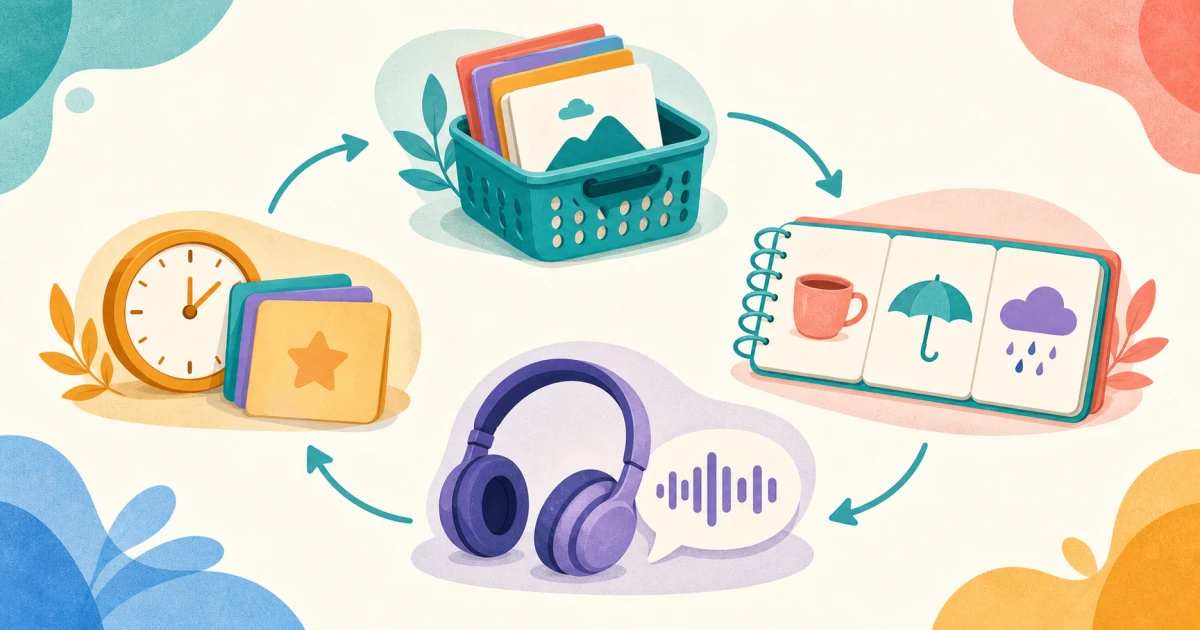
Elige ocho palabras. Selecciona dos sustantivos, dos verbos, dos adjetivos y dos palabras gramaticales de un mismo tema.
Construye cuatro frases. Usa las palabras en oraciones sobre tu vida real: tu hogar, tu trabajo, tu familia o tus planes.
Di las frases en voz alta. Hablar revela qué palabras puedes usar y cuáles solo reconoces.
Repasa mañana. No añadas otras ocho palabras hasta que puedas recordar la mayoría de las de hoy sin mirar.
Palabras para practicar
abuse
sustantivo
abuso, maltrato, uso indebido
Ejemplos
- It's important to report any signs of child abuse to the authorities.
- The investigation revealed serious abuse of power by government officials.
actually
adverbio
de hecho, en realidad
Ejemplos
- I thought the meeting was today, but it's actually scheduled for tomorrow.
- The book looks boring, but it's actually quite interesting and engaging.
affection
sustantivo
afecto, sentimiento
Ejemplos
- The child showed deep affection for his grandmother who raised him.
- Their mutual affection was evident to everyone who saw them together.
agreement
sustantivo
acuerdo, pacto, convenio
Ejemplos
- The trade agreement will benefit both countries' economic development significantly.
- There was general agreement among the committee members about the proposed changes.
airport
sustantivo
aeropuerto, terminal aérea, despacho
Ejemplos
- International airports handle millions of travelers and tons of cargo annually.
- We need to arrive at the airport two hours before our departure time.
alternate
adjetivo
alternativo, opcional
Ejemplos
- The parking lot uses alternate spaces for cars and motorcycles.
- We need an alternate plan in case the weather doesn't cooperate.
announce
verbo
anunciar, publicar, declarar
Ejemplos
- Airlines announce flight delays through the terminal's public address system.
- The principal will announce the scholarship winners during tomorrow's assembly.
apart
adverbio
separado
Ejemplos
- Please keep these chemicals apart to prevent dangerous reactions.
- The two friends lived far apart but stayed in regular contact.
apply
verbo
solicitar, aplicar, usar
Ejemplos
- Apply pressure to the wound to stop the bleeding immediately.
- Students can apply for financial aid to help pay tuition costs.
arrest
sustantivo
detención, captura, detener
Ejemplos
- He was under arrest for suspected involvement in the robbery.
- The arrest of the criminal was reported on the evening news.
attend
verbo
asistir, atender, participar
Ejemplos
- All students must attend classes regularly to pass their courses.
- The nurse will attend to the patient's needs throughout the night.
ballet
sustantivo
ballet, danza clásica, bailar
Ejemplos
- She studied ballet for many years before becoming a professional dancer.
- The ballet performance featured graceful movements and beautiful costumes.
basis
sustantivo
base, fundamento, principio
Ejemplos
- The selection process is conducted on the basis of merit alone.
- Trust forms the basis of any successful relationship or partnership.
bedroom
sustantivo
dormitorio, habitación
Ejemplos
- She decorated her bedroom with posters and colorful curtains.
- The master bedroom has a beautiful view of the garden.
biotechnology
sustantivo
biotecnología
Ejemplos
- Agricultural biotechnology helps create disease-resistant crop varieties.
- Biotechnology companies develop new medical treatments and therapies.
borrow
verbo
pedir prestado, tomar en préstamo
Ejemplos
- Can I borrow your pen for a few minutes?
- He had to borrow money from the bank for repairs.
browser
sustantivo
navegador, explorador, buscador
Ejemplos
- Chrome is the most popular web browser worldwide.
- The store welcomes browsers as well as buyers.
candidate
sustantivo
candidato
Ejemplos
- Each presidential candidate presented their policy plans to voters.
- The job candidate impressed the interview panel with her experience.
cat
sustantivo
gato
Ejemplos
- The fluffy cat sat peacefully by the warm fireplace in the evening.
- Their pet cat loves to play with colorful balls of yarn.
cherished
adjetivo
valorado, querido
Ejemplos
- His cherished dream of becoming a pilot finally came true.
- The old photograph was her most cherished possession from childhood.
cloudy
adjetivo
nublado, cubierto, nebuloso
Ejemplos
- The water became cloudy after stirring up sediment from the bottom.
- The weather forecast predicts cloudy skies with possible rain this evening.
commute
verbo
comutar, desplazarse, viajar
Ejemplos
- Public transportation helps people commute efficiently reducing traffic congestion.
- Workers commute daily between suburban homes and downtown offices.
confirmation
sustantivo
confirmación, ratificación, verificación
Ejemplos
- She received confirmation of her job application via email yesterday.
- The confirmation ceremony was held at the local church on Sunday.
correspond
verbo
correspondir, coincidir
Ejemplos
- She corresponds regularly with her friends who live in different countries.
- The witness testimony should correspond with the physical evidence found at the scene.
custom
sustantivo
personalizado
Ejemplos
- It is a local custom to remove shoes before entering homes.
- The wedding ceremony followed traditional customs from their culture.
Qué estudiar a continuación
- Usa tus palabras en situaciones completas con Frases sencillas en inglés para el uso diario.
- Continúa con las 1000 palabras más comunes del inglés.
- Explora conjuntos para principiantes en la biblioteca de vocabulario A1.
Preguntas frecuentes
¿Cuántas palabras básicas de inglés necesito?
Unas 300 palabras cuidadosamente elegidas pueden ayudarte a manejar muchas situaciones básicas. No necesitas memorizarlas todas en una semana; el repaso regular importa más.
¿Deben los principiantes aprender gramática o vocabulario primero?
Aprende ambos juntos en pequeñas cantidades. La gramática básica te ayuda a conectar las palabras que aprendes en frases útiles.
¿Cuál es la forma más rápida de recordar palabras básicas del inglés?
Usa cada palabra en una oración personal, dila en voz alta y repásala al día siguiente, a los tres días y a la semana.
¿Son suficientes las palabras sueltas para conversar?
No. Las palabras sueltas son los bloques de construcción. Practica combinarlas en frases cortas y expresiones comunes.
¿Qué debo aprender después del vocabulario A1?
Pasa al vocabulario A2, la lectura simple, la práctica de escucha y las conversaciones cortas. Añade más palabras por tema en lugar de empezar una lista aleatoria.