Vocabulario de Ropa en Inglés: Guía de Moda y Prendas de Vestir
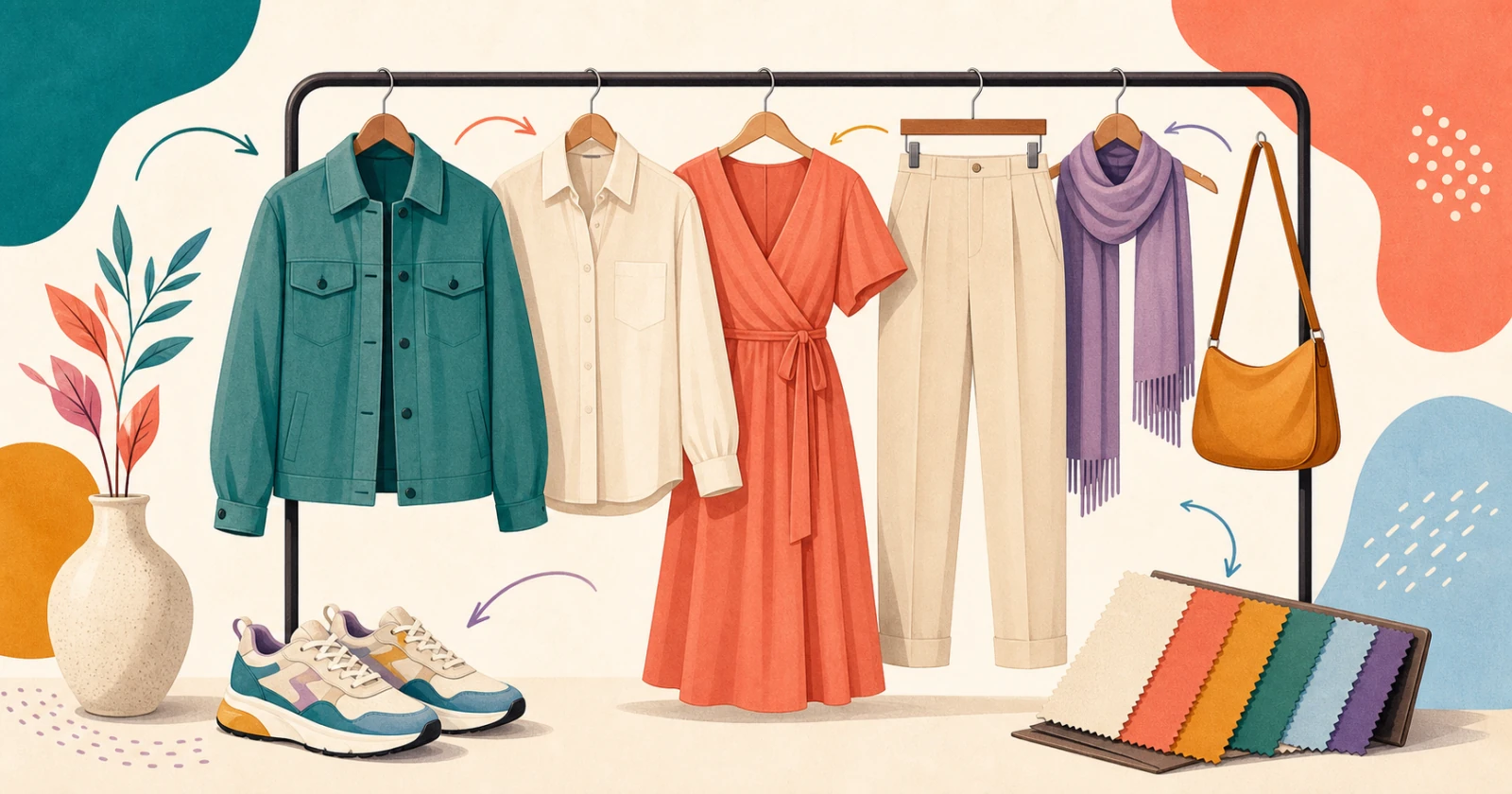
El vocabulario de ropa sirve para mucho más que ir de compras. Lo usas al hacer la maleta para un viaje, al describir a una persona, al hablar del tiempo, al seguir un código de vestimenta o al pedir una talla diferente. La clave es aprender las palabras en grupos útiles: prendas, accesorios, materiales, ajuste y acciones.
Esta guía empieza con las palabras cotidianas de nivel A1–A2 y avanza hacia un vocabulario de moda más preciso. Para una colección más amplia de vocabulario temático, consulta Vocabulario del inglés por temas.
- Nivel: A1–B2
- Enfoque: ropa, calzado, accesorios, materiales, ajuste, estilos y compras
- Mejor método: estudia las palabras con fotos de conjuntos reales y luego describe lo que llevas puesto
Clothes, Clothing y Cloth: la diferencia
Clothes es la palabra plural habitual para las prendas que llevas: These clothes are clean. (Esta ropa está limpia.) Clothing es una palabra general incontable: Winter clothing can be expensive. (La ropa de invierno puede ser cara.) Cloth significa tela, a menudo antes de convertirse en ropa: This bag is made of cloth. (Esta bolsa está hecha de tela.)
Prendas de vestir cotidianas
| Palabra | Significado | Oración de ejemplo |
|---|---|---|
| shirt | prenda superior con mangas, normalmente con cuello y botones | He wore a white shirt to the interview. (Llevó una camisa blanca a la entrevista.) |
| T-shirt | camiseta informal de manga corta | I packed three T-shirts for the trip. (Metí tres camisetas en la maleta para el viaje.) |
| jumper / sweater | jersey cálido de punto | Take a jumper because the evening may be cold. (Llévate un jersey porque puede hacer frío por la tarde.) |
| jacket | capa exterior corta | Her jacket is hanging by the door. (Su chaqueta está colgada junto a la puerta.) |
| coat | capa exterior larga y cálida | You need a coat in winter. (Necesitas un abrigo en invierno.) |
| dress | prenda de una pieza que suelen llevar mujeres y niñas | She chose a blue dress for the party. (Eligió un vestido azul para la fiesta.) |
| skirt | prenda que cuelga desde la cintura | This skirt goes well with the top. (Esta falda combina bien con la blusa.) |
| trousers / pants | prendas que cubren cada pierna por separado | These trousers are too long for me. (Estos pantalones me quedan demasiado largos.) |
| jeans | pantalones de tela vaquera | Jeans are common casual clothes. (Los vaqueros son ropa informal habitual.) |
| shorts | pantalones cortos | He wears shorts when it is hot. (Lleva pantalones cortos cuando hace calor.) |
| socks | cubiertas suaves que se llevan en los pies | I cannot find my other sock. (No encuentro el otro calcetín.) |
| underwear | ropa que se lleva debajo de las prendas exteriores | Pack clean underwear for every day. (Mete ropa interior limpia para cada día.) |
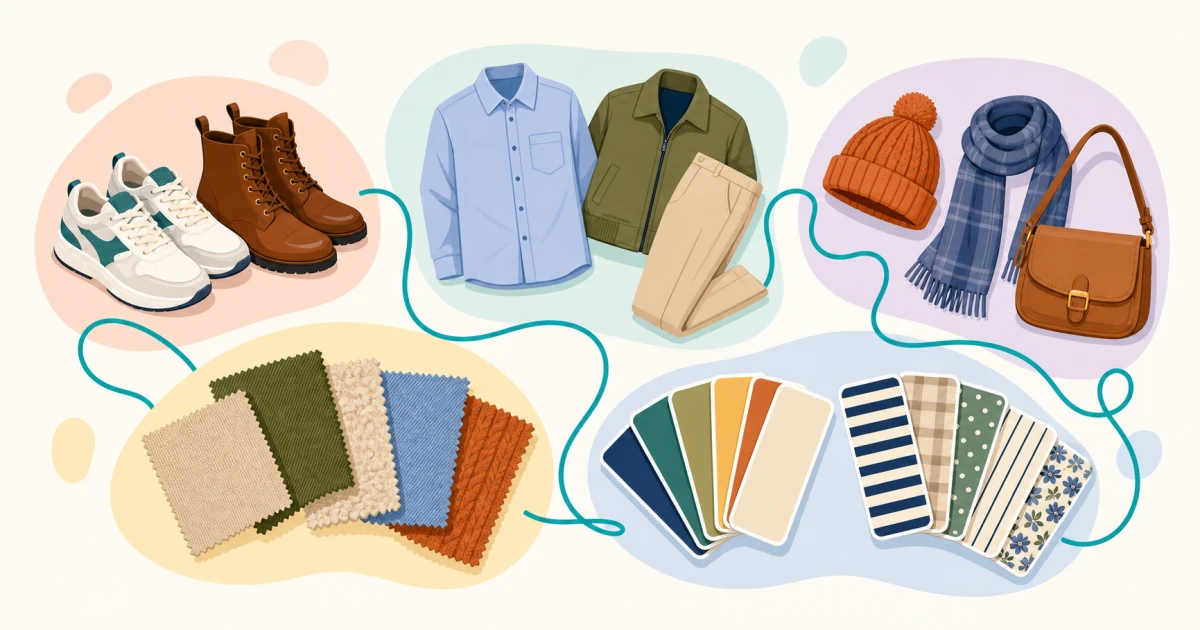
Calzado y accesorios
| Palabra | Significado | Oración de ejemplo |
|---|---|---|
| shoes | cosas que se llevan en los pies | These shoes are comfortable for walking. (Estos zapatos son cómodos para caminar.) |
| trainers / sneakers | zapatillas deportivas suaves | I wear trainers to the gym. (Llevo zapatillas al gimnasio.) |
| boots | zapatos que cubren el tobillo o parte de la pierna | Her boots are waterproof. (Sus botas son impermeables.) |
| sandals | zapatos abiertos sujetos con correas | Sandals are useful in hot weather. (Las sandalias son prácticas cuando hace calor.) |
| hat | algo que se lleva en la cabeza | Put on a hat in the sun. (Ponte un sombrero bajo el sol.) |
| scarf | un trozo largo de tela que se lleva alrededor del cuello | He gave her a wool scarf. (Le regaló una bufanda de lana.) |
| gloves | coberturas para las manos | Do not forget your gloves. (No te olvides los guantes.) |
| belt | una tira que se lleva alrededor de la cintura | This belt is made of leather. (Este cinturón está hecho de cuero.) |
| bag | un recipiente donde llevas cosas personales | Her bag is under the chair. (Su bolso está debajo de la silla.) |
| jewellery | objetos decorativos como anillos o collares | She wears simple jewellery at work. (Lleva joyas sencillas en el trabajo.) |
Materiales, estampados y ajuste
| Palabra | Significado | Oración de ejemplo |
|---|---|---|
| cotton | tela natural suave | This shirt is made of cotton. (Esta camisa está hecha de algodón.) |
| wool | material cálido procedente de las ovejas | Wool socks are good for winter. (Los calcetines de lana son buenos para el invierno.) |
| leather | material hecho de piel de animal o su alternativa | He bought a leather belt. (Compró un cinturón de cuero.) |
| denim | tela de algodón resistente usada para los vaqueros | Denim jackets never completely disappear from fashion. (Las chaquetas vaqueras nunca desaparecen del todo de la moda.) |
| silk | una tela suave y ligera | The scarf feels like silk. (La bufanda tiene tacto de seda.) |
| striped | con rayas de distintos colores | She wore a striped top. (Llevaba una camiseta de rayas.) |
| plain | sin estampado | I prefer plain black trousers. (Prefiero los pantalones negros lisos.) |
| loose | no ajustado | This coat is loose around the shoulders. (Este abrigo es ancho de hombros.) |
| tight | que se ajusta al cuerpo | These shoes are too tight. (Estos zapatos me aprietan demasiado.) |
| fit | ser del tamaño o la forma correcta | The dress fits you perfectly. (El vestido te sienta perfectamente.) |
Verbos útiles para la ropa
| Expresión | Significado | Oración de ejemplo |
|---|---|---|
| wear | tener ropa puesta | What are you going to wear tomorrow? (¿Qué vas a ponerte mañana?) |
| put on | empezar a ponerse algo | Put on your coat before you go outside. (Ponte el abrigo antes de salir.) |
| take off | quitarse la ropa | Please take off your shoes at the door. (Por favor, quítate los zapatos en la puerta.) |
| try on | ponerse ropa para comprobar la talla o el aspecto | Can I try on this jacket? (¿Puedo probarme esta chaqueta?) |
| match | combinar bien juntos | Your shoes match your bag. (Tus zapatos combinan con tu bolso.) |
| suit | quedar bien a alguien | Blue really suits you. (El azul te sienta muy bien.) |
| get dressed | ponerse la ropa | I get dressed quickly in the morning. (Me visto rápido por la mañana.) |
| change | ponerse ropa diferente | We changed after the gym. (Nos cambiamos después del gimnasio.) |
Ir de compras de ropa
Aprende las expresiones siguientes como bloques útiles, no como vocabulario aislado.
| Expresión | Cuándo usarla |
|---|---|
| What size are you? | preguntar la talla de alguien |
| Do you have this in a medium? | pedir otra talla |
| Where is the fitting room? | preguntar dónde probarse la ropa |
| It is too big / too small. | describir un problema de talla |
| It does not fit. | decir que la prenda no es la talla o la forma correcta |
| Is it on sale? | preguntar si el precio está rebajado |
| Can I return it? | preguntar sobre devoluciones |
| I will take it. | decir que quieres comprarlo |
Aprende el vocabulario de ropa en contexto
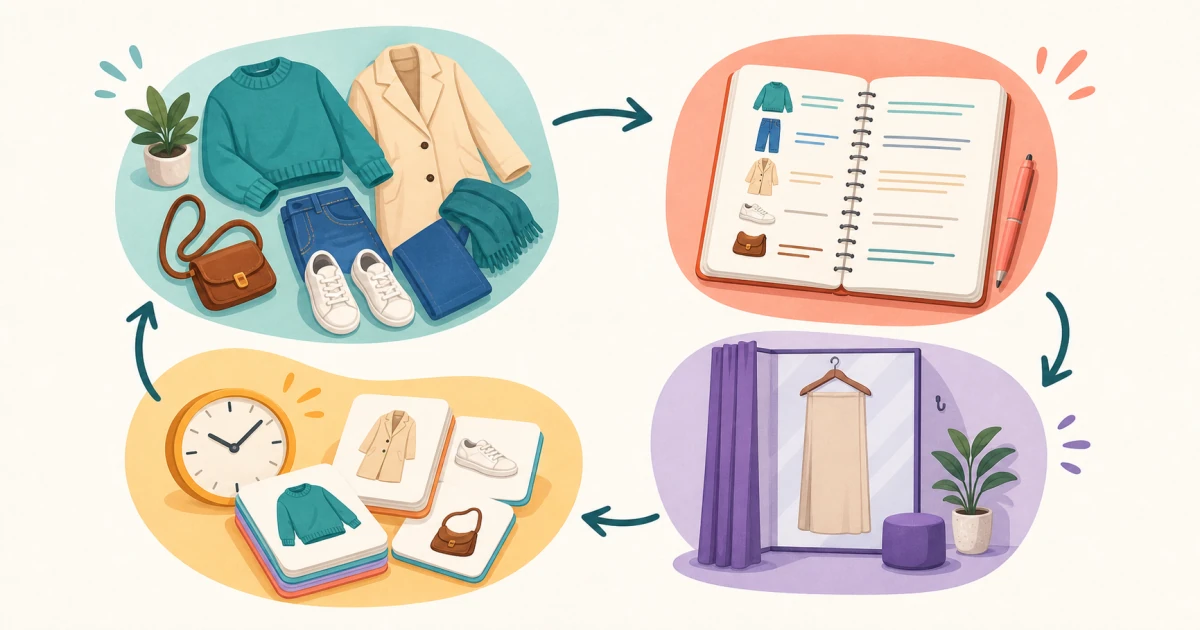
No memorices jacket (chaqueta), scarf (bufanda) y boots (botas) como tres traducciones separadas. Crea una escena: «Hace frío y llueve. Llevo una chaqueta impermeable, una bufanda de lana y botas.» El contexto crea una red de memoria.
Prueba esta práctica de tres pasos:
- Describe lo que llevas puesto hoy en cinco frases.
- Describe a una persona en una foto sin juzgar su apariencia.
- Crea una lista de equipaje para un fin de semana con tiempo caluroso, frío o lluvioso.
Palabras para practicar
accomplish
verbo
Lograr, cumplir, alcanzar
Ejemplos
- She was able to accomplish all her goals before the deadline.
- Working together, the team can accomplish much more than individuals working alone.
admire
verbo
admirar, estimular
Ejemplos
- I really admire people who volunteer their time to help others.
- Tourists often stop to admire the stunning architecture of the ancient cathedral.
agonize
verbo
agonizar, sufrir, luchando
Ejemplos
- Don't agonize too much about past mistakes that you cannot change.
- She continued to agonize over the difficult decision for weeks.
ambiguity
sustantivo
ambigüedad, duda, incertidumbre
Ejemplos
- Legal documents should be written clearly to avoid any ambiguity.
- The contract's ambiguity led to disagreements between the two companies.
anxiously
adverbio
ansiosamente
Ejemplos
- Students anxiously checked their phones for exam results.
- The family waited anxiously for news about their missing relative.
artery
sustantivo
arteria, vena, conducto
Ejemplos
- The blocked artery required immediate surgical intervention to save his life.
- This highway is a major artery connecting the city to surrounding areas.
attainable
adjetivo
alcanzable, posible, factible
Ejemplos
- Setting realistic and attainable goals helps maintain motivation for success.
- With proper training, running a marathon is an attainable objective.
badly
adverbio
mal, malamente, mal hecho
Ejemplos
- She badly wanted to visit Paris before the end of summer.
- The team played badly and lost the championship game.
bathroom
sustantivo
baño, servicio
Ejemplos
- Excuse me, could you tell me where the bathroom is located?
- The hotel bathroom was spacious and beautifully decorated.
bestseller
sustantivo
libro de ventas, superventas, más vendido
Ejemplos
- Her novel became an international bestseller within six months.
- The bookstore has a special section dedicated to current bestsellers.
bless
verbo
bendecir
Ejemplos
- She felt blessed to have such wonderful friends.
- The priest blessed the newborn baby during the ceremony.
bottom
adjetivo
inferior, bajo
Ejemplos
- She keeps her shoes on the bottom shelf.
- The bottom line is that we need more funding.
broadcast
sustantivo
transmisión, difusión, emisión
Ejemplos
- Millions watched the live broadcast of the event.
- The news broadcast revealed shocking new information.
buy
verbo
comprar
Ejemplos
- She decided to buy organic vegetables at the local farmer's market.
- We plan to buy a new car before our summer vacation trip.
cardboard
sustantivo
cartón, cartulina, papel
Ejemplos
- Children made creative art projects using colored cardboard and glue.
- The moving boxes were made of sturdy corrugated cardboard material.
century
sustantivo
siglo
Ejemplos
- Medical advances in the past century have greatly improved human health.
- The ancient castle was built in the fourteenth century by local nobles.
choir
sustantivo
coro
Ejemplos
- She joined the school choir to improve her singing skills and confidence.
- The church choir performed beautiful hymns during the Sunday service.
coastal
adjetivo
costero, marítimo, litoral
Ejemplos
- Coastal towns often depend on fishing and tourism for their economy.
- The coastal erosion threatens many beachfront properties and buildings.
compile
verbo
compilar, reunir, recopilar
Ejemplos
- Programmer must compile source code before executing software application.
- Research team will compile data from multiple studies and sources.
conservative
sustantivo
conservador, defensor, partidario
Ejemplos
- Many conservatives oppose rapid changes to established social institutions.
- She is a conservative who believes in maintaining traditional family values.
corona
sustantivo
corona, halo
critic
sustantivo
crítico
Ejemplos
- Even his harshest critic admitted that the plan had merit.
- The restaurant critic wrote a positive review of the new establishment.
dash
sustantivo
carrera, avance
Ejemplos
- Add just a dash of salt to improve the soup's flavor.
- She made a mad dash for the door when it started raining.
deliberately
adverbio
deliberadamente, intencionalmente, consciente
Ejemplos
- She deliberately arrived late to avoid the crowded opening ceremony.
- The artist deliberately used bright colors to create emotional impact.
devote
verbo
consagrar, dedicar, destinar
Ejemplos
- Parents devote much time and energy to raising their children properly.
- She will devote her entire weekend to studying for final examinations.
Qué estudiar a continuación
- Amplía el vocabulario temático con Vocabulario del inglés por temas.
- Practica las palabras esenciales para principiantes en la biblioteca de vocabulario A2.
- Aprende lenguaje útil para viajes en Frases sencillas en inglés para el uso diario.
Preguntas frecuentes
¿Es «clothes» singular o plural?
«Clothes» es plural: di my clothes are new (mi ropa es nueva), no my clothes is new. Usa «an item of clothing» para una sola prenda.
¿Cuál es la diferencia entre trousers y pants?
En inglés británico, trousers es la palabra habitual y pants suele referirse a la ropa interior. En inglés americano, pants normalmente significa pantalones.
¿Cómo puedo recordar el vocabulario de ropa?
Usa tu propio armario. Etiqueta fotos, describe lo que llevas puesto y agrupa las palabras por función, como ropa de invierno o ropa de trabajo.
¿Debo aprender vocabulario de moda siendo principiante?
Empieza con las prendas del día a día y las frases para ir de compras. Añade materiales, estilos y términos avanzados cuando ya puedas describir conjuntos básicos.
¿Qué significa «fit» en las compras de ropa?
«Fit» se refiere al tamaño y la forma de una prenda en tu cuerpo. Una prenda puede ser la talla correcta y aun así no quedar cómodamente.