

Vocabulario de inglés para conversar: palabras y expresiones esenciales
Para mantener una buena conversación no basta con conocer muchas palabras. Necesitas saber cómo empezar un tema, explicar una opinión, reaccionar a lo que dice otra persona y hacer una pregunta de seguimiento que suene natural. Esta guía organiza el vocabulario de inglés para conversar según lo que te permite hacer en una conversación.
- Nivel: A2–C1
- Enfoque: conversación cotidiana, opiniones, reacciones y descripciones
- Ideal para: estudiantes de inglés que quieren expresarse con más claridad y naturalidad
Cómo usar esta lista de vocabulario para hablar
Elige un grupo pequeño de expresiones y practica con una respuesta completa. Una estructura útil es respuesta + motivo + ejemplo: expresa tu idea, explica por qué piensas así y añade un ejemplo breve. De este modo puedes utilizar vocabulario nuevo sin que tu discurso parezca una lista memorizada.
Las frases de ejemplo que aparecen abajo son modelos, no guiones que debas repetir literalmente. Adáptalas a tu experiencia y fíjate en qué expresiones son informales y cuáles son más formales. Para practicar los fundamentos, consulta inglés básico para hablar.
Cómo empezar y continuar una conversación
| Palabra o expresión | Categoría gramatical | Significado | Ejemplo |
|---|---|---|---|
| actually | adverbio | se usa para añadir un detalle sorprendente o corregir algo | Actually, I have visited that museum before. |
| by the way | expresión | se usa para introducir un tema nuevo pero relacionado | By the way, have you tried the new café? |
| conversation | sustantivo | intercambio informal o formal de ideas | We had a long conversation about travel. |
| curious | adjetivo | interesado en aprender o saber algo | I am curious about how you chose your career. |
| experience | sustantivo | algo que le ocurre a una persona | It was a useful experience for both of us. |
| interesting | adjetivo | que hace que alguien quiera saber más | That is an interesting way to solve the problem. |
| mention | verbo | hablar brevemente de algo | She mentioned a book I might enjoy. |
| recently | adverbio | hace poco tiempo | I recently started learning how to cook. |
| topic | sustantivo | tema que las personas conversan | Music is an easy topic for us to talk about. |
| what about…? | expresión | se usa para pedir la opinión de alguien o proponer una opción | I prefer tea. What about you? |
| I was wondering… | expresión | manera educada de introducir una pregunta | I was wondering how you heard about the event. |
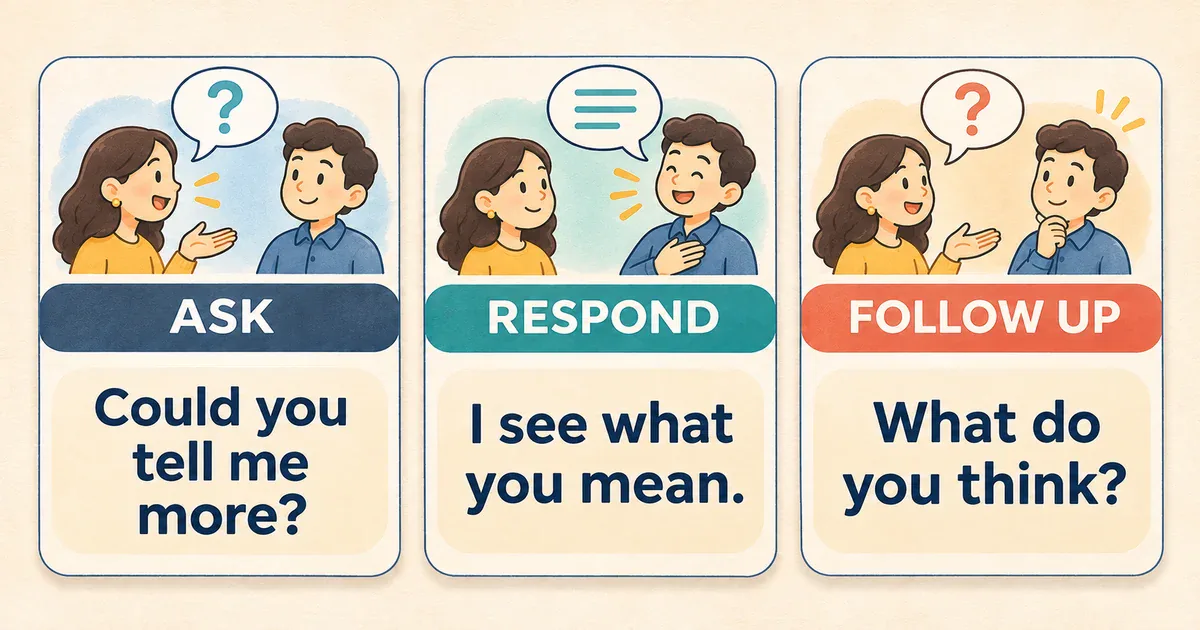
| tell me more | expresión | petición para que alguien dé más información | That sounds exciting. Tell me more. |
Cómo expresar una opinión
| Palabra o expresión | Categoría gramatical | Significado | Ejemplo |
|---|---|---|---|
| believe | verbo | pensar que algo es cierto o probable | I believe public parks make cities better. |
| consider | verbo | pensar detenidamente en algo | I consider learning a language a useful challenge. |
| feel | verbo | tener una opinión o impresión concreta | I feel that the second option is more practical. |
| in my view | expresión | se usa para presentar una opinión personal | In my view, the story has a hopeful ending. |
| it seems to me | expresión | se usa para presentar una impresión o valoración | It seems to me that the plan needs more time. |
| prefer | verbo | gustar más una opción que otra | I prefer walking because it helps me relax. |
| point of view | expresión nominal | manera en que alguien piensa sobre un tema | I understand your point of view. |
| probably | adverbio | con muchas posibilidades, aunque no es seguro | I will probably stay home this evening. |
| recommend | verbo | decir que algo es una buena opción | I recommend the book because it is easy to follow. |
| suppose | verbo | pensar que algo es probable o imaginar una situación | I suppose we could meet after lunch. |
| tend to | expresión verbal | comportarse o suceder habitualmente de una manera | I tend to read before I go to bed. |
| to be honest | expresión | se usa para presentar una opinión sincera | To be honest, I found the ending confusing. |
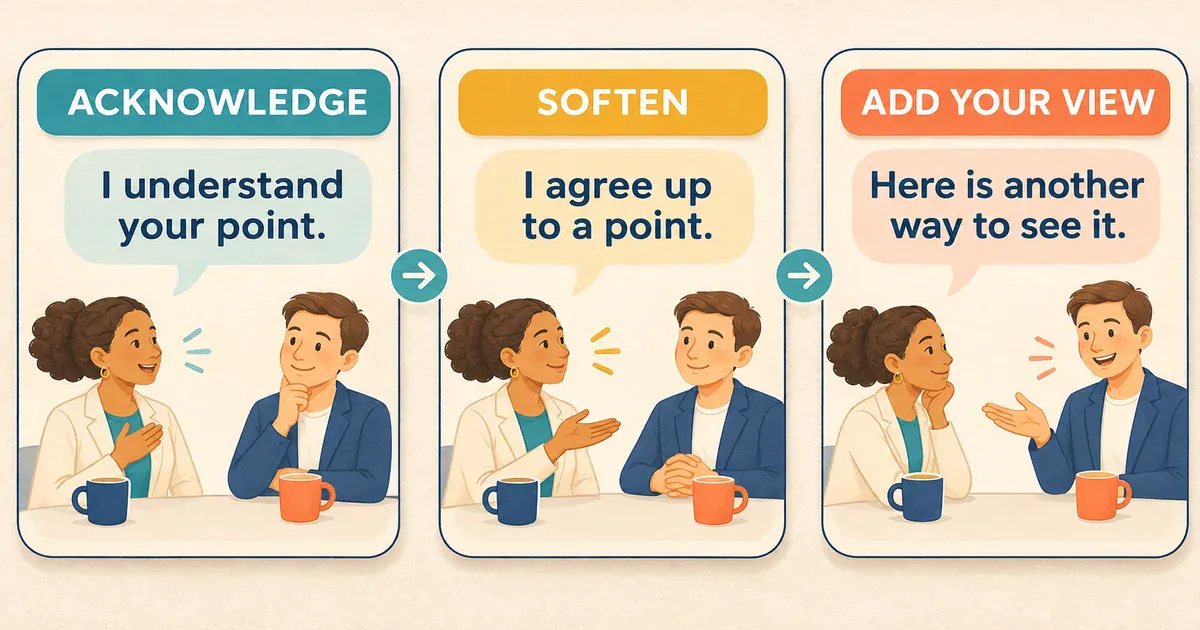
Cómo estar de acuerdo, discrepar y responder
| Palabra o expresión | Categoría gramatical | Significado | Ejemplo |
|---|---|---|---|
| absolutely | adverbio | completamente; se usa para expresar un acuerdo firme | Absolutely, a short break would help. |
| I see what you mean | expresión | se usa para mostrar que entiendes la idea de alguien | I see what you mean about the travel time. |
| fair point | expresión | respuesta que reconoce que un argumento es razonable | Fair point; I had not considered the extra cost. |
| exactly | adverbio | se usa para mostrar un acuerdo total | Exactly, that is the reason I chose it. |
| I agree up to a point | expresión | se usa para estar parcialmente de acuerdo y mantener otra opinión | I agree up to a point, but the schedule is still too tight. |
| however | adverbio | se usa para introducir una idea que contrasta con la anterior | The room is small. However, it is close to work. |
| in contrast | expresión | se usa para señalar una diferencia | In contrast, my old neighborhood was very quiet. |
| perhaps | adverbio | se usa para expresar duda o hacer una sugerencia con tacto | Perhaps we can try a different approach. |
| on the other hand | expresión | se usa para introducir una consideración opuesta | It is expensive. On the other hand, it should last for years. |
| respectfully | adverbio | de una manera educada y considerada | I respectfully disagree with that conclusion. |
| that is true | expresión | se usa para aceptar una parte de un argumento | That is true, although the route is longer. |
| understandable | adjetivo | fácil de reconocer como razonable | It is understandable that you want more time. |
Cómo describir a personas, lugares y experiencias
| Palabra o expresión | Categoría gramatical | Significado | Ejemplo |
|---|---|---|---|
| convenient | adjetivo | fácil de usar o adecuado para una situación | The station is convenient for my office. |
| crowded | adjetivo | lleno de muchas personas | The market was crowded on Saturday morning. |
| delightful | adjetivo | muy agradable o placentero | We had a delightful afternoon by the sea. |
| demanding | adjetivo | que requiere mucho esfuerzo o atención | The course is demanding but rewarding. |
| familiar | adjetivo | conocido por una experiencia anterior | The neighborhood feels familiar now. |
| memorable | adjetivo | que merece la pena recordar | The concert was a memorable experience. |
| peaceful | adjetivo | tranquilo y en calma | The garden is peaceful in the early morning. |
| reliable | adjetivo | digno de confianza | The bus service is reliable most days. |
| spacious | adjetivo | que tiene mucho espacio | The apartment is bright and spacious. |
| surroundings | sustantivo | zona y cosas que rodean un lugar | I like the green surroundings of the house. |
| unusual | adjetivo | distinto de lo habitual o esperado | We saw an unusual bird beside the path. |
| worthwhile | adjetivo | lo bastante valioso como para justificar el tiempo o el esfuerzo | The class was worthwhile because we practiced every week. |
Cómo hablar de sentimientos y reaccionar
| Palabra o expresión | Categoría gramatical | Significado | Ejemplo |
|---|---|---|---|
| amazed | adjetivo | muy sorprendido por algo impresionante | I was amazed by the view from the hill. |
| annoyed | adjetivo | un poco enfadado o molesto | He was annoyed when the train was cancelled. |
| confident | adjetivo | seguro de la propia capacidad o criterio | I feel more confident when I prepare a few ideas. |
| disappointed | adjetivo | triste porque algo no estuvo a la altura de lo esperado | We were disappointed that the gallery was closed. |
| embarrassed | adjetivo | que siente incomodidad o vergüenza | I felt embarrassed when I forgot her name. |
| excited | adjetivo | muy contento y entusiasmado | They are excited about moving to a new city. |
| frustrated | adjetivo | molesto porque algo es difícil o no sale bien | I was frustrated by the slow internet connection. |
| grateful | adjetivo | que siente agradecimiento | I am grateful for your thoughtful advice. |
| relieved | adjetivo | relajado porque una preocupación ha terminado | She felt relieved when the interview was over. |
| surprised | adjetivo | que siente que algo ocurrió de manera inesperada | I was surprised by the kind message. |
| that makes sense | expresión | se usa para mostrar que una explicación es lógica | That makes sense; the shop closes early on Sundays. |
| what a shame | expresión | se usa para expresar pena por algo desafortunado | What a shame that you could not stay longer. |
Cómo contar una historia breve
| Palabra o expresión | Categoría gramatical | Significado | Ejemplo |
|---|---|---|---|
| at first | expresión | al principio de una situación | At first, I did not know anyone at the class. |
| eventually | adverbio | al final, después de algún tiempo | We eventually found a quiet restaurant. |
| fortunately | adverbio | se usa para presentar un resultado positivo | Fortunately, the rain stopped before the match. |
| meanwhile | adverbio | durante el mismo periodo | I made dinner; meanwhile, Sam set the table. |
| one day | expresión | en un momento indeterminado del pasado o del futuro | One day, I would like to visit Iceland. |
| suddenly | adverbio | rápida e inesperadamente | Suddenly, the lights went out. |
| the next thing I knew | expresión | se usa para introducir un acontecimiento posterior sorprendente | The next thing I knew, the whole class was singing. |
| to begin with | expresión | se usa para presentar la primera razón o idea | To begin with, the apartment was near the station. |
| unfortunately | adverbio | se usa para introducir un resultado decepcionante | Unfortunately, I left my notebook at home. |
| while | conjunción | durante el tiempo en que ocurre otra cosa | I listened to a podcast while I walked. |
| as soon as | conjunción | inmediatamente después de que algo ocurra | Call me as soon as you arrive. |
| in the end | expresión | después de que todo haya ocurrido | In the end, we decided to stay another night. |
Preguntas útiles para continuar la conversación
Las buenas preguntas de seguimiento muestran interés y ayudan a la otra persona a continuar. Estas estructuras son útiles en conversaciones informales y profesionales.
- How did you get interested in that? Pregunta cómo empezó el interés de alguien.
- What was that like? Invita a describir una experiencia.
- What happened next? Anima a alguien a continuar una historia.
- What do you like most about it? Pregunta por una opinión concreta.
- Would you do it again? Invita a reflexionar sobre una experiencia.
- How does that compare with…? Pide que expliquen una diferencia.
- Could you give me an example? Solicita una explicación más clara.
- What would you recommend? Pide una sugerencia.
Vocabulario de inglés para conversar y practicar
Practica estas palabras útiles con respuestas breves y preguntas de seguimiento.
abuse
sustantivo
abuso, maltrato, uso indebido
Ejemplos
- It's important to report any signs of child abuse to the authorities.
- The investigation revealed serious abuse of power by government officials.
actually
adverbio
de hecho, en realidad
Ejemplos
- I thought the meeting was today, but it's actually scheduled for tomorrow.
- The book looks boring, but it's actually quite interesting and engaging.
affection
sustantivo
afecto, sentimiento
Ejemplos
- The child showed deep affection for his grandmother who raised him.
- Their mutual affection was evident to everyone who saw them together.
agreement
sustantivo
acuerdo, pacto, convenio
Ejemplos
- The trade agreement will benefit both countries' economic development significantly.
- There was general agreement among the committee members about the proposed changes.
airport
sustantivo
aeropuerto, terminal aérea, despacho
Ejemplos
- International airports handle millions of travelers and tons of cargo annually.
- We need to arrive at the airport two hours before our departure time.
alternate
adjetivo
alternativo, opcional
Ejemplos
- The parking lot uses alternate spaces for cars and motorcycles.
- We need an alternate plan in case the weather doesn't cooperate.
announce
verbo
anunciar, publicar, declarar
Ejemplos
- Airlines announce flight delays through the terminal's public address system.
- The principal will announce the scholarship winners during tomorrow's assembly.
apart
adverbio
separado
Ejemplos
- Please keep these chemicals apart to prevent dangerous reactions.
- The two friends lived far apart but stayed in regular contact.
apply
verbo
solicitar, aplicar, usar
Ejemplos
- Apply pressure to the wound to stop the bleeding immediately.
- Students can apply for financial aid to help pay tuition costs.
arrest
sustantivo
detención, captura, detener
Ejemplos
- He was under arrest for suspected involvement in the robbery.
- The arrest of the criminal was reported on the evening news.
attend
verbo
asistir, atender, participar
Ejemplos
- All students must attend classes regularly to pass their courses.
- The nurse will attend to the patient's needs throughout the night.
ballet
sustantivo
ballet, danza clásica, bailar
Ejemplos
- She studied ballet for many years before becoming a professional dancer.
- The ballet performance featured graceful movements and beautiful costumes.
basis
sustantivo
base, fundamento, principio
Ejemplos
- The selection process is conducted on the basis of merit alone.
- Trust forms the basis of any successful relationship or partnership.
bedroom
sustantivo
dormitorio, habitación
Ejemplos
- She decorated her bedroom with posters and colorful curtains.
- The master bedroom has a beautiful view of the garden.
biotechnology
sustantivo
biotecnología
Ejemplos
- Agricultural biotechnology helps create disease-resistant crop varieties.
- Biotechnology companies develop new medical treatments and therapies.
borrow
verbo
pedir prestado, tomar en préstamo
Ejemplos
- Can I borrow your pen for a few minutes?
- He had to borrow money from the bank for repairs.
browser
sustantivo
navegador, explorador, buscador
Ejemplos
- Chrome is the most popular web browser worldwide.
- The store welcomes browsers as well as buyers.
candidate
sustantivo
candidato
Ejemplos
- Each presidential candidate presented their policy plans to voters.
- The job candidate impressed the interview panel with her experience.
cat
sustantivo
gato
Ejemplos
- The fluffy cat sat peacefully by the warm fireplace in the evening.
- Their pet cat loves to play with colorful balls of yarn.
cherished
adjetivo
valorado, querido
Ejemplos
- His cherished dream of becoming a pilot finally came true.
- The old photograph was her most cherished possession from childhood.
cloudy
adjetivo
nublado, cubierto, nebuloso
Ejemplos
- The water became cloudy after stirring up sediment from the bottom.
- The weather forecast predicts cloudy skies with possible rain this evening.
commute
verbo
comutar, desplazarse, viajar
Ejemplos
- Public transportation helps people commute efficiently reducing traffic congestion.
- Workers commute daily between suburban homes and downtown offices.
confirmation
sustantivo
confirmación, ratificación, verificación
Ejemplos
- She received confirmation of her job application via email yesterday.
- The confirmation ceremony was held at the local church on Sunday.
correspond
verbo
correspondir, coincidir
Ejemplos
- She corresponds regularly with her friends who live in different countries.
- The witness testimony should correspond with the physical evidence found at the scene.
custom
sustantivo
personalizado
Ejemplos
- It is a local custom to remove shoes before entering homes.
- The wedding ceremony followed traditional customs from their culture.
Una rutina diaria breve para practicar la expresión oral
- Elige un tema, como la comida, el trabajo o los viajes.
- Anota tres palabras clave y una opinión que puedas expresar.
- Habla durante un minuto con la estructura respuesta + motivo + ejemplo.
- Escucha la grabación y detecta un momento en el que habría sido útil hacer una pregunta de seguimiento.
- Repite la respuesta con una expresión más clara o precisa.
Puedes practicar vocabulario temático con vocabulario de inglés por temas y repasar expresiones en la biblioteca de vocabulario laboral.
Errores habituales con el vocabulario para hablar
- Usar una expresión idiomática en cada respuesta. Una expresión natural es mejor que varias que no encajan.
- Repetir “I think” en todas las frases. Alterna con in my view, I believe o una afirmación directa.
- Elegir una palabra difícil que no dominas. Usa una palabra que comprendas y puedas pronunciar cómodamente.
- Dar una opinión sin apoyarla. Añade un motivo o un ejemplo para que la respuesta sea más clara.
- Memorizar una respuesta completa. Prepara expresiones útiles y adáptalas a la pregunta que te hagan.
Qué hacer a continuación
- Elige una sección y aprende cinco expresiones.
- Usa cada expresión en una frase personal.
- Practica una respuesta de un minuto y una pregunta de seguimiento.
- Lee inglés básico para hablar.
- Repasa más palabras con vocabulario de inglés por temas.
Preguntas frecuentes
¿Cómo puedo mejorar mi vocabulario para hablar en inglés?
Aprende palabras útiles dentro de expresiones y situaciones, en lugar de estudiarlas como traducciones aisladas. Practícalas en respuestas breves, ejemplos y preguntas de seguimiento; luego repásalas con regularidad para recordarlas durante una conversación real.
¿Cuántas palabras nuevas debería aprender cada día?
Elige una cantidad que puedas repasar y utilizar correctamente. Cinco expresiones aplicadas en tus propias frases suelen ser más útiles que una lista larga que solo lees una vez.
¿Cómo puedo sonar más natural al conversar en inglés?
Utiliza expresiones habituales que encajen con la situación, responde a lo que ha dicho la otra persona y haz una pregunta de seguimiento pertinente. La conversación natural es interactiva, así que no es necesario que cada respuesta sea larga o complicada.
¿Debería utilizar vocabulario avanzado cuando hablo?
Usa palabras precisas cuando te ayuden a expresar lo que quieres decir. Las palabras avanzadas no mejoran una respuesta si suenan poco naturales o están mal utilizadas.
¿Qué puedo hacer si olvido una palabra mientras hablo?
Explica la idea de otra manera, da un ejemplo o usa una palabra más sencilla. También puedes hacer una breve pausa y pedir un momento para pensar. La conversación puede continuar aunque no recuerdes la palabra exacta.


