
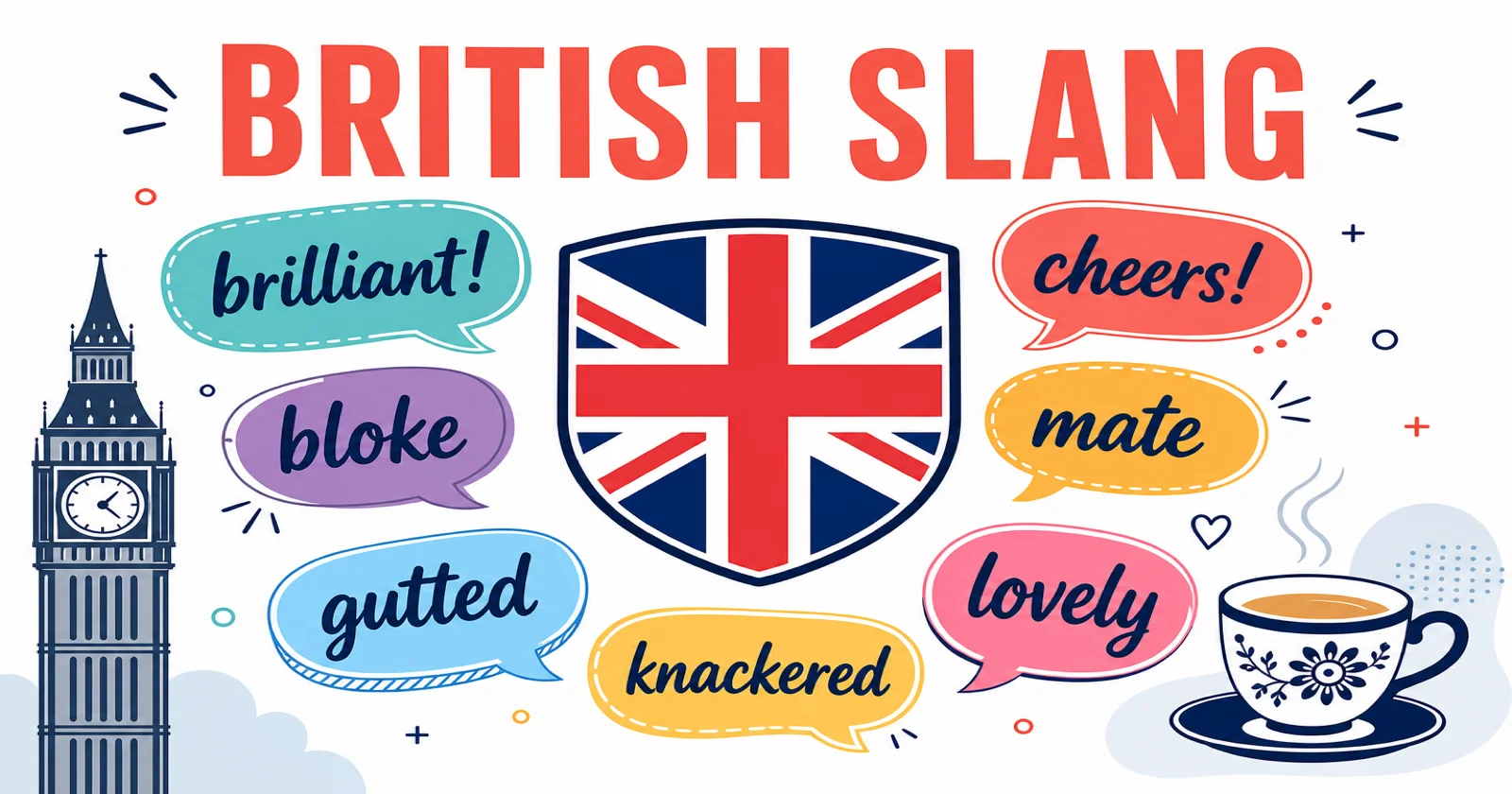
イギリス英語スラング:知っておくべき200以上の表現
アメリカのテキストで英語を学んだのに、イギリスのテレビ番組を見たら、約70%しか理解できなかったという経験はありませんか?アクセントのせいではありません — 語彙のせいです。イギリス人が “I’m absolutely knackered after that dodgy kebab, and now I need to pop to the chemist before I go to my mate’s gaff” と言ったとき、すべて英語ですが、アメリカ英語を学んだ人にとってはまるで外国語のように聞こえるかもしれません。
イギリス英語には、テキストにほとんど登場しないスラング、カジュアルな単語、表現の膨大な独自語彙があります。UK全土で使われるものもあれば、ロンドン、北部、スコットランドに特有のものもあります。何世紀も前からあるものもあれば、昨年登場したものもあります。
このガイドでは、最も役立つ200以上のイギリス英語スラングと表現をカテゴリー別に紹介します。各単語には定義、例文、使用範囲に関するメモが含まれています。イギリスに住む予定の方、イギリスのテレビを見る方、イギリス人の友人が本当は何を言っているのか理解したい方 — このガイドが参考になります。
- 収録数: 200以上のイギリススラング
- 整理方法: 10カテゴリー
- 形式: 単語 → 意味 → 例文
- 対象レベル: B1〜C2
- こんな方に: イギリス英語の理解、渡英準備、異文化理解
人と人間関係
| # | 単語・表現 | 意味 | 例文 |
|---|---|---|---|
| 1 | bloke | 男性、やつ | He’s a nice bloke — you’d like him. |
| 2 | mate | 友達;カジュアルな呼びかけにも使う | Alright, mate? How’s it going? |
| 3 | lad | 少年、若い男性 | The lads are going to the pub tonight. |
| 4 | lass | 少女、若い女性(北部方言) | She’s a lovely lass from Yorkshire. |
| 5 | chap | 男性(やや古風で丁寧) | He’s a decent chap, that one. |
| 6 | bird | 女性、彼女(カジュアル、失礼になることも) | He’s been seeing some bird from Manchester. |
| 7 | missus / Mrs | 妻または彼女 | I need to check with the missus first. |
| 8 | geezer | 男(ロンドン) | Some geezer just knocked on the door. |
| 9 | bruv | 兄弟、友人(ロンドン) | Thanks, bruv — I owe you one. |
| 10 | muppet | 間抜けな人 | He forgot his passport — what a muppet! |
| 11 | plonker | 愚かな人 | Don’t be such a plonker, Rodney! |
| 12 | nutter | 変人、狂った人 | He jumped in the river — absolute nutter. |
| 13 | tosser | 嫌な人、軽蔑すべき人 | The boss is a complete tosser. |
| 14 | numpty | 間抜けな人(スコットランド) | Some numpty parked across two spaces. |
| 15 | bairn | 子ども(スコットランド・北部) | She’s got three bairns under five. |
| 16 | love / luv | 呼びかけ(「dear」のように) | What can I get you, love? |
| 17 | darling | 親愛の呼びかけ(南部ではカジュアルに使う) | Thanks, darling — that’s very kind. |
| 18 | posh | 上流階級の、高級な | She went to a posh school in Surrey. |
| 19 | chav | 下層階級で攻撃的と見なされる人 | The media loves stereotyping chavs. |
| 20 | punter | お客、一般人 | The punters seemed happy with the show. |
ポジティブな気持ち・賛成
| # | 単語・表現 | 意味 | 例文 |
|---|---|---|---|
| 21 | brilliant | 素晴らしい | “How was the concert?” “Brilliant!” |
| 22 | lovely | 素敵な、素晴らしい | That was a lovely meal — thank you. |
| 23 | smashing | 最高の、素晴らしい | We had a smashing time at the festival. |
| 24 | cracking | 素晴らしい、とても良い | She’s done a cracking job on this report. |
| 25 | proper | 本物の、正真正銘の(強調語) | That’s a proper cup of tea. |
| 26 | well | とても(強調語) | That film was well good. |
| 27 | dead | とても(強調語、北部) | She’s dead funny when she wants to be. |
| 28 | mint | 最高の(北部) | “How was the match?” “Mint!” |
| 29 | sound | 良い、信頼できる;「OK」の意味も | He’s a sound bloke. / “I’ll be there at 7.” “Sound.” |
| 30 | chuffed | とても嬉しい、誇らしい | She was chuffed to bits with her exam results. |
| 31 | over the moon | 最高に幸せ | He was over the moon when he got the job. |
| 32 | buzzing | とてもワクワクしている | I’m absolutely buzzing about the trip. |
| 33 | gobsmacked | 驚愕した、唖然とした | I was gobsmacked when I heard the news. |
| 34 | ace | 素晴らしい | “How was the party?” “Ace!” |
| 35 | wicked | かっこいい、最高(カジュアル) | That trick was wicked! |
| 36 | lush | 素敵な、魅力的な(ウェールズ) | The cake was absolutely lush. |
| 37 | fit | 魅力的な(人について) | She’s well fit, isn’t she? |
| 38 | tidy | 良い、きれいな(ウェールズ) | “How was the gig?” “Tidy!” |
| 39 | belting | 最高の(北部) | We had a belting night out. |
| 40 | boss | 最高の(リバプール) | That goal was boss! |
ネガティブな気持ち・不満
| # | 単語・表現 | 意味 | 例文 |
|---|---|---|---|
| 41 | rubbish | くだらない;質が悪い | “He said he’ll be on time.” “That’s rubbish.” |
| 42 | naff | ダサい、かっこ悪い | That jumper is a bit naff, isn’t it? |
| 43 | pants | ひどい、最悪な | The film was absolutely pants. |
| 44 | dodgy | 怪しい、信頼できない | That kebab looks a bit dodgy. |
| 45 | grim | 不快な、陰鬱な | The weather’s been grim all week. |
| 46 | manky | 汚い、不潔な | The kitchen was absolutely manky. |
| 47 | rank | 気持ち悪い | That milk smells rank — throw it out. |
| 48 | gutted | とても残念な | I was gutted when they cancelled the concert. |
| 49 | miffed | 少しイライラした | She was a bit miffed about not being invited. |
| 50 | narked | イライラした | He was well narked about the traffic. |
| 51 | minging | 醜い、不快な | That toilet was absolutely minging. |
| 52 | bog-standard | 普通の、ごく標準的な | It’s just a bog-standard laptop — nothing special. |
| 53 | daft | ばかな、愚かな | Don’t be daft — of course I’ll help. |
| 54 | barmy | 狂った、おかしい | You want to swim in January? You’re barmy! |
| 55 | bonkers | 狂った | The housing prices in London are bonkers. |
| 56 | mental | 狂った(カジュアル) | The traffic was mental this morning. |
| 57 | knackered | 極度に疲れた | I’m absolutely knackered after that shift. |
| 58 | shattered | 疲れ果てた | We walked 20 miles — I’m shattered. |
| 59 | cream-crackered | 疲れ果てた(コックニー押韻スラング) | I’m cream-crackered — need a kip. |
| 60 | fed up | うんざりした | I’m fed up with this rain. |
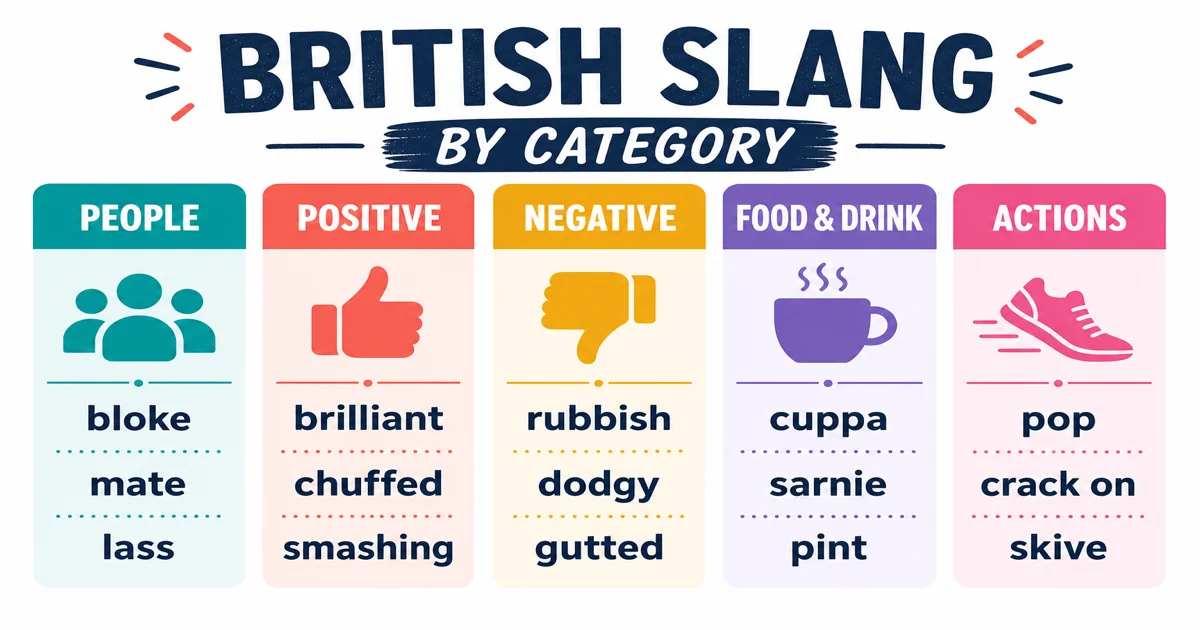
食べ物と飲み物
| # | 単語・表現 | 意味 | 例文 |
|---|---|---|---|
| 61 | cuppa | 紅茶一杯 | Fancy a cuppa? |
| 62 | brew | 紅茶一杯 | Put the kettle on — I need a brew. |
| 63 | biscuit | クッキー(アメリカ英語ではcookie) | Would you like a biscuit with your tea? |
| 64 | chips | フライドポテト | Fish and chips, please. |
| 65 | crisps | ポテトチップス | Pass me the crisps — salt and vinegar. |
| 66 | sarnie | サンドイッチ | I’ll grab a bacon sarnie for lunch. |
| 67 | butty | サンドイッチ(北部) | A chip butty is a Northern classic. |
| 68 | nosh | 食べ物;食べる | Let’s grab some nosh before the film. |
| 69 | scran | 食べ物(北部・軍隊) | What’s for scran tonight? |
| 70 | peckish | 少しお腹が空いた | I’m a bit peckish — got any snacks? |
| 71 | starving | とてもお腹が空いた(誇張) | I’m starving — can we eat soon? |
| 72 | brekkie | 朝食 | What are you having for brekkie? |
| 73 | tea | 夕食(北部) | “What’s for tea, Mum?” |
| 74 | gaffer tape | ダクトテープ | Fix it with gaffer tape — that’ll do. |
| 75 | ploughman’s | パン、チーズ、ピクルスのコールドランチ | I’ll have the ploughman’s, please. |
| 76 | pint | ビール一杯 | Let’s grab a pint after work. |
| 77 | off-licence | 酒屋 | Pop to the off-licence and grab some wine. |
| 78 | bladdered / trolleyed | とても酔っぱらった | He was absolutely bladdered by 9 o’clock. |
| 79 | legless | 泥酔した | She was legless after three cocktails. |
| 80 | pissed | 酔っぱらった(アメリカ英語の「怒っている」ではない) | He got pissed at the office Christmas party. |
日常の行動
| # | 単語・表現 | 意味 | 例文 |
|---|---|---|---|
| 81 | pop | ちょっと行く | I’m just going to pop to the shops. |
| 82 | nip | さっと行く(北部) | I’ll nip out for some milk. |
| 83 | crack on | 始める、続ける | Right, let’s crack on with the meeting. |
| 84 | faff about | ぐずぐずする、時間を無駄にする | Stop faffing about and get ready! |
| 85 | have a go | やってみる | I’ve never tried it, but I’ll have a go. |
| 86 | sort it | 解決する、整理する | Don’t worry — I’ll sort it. |
| 87 | suss out | 見抜く、調べる | I need to suss out the best route. |
| 88 | take the mickey / take the mick | からかう | Are you taking the mick? |
| 89 | wind someone up | わざとイライラさせる、からかう | He loves winding his sister up. |
| 90 | leg it | 急いで逃げる | We saw the security guard and legged it. |
| 91 | skive | 仕事や学校をサボる | He skived off school to go to the cinema. |
| 92 | bunk off | サボる | We used to bunk off on Fridays. |
| 93 | chat up | ナンパする | He was trying to chat up the barmaid. |
| 94 | kip | 昼寝;寝る | I need a quick kip before we go out. |
| 95 | bog | トイレ | Where’s the bog? I need a wee. |
| 96 | loo | トイレ(丁寧) | Excuse me, where’s the loo? |
| 97 | ring / give a bell | 電話する | Give me a bell when you arrive. |
| 98 | nick | 盗む;「警察署」や「刑務所」の意味も | Someone nicked my bike! |
| 99 | grass | 密告する | Don’t grass on your mates. |
| 100 | chuck | 投げる;「別れる」の意味も | Chuck that in the bin. / She chucked him last week. |
場所とモノ
| # | 単語・表現 | 意味 | 例文 |
|---|---|---|---|
| 101 | gaff | 家 | Come round to my gaff tonight. |
| 102 | flat | アパート | She lives in a flat in Notting Hill. |
| 103 | the tube | ロンドン地下鉄 | Take the tube to Piccadilly Circus. |
| 104 | chemist | 薬局 | I need to pop to the chemist for some paracetamol. |
| 105 | off-licence | 酒屋 | Grab a bottle from the off-licence. |
| 106 | boot | 車のトランク | Put the bags in the boot. |
| 107 | bonnet | 車のボンネット | Open the bonnet — something’s rattling. |
| 108 | lorry | トラック | A lorry broke down on the M25. |
| 109 | motorway | 高速道路 | Take the motorway — it’s faster. |
| 110 | pavement | 歩道 | Walk on the pavement, not the road. |
| 111 | zebra crossing | 横断歩道 | Use the zebra crossing to get across. |
| 112 | roundabout | ロータリー | Take the third exit at the roundabout. |
| 113 | queue | 行列 | There’s a massive queue outside the shop. |
| 114 | telly | テレビ | What’s on the telly tonight? |
| 115 | mobile | 携帯電話 | What’s your mobile number? |
| 116 | quid | ポンド(£1) | That’ll be five quid, mate. |
| 117 | fiver | 5ポンド紙幣 | Have you got a fiver I can borrow? |
| 118 | tenner | 10ポンド紙幣 | It only costs a tenner to get in. |
| 119 | brolly | 傘 | Grab your brolly — it’s going to rain. |
| 120 | jumper | セーター | Put a jumper on — it’s freezing. |
会話フレーズ
| # | 単語・表現 | 意味 | 例文 |
|---|---|---|---|
| 121 | alright? | こんにちは、調子はどう? | “Alright, mate?” “Yeah, not bad.” |
| 122 | cheers | ありがとう;乾杯 | Cheers for helping me with that. |
| 123 | ta | ありがとう(とてもカジュアル) | “Here’s your change.” “Ta!” |
| 124 | sorted | 完了、手配済み | “Is everything ready?” “Yeah, sorted.” |
| 125 | no worries | 大丈夫、気にしないで | “Sorry I’m late.” “No worries.” |
| 126 | fair enough | なるほど、わかった | “I can’t come tonight.” “Fair enough.” |
| 127 | innit | ~だよね?(ロンドン) | Cold today, innit? |
| 128 | you what? | え?何?(驚きや不信) | “I’m moving to Australia.” “You what?!” |
| 129 | blimey | 驚きの感嘆詞 | Blimey, that was quick! |
| 130 | bloody hell | 驚きやフラストレーションの表現 | Bloody hell, look at the time! |
| 131 | crikey | 驚きの感嘆詞(古風) | Crikey, the prices have gone up! |
| 132 | cor blimey | 強い驚きの表現 | Cor blimey, that’s expensive! |
| 133 | bob’s your uncle | はい出来上がり(=完了) | Put it in the oven for 20 minutes, and Bob’s your uncle. |
| 134 | easy peasy | とても簡単 | “Is it hard to make?” “No, easy peasy.” |
| 135 | spot on | ぴったり、完璧 | Your prediction was spot on. |
| 136 | not my cup of tea | 自分の好みではない | Horror films aren’t my cup of tea. |
| 137 | taking the biscuit | 度を超している、ひどい | Arriving two hours late really takes the biscuit. |
| 138 | you’re having a laugh | 冗談でしょう | £200 for a parking fine? You’re having a laugh! |
| 139 | do one | あっちへ行け(失礼) | Tell him to do one. |
| 140 | get in! | やった!(お祝い) | “We won the match!” “Get in!” |
天気と気分
| # | 単語・表現 | 意味 | 例文 |
|---|---|---|---|
| 141 | chilly | 肌寒い(凍るほどではない) | It’s a bit chilly out — grab a jacket. |
| 142 | nippy | 寒い | It’s nippy this morning! |
| 143 | brass monkeys | 極寒 | It’s brass monkeys outside — stay in. |
| 144 | bucketing down | 土砂降り | It’s absolutely bucketing down out there. |
| 145 | drizzle | 小雨 | It’s just a drizzle — you don’t need a brolly. |
| 146 | scorching | 猛暑 | It’s scorching today — 35 degrees! |
| 147 | muggy | 蒸し暑い | It’s so muggy — I can barely breathe. |
| 148 | miserable | ぱっとしない(天気) | What miserable weather we’re having. |
| 149 | moody | 気まぐれな、変わりやすい | The weather’s been dead moody this week. |
| 150 | right | とても、完全に(強調語) | He’s a right laugh. / It’s a right mess. |
仕事とお金
| # | 単語・表現 | 意味 | 例文 |
|---|---|---|---|
| 151 | sack / get the sack | クビにする・クビになる | He got the sack for being late too often. |
| 152 | make redundant | リストラする | They made 200 workers redundant. |
| 153 | do overtime | 残業する | I’ve been doing overtime all month. |
| 154 | cushy | 楽な、快適な(仕事) | He’s got a cushy job in the city. |
| 155 | doddle | とても簡単なこと | The exam was an absolute doddle. |
| 156 | skint | 金欠の | I’m skint until payday. |
| 157 | loaded | とてもお金持ち | Her parents are absolutely loaded. |
| 158 | splash out | たくさんお金を使う | We splashed out on a fancy dinner. |
| 159 | rip-off | ぼったくり | £8 for a coffee? What a rip-off! |
| 160 | a steal | お買い得 | That coat was a steal at £30. |
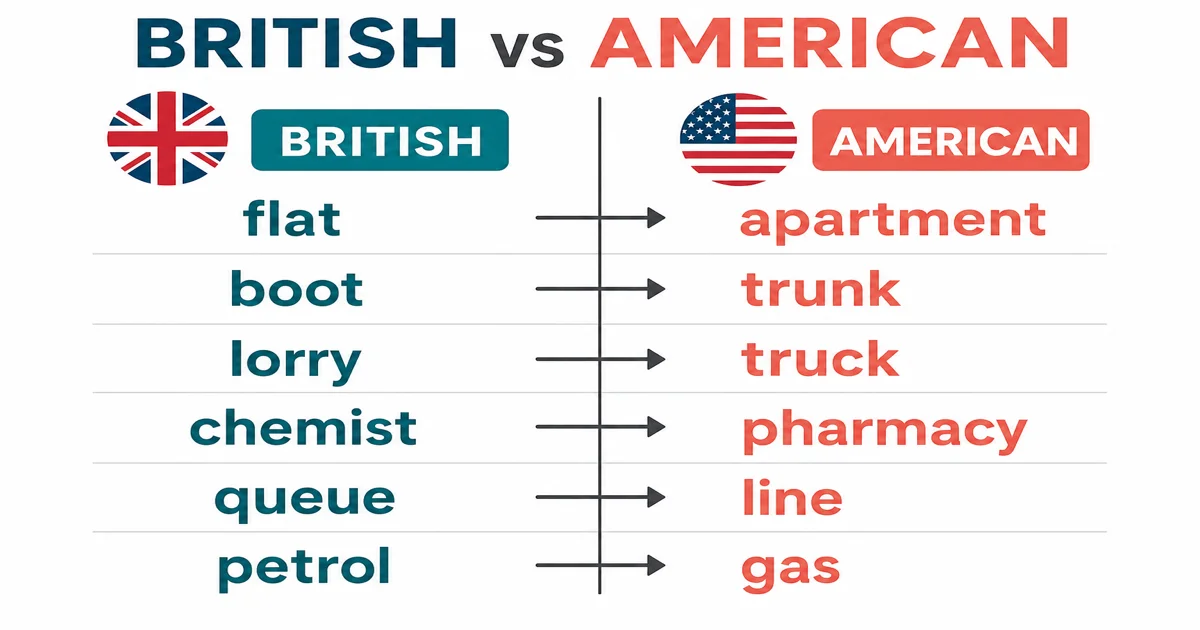
イギリス英語 vs. アメリカ英語:主な違い
以下はスラングではなく — アメリカ英語と異なる標準的なイギリス英語です。
| イギリス英語 | アメリカ英語 | 意味 |
|---|---|---|
| flat | apartment | 1フロアの住居 |
| lift | elevator | エレベーター |
| boot | trunk | 車の後部 |
| bonnet | hood | 車の前部 |
| lorry | truck | 大型車両 |
| petrol | gas/gasoline | 燃料 |
| nappy | diaper | おむつ |
| dummy | pacifier | おしゃぶり |
| cot | crib | ベビーベッド |
| post | 手紙や荷物 | |
| torch | flashlight | 懐中電灯 |
| holiday | vacation | 休暇 |
| queue | line | 行列 |
| bin | trash can | ゴミ箱 |
| rubber | eraser | 消しゴム |
| autumn | fall | 秋 |
| football | soccer | サッカー |
| trousers | pants | ズボン |
| pants | underwear | 下着 |
| trainers | sneakers | スニーカー |
注意: “pants” はイギリス英語では下着を意味します。イギリス人に “nice pants” と言うと、アメリカとはまったく違う反応が返ってきます。
地域による違い
イギリスのスラングは地域によって大きく異なります:
| 地域 | 独自のスラング | 例 |
|---|---|---|
| ロンドン | コックニー押韻スラング | dog and bone(phone)、plates of meat(feet) |
| マンチェスター | マンキュニアン | mint(great)、our kid(兄弟・親友) |
| リバプール | スカウス | boss(great)、la(lad, mate) |
| ニューカッスル | ジョーディー | canny(nice)、gan(go)、howay(come on) |
| バーミンガム | ブラミー | bostin(brilliant)、bab(babe、呼びかけ) |
| ヨークシャー | ヨークシャー方言 | reyt(right/very)、nowt(nothing)、summat(something) |
| スコットランド | スコッツ | braw(fine, good)、wee(small)、ken(know) |
| ウェールズ | ウェールズ英語 | lush(lovely)、tidy(good)、tamping(very angry) |
イギリス英語スラングの理解の仕方
1. イギリスのテレビを見ましょう。 Peep Show、The Inbetweeners、Derry Girls、Top Boy などの番組は、文脈の中でリアルなイギリスのスラングを学べる宝庫です。
2. 文脈に注目しましょう。 単語がわからなくても、トーンや周囲の言葉から、ポジティブかネガティブかは通常わかります。
3. 聞いてみましょう。 イギリス人は自分のスラングを説明するのが大好きです。”What does ‘chuffed’ mean?” はごく普通の質問です。
4. 使ってみましょう(慎重に)。 まずは広く理解される単語(”brilliant,” “cheers,” “mate,” “lovely”)から始めましょう。地域的なスラングや不快になりうるスラングは、社会的な文脈を理解してから使いましょう。
5. Linglifyに追加しましょう。 イギリスのスラングを語彙に追加して、間隔反復で練習しましょう。
練習用の単語
boom
名詞
急増, ブーム, 爆発
例
- The boom of thunder echoed across the valley.
- The technology boom created many new millionaires.
cooperate
動詞
協力する, 協働する
evaluate
動詞
評価する, 査定する
例
- Companies evaluate job candidates based on experience, skills, and personality.
- Teachers evaluate student progress through tests, projects, and classroom participation.
graduate
動詞
卒業する
例
- She will graduate from university next year with a degree in engineering.
- Students must complete all requirements before they can graduate from high school.
horizon
名詞
地平線
例
- The sun disappeared behind the horizon as evening approached.
- Traveling broadens your horizon and exposes you to new cultures.
indispensable
形容詞
不可欠な
例
- Clean water is indispensable for human survival and good health.
- Her experience and skills make her indispensable to the research team.
jury
名詞
陪審団, 陪審
例
- The jury deliberated for several hours before reaching a verdict.
- The talent show jury consisted of professional musicians and entertainers.
lifelong
形容詞
一生の, 生涯の
例
- Learning is a lifelong process that never truly ends.
- Their lifelong friendship began during elementary school years.
motivated
形容詞
やる気のある
例
- Motivated employee seeks additional responsibilities and challenges at work.
- Success requires being motivated even when facing difficult obstacles.
normally
副詞
通常は, 普通は, ふつうは
例
- Heart normally beats between sixty and hundred times per minute.
- Students normally arrive at school before morning bell rings.
off
副詞
離れて, 切れて, 休みの
例
- Please turn off the lights before leaving the room.
- The dog ran off into the forest chasing wild rabbits.
prejudice
名詞
偏見, 先入観, 差別
例
- Education helps overcome prejudice and promotes understanding.
- Racial prejudice damages communities and individuals alike.
resolve
動詞
解決する, 決意する
例
- Mediator helps parties resolve dispute through negotiation.
- Technical team will resolve software problems quickly.
stress
動詞
強調する, 緊張させる
例
- Heavy workload may stress employees beyond limits.
- Teacher will stress importance of homework completion.
total
形容詞
全体の, 総合的な, 完全な
例
- Total cost includes all fees and expenses.
- Total silence fills room during meditation session.
tragedy
名詞
悲劇
例
- Natural tragedy affects thousands of innocent people.
- Personal tragedy changes person's life perspective completely.
union
名詞
連合, 結合, 協会
例
- Labor union protects worker rights and interests.
- Marriage union joins two people in partnership.
voyage
名詞
航海, 旅行
例
- Space exploration represents humanity's greatest voyage into the unknown.
- The ocean voyage from Europe to America took several weeks in the past.
candidate
名詞
候補者, 志願者
例
- Each presidential candidate presented their policy plans to voters.
- The job candidate impressed the interview panel with her experience.
discourage
動詞
落胆させる, 思いとどまらせる, 意欲をなくさせる
例
- Don't let one failure discourage you from pursuing your dreams.
- High prices discourage many people from buying organic food products.
donate
動詞
寄付する
例
- Many people donate money to charities that help homeless individuals.
- She decided to donate blood to help patients in emergency situations.
firmly
副詞
しっかりと, 堅く
例
- Hold the rope firmly while climbing down the steep mountain slope.
- The manager firmly believed in treating all employees with respect.
guide
動詞
案内する
例
- Parents should guide their children to make responsible decisions.
- The experienced hiker will guide the group through the mountain trail safely.
humorous
形容詞
ユーモラスな, 面白い, 滑稽な
例
- She writes humorous articles about everyday life and family experiences.
- The humorous speech made everyone laugh and lightened the serious mood.
admission
名詞
入場, 入学, 認めること
例
- Her admission to the prestigious medical school was the result of hard work.
- The museum offers free admission on the first Sunday of every month.
次のステップ
-
リストから10語を選びましょう。 聞いたことはあるけど使ったことのないものを選び、意味とともにメモしましょう。
-
イギリスのテレビ番組を見ましょう。 これらの単語に注目して、実際の会話でどう使われているか観察してください。
-
Linglifyにイギリススラングを追加して間隔反復で練習しましょう。
-
イギリスのイディオムも学びましょう — 英語イディオム:500以上の一般的な表現にはイギリス特有のイディオムも多数含まれています。
-
アメリカ英語と比較しましょう — 違いを理解すれば、恥ずかしい混同を防げます(特に “pants” に注意)。
よくある質問
最も一般的なイギリス英語スラングは何ですか?
全地域で最も広く使われているのは:mate(友人)、brilliant(素晴らしい)、cheers(ありがとう)、lovely(素敵な)、rubbish(くだらない・悪い)、knackered(疲れた)、quid(ポンド)、dodgy(怪しい)、sorted(手配済み)、bloke(男)です。これらはUK全土で理解され、ほとんどのカジュアルな場面で安心して使えます。
イギリス英語スラングは失礼ですか?
単語と文脈によります。”brilliant,” “lovely,” “cheers,” “mate” は完全に丁寧です。”bloody,” “pissed,” “sod off” は軽く失礼です。”tosser” やそれ以上の強い言葉は攻撃的であり、丁寧な場では避けるべきです。一般的なルールとして、おばあさんの前では使わない言葉は、知らない人にも使わないようにしましょう。
すべてのイギリス人が同じスラングを使いますか?
いいえ。イギリスのスラングは地域、年齢、社会階級によって大きく異なります。ロンドンのティーンエイジャーと、ヨークシャーの農家や、エディンバラの学生では、使うスラングが全然違います。普遍的な単語もありますが(”cheers,” “mate”)、特定の地域をすぐに特定できるものもあります(”boss” = リバプール、”mint” = マンチェスター、”braw” = スコットランド)。
IELTSやフォーマルな場面でイギリスのスラングを使えますか?
使えません。IELTSの試験官やフォーマルな場面では標準英語が求められます。学術的なライティング、ビジネスプレゼンテーション、就職面接でスラングを使うと、信頼性が下がります。イギリスのスラングは、カジュアルな会話、テキスト、社交の場で使うものです。IELTSのスピーキングテストでは、”brilliant” や “lovely” のような非常に一般的な単語は許容されますが、”gutted” や “well fit” のような強いスラングは適切ではありません。
イギリスのスラングはアメリカのスラングとどう違いますか?
イギリスとアメリカのスラングは異なる文化的影響を受けて独立して発展しました。主な違いとして:”pissed”(イギリス:酔った / アメリカ:怒った)、”pants”(イギリス:下着 / アメリカ:ズボン)、”chips”(イギリス:フライドポテト / アメリカ:ポテトチップス)、”fit”(イギリス:魅力的な / アメリカ:健康的な)。多くのイギリスのスラングにはアメリカ英語に対応する言葉がまったくなく(”chuffed,” “gobsmacked,” “knackered”)、その逆も同様です。