
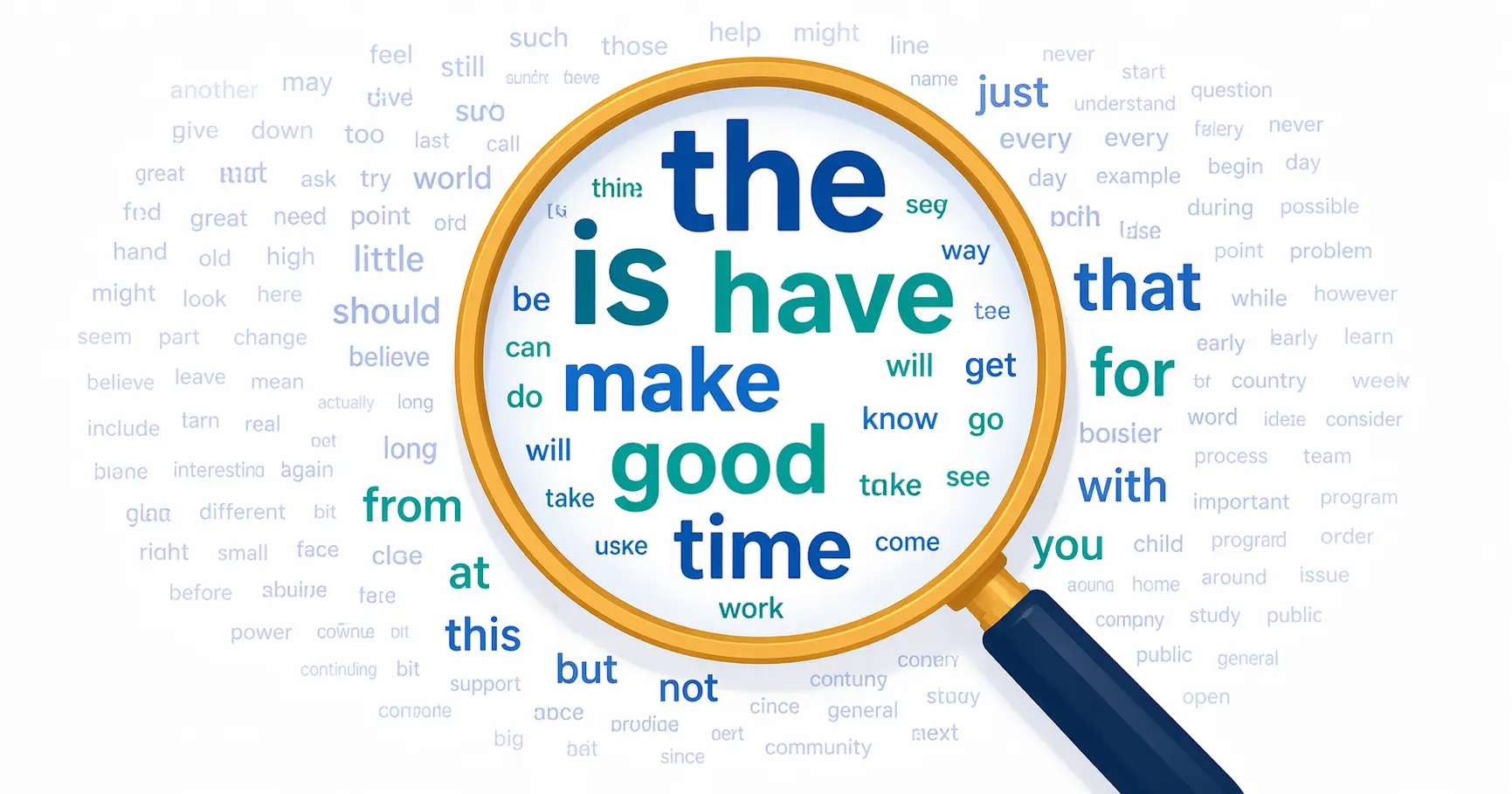
頻出英単語1000語:これだけで日常英語の85%をカバー
英語の頻出1,000語は、日常会話の約85%、書き言葉の約75%をカバーします。つまり、この1,000語を本当に身につければ — ただ見たことがあるだけでなく、意味がわかり、文で使え、正しくスペルできれば — ほとんどの英語の会話についていけるし、基本的なニュース記事も読めるし、日常的なコミュニケーションもこなせます。
この記事では、厳選した頻出英単語を意味付きでA-Zのアルファベット順に整理して紹介します。例文、品詞別の内訳、そして現実的な学習プランも用意しています。
なぜ最初の1,000語が最も重要なのか
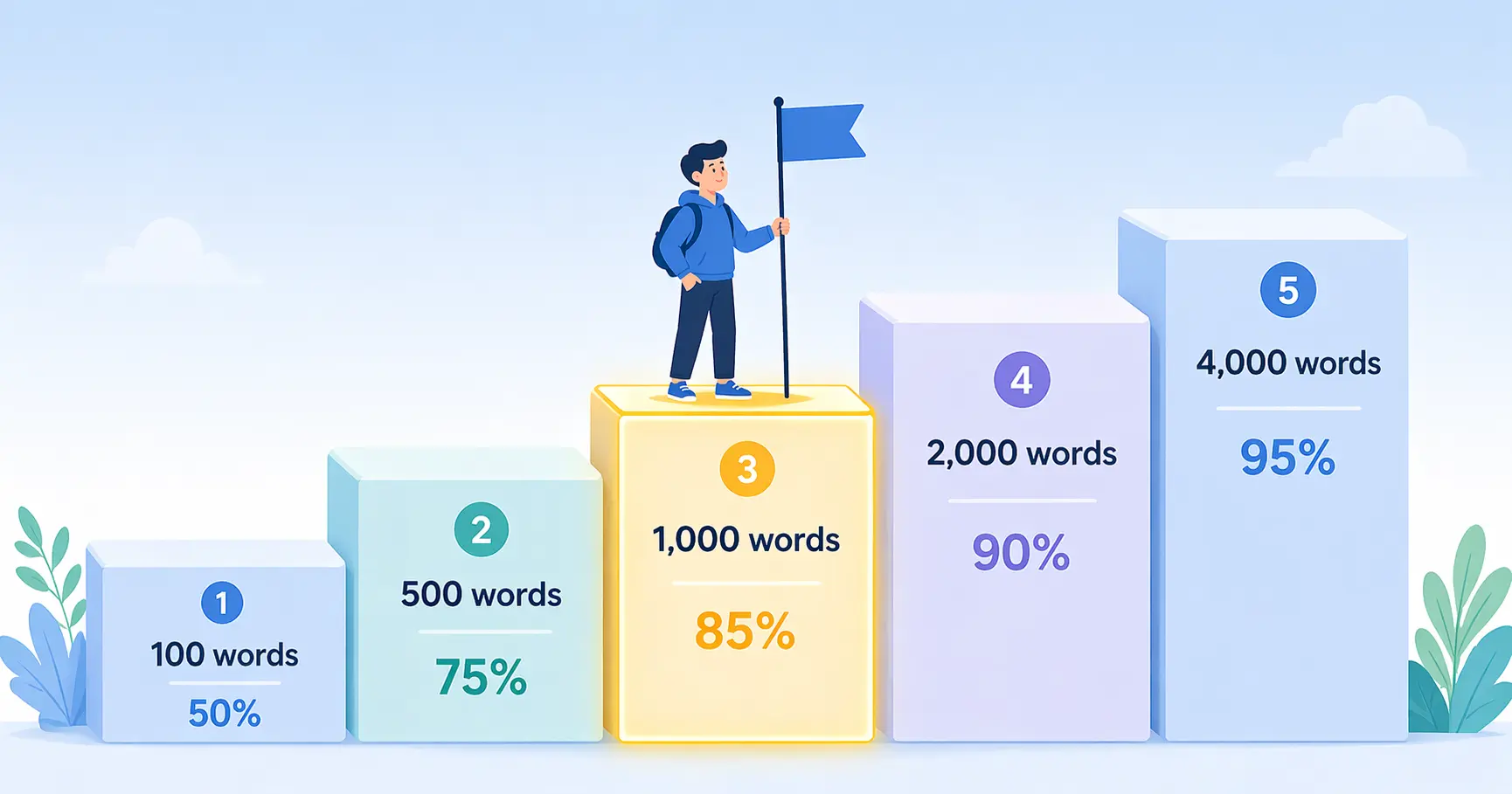
語彙に関する研究は、少数の単語が英語の大部分の仕事をしていることを一貫して示しています:
| 既知の単語数 | 会話の理解度 | テキストの理解度 |
|---|---|---|
| 100語 | 約50% | 約45% |
| 500語 | 約75% | 約65% |
| 1,000語 | 約85% | 約75% |
| 2,000語 | 約90% | 約80% |
| 4,000語 | 約95% | 約90% |
最初の1,000語が最も大きなリターンをもたらします。1,000語以降は、1語追加するごとに理解度の上昇幅がどんどん小さくなります。「available」(頻度ランク約400位)を覚えると理解力は大きく上がりますが、「ambivalent」(頻度ランク約8,000位)を覚えてもその効果はわずかです。
これが頻度ベースの学習が有効な理由です。最も頻繁に登場する単語から先に勉強するので、勉強した1時間ごとのリアルな理解度の向上が最大になります。
頻出英単語1,000語 A-Z
各アルファベットから最も重要な単語を厳選し、意味と例文を載せています。頻度順で整理した完全な1,000語リストです。
A
| 単語 | 品詞 | 意味 | 例文 |
|---|---|---|---|
| about | 前置詞/副詞 | ~について;約、おおよそ | The book is about Japanese history. There were about 50 people. |
| above | 前置詞 | ~より高い;~を超える | The temperature rose above 30 degrees. |
| accept | 動詞 | 受け入れる;同意する | She accepted the job offer immediately. |
| across | 前置詞 | ~を横切って | He walked across the bridge in the rain. |
| actually | 副詞 | 実は;実際には | The test was actually easier than I expected. |
| add | 動詞 | 加える;追加する | Add two tablespoons of sugar to the mixture. |
| affect | 動詞 | 影響を与える | The weather affects my mood every winter. |
| afraid | 形容詞 | 恐れている | She is afraid of flying. |
| after | 前置詞/接続詞 | ~の後に | We went for a walk after dinner. |
| again | 副詞 | もう一度 | Can you say that again, please? |
| age | 名詞 | 年齢 | Children start school at the age of five in most countries. |
| agree | 動詞 | 同意する | I agree with everything you said. |
| ahead | 副詞 | 前方に;今後 | The road ahead was completely empty. |
| allow | 動詞 | 許可する | The teacher does not allow phones in class. |
| almost | 副詞 | ほとんど;もう少しで | We have almost finished the project. |
| along | 前置詞/副詞 | ~に沿って | We walked along the river for an hour. |
| already | 副詞 | すでに;もう | I have already seen that movie twice. |
| also | 副詞 | ~もまた | She speaks French and also a little German. |
| always | 副詞 | いつも;常に | He always arrives early for meetings. |
| among | 前置詞 | ~の中で;~のうちの | She was among the best students in her class. |
| amount | 名詞 | 量 | The recipe requires a small amount of salt. |
| appear | 動詞 | 現れる;~に見える | Stars appear in the sky after sunset. |
| apply | 動詞 | 応募する;適用される | She applied for three jobs last week. |
| area | 名詞 | 地域;分野 | This area is known for its excellent restaurants. |
| around | 前置詞/副詞 | ~の周りに;約 | There are trees all around the house. |
| arrive | 動詞 | 到着する | The train arrives at 6:45 PM. |
| ask | 動詞 | 尋ねる;頼む | Can I ask you a question? |
| attention | 名詞 | 注意;注目 | Pay attention — this part is important. |
| available | 形容詞 | 利用できる;空いている | The doctor is available on Tuesday afternoon. |
| avoid | 動詞 | 避ける | I avoid eating sugar before bed. |
B
| 単語 | 品詞 | 意味 | 例文 |
|---|---|---|---|
| back | 名詞/副詞 | 後ろ;戻って | He sat at the back of the room. |
| bad | 形容詞 | 悪い;ひどい | The weather was bad all week. |
| base | 名詞/動詞 | 基礎;拠点を置く | The company is based in London. |
| beautiful | 形容詞 | 美しい | The sunset over the ocean was beautiful. |
| because | 接続詞 | なぜなら | She left early because she felt sick. |
| become | 動詞 | ~になる | He became a doctor after years of study. |
| before | 前置詞/接続詞 | ~の前に | Finish your homework before dinner. |
| begin | 動詞 | 始まる;始める | The concert begins at 8 PM. |
| behind | 前置詞 | ~の後ろに | The car park is behind the building. |
| believe | 動詞 | 信じる | I believe she is telling the truth. |
| below | 前置詞/副詞 | ~より下に | The temperature dropped below zero last night. |
| best | 形容詞/副詞 | 最も良い | This is the best restaurant in the city. |
| better | 形容詞/副詞 | より良い | Your English is getting better every week. |
| between | 前置詞 | ~の間に | The meeting is between 2 and 4 PM. |
| beyond | 前置詞 | ~を超えて | The view beyond the mountains was incredible. |
| big | 形容詞 | 大きい | They live in a big house near the park. |
| body | 名詞 | 体;身体 | Exercise is good for your body and mind. |
| book | 名詞/動詞 | 本;予約する | I booked a hotel room for Friday night. |
| both | 限定詞/代名詞 | 両方 | Both answers are correct. |
| bring | 動詞 | 持ってくる | Please bring your laptop to the meeting. |
| build | 動詞 | 建てる;構築する | They are building a new hospital downtown. |
| business | 名詞 | ビジネス;会社 | She started her own business at 25. |
| buy | 動詞 | 買う | I need to buy a new phone. |
C
| 単語 | 品詞 | 意味 | 例文 |
|---|---|---|---|
| call | 動詞/名詞 | 電話する;呼ぶ | I will call you tomorrow morning. |
| care | 動詞/名詞 | 気にかける;世話 | She cares about the environment. |
| carry | 動詞 | 運ぶ | He carried the boxes up the stairs. |
| case | 名詞 | 場合;ケース | In that case, we should leave early. |
| cause | 名詞/動詞 | 原因;引き起こす | What caused the delay? |
| certain | 形容詞 | 確かな;特定の | I am certain the answer is correct. |
| change | 動詞/名詞 | 変える;変化 | The city has changed a lot in ten years. |
| check | 動詞 | 確認する | Check your email — I sent the document an hour ago. |
| child | 名詞 | 子供 | Every child in the school receives free lunch. |
| choose | 動詞 | 選ぶ | You can choose any color you like. |
| city | 名詞 | 都市 | Tokyo is the largest city in Japan. |
| claim | 動詞/名詞 | 主張する | He claims he was at home all evening. |
| clear | 形容詞/動詞 | 明確な;透明な | The instructions were clear and simple. |
| close | 動詞/形容詞 | 閉じる;近い | Please close the door. The shop is close to my house. |
| come | 動詞 | 来る | Come here — I want to show you something. |
| common | 形容詞 | よくある;共通の | Spelling mistakes are very common among beginners. |
| community | 名詞 | コミュニティ;地域社会 | The local community organized a cleanup day. |
| company | 名詞 | 会社 | She works for a technology company. |
| compare | 動詞 | 比較する | Compare the two products before you buy. |
| complete | 形容詞/動詞 | 完全な;完了する | The project is now complete. |
| concern | 名詞/動詞 | 懸念;関係する | Safety is our main concern. |
| consider | 動詞 | 検討する | We should consider all the options before deciding. |
| continue | 動詞 | 続ける;続く | She continued reading despite the noise. |
| control | 名詞/動詞 | 管理;コントロール | You need to control your spending. |
| cost | 名詞/動詞 | 費用;(金額が)かかる | The cost of living has increased by 8%. |
| could | 助動詞 | ~できた;~かもしれない | She could speak three languages by age 12. |
| country | 名詞 | 国;田舎 | Japan is a beautiful country. |
| couple | 名詞 | 2つ;カップル | We stayed for a couple of hours. |
| course | 名詞 | コース;講座 | She is taking an online course in marketing. |
| cover | 動詞/名詞 | 覆う;カバーする | Snow covered the entire city overnight. |
| create | 動詞 | 作り出す | The artist created a stunning painting. |
| current | 形容詞/名詞 | 現在の;流れ | What is the current population of London? |
| cut | 動詞 | 切る;削減する | The government plans to cut taxes next year. |
D–F
| 単語 | 品詞 | 意味 | 例文 |
|---|---|---|---|
| deal | 名詞/動詞 | 取引;対処する | We made a deal with the supplier. |
| decide | 動詞 | 決める | Have you decided where to go for dinner? |
| describe | 動詞 | 描写する;説明する | Can you describe the apartment? |
| develop | 動詞 | 発展する;開発する | The company developed a new product. |
| different | 形容詞 | 異なる | The two brothers have very different personalities. |
| difficult | 形容詞 | 難しい | The exam was more difficult than expected. |
| discover | 動詞 | 発見する | Scientists discovered a new species of fish. |
| drive | 動詞/名詞 | 運転する | She drives to work every morning. |
| drop | 動詞/名詞 | 落とす;下がる | Be careful not to drop the glass. |
| during | 前置詞 | ~の間 | I fell asleep during the movie. |
| each | 限定詞 | それぞれの | Each student receives a textbook. |
| early | 形容詞/副詞 | 早い;早く | We arrived early to get good seats. |
| easy | 形容詞 | 簡単な | The first questions were easy. |
| effect | 名詞 | 効果;影響 | The new law had an immediate effect on traffic. |
| enough | 限定詞/副詞 | 十分な | We have enough food for everyone. |
| enter | 動詞 | 入る | Please enter through the main door. |
| entire | 形容詞 | 全体の | She ate the entire pizza by herself. |
| especially | 副詞 | 特に | I love all fruits, especially strawberries. |
| even | 副詞/形容詞 | ~さえ;平らな | Even the teacher made a mistake. |
| ever | 副詞 | これまでに | Have you ever been to Australia? |
| every | 限定詞 | すべての;毎~ | I go to the gym every morning. |
| example | 名詞 | 例 | Can you give me an example? |
| expect | 動詞 | 予想する;期待する | I expect the results tomorrow. |
| experience | 名詞/動詞 | 経験 | She has ten years of experience in marketing. |
| explain | 動詞 | 説明する | The teacher explained the grammar rule again. |
| face | 名詞/動詞 | 顔;直面する | We need to face the problem directly. |
| fact | 名詞 | 事実 | It is a fact that the Earth orbits the Sun. |
| far | 形容詞/副詞 | 遠い | The station is not far from here. |
| fast | 形容詞/副詞 | 速い | The train is very fast — it reaches 300 km/h. |
| feel | 動詞 | 感じる | I feel much better today. |
| few | 限定詞/代名詞 | 少数の | Only a few students passed the test. |
| fill | 動詞 | 満たす;記入する | She filled the glass with water. |
| finally | 副詞 | ようやく;最終的に | We finally found the restaurant after walking for 20 minutes. |
| find | 動詞 | 見つける | I cannot find my keys. |
| finish | 動詞 | 終わる;終える | What time does the class finish? |
| follow | 動詞 | 従う;ついていく | Follow the instructions on the screen. |
| force | 名詞/動詞 | 力;強制する | The wind was strong enough to force the door open. |
| foreign | 形容詞 | 外国の | She is learning two foreign languages. |
| form | 名詞/動詞 | 形式;用紙;形成する | Please fill in the application form. |
| free | 形容詞/動詞 | 無料の;自由な | Admission to the museum is free on Sundays. |
| friend | 名詞 | 友人 | She has been my best friend since school. |
| full | 形容詞 | いっぱいの | The bus was completely full. |
| future | 名詞/形容詞 | 未来;将来の | Nobody knows what the future will bring. |
G–L
| 単語 | 品詞 | 意味 | 例文 |
|---|---|---|---|
| general | 形容詞 | 一般的な;全体的な | The general opinion is that the plan will work. |
| give | 動詞 | 与える | She gave me her phone number. |
| government | 名詞 | 政府 | The government announced new education policies. |
| great | 形容詞 | 素晴らしい;偉大な | The concert was great — we had an amazing time. |
| group | 名詞 | グループ;集団 | A group of students visited the factory. |
| grow | 動詞 | 成長する;増える | The company has grown rapidly in three years. |
| half | 名詞/限定詞 | 半分 | Half the class was absent due to illness. |
| happen | 動詞 | 起こる | What happened at the meeting yesterday? |
| hard | 形容詞/副詞 | 難しい;一生懸命に | She works hard to support her family. |
| head | 名詞/動詞 | 頭;部長;向かう | He is the head of the marketing department. |
| help | 動詞/名詞 | 助ける;手助け | Can you help me carry these bags? |
| high | 形容詞/副詞 | 高い | The price of petrol is very high right now. |
| hold | 動詞 | 持つ;開催する | She held the baby carefully. The event is held every June. |
| home | 名詞/副詞 | 家 | I usually get home at 6 PM. |
| hope | 動詞/名詞 | 望む;希望 | I hope you feel better soon. |
| however | 副詞 | しかしながら | The hotel was expensive. However, the service was excellent. |
| human | 形容詞/名詞 | 人間の;人間 | Human memory is surprisingly unreliable. |
| idea | 名詞 | 考え;アイデア | That is a great idea — let us try it. |
| important | 形容詞 | 重要な | Sleep is important for learning. |
| include | 動詞 | 含む | The price includes breakfast and parking. |
| increase | 動詞/名詞 | 増加する;増加 | Sales increased by 15% last quarter. |
| information | 名詞 | 情報 | For more information, visit our website. |
| interest | 名詞/動詞 | 興味;利息 | She has a strong interest in science. |
| issue | 名詞 | 問題;課題 | Climate change is a critical issue today. |
| job | 名詞 | 仕事;職 | He got a new job at a bank. |
| join | 動詞 | 参加する;つなげる | She joined the company last month. |
| just | 副詞 | ちょうど;たった今;~だけ | I just arrived — give me one minute. |
| keep | 動詞 | 保つ;持ち続ける | Keep the receipt in case you need to return it. |
| kind | 名詞/形容詞 | 種類;親切な | What kind of music do you like? She is a very kind person. |
| know | 動詞 | 知っている | I know the answer to that question. |
| large | 形容詞 | 大きい | They need a large conference room for 50 people. |
| last | 形容詞/動詞 | 最後の;前の;続く | The meeting lasted two hours. I saw her last week. |
| late | 形容詞/副詞 | 遅い;遅刻した | Sorry I am late — the traffic was terrible. |
| lead | 動詞/名詞 | 導く;率いる | She leads a team of 20 people. |
| learn | 動詞 | 学ぶ | She learned to speak English in two years. |
| leave | 動詞 | 去る;出発する | I leave the house at 7:30 every morning. |
| less | 限定詞/副詞 | より少ない | I try to spend less money on things I do not need. |
| level | 名詞 | レベル;水準 | Her English is at an intermediate level. |
| life | 名詞 | 生活;人生 | She lived a long and happy life. |
| likely | 形容詞/副詞 | ありそうな;たぶん | Rain is likely this afternoon. |
| line | 名詞 | 線;列 | There was a long line outside the store. |
| list | 名詞/動詞 | リスト;一覧にする | Make a list of everything you need to buy. |
| live | 動詞/形容詞 | 住む;生きている | They live in a small town near the coast. |
| long | 形容詞/副詞 | 長い | The journey was long but enjoyable. |
| look | 動詞 | 見る;~に見える | Look at this photo — is that your friend? |
| lose | 動詞 | 失う;負ける | I always lose my keys. |
| low | 形容詞 | 低い | The price is surprisingly low. |
M–P
| 単語 | 品詞 | 意味 | 例文 |
|---|---|---|---|
| main | 形容詞 | 主な;一番大事な | The main reason I moved was the job. |
| make | 動詞 | 作る;~させる | She made dinner for the whole family. |
| matter | 名詞/動詞 | 問題;重要である | It does not matter — either day works for me. |
| may | 助動詞 | ~かもしれない;~してもよい | It may rain later. You may leave early today. |
| mean | 動詞/形容詞 | 意味する;意地悪な | What does this word mean? |
| meet | 動詞 | 会う;満たす | Nice to meet you. The product meets all safety standards. |
| mind | 名詞/動詞 | 心;気にする | She changed her mind at the last minute. |
| miss | 動詞 | 逃す;寂しく思う | I miss my family when I travel. |
| money | 名詞 | お金 | She saves money by cooking at home. |
| most | 限定詞/副詞 | 最も多い;ほとんどの | Most students passed the exam. |
| move | 動詞 | 動く;引っ越す | We moved to a new apartment in January. |
| much | 限定詞/副詞 | たくさんの | How much does this cost? |
| must | 助動詞 | ~しなければならない;~に違いない | You must wear a seatbelt. She must be tired after the flight. |
| name | 名詞/動詞 | 名前;名づける | My name is Anna. Can you name three countries in Africa? |
| natural | 形容詞 | 自然の;当然の | It is natural to feel nervous before an interview. |
| near | 前置詞/形容詞 | ~の近くに | The school is near the train station. |
| need | 動詞/名詞 | 必要とする;必要性 | I need to finish this report by tomorrow. |
| never | 副詞 | 一度も~ない | I have never been to South America. |
| new | 形容詞 | 新しい | She bought a new laptop for work. |
| next | 形容詞/副詞 | 次の | The next train leaves in 10 minutes. |
| nothing | 代名詞 | 何もない | There is nothing in the fridge. |
| notice | 動詞/名詞 | 気づく | Did you notice anything strange? |
| now | 副詞 | 今 | We need to leave now or we will be late. |
| number | 名詞 | 数;番号 | A large number of people attended the event. |
| offer | 動詞/名詞 | 提供する;申し出 | They offered her a higher salary. |
| often | 副詞 | よく;しばしば | How often do you exercise? |
| only | 形容詞/副詞 | ~だけ;唯一の | There are only two tickets left. |
| open | 形容詞/動詞 | 開いている;開ける | The store is open from 9 to 6. |
| order | 名詞/動詞 | 順序;注文する | I ordered a coffee and a sandwich. |
| other | 形容詞/代名詞 | 他の | Do you have any other questions? |
| outside | 前置詞/名詞 | 外に;外側 | It is cold outside — take a jacket. |
| own | 形容詞/動詞 | 自分自身の;所有する | She has her own apartment now. |
| part | 名詞 | 部分 | This is the hardest part of the exam. |
| pay | 動詞/名詞 | 支払う;給料 | How much do they pay you? |
| people | 名詞 | 人々 | About 500 people work in this building. |
| place | 名詞/動詞 | 場所;置く | This is a nice place for a picnic. |
| plan | 名詞/動詞 | 計画;計画する | What are your plans for the weekend? |
| point | 名詞/動詞 | 点;ポイント;指さす | That is a good point. She pointed at the map. |
| possible | 形容詞 | 可能な | Is it possible to change the date? |
| power | 名詞 | 力;電力 | Solar power is becoming cheaper every year. |
| present | 形容詞/名詞/動詞 | 現在の;贈り物;発表する | All members were present at the meeting. |
| problem | 名詞 | 問題 | The main problem is the lack of funding. |
| produce | 動詞 | 生産する;制作する | The factory produces 500 cars per day. |
| program | 名詞 | プログラム;番組 | The training program lasts six weeks. |
| provide | 動詞 | 提供する | The hotel provides free breakfast for guests. |
| public | 形容詞/名詞 | 公共の;公衆 | Public transport is free for children under 5. |
| put | 動詞 | 置く | Put your bag on the table. |
Q–S
| 単語 | 品詞 | 意味 | 例文 |
|---|---|---|---|
| question | 名詞 | 質問 | Can I ask a question? |
| quite | 副詞 | かなり;まったく | The movie was quite good, actually. |
| reach | 動詞 | 到着する;届く | We reached the hotel at midnight. |
| read | 動詞 | 読む | She reads for 30 minutes before bed every night. |
| ready | 形容詞 | 準備ができた | Dinner is ready — come to the table. |
| real | 形容詞 | 本物の;本当の | Is that a real diamond? |
| reason | 名詞 | 理由 | What is the reason for the delay? |
| receive | 動詞 | 受け取る | I received your email this morning. |
| record | 名詞/動詞 | 記録 | She broke the world record in the 100 meters. |
| remain | 動詞 | 残る;~のままでいる | Please remain seated until the plane stops. |
| remember | 動詞 | 覚えている;思い出す | I remember the first day I arrived in London. |
| report | 名詞/動詞 | 報告書;報告する | The report shows a 10% increase in sales. |
| require | 動詞 | 必要とする;要求する | This job requires three years of experience. |
| result | 名詞 | 結果 | Hard work leads to good results. |
| return | 動詞/名詞 | 戻る;返す | She returned to work after two weeks. |
| right | 形容詞/名詞/副詞 | 正しい;権利;右 | That is the right answer. Turn right at the corner. |
| run | 動詞 | 走る;経営する | He runs 5 kilometers every morning. She runs a small business. |
| same | 形容詞 | 同じ | We take the same bus every day. |
| say | 動詞 | 言う | She said she would call me back. |
| seem | 動詞 | ~のように見える | He seems tired today. |
| send | 動詞 | 送る | I sent the package yesterday. |
| serious | 形容詞 | 深刻な;本気の | This is a serious problem that needs attention. |
| serve | 動詞 | 提供する;奉仕する | The restaurant serves breakfast from 7 to 10 AM. |
| set | 動詞/名詞 | セットする;一式 | She set the alarm for 6 AM. |
| several | 限定詞 | いくつかの | I have visited that city several times. |
| share | 動詞/名詞 | 共有する;分け前 | She shared her lunch with her colleague. |
| short | 形容詞 | 短い;背が低い | It was a short meeting — only 15 minutes. |
| should | 助動詞 | ~すべき;~のはず | You should see a doctor about that. |
| show | 動詞/名詞 | 見せる;番組 | Can you show me how to do this? |
| similar | 形容詞 | 似ている | The two houses are very similar in design. |
| simple | 形容詞 | 簡単な;単純な | The recipe is simple — only five ingredients. |
| since | 前置詞/接続詞 | ~以来;~なので | I have lived here since 2019. Since you asked, I will tell you. |
| situation | 名詞 | 状況 | The situation is improving slowly. |
| small | 形容詞 | 小さい | They live in a small village in the mountains. |
| social | 形容詞 | 社会的な | Social media has changed how we communicate. |
| some | 限定詞 | いくつかの;少しの | Can I have some water, please? |
| soon | 副詞 | すぐに;まもなく | The bus should arrive soon. |
| speak | 動詞 | 話す | Do you speak English? |
| special | 形容詞 | 特別な | Today is a special day — it is her birthday. |
| spend | 動詞 | 使う(お金・時間) | How much time do you spend studying? |
| stand | 動詞 | 立つ;位置する | Please stand up when the teacher enters. |
| start | 動詞/名詞 | 始める;始まり | The movie starts at 8 PM. |
| state | 名詞/動詞 | 状態;述べる | The building is in a poor state. He stated his opinion clearly. |
| stay | 動詞 | 滞在する;留まる | We stayed at a small hotel near the beach. |
| still | 副詞/形容詞 | まだ;静かな | She still lives with her parents. |
| stop | 動詞 | 止まる;やめる | The bus stops right in front of the school. |
| strong | 形容詞 | 強い | She has a strong opinion about education. |
| suggest | 動詞 | 提案する | I suggest we meet at 10 AM instead. |
| support | 動詞/名詞 | 支える;サポート | Her family supports her decision to study abroad. |
| sure | 形容詞 | 確かな | Are you sure about that? |
| system | 名詞 | システム;制度 | The education system needs reform. |
T–Z
| 単語 | 品詞 | 意味 | 例文 |
|---|---|---|---|
| take | 動詞 | 取る;持っていく;かかる | Take an umbrella — it might rain. |
| talk | 動詞/名詞 | 話す;会話 | We need to talk about the project. |
| tell | 動詞 | 言う;教える | Can you tell me the time? |
| test | 名詞/動詞 | テスト;試す | She passed her driving test on the first attempt. |
| thing | 名詞 | 物;事 | I have a few things to finish before I leave. |
| think | 動詞 | 考える;思う | I think this is the right decision. |
| through | 前置詞 | ~を通って | We walked through the park. |
| together | 副詞 | 一緒に | We worked together on the project. |
| top | 名詞/形容詞 | 上部;トップの | She graduated at the top of her class. |
| total | 形容詞/名詞 | 合計の;総額 | The total cost was $450. |
| toward | 前置詞 | ~の方に | She walked toward the exit. |
| turn | 動詞/名詞 | 曲がる;回す | Turn left at the traffic lights. |
| type | 名詞/動詞 | 種類;タイプする | What type of phone do you have? |
| understand | 動詞 | 理解する | I understand the instructions now. |
| until | 前置詞/接続詞 | ~まで | Wait here until I come back. |
| use | 動詞/名詞 | 使う;使用 | May I use your phone? |
| usually | 副詞 | 普通は;たいてい | I usually wake up at 7 AM. |
| value | 名詞/動詞 | 価値 | The value of the house has doubled. |
| very | 副詞 | とても | The test was very difficult. |
| view | 名詞/動詞 | 景色;見解 | The view from the top floor is amazing. |
| voice | 名詞 | 声 | She has a very calm voice. |
| wait | 動詞 | 待つ | Please wait here — I will be right back. |
| walk | 動詞/名詞 | 歩く;散歩 | I walk to work every day — it takes 20 minutes. |
| want | 動詞 | 欲しい;~したい | What do you want for dinner? |
| watch | 動詞/名詞 | 見る;腕時計 | We watched a documentary about space last night. |
| water | 名詞 | 水 | Drink at least 2 liters of water per day. |
| way | 名詞 | 方法;道 | This is the easiest way to solve the problem. |
| week | 名詞 | 週 | I go to the gym three times a week. |
| whole | 形容詞 | 全体の | She read the whole book in one day. |
| without | 前置詞 | ~なしで | She left without saying goodbye. |
| word | 名詞 | 単語;言葉 | What does this word mean? |
| work | 動詞/名詞 | 働く;仕事 | She works for an international organization. |
| world | 名詞 | 世界 | English is spoken all over the world. |
| write | 動詞 | 書く | Write your name at the top of the page. |
| wrong | 形容詞 | 間違った;正しくない | Something is wrong with my computer. |
| year | 名詞 | 年 | She lived in Berlin for three years. |
| yet | 副詞/接続詞 | まだ;しかし | I have not finished yet. The hotel is small, yet very comfortable. |
| young | 形容詞 | 若い | Young people are increasingly interested in sustainability. |
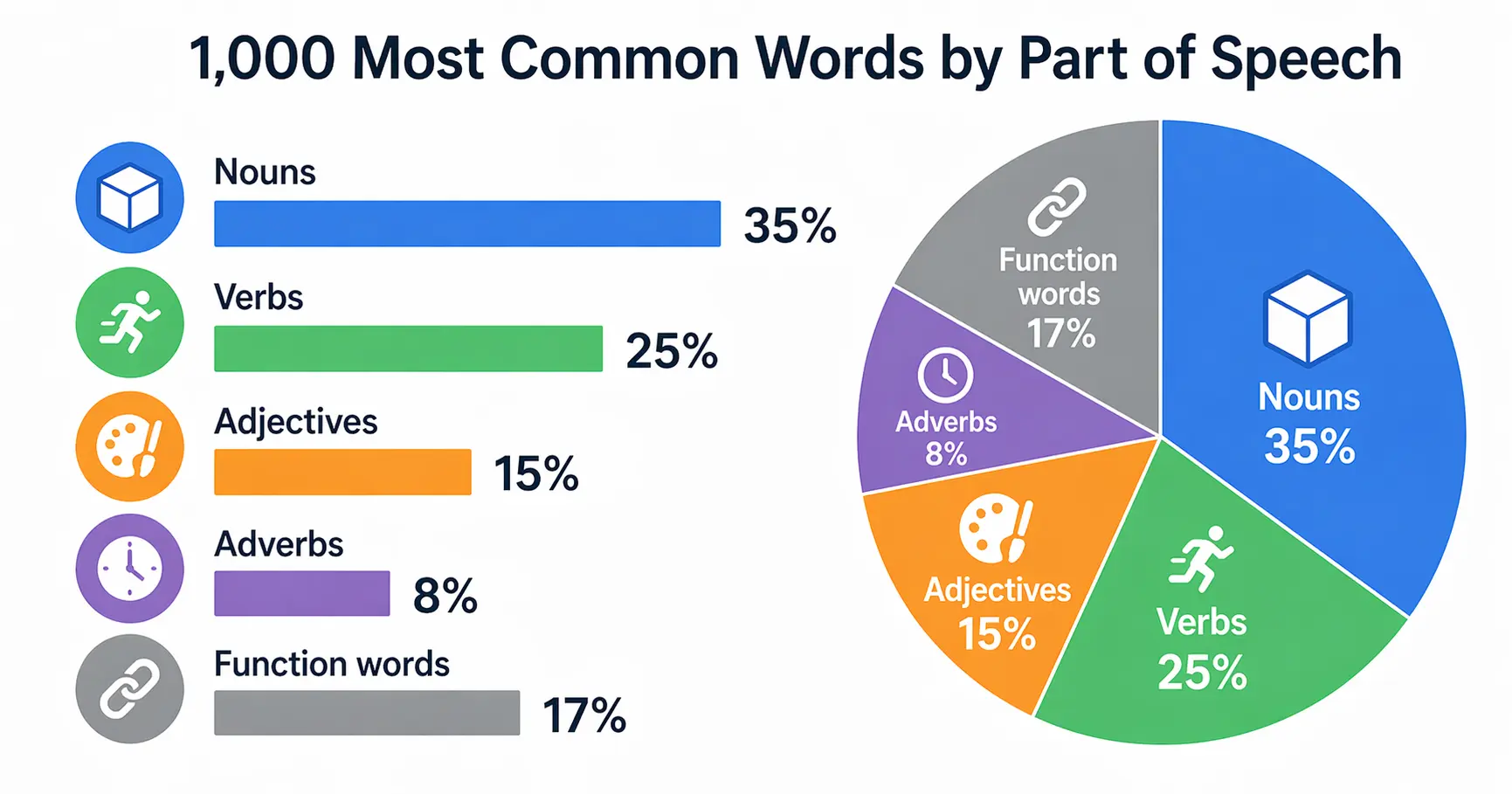
この1,000語の品詞別の内訳
内訳を理解すると、効率的に学べます:
| 品詞 | 割合(約) | 語数 | 役割 |
|---|---|---|---|
| 名詞 | 35% | 約350 | ものの名前:problem, area, information, government |
| 動詞 | 25% | 約250 | 動作を表す:provide, include, continue, require |
| 形容詞 | 15% | 約150 | 性質を表す:important, different, possible, strong |
| 副詞 | 8% | 約80 | 方法・時・場所を修飾:already, however, often, usually |
| 機能語 | 17% | 約170 | アイデアをつなぐ:the, in, with, because, which, although |
機能語(前置詞、接続詞、限定詞、代名詞)は個々の頻度は最も高いですが、カテゴリーとしての単語数は最も少ないです。これらはほとんどすでに知っているでしょう。学習者にとって最大のギャップは通常、動詞と形容詞にあります — require、previous、significant、maintain のような、実際の英語では常に登場するのに、初級コースではスキップされがちな単語です。
学習プラン:8週間で1,000語
1,000語すべてをゼロから覚える必要はありません。ほとんどの学習者はすでに400〜600語を知っています。目標は、自分のギャップを効率的に埋めることです。
第1〜2週:評価と土台づくり
- 上のリストをざっと見る。 意味と使い方の両方で100%自信がない単語にすべてマークをつけましょう。
- 状況を把握する。 ほとんどの学習者は200〜400語が未知または部分的にしか知らない単語です。
-
3つのグループに分ける:
- よく知っている — 考えなくても文で使える
- 見覚えはあるが不確か — 読んでいて理解はできるが自信を持って使えない
- 知らない — 馴染みがない、またはとても曖昧
学習時間は「見覚えはあるが不確か」と「知らない」のグループに集中させましょう。
第3〜6週:能動的学習(1日25語)
| 時間帯 | 活動 | 時間 |
|---|---|---|
| 朝 | 昨日の単語のクイックリコールテスト | 5分 |
| 午後 | 新しい単語を25語学ぶ — 定義と例文を読み、5語については自分で文を書く | 15分 |
| 夜 | 今日の新しい単語+3日前の単語を復習 | 10分 |
1日25語、週5日ペースで、4週間で500語をカバーできます。これらの多くは「見覚えはあるが不確か」な単語で、数回の復習で確実に使えるようになります。
第7〜8週:復習と実践的な使用
- 新しい単語はなし。復習と使用に完全に集中。
- 第3〜6週のすべての単語で自分をテスト。
- 難しいと感じる単語を使って1日10文を書く。
- 1日1本の英語記事を読み、この1,000語のうちいくつ出てくるか確認。
第8週以降
次のレベルへ。必須英単語4000語ガイドはこのリストの続きで、1,001〜4,000語を6ヶ月の構造的プランで学べます。
今すぐ練習できる単語
このリストから25語の必須単語です。ワンクリックで辞書に追加でき、間隔反復の復習が自動的に始まります。
experience
名詞
経験
例
- Her previous work experience made her an ideal candidate for the position.
- Traveling to different countries provides valuable cultural experience.
meeting
名詞
会議, 会合, 打ち合わせ
例
- The business meeting discussed budget plans for next fiscal year.
- Town meeting allows residents to voice concerns about local issues.
reply
名詞
返事, 回答
例
- Quick reply shows professional customer service quality.
- Written reply confirms agreement terms and conditions.
create
動詞
創造する
例
- Artists create beautiful works that inspire and move people emotionally.
- The new policy will create opportunities for economic growth.
mention
動詞
言及する, 触れる
例
- Please mention my name when you call about job opening.
- The report fails to mention important environmental concerns.
describe
動詞
説明する, 描写する, 述べる
例
- Can you describe what the suspect looked like to police officers?
- The travel guide describes many interesting places to visit in Europe.
impact
名詞
衝撃, 影響
例
- Climate change has a significant impact on global weather patterns.
- The impact of the collision damaged both cars severely.
exam
名詞
試験, テスト
例
- Students study hard for weeks before taking their final exams.
- The driving exam tests both knowledge and practical skills behind wheel.
powerful
形容詞
強力な, 力強い
例
- Powerful computer processes data very quickly.
- Powerful speech moves audience to take action.
wonderful
形容詞
素晴らしい, すてきな
例
- The restaurant serves wonderful food with excellent service.
- We had a wonderful time at the beach during summer vacation.
confident
形容詞
自信がある
例
- She felt confident about passing the difficult examination successfully.
- The confident speaker delivered an inspiring presentation to the audience.
favor
名詞
好意, 援助, 賛意
例
- Could you do me a favor and pick up my dry cleaning?
- The proposal gained favor among the committee members after lengthy discussion.
ambition
名詞
野望, 野心
例
- Her ambition is to become a successful doctor and help people worldwide.
- Sometimes ambition can drive people to work too hard and neglect family.
tourist
名詞
観光客, ツーリスト
例
- Foreign tourist visits famous landmarks and museums.
- Tourist season brings economic benefits to region.
student
名詞
学生, 生徒
例
- Diligent student completes homework assignments on time.
- Graduate student conducts research for doctoral degree.
relaxed
形容詞
リラックスした, くつろいだ
例
- Relaxed atmosphere encourages open discussion among participants.
- Relaxed person handles pressure situations more effectively.
hot
形容詞
熱い, 暑い
例
- Summer weather is extremely hot in desert regions around the world.
- The coffee is too hot to drink right now - let it cool down.
cool
動詞
冷やす, 冷める
orange
名詞
オレンジ, みかん
例
- Fresh orange juice contains vitamin C and natural sugar.
- The sunset painted sky in beautiful shades of orange.
meat
名詞
肉
例
- Fresh meat should be stored in refrigerator for food safety.
- Vegetarians choose not to eat meat for ethical reasons.
football
名詞
サッカー, フットボール
例
- Football is the most popular sport in many countries around the world.
- The children play football in the school yard during their lunch break.
名詞
郵便, メール
例
- Check mail every day for important bills and official documents.
- Electronic mail has largely replaced traditional postal letters today.
father
名詞
父
例
- His father taught him how to ride a bicycle in the park.
- The young father proudly carried his baby daughter in his arms.
rush
名詞
急ぎ, 突進
例
- Last-minute rush creates stress and mistakes often.
- Morning rush causes traffic jams in city.
result
名詞
結果, 成績, 結末
例
- Election result surprises political analysts and voters.
- Test result shows significant improvement in performance.
このリストを効果的に使うコツ
読むだけでなく、自分をテストする。「意味」の列を隠して、記憶から各単語を定義してみてください。「単語」の列を隠して、定義から英単語を思い出してみてください。アクティブ・リコールは受動的な読書よりはるかに効果的です。
複数の意味がある単語に注意する。 頻出1,000語の多くは3〜5の意味を持っています。「Right」は「正しい」「権利」「右」。「Run」は「走る」「経営する」「機械を動かす」。最もよく使われる意味を先に覚え、その後で他の意味を追加しましょう。
コロケーションに気づく。 よく使う単語には自然なパートナーがあります:make a decision(”do” a decisionではない)、take a photo(”make” a photoではない)、do homework(”make” homeworkではない)。正しいコロケーションを覚えることが、自然な英語とテキストブック英語を分ける決定的な違いです。
知らない単語を記録する。 このリストで知らない単語は、すべて最優先の学習ターゲットです。これらの単語は他のどの単語よりも英語に頻繁に登場します — 早く覚えれば覚えるほど、理解力は速く向上します。
次に読むべき記事
-
4,000語にレベルアップ。 最初の1,000語で理解度85%。次の3,000語で95%に。必須英単語4000語ガイドで構造的なプランを。
-
文の中で単語を覚える。 日常で使える簡単な英語の文で、よく使う語彙を使った200以上の実用文を見られます。
-
暗記システムを作る。 英単語の覚え方で、科学的に実証された8つのテクニックを。
-
総合的な学習法を改善する。 語彙力を向上させる方法で長期的な成長のための10の戦略を。
FAQ
英語の頻出1000語とは?
英語の頻出1,000語は、日常の会話や文章で最も多く使われる単語です。機能語(the, is, in)、基本動詞(make, take, give, know)、よく使われる名詞(time, people, way, day)、必須形容詞(new, good, different, important)などが含まれます。これらを合わせると日常英会話の約85%をカバーします。この記事ではそれらを意味と例文付きでアルファベット順にまとめています。
1,000語で英語は話せる?
1,000語で基本的な会話は可能です — 挨拶、日常のルーティン、簡単な意見、買い物、旅行のシーン。英語圏の国で「なんとかやっていく」ことはできます。ただし、仕事での快適なコミュニケーション、ニュースの理解、IELTSのような試験の合格には3,000〜5,000語が必要です。1,000語は強固な基盤であって、ゴールではありません。
1,000語を覚えるのにどれくらいかかる?
すでに英語の知識がある場合、これらの単語の400〜600語はすでに知っているでしょう。残りの400〜600語を覚えるのに、1日15〜25語ペース+毎日の復習で約6〜8週間かかります。完全な初心者がゼロからなら10〜12週間。スピードではなく継続性が鍵です — 毎日15分の勉強は、週1回2時間の勉強に勝ります。
頻出英単語を覚える最良の方法は?
単独ではなく文脈の中で覚えましょう。各単語について、定義を読み、例文を2〜3個勉強し、自分で文を書く。間隔反復(1日後、3日後、7日後、14日後に復習)で定着させます。「ほぼ知っている」単語から先に取り組みましょう — 部分的な知識を自信のある使用に変えるほうが、完全に新しい単語を覚えるより速いからです。
頻出1000語はアルファベット順と頻度順、どちらで学ぶべき?
学習目的なら、頻度順のほうが効率的です — 最もインパクトの大きい単語から先に覚えられるからです。この記事のA-Z配列はリファレンスと素早い検索用です。能動的に勉強する際は、最も頻繁に出会う単語から始めましょう:基本動詞(be, have, do, say, get, make, go, know, take, see)、頻出名詞(time, year, people, way, day)、高頻度形容詞(good, new, first, last, long, great, little, own, other, old)。
最初の1000語を覚えたら次は?
次のステップは2,000〜4,000語に拡大すること。理解度が85%から95%に上がり、辞書なしで文脈から新しい単語を覚えられるレベルになります。必須英単語4000語ガイドでは、レベル別の構造的プランを提供しています。トピック別の語彙に集中することもできます:テクノロジー、仕事、またはIELTS語彙ガイドでの試験対策。