
句動詞100選:意味と例文付き必須リスト
句動詞は、英語学習者にとって語彙の中で最も難しい部分です。ネイティブスピーカーはあらゆる会話、メール、メッセージで句動詞を使いますが、個々の単語から意味を推測するのはほぼ不可能です。「put up with」は「put」+「up」+「with」ではなく、「耐える、我慢する」という意味です。
このリストでは、英語で最も使われる句動詞100個を、明確な意味と実際の例文付きで紹介します。トピック別に整理しているので、必要なものから優先的に学べ、リファレンスとしてもすぐに見つけられます。
- 句動詞の数: 100
- レベル: A2〜B2(初級〜中上級)
- こんな人に最適: 英語の流暢さ向上、IELTS対策、会話練習、日常コミュニケーション
この100の句動詞の選定基準
英語の話し言葉と書き言葉のコーパス(British National CorpusとCorpus of Contemporary American English)を分析し、最も頻出する句動詞を抽出しました。このリストの100個は以下の3つの基準を満たしています:
- 高頻度 — 英語で最も使われる句動詞トップ200に入る
- 幅広い実用性 — 日常会話・学術英語・ビジネスのすべてで通用する
- 試験での出題頻度 — IELTS、ケンブリッジ英検、TOEFLの教材にすべて登場する
100個すべてを覚えれば、映画・ポッドキャスト・ニュース記事・日常会話で出会う句動詞の大半が理解できるようになります。
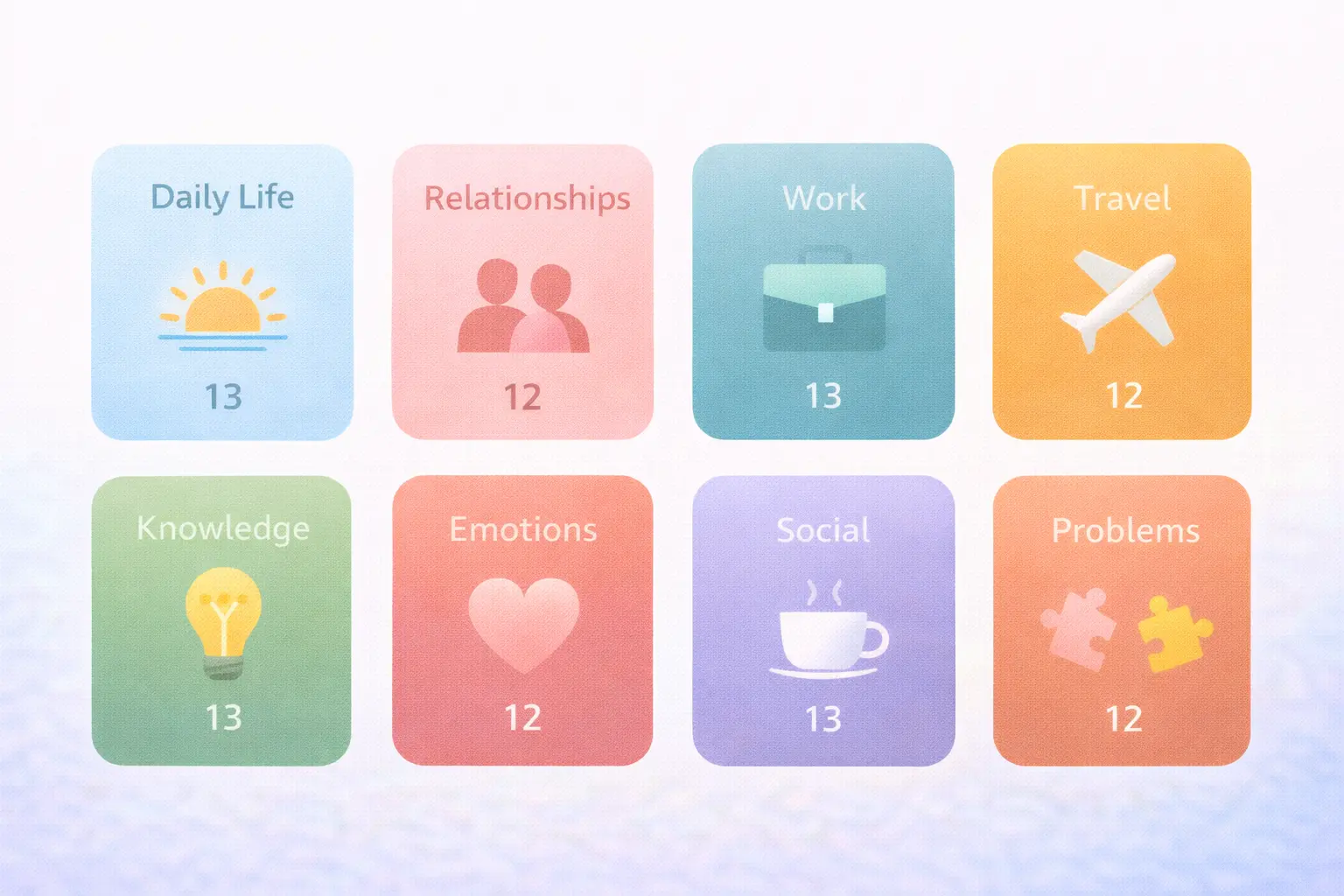
日常生活と習慣
起床から就寝まで、毎日の行動を表す句動詞です。
| # | 句動詞 | 意味 | 例文 |
|---|---|---|---|
| 1 | wake up | 目が覚める | I usually wake up at 7 AM, but on weekends I sleep until 9.(普段は朝7時に起きるが、週末は9時まで寝る。) |
| 2 | get up | 起きる;立ち上がる | He got up, stretched, and walked to the kitchen.(起き上がり、伸びをして、キッチンへ向かった。) |
| 3 | turn on | (機器を)つける | Can you turn on the light? It is too dark in here.(電気をつけて?暗すぎる。) |
| 4 | turn off | (機器を)消す | Please turn off your phone before the movie starts.(映画が始まる前に電話を切ってください。) |
| 5 | put on | 着る | She put on her coat and left the house.(コートを着て家を出た。) |
| 6 | take off | 脱ぐ;離陸する | Take off your shoes before entering the house.(家に入る前に靴を脱いでね。) |
| 7 | throw away | 捨てる | Do not throw away that box — I need it for the move.(その箱を捨てないで——引っ越しに必要。) |
| 8 | clean up | きれいにする、片付ける | We spent the whole afternoon cleaning up after the party.(パーティーの後、午後いっぱい片付けをした。) |
| 9 | put away | 元の場所に片付ける | The kids never put away their toys without being asked.(子供たちは言わないとおもちゃを片付けない。) |
| 10 | lie down | 横になる | I need to lie down for a few minutes — I have a headache.(数分横にならせて——頭痛がする。) |
| 11 | use up | 使い切る | We used up all the milk, so I need to go to the store.(牛乳を使い切ったので、買いに行かないと。) |
| 12 | run out of | 〜を切らす | We have run out of coffee — can you buy some on the way home?(コーヒーが切れた——帰りに買ってきてくれる?) |
| 13 | tidy up | 整理整頓する | Tidy up your room before your grandparents arrive.(祖父母が来る前に部屋を片付けなさい。) |
コミュニケーションと人間関係
人と話す、関係を維持する、社会的なやりとりに関する句動詞です。
| # | 句動詞 | 意味 | 例文 |
|---|---|---|---|
| 14 | get along with | 〜と仲良くやる | I get along with all my colleagues, but especially with my team lead.(同僚みんなとうまくやっているが、特にチームリーダーとは仲がいい。) |
| 15 | break up | (恋愛関係で)別れる | They broke up after three years together.(3年付き合った後に別れた。) |
| 16 | make up | 仲直りする | They argued on Monday but made up by Wednesday.(月曜に喧嘩したが、水曜には仲直りした。) |
| 17 | bring up | 話題に出す;子供を育てる | She brought up an interesting point about the budget.(予算について興味深い指摘をした。) |
| 18 | catch up with | 追いつく;久しぶりに会う | Let us meet for coffee this weekend — I want to catch up with you.(今週末コーヒーを飲もう——近況を聞きたい。) |
| 19 | fall out with | (喧嘩で)仲たがいする | He fell out with his brother over money.(お金のことで兄弟と仲たがいした。) |
| 20 | ask out | デートに誘う | He finally asked her out after months of hesitation.(何ヶ月も迷った末にようやく彼女をデートに誘った。) |
| 21 | let down | 失望させる | I promised to help and I do not want to let you down.(手伝うと約束したし、がっかりさせたくない。) |
| 22 | put up with | 我慢する、耐える | I cannot put up with this noise any longer.(この騒音にはもう耐えられない。) |
| 23 | look after | 世話をする | Can you look after the dog while I am on holiday?(休暇中、犬の面倒を見てくれる?) |
| 24 | grow up | 大人になる;成長する | She grew up in a small town in northern England.(イングランド北部の小さな町で育った。) |
| 25 | hang out | 一緒に時間を過ごす | We usually hang out at the park on Saturday afternoons.(土曜の午後はたいてい公園で過ごす。) |
仕事・勉強・生産性
オフィス、教室、物事を成し遂げるために必要な句動詞です。
| # | 句動詞 | 意味 | 例文 |
|---|---|---|---|
| 26 | set up | 準備する;手配する | She set up a meeting for next Tuesday at 10 AM.(来週火曜10時に会議を設定した。) |
| 27 | carry out | 実行する;遂行する | The team carried out the experiment over three weeks.(チームは3週間かけて実験を行った。) |
| 28 | fill in | 記入する | Please fill in the application form and submit it online.(申請書に記入してオンラインで提出してください。) |
| 29 | hand in | 提出する | You need to hand in your essay by Friday afternoon.(金曜日の午後までにエッセイを提出してください。) |
| 30 | take on | 引き受ける | She took on extra work to cover for her absent colleague.(不在の同僚の代わりに追加の仕事を引き受けた。) |
| 31 | put off | 延期する | Do not put off your homework — do it now and relax later.(宿題を後回しにしないで——今やって後でゆっくりしよう。) |
| 32 | call off | 中止する | The meeting was called off because the manager was sick.(マネージャーが病気で会議は中止になった。) |
| 33 | keep up with | 〜に遅れずについていく | It is hard to keep up with the workload during exam season.(試験期間中は作業量についていくのが大変だ。) |
| 34 | come up with | 考えつく | The marketing team came up with a brilliant campaign.(マーケティングチームが素晴らしいキャンペーンを考えついた。) |
| 35 | work out | 運動する;解決する | I work out three times a week at the gym.(週3回ジムで運動している。) |
| 36 | go ahead | 進める;始める | The project was approved — we can go ahead with the plan.(プロジェクトが承認された——計画を進められる。) |
| 37 | take over | 引き継ぐ;支配する | When the CEO retired, his daughter took over the company.(CEOが退任し、娘が会社を引き継いだ。) |
| 38 | drop out | 中退する;脱退する | He dropped out of university in his second year to start a business.(起業するために大学2年で中退した。) |
前半50:移動と旅行
徒歩、車、バス、飛行機での移動に関する句動詞です。
| # | 句動詞 | 意味 | 例文 |
|---|---|---|---|
| 39 | get on | 乗る(バス・電車・飛行機) | We got on the train just before the doors closed.(ドアが閉まる直前に電車に乗った。) |
| 40 | get off | 降りる(バス・電車・飛行機) | Get off at the next stop — the museum is right there.(次の停留所で降りて——博物館はすぐそこ。) |
| 41 | get in | 乗り込む(車・タクシー) | She got in the taxi and gave the driver her address.(タクシーに乗り込み、運転手に住所を伝えた。) |
| 42 | get out | 出る(車・閉じた空間) | He got out of the car and slammed the door.(車から出てドアをバンと閉めた。) |
| 43 | pick up | 迎えに行く;拾い上げる | I will pick you up at the airport at 6 PM.(6時に空港に迎えに行くよ。) |
| 44 | drop off | 送り届ける | Can you drop me off at the train station on your way to work?(仕事に行く途中で駅まで送ってくれる?) |
| 45 | set off | 出発する | We set off at dawn to avoid the traffic.(渋滞を避けるために夜明けに出発した。) |
| 46 | check in | チェックインする | We checked in at the hotel and went straight to the pool.(ホテルにチェックインしてすぐプールに行った。) |
| 47 | check out | チェックアウトする;確認する | You need to check out before 11 AM.(午前11時までにチェックアウトしてください。) |
| 48 | head out | 出発する | I am heading out now — see you at the restaurant.(もう出るよ——レストランで会おう。) |
| 49 | pull over | 路肩に停車する | The police officer signaled the driver to pull over.(警察官がドライバーに停車するよう合図した。) |
| 50 | slow down | スピードを落とす | Slow down — there is a school zone ahead.(スピードを落として——この先はスクールゾーンだよ。) |
ここまでで50の句動詞——折り返し地点です。時間がなければ、まずこの前半50に集中しましょう。日常生活・人間関係・仕事・旅行をカバーしています。後半50は、思考・感情・社交・問題解決の場面を追加します。
知識・発見・思考
学び、調べ、理解するための句動詞です。
| # | 句動詞 | 意味 | 例文 |
|---|---|---|---|
| 51 | find out | 見つけ出す、知る | I just found out that the concert is sold out.(コンサートが完売だと知った。) |
| 52 | look up | 調べる(辞書・ネットで) | If you do not know the word, look it up in a dictionary.(その単語がわからなければ辞書で調べて。) |
| 53 | go through | 注意深く調べる | The accountant went through every receipt from the past year.(会計士が過去1年分のすべてのレシートを確認した。) |
| 54 | figure out | 理解する;解決する | It took me an hour to figure out how to use the new software.(新しいソフトの使い方を理解するのに1時間かかった。) |
| 55 | sort out | 整理する;解決する | We need to sort out the schedule before the conference.(会議の前にスケジュールを整理しないと。) |
| 56 | point out | 指摘する | She pointed out several errors in the report.(報告書のいくつかのミスを指摘した。) |
| 57 | turn out | 結局〜になる | The project turned out to be much harder than expected.(そのプロジェクトは予想よりずっと難しかった。) |
| 58 | come across | 偶然見つける | I came across an old photo album while cleaning the attic.(屋根裏を掃除していたら古いアルバムを見つけた。) |
| 59 | look into | 調査する | The police are looking into the cause of the accident.(警察が事故の原因を調べている。) |
| 60 | make out | かろうじて見える/聞こえる | The writing was so small I could barely make out the words.(字が小さすぎてほとんど読めなかった。) |
| 61 | stand for | 〜を意味する、表す | “UN” stands for “United Nations.”(UNは「United Nations(国際連合)」の略。) |
| 62 | rule out | 可能性を排除する | Doctors have ruled out any serious illness.(医師は重い病気の可能性を排除した。) |
| 63 | think over | じっくり考える | I need a few days to think over your offer.(あなたの提案をじっくり考えるのに数日必要です。) |
感情と態度
気持ち・反応・対処法を表す句動詞です。
| # | 句動詞 | 意味 | 例文 |
|---|---|---|---|
| 64 | give up | 諦める;やめる | Do not give up — you are so close to finishing.(諦めないで——もうすぐ完成だよ。) |
| 65 | cheer up | 元気になる/元気づける | Cheer up — the exam is over and you did your best.(元気出して——試験は終わったし、ベストを尽くしたよ。) |
| 66 | calm down | 落ち着く | Take a deep breath and calm down before you respond.(返事をする前に深呼吸して落ち着いて。) |
| 67 | freak out | パニックになる(口語) | She freaked out when she realized she lost her passport.(パスポートをなくしたと気づいてパニックになった。) |
| 68 | look forward to | 楽しみにする | I am looking forward to the summer holidays.(夏休みが楽しみだ。) |
| 69 | get over | 回復する、立ち直る | It took her months to get over the breakup.(別れから立ち直るのに何ヶ月もかかった。) |
| 70 | hold on | ちょっと待つ | Hold on — let me grab my keys before we leave.(ちょっと待って——出る前に鍵を取ってくる。) |
| 71 | count on | 頼りにする | You can always count on Maria — she never lets anyone down.(マリアはいつでも頼りになる——彼女は誰もがっかりさせない。) |
| 72 | show off | 見せびらかす | He was showing off his new car to everyone at the party.(パーティーでみんなに新車を見せびらかしていた。) |
| 73 | end up | 結局〜になる | We got lost and ended up on the wrong side of town.(道に迷って街の反対側に着いてしまった。) |
| 74 | burn out | 燃え尽きる | After working 80-hour weeks for a year, she completely burned out.(1年間週80時間働いて、完全に燃え尽きた。) |
| 75 | back up | 支持する;バックアップを取る | My whole team backed me up during the disagreement.(意見の対立の際、チーム全員が私を支持してくれた。) |
社交と日常の活動
外出、買い物、日常の社会生活に関する句動詞です。
| # | 句動詞 | 意味 | 例文 |
|---|---|---|---|
| 76 | show up | 現れる、来る | He showed up 30 minutes late with no explanation.(説明もなく30分遅れて現れた。) |
| 77 | turn up | 現れる(突然);音量を上げる | She turned up at the party without an invitation.(招待されていないのにパーティーに現れた。) |
| 78 | come over | 家を訪ねる | Why do you not come over for dinner on Saturday?(土曜にうちにご飯食べに来ない?) |
| 79 | eat out | 外食する | We eat out at least twice a week — cooking every day is exhausting.(週に少なくとも2回は外食する——毎日料理は疲れる。) |
| 80 | dress up | おしゃれする、着飾る | You need to dress up for the company gala.(会社のガラパーティーにはおしゃれしないと。) |
| 81 | try on | 試着する | She tried on five dresses before choosing one.(1着選ぶまでに5着試着した。) |
| 82 | give back | 返す | I need to give back the book I borrowed from the library.(図書館から借りた本を返さないと。) |
| 83 | pay back | 返済する | I will pay you back on Friday when I get paid.(金曜に給料が出たら返すよ。) |
| 84 | save up | お金を貯める | They are saving up to buy their first apartment.(初めてのマンション購入のために貯金している。) |
| 85 | cut down on | 〜を減らす | The doctor told him to cut down on sugar and salt.(医者に砂糖と塩分を減らすよう言われた。) |
| 86 | go on | 続ける;起こる | Please go on — I am listening.(続けてください——聞いています。) |
| 87 | join in | 参加する | Everyone was dancing, so I decided to join in.(みんな踊っていたので、私も参加した。) |
| 88 | take back | 返品する | These shoes do not fit — I need to take them back.(この靴は合わない——返品しないと。) |
問題・課題・状況
予期せぬ出来事や困難への対処に関する句動詞です。
| # | 句動詞 | 意味 | 例文 |
|---|---|---|---|
| 89 | deal with | 対処する | I do not know how to deal with this situation.(この状況にどう対処すればいいかわからない。) |
| 90 | look out | 気をつける | Look out! There is a car coming.(気をつけて!車が来てる。) |
| 91 | break down | 故障する;感情的に崩れる | The car broke down on the highway and we had to call for help.(高速道路で車が故障して助けを呼ばなければならなかった。) |
| 92 | blow up | 爆発する;激怒する | He blew up at his assistant for losing the files.(ファイルをなくしたアシスタントに激怒した。) |
| 93 | run into | 偶然会う;問題にぶつかる | I ran into my old teacher at the supermarket yesterday.(昨日スーパーで昔の先生に偶然会った。) |
| 94 | come up | 生じる;話題に出る | Something has come up at work — I will be home late.(仕事で用事ができた——帰りが遅くなる。) |
| 95 | hold up | 遅らせる | The flight was held up for two hours because of fog.(霧で便が2時間遅れた。) |
| 96 | mix up | 混同する | I always mix up “affect” and “effect.”(いつも “affect” と “effect” を混同する。) |
| 97 | make up for | 埋め合わせる | He bought her flowers to make up for forgetting her birthday.(誕生日を忘れた埋め合わせに花を買った。) |
| 98 | pass out | 気絶する | It was so hot in the room that one of the students passed out.(部屋が暑すぎて生徒の一人が気絶した。) |
| 99 | shut down | 閉鎖する;完全に停止する | The factory shut down last year, and 200 people lost their jobs.(工場が去年閉鎖され、200人が職を失った。) |
| 100 | take apart | 分解する | He took apart the old radio to see how it worked.(仕組みを見るために古いラジオを分解した。) |
練習用ボキャブラリー
以下の25語は、上記の句動詞と一緒によく使われる単語です。クリックすると定義、発音、例文が見られます。
finance
動詞
資金を調達する, 融資する
例
- Many students need loans to finance their college education expenses.
- The bank agreed to finance the construction of the new shopping center.
executive
形容詞
経営の, 役員の
例
- Executive decisions require careful consideration of multiple factors and consequences.
- The executive branch of government is responsible for implementing laws.
valid
形容詞
有効な, 妥当な, 正当な
例
- Valid argument supports logical reasoning and conclusion.
- Valid passport allows international travel without problems.
flexible
形容詞
柔軟な, 弾力のある
例
- Flexible working arrangements help employees balance work and family life.
- The flexible plastic tube can bend without breaking or cracking.
culmination
名詞
頂点, 最高潮
例
- The graduation ceremony was the culmination of four years of hard study.
- Winning the championship represented the culmination of the team's efforts.
transmit
動詞
送る, 伝える, 伝送する
例
- Disease may transmit through contact with surfaces.
- Satellites transmit signals across vast distances effectively.
gulp
動詞
飲み込む, ぐっと飲む
例
- She had to gulp nervously before giving her presentation to the board.
- The thirsty runner gulped down an entire bottle of cold water.
cherished
形容詞
大切にされた, 愛された, 宝物の
例
- His cherished dream of becoming a pilot finally came true.
- The old photograph was her most cherished possession from childhood.
fate
名詞
運命, 宿命
例
- She believes that fate brought them together at the right moment.
- The explorer's fate remained unknown after he disappeared in the jungle.
spellbound
形容詞
魅了された, 夢中の, 心を奪われた
例
- Audience sits spellbound during magical performance tonight.
- Children remain spellbound by storyteller's fascinating tales.
pet
形容詞
ペットの
例
- Pet project receives extra attention and resources.
- Pet theory explains professor's research focus area.
master
名詞
師匠, マスター
例
- Apprentices learn traditional crafts from experienced master craftsmen.
- The chess master defeated opponents using brilliant strategic moves.
payable
形容詞
支払われるべき, 支払可能な, 支払い義務のある
例
- All dues are payable at the end of the month.
- The invoice is payable within 30 days.
serenity
名詞
平静, 静けさ, 落ち着き
例
- She maintained her serenity despite the chaos.
- The serenity of the lake was calming.
classy
形容詞
上品な, 洗練された
例
- Classy restaurant serves gourmet food in elegant dining atmosphere.
- Her classy appearance impressed everyone at formal business meeting.
revolt
動詞
反乱, 蜂起, 叛乱
例
- A revolt broke out in the city center last night.
- The workers decided to revolt against the unfair conditions.
rethink
動詞
再考する, 見直す, 再検討する
例
- He decided to rethink his position on the issue.
- We need to rethink our strategy for the project.
gypsy
名詞
ジプシー, ロマ
例
- Traditional gypsy music features violin and passionate vocals.
- Wandering gypsy caravan traveled through European countryside.
buffoon
名詞
お笑い芸人, 道化, ばか
例
- Court buffoon entertained royal family with silly performances.
- Don't act like buffoon during important business presentation.
execution
名詞
実行, 処刑, 執行
例
- Perfect execution of the dance routine impressed judges and audience members.
- The execution of the business plan requires careful coordination and timing.
territory
名詞
領土, 地域, 土地
例
- Animal territory provides food and shelter resources.
- National territory requires protection from foreign invasion.
tribe
名詞
部族
例
- Ancient tribe lived in harmony with nature.
- Indigenous tribe preserves traditional customs and languages.
resolve
動詞
解決する, 決意する
例
- Mediator helps parties resolve dispute through negotiation.
- Technical team will resolve software problems quickly.
句動詞を効果的に学ぶ方法
1. カテゴリー別に学び、アルファベット順にしない。 上の表のグループはそのために作られています。「get on」「get off」「get in」「get out」を一緒に覚えると、パターンが見えてきて定着しやすくなります。
2. 動詞だけでなく、フレーズ全体を覚える。 「put up with」は一つのまとまりです。「put」+「up」だけ覚えても、会話で正しいフレーズは出てきません。句動詞は必ず完全な形で覚えましょう。
3. 覚えたその日に使う。 新しい句動詞を5つ覚えたら、すべてを使った短い文章を書くか会話をしてみましょう。24時間以内にアウトプットすることが最も強力な記憶定着法です。
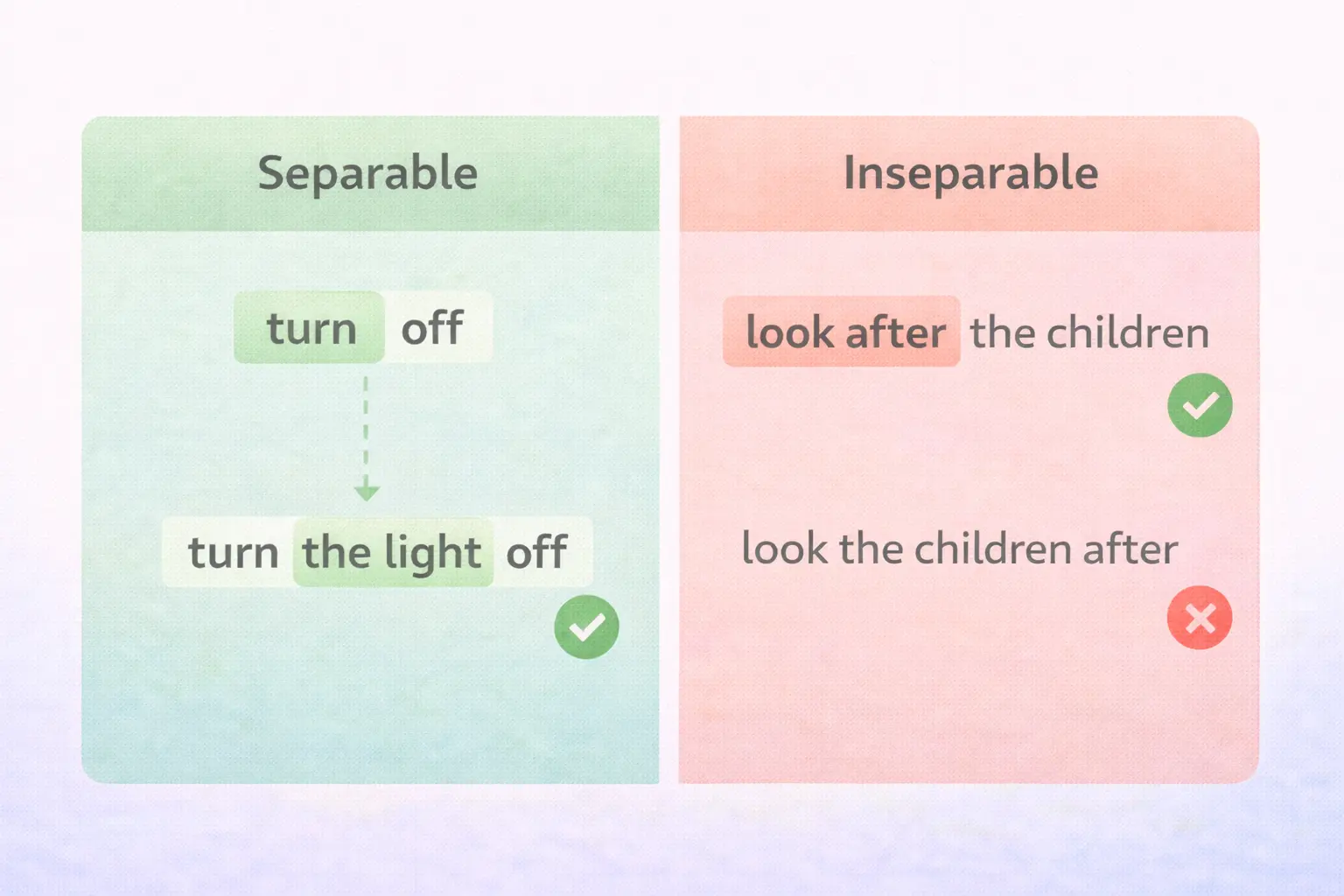
4. 分離可能か不可能かに注意する。 句動詞には分離可能なもの「turn the light off」=「turn off the light」と、不可能なもの「look after the children」(「look the children after」は不可)があります。迷ったら動詞とパーティクルをくっつけたままにしましょう。
5. 間隔反復で復習する。 句動詞をLinglifyの辞書に追加して、間隔を空けて復習しましょう。毎日10分の方が、週1回の1時間より効果的です。
体系的な学習法については、英語の語彙力を向上させる方法をお読みください。
次のステップ
-
まず50から始める。 100個が多すぎると感じたら、最もよく使う句動詞50選から始めましょう。基本動詞別に整理し、覚えやすいパターン解説付きです。
-
上級句動詞にステップアップ。 このリストに慣れたら、上級句動詞ガイドでC1〜C2レベルの学術・ビジネス英語の句動詞60選以上に挑戦しましょう。
-
動詞グループで深掘り。 1つの動詞から生まれるすべての句動詞を学ぶなら、最も多彩なMAKEの句動詞ガイドから始めましょう。
-
ビジネスシーンで活用。 英語で仕事をしているなら、ビジネス句動詞ガイドで会議・メール・交渉に使えるプロフェッショナルなフレーズ60選以上を学びましょう。
-
毎日の学習習慣を作る。 語彙学習のステップバイステップシステムで、この100の句動詞を数週間で使えるボキャブラリーにしましょう。
よくある質問
最も重要な句動詞50個は?
この記事の前半50個(#1〜#50)が、日常英語で最もよく使われます。日常の習慣(wake up, turn on, put on)、人間関係(get along with, break up, make up)、仕事(set up, carry out, hand in)、旅行(get on, pick up, check in)をカバーしています。50個だけ覚えるならこの前半に集中するか、基本動詞別に整理した句動詞50選ガイドをご覧ください。
英語にはいくつの句動詞がある?
英語には10,000以上の句動詞の組み合わせがありますが、よく使われるのは200〜300程度です。このリストの100個が最も頻出するものをカバーしています。何千もの句動詞を覚える必要はありません——このリストをマスターすれば、ほとんどの非ネイティブスピーカーよりも先を行けます。
句動詞を最速で覚える方法は?
テーマ別のグループ(旅行、仕事、感情)で学び、アルファベット順にしないこと。実際の自分の状況を使って例文を書くこと。間隔反復で復習すること。そして最も大切なのは、会話やライティングで積極的に使うことです。句動詞は受動的な暗記では身につきません。
句動詞はフォーマルな英語でも使える?
多くの句動詞はフォーマルな英語に適しています:「carry out(実行する)」「set up(設立する)」「point out(指摘する)」「rule out(排除する)」。一方「hang out」「freak out」「blow up」はカジュアルです。フォーマルかどうかは句動詞というカテゴリーではなく、個々の句動詞によって異なります。フォーマル・学術的な選択肢は上級句動詞ガイドをご覧ください。
IELTSに句動詞は必要?
はい。IELTS試験官はスピーキングでの自然な句動詞の使用(流暢さの証拠)と、ライティングでの適切な使用(語彙力の証拠)を評価します。ただしWriting Task 2ではフォーマルな句動詞に限定しましょう:「account for」「bring about」「carry out」。スピーキングでは「hang out」や「catch up with」のようなカジュアルな句動詞が自然で本物らしく聞こえます。バンド別の戦略はIELTS語彙完全ガイドをご覧ください。
句動詞とイディオムの違いは?
句動詞は動詞+パーティクルの組み合わせで、個々の単語とは異なる意味を持ちます:「give up」=やめる。イディオムは文法規則に文字通りには従わない固定表現です:「it is raining cats and dogs」=大雨が降っている。句動詞は常に動詞として機能します。イディオムは文のどの部分にもなりえます。重なる部分もあります——「let the cat out of the bag」はイディオム、「give up」は句動詞です。