英語の形容詞一覧:基礎から上級まで350語
形容詞は言葉に命を吹き込む単語です。形容詞がなければ、すべてが平坦になります:”I saw a dog” が “I saw a huge, scruffy, adorable dog” になります。名詞は同じでも、形容詞がサイズ、状態、感情的な反応 — すべてを3語で描き出します。
英語には何千もの形容詞がありますが、多くの学習者は同じ20語ばかり使いがちです:good, bad, big, small, nice, happy, sad, beautiful, ugly, old, new, young, fast, slow, easy, hard, hot, cold, long, short。これらは使えますが、英語が基本的で単調に聞こえてしまいます。
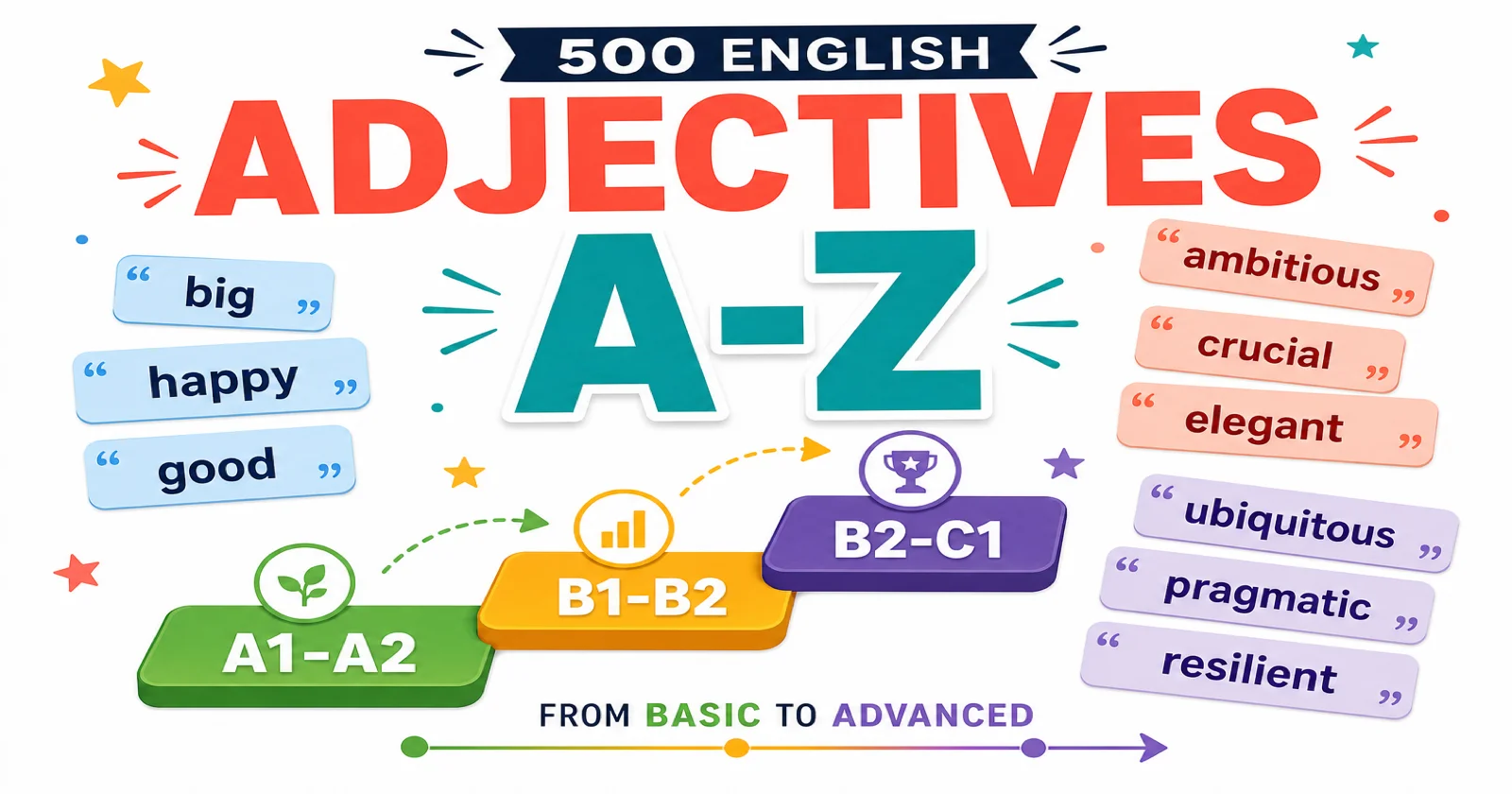
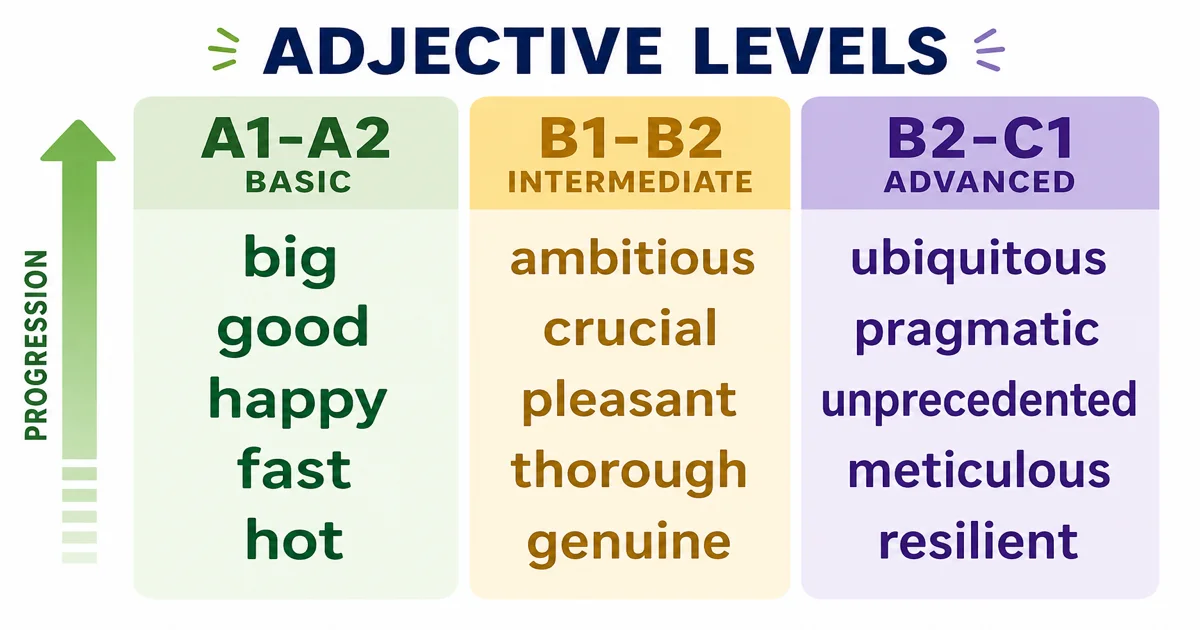
このガイドでは、レベル(A1〜C1)とカテゴリー(外見、性格、サイズ、評価など)別に整理した350の形容詞を紹介します。各形容詞には明確な定義と例文が含まれています。体系的に語彙をアップグレードするための参考書としてお使いください。
- 収録数: 350の形容詞
- 整理方法: CEFRレベル(A1〜C1)と意味カテゴリー
- 形式: 形容詞 → 意味 → 例文
- こんな方に: 語彙力強化、ライティング改善、試験対策
使い古された形容詞の言い換えは、よく使う単語の同義語:200以上のアップグレードをご覧ください。
形容詞とは?
形容詞は名詞を描写・修飾する単語です。以下のような質問に答えます:
- どんな種類? — a tall building, a beautiful sunset
- いくつ? — several options, few mistakes
- どれ? — this book, that car
- どのくらい? — enough time, little patience
文中での形容詞の位置
| 位置 | 例 | ルール |
|---|---|---|
| 名詞の前 | a red car | 最も一般的な位置 |
| 連結動詞の後 | The car is red. | be, seem, look, feel, taste, smell, sound の後 |
| 名詞の後 | something interesting | 不定代名詞(something, anything, nothing)の後 |
複数の形容詞の語順
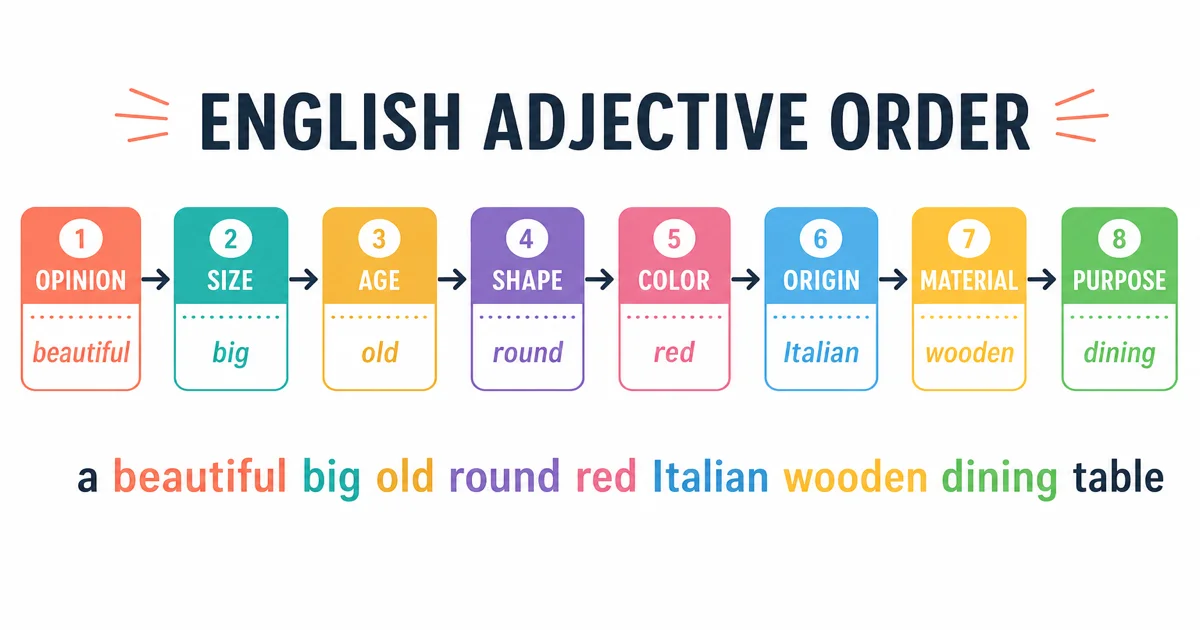
名詞の前に複数の形容詞を使う場合、英語では特定の語順に従います:
意見 → サイズ → 年齢 → 形 → 色 → 出身 → 材質 → 目的
| 語順 | 例 |
|---|---|
| 意見 + サイズ | a beautiful large house |
| 意見 + 年齢 | a lovely old church |
| サイズ + 色 | a small red car |
| 意見 + 出身 + 材質 | an expensive Italian leather bag |
| サイズ + 年齢 + 色 | a big old brown dog |
“a beautiful old Italian painting” と言います — 決して “an Italian old beautiful painting” とは言いません。
A1〜A2:基本形容詞(100語)
外見と身体的描写
| # | 形容詞 | 意味 | 例文 |
|---|---|---|---|
| 1 | big | 大きい | They live in a big house. |
| 2 | small | 小さい | She has a small apartment. |
| 3 | tall | 背が高い | He is very tall — about 190 cm. |
| 4 | short | 背が低い;短い | She is short but strong. |
| 5 | long | 長い | The movie was really long. |
| 6 | old | 年をとった | My grandmother is 85 years old. |
| 7 | young | 若い | She’s too young to drive. |
| 8 | new | 新しい | I got a new phone yesterday. |
| 9 | beautiful | 美しい | What a beautiful view! |
| 10 | ugly | 醜い | The building is really ugly. |
| 11 | clean | きれいな | The kitchen is very clean. |
| 12 | dirty | 汚い | His shoes are dirty from the mud. |
| 13 | fat | 太った | The cat is getting fat. |
| 14 | thin | 細い;薄い | She’s very thin. |
| 15 | dark | 暗い;色が濃い | The room is too dark to read. |
| 16 | light | 明るい;軽い | The bag is very light. |
| 17 | heavy | 重い | This box is too heavy to carry. |
| 18 | round | 丸い | The table is round. |
| 19 | flat | 平らな | The land here is flat. |
| 20 | sharp | 鋭い | Be careful — that knife is sharp. |
感情と性格
| # | 形容詞 | 意味 | 例文 |
|---|---|---|---|
| 21 | happy | 幸せな | She looks very happy today. |
| 22 | sad | 悲しい | He was sad to leave. |
| 23 | angry | 怒った | Don’t make her angry! |
| 24 | tired | 疲れた | I’m so tired after work. |
| 25 | hungry | お腹が空いた | Are you hungry? Let’s eat. |
| 26 | thirsty | のどが渇いた | I’m really thirsty — can I have water? |
| 27 | scared | 怖がっている | She’s scared of spiders. |
| 28 | nice | いい、感じの良い | He’s a very nice person. |
| 29 | kind | 親切な | That was very kind of you. |
| 30 | funny | おもしろい | She tells really funny jokes. |
| 31 | quiet | 静かな | The library is quiet. |
| 32 | loud | うるさい | The music is too loud. |
| 33 | friendly | フレンドリーな | People here are very friendly. |
| 34 | brave | 勇敢な | The firefighter was very brave. |
| 35 | lazy | 怠惰な | Don’t be lazy — study harder. |
| 36 | busy | 忙しい | Sorry, I’m very busy today. |
| 37 | stupid | 愚かな | That was a stupid mistake. |
| 38 | smart | 賢い | She’s the smartest kid in class. |
| 39 | strong | 強い | He’s very strong. |
| 40 | weak | 弱い | I felt weak after the illness. |
質と評価
| # | 形容詞 | 意味 | 例文 |
|---|---|---|---|
| 41 | good | 良い | This is a really good book. |
| 42 | bad | 悪い | The weather is bad today. |
| 43 | great | 素晴らしい;大きい | That’s a great idea! |
| 44 | terrible | ひどい | The food was terrible. |
| 45 | easy | 簡単な | The test was easy. |
| 46 | hard | 難しい;硬い | Math is hard for some people. |
| 47 | fast | 速い | She’s a fast runner. |
| 48 | slow | 遅い | The internet is really slow. |
| 49 | hot | 暑い;熱い | The coffee is too hot. |
| 50 | cold | 寒い;冷たい | It’s very cold outside. |
| 51 | warm | 暖かい | The water is warm. |
| 52 | cool | 涼しい;かっこいい | It’s cool outside today. |
| 53 | expensive | 高い(値段が) | The restaurant is too expensive. |
| 54 | cheap | 安い | The food is cheap and good. |
| 55 | free | 無料の;自由な | Entry is free on Sundays. |
| 56 | rich | 裕福な | She’s very rich. |
| 57 | poor | 貧しい | The family is very poor. |
| 58 | safe | 安全な | This neighborhood is safe. |
| 59 | dangerous | 危険な | The road is dangerous at night. |
| 60 | important | 重要な | Education is very important. |
色・味・その他の基本語
| # | 形容詞 | 意味 | 例文 |
|---|---|---|---|
| 61 | red | 赤い | She wore a red dress. |
| 62 | blue | 青い | The sky is bright blue today. |
| 63 | green | 緑の | The park is very green in summer. |
| 64 | black | 黒い | He drives a black car. |
| 65 | white | 白い | The walls are white. |
| 66 | yellow | 黄色い | She bought yellow flowers. |
| 67 | sweet | 甘い | This cake is very sweet. |
| 68 | sour | 酸っぱい | The milk has gone sour. |
| 69 | salty | 塩辛い | The soup is too salty. |
| 70 | spicy | 辛い | I love spicy food. |
| 71 | delicious | おいしい | The pasta was delicious! |
| 72 | horrible | ひどい、不快な | The taste was horrible. |
| 73 | open | 開いた | The door is open. |
| 74 | closed | 閉まった | The shop is closed today. |
| 75 | full | いっぱいの | The glass is full. |
| 76 | empty | 空の | The room is empty. |
| 77 | wet | 濡れた | My shoes are wet. |
| 78 | dry | 乾いた | Is the paint dry yet? |
| 79 | right | 正しい;右の | That’s the right answer. |
| 80 | wrong | 間違った | You gave the wrong address. |
| 81 | same | 同じ | We have the same birthday! |
| 82 | different | 異なる | The two plans are very different. |
| 83 | next | 次の | The next bus leaves in 10 minutes. |
| 84 | last | 最後の | This is the last chance. |
| 85 | first | 最初の | She was the first to arrive. |
| 86 | ready | 準備ができた | Are you ready to go? |
| 87 | sure | 確かな | Are you sure about this? |
| 88 | true | 本当の | Is that story true? |
| 89 | real | 本物の | Is that a real diamond? |
| 90 | possible | 可能な | Is it possible to change the date? |
| 91 | simple | 簡単な | The instructions are simple. |
| 92 | difficult | 難しい | The question was difficult. |
| 93 | special | 特別な | Today is a special day. |
| 94 | popular | 人気のある | This song is very popular. |
| 95 | famous | 有名な | She’s a famous actress. |
| 96 | common | よくある | Colds are common in winter. |
| 97 | main | 主な | What’s the main problem? |
| 98 | only | 唯一の | He’s the only child. |
| 99 | own | 自分自身の | I want my own room. |
| 100 | whole | 全体の | I ate the whole pizza. |
B1〜B2:中級形容詞(130語)
性格と人柄
| # | 形容詞 | 意味 | 例文 |
|---|---|---|---|
| 101 | ambitious | 野心的な | She’s very ambitious — she wants to be CEO. |
| 102 | arrogant | 傲慢な | He’s talented but incredibly arrogant. |
| 103 | confident | 自信のある | She’s confident in her abilities. |
| 104 | creative | 創造的な | The designer is very creative. |
| 105 | curious | 好奇心旺盛な | Children are naturally curious. |
| 106 | generous | 寛大な | She’s very generous with her time. |
| 107 | honest | 正直な | I appreciate your honest opinion. |
| 108 | humble | 謙虚な | Despite his success, he remains humble. |
| 109 | jealous | 嫉妬深い | She’s jealous of her sister’s success. |
| 110 | loyal | 忠実な | He’s a loyal friend. |
| 111 | mature | 成熟した | She’s very mature for her age. |
| 112 | optimistic | 楽観的な | She’s optimistic about the future. |
| 113 | pessimistic | 悲観的な | Don’t be so pessimistic — we’ll be fine. |
| 114 | patient | 忍耐強い | Teachers need to be very patient. |
| 115 | polite | 礼儀正しい | The staff are always polite. |
| 116 | reliable | 頼りになる | She’s the most reliable person I know. |
| 117 | sensible | 分別のある | That’s a sensible decision. |
| 118 | sensitive | 繊細な | She’s very sensitive to criticism. |
| 119 | shy | 恥ずかしがりの | He’s too shy to speak in public. |
| 120 | stubborn | 頑固な | She’s too stubborn to admit she’s wrong. |
外見と描写
| # | 形容詞 | 意味 | 例文 |
|---|---|---|---|
| 121 | attractive | 魅力的な | She’s an attractive woman. |
| 122 | brilliant | とても明るい;とても賢い | The sun is brilliant today. |
| 123 | charming | 魅力的な | What a charming little village! |
| 124 | elegant | 上品な | She wore an elegant dress. |
| 125 | enormous | 巨大な | The house has an enormous garden. |
| 126 | fascinating | 非常に興味深い | The documentary was fascinating. |
| 127 | gorgeous | とても美しい | The sunset was gorgeous. |
| 128 | handsome | ハンサムな(通常男性に) | He’s a very handsome man. |
| 129 | huge | 非常に大きい | There’s a huge crowd outside. |
| 130 | massive | 大規模な | The storm caused massive damage. |
| 131 | narrow | 狭い | The road is too narrow for two cars. |
| 132 | neat | きちんとした | Her desk is always neat. |
| 133 | pale | 色が薄い;青白い | She looked pale and tired. |
| 134 | rough | 粗い | The surface feels rough. |
| 135 | smooth | 滑らかな | The baby’s skin is so smooth. |
| 136 | steep | 急な | The hill is very steep. |
| 137 | thick | 厚い | The walls are very thick. |
| 138 | tiny | とても小さい | She lives in a tiny apartment. |
| 139 | vast | 広大な | The Sahara is a vast desert. |
| 140 | wide | 幅広い | The river is very wide here. |
感情と状態
| # | 形容詞 | 意味 | 例文 |
|---|---|---|---|
| 141 | anxious | 不安な | She’s anxious about the interview. |
| 142 | ashamed | 恥ずかしいと感じている | He was ashamed of his behavior. |
| 143 | confused | 混乱した | I’m confused by the instructions. |
| 144 | content | 満足した | She felt content with her life. |
| 145 | delighted | とても喜んだ | I’m delighted to meet you. |
| 146 | desperate | 必死な | He’s desperate for a job. |
| 147 | disappointed | がっかりした | She was disappointed with the result. |
| 148 | embarrassed | 恥ずかしい思いをしている | He was embarrassed by the mistake. |
| 149 | exhausted | 疲れ果てた | I’m completely exhausted. |
| 150 | frustrated | イライラした | She’s frustrated with the slow progress. |
| 151 | grateful | 感謝している | I’m grateful for your help. |
| 152 | impressed | 感銘を受けた | I was impressed by her presentation. |
| 153 | lonely | 孤独な | She felt lonely in the new city. |
| 154 | nervous | 緊張した | He’s nervous about the exam. |
| 155 | overwhelmed | 圧倒された | She was overwhelmed by the workload. |
| 156 | proud | 誇りに思う | Her parents are very proud. |
| 157 | relieved | 安心した | I was relieved when the results came back. |
質・状況・抽象的な概念
| # | 形容詞 | 意味 | 例文 |
|---|---|---|---|
| 158 | accurate | 正確な | The report is accurate. |
| 159 | appropriate | 適切な | That outfit isn’t appropriate for the office. |
| 160 | available | 利用可能な | Is this room available? |
| 161 | capable | 能力のある | She’s a very capable manager. |
| 162 | complex | 複雑な | The problem is more complex than we thought. |
| 163 | convenient | 便利な | The hotel is in a convenient location. |
| 164 | crucial | 極めて重要な | Timing is crucial. |
| 165 | effective | 効果的な | The medicine was effective. |
| 166 | essential | 不可欠な | Water is essential for life. |
| 167 | familiar | よく知っている | The name sounds familiar. |
| 168 | flexible | 柔軟な | We need a flexible schedule. |
| 169 | frequent | 頻繁な | Frequent exercise improves health. |
| 170 | genuine | 本物の | Is this a genuine leather bag? |
| 171 | gradual | 段階的な | There was a gradual improvement. |
| 172 | inevitable | 避けられない | Change is inevitable. |
| 173 | obvious | 明白な | The answer is obvious. |
| 174 | permanent | 永久的な | The damage is permanent. |
| 175 | pleasant | 心地よい | We had a pleasant conversation. |
| 176 | practical | 実用的な | We need a practical solution. |
| 177 | previous | 前の | In the previous chapter… |
| 178 | rapid | 急速な | The country saw rapid growth. |
| 179 | reasonable | 妥当な | The price is reasonable. |
| 180 | relevant | 関連のある | Is this information relevant? |
| 181 | severe | 深刻な | The storm caused severe damage. |
| 182 | significant | 重要な | There was a significant change. |
その他の中級形容詞
| # | 形容詞 | 意味 | 例文 |
|---|---|---|---|
| 183 | absent | 不在の | She was absent from school. |
| 184 | aware | 気づいている | Are you aware of the risk? |
| 185 | brief | 短い | She gave a brief speech. |
| 186 | broad | 広い | He has broad shoulders. |
| 187 | calm | 穏やかな | Stay calm — everything is fine. |
| 188 | certain | 確信している | I’m certain she’ll agree. |
| 189 | constant | 絶え間ない | The constant noise is annoying. |
| 190 | current | 現在の | What’s the current situation? |
| 191 | deep | 深い | The lake is very deep. |
| 192 | entire | 全体の | She read the entire book. |
| 193 | extreme | 極端な | The heat was extreme. |
| 194 | fierce | 激しい | The competition was fierce. |
| 195 | firm | 固い;断固とした | The mattress is very firm. |
| 196 | gentle | 優しい | He has a gentle voice. |
| 197 | harsh | 厳しい | The winter was harsh. |
| 198 | ideal | 理想的な | This is the ideal location. |
| 199 | immediate | 即座の | We need an immediate response. |
| 200 | incredible | 信じがたい;素晴らしい | The view was incredible. |
| 201 | independent | 独立した | She’s very independent. |
| 202 | keen | 熱心な;鋭い | She’s keen to start the project. |
| 203 | legal | 合法の | Is this legal? |
| 204 | logical | 論理的な | That’s a logical conclusion. |
| 205 | mild | 穏やかな;軽い | The weather is mild today. |
| 206 | precise | 正確な | Be more precise in your answer. |
| 207 | rare | まれな | Snow is rare in this region. |
| 208 | remote | 遠い;辺鄙な | They live in a remote village. |
| 209 | separate | 別々の | The rooms are separate. |
| 210 | slight | わずかな | There was a slight delay. |
| 211 | steady | 安定した | The economy showed steady growth. |
| 212 | strict | 厳格な | The teacher is very strict. |
| 213 | sudden | 突然の | There was a sudden change in weather. |
| 214 | typical | 典型的な | That’s a typical response. |
| 215 | ultimate | 究極の | This is the ultimate guide. |
| 216 | unique | 唯一の;独特な | Every fingerprint is unique. |
| 217 | urban | 都市の | Urban areas have higher costs. |
| 218 | valuable | 価値のある | She gave me valuable advice. |
| 219 | visible | 見える | The mountain is visible from here. |
| 220 | vital | 不可欠な | Sleep is vital for health. |
| 221 | vulnerable | 脆弱な | Children are the most vulnerable. |
| 222 | wealthy | 裕福な | They’re a very wealthy family. |
| 223 | annual | 毎年の | The annual report is ready. |
| 224 | artificial | 人工の | The flowers are artificial. |
| 225 | contemporary | 現代の | She loves contemporary art. |
B2〜C1:上級形容詞(125語)
性格と行動
| # | 形容詞 | 意味 | 例文 |
|---|---|---|---|
| 226 | assertive | 自己主張のできる | She’s assertive without being aggressive. |
| 227 | charismatic | カリスマ的な | He’s a charismatic leader. |
| 228 | compassionate | 思いやりのある | Nurses need to be compassionate. |
| 229 | conscientious | 勤勉な;良心的な | She’s a conscientious worker. |
| 230 | cynical | 皮肉な;懐疑的な | He’s become cynical about politics. |
| 231 | diligent | 勤勉な | She’s a diligent student. |
| 232 | eloquent | 雄弁な | She gave an eloquent speech. |
| 233 | empathetic | 共感できる | Good leaders are empathetic. |
| 234 | gullible | だまされやすい | He’s too gullible — he believes everything. |
| 235 | impulsive | 衝動的な | She made an impulsive purchase. |
| 236 | insightful | 洞察力のある | Her comments were very insightful. |
| 237 | meticulous | 細部にまで注意深い | He’s meticulous about his work. |
| 238 | persistent | 粘り強い | She’s persistent — she never gives up. |
| 239 | pragmatic | 実利的な | We need a pragmatic approach. |
| 240 | resilient | 回復力のある | Children are remarkably resilient. |
| 241 | skeptical | 懐疑的な | I’m skeptical about his claims. |
| 242 | spontaneous | 自発的な | Let’s be spontaneous — go on a road trip! |
描写と抽象
| # | 形容詞 | 意味 | 例文 |
|---|---|---|---|
| 243 | abundant | 豊富な | The region has abundant natural resources. |
| 244 | adequate | 十分な | The budget is adequate for the project. |
| 245 | adverse | 不利な | Adverse weather delayed the flight. |
| 246 | ambiguous | 曖昧な | The instructions are ambiguous. |
| 247 | compelling | 説得力のある | The evidence is compelling. |
| 248 | conspicuous | 目立つ | His absence was conspicuous. |
| 249 | controversial | 議論を呼ぶ | The decision was controversial. |
| 250 | conventional | 従来の | She rejected conventional thinking. |
| 251 | deliberate | 意図的な | It was a deliberate mistake. |
| 252 | detrimental | 有害な | Smoking is detrimental to health. |
| 253 | distinct | 明確に異なる | The two species are distinct. |
| 254 | diverse | 多様な | The city has a diverse population. |
| 255 | drastic | 抜本的な | We need drastic action. |
| 256 | elusive | つかみどころのない | Success remains elusive. |
| 257 | exquisite | 精巧な;絶妙な | The craftsmanship is exquisite. |
| 258 | feasible | 実行可能な | Is the plan feasible? |
| 259 | formidable | 手ごわい | She’s a formidable opponent. |
その他の上級形容詞
| # | 形容詞 | 意味 | 例文 |
|---|---|---|---|
| 260 | imminent | 差し迫った | A decision is imminent. |
| 261 | implicit | 暗黙の | There was an implicit agreement. |
| 262 | indispensable | 不可欠な | She became indispensable to the team. |
| 263 | inherent | 固有の | Risk is inherent in business. |
| 264 | intriguing | 興味をそそる | The discovery is intriguing. |
| 265 | lucrative | 儲かる | He found a lucrative career in tech. |
| 266 | mundane | 平凡な | She wanted to escape her mundane routine. |
| 267 | notorious | 悪名高い | The prison is notorious. |
| 268 | obscure | 無名の;不明瞭な | She referenced an obscure law. |
| 269 | paramount | 最も重要な | Safety is paramount. |
| 270 | peculiar | 奇妙な | That’s a peculiar thing to say. |
| 271 | pertinent | 適切な;関連のある | Is this pertinent to the discussion? |
| 272 | plausible | もっともらしい | His explanation is plausible. |
| 273 | predominant | 支配的な | English is the predominant language. |
| 274 | profound | 深い;深遠な | The book had a profound effect on me. |
| 275 | prominent | 著名な | She’s a prominent figure in politics. |
| 276 | redundant | 冗長な;不要になった | His position was made redundant. |
| 277 | rigorous | 厳密な | The testing was rigorous. |
| 278 | robust | 堅固な;頑健な | The economy is robust. |
| 279 | shrewd | 抜け目のない | She’s a shrewd businesswoman. |
| 280 | sophisticated | 洗練された | The system is sophisticated. |
| 281 | staggering | 驚くほどの | The cost was staggering. |
| 282 | stringent | 厳しい | The regulations are stringent. |
| 283 | subsequent | その後の | In subsequent years, profits rose. |
| 284 | substantial | かなりの | She received a substantial raise. |
| 285 | tangible | 目に見える;具体的な | We need tangible results. |
| 286 | tentative | 暫定的な | We have a tentative agreement. |
| 287 | trivial | 些細な | Don’t waste time on trivial matters. |
| 288 | ubiquitous | どこにでもある | Smartphones are ubiquitous. |
| 289 | unprecedented | 前例のない | The growth was unprecedented. |
| 290 | viable | 実行可能な | Is the plan viable? |
| 291 | volatile | 不安定な | The stock market is volatile. |
| 292 | worthwhile | 価値のある | The training was worthwhile. |
| 293 | abrupt | 突然の | His departure was abrupt. |
| 294 | acute | 深刻な;鋭い | She felt acute pain. |
| 295 | ample | 十分すぎるほどの | There is ample time. |
| 296 | arbitrary | 恣意的な | The decision seemed arbitrary. |
| 297 | coherent | 首尾一貫した | She made a coherent argument. |
| 298 | compatible | 互換性のある | The systems are compatible. |
| 299 | comprehensive | 包括的な | This is a comprehensive guide. |
| 300 | concise | 簡潔な | Write a concise summary. |
| 301 | concrete | 具体的な | We need concrete evidence. |
| 302 | durable | 耐久性のある | The material is durable. |
| 303 | elaborate | 精巧な;詳細な | She gave an elaborate explanation. |
| 304 | explicit | 明示的な | The instructions are explicit. |
| 305 | fragile | 壊れやすい | The vase is fragile. |
学術・ビジネス向け形容詞
| # | 形容詞 | 意味 | 例文 |
|---|---|---|---|
| 306 | abstract | 抽象的な | The concept is too abstract. |
| 307 | accessible | 利用しやすい | The building is wheelchair accessible. |
| 308 | authoritative | 権威のある | She wrote the authoritative guide. |
| 309 | chronic | 慢性の | He suffers from chronic pain. |
| 310 | cognitive | 認知の | Cognitive skills decline with age. |
| 311 | collaborative | 協力的な | It was a collaborative effort. |
| 312 | complementary | 補完的な | The two approaches are complementary. |
| 313 | contingent | 条件付きの | The offer is contingent on funding. |
| 314 | credible | 信頼できる | Is the witness credible? |
| 315 | dynamic | 活発な;動的な | The market is dynamic. |
| 316 | ethical | 倫理的な | Is this an ethical decision? |
| 317 | holistic | 全体的な | We take a holistic approach. |
| 318 | incremental | 段階的な | Change is incremental. |
| 319 | innovative | 革新的な | The company is highly innovative. |
| 320 | mandatory | 義務的な | Attendance is mandatory. |
| 321 | nuanced | 微妙な違いのある | The issue is more nuanced than it seems. |
| 322 | proactive | 先見的な | Be proactive, not reactive. |
| 323 | qualitative | 質的な | We need qualitative research. |
| 324 | quantitative | 量的な | The quantitative data supports this. |
| 325 | reciprocal | 相互の | They have a reciprocal agreement. |
| 326 | scalable | 拡張可能な | The solution must be scalable. |
| 327 | simultaneous | 同時の | There were simultaneous events. |
| 328 | subjective | 主観的な | Beauty is subjective. |
| 329 | sustainable | 持続可能な | We need sustainable energy. |
| 330 | systematic | 体系的な | She took a systematic approach. |
| 331 | theoretical | 理論的な | The model is theoretical. |
| 332 | unbiased | 偏りのない | The report is unbiased. |
| 333 | warranted | 正当な | The criticism was warranted. |
| 334 | widespread | 広範囲の | The problem is widespread. |
| # | 形容詞 | 意味 | 例文 |
|---|---|---|---|
| 335–350 | contentious, cumbersome, defiant, dire, exemplary, exhaustive, flawed, fleeting, immutable, impending, intricate, precarious, relentless, resilient, rudimentary, scrupulous | 文脈で意味を確認してください | これらの上級語は学術論文、ビジネスレポート、質の高いジャーナリズムで登場します。 |
練習用の形容詞
boom
名詞
急増, ブーム, 爆発
例
- The boom of thunder echoed across the valley.
- The technology boom created many new millionaires.
cooperate
動詞
協力する, 協働する
evaluate
動詞
評価する, 査定する
例
- Companies evaluate job candidates based on experience, skills, and personality.
- Teachers evaluate student progress through tests, projects, and classroom participation.
graduate
動詞
卒業する
例
- She will graduate from university next year with a degree in engineering.
- Students must complete all requirements before they can graduate from high school.
horizon
名詞
地平線
例
- The sun disappeared behind the horizon as evening approached.
- Traveling broadens your horizon and exposes you to new cultures.
indispensable
形容詞
不可欠な
例
- Clean water is indispensable for human survival and good health.
- Her experience and skills make her indispensable to the research team.
jury
名詞
陪審団, 陪審
例
- The jury deliberated for several hours before reaching a verdict.
- The talent show jury consisted of professional musicians and entertainers.
lifelong
形容詞
一生の, 生涯の
例
- Learning is a lifelong process that never truly ends.
- Their lifelong friendship began during elementary school years.
motivated
形容詞
やる気のある
例
- Motivated employee seeks additional responsibilities and challenges at work.
- Success requires being motivated even when facing difficult obstacles.
normally
副詞
通常は, 普通は, ふつうは
例
- Heart normally beats between sixty and hundred times per minute.
- Students normally arrive at school before morning bell rings.
off
副詞
離れて, 切れて, 休みの
例
- Please turn off the lights before leaving the room.
- The dog ran off into the forest chasing wild rabbits.
prejudice
名詞
偏見, 先入観, 差別
例
- Education helps overcome prejudice and promotes understanding.
- Racial prejudice damages communities and individuals alike.
resolve
動詞
解決する, 決意する
例
- Mediator helps parties resolve dispute through negotiation.
- Technical team will resolve software problems quickly.
stress
動詞
強調する, 緊張させる
例
- Heavy workload may stress employees beyond limits.
- Teacher will stress importance of homework completion.
total
形容詞
全体の, 総合的な, 完全な
例
- Total cost includes all fees and expenses.
- Total silence fills room during meditation session.
tragedy
名詞
悲劇
例
- Natural tragedy affects thousands of innocent people.
- Personal tragedy changes person's life perspective completely.
union
名詞
連合, 結合, 協会
例
- Labor union protects worker rights and interests.
- Marriage union joins two people in partnership.
voyage
名詞
航海, 旅行
例
- Space exploration represents humanity's greatest voyage into the unknown.
- The ocean voyage from Europe to America took several weeks in the past.
candidate
名詞
候補者, 志願者
例
- Each presidential candidate presented their policy plans to voters.
- The job candidate impressed the interview panel with her experience.
discourage
動詞
落胆させる, 思いとどまらせる, 意欲をなくさせる
例
- Don't let one failure discourage you from pursuing your dreams.
- High prices discourage many people from buying organic food products.
donate
動詞
寄付する
例
- Many people donate money to charities that help homeless individuals.
- She decided to donate blood to help patients in emergency situations.
firmly
副詞
しっかりと, 堅く
例
- Hold the rope firmly while climbing down the steep mountain slope.
- The manager firmly believed in treating all employees with respect.
guide
動詞
案内する
例
- Parents should guide their children to make responsible decisions.
- The experienced hiker will guide the group through the mountain trail safely.
humorous
形容詞
ユーモラスな, 面白い, 滑稽な
例
- She writes humorous articles about everyday life and family experiences.
- The humorous speech made everyone laugh and lightened the serious mood.
admission
名詞
入場, 入学, 認めること
例
- Her admission to the prestigious medical school was the result of hard work.
- The museum offers free admission on the first Sunday of every month.
次のステップ
-
自分のレベルを確認しましょう。 A1〜A2のリストを見てください。すべて知っていたら、B1〜B2に進みましょう。知らない単語が出始めるレベルに集中してください。
-
毎日5つの新しい形容詞を覚えましょう。 それぞれの形容詞を使って、自分の生活についての文を書いてみてください。
-
基本的な形容詞を置き換えましょう。 次に “good” と書きそうになったら、止まってより的確な代替語を選びましょう:excellent, remarkable, adequate, decent。
-
Linglifyに追加して間隔反復で練習しましょう。
-
同義語を学びましょう — よく使う単語の同義語:200以上のアップグレードは、使い古された形容詞の的確な代替語を見つけるのに役立ちます。
よくある質問
英語で最も一般的な形容詞トップ10は何ですか?
英語で最も頻繁に使われる形容詞は:good, new, first, last, long, great, little, own, other, old です。これらはほぼすべての会話やテキストに登場します。しかし、あまりにも一般的であるため、最も使い古されてもいます。これらの基本的な形容詞(特に “good,” “great,” “nice”)の同義語を学ぶと、語彙の幅が大幅に向上します。
英語の形容詞の正しい語順は?
英語では特定の語順に従います:意見 → サイズ → 年齢 → 形 → 色 → 出身 → 材質 → 目的 → 名詞。例えば:”a beautiful (意見) large (サイズ) old (年齢) round (形) brown (色) Italian (出身) wooden (材質) dining (目的) table”。ネイティブスピーカーはこの語順を直感的に守っています — ただ「自然に聞こえる」のです。語順を変えると不自然に聞こえます。
一つの文にいくつの形容詞を使うべきですか?
名詞に対して1〜2個が理想的です。3個は創作文(”a beautiful old stone cottage”)なら許容されます。4個以上になると、ぎこちなく読みにくくなります。学術的なライティングでは、的確な形容詞1つの方が、曖昧な形容詞3つよりも優れています:”a comprehensive analysis” は “a really good and complete analysis” より良い表現です。
-ed形容詞と-ing形容詞の違いは?
-ed で終わる形容詞は、人がどう感じているかを表します:”I’m bored”(退屈だと感じている)。-ing で終わる形容詞は、その感情を引き起こすものを表します:”The movie is boring”(映画が退屈さを引き起こしている)。これは最もよくある間違いの一つです:”I’m boring” は、自分が他人に退屈を与えているという意味になり、自分が退屈しているという意味ではありません。
上級形容詞を効果的に学ぶには?
3つの戦略があります:(1)質の高いジャーナリズムや学術テキストを読む — 上級形容詞が自然な文脈で登場します。(2)対義語のペアで学ぶ(abundant/scarce, implicit/explicit, volatile/stable)。(3)間隔反復を使って、単語を認識から能動的使用に移します。最大の間違いは、文脈なしでリストを暗記することです — 形容詞は必ず文の中で学びましょう。