
英語の同音異義語・同形異義語200選:意味と例文まとめ
“bat”は飛ぶ動物とスポーツ用具の両方を意味します。”bank”は金融機関と川の岸。”light”は明るさと軽さ。これらはホモニム(同音異義語・同形異義語)— 綴りや発音が同じで、意味がまったく異なる単語です。
ホモニムは英語で最も厄介な側面の一つです。単語だけではどの意味か推測できません。文脈が必要です。学習者にとっては常に混乱の原因となります — 単語は知っているのに、どの意味が当てはまるのかわからない。
このガイドでは、最も一般的な英語のホモニム200以上をタイプ別に整理しました。各エントリーには主要な意味すべてと、文脈がどの意味を示すかがわかる明確な例文を付けています。
- 収録数: 200以上のホモニム
- 形式: 単語 → 意味 → 例文
- 整理方法: タイプ別(真のホモニム、同形異義語、同音異義語)
- レベル: A2〜C1
同音異義語(ホモフォン)の完全ガイドは 英語の同音異義語:300以上の例文付き完全ガイド をご覧ください。
ホモニムとは?
ホモニムとは、別の単語と同じ綴りまたは発音を持ちながら、異なる意味を持つ単語のことです。語源はギリシャ語のhomo(同じ)+ onym(名前)です。
3つのタイプがあります。
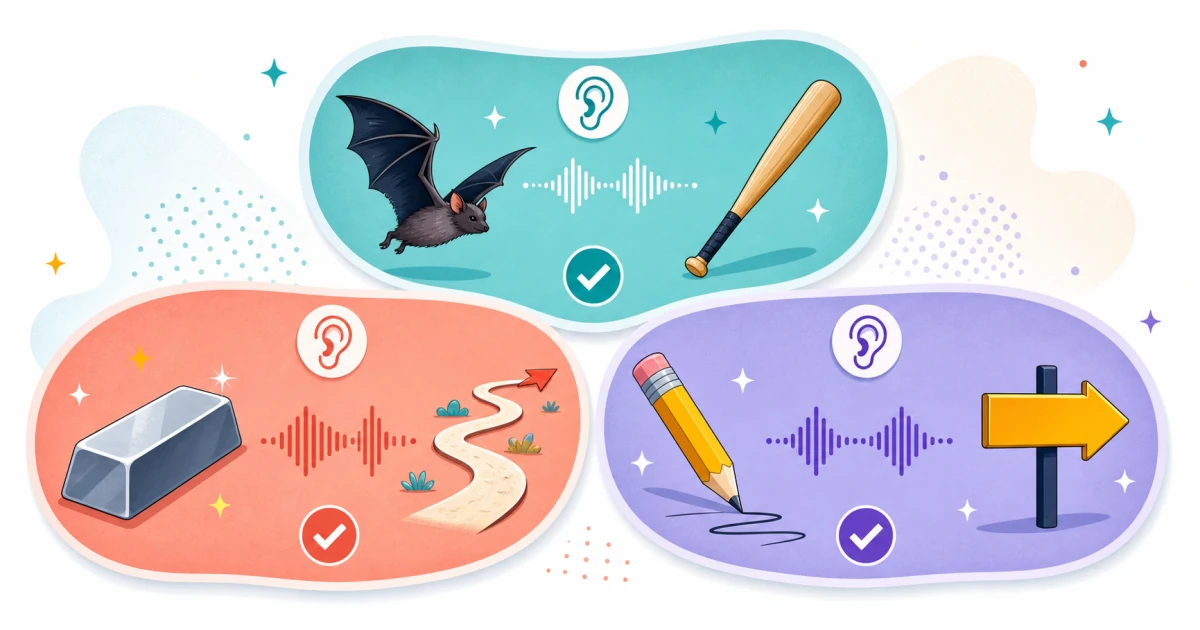
| タイプ | 綴りは同じ? | 発音は同じ? | 例 |
|---|---|---|---|
| 真のホモニム | はい | はい | bat(動物)/ bat(スポーツ用具) |
| 同形異義語(ホモグラフ) | はい | いいえ | lead(金属)/ lead(導く) |
| 同音異義語(ホモフォン) | いいえ | はい | write / right |
真のホモニムは綴りも発音も同じで、無関係な意味を持ちます。同形異義語は綴りは同じですが発音が異なります。同音異義語は発音は同じですが綴りが異なります。
日常では、3つすべてを「ホモニム」と呼ぶことが多いです。このガイドでは3つすべてをカバーし、各エントリーにタイプを示しています。
真のホモニム(綴り・発音ともに同じ)
クラシックなホモニム:綴りも発音も同一ですが、まったく異なる意味を持ちます。
A–D
| # | 単語 | 意味1 | 意味2 | 意味3 |
|---|---|---|---|---|
| 1 | arm | 肩から下の体の部分 — She broke her arm. | 武器 — The country armed its soldiers. | |
| 2 | ball | 丸い物体 — Throw the ball! | 正式な舞踏会 — Cinderella went to the ball. | |
| 3 | band | 音楽グループ — The band played rock music. | 細長い素材の輪 — She wore a rubber band around her wrist. | |
| 4 | bank | 金融機関 — I went to the bank to deposit money. | 川の岸 — We sat on the bank of the Thames. | |
| 5 | bark | 犬の鳴き声 — The dog barked at the stranger. | 木の外皮 — The bark of the oak was rough. | |
| 6 | bat | 飛ぶ哺乳類 — Bats come out at night. | スポーツ用具 — He swung the bat and hit the ball. | |
| 7 | bear | 大型の動物 — We saw a bear in the forest. | 耐える、運ぶ — I can’t bear the noise. | |
| 8 | bill | 紙幣 — He paid with a $20 bill. | 請求書 — The electricity bill was high. | 鳥のくちばし — The duck’s bill was orange. |
| 9 | block | 固体の塊 — a block of ice | 妨げる — He blocked the entrance. | 街区 — Walk two blocks north. |
| 10 | board | 平らな木板 — She nailed the board to the wall. | 乗り込む(飛行機、バス) — We boarded the flight at 3 PM. | 取締役会 — The board approved the plan. |
| 11 | book | 書籍 — I’m reading a great book. | 予約する — I booked a hotel room. | |
| 12 | bow | 船の前方 — The bow cut through the waves. | リボンの結び目 — She tied a bow in her hair. | 弓 — He practiced with a bow and arrow. |
| 13 | bright | 明るい — The room is very bright. | 聡明な — She’s a bright student. | |
| 14 | can | 金属容器 — a can of soup | できる — I can swim. | |
| 15 | capital | 首都 — Tokyo is the capital of Japan. | 資本、資金 — We need capital to start the business. | 大文字 — Write your name in capitals. |
| 16 | change | 変える — I changed my mind. | 小銭 — Do you have any change? | |
| 17 | chest | 胸の前面 — He felt pain in his chest. | 大きな箱 — The treasure chest was locked. | |
| 18 | club | 団体、クラブ — She joined the chess club. | 棒 — a golf club | ナイトクラブ — We went to a club on Saturday. |
| 19 | coat | 上着 — Put on your coat — it’s cold. | 塗料の層 — Apply two coats of paint. | |
| 20 | cool | 少し冷たい — The water was cool and refreshing. | 冷静な — Stay cool under pressure. | かっこいい — That’s a cool jacket. |
| 21 | count | 数を数える — Count the chairs in the room. | 伯爵 — Count Dracula | |
| 22 | crane | 大型の鳥 — We saw a crane by the lake. | クレーン(起重機) — A crane lifted the steel beams. | |
| 23 | current | 水流・電流 — The river current is strong. | 現在の — The current situation is stable. | |
| 24 | date | 日付 — What’s today’s date? | デーツ(果物) — I bought some dates at the market. | デート — They went on a date. |
| 25 | deck | 船の甲板 — We stood on the upper deck. | トランプの山札 — Shuffle the deck. | |
| 26 | draft | 下書き — This is the first draft of the essay. | 冷たい空気の流れ — Close the window — there’s a draft. | 徴兵される — He was drafted in 1942. |
| 27 | draw | 絵を描く — She drew a portrait. | 引き分け — The match ended in a draw. | 引く — Draw the curtains. |
| 28 | drop | 少量の液体 — A drop of rain fell on my face. | 落とす、落ちる — I dropped my phone. | |
| 29 | duck | 水鳥 — We fed the ducks in the park. | 素早く頭を下げる — Duck! The ball is coming! |
E–L
| # | 単語 | 意味1 | 意味2 | 意味3 |
|---|---|---|---|---|
| 30 | express | 急行の — an express train | 表現する — He expressed his concern. | |
| 31 | fair | 公正な — The decision was fair. | 見本市、縁日 — We went to the county fair. | 色白の — She has fair skin. |
| 32 | fan | 扇風機 — Turn on the fan. | 熱心な支持者 — She’s a big fan of soccer. | |
| 33 | file | 書類フォルダー — Put it in the file cabinet. | やすりで磨く — She filed her nails. | 正式に提出する — He filed a complaint. |
| 34 | fine | 高品質の — The wine was very fine. | 罰金 — He got a $100 fine for speeding. | 元気な — “How are you?” “I’m fine.” |
| 35 | fire | 火 — The fire spread quickly. | 解雇する — She was fired last week. | 発砲する — The soldier fired his weapon. |
| 36 | flat | 平らな — The land is flat. | アパート(英) — She lives in a flat in London. | パンクした — I got a flat tire. |
| 37 | fly | 昆虫 — A fly landed on my food. | 空を飛ぶ — We flew to Paris. | |
| 38 | foot | 足 — My left foot hurts. | 底、基部 — at the foot of the mountain | フィート(12インチ) — The room is 10 feet wide. |
| 39 | grave | 墓 — They visited the grave. | 非常に深刻な — This is a grave mistake. | |
| 40 | groom | 新郎 — The groom looked nervous. | 手入れする — She groomed the horse. | |
| 41 | ground | 地面 — The ball hit the ground. | grindの過去形 — She ground the coffee beans. | |
| 42 | jam | ジャム — strawberry jam | 詰まる — The printer jammed again. | 交通渋滞 — We’re stuck in a traffic jam. |
| 43 | key | 鍵 — I lost my house key. | 重要な — This is the key issue. | 調(音楽) — The song is in the key of C. |
| 44 | kind | 種類 — What kind of music do you like? | 親切な — She’s a very kind person. | |
| 45 | lap | 周回 — He completed 10 laps. | 膝の上 — The cat sat on her lap. | |
| 46 | last | 最後の — This is the last chance. | 続く — The meeting lasted two hours. | |
| 47 | lead | 導く — She led the team to victory. | リード(犬の紐) — Keep your dog on a lead. | |
| 48 | leaves | leafの複数形 — The leaves turned brown. | 出発する — She leaves for work at 8 AM. | |
| 49 | letter | 手紙 — I received a letter. | 文字 — The letter ‘A’ is a vowel. | |
| 50 | lie | 横になる — Lie down and rest. | 嘘をつく — Don’t lie to me. | |
| 51 | light | 明かり — Turn on the light. | 軽い — The bag is very light. | 色が薄い — She has light blue eyes. |
| 52 | line | 線 — Draw a straight line. | 列 — There’s a long line outside. | 台詞 — He forgot his lines. |
M–R
| # | 単語 | 意味1 | 意味2 | 意味3 |
|---|---|---|---|---|
| 53 | match | 試合 — We watched the football match. | マッチ(火をつける棒) — He struck a match. | 一致する — The colors don’t match. |
| 54 | mean | 意味する — What do you mean? | 意地悪な — Don’t be so mean to your sister. | 平均 — the mean temperature |
| 55 | mine | 私のもの — This book is mine. | 鉱山 — a coal mine | |
| 56 | miss | 逃す、外す — I missed the bus. | 未婚女性への敬称 — Miss Johnson | 恋しく思う — I miss my family. |
| 57 | mole | 小型の掘る動物 — A mole dug up the garden. | ほくろ — She has a mole on her cheek. | モル(化学単位) — One mole of water |
| 58 | nail | 釘 — He hammered the nail. | 爪 — She painted her nails red. | |
| 59 | net | 網 — a fishing net | 純(控除後) — net income | |
| 60 | note | メモ — She left a note on the desk. | 音符 — He played a high note. | 紙幣 — a ten-pound note |
| 61 | novel | 長編小説 — She wrote a novel. | 斬新な — That’s a novel approach. | |
| 62 | order | 順序 — Put them in alphabetical order. | 注文する — I ordered a pizza. | 命令 — The officer gave an order. |
| 63 | organ | 臓器 — The heart is a vital organ. | オルガン(楽器) — She plays the church organ. | |
| 64 | palm | 手のひら — He placed the coin in her palm. | ヤシの木 — palm trees on the beach | |
| 65 | park | 公園 — We walked in the park. | 駐車する — I parked the car. | |
| 66 | patient | 患者 — The patient is recovering. | 忍耐強い — Be patient — your turn will come. | |
| 67 | pen | ペン — Sign with a pen. | 囲い(動物用) — a sheep pen | |
| 68 | pick | 選ぶ — Pick a card, any card. | 摘む — We picked apples from the tree. | つるはし — an ice pick |
| 69 | pitch | 競技場 — a football pitch | 投げる — She pitched the ball. | 音の高さ — a high pitch |
| 70 | plant | 植物 — Water the plants. | 工場 — a manufacturing plant | 植える — We planted trees. |
| 71 | play | 遊ぶ — The children played outside. | 劇 — We saw a play at the theater. | |
| 72 | point | 先端 — the point of a needle | 要点 — What’s your point? | 指し示す — She pointed at the map. |
| 73 | pool | プール — We swam in the pool. | 共有資源 — a car pool | ビリヤード — Let’s play pool. |
| 74 | pound | 重量単位 — a pound of butter | 英ポンド — It costs five pounds. | 強く打つ — He pounded on the door. |
| 75 | present | 贈り物 — She opened her birthday present. | 現在 — at the present moment | 提示する — He presented the report. |
| 76 | press | 押す — Press the button. | 報道機関 — The press covered the event. | アイロンをかける — Press your shirt before the interview. |
| 77 | race | 競走 — She won the race. | 人種 — people of every race | |
| 78 | ring | 指輪 — a wedding ring | 鳴る — The phone is ringing. | リング(ボクシング) — The boxer entered the ring. |
| 79 | rock | 岩 — She sat on a rock. | ロック音楽 — rock and roll | ゆりかごのように揺らす — She rocked the baby to sleep. |
| 80 | run | 走る — He runs every morning. | 経営する — She runs a business. | 流れる — The river runs through the valley. |
| 81 | ruler | 定規 — Use a ruler to draw the line. | 支配者 — the ruler of the kingdom |
S–Z
| # | 単語 | 意味1 | 意味2 | 意味3 |
|---|---|---|---|---|
| 82 | safe | 安全な — This neighborhood is safe. | 金庫 — He kept the documents in a safe. | |
| 83 | scale | 体重計 — Stand on the scale. | 規模 — a large-scale project | 魚の鱗 — fish scales |
| 84 | seal | アザラシ — We saw seals on the beach. | 密封する — Seal the envelope. | 公印 — the government seal |
| 85 | second | 2番目 — She finished second. | 秒 — Wait a second. | 賛成する — I second that motion. |
| 86 | sentence | 文 — Write a complete sentence. | 判決 — He received a 5-year sentence. | |
| 87 | set | 一式 — a set of tools | 置く — Set the table for dinner. | 沈む(太陽) — The sun sets at 7 PM. |
| 88 | sharp | 鋭い — a sharp knife | ちょうど(時間) — Be there at 3 o’clock sharp. | 鋭い(頭脳) — She has a sharp mind. |
| 89 | sink | 流し台 — Wash the dishes in the sink. | 沈む — The ship sank. | |
| 90 | sole | 唯一の — She was the sole survivor. | 靴底 — The soles of my shoes are worn. | ヒラメ(魚) — grilled sole |
| 91 | spring | 春 — Flowers bloom in spring. | 泉 — a natural spring | バネ — a mattress spring | 跳ぶ — The cat sprang off the chair. | | 92 | stable | 厩舎 — The horses are in the stable. | 安定した — The patient is in stable condition. | | | 93 | staff | 職員 — The staff were very helpful. | 杖 — a wizard’s staff | | | 94 | stage | 舞台 — She walked onto the stage. | 段階 — the early stages of development | | | 95 | stake | 杭 — He drove a stake into the ground. | 利害関係 — He has a stake in the company. | | | 96 | star | 星 — The stars are bright tonight. | スター、有名人 — She’s a movie star. | | | 97 | stick | 棒 — The dog fetched the stick. | 貼り付ける — Stick the poster on the wall. | | | 98 | story | 物語 — She told a funny story. | 階 — a three-story building | | | 99 | suit | スーツ — He wore a grey suit. | 都合が良い — Does Monday suit you? | 訴訟 — She filed a suit against the company. | | 100 | tank | タンク — a fish tank | 戦車 — The army deployed tanks. | | | 101 | temple | 寺院 — an ancient temple | こめかみ — He rubbed his temples. | | | 102 | tender | 柔らかい — a tender touch | 入札 — They submitted a tender for the contract. | | | 103 | tie | ネクタイ — He wore a red tie. | 引き分け — The game ended in a tie. | 結ぶ — Tie your shoelaces. | | 104 | toast | トースト — I had toast for breakfast. | 乾杯 — Let’s raise a toast! | | | 105 | trip | 旅行 — a business trip | つまずく — She tripped on the step. | | | 106 | trunk | 木の幹 — The trunk was three meters wide. | トランク(米) — Put the bags in the trunk. | 象の鼻 — The elephant used its trunk. | | 107 | type | 種類 — What type of music do you like? | タイプする — She typed the report. | | | 108 | vessel | 船 — a cargo vessel | 容器 — a blood vessel | | | 109 | watch | 腕時計 — a gold watch | 見る — Watch this video. | | | 110 | wave | 波 — The waves were huge. | 手を振る — She waved at us. | | | 111 | well | 健康な — I feel well today. | 井戸 — They dug a well. | | | 112 | wind | 風 — The wind was strong. | 巻く — Wind the clock.(発音が異なる) | |
よくある同形異義語(綴りは同じ、発音が異なる)
| # | 単語 | 発音1 | 発音2 |
|---|---|---|---|
| 113 | bass | /bæs/ — 低音 — He plays bass guitar. | /bæs/ — 魚の一種 — We caught a bass. |
| 114 | bow | /baʊ/ — お辞儀する — He bowed to the audience. | /boʊ/ — 弓 / リボン — She tied a bow. |
| 115 | close | /kloʊz/ — 閉める — Close the door. | /kloʊs/ — 近い — She lives close to the school. |
| 116 | content | /ˈkɒntent/ — 内容 — the content of the book | /kənˈtent/ — 満足している — She felt content with her life. |
| 117 | desert | /ˈdezərt/ — 砂漠 — the Sahara desert | /dɪˈzɜːrt/ — 見捨てる — He deserted his post. |
| 118 | dove | /dʌv/ — 鳩 — a white dove | /doʊv/ — diveの過去形 — She dove into the pool. |
| 119 | lead | /liːd/ — 導く — She leads the team. | /led/ — 鉛 — lead pipes |
| 120 | live | /lɪv/ — 住む — I live in Tokyo. | /laɪv/ — 生放送の — a live broadcast |
| 121 | minute | /ˈmɪnɪt/ — 60秒 — Wait a minute. | /maɪˈnjuːt/ — 極めて小さい — minute details |
| 122 | object | /ˈɒbdʒekt/ — 物体 — a flying object | /əbˈdʒekt/ — 反対する — I object to this plan. |
| 123 | polish | /ˈpɒlɪʃ/ — 磨く — Polish your shoes. | /ˈpoʊlɪʃ/ — ポーランドの — Polish cuisine |
| 124 | present | /ˈprezənt/ — 贈り物 — a birthday present | /prɪˈzent/ — 提示する — He presented the report. |
| 125 | produce | /ˈprɒdjuːs/ — 農産物 — fresh produce | /prəˈdjuːs/ — 生産する — The factory produces cars. |
| 126 | project | /ˈprɒdʒekt/ — プロジェクト — a school project | /prəˈdʒekt/ — 予測する — They projected a 10% increase. |
| 127 | read | /riːd/ — 現在形 — I read books daily. | /red/ — 過去形 — She read the letter yesterday. |
| 128 | record | /ˈrekɔːrd/ — 記録 — a world record | /rɪˈkɔːrd/ — 記録する — Record the meeting. |
| 129 | refuse | /rɪˈfjuːz/ — 断る — She refused the offer. | /ˈrefjuːs/ — ごみ — Refuse collection is on Mondays. |
| 130 | row | /roʊ/ — 列 — a row of chairs | /raʊ/ — 口論 — They had a terrible row. |
| 131 | subject | /ˈsʌbdʒekt/ — 主題 — the subject of the essay | /səbˈdʒekt/ — さらす — He was subjected to questioning. |
| 132 | tear | /tɪər/ — 涙 — Tears rolled down her cheek. | /teər/ — 破る — She tore the paper in half. |
| 133 | wind | /wɪnd/ — 風 — The wind is strong today. | /waɪnd/ — 巻く — Wind the handle clockwise. |
| 134 | wound | /wuːnd/ — 傷 — a deep wound | /waʊnd/ — windの過去形 — She wound the thread around the spool. |
よくある同音異義語(発音は同じ、綴りが異なる)
| # | 単語1 | 単語2 | 発音 | 意味 |
|---|---|---|---|---|
| 135 | write | right | /raɪt/ | 書く / 正しい;右 |
| 136 | their | there / they’re | /ðeər/ | 彼らの / そこ / 彼らは |
| 137 | to | too / two | /tuː/ | 前置詞 / も;過度に / 数字の2 |
| 138 | your | you’re | /jɔːr/ | あなたの / あなたは |
| 139 | its | it’s | /ɪts/ | それの / それは |
| 140 | know | no | /noʊ/ | 知っている / 否定 |
| 141 | hear | here | /hɪər/ | 聞く / ここ |
| 142 | sea | see | /siː/ | 海 / 見る |
| 143 | son | sun | /sʌn/ | 息子 / 太陽 |
| 144 | one | won | /wʌn/ | 数字の1 / winの過去形 |
| 145 | flower | flour | /flaʊər/ | 花 / 小麦粉 |
| 146 | meet | meat | /miːt/ | 会う / 肉 |
| 147 | piece | peace | /piːs/ | 一片 / 平和 |
| 148 | wait | weight | /weɪt/ | 待つ / 重さ |
| 149 | break | brake | /breɪk/ | 壊す / ブレーキ |
| 150 | sail | sale | /seɪl/ | 帆 / セール |
| 151 | tail | tale | /teɪl/ | しっぽ / 物語 |
| 152 | pair | pear / pare | /peər/ | 一対 / 梨 / 皮をむく |
| 153 | steal | steel | /stiːl/ | 盗む / 鋼鉄 |
| 154 | been | bean | /biːn/ | beの過去分詞 / 豆 |
| 155 | die | dye | /daɪ/ | 死ぬ / 染める |
| 156 | heal | heel | /hiːl/ | 治す / かかと |
| 157 | knight | night | /naɪt/ | 騎士 / 夜 |
| 158 | threw | through | /θruː/ | throwの過去形 / 通り抜けて |
| 159 | whole | hole | /hoʊl/ | 全体の / 穴 |
| 160 | week | weak | /wiːk/ | 週 / 弱い |
| 161 | which | witch | /wɪtʃ/ | どれ? / 魔女 |
| 162 | wood | would | /wʊd/ | 木材 / 仮定法の助動詞 |
| 163 | wear | where | /weər/ | 着る / どこ |
| 164 | made | maid | /meɪd/ | makeの過去形 / 家政婦 |
| 165 | waste | waist | /weɪst/ | 無駄にする / 腰 |
| 166 | rain | reign | /reɪn/ | 雨 / 統治 |
| 167 | board | bored | /bɔːrd/ | 板 / 退屈している |
| 168 | cereal | serial | /ˈsɪriəl/ | シリアル / 連続的な |
| 169 | principal | principle | /ˈprɪnsəpəl/ | 校長 / 原則 |
| 170 | stationary | stationery | /ˈsteɪʃənəri/ | 静止した / 文房具 |
| 171 | affect | effect | /əˈfekt/ | 影響する(動詞)/ 結果(名詞) |
| 172 | complement | compliment | /ˈkɒmplɪment/ | 補完する / 褒める |
| 173 | accept | except | /əkˈsept/ | 受け入れる / 〜を除いて |
| 174 | aloud | allowed | /əˈlaʊd/ | 声に出して / 許可された |
| 175 | bare | bear | /beər/ | 裸の / クマ |
| 176 | cite | site / sight | /saɪt/ | 引用する / 場所 / 視力 |
| 177 | deer | dear | /dɪər/ | 鹿 / 親愛なる;高価な |
| 178 | feat | feet | /fiːt/ | 偉業 / footの複数形 |
| 179 | grown | groan | /ɡroʊn/ | growの過去分詞 / うめき声 |
| 180 | hair | hare | /heər/ | 髪 / 野ウサギ |
| 181 | hour | our | /aʊər/ | 60分 / 私たちの |
| 182 | knot | not | /nɒt/ | 結び目 / 否定 |
| 183 | lesson | lessen | /ˈlesən/ | 授業 / 減らす |
| 184 | muscle | mussel | /ˈmʌsəl/ | 筋肉 / ムール貝 |
| 185 | naval | navel | /ˈneɪvəl/ | 海軍の / へそ |
| 186 | passed | past | /pæst/ | 通り過ぎた / 過去 |
| 187 | patience | patients | /ˈpeɪʃəns/ | 忍耐 / 患者たち |
| 188 | profit | prophet | /ˈprɒfɪt/ | 利益 / 預言者 |
| 189 | role | roll | /roʊl/ | 役割 / 転がす;パン |
| 190 | scene | seen | /siːn/ | 場面 / seeの過去分詞 |
| 191 | sew | so / sow | /soʊ/ | 縫う / だから / 種をまく |
| 192 | stair | stare | /steər/ | 階段の一段 / じっと見る |
| 193 | toe | tow | /toʊ/ | 足の指 / 牽引する |
| 194 | vain | vein / vane | /veɪn/ | うぬぼれの / 静脈 / 風向計 |
| 195 | wary | weary | similar | 用心深い / 疲れた |
| 196 | weather | whether | /ˈweðər/ | 天気 / 〜かどうか |
| 197 | idle | idol | /ˈaɪdəl/ | 怠惰な / 偶像 |
| 198 | morning | mourning | /ˈmɔːrnɪŋ/ | 朝 / 喪に服する |
| 199 | council | counsel | /ˈkaʊnsəl/ | 評議会 / 助言 |
| 200 | dessert | desert | /dɪˈzɜːrt/ | デザート / 砂漠 |
ホモニムをマスターする方法
1. 常に文脈の中で単語を学ぶ。 “bank”に出会ったとき、文が金融機関か川の岸かを教えてくれます。個々の単語ではなく、文全体を読む習慣をつけましょう。
2. 発音に注意する。 “lead”や”wind”のような同形異義語では、発音だけが意味を区別します。両方の発音を練習しましょう。
3. 最も一般的な意味から学ぶ。 “bat”なら、まずスポーツ用具の意味(より一般的)を学び、後から動物の意味を追加しましょう。
4. 視覚的な連想を使う。 “write/right”のような同音異義語では、綴りと意味を結びつけるイメージを作りましょう:”write”には”w”があり”word”と関連します。
5. Linglifyに追加して、例文付きの間隔反復練習を行いましょう。
練習用の単語
boom
名詞
急増, ブーム, 爆発
例
- The boom of thunder echoed across the valley.
- The technology boom created many new millionaires.
cooperate
動詞
協力する, 協働する
evaluate
動詞
評価する, 査定する
例
- Companies evaluate job candidates based on experience, skills, and personality.
- Teachers evaluate student progress through tests, projects, and classroom participation.
graduate
動詞
卒業する
例
- She will graduate from university next year with a degree in engineering.
- Students must complete all requirements before they can graduate from high school.
horizon
名詞
地平線
例
- The sun disappeared behind the horizon as evening approached.
- Traveling broadens your horizon and exposes you to new cultures.
indispensable
形容詞
不可欠な
例
- Clean water is indispensable for human survival and good health.
- Her experience and skills make her indispensable to the research team.
jury
名詞
陪審団, 陪審
例
- The jury deliberated for several hours before reaching a verdict.
- The talent show jury consisted of professional musicians and entertainers.
lifelong
形容詞
一生の, 生涯の
例
- Learning is a lifelong process that never truly ends.
- Their lifelong friendship began during elementary school years.
motivated
形容詞
やる気のある
例
- Motivated employee seeks additional responsibilities and challenges at work.
- Success requires being motivated even when facing difficult obstacles.
normally
副詞
通常は, 普通は, ふつうは
例
- Heart normally beats between sixty and hundred times per minute.
- Students normally arrive at school before morning bell rings.
off
副詞
離れて, 切れて, 休みの
例
- Please turn off the lights before leaving the room.
- The dog ran off into the forest chasing wild rabbits.
prejudice
名詞
偏見, 先入観, 差別
例
- Education helps overcome prejudice and promotes understanding.
- Racial prejudice damages communities and individuals alike.
resolve
動詞
解決する, 決意する
例
- Mediator helps parties resolve dispute through negotiation.
- Technical team will resolve software problems quickly.
stress
動詞
強調する, 緊張させる
例
- Heavy workload may stress employees beyond limits.
- Teacher will stress importance of homework completion.
total
形容詞
全体の, 総合的な, 完全な
例
- Total cost includes all fees and expenses.
- Total silence fills room during meditation session.
tragedy
名詞
悲劇
例
- Natural tragedy affects thousands of innocent people.
- Personal tragedy changes person's life perspective completely.
union
名詞
連合, 結合, 協会
例
- Labor union protects worker rights and interests.
- Marriage union joins two people in partnership.
voyage
名詞
航海, 旅行
例
- Space exploration represents humanity's greatest voyage into the unknown.
- The ocean voyage from Europe to America took several weeks in the past.
candidate
名詞
候補者, 志願者
例
- Each presidential candidate presented their policy plans to voters.
- The job candidate impressed the interview panel with her experience.
discourage
動詞
落胆させる, 思いとどまらせる, 意欲をなくさせる
例
- Don't let one failure discourage you from pursuing your dreams.
- High prices discourage many people from buying organic food products.
donate
動詞
寄付する
例
- Many people donate money to charities that help homeless individuals.
- She decided to donate blood to help patients in emergency situations.
firmly
副詞
しっかりと, 堅く
例
- Hold the rope firmly while climbing down the steep mountain slope.
- The manager firmly believed in treating all employees with respect.
guide
動詞
案内する
例
- Parents should guide their children to make responsible decisions.
- The experienced hiker will guide the group through the mountain trail safely.
humorous
形容詞
ユーモラスな, 面白い, 滑稽な
例
- She writes humorous articles about everyday life and family experiences.
- The humorous speech made everyone laugh and lightened the serious mood.
admission
名詞
入場, 入学, 認めること
例
- Her admission to the prestigious medical school was the result of hard work.
- The museum offers free admission on the first Sunday of every month.
よくある質問
ホモニムとは?5つの例を教えてください。
ホモニムとは、別の単語と同じ綴りまたは発音を持ちながら、異なる意味を持つ単語のことです。5つの例:(1) bat — 飛ぶ動物 / スポーツ用具、(2) bank — 金融機関 / 川の岸、(3) light — 明るさ / 軽さ、(4) ring — 指輪 / 電話の鳴り声、(5) fair — 公正 / 見本市。鍵は文脈がどの意味が当てはまるかを決めることです。
ホモニム、ホモフォン、ホモグラフの違いは?
ホモニムは綴りも発音も同じで意味が異なります(bat/bat)。ホモフォンは発音は同じですが綴りが異なります(write/right)。ホモグラフは綴りは同じですが発音が異なります(lead — 金属 /led/ vs. 導く /liːd/)。”ホモニム”は3つすべてを包括する総称としても使われます。
英語にはホモニムがいくつある?
英語には真のホモニム(同じ綴り+同じ発音+異なる意味)が約450〜500組、さらに約600組以上のホモフォンペア、150組以上のホモグラフペアがあります。正確な数は「異なる意味」の定義の厳しさによって変わります — 関連する意味が何十もある単語もあります。
英語にホモニムが多いのはなぜ?
英語は何世紀にもわたりラテン語、フランス語、ノルス語、ゲルマン語、ギリシャ語など多くの言語から単語を借用してきました。異なる起源の単語が同じ綴りや発音になったことがあります。”Bank”(金融)はイタリア語のbanca(ベンチ)から、”bank”(川岸)は古ノルス語のbankiから来ています。類似は偶然です。
ホモニムはAIや機械翻訳にとって問題になる?
はい。ホモニムは自然言語処理における最大の課題の一つです。機械が”I went to the bank”を読むとき、周囲の文脈を使って”bank”が金融機関か川岸かを判断しなければなりません。GPTのような現代のAIは統計的な文脈分析でこれをうまく処理しますが、特に稀な意味ではエラーがまだ発生します。