
makeの句動詞一覧:意味・例文・使い分け(make up / make out など)
MAKEは英語でもっとも多用途な動詞のひとつです。前置詞や副詞 — up、out、off、for など — をつけるだけで意味がまったく変わります。「make up」だけでも文脈によって5つの意味があり、それはあくまでひとつの組み合わせにすぎません。
このガイドでは、MAKEを使う主要な句動詞を意味のグループ別にまとめました。それぞれにわかりやすい定義、実生活に近い例文、フォーマルさの目安を載せています。IELTS対策、ビジネス英語、自然な表現を身につけたい方 — どれにも使える参照記事です。
- 扱う句動詞:20以上
- レベル:B1〜B2(中級〜中上級)
- 重点:意味、例文、用法の注意、よくある誤り
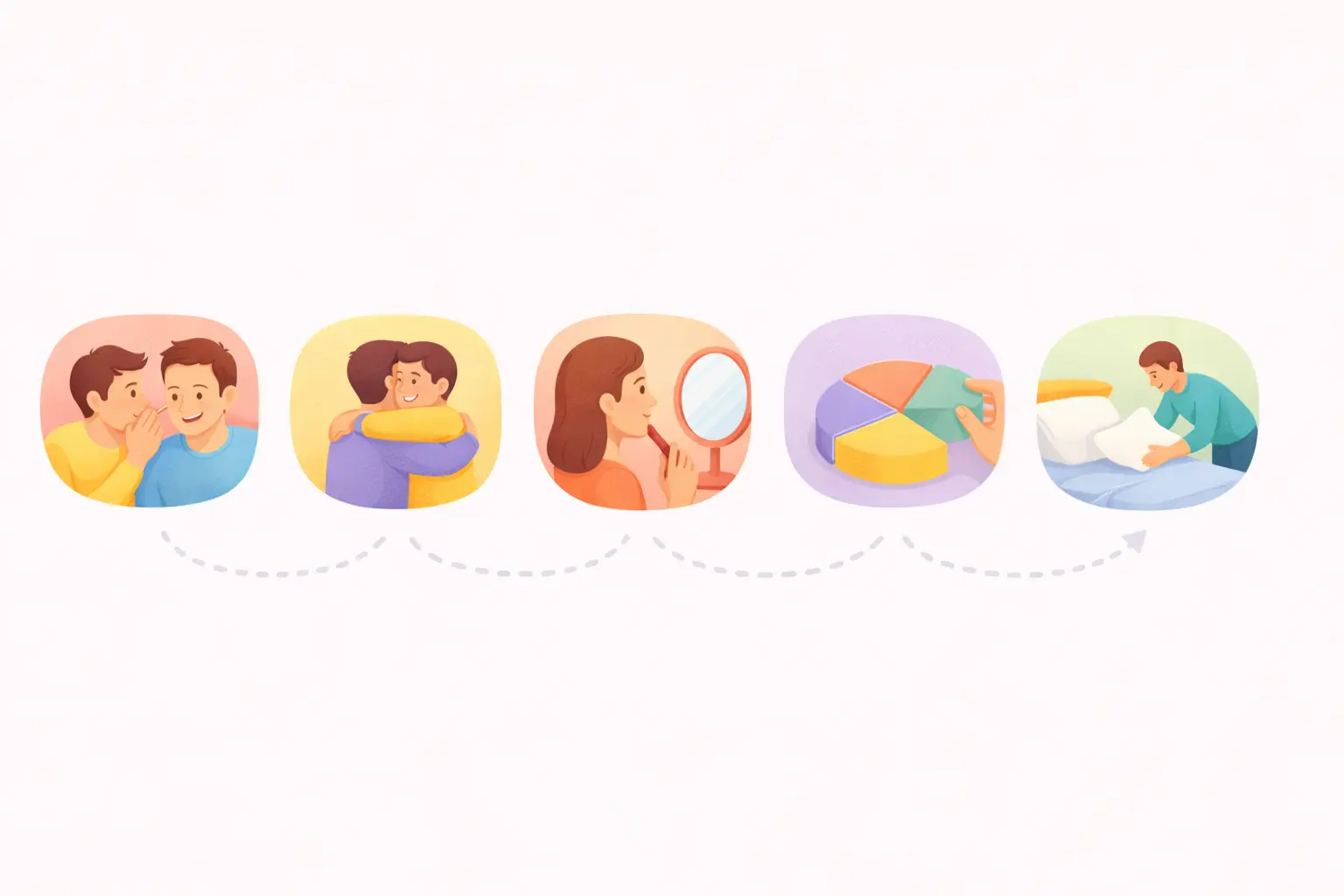
MAKE UP — いちばんよく出る(5つの意味)
「make up」は MAKE の句動詞のなかで検索されやすい表現ですが、それには理由があります。意味が5つに分かれており、混同するのは学習者によくあるミスです。
1. でっち上げる(話・言い訳・うそ)
本当ではないこと、作り話を「作る」。
She made up an excuse for being late to the meeting. — 彼女は会議に遅れたことの言い訳をでっち上げた。 Children love making up stories about imaginary friends. — 子どもたちは空想の友だちの話を作るのが大好きだ。 Don’t believe him — he made the whole thing up. — 彼の言うことは信じないで — 全部でっち上げだ。
2. 仲直りする(口論のあと)
意見の食い違いのあと、また仲良くなる。
They argued about money but made up the next day. — 二人はお金のことで言い争ったが、翌日には仲直りした。 Life is short — make up with your sister before it is too late. — 人生は短い — 遅すぎる前に妹と仲直りしなさい。
3. メイクする(化粧をする)
顔に化粧品をのせる。
She usually makes herself up before video calls. — 彼女はビデオ通話の前にいつも化粧をする。 The actress was made up to look 20 years older for the role. — その役のために女優は20歳年上に見えるように化粧された。
4. 占める・構成する(全体を形づくる)
何かを形づくる「部分」である。
Women make up 52% of the company’s workforce. — 女性はその会社の労働力の52%を占めている。 Three short stories make up the second part of the book. — 短編3編が本の第二部をなしている。
5. 整える・用意する(ベッド・部屋・調剤など)
ベッドを整える、部屋を用意する、処方を調剤するなど。
Could you make up the guest room? We have visitors arriving tonight. — 客間を用意してくれる?今夜お客さんが来るの。 The pharmacist made up the prescription while I waited. — 薬剤師が待っているあいだに処方箋どおりに薬を調合してくれた。
覚え方のヒント: どの意味かは文脈が教えてくれます。主語と目的語を見ましょう:人 + excuse=でっち上げ、二人=仲直り、パーセント + 集団=構成・占める。
MAKE OUT — 4つの意味
検索されやすく、意味のバリエーションが多い句動詞です。
1. かろうじて見える・聞き取れる・理解できる
はっきりとは感じ取れないが、なんとか知覚・理解する。
I could not make out what the sign said from that distance. — あの距離では看板に何と書いてあるか判読できなかった。 The handwriting was so bad I could barely make out the words. — 字がひどすぎて、単語をかろうじて読み取れる程度だった。 Can you make out what he is saying? The audio is terrible. — 何と言っているか聞き取れる?音声がひどいよ。
2. 〜だと主張する・そう言い張る(疑いを含むことが多い)
何かを断言するが、本当かどうかは疑わしい、というニュアンスになりがち。
He makes out that he is an expert, but he only started learning last month. — 彼は専門家だと言い張るが、学び始めたのは先月だ。 The article makes out that the problem is simple, but it is not. — 記事は問題が単純だと書いているが、そうではない。
3. 書き記す(小切手・領収書・書類)
正式な書類に記入する。
Please make the cheque out to “Smith & Associates.” — 小切手の宛名を「Smith & Associates」にしてください。 I will make out a receipt for your records. — 記録用に領収書を書きます。
4. うまくいく・やっていく(口語、アメリカ英語で多い)
特定の場面でどうだったか、という「様子」を言う。
How did you make out at the job interview? — 面接はどうだった? We made out pretty well on the sale — doubled our investment. — その売却ではかなりうまくいった — 投資が倍になった。
MAKE FOR — 向かう・もたらす
関連はあるが、区別すべき2つの意味です。
1. 〜へ向かう・進む
ある場所の方へ進む。
When the fire alarm went off, everyone made for the exit. — 火災報知器が鳴ると、みんな出口へ向かった。 After lunch, we made for the coast and arrived by sunset. — 昼食のあと、海岸へ向かい日没までに着いた。
2. 〜につながる・〜を生む
ある結果や雰囲気を生み出す。
Good lighting and comfortable chairs make for a productive workspace. — 明るい照明と快適な椅子は、生産的な作業環境につながる。 Mixing experienced and junior team members makes for better results. — ベテランと若手を混ぜると、より良い成果につながる。
MAKE OFF / MAKE OFF WITH — 逃げる・持ち去る
Make off
急いで立ち去る。特に逃げるとき。
The thieves made off before the police arrived. — 泥棒たちは警察が来る前に逃げた。 He made off through the back door when he heard the sirens. — サイレンを聞いて裏口から逃げた。
Make off with
何かを盗んで持ち去る。
Someone made off with my laptop while I was getting coffee. — コーヒーを取りに行っているあいだに誰かがノートパソコンを持ち去った。 The hackers made off with millions in cryptocurrency. — ハッカーは暗号資産で数百万ドルを持ち去った。
MAKE UP FOR — 埋め合わせる
失ったもの、取り逃したもの、悪いことをしたことへの「埋め合わせ」をする。
He worked overtime to make up for the days he missed. — 彼は休んだ日の埋め合わせに残業した。 The beautiful scenery more than made up for the long drive. — 美しい景色が長いドライブを十分に埋め合わせてくれた。 She bought him dinner to make up for forgetting his birthday. — 彼女は誕生日を忘れた埋め合わせに彼を夕食に連れて行った。
これは「make up」(仲直り)とは別物です。「make up for」は常に「埋め合わせ・補償」 — マイナスをプラスで埋める — の意味です。
MAKE DO (WITH) — あるものでやりくりする
理想的ではなくても、手元にあるものでなんとかする。
We do not have a projector, so we will have to make do with a laptop screen. — プロジェクターがないので、ノートPCの画面で我慢するしかない。 During the crisis, families had to make do with very little. — 危機のなかで家族はごくわずかなものでやりくりしなければならなかった。 There is no fresh bread — we will have to make do with what is in the freezer. — 新鮮なパンがない — 冷凍庫にあるもので我慢するしかない。
注意: この句動詞は do であって due ではありません。「make due with」と綴るのはよくある誤りです。
MAKE INTO — 〜に変える
何かを別のものに変える・作り変える。
They made the old warehouse into a modern art gallery. — 彼らは古い倉庫を現代美術館にした。 The book was made into a film in 2024. — その本は2024年に映画化された。 With some paint and new furniture, we can make this room into a proper office. — ペンキと新しい家具があれば、この部屋をちゃんとしたオフィスにできる。
MAKE OF — どう受け取るか・どう思うか
何かをどう解釈するか。疑問文でよく使う。
What do you make of the new proposal? — 新しい提案をどう思う? I do not know what to make of his behavior lately. — 最近の彼の行動がよく分からない。 What did you make of the film? I thought it was brilliant. — 映画はどうだった?私はすばらしいと思った。
MAKE の句動詞 — 一覧表(早見)
MAKE の句動詞をひとつの表にまとめました。
| Phrasal Verb | Meaning | Level | Example |
|---|---|---|---|
| make up | でっち上げる(話・言い訳) | B1 | He made up the story. |
| make up | 仲直りする | B1 | They made up after the fight. |
| make up | メイクする | B1 | She made herself up for the party. |
| make up | 占める・構成する | B2 | Imports make up 60% of supply. |
| make up | ベッド・部屋などを整える | B2 | Can you make up the spare room? |
| make out | かろうじて見える・聞き取れる | B2 | I can’t make out the writing. |
| make out | 〜だと言い張る | B2 | He makes out he’s innocent. |
| make out | 小切手・領収書などに記入する | B2 | Make the cheque out to me. |
| make out | うまくいく・様子がどうか | B2 | How did you make out? |
| make for | 〜へ向かう | B2 | We made for the nearest exit. |
| make for | 〜につながる・もたらす | B2 | This makes for good reading. |
| make off | 急いで逃げる | B2 | The thief made off on foot. |
| make off with | 盗んで持ち去る | B2 | He made off with the cash. |
| make up for | 埋め合わせる | B1 | She made up for lost time. |
| make do (with) | あるものでやりくりする | B2 | We’ll make do with what we have. |
| make into | 〜に変える | B2 | They made it into a museum. |
| make of | どう思う・どう解釈する | B2 | What do you make of this? |
| make over | 改装する・見た目を変える | B2 | They made over the entire shop. |
| make towards | 〜の方へ進む | B2 | She made towards the door. |
| make it | 成功する・間に合う | B1 | We barely made it to the airport. |
練習したい語彙
これらの句動詞とあわせて、英語全般の語彙も強化しましょう。単語をクリックすると定義・発音・例文が見られます。
worthless
形容詞
価値のない, 無価値な, 役に立たない
例
- Don't let anyone make you feel worthless or unimportant.
- The broken watch became completely worthless and couldn't be repaired.
formally
副詞
正式に, きちんと
例
- Students must formally register for classes before the semester begins.
- The new president will be formally inaugurated next month in the capital.
border
名詞
境界線, 国境, 縁
例
- The garden had a beautiful flower border along the path.
- They crossed the border between France and Germany.
unload
動詞
荷を下ろす, 荷を降ろす
例
- Ship crew must unload containers at port.
- Workers unload cargo from delivery truck efficiently.
stress
動詞
強調する, 緊張させる
例
- Heavy workload may stress employees beyond limits.
- Teacher will stress importance of homework completion.
willingly
副詞
喜んで, 進んで
例
- He willingly shared his knowledge with younger students.
- The volunteers worked willingly without expecting any payment.
prospect
名詞
見込み, 展望, 可能性
例
- Economic prospect looks optimistic for next year.
- Job prospect improves with additional education training.
willingness
名詞
意欲, 意志
例
- Her willingness to learn impressed all the teachers.
- The company values employees' willingness to work as a team.
timeliness
名詞
タイムリーさ, 適時性, 時機の良さ
例
- Project timeliness determines success in competitive business environment.
- Report timeliness affects decision making processes significantly.
calm
形容詞
穏やかな, 静かな
例
- She remained calm despite the stressful situation at work.
- The calm ocean reflected the beautiful colors of the sunset.
bewilderment
名詞
当惑
例
- She stared in bewilderment at the unexpected test results.
- The tourist's bewilderment was obvious when he got lost downtown.
brick
名詞
レンガ
例
- He's been a real brick during this crisis.
- The house was built with traditional red brick.
revise
動詞
改訂する, 修正する
例
- Author must revise manuscript before publication deadline.
- Student will revise lessons before final examination.
lap
名詞
ひざ, 一周
例
- The cat curled up comfortably on her lap while reading.
- The runner completed another lap around the track successfully.
transfer
動詞
移す, 転送する
例
- Bank will transfer money between accounts quickly.
- Student may transfer to different university program.
max
名詞
最大値, 最大, 最高
例
- Students can borrow max of five books from library.
- The speed limit max on highway is seventy miles per hour.
exhausted
形容詞
疲れ果てた, くたくたの
例
- After running the marathon, she felt completely exhausted and needed to rest.
- The exhausted workers finally finished their twelve-hour shift at the factory.
diligent
形容詞
勤勉な
例
- Diligent students typically achieve better grades through consistent hard work.
- The diligent researcher spent years collecting data for the scientific study.
independent
形容詞
独立した, 自立した
例
- She's very independent and prefers to solve problems on her own.
- The independent research confirmed the results of the original study.
impolitely
副詞
失礼に, 無礼に
例
- He spoke impolitely to the waiter and made everyone uncomfortable.
- She impolitely refused to answer the reporter's questions.
characterize
動詞
特徴付ける, 性格付ける, 特徴を示す
例
- Honesty and integrity characterize his approach to business dealings.
- The report characterizes the current economic situation as generally stable.
yell
動詞
叫ぶ
例
- Don't yell at the children when they make innocent mistakes.
- The coach had to yell instructions over the crowd noise.
aggressive
形容詞
攻撃的な, 積極的な
例
- Some drivers become aggressive when stuck in heavy traffic for hours.
- The aggressive marketing campaign helped increase sales by thirty percent last quarter.
alphabet
名詞
アルファベット
例
- Children learn the alphabet before they can read complete sentences.
- The English alphabet has twenty-six letters from A to Z.
MAKE の句動詞の練習の仕方
1. まずはトップ5から。 一度に20個は覚えないでください。make up(でっち上げ)、make out(理解・聞き取り)、make for(向かう)、make up for(埋め合わせ)、make do with(やりくり)から始めると、実際の使用のおおむね8割をカバーできます。
2. 自分の文を書く。 各句動詞について、自分の生活に関する文を2〜3つ書きましょう。「I made up an excuse when I was late to work(遅刻したとき言い訳をでっち上げた)」は、他人の例を読むより記憶に残りやすいです。
3. 文脈のなかで拾う。 ビジネス系ポッドキャスト、ドラマ、ニュースには MAKE の句動詞がよく出ます。聞いたら一時停止して、どの意味か当てはめてみましょう。
4. 文脈ヒントで自己テスト。 上の表の「意味」列を隠し、例文だけで当てはめてみる。会話や試験で必要になる「文脈から句動詞を読む」力になります。
語彙学習を体系立てて進めたい方は、英単語の覚え方:7ステップのガイドもご覧ください。

MAKE の句動詞でよくある間違い
1. 「make up」の意味の取り違え。 「We made up」(仲直りした)と「We made it up」(でっち上げた)は別物です。代名詞「it」で意味がまったく変わります。目的語がなければ make up は多くの場合「仲直り」。具体的な目的語があれば「でっち上げ」などになりやすいです。
2. 「make due」と書いてしまう。 綴りの誤りとして非常に多いです。正しいのは make do with で、「make due with」は使いません。
3. 「make out」と「find out」の混同。 make out=かろうじて分かる(I can’t make out the text)。find out=情報を知る(I found out the truth)。置き換えはできません。
4. 「make up for」の for を落とす。 「I’ll make up the lost time」は曖昧 — 「構成する」とも読めます。「I’ll make up for the lost time」なら「埋め合わせ」がはっきりします。前置詞 for が要です。
5. 「make of」と「make from」の混同。 「What do you make of this?」=どう思う? 「What is this made from?」=何の材料でできている? まったく別の質問です。
あわせて読みたい
-
ほかの句動詞。 C1〜C2レベルの幅広い句動詞は、上級者向け句動詞ガイドを参照してください。
-
仕事で使う句動詞。 ビジネス英語なら、ビジネス句動詞ガイドで職場で使う表現60以上を確認できます。
-
句動詞の練習。 句動詞ライブラリ(中級)でフラッシュカードやクイズ付きの練習ができます。
-
語彙力の伸ばし方。 語彙力を高める10の方法もおすすめです。
よくある質問
MAKEには句動詞がいくつある?
おおよそ20の別々の句動詞がありますが、とくに「make up」「make out」はひとつに複数の意味があります。意味の組み合わせにすると30を超え、句動詞をつくりやすい動詞の代表格です。
「make up」と「make up for」の違いは?
「make up」は仲直り(They made up after arguing)、でっち上げ(She made up a story)、構成・占める(Water makes up 70% of the body)などの意味があります。「make up for」は常に「埋め合わせ・補償」 — マイナスをプラスで埋める — です:He made up for his mistake by working extra hours.
「make out」はどんな意味?
主に4つです。(1) かろうじて見える・聞き取れる・理解できる — I can’t make out the writing on the sign;(2) 〜だと言い張る — He makes out that he’s rich;(3) 正式な書類に記入する — Make the cheque out to my company;(4) うまくいく・様子 — How did you make out at the interview?
MAKEの句動詞はフォーマル?カジュアル?
多くは中立で、話し言葉でも書き言葉でも使えます。「make for」(もたらす)、「make up」(占める・構成)、「make out」(書類に記入)はフォーマルな文章にも向きます。「make off with」(盗む)や「make out」(様子がどうか)は口語的で、会話向きです。
MAKEの句動詞、覚え方のおすすめは?
意味のグループを一度にひとつずつ。いちばん多い「make up」の5つの意味から始めるのがおすすめです。自分の体験を書いた例文を作り、24時間以内に会話で使ってみる。間隔を空けて復習する(スペースド・リピテーション)と長期記憶に定着しやすくなります。Linglifyの間隔反復でも練習できます。