가장 자주 쓰이는 영어 단어 1,000개: 필수 목록
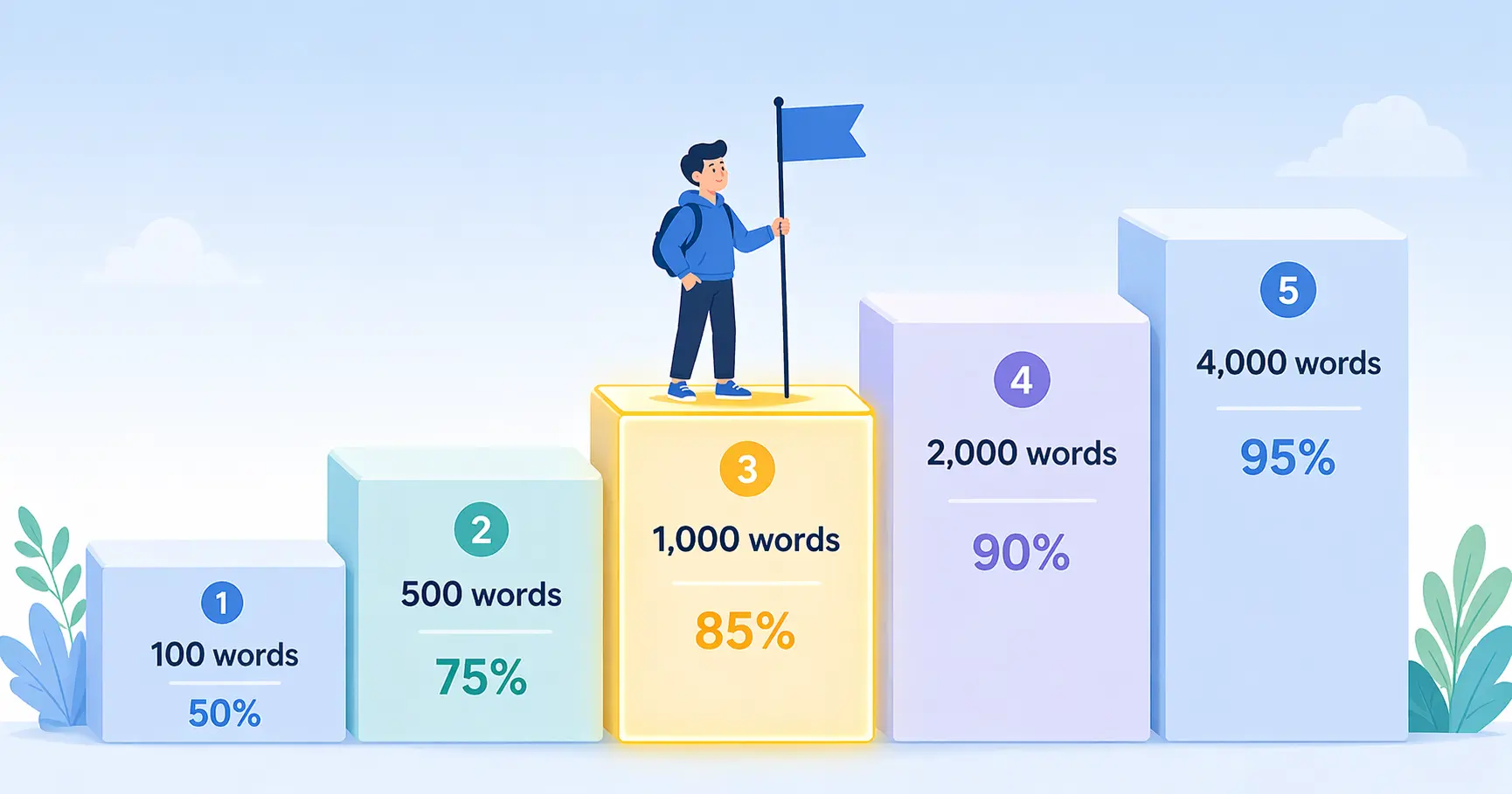
영어에서 가장 자주 쓰이는 단어 1,000개는 일상 대화의 약 85%, 문어의 약 75%를 차지합니다. 즉 이 1,000개 단어를 단순히 알아보는 데 그치지 않고 뜻을 이해하고, 문장에 활용하고, 철자까지 정확히 쓸 수 있다면 대부분의 영어 대화를 따라가고, 기본적인 뉴스 기사를 읽고, 일상적인 상황에서 의사소통할 수 있습니다.
이 글에서는 가장 자주 쓰이는 영어 단어를 엄선해 A부터 Z까지 알파벳순으로 뜻과 함께 소개합니다. 예문, 품사별 분류, 현실적인 학습 계획도 확인할 수 있습니다.
처음 1,000개 단어가 가장 중요한 이유
어휘 연구를 보면 소수의 단어가 영어에서 대부분의 역할을 한다는 사실이 꾸준히 확인됩니다.
| 알고 있는 단어 수 | 이해하는 대화의 비율 | 이해하는 글의 비율 |
|---|---|---|
| 100 | ~50% | ~45% |
| 500 | ~75% | ~65% |
| 1,000 | ~85% | ~75% |
| 2,000 | ~90% | ~80% |
| 4,000 | ~95% | ~90% |
처음 1,000개 단어를 익히면 학습 시간 대비 가장 큰 효과를 얻을 수 있습니다. 1,000개 이후에는 단어를 더 배울수록 이해력이 조금씩만 향상됩니다. 예를 들어 약 400위인 “available”을 배우면 약 8,000위인 “ambivalent”을 배우는 것보다 이해력이 훨씬 더 크게 향상됩니다.
빈도 기반 학습이 효과적인 이유도 여기에 있습니다. 가장 자주 등장하는 단어부터 공부하면 매 시간 학습으로 실제 영어 이해력을 최대한 높일 수 있습니다.
가장 자주 쓰이는 영어 단어 1,000개 A부터 Z까지
아래는 각 알파벳에서 꼭 알아야 할 단어를 엄선해 뜻과 예문을 함께 정리한 목록입니다. 전체 단어 1,000개는 알파벳 그룹 안에서 빈도순으로 정리되어 있습니다.
A
| 단어 | 품사 | 뜻 | 예문 |
|---|---|---|---|
| about | 전치사/부사 | ~에 관한; 약, 대략 | The book is about Japanese history. There were about 50 people. |
| above | 전치사 | ~보다 높은; ~을 넘는 | The temperature rose above 30 degrees. |
| accept | 동사 | 받거나 하기로 동의하다 | She accepted the job offer immediately. |
| across | 전치사 | 한쪽에서 다른 쪽으로 | He walked across the bridge in the rain. |
| actually | 부사 | 사실은; 실제로 | The test was actually easier than I expected. |
| add | 동사 | 다른 것과 합치다, 더하다 | Add two tablespoons of sugar to the mixture. |
| affect | 동사 | 영향을 미치다 | The weather affects my mood every winter. |
| afraid | 형용사 | 두려움을 느끼는 | She is afraid of flying. |
| after | 전치사/접속사 | ~보다 나중에; ~뒤에 | We went for a walk after dinner. |
| again | 부사 | 한 번 더 | Can you say that again, please? |
| age | 명사 | 사람이나 사물의 나이 | Children start school at the age of five in most countries. |
| agree | 동사 | 같은 의견을 가지다, 동의하다 | I agree with everything you said. |
| ahead | 부사 | 앞에; 미래에 | The road ahead was completely empty. |
| allow | 동사 | 허락하다 | The teacher does not allow phones in class. |
| almost | 부사 | 거의; 완전히는 아닌 | We have almost finished the project. |
| along | 전치사/부사 | ~을 따라 앞으로; ~옆에 | We walked along the river for an hour. |
| already | 부사 | 이미; 지금쯤은 | I have already seen that movie twice. |
| also | 부사 | 또한; ~도 | She speaks French and also a little German. |
| always | 부사 | 항상; 매번 | He always arrives early for meetings. |
| among | 전치사 | ~의 한가운데에; 집단의 일부로 | She was among the best students in her class. |
| amount | 명사 | 어떤 것의 양 | The recipe requires a small amount of salt. |
| appear | 동사 | 보이게 되다; ~인 것 같다 | Stars appear in the sky after sunset. |
| apply | 동사 | 정식으로 신청하다; 적용되다 | She applied for three jobs last week. |
| area | 명사 | 지역이나 장소의 일부 | This area is known for its excellent restaurants. |
| around | 전치사/부사 | 둘레에; 약, 대략 | There are trees all around the house. |
| arrive | 동사 | 목적지에 도착하다 | The train arrives at 6:45 PM. |
| ask | 동사 | 답을 얻으려고 질문하다 | Can I ask you a question? |
| attention | 명사 | 어떤 것에 정신을 집중하는 일 | Pay attention — this part is important. |
| available | 형용사 | 사용할 수 있는; 시간을 낼 수 있는 | The doctor is available on Tuesday afternoon. |
| avoid | 동사 | 피하다; 일어나지 않게 하다 | I avoid eating sugar before bed. |
B
| 단어 | 품사 | 뜻 | 예문 |
|---|---|---|---|
| back | 명사/부사 | 뒤쪽; 되돌아가서 | He sat at the back of the room. |
| bad | 형용사 | 품질이 나쁜; 불쾌한 | The weather was bad all week. |
| base | 명사/동사 | 바닥이나 토대; ~을 기반으로 하다 | The company is based in London. |
| beautiful | 형용사 | 매우 매력적이거나 보기 좋은 | The sunset over the ocean was beautiful. |
| because | 접속사 | ~라는 이유로, 왜냐하면 | She left early because she felt sick. |
| become | 동사 | ~이 되기 시작하다; 성장해 ~이 되다 | He became a doctor after years of study. |
| before | 전치사/접속사 | ~보다 먼저 | Finish your homework before dinner. |
| begin | 동사 | 시작하다 | The concert begins at 8 PM. |
| behind | 전치사 | ~의 뒤에 | The car park is behind the building. |
| believe | 동사 | 사실이라고 생각하다; 믿음을 가지다 | I believe she is telling the truth. |
| below | 전치사/부사 | ~보다 낮은; 아래에 | The temperature dropped below zero last night. |
| best | 형용사/부사 | 품질이 가장 좋은 | This is the best restaurant in the city. |
| better | 형용사/부사 | 더 좋은; 향상된 | Your English is getting better every week. |
| between | 전치사 | 두 사물 사이의 공간에 | The meeting is between 2 and 4 PM. |
| beyond | 전치사 | ~보다 더 멀리; ~을 넘어 | The view beyond the mountains was incredible. |
| big | 형용사 | 크기가 큰 | They live in a big house near the park. |
| body | 명사 | 사람이나 동물의 신체 구조 | Exercise is good for your body and mind. |
| book | 명사/동사 | 제본된 책; 예약하다 | I booked a hotel room for Friday night. |
| both | 한정사/대명사 | 둘 다, 두 가지를 함께 | Both answers are correct. |
| bring | 동사 | 어떤 장소로 무언가를 가져오다 | Please bring your laptop to the meeting. |
| build | 동사 | 건설하다; 만들어 내다 | They are building a new hospital downtown. |
| business | 명사 | 상업 활동; 회사 | She started her own business at 25. |
| buy | 동사 | 돈을 내고 무언가를 사다 | I need to buy a new phone. |
C
| 단어 | 품사 | 뜻 | 예문 |
|---|---|---|---|
| call | 동사/명사 | 전화로 말하다; 이름을 붙이다 | I will call you tomorrow morning. |
| care | 동사/명사 | 걱정하다; 돌보다 | She cares about the environment. |
| carry | 동사 | 무언가를 들고 옮기다 | He carried the boxes up the stairs. |
| case | 명사 | 상황; 용기나 케이스 | In that case, we should leave early. |
| cause | 명사/동사 | 원인; 일으키다 | What caused the delay? |
| certain | 형용사 | 확신하는; 특정한 | I am certain the answer is correct. |
| change | 동사/명사 | 바꾸다, 달라지다; 변화 | The city has changed a lot in ten years. |
| check | 동사 | 조사하다; 확인하다 | Check your email — I sent the document an hour ago. |
| child | 명사 | 어린 사람, 아이 | Every child in the school receives free lunch. |
| choose | 동사 | 여러 선택지 중에서 고르다; 결정하다 | You can choose any color you like. |
| city | 명사 | 큰 도시 | Tokyo is the largest city in Japan. |
| claim | 동사/명사 | 사실이라고 주장하다; 주장 | He claims he was at home all evening. |
| clear | 형용사/동사 | 이해하기 쉬운; 투명한; 분명하게 하다 | The instructions were clear and simple. |
| close | 동사/형용사 | 닫다; 가까운 | Please close the door. The shop is close to my house. |
| come | 동사 | ~쪽으로 이동하다; 도착하다 | Come here — I want to show you something. |
| common | 형용사 | 자주 발생하는; 많은 사람이 공유하는 | Spelling mistakes are very common among beginners. |
| community | 명사 | 같은 지역에 사는 사람들의 집단 | The local community organized a cleanup day. |
| company | 명사 | 사업 조직, 회사 | She works for a technology company. |
| compare | 동사 | 차이점과 공통점을 살펴보다 | Compare the two products before you buy. |
| complete | 형용사/동사 | 끝난; 모든 부분을 갖춘 | The project is now complete. |
| concern | 명사/동사 | 걱정; ~와 관련되다 | Safety is our main concern. |
| consider | 동사 | 신중히 생각하다, 고려하다 | We should consider all the options before deciding. |
| continue | 동사 | 계속하다; 멈추지 않다 | She continued reading despite the noise. |
| control | 명사/동사 | 통제하는 힘; 관리하다 | You need to control your spending. |
| cost | 명사/동사 | 어떤 것의 가격; 비용이 들다 | The cost of living has increased by 8%. |
| could | 조동사 | 과거의 능력; 가능성 | She could speak three languages by age 12. |
| country | 명사 | 국가; 시골 지역 | Japan is a beautiful country. |
| couple | 명사 | 둘; 한 쌍의 사람 | We stayed for a couple of hours. |
| course | 명사 | 일련의 수업; 방향 | She is taking an online course in marketing. |
| cover | 동사/명사 | 무언가를 덮다; 포함하다 | Snow covered the entire city overnight. |
| create | 동사 | 새로운 것을 만들다 | The artist created a stunning painting. |
| current | 형용사/명사 | 현재의; 흐름 | What is the current population of London? |
| cut | 동사 | 날카로운 도구로 자르다; 줄이다 | The government plans to cut taxes next year. |
D–F
| 단어 | 품사 | 뜻 | 예문 |
|---|---|---|---|
| deal | 명사/동사 | 합의; 처리하다 | We made a deal with the supplier. |
| decide | 동사 | 선택하다, 결정하다 | Have you decided where to go for dinner? |
| describe | 동사 | 어떤 것이 어떤지 말하다, 묘사하다 | Can you describe the apartment? |
| develop | 동사 | 성장하다; 시간이 지나며 만들어 내다 | The company developed a new product. |
| different | 형용사 | 같지 않은, 다른 | The two brothers have very different personalities. |
| difficult | 형용사 | 하거나 이해하기 어려운 | The exam was more difficult than expected. |
| discover | 동사 | 처음으로 무언가를 찾아내다 | Scientists discovered a new species of fish. |
| drive | 동사/명사 | 차량을 운전하다; 차를 타고 가는 여정 | She drives to work every morning. |
| drop | 동사/명사 | 떨어지다; 무언가를 떨어뜨리다 | Be careful not to drop the glass. |
| during | 전치사 | 일정 기간 내내, ~동안 | I fell asleep during the movie. |
| each | 한정사 | 둘 이상의 것 중 각각 | Each student receives a textbook. |
| early | 형용사/부사 | 예상한 시간보다 이른 | We arrived early to get good seats. |
| easy | 형용사 | 어렵지 않은, 쉬운 | The first questions were easy. |
| effect | 명사 | 어떤 것으로 인해 생긴 결과나 변화 | The new law had an immediate effect on traffic. |
| enough | 한정사/부사 | 필요한 만큼의 | We have enough food for everyone. |
| enter | 동사 | 안으로 들어가다 | Please enter through the main door. |
| entire | 형용사 | 전체의; 완전한 | She ate the entire pizza by herself. |
| especially | 부사 | 특히; 보통보다 더 | I love all fruits, especially strawberries. |
| even | 부사/형용사 | 강조할 때 쓰임; 평평한/같은 | Even the teacher made a mistake. |
| ever | 부사 | 어느 때라도 | Have you ever been to Australia? |
| every | 한정사 | 모든; 각각 | I go to the gym every morning. |
| example | 명사 | 다른 것들이 어떤지 보여 주는 사례 | Can you give me an example? |
| expect | 동사 | 어떤 일이 일어날 것이라고 생각하다 | I expect the results tomorrow. |
| experience | 명사/동사 | 직접 해 보며 얻은 지식; 경험하다 | She has ten years of experience in marketing. |
| explain | 동사 | 이해할 수 있도록 분명히 말하다 | The teacher explained the grammar rule again. |
| face | 명사/동사 | 머리의 앞부분, 얼굴; 직면하다 | We need to face the problem directly. |
| fact | 명사 | 사실인 것 | It is a fact that the Earth orbits the Sun. |
| far | 형용사/부사 | 먼 거리의, 멀리 | The station is not far from here. |
| fast | 형용사/부사 | 빠르게 움직이는, 빠르게 | The train is very fast — it reaches 300 km/h. |
| feel | 동사 | 감정이나 신체 감각을 경험하다 | I feel much better today. |
| few | 한정사/대명사 | 적은 수의 | Only a few students passed the test. |
| fill | 동사 | 가득 채우다 | She filled the glass with water. |
| finally | 부사 | 마침내; 오랜 시간이 지난 뒤 | We finally found the restaurant after walking for 20 minutes. |
| find | 동사 | 발견하다; 위치를 알아내다 | I cannot find my keys. |
| finish | 동사 | 완료하다; 끝나다 | What time does the class finish? |
| follow | 동사 | 뒤따라가다; 따르다 | Follow the instructions on the screen. |
| force | 명사/동사 | 힘; 누군가에게 무언가를 하게 하다 | The wind was strong enough to force the door open. |
| foreign | 형용사 | 다른 나라에서 온 | She is learning two foreign languages. |
| form | 명사/동사 | 유형; 형태; 만들다 | Please fill in the application form. |
| free | 형용사/동사 | 비용이 들지 않는; 제한이 없는; 해방하다 | Admission to the museum is free on Sundays. |
| friend | 명사 | 알고 지내며 좋아하는 사람, 친구 | She has been my best friend since school. |
| full | 형용사 | 가능한 한 많이 들어 있는, 가득 찬 | The bus was completely full. |
| future | 명사/형용사 | 앞으로 다가올 시간; 미래의 | Nobody knows what the future will bring. |
G–L
| 단어 | 품사 | 뜻 | 예문 |
|---|---|---|---|
| general | 형용사 | 모두에게 해당하는; 구체적이지 않은 | The general opinion is that the plan will work. |
| give | 동사 | 누군가에게 무언가를 건네다 | She gave me her phone number. |
| government | 명사 | 국가를 통치하는 집단, 정부 | The government announced new education policies. |
| great | 형용사 | 매우 좋은; 큰 | The concert was great — we had an amazing time. |
| group | 명사 | 함께 모인 사람이나 사물의 무리 | A group of students visited the factory. |
| grow | 동사 | 크기가 커지다; 발전하다 | The company has grown rapidly in three years. |
| half | 명사/한정사 | 똑같이 나눈 두 부분 중 하나, 절반 | Half the class was absent due to illness. |
| happen | 동사 | 일어나다, 발생하다 | What happened at the meeting yesterday? |
| hard | 형용사/부사 | 어려운; 많은 노력을 들여 | She works hard to support her family. |
| head | 명사/동사 | 신체의 머리; 이끌다 | He is the head of the marketing department. |
| help | 동사/명사 | 누군가의 일을 쉽게 해 주다; 도움 | Can you help me carry these bags? |
| high | 형용사/부사 | 높은; 큰 수준에 있는 | The price of petrol is very high right now. |
| hold | 동사 | 손에 들고 있다; 행사를 개최하다 | She held the baby carefully. The event is held every June. |
| home | 명사/부사 | 사는 곳, 집; 집으로 | I usually get home at 6 PM. |
| hope | 동사/명사 | 어떤 일이 일어나기를 바라다; 희망 | I hope you feel better soon. |
| however | 부사 | 그렇지만; 그와 대조적으로 | The hotel was expensive. However, the service was excellent. |
| human | 형용사/명사 | 인간과 관련된; 인간 | Human memory is surprisingly unreliable. |
| idea | 명사 | 생각이나 제안 | That is a great idea — let us try it. |
| important | 형용사 | 매우 중요한 | Sleep is important for learning. |
| include | 동사 | 더 큰 것의 일부로 포함하다 | The price includes breakfast and parking. |
| increase | 동사/명사 | 더 커지거나 많아지다; 증가 | Sales increased by 15% last quarter. |
| information | 명사 | 어떤 것에 관한 사실이나 정보 | For more information, visit our website. |
| interest | 명사/동사 | 호기심; 저축으로 얻는 이자; 흥미를 끌다 | She has a strong interest in science. |
| issue | 명사 | 화제; 문제 | Climate change is a critical issue today. |
| job | 명사 | 보수를 받는 일; 과제 | He got a new job at a bank. |
| join | 동사 | 집단의 일원이 되다; 연결하다 | She joined the company last month. |
| just | 부사 | 단지; 방금; 정확히 | I just arrived — give me one minute. |
| keep | 동사 | 계속 가지고 있다; 보관하다 | Keep the receipt in case you need to return it. |
| kind | 명사/형용사 | 종류; 친절하고 배려심 있는 | What kind of music do you like? She is a very kind person. |
| know | 동사 | 머릿속에 정보를 가지고 있다, 알다 | I know the answer to that question. |
| large | 형용사 | 크기나 양이 큰 | They need a large conference room for 50 people. |
| last | 형용사/동사 | 가장 최근의; 계속되다 | The meeting lasted two hours. I saw her last week. |
| late | 형용사/부사 | 예상한 시간보다 늦은 | Sorry I am late — the traffic was terrible. |
| lead | 동사/명사 | 길을 안내하다; 책임을 맡다; 이끌다 | She leads a team of 20 people. |
| learn | 동사 | 지식이나 기술을 얻다, 배우다 | She learned to speak English in two years. |
| leave | 동사 | 떠나다; 그대로 두다 | I leave the house at 7:30 every morning. |
| less | 한정사/부사 | 더 적은 양의; 더 적게 | I try to spend less money on things I do not need. |
| level | 명사 | 단계나 기준상의 위치 | Her English is at an intermediate level. |
| life | 명사 | 살아 있는 상태; 삶 | She lived a long and happy life. |
| likely | 형용사/부사 | 일어날 가능성이 있는; 아마 | Rain is likely this afternoon. |
| line | 명사 | 길고 가는 표시; 줄지어 선 사람들 | There was a long line outside the store. |
| list | 명사/동사 | 함께 적은 항목의 목록; 목록을 작성하다 | Make a list of everything you need to buy. |
| live | 동사/형용사 | 어디에 살다; 살아 있는 | They live in a small town near the coast. |
| long | 형용사/부사 | 거리가 먼; 시간이 오래 걸리는; 오랫동안 | The journey was long but enjoyable. |
| look | 동사 | 눈으로 보다; ~처럼 보이다 | Look at this photo — is that your friend? |
| lose | 동사 | 더는 가지고 있지 않다; 경기에서 지다 | I always lose my keys. |
| low | 형용사 | 지면 가까이에 있는; 양이 적은 | The price is surprisingly low. |
M–P
| 단어 | 품사 | 뜻 | 예문 |
|---|---|---|---|
| main | 형용사 | 가장 중요한 | The main reason I moved was the job. |
| make | 동사 | 만들다; 일으키다 | She made dinner for the whole family. |
| matter | 명사/동사 | 주제; 중요하다 | It does not matter — either day works for me. |
| may | 조동사 | 가능성; 허가 | It may rain later. You may leave early today. |
| mean | 동사/형용사 | 의도하다; 의미하다; 불친절한 | What does this word mean? |
| meet | 동사 | 함께 모이다, 만나다; 기준을 충족하다 | Nice to meet you. The product meets all safety standards. |
| mind | 명사/동사 | 생각하는 정신; 꺼리다 | She changed her mind at the last minute. |
| miss | 동사 | 맞히지 못하다; 부재를 슬퍼하다, 그리워하다 | I miss my family when I travel. |
| money | 명사 | 물건을 사는 데 사용하는 돈 | She saves money by cooking at home. |
| most | 한정사/부사 | 가장 많은 양; 대부분 | Most students passed the exam. |
| move | 동사 | 위치나 장소를 바꾸다, 이동하다 | We moved to a new apartment in January. |
| much | 한정사/부사 | 많은 양의; 얼마나 많이 | How much does this cost? |
| must | 조동사 | 필요성; 강한 추측 | You must wear a seatbelt. She must be tired after the flight. |
| name | 명사/동사 | 사람이나 사물을 부르는 말, 이름; 이름을 말하다 | My name is Anna. Can you name three countries in Africa? |
| natural | 형용사 | 자연에 존재하는; 자연스러운 | It is natural to feel nervous before an interview. |
| near | 전치사/형용사 | ~에 가까운 | The school is near the train station. |
| need | 동사/명사 | 필요로 하다; 필요 | I need to finish this report by tomorrow. |
| never | 부사 | 한 번도 ~않다; 절대로 | I have never been to South America. |
| new | 형용사 | 전에 없던; 최근에 만들어진 | She bought a new laptop for work. |
| next | 형용사/부사 | 바로 다음에 오는 | The next train leaves in 10 minutes. |
| nothing | 대명사 | 아무것도 없음 | There is nothing in the fridge. |
| notice | 동사/명사 | 알아차리다; 공지 | Did you notice anything strange? |
| now | 부사 | 현재 시점에, 지금 | We need to leave now or we will be late. |
| number | 명사 | 수학적 값; 수량, 숫자 | A large number of people attended the event. |
| offer | 동사/명사 | 받아들이도록 제안하다; 제안 | They offered her a higher salary. |
| often | 부사 | 여러 번; 자주 | How often do you exercise? |
| only | 형용사/부사 | 그 이상은 아닌; 단 하나의 | There are only two tickets left. |
| open | 형용사/동사 | 닫혀 있지 않은; 열어 접근할 수 있게 하다 | The store is open from 9 to 6. |
| order | 명사/동사 | 배열; 구매 요청을 하다 | I ordered a coffee and a sandwich. |
| other | 형용사/대명사 | 추가의; 다른 | Do you have any other questions? |
| outside | 전치사/명사 | 안쪽이 아닌; 바깥 | It is cold outside — take a jacket. |
| own | 형용사/동사 | 자기 소유의; 소유하다 | She has her own apartment now. |
| part | 명사 | 더 큰 것의 일부 | This is the hardest part of the exam. |
| pay | 동사/명사 | 무언가의 대가로 돈을 주다; 급여 | How much do they pay you? |
| people | 명사 | 일반적인 인간들, 사람들 | About 500 people work in this building. |
| place | 명사/동사 | 장소; 어딘가에 놓다 | This is a nice place for a picnic. |
| plan | 명사/동사 | 상세한 계획; 의도하다 | What are your plans for the weekend? |
| point | 명사/동사 | 생각이나 주장; 가리키다 | That is a good point. She pointed at the map. |
| possible | 형용사 | 일어나거나 실행할 수 있는 | Is it possible to change the date? |
| power | 명사 | 통제할 수 있는 힘; 에너지 | Solar power is becoming cheaper every year. |
| present | 형용사/명사/동사 | 현재의; 선물; 보여 주다 | All members were present at the meeting. |
| problem | 명사 | 어려움; 해결해야 할 것, 문제 | The main problem is the lack of funding. |
| produce | 동사 | 만들다, 생산하다 | The factory produces 500 cars per day. |
| program | 명사 | 계획; TV 방송; 소프트웨어 | The training program lasts six weeks. |
| provide | 동사 | 주다, 공급하다 | The hotel provides free breakfast for guests. |
| public | 형용사/명사 | 모두를 위한; 일반 대중 | Public transport is free for children under 5. |
| put | 동사 | 무언가를 특정 위치로 옮기다, 놓다 | Put your bag on the table. |
Q–S
| 단어 | 품사 | 뜻 | 예문 |
|---|---|---|---|
| question | 명사 | 누군가에게 묻는 것, 질문 | Can I ask a question? |
| quite | 부사 | 꽤; 완전히 | The movie was quite good, actually. |
| reach | 동사 | 도착하다; ~까지 뻗다 | We reached the hotel at midnight. |
| read | 동사 | 글자를 보고 뜻을 이해하다, 읽다 | She reads for 30 minutes before bed every night. |
| ready | 형용사 | 준비된 | Dinner is ready — come to the table. |
| real | 형용사 | 실제로 존재하는; 진짜인 | Is that a real diamond? |
| reason | 명사 | 어떤 일이 일어나거나 행해지는 이유 | What is the reason for the delay? |
| receive | 동사 | 받다, 전달받다 | I received your email this morning. |
| record | 명사/동사 | 저장된 정보; 최고의 성취 기록 | She broke the world record in the 100 meters. |
| remain | 동사 | 계속 머무르다; 계속 존재하다 | Please remain seated until the plane stops. |
| remember | 동사 | 기억 속에 간직하다, 기억하다 | I remember the first day I arrived in London. |
| report | 명사/동사 | 어떤 일에 관한 기록; 설명하다 | The report shows a 10% increase in sales. |
| require | 동사 | 필요로 하다; 요구하다 | This job requires three years of experience. |
| result | 명사 | 어떤 일 때문에 생긴 결과 | Hard work leads to good results. |
| return | 동사/명사 | 돌아오다, 돌려주다; 귀환 | She returned to work after two weeks. |
| right | 형용사/명사/부사 | 옳은; 도덕적 권리; 방향 | That is the right answer. Turn right at the corner. |
| run | 동사 | 발로 빠르게 움직이다; 운영하다 | He runs 5 kilometers every morning. She runs a small business. |
| same | 형용사 | 동일한; 다르지 않은 | We take the same bus every day. |
| say | 동사 | 말을 하다 | She said she would call me back. |
| seem | 동사 | ~인 것처럼 보이다 | He seems tired today. |
| send | 동사 | 무언가가 다른 장소로 가게 하다, 보내다 | I sent the package yesterday. |
| serious | 형용사 | 중요한; 농담이 아닌 | This is a serious problem that needs attention. |
| serve | 동사 | 음식이나 서비스를 제공하다 | The restaurant serves breakfast from 7 to 10 AM. |
| set | 동사/명사 | 특정 위치에 두다; 한 묶음 | She set the alarm for 6 AM. |
| several | 한정사 | 둘보다 많지만 아주 많지는 않은 | I have visited that city several times. |
| share | 동사/명사 | 무언가의 일부를 나누어 주다; 몫 | She shared her lunch with her colleague. |
| short | 형용사 | 길지 않은; 키가 크지 않은 | It was a short meeting — only 15 minutes. |
| should | 조동사 | 조언; 기대 | You should see a doctor about that. |
| show | 동사/명사 | 누군가에게 보게 하다; 보여 주기 | Can you show me how to do this? |
| similar | 형용사 | 비슷하지만 완전히 같지는 않은 | The two houses are very similar in design. |
| simple | 형용사 | 이해하거나 하기 쉬운 | The recipe is simple — only five ingredients. |
| since | 전치사/접속사 | 과거 어느 때부터 지금까지; ~이므로 | I have lived here since 2019. Since you asked, I will tell you. |
| situation | 명사 | 특정 시점의 상황이나 사정 | The situation is improving slowly. |
| small | 형용사 | 크기가 작은 | They live in a small village in the mountains. |
| social | 형용사 | 사회나 사람 간 교류에 관한 | Social media has changed how we communicate. |
| some | 한정사 | 정확한 양을 밝히지 않은 얼마간의 | Can I have some water, please? |
| soon | 부사 | 가까운 미래에, 곧 | The bus should arrive soon. |
| speak | 동사 | 말하다, 말을 하다 | Do you speak English? |
| special | 형용사 | 평소보다 더 좋거나 다른 | Today is a special day — it is her birthday. |
| spend | 동사 | 돈을 사용하다; 시간을 보내다 | How much time do you spend studying? |
| stand | 동사 | 두 발로 서 있다; 위치하다 | Please stand up when the teacher enters. |
| start | 동사/명사 | 시작하다; 시작 | The movie starts at 8 PM. |
| state | 명사/동사 | 상태; 말로 표현하다 | The building is in a poor state. He stated his opinion clearly. |
| stay | 동사 | 한 장소에 계속 머물다 | We stayed at a small hotel near the beach. |
| still | 부사/형용사 | 지금까지 계속; 움직이지 않는 | She still lives with her parents. |
| stop | 동사 | 움직임이나 행동을 멈추다 | The bus stops right in front of the school. |
| strong | 형용사 | 힘이나 능력이 큰 | She has a strong opinion about education. |
| suggest | 동사 | 생각이나 제안을 내놓다 | I suggest we meet at 10 AM instead. |
| support | 동사/명사 | 돕다; 지지 | Her family supports her decision to study abroad. |
| sure | 형용사 | 확신하는; 자신 있는 | Are you sure about that? |
| system | 명사 | 함께 작동하는 서로 연결된 것들의 집합 | The education system needs reform. |
T–Z
| 단어 | 품사 | 뜻 | 예문 |
|---|---|---|---|
| take | 동사 | 손에 들다; 나르다; 필요로 하다 | Take an umbrella — it might rain. |
| talk | 동사/명사 | 말하다; 대화 | We need to talk about the project. |
| tell | 동사 | 누군가에게 말하다; 알리다 | Can you tell me the time? |
| test | 명사/동사 | 시험; 무언가를 확인하다 | She passed her driving test on the first attempt. |
| thing | 명사 | 사물; 사실이나 상황 | I have a few things to finish before I leave. |
| think | 동사 | 생각을 하다; ~라고 여기다 | I think this is the right decision. |
| through | 전치사 | 한쪽에서 다른 쪽으로; ~을 통해 | We walked through the park. |
| together | 부사 | 서로 함께; 동시에 | We worked together on the project. |
| top | 명사/형용사 | 가장 높은 부분; 가장 좋은 | She graduated at the top of her class. |
| total | 형용사/명사 | 전체의; 총액 | The total cost was $450. |
| toward | 전치사 | ~을 향해 | She walked toward the exit. |
| turn | 동사/명사 | 방향을 바꾸다; 회전 | Turn left at the traffic lights. |
| type | 명사/동사 | 종류나 범주; 타자를 치다 | What type of phone do you have? |
| understand | 동사 | 뜻을 알다; 이해하다 | I understand the instructions now. |
| until | 전치사/접속사 | ~할 때까지 | Wait here until I come back. |
| use | 동사/명사 | 목적에 맞게 사용하다; 사용 | May I use your phone? |
| usually | 부사 | 대부분의 경우에; 보통 | I usually wake up at 7 AM. |
| value | 명사/동사 | 값어치; 중요성; 가치를 매기다 | The value of the house has doubled. |
| very | 부사 | 정도가 높은, 매우 | The test was very difficult. |
| view | 명사/동사 | 눈에 보이는 풍경; 의견 | The view from the top floor is amazing. |
| voice | 명사 | 말할 때 내는 소리, 목소리 | She has a very calm voice. |
| wait | 동사 | 어떤 일이 일어날 때까지 머무르다, 기다리다 | Please wait here — I will be right back. |
| walk | 동사/명사 | 발로 걸어가다; 걷기 | I walk to work every day — it takes 20 minutes. |
| want | 동사 | 바라다; 원하다 | What do you want for dinner? |
| watch | 동사/명사 | 한동안 바라보다; 시간을 알려 주는 기기 | We watched a documentary about space last night. |
| water | 명사 | 강, 호수, 비에 있는 맑은 액체, 물 | Drink at least 2 liters of water per day. |
| way | 명사 | 방법; 경로 | This is the easiest way to solve the problem. |
| week | 명사 | 7일의 기간, 한 주 | I go to the gym three times a week. |
| whole | 형용사 | 전체의; 완전한 | She read the whole book in one day. |
| without | 전치사 | ~을 가지지 않고; ~이 없이 | She left without saying goodbye. |
| word | 명사 | 언어의 단위, 단어 | What does this word mean? |
| work | 동사/명사 | 일을 하다; 노력이나 일 | She works for an international organization. |
| world | 명사 | 지구; 모든 사람들, 세상 | English is spoken all over the world. |
| write | 동사 | 종이나 화면에 글자를 쓰다 | Write your name at the top of the page. |
| wrong | 형용사 | 옳지 않은; 도덕적으로 잘못된 | Something is wrong with my computer. |
| year | 명사 | 365일의 기간, 1년 | She lived in Berlin for three years. |
| yet | 부사/접속사 | 지금까지; 그러나 | I have not finished yet. The hotel is small, yet very comfortable. |
| young | 형용사 | 나이가 많지 않은, 젊은 | Young people are increasingly interested in sustainability. |
품사별로 살펴보는 단어 1,000개
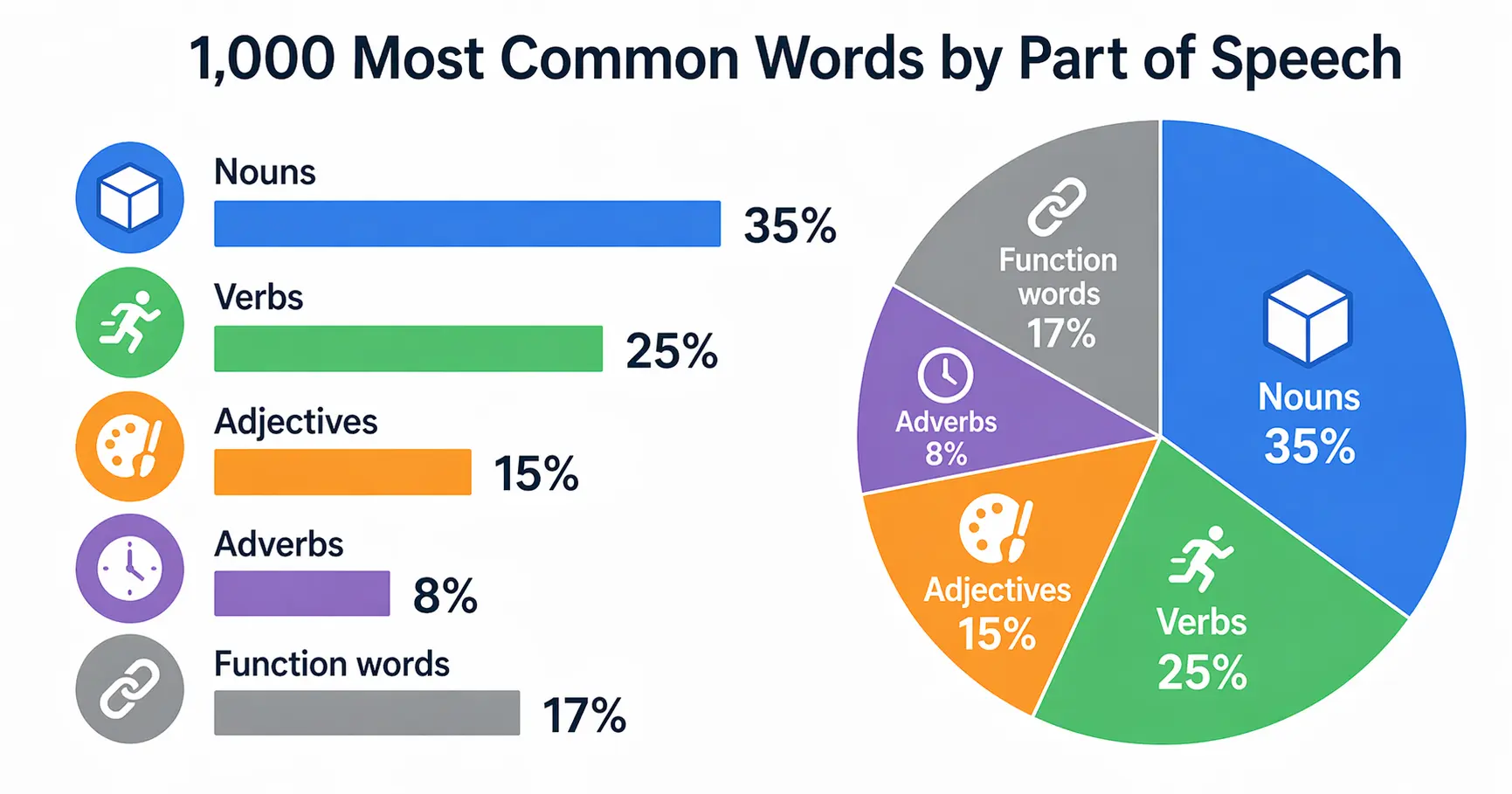
품사별 분포를 이해하면 더 효율적으로 공부할 수 있습니다.
| 품사 | 대략적인 비율 | 개수 | 쓰임 |
|---|---|---|---|
| 명사 | 35% | ~350 | 사물의 이름: problem, area, information, government |
| 동사 | 25% | ~250 | 행동을 나타냄: provide, include, continue, require |
| 형용사 | 15% | ~150 | 특성을 설명함: important, different, possible, strong |
| 부사 | 8% | ~80 | 방식/시간/장소를 수식함: already, however, often, usually |
| 기능어 | 17% | ~170 | 생각을 연결함: the, in, with, because, which, although |
기능어(전치사, 접속사, 한정사, 대명사)는 개별 단어의 빈도가 가장 높지만, 전체 개수에서는 가장 작은 범주입니다. 이미 이들 중 대부분을 알고 있을 거예요. 학습자에게 가장 부족한 부분은 보통 동사와 형용사입니다. require, previous, significant, maintain처럼 기초 교재에서는 종종 다루지 않지만 실제 영어에서 계속 등장하는 단어들이 여기에 해당합니다.
학습 계획: 8주에 단어 1,000개 익히기
단어 1,000개를 전부 처음부터 배울 필요는 없습니다. 대부분의 학습자는 이미 그중 400~600개를 알고 있습니다. 목표는 모르는 부분을 효율적으로 채우는 것입니다.
1~2주 차: 점검과 기초 다지기
- 위 목록을 훑어보세요. 뜻과 쓰임 모두 확실하지 않은 단어를 표시하세요.
- 현재 수준을 파악하세요. 모르는 단어나 부분적으로만 아는 단어가 200~400개라고 답하는 학습자가 많습니다.
-
세 그룹으로 나누세요.
- 잘 아는 단어 — 생각하지 않아도 문장에서 쓸 수 있습니다.
- 알아보지만 확신이 없는 단어 — 읽을 때는 이해하지만 자신 있게 쓰지 못합니다.
- 모르는 단어 — 익숙하지 않거나 뜻이 매우 불분명합니다.
“알아보지만 확신이 없는 단어”와 “모르는 단어” 그룹에 학습 시간을 집중하세요.
3~6주 차: 적극적으로 배우기 (하루 25개)
| 시간대 | 활동 | 시간 |
|---|---|---|
| 오전 | 전날 배운 단어를 빠르게 떠올려 보는 시험 | 5분 |
| 오후 | 새 단어 25개 학습 — 정의와 예문을 읽고, 그중 5개로 나만의 문장 만들기 | 15분 |
| 저녁 | 오늘 배운 새 단어와 3일 전에 배운 단어 복습 | 10분 |
하루 25개씩 주 5일 공부하면 4주 동안 단어 500개를 익힐 수 있습니다. 이 가운데 많은 단어는 “알아보지만 확신이 없는“ 단어이므로 몇 번만 복습해도 확실히 내 것으로 만들 수 있습니다.
7~8주 차: 복습하고 실제로 사용하기
- 새 단어 학습을 멈추고 복습과 활용에만 집중하세요.
- 3~6주 차에 배운 모든 단어를 스스로 시험해 보세요.
- 어려운 단어를 사용해 하루에 문장 10개를 쓰세요.
- 매일 영어 기사 한 편을 읽으며 이 단어 1,000개 중 몇 개가 나오는지 살펴보세요.
8주 후
다음 단계로 넘어가세요. 필수 영어 단어 4,000개 학습 가이드는 이 목록 다음 단계인 1,001~4,000위 단어를 체계적인 6개월 계획으로 다룹니다.
지금 연습할 단어
이 목록에서 뽑은 필수 단어 25개입니다. 클릭 한 번으로 사전에 추가하면 간격 반복 복습이 자동으로 시작됩니다.
experience
명사
-
예문
- Her previous work experience made her an ideal candidate for the position.
- Traveling to different countries provides valuable cultural experience.
meeting
명사
-
예문
- The business meeting discussed budget plans for next fiscal year.
- Town meeting allows residents to voice concerns about local issues.
reply
명사
-
예문
- Quick reply shows professional customer service quality.
- Written reply confirms agreement terms and conditions.
create
동사
-
예문
- Artists create beautiful works that inspire and move people emotionally.
- The new policy will create opportunities for economic growth.
mention
동사
-
예문
- Please mention my name when you call about job opening.
- The report fails to mention important environmental concerns.
describe
동사
-
예문
- Can you describe what the suspect looked like to police officers?
- The travel guide describes many interesting places to visit in Europe.
impact
명사
-
예문
- Climate change has a significant impact on global weather patterns.
- The impact of the collision damaged both cars severely.
exam
명사
-
예문
- Students study hard for weeks before taking their final exams.
- The driving exam tests both knowledge and practical skills behind wheel.
powerful
형용사
-
예문
- Powerful computer processes data very quickly.
- Powerful speech moves audience to take action.
wonderful
형용사
-
예문
- The restaurant serves wonderful food with excellent service.
- We had a wonderful time at the beach during summer vacation.
confident
형용사
-
예문
- She felt confident about passing the difficult examination successfully.
- The confident speaker delivered an inspiring presentation to the audience.
favor
명사
-
예문
- Could you do me a favor and pick up my dry cleaning?
- The proposal gained favor among the committee members after lengthy discussion.
ambition
명사
-
예문
- Her ambition is to become a successful doctor and help people worldwide.
- Sometimes ambition can drive people to work too hard and neglect family.
tourist
명사
-
예문
- Foreign tourist visits famous landmarks and museums.
- Tourist season brings economic benefits to region.
student
명사
-
예문
- Diligent student completes homework assignments on time.
- Graduate student conducts research for doctoral degree.
relaxed
형용사
-
예문
- Relaxed atmosphere encourages open discussion among participants.
- Relaxed person handles pressure situations more effectively.
hot
형용사
-
예문
- Summer weather is extremely hot in desert regions around the world.
- The coffee is too hot to drink right now - let it cool down.
cool
동사
-
orange
명사
-
예문
- Fresh orange juice contains vitamin C and natural sugar.
- The sunset painted sky in beautiful shades of orange.
meat
명사
-
예문
- Fresh meat should be stored in refrigerator for food safety.
- Vegetarians choose not to eat meat for ethical reasons.
football
명사
-
예문
- Football is the most popular sport in many countries around the world.
- The children play football in the school yard during their lunch break.
명사
-
예문
- Check mail every day for important bills and official documents.
- Electronic mail has largely replaced traditional postal letters today.
father
명사
-
예문
- His father taught him how to ride a bicycle in the park.
- The young father proudly carried his baby daughter in his arms.
rush
명사
-
예문
- Last-minute rush creates stress and mistakes often.
- Morning rush causes traffic jams in city.
result
명사
-
예문
- Election result surprises political analysts and voters.
- Test result shows significant improvement in performance.
이 목록을 효과적으로 활용하는 방법
그냥 읽지 말고 스스로 시험해 보세요. “뜻” 열을 가리고 각 단어의 뜻을 기억해 보세요. “단어” 열을 가리고 정의를 본 뒤 영어 단어를 떠올려 보세요. 적극적으로 기억을 끌어내는 연습은 수동적으로 읽는 것보다 훨씬 효과적입니다.
뜻이 여러 개인 단어에 주의를 기울이세요. 가장 흔한 단어 1,000개 중 상당수는 뜻이 3~5개입니다. “Right”는 옳다는 뜻, 도덕적 권리, 방향을 뜻합니다. “Run”은 빠르게 움직이다, 사업을 운영하다, 기계를 작동하다라는 뜻으로 쓰입니다. 먼저 가장 흔한 뜻을 익힌 다음 다른 뜻을 더해 보세요.
연어에 주목하세요. 흔한 단어는 자연스럽게 짝을 이루는 표현이 있습니다. 결정을 make 한다고 하지 “do” 한다고 하지 않고, 사진을 take 한다고 하지 “make” 한다고 하지 않습니다. 숙제는 do 한다고 하지 “make” 한다고 하지 않습니다. 적절한 연어를 배우는 것이 자연스러운 영어와 교과서식 영어를 가르는 차이입니다.
모르는 단어를 기록하세요. 이 목록에서 모르는 단어는 모두 우선적으로 배워야 할 단어입니다. 다른 단어보다 영어에서 더 자주 등장하므로, 빨리 익힐수록 이해력이 더 빠르게 향상됩니다.
다음에 읽을 글
-
단어 4,000개까지 실력을 넓히세요. 첫 1,000개 단어로 글의 85%를 이해할 수 있고, 다음 3,000개를 익히면 95%까지 높아집니다. 체계적인 학습 계획은 필수 영어 단어 4,000개 가이드를 참고하세요.
-
문장 속에서 단어를 배우세요. 자주 쓰이는 어휘를 활용한 문장 200개 이상을 담은 일상에서 쓰는 간단한 영어 문장을 확인해 보세요.
-
암기 체계를 만드세요. 단어가 오래 기억에 남도록 돕는 과학적으로 검증된 8가지 방법은 어휘 암기하는 방법에서 확인할 수 있습니다.
-
전체적인 학습법을 개선하세요. 장기적으로 실력을 키울 수 있는 검증된 전략 10가지를 소개하는 어휘력 향상 가이드를 읽어 보세요.
자주 묻는 질문
가장 자주 쓰이는 영어 단어 1,000개는 무엇인가요?
가장 자주 쓰이는 영어 단어 1,000개란 일상 대화와 글에서 가장 빈번하게 등장하는 단어입니다. 기능어(the, is, in), 기초 동사(make, take, give, know), 흔한 명사(time, people, way, day), 필수 형용사(new, good, different, important)가 포함됩니다. 이 단어들을 합치면 일상적인 영어 대화의 약 85%를 차지합니다. 이 글에서는 뜻과 예문을 곁들여 알파벳순으로 소개합니다.
단어 1,000개면 영어로 말하기에 충분한가요?
단어 1,000개면 인사, 일상 루틴, 간단한 의견, 쇼핑, 여행 상황 등 기초적인 대화에 필요한 어휘를 익힐 수 있습니다. 단어 1,000개로 영어권 국가에서 기본적인 생활은 할 수 있습니다. 하지만 직장에서 편하게 의사소통하고, 뉴스를 이해하거나, IELTS 같은 시험에 합격하려면 단어 3,000~5,000개가 필요합니다. 단어 1,000개는 탄탄한 기초이지 최종 목표는 아닙니다.
영어 단어 1,000개를 배우는 데 얼마나 걸리나요?
이미 영어를 조금 안다면 이 단어 중 400~600개는 알고 있을 가능성이 높습니다. 매일 복습하면서 하루 15~25개의 새 단어를 배우면 나머지 400~600개를 익히는 데 약 6~8주가 걸립니다. 완전한 초보자가 처음부터 시작하면 10~12주가 필요합니다. 중요한 것은 속도가 아니라 꾸준함입니다. 일주일에 한 번 2시간 공부하는 것보다 매일 15분씩 공부하는 편이 낫습니다.
자주 쓰이는 영어 단어를 배우는 가장 좋은 방법은 무엇인가요?
단어를 따로 외우지 말고 문맥 속에서 배우세요. 단어마다 정의를 읽고 예문 2~3개를 살펴본 뒤 자신만의 문장을 만들어 보세요. 간격을 점차 늘려 가며(하루, 3일, 7일, 14일) 복습하세요. 거의 알고 있는 단어부터 집중적으로 공부하세요. 일부만 알던 단어를 자신 있게 사용하는 수준으로 끌어올리는 일이 완전히 새로운 단어를 배우는 것보다 빠릅니다.
가장 자주 쓰이는 영어 단어 1,000개는 알파벳순과 빈도순 중 어떤 순서로 배워야 하나요?
학습 목적이라면 빈도순이 더 효율적입니다. 효과가 큰 단어부터 배우게 되기 때문입니다. 이 글의 A~Z 순서는 참고하거나 단어를 빠르게 찾기 위한 구성입니다. 실제로 공부할 때는 가장 자주 접하는 단어부터 시작하세요. 기초 동사(be, have, do, say, get, make, go, know, take, see), 흔한 명사(time, year, people, way, day), 빈도가 높은 형용사(good, new, first, last, long, great, little, own, other, old) 등이 있습니다.
첫 단어 1,000개를 익힌 다음에는 무엇을 공부해야 하나요?
다음 단계는 단어 2,000~4,000개까지 어휘를 늘리는 것입니다. 그러면 이해력이 85%에서 95%까지 올라가 사전 없이도 문맥에서 새 단어를 익힐 수 있습니다. 필수 영어 단어 4,000개 가이드에서는 수준별 학습 계획을 제공합니다. 또는 기술, 직장 등 주제별 어휘나 IELTS 어휘 가이드를 통해 시험 어휘를 공부할 수도 있습니다.