일상 영어에서 가장 자주 쓰이는 구동사 50개
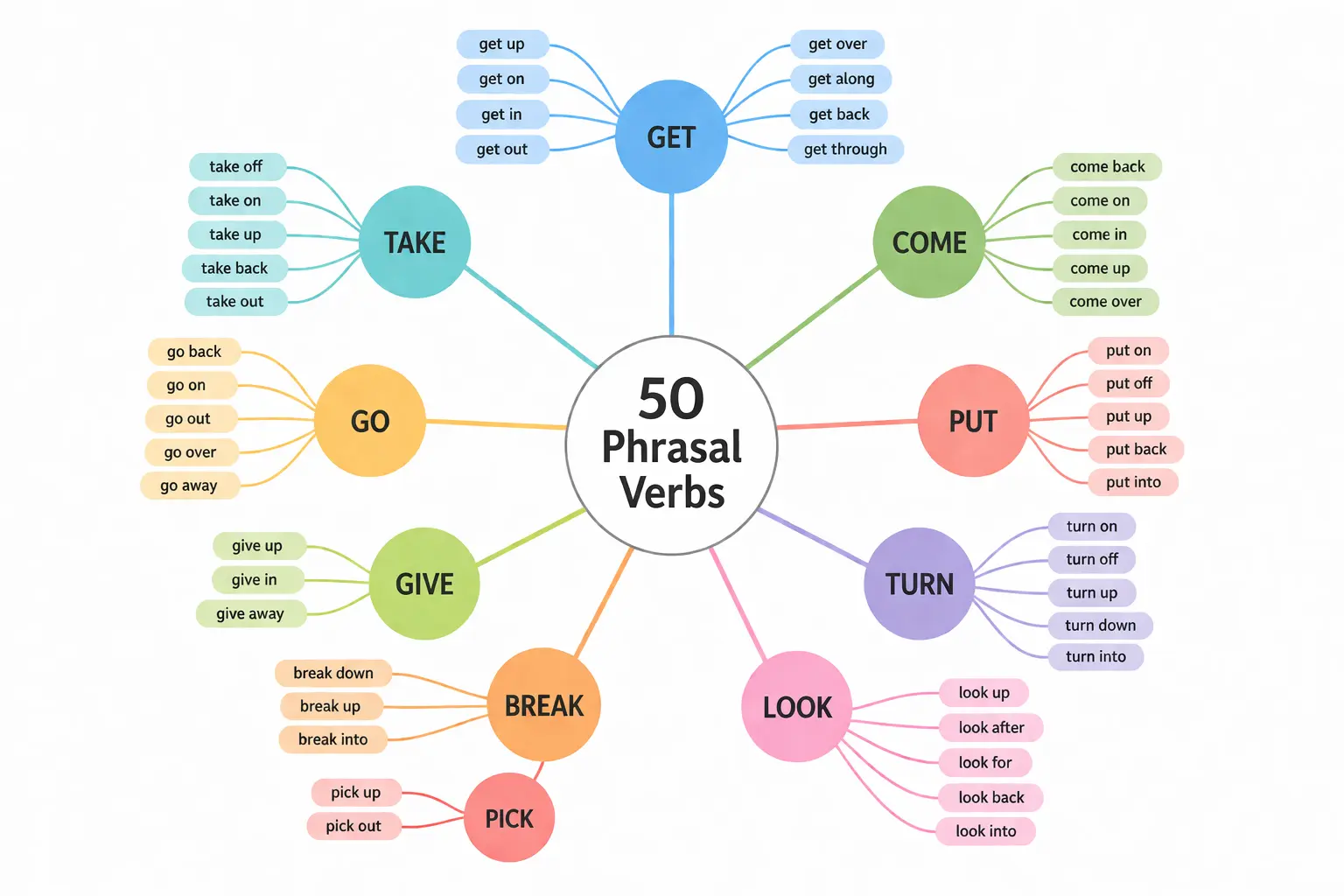
영어에는 구동사 조합이 10,000개 넘게 있지만 그만큼 많이 알 필요는 없습니다. 구동사 50개만 알아도 원어민이 일상 대화에서 하는 말 대부분을 이해할 수 있습니다. 이 목록의 50개를 익히면 영화, 팟캐스트, 직장 대화, 편한 문자에서 들리는 구동사 대부분을 알아들을 수 있습니다.
이 가이드는 기본 동사(GET, TAKE, GO, PUT, TURN, LOOK 등)를 기준으로 구동사를 정리합니다. 동사별 그룹으로 배우면 더 쉽게 기억할 수 있기 때문입니다. 각 표현의 뜻과 실제 일상에서의 쓰임을 보여 주는 예문 두 개를 확인할 수 있습니다.
- 구동사 수: 50개
- 수준: A2–B2 (초급~중상급)
- 추천 대상: 일상 회화, IELTS Speaking, 전반적인 영어 구사력 향상
- 분류 기준: 기본 동사별 (동사 그룹 10개)
기본 동사별로 배우는 이유
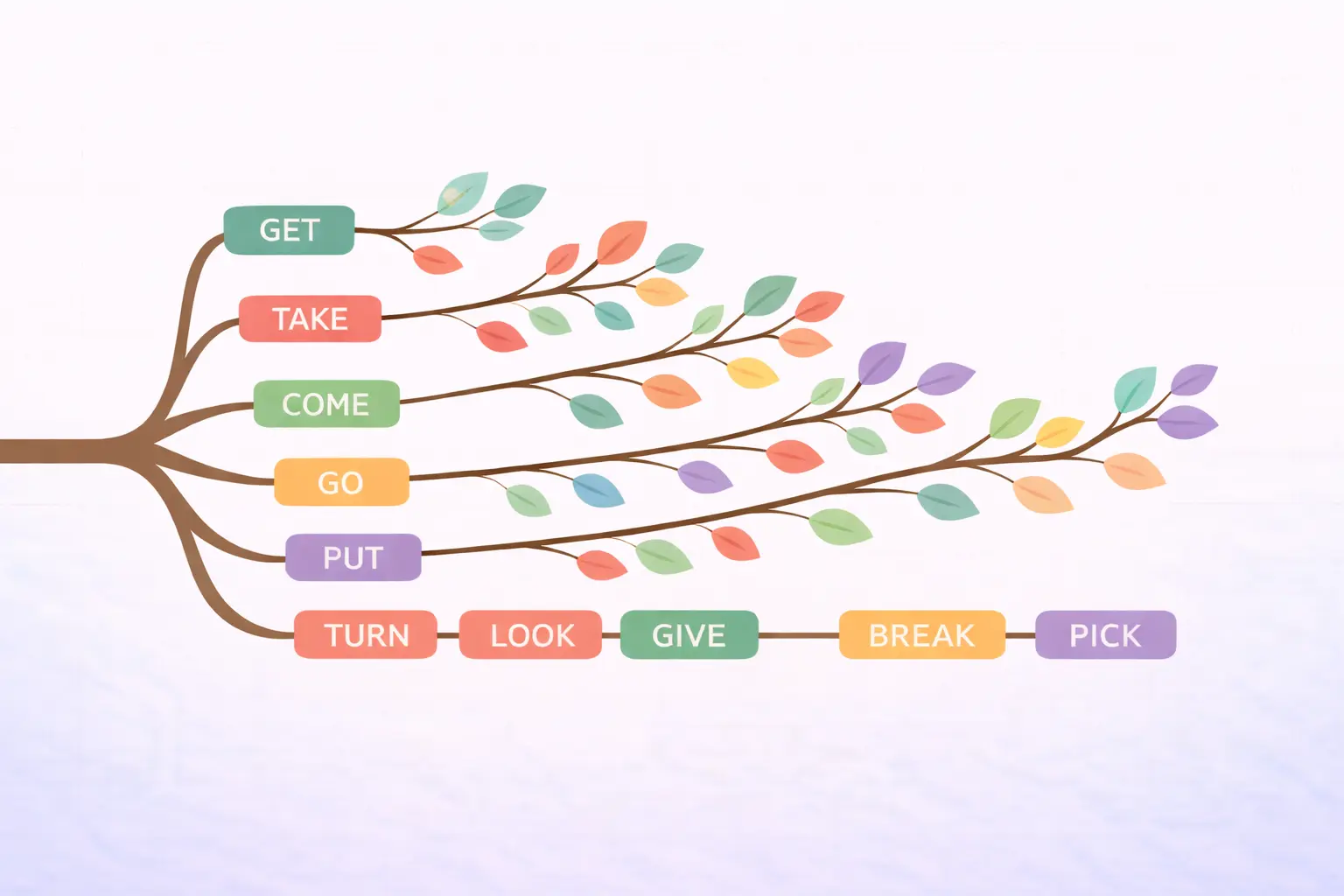
대부분의 구동사 목록은 서로 무관한 표현 100개를 표에 한꺼번에 나열합니다. 그런 목록은 외우기 어렵습니다. 기본 동사별로 묶으면 패턴이 나타납니다.
- GET = 이동, 상태 변화, 획득
- TAKE = 제거, 수용, 시작
- GO = 이동, 지속, 변화
- PUT = 놓기, 참기, 미루기
- TURN = 방향이나 상태 바꾸기
“get up”, “get on”, “get off”, “get over”를 함께 배우면 알파벳순 목록 여기저기에 흩어진 표현을 따로 배우는 것보다 빠릅니다. 뇌가 이 표현들을 같은 어근과 연결해 주므로 새 구동사를 더 쉽게 익힐 수 있습니다.
GET — 가장 활용도가 높은 동사
GET은 다른 어떤 영어 동사보다 흔한 구동사를 많이 만듭니다. 다음 여덟 개는 거의 모든 대화에서 등장합니다.
| # | 구동사 | 뜻 | 예문 |
|---|---|---|---|
| 1 | get up | 침대에서 일어나다; 일어서다 | I get up at 6:30 every morning for work. / She got up from her chair and walked to the window. |
| 2 | get on | 교통수단에 타다; 관계가 좋다 | We got on the bus just as it was about to leave. / How do you get on with your new neighbours? |
| 3 | get off | 교통수단에서 내리다; 퇴근하다 | Get off at the third stop — the library is right there. / What time do you get off work today? |
| 4 | get along with | 친근한 관계를 맺다 | She gets along with everyone in the office. / My cat does not get along with the new dog. |
| 5 | get over | 무언가에서 회복하다 | It took him weeks to get over the flu. / She finally got over the shock of losing her job. |
| 6 | get back | 돌아오다; 무언가를 다시 받다 | What time did you get back from the trip? / I lent him my book a month ago and still have not got it back. |
| 7 | get into | 들어가다; 관심을 가지거나 관여하기 시작하다 | He got into the car without saying a word. / She got into photography during the lockdown. |
| 8 | get rid of | 원하지 않는 무언가를 치우거나 버리다 | We need to get rid of this old sofa — it is falling apart. / I finally got rid of those annoying pop-up ads on my phone. |
눈여겨볼 패턴: GET은 거의 항상 변화를 나타냅니다. 위치의 변화(get up, get on, get off), 상태의 변화(get over, get into), 소유의 변화(get back, get rid of) 등이 있습니다.
TAKE — 제거, 수용, 시작
TAKE를 사용하는 구동사는 무언가를 제거하거나 책임을 맡고 활동을 시작하는 의미를 담습니다.
| # | 구동사 | 뜻 | 예문 |
|---|---|---|---|
| 9 | take off | 옷을 벗다; (비행기가) 이륙하다; 갑자기 성공하다 | Take off your jacket — it is warm inside. / The plane took off 20 minutes late because of the weather. |
| 10 | take on | 과제나 책임을 맡다; 고용하다 | She took on the project even though she was already busy. / The company is taking on 50 new employees this quarter. |
| 11 | take up | 새 취미나 활동을 시작하다; 공간이나 시간을 차지하다 | He took up running last year and has already done a marathon. / This table takes up too much space in the kitchen. |
| 12 | take care of | 돌보다; 처리하다 | Can you take care of the kids while I go to the dentist? / Do not worry about the invoice — I will take care of it. |
| 13 | take out | 안에서 꺼내다; 누군가를 식당이나 행사에 데려가다 | He took out his wallet and paid for the meal. / I am taking my parents out for dinner on their anniversary. |
눈여겨볼 패턴: TAKE는 흔히 “한 장소나 상태에서 제거하다”라는 뜻을 담습니다. 옷을 벗고(take off), 주머니에서 지갑을 꺼내고(take out your wallet), 다른 사람의 업무 더미에서 일을 가져와 맡습니다(take on work).
COME — 도착, 발생, 발견
COME을 사용하는 구동사는 도착, 사건의 발생, 예상치 못한 발견을 나타냅니다.
| # | 구동사 | 뜻 | 예문 |
|---|---|---|---|
| 14 | come back | 어떤 장소로 돌아오다 | She went to Australia for a year but came back because she missed her family. / When are you coming back from lunch? |
| 15 | come in | 방이나 건물에 들어오다 | Come in and sit down — the meeting is about to start. / The door was open, so I just came in. |
| 16 | come up | 발생하다; 화제로 나오다; 다가오다 | Something urgent came up at work, so I will be late. / Your name came up in the conversation. |
| 17 | come up with | 생각이나 계획, 해결책을 떠올리다 | She came up with a creative solution to the problem. / We need to come up with a name for the new product. |
| 18 | come across | 우연히 발견하다; ~한 인상을 주다 | I came across your article while researching online. / He comes across as confident, but he is actually quite shy. |
눈여겨볼 패턴: COME은 말하는 사람 쪽으로 이동하거나 어떤 결과에 이르는 것을 나타냅니다. 무언가가 돌아오고(come back), 주의를 끌기 위해 떠오르며(come up), 경험 속에 나타납니다(come across your path).
GO — 이동, 지속, 변화
GO를 사용하는 구동사는 멀어지는 움직임, 지속, 변화를 나타냅니다.
| # | 구동사 | 뜻 | 예문 |
|---|---|---|---|
| 19 | go on | 계속하다; 일어나다 | Please go on — I did not mean to interrupt you. / What is going on here? Why is everyone shouting? |
| 20 | go out | 사교 활동을 하러 외출하다; 불이 꺼지다 | We go out for dinner every Friday night. / The candle went out because of the wind. |
| 21 | go ahead | 진행하다; 시작하다 | Go ahead and start without me — I will catch up. / The concert will go ahead despite the rain. |
| 22 | go back | 어떤 장소나 이전 상태로 돌아가다 | I left my phone at the office and had to go back for it. / Once you send the email, you cannot go back and change it. |
| 23 | go through | 어려운 일을 겪다; 꼼꼼히 살펴보다 | She went through a very tough period after the divorce. / The lawyer went through every clause in the contract. |
눈여겨볼 패턴: GO는 현재 위치에서 멀어지는 움직임을 나타냅니다. 외출하고(go out), 이전 위치로 돌아가고(go back), 어려운 경험을 통과하듯 겪습니다(go through).
PUT — 놓기, 미루기, 참기
PUT을 사용하는 구동사는 물건을 놓거나 일을 미루고 상황을 견디는 의미를 담습니다.
| # | 구동사 | 뜻 | 예문 |
|---|---|---|---|
| 24 | put on | 옷을 입다; 살이 찌다; 음악이나 프로그램을 틀다 | Put on a warm coat — it is freezing outside. / She put on some music to help her concentrate. |
| 25 | put off | 미루다; 누군가가 무언가를 하고 싶지 않게 만들다 | Do not put off the dentist appointment again — you need to go. / The long commute put me off taking the job. |
| 26 | put up with | 짜증 나거나 불쾌한 일을 참다 | I cannot put up with his constant complaining anymore. / How do you put up with the noise from the construction site? |
| 27 | put away | 무언가를 제자리에 돌려놓다 | Please put away the dishes after you dry them. / The kids need to put away their toys before bedtime. |
| 28 | put down | 표면에 놓다; 누군가를 비판하다 | He put down his phone and looked at me. / Stop putting yourself down — your work is excellent. |
눈여겨볼 패턴: PUT은 무언가를 어떤 곳에 놓는다는 의미를 담습니다. 문자 그대로 옷을 입고(put on), 접시를 치우고(put away), 전화기를 내려놓습니다(put down). 비유적으로는 일을 미래로 미루고(put off), 불쾌한 것 아래에 자신을 놓듯 참습니다(put up with).
TURN — 방향이나 상태 바꾸기
TURN을 사용하는 구동사는 전환, 변화, 변형을 나타냅니다.
| # | 구동사 | 뜻 | 예문 |
|---|---|---|---|
| 29 | turn on | 기기를 켜다; 무언가가 작동하게 하다 | Turn on the air conditioning — it is too hot in here. / She turned on the laptop and checked her emails. |
| 30 | turn off | 기기를 끄다; 도로에서 빠져나가다 | Please turn off the lights when you leave the room. / Turn off at the next exit to reach the hotel. |
| 31 | turn out | 특정한 결과가 되다; ~인 것으로 드러나다 | The party turned out to be much more fun than I expected. / It turned out that he had been lying the whole time. |
| 32 | turn up | (종종 예기치 않게) 도착하다; 음량을 높이다 | She turned up at the party without telling anyone. / Can you turn up the volume? I cannot hear the news. |
| 33 | turn down | 거절하다; 음량을 낮추다 | She turned down the job offer because the salary was too low. / Turn down the music — the baby is sleeping. |
눈여겨볼 패턴: TURN은 항상 상태의 변화를 나타냅니다. ON/OFF는 작동 상태, UP/DOWN은 어떤 것의 수준, OUT은 도달한 최종 상태를 뜻합니다. 제안을 거절하는 DOWN은 무언가를 외면한다는 뜻입니다.
LOOK — 찾기, 보기, 기대하기
LOOK을 사용하는 구동사는 보기, 찾기, 주의를 기울이는 것과 관련이 있습니다.
| # | 구동사 | 뜻 | 예문 |
|---|---|---|---|
| 34 | look for | 무언가를 찾으려고 하다 | I am looking for my car keys — have you seen them? / She has been looking for a new apartment for three months. |
| 35 | look after | 돌보다 | My mother looks after the children when I am at work. / You need to look after your health — you have been working too hard. |
| 36 | look up | 정보를 찾아보다; 상황이 나아지다 | Look up the word in a dictionary if you do not know it. / Business has been looking up since the new manager arrived. |
| 37 | look forward to | 미래의 일을 기대하며 설레다 | I am looking forward to the weekend. / We look forward to meeting you at the interview. |
| 38 | look out | 조심하다; 위험을 살피다 | Look out! There is a step right in front of you. / Look out for pickpockets in crowded tourist areas. |
눈여겨볼 패턴: LOOK은 항상 주의를 어디에 두는지를 나타냅니다. FOR는 원하는 것을 향하고, AFTER는 돌봄이 필요한 사람을 향합니다. UP은 정보의 출처를 향하고, FORWARD TO는 미래를 향하며, OUT은 잠재적인 위험을 살핍니다.
GIVE — 그만두기, 돌려주기, 나누기
| # | 구동사 | 뜻 | 예문 |
|---|---|---|---|
| 39 | give up | 시도를 멈추다; 습관을 끊다 | She gave up smoking three years ago. / The puzzle is impossible — I give up. |
| 40 | give back | 주인에게 무언가를 돌려주다 | Can you give back the tools you borrowed last week? / The charity works to give back to the community. |
| 41 | give away | 기부하다; 비밀을 드러내다 | We gave away our old furniture when we moved. / Do not give away the ending of the movie! |
BREAK — 끝내기, 멈추기, 들어가기
| # | 구동사 | 뜻 | 예문 |
|---|---|---|---|
| 42 | break up | 연인 관계를 끝내다; 신호가 끊기다 | They broke up after dating for two years. / You are breaking up — I will call you back on a better connection. |
| 43 | break down | 작동을 멈추다; 감정을 억누르지 못하다 | The car broke down in the middle of the highway. / She broke down in tears when she heard the news. |
| 44 | break into | 강제로 침입하다; 갑자기 시작하다 | Someone broke into the house while they were on holiday. / He broke into a run when he saw the bus leaving. |
PICK — 고르기, 데리러 가기, 익히기
| # | 구동사 | 뜻 | 예문 |
|---|---|---|---|
| 45 | pick up | 누군가를 태우러 가다; 자연스럽게 익히다; 나아지다 | I will pick you up at the station at 5 PM. / She picked up some Spanish while living in Barcelona. |
| 46 | pick out | 집단에서 고르다, 선택하다 | She picked out a dress for the wedding. / Can you pick out the best candidate from these CVs? |
SET과 BRING — 준비하고 꺼내기
| # | 구동사 | 뜻 | 예문 |
|---|---|---|---|
| 47 | set up | 마련하다; 설립하다; 준비하다 | He set up his own business after leaving the bank. / Can you help me set up the projector for the presentation? |
| 48 | set off | 여행을 시작하다; 작동시키다 | We set off early to avoid the morning traffic. / The alarm was set off by a cat walking past the sensor. |
| 49 | bring up | 화제를 꺼내다; 아이를 키우다 | He brought up the salary issue during the meeting. / She was brought up in a small village in the south of France. |
| 50 | bring back | 무언가를 가져오다; 기억을 떠올리게 하다 | Please bring back the library books before Friday. / This song brings back memories of my school days. |
빠른 참고: 한눈에 보는 구동사 50개
| 기본 동사 | 구동사 | 개수 |
|---|---|---|
| GET | get up, get on, get off, get along with, get over, get back, get into, get rid of | 8 |
| TAKE | take off, take on, take up, take care of, take out | 5 |
| COME | come back, come in, come up, come up with, come across | 5 |
| GO | go on, go out, go ahead, go back, go through | 5 |
| PUT | put on, put off, put up with, put away, put down | 5 |
| TURN | turn on, turn off, turn out, turn up, turn down | 5 |
| LOOK | look for, look after, look up, look forward to, look out | 5 |
| GIVE | give up, give back, give away | 3 |
| BREAK | break up, break down, break into | 3 |
| PICK | pick up, pick out | 2 |
| SET | set up, set off | 2 |
| BRING | bring up, bring back | 2 |
| 총계 | 50 |
연습할 어휘
흔한 구동사와 함께 자주 등장하는 단어 25개입니다. 간격 반복으로 연습할 수 있도록 Linglify 사전에 추가하세요.
finance
동사
-
예문
- Many students need loans to finance their college education expenses.
- The bank agreed to finance the construction of the new shopping center.
executive
형용사
-
예문
- Executive decisions require careful consideration of multiple factors and consequences.
- The executive branch of government is responsible for implementing laws.
valid
형용사
-
예문
- Valid argument supports logical reasoning and conclusion.
- Valid passport allows international travel without problems.
culmination
명사
-
예문
- The graduation ceremony was the culmination of four years of hard study.
- Winning the championship represented the culmination of the team's efforts.
transmit
동사
-
예문
- Disease may transmit through contact with surfaces.
- Satellites transmit signals across vast distances effectively.
gulp
동사
-
예문
- She had to gulp nervously before giving her presentation to the board.
- The thirsty runner gulped down an entire bottle of cold water.
cherished
형용사
-
예문
- His cherished dream of becoming a pilot finally came true.
- The old photograph was her most cherished possession from childhood.
fate
명사
-
예문
- She believes that fate brought them together at the right moment.
- The explorer's fate remained unknown after he disappeared in the jungle.
spellbound
형용사
-
예문
- Audience sits spellbound during magical performance tonight.
- Children remain spellbound by storyteller's fascinating tales.
pet
형용사
-
예문
- Pet project receives extra attention and resources.
- Pet theory explains professor's research focus area.
master
명사
-
예문
- Apprentices learn traditional crafts from experienced master craftsmen.
- The chess master defeated opponents using brilliant strategic moves.
payable
동사
-
예문
- All dues are payable at the end of the month.
- The invoice is payable within 30 days.
serenity
형용사
-
예문
- She maintained her serenity despite the chaos.
- The serenity of the lake was calming.
classy
명사
-
예문
- Classy restaurant serves gourmet food in elegant dining atmosphere.
- Her classy appearance impressed everyone at formal business meeting.
revolt
동사
-
예문
- A revolt broke out in the city center last night.
- The workers decided to revolt against the unfair conditions.
rethink
명사
-
예문
- He decided to rethink his position on the issue.
- We need to rethink our strategy for the project.
gypsy
형용사
-
예문
- Traditional gypsy music features violin and passionate vocals.
- Wandering gypsy caravan traveled through European countryside.
buffoon
형용사
-
예문
- Court buffoon entertained royal family with silly performances.
- Don't act like buffoon during important business presentation.
execution
명사
-
예문
- Perfect execution of the dance routine impressed judges and audience members.
- The execution of the business plan requires careful coordination and timing.
territory
명사
-
예문
- Animal territory provides food and shelter resources.
- National territory requires protection from foreign invasion.
tribe
명사
-
예문
- Ancient tribe lived in harmony with nature.
- Indigenous tribe preserves traditional customs and languages.
resolve
동사
-
예문
- Mediator helps parties resolve dispute through negotiation.
- Technical team will resolve software problems quickly.
flexible
형용사
-
예문
- Flexible working arrangements help employees balance work and family life.
- The flexible plastic tube can bend without breaking or cracking.
이 구동사 50개를 효과적으로 공부하는 방법
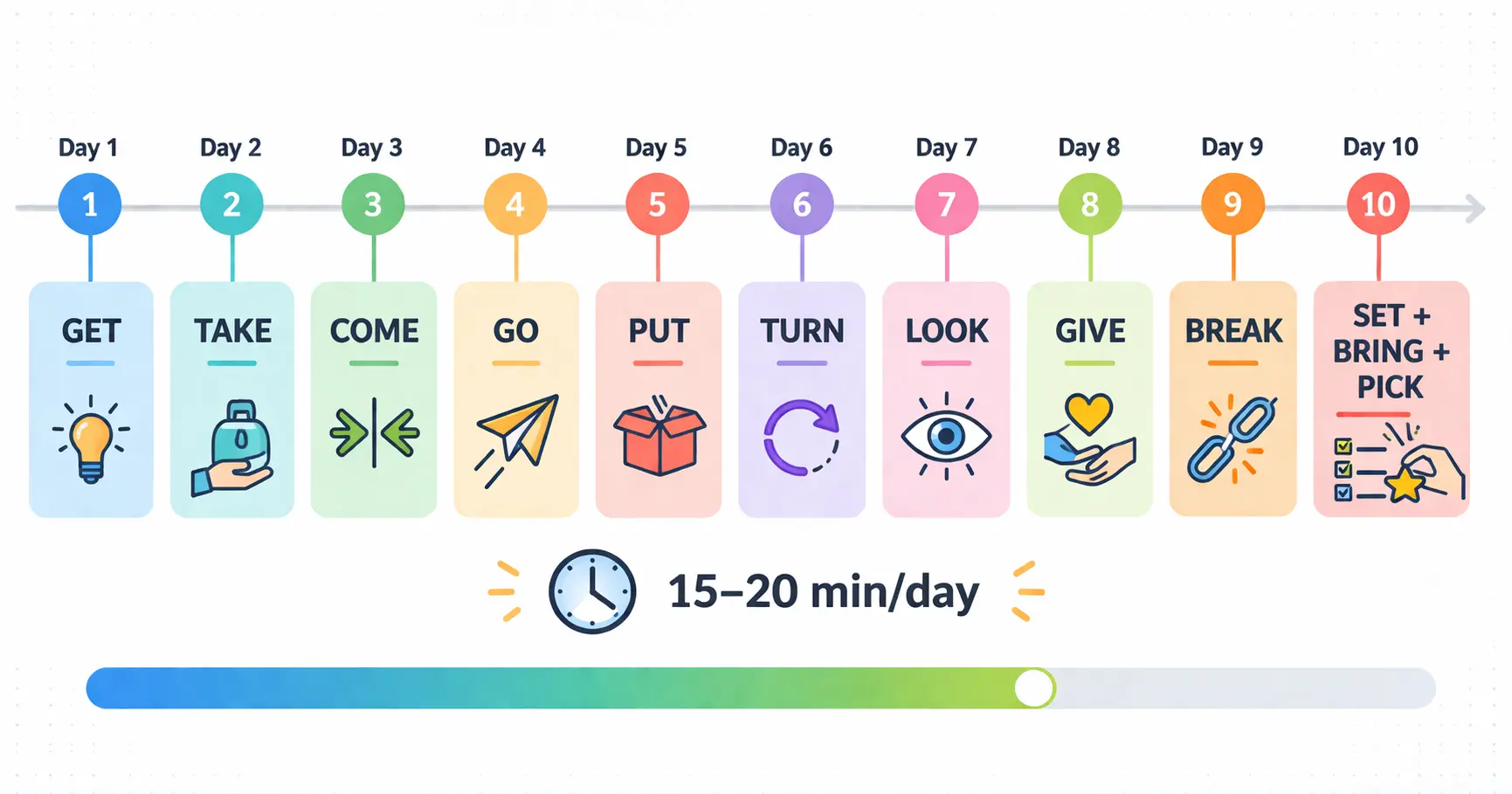
1. 하루에 한 동사 그룹씩 배우세요. 월요일은 GET 구동사, 화요일은 TAKE, 수요일은 COME을 공부하세요. 10일이면 50개를 모두 살펴볼 수 있습니다. 각 그룹에 15~20분씩 투자하세요.
2. 자신의 삶에 관한 문장을 쓰세요. 예문을 읽기만 하지 말고 직접 문장을 만들어 보세요. “I got up at 7 today.” “I need to get rid of my old phone.” 개인적인 문장이 교과서의 일반적인 예문보다 더 오래 기억에 남습니다.
3. “바꿔 말하고 한 단계 높이기” 방법을 활용하세요. 하루 동안 말할 때 기초 동사를 바꿔 보세요. “I started running” 대신 “I took up running”이라고 해 보세요. “I returned” 대신 “I came back”이라고 말해 보세요. 의식적으로 표현을 바꾸는 연습이 습관을 만듭니다.
4. 자막을 켜고 영어 콘텐츠를 시청하세요. TV 프로그램이나 YouTube 채널 하나를 선택하고 한 편에서 이 구동사 50개 중 몇 개가 들리는지 세어 보세요. 생각보다 많아서 놀랄 거예요. 한 편에 보통 15~20개가 나옵니다.
5. 기본 동사를 보고 뜻을 떠올려 보세요. 뜻 열을 가리고 각 구동사의 뜻을 기억해 보세요. 그런 다음 구동사 열을 가리고 뜻을 본 뒤 표현을 떠올려 보세요. 양방향으로 연습하면 더 잘 기억할 수 있습니다.
완전한 어휘 학습 체계는 어휘력 향상 가이드를 읽어 보세요.
다음 단계
-
100개까지 확장하세요. 이 50개가 익숙해지면 주제별로 정리한 필수 구동사 전체 목록인 뜻과 예문이 있는 구동사 100개로 넘어가세요.
-
특정 동사를 자세히 살펴보세요. MAKE를 사용하는 모든 구동사를 완전히 정리한 내용(“make up”만 해도 뜻이 5개 이상)은 MAKE를 사용한 구동사 가이드를 확인하세요.
-
고급 단계로 올라가세요. 학술 및 직업 영어에서 쓰이는 C1–C2 수준의 구동사는 고급 구동사 가이드에서 알아보세요.
-
직장에서 활용하세요. 회의, 이메일, 비즈니스 의사소통에서 쓰이는 구동사는 비즈니스 구동사 가이드를 참고하세요.
-
매일 공부하는 습관을 만드세요. 단계별 어휘 학습 체계를 따라 2주 안에 이 구동사 50개를 실제로 쓸 수 있는 어휘로 만들어 보세요.
자주 묻는 질문
영어에서 가장 자주 쓰이는 구동사 10개는 무엇인가요?
빈도 자료에 따르면 가장 자주 쓰이는 10개는 get up, go on, come back, find out, give up, turn out, pick up, look for, take off, go out입니다. 구어 영어에서 백만 단어당 수천 번씩 등장합니다. 10개만 배운다면 이 표현들을 익히세요.
이 목록과 구동사 100개 목록은 어떻게 다른가요?
이 글에서는 기본 동사(GET, TAKE, COME 등)별로 구동사 50개를 정리하고, 각 표현에 예문 두 개와 동사 그룹별 패턴 설명을 제공합니다. 구동사 100개 목록은 일상생활, 직장, 여행, 감정 등 주제별로 구성되어 있으며, 구동사를 두 배로 다루고 각 표현에 예문 하나씩을 제공합니다. 패턴을 익힐 때는 이 글을, 참고 자료가 필요할 때는 100개 목록을 이용하세요.
구동사 50개를 익히는 데 얼마나 걸리나요?
매일 집중해서 공부하면 대부분의 학습자는 2~3주 안에 구동사 50개를 익힐 수 있습니다. 하루에 동사 그룹 하나를 배우고(15~20분), 새 그룹을 시작하기 전에 전날 배운 그룹을 복습하세요. 10일 동안 학습한 뒤에는 일주일 더 말하기와 글쓰기에서 직접 사용하는 연습을 하세요.
이 구동사는 영국 영어와 미국 영어에서 똑같이 쓰이나요?
네. 이 목록의 구동사 50개는 모두 영국 영어와 미국 영어에서 사용됩니다. 몇몇 표현은 선호도에 약간 차이가 있습니다. 미국인은 영국 화자보다 “get rid of”를 더 자주 쓰고, 영국 화자는 “dispose of”도 사용할 수 있습니다. 하지만 이 50개는 모두 두 영어권에서 널리 이해되고 쓰입니다.
IELTS Writing에서 이 구동사를 사용해도 되나요?
IELTS Writing에 적합한 구동사도 있습니다. 이 목록에는 없지만 “carry out”과 “go through”, “come up with”, “set up”은 에세이에서 잘 쓰입니다. “hang out”이나 “get rid of” 같은 표현은 Speaking에 더 적합합니다. IELTS에 특화된 구동사 조언은 IELTS 어휘 가이드를 참고하세요.
구동사를 배우기가 왜 그렇게 어려운가요?
세 가지 이유가 있습니다. (1) 뜻을 구성 단어만 보고 예측하기 어려운 경우가 많습니다. “put up with”는 단어만으로 “참다”라는 뜻을 유추할 수 없습니다. (2) 하나의 구동사가 여러 뜻을 가질 수 있습니다. “take off”는 옷을 벗다, 이륙하다, 성공하기 시작하다라는 뜻입니다. (3) 문법이 까다롭습니다. “turn the light off”처럼 분리할 수 있는 구동사도 있고, “look after the kids”처럼 분리할 수 없는 표현도 있습니다(“look the kids after”라고 하지 않습니다). 이 글은 기본 동사별로 정리해 첫 번째 어려움인 뜻의 패턴을 이해하도록 돕습니다.