
음식과 음료 어휘: 요리와 식당에서 쓰는 실용 영어
음식은 학습자가 슈퍼마켓이나 식당에서, 여행 중에, 친구와 이야기할 때 실제로 가장 먼저 사용하게 되는 주제 중 하나입니다. 긴 단어 목록 하나를 통째로 외우는 대신 상황별로 음식 어휘를 익혀 보세요. Ingredients(재료)는 recipe(조리법), chop(다지다), fry(튀기다)와 함께 사용하면 더 잘 기억할 수 있습니다.
이 가이드에서는 일상적인 음식과 음료, 요리 동작, 식당에서 쓰는 표현, 맛을 묘사하는 방법을 다룹니다. Linglify의 주제별 전체 어휘 모음은 음식과 음료 어휘 라이브러리에서 확인하세요.
- 수준: A1–B2
- 주제: 식품군, 요리, 식당, 음료, 맛과 식감
- 추천 학습법: 자신이 잘 아는 식사를 어휘를 사용해 묘사해 보세요.
Food, Meal, Dish, Course의 차이
이 단어들은 서로 관련이 있지만 뜻은 다릅니다.
- food는 사람이 먹는 것을 전반적으로 뜻합니다.
- meal은 아침이나 저녁처럼 음식을 먹는 한 차례의 식사입니다.
- dish는 카레나 파스타처럼 조리된 음식 한 가지입니다.
- course는 전채나 디저트처럼 정식 식사의 한 부분입니다.
과일, 채소, 일상적인 재료
| 단어 | 뜻 | 예문 |
|---|---|---|
| apple | 과육이 단단한 둥근 과일, 사과 | I usually take an apple to work. |
| banana | 길고 노란 과일, 바나나 | Add a sliced banana to the cereal. |
| berry | 작고 부드러운 과일, 베리류 | These berries are sweet and fresh. |
| lemon | 시큼한 노란 감귤류 과일, 레몬 | Put some lemon in the water. |
| potato | 땅속에서 자라는 녹말이 많은 채소, 감자 | We had baked potatoes for dinner. |
| tomato | 요리에서 채소처럼 자주 쓰이는 붉은 과일, 토마토 | The salad needs more tomato. |
| onion | 냄새와 맛이 강한 둥근 채소, 양파 | Chop the onion before you cook it. |
| carrot | 길고 주황색인 뿌리채소, 당근 | Carrots are good in soup. |
| bean | 음식으로 사용하는 작은 씨앗, 콩 | This dish contains beans and rice. |
| mushroom | 여러 요리에 쓰이는 부드러운 균류, 버섯 | She does not eat mushrooms. |
| herb | 음식에 향을 더하려고 사용하는 잎, 허브 | Basil is a popular herb in Italian cooking. |
| spice | 맛을 내려고 사용하는 말린 씨앗·뿌리·가루, 향신료 | This spice makes the sauce warmer and richer. |
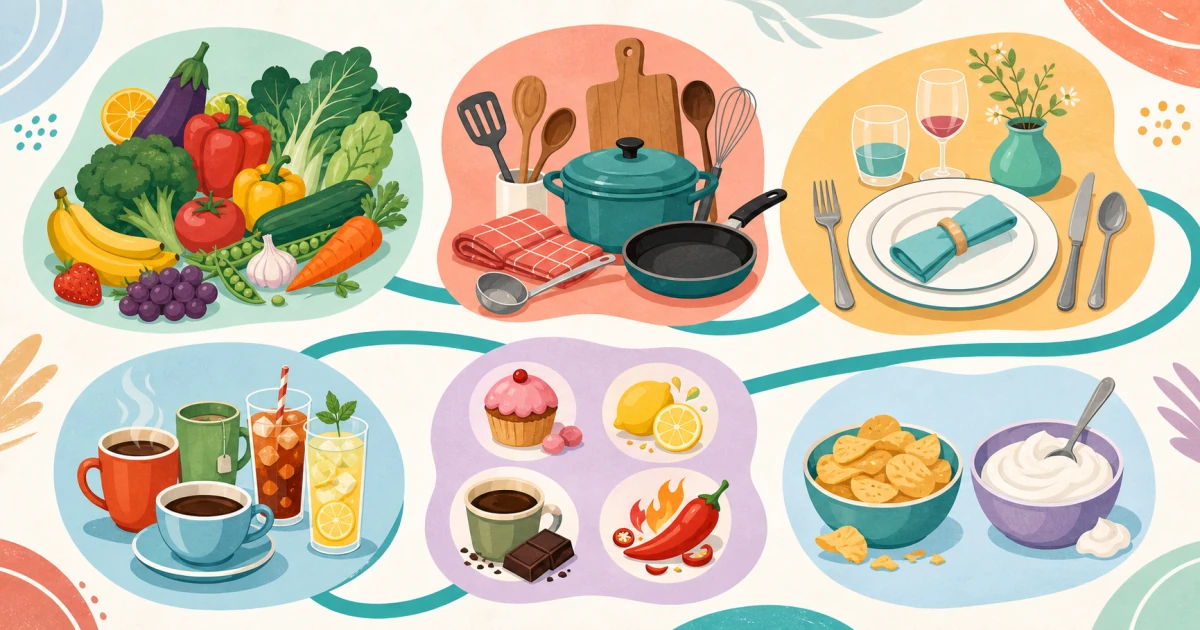
요리 동사와 주방 어휘
| 단어 | 뜻 | 예문 |
|---|---|---|
| recipe | 음식을 만드는 방법, 조리법 | This recipe takes only twenty minutes. |
| ingredient | 음식을 만들 때 넣는 재료 하나 | Check that you have all the ingredients. |
| chop | 음식을 작은 조각으로 자르다; 다지다 | Chop the carrots into small pieces. |
| slice | 얇고 납작하게 자르다; 썰다 | Slice the bread carefully. |
| mix | 재료를 한데 섞다 | Mix the eggs with the milk. |
| boil | 아주 뜨거운 물에 넣어 익히다; 끓이다 | Boil the pasta for eight minutes. |
| fry | 뜨거운 기름에 조리하다; 튀기다·볶다 | Fry the onions until they are soft. |
| bake | 오븐에서 조리하다; 굽다 | We baked a cake for her birthday. |
| grill | 위나 아래에서 열을 가해 조리하다; 굽다 | Grill the vegetables for ten minutes. |
| serve | 식사 때 사람들에게 음식을 내다 | The restaurant serves lunch from noon. |
식당이나 카페에서
| 표현 | 뜻 또는 용법 | 예문 |
|---|---|---|
| menu | 주문할 수 있는 음식과 음료 목록, 메뉴 | Could I see the menu, please? |
| starter | 식사의 첫 순서에 나오는 작은 음식, 전채 | We shared a starter. |
| main course | 식사의 중심이 되는 음식, 메인 요리 | The fish is my main course. |
| dessert | 식사의 마지막에 먹는 단 음식, 디저트 | Would you like dessert? |
| bill / check | 내야 할 금액, 계산서 | Could we have the bill, please? |
| reservation | 자리를 마련해 달라는 예약 | I have a reservation for two at seven. |
| allergy | 어떤 것에 대한 신체의 해로운 반응, 알레르기 | I have a nut allergy. |
| vegetarian | 고기를 먹지 않는 사람; 채식주의자 | Is there a vegetarian option? |
| takeaway / takeout | 다른 곳에서 먹으려고 사 가는 음식, 포장 음식 | Let’s order a takeaway tonight. |
| tip | 서비스에 대해 추가로 주는 돈, 팁 | In some countries, leaving a tip is expected. |
음료, 맛과 식감
| 단어 | 뜻 | 예문 |
|---|---|---|
| still water | 탄산이 없는 물 | I would like still water, please. |
| sparkling water | 기포가 있는 탄산수 | She prefers sparkling water with lunch. |
| juice | 과일이나 채소로 만든 음료, 주스 | Is the orange juice freshly squeezed? |
| smoothie | 재료를 갈아 만든 걸쭉한 차가운 음료, 스무디 | He made a banana smoothie for breakfast. |
| bitter | 달지 않고 톡 쏘는 맛이 나는, 쓴 | Black coffee can taste bitter. |
| sour | 레몬 같은 신맛이 나는, 신 | The sauce is too sour for me. |
| sweet | 설탕 같은 맛이 나는, 단 | This mango is very sweet. |
| spicy | 매운 향신료가 들어간, 매운 | The curry is delicious but spicy. |
| crispy | 기분 좋게 단단하고 쉽게 부서지는, 바삭한 | The bread is warm and crispy. |
| creamy | 크림처럼 부드럽고 진한, 크리미한 | The soup has a creamy texture. |
원하는 음식을 분명하게 말하기
음식과 관련해 자주 쓰는 표현은 정중한 요청문에 들어갑니다.
- Could I have …, please? — …을 주시겠어요?
- I would like … — …을 주세요.
- Can I get this without …? — …을 빼고 주문할 수 있나요?
- Is this suitable for vegetarians? — 이 음식은 채식주의자에게 괜찮나요?
- Could you make it less spicy? — 덜 맵게 해 주실 수 있나요?
I want도 문법적으로는 맞지만, 식당에서는 보통 I would like가 더 정중합니다.
자신의 생활과 연결해 음식 어휘 익히기
자주 먹는 식사 하나를 고르세요. 재료와 요리 동작, 맛이나 식감을 나타내는 단어 세 개를 적어 보세요. 그런 다음 소리 내어 설명해 보세요.
“아침으로 바나나와 베리를 넣은 오트밀을 만들어요. 우유와 섞어요. 따뜻하고 달콤하며 크리미해요.”
자신에게 의미 있는 연습은 서로 관계없는 음식 단어 40개를 번역하는 것보다 기억에 더 오래 남습니다.
연습할 단어
experience
명사
-
예문
- Her previous work experience made her an ideal candidate for the position.
- Traveling to different countries provides valuable cultural experience.
meeting
명사
-
예문
- The business meeting discussed budget plans for next fiscal year.
- Town meeting allows residents to voice concerns about local issues.
reply
명사
-
예문
- Quick reply shows professional customer service quality.
- Written reply confirms agreement terms and conditions.
result
명사
-
예문
- Election result surprises political analysts and voters.
- Test result shows significant improvement in performance.
create
동사
-
예문
- Artists create beautiful works that inspire and move people emotionally.
- The new policy will create opportunities for economic growth.
mention
동사
-
예문
- Please mention my name when you call about job opening.
- The report fails to mention important environmental concerns.
describe
동사
-
예문
- Can you describe what the suspect looked like to police officers?
- The travel guide describes many interesting places to visit in Europe.
impact
명사
-
예문
- Climate change has a significant impact on global weather patterns.
- The impact of the collision damaged both cars severely.
exam
명사
-
예문
- Students study hard for weeks before taking their final exams.
- The driving exam tests both knowledge and practical skills behind wheel.
powerful
형용사
-
예문
- Powerful computer processes data very quickly.
- Powerful speech moves audience to take action.
wonderful
형용사
-
예문
- The restaurant serves wonderful food with excellent service.
- We had a wonderful time at the beach during summer vacation.
confident
형용사
-
예문
- She felt confident about passing the difficult examination successfully.
- The confident speaker delivered an inspiring presentation to the audience.
favor
명사
-
예문
- Could you do me a favor and pick up my dry cleaning?
- The proposal gained favor among the committee members after lengthy discussion.
ambition
명사
-
예문
- Her ambition is to become a successful doctor and help people worldwide.
- Sometimes ambition can drive people to work too hard and neglect family.
tourist
명사
-
예문
- Foreign tourist visits famous landmarks and museums.
- Tourist season brings economic benefits to region.
student
명사
-
예문
- Diligent student completes homework assignments on time.
- Graduate student conducts research for doctoral degree.
relaxed
형용사
-
예문
- Relaxed atmosphere encourages open discussion among participants.
- Relaxed person handles pressure situations more effectively.
hot
형용사
-
예문
- Summer weather is extremely hot in desert regions around the world.
- The coffee is too hot to drink right now - let it cool down.
cool
동사
-
orange
명사
-
예문
- Fresh orange juice contains vitamin C and natural sugar.
- The sunset painted sky in beautiful shades of orange.
meat
명사
-
예문
- Fresh meat should be stored in refrigerator for food safety.
- Vegetarians choose not to eat meat for ethical reasons.
football
명사
-
예문
- Football is the most popular sport in many countries around the world.
- The children play football in the school yard during their lunch break.
명사
-
예문
- Check mail every day for important bills and official documents.
- Electronic mail has largely replaced traditional postal letters today.
father
명사
-
예문
- His father taught him how to ride a bicycle in the park.
- The young father proudly carried his baby daughter in his arms.
rush
명사
-
예문
- Last-minute rush creates stress and mistakes often.
- Morning rush causes traffic jams in city.
다음에 공부할 내용
- 주제별 영어 어휘에서 더 다양한 테마별 단어를 익히세요.
- 일상생활에서 쓰는 쉬운 영어 문장으로 음식 표현을 사용해 보세요.
- 음식과 음료 어휘 라이브러리에 단어를 추가하고 복습하세요.
자주 묻는 질문
“food”는 셀 수 있는 명사인가요?
보통 food는 셀 수 없는 명사입니다. There is some food in the kitchen.(주방에 음식이 좀 있다)처럼 씁니다. 음식의 종류를 뜻할 때는 foods를 사용합니다. Asian foods are popular here.(이곳에서는 아시아 음식이 인기 있다)
“dinner”와 “supper”는 어떻게 다른가요?
대부분의 영어에서 dinner는 저녁에 먹는 주된 식사를 뜻합니다. Supper도 쓰이는데 특히 일부 지역에서 흔하며, 더 가벼운 저녁 식사를 뜻하기도 합니다.
식당에서 쓰는 영어를 어떻게 향상시킬 수 있나요?
정중한 요청문을 통째로 익히고, 메뉴를 읽는 연습을 하고, 손님과 직원 역할을 번갈아 맡아 연습하세요. 실제로 사용할 가능성이 가장 높은 표현부터 익히는 것이 좋습니다.
“spicy”와 “hot”은 어떻게 다른가요?
Spicy는 향신료가 강하게 들어간 음식을 뜻합니다. Hot도 매운맛을 의미할 수 있지만 높은 온도를 뜻하기도 하므로 맛을 말할 때는 spicy가 더 분명합니다.
음식 어휘와 함께 음식 관용구도 배워야 하나요?
기본 음식 단어를 익힌 뒤 관용구는 따로 공부하세요. a piece of cake와 같은 관용구는 문자 그대로 음식에 관한 뜻이 아닙니다.