
IELTS Speaking 어휘: Band 7 이상을 위한 주제별 단어 목록
IELTS Speaking 시험은 “Lexical Resource(어휘 자원)”라는 기준으로 어휘력을 평가하며, 이 기준은 Speaking 점수의 25%를 차지합니다. 하지만 많은 응시자가 놓치는 점이 있습니다. Speaking 어휘와 Writing 어휘는 다릅니다. Speaking에서는 단어가 자연스럽게 들려야 합니다. 일상 대화에 학술적인 단어를 억지로 끼워 넣으면 채점관은 바로 알아차립니다.
이 가이드에서는 다음을 제공합니다.
- 가장 흔한 Speaking 주제 10개에 맞춘 어휘
- 외운 티 없이 유창하게 들리는 자연스러운 표현
- 어휘 폭을 넓히기 위해 제한적으로 사용할 관용 표현
- 억지스럽지 않게 기초 어휘를 바꿔 쓸 수 있는 대체 단어
IELTS Speaking 어휘는 어떻게 평가되나요?
채점관은 어휘를 사용할 때 다음 네 가지를 살핍니다.
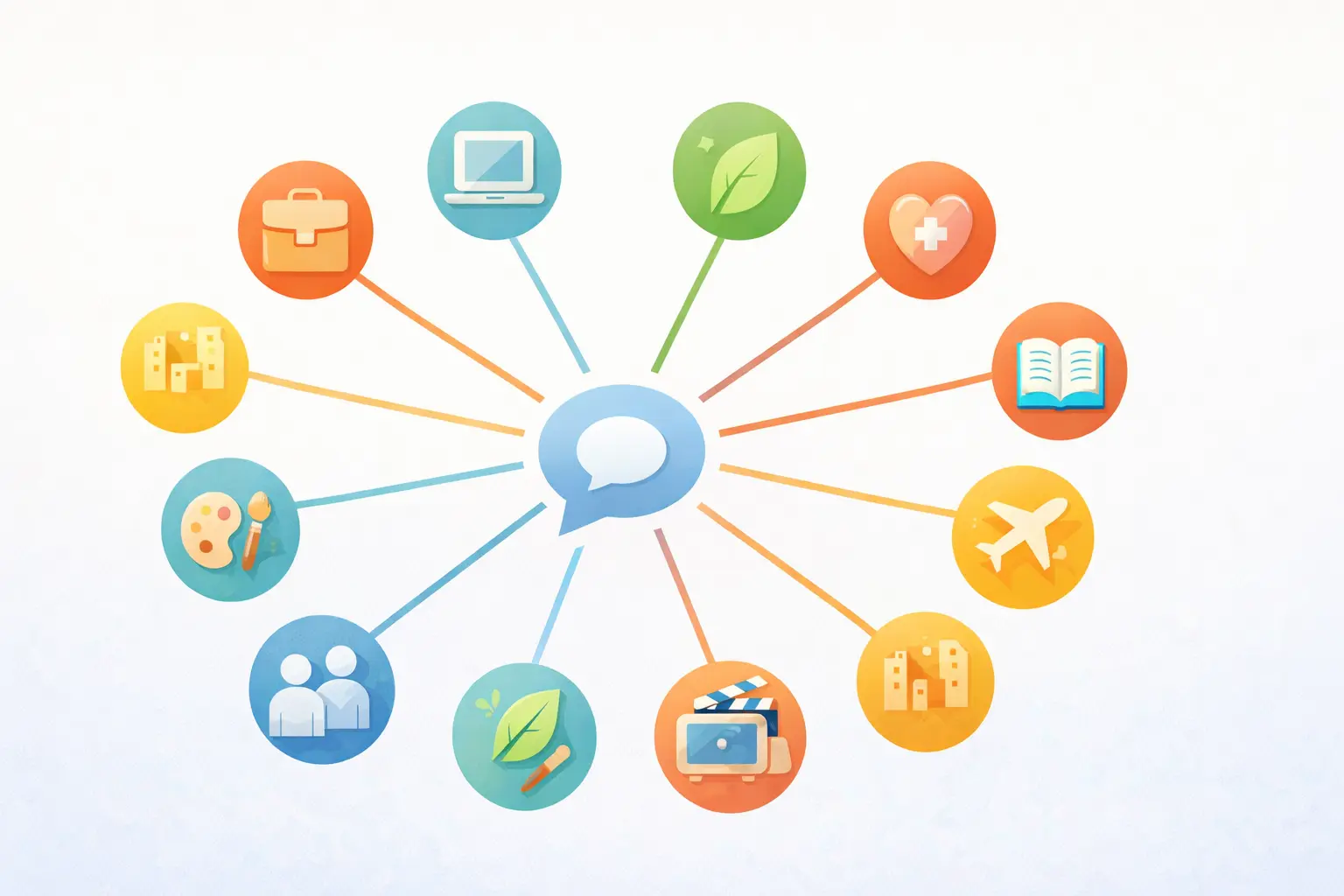
- 주제별 어휘 — 여러 주제를 구체적이고 관련성 높은 단어로 이야기할 수 있나요?
- 바꿔 말하기 능력 — 같은 생각을 여러 방식으로 표현할 수 있나요?
- 연어의 정확성 — 단어 조합이 자연스럽게 들리나요?
- 관용 표현 — 교재에만 나올 법한 구절이 아니라 자연스러운 표현을 사용하나요?
Band 7 요건: “다양한 주제를 논의할 때 어휘 자원을 유연하게 사용하고, 덜 흔한 어휘와 관용 어휘도 일부 사용하며, 문체와 연어에 대한 어느 정도의 인식을 보여 줍니다.”
여기서 가장 중요한 단어는 “유연하게”입니다. 고급 단어 500개를 외울 필요는 없습니다. 주제별로 자신 있게 쓸 수 있는 탄탄한 단어 15~20개가 필요합니다.
주제 1: 직장과 경력
세 가지 Part 전체에서 가장 자주 등장하는 Speaking 주제 중 하나입니다.
필수 어휘
| 기초 표현 | 더 나은 표현 |
|---|---|
| a good job | rewarding career(보람 있는 경력) |
| a hard job | demanding role(부담이 큰 역할) |
| work from home | work remotely / freelance(원격 근무 / 프리랜서로 일하다) |
| boss | supervisor / line manager(감독자 / 직속 관리자) |
| want to succeed | have ambitions / be driven(야망이 있다 / 의욕이 넘치다) |
| start a business | become entrepreneurial / launch a start-up(기업가적이 되다 / 스타트업을 시작하다) |
자연스러운 표현
- “I’m currently pursuing a career in marketing.”(현재 마케팅 분야에서 경력을 쌓고 있습니다.)
- “My job can be quite hectic, especially during deadlines.”(특히 마감 기간에는 일이 상당히 정신없을 수 있습니다.)
- “I’d love to strike a better work-life balance.”(일과 삶의 균형을 더 잘 맞추고 싶습니다.)
- “Many graduates struggle to land a decent job these days.”(요즘 많은 졸업생이 괜찮은 일자리를 얻는 데 어려움을 겪습니다.)
- “I find my work intellectually stimulating.”(제 일은 지적으로 자극이 됩니다.)
예시 답변(Part 2)
“I currently work as a project manager, which is a fairly demanding role but also incredibly rewarding. What I find most stimulating is the variety — no two days are the same. The work-life balance could be better, though. During busy periods, it gets hectic, and I often have to work overtime. That said, I have ambitions to eventually move into a leadership position, so I see it as a valuable stepping stone.”
주제 2: 기술과 디지털 생활
어떤 형태로든 거의 모든 Speaking 시험에 등장합니다.
필수 어휘
| 기초 표현 | 더 나은 표현 |
|---|---|
| new technology | cutting-edge technology(최첨단 기술) |
| use phone too much | be addicted to / glued to your phone(휴대폰에 중독되다 / 휴대폰에서 눈을 떼지 못하다) |
| technology is everywhere | technology is ubiquitous(기술이 어디에나 있다) |
| old technology | outdated / obsolete technology(구식 기술 / 쓸모없어진 기술) |
| useful app | user-friendly / intuitive app(사용하기 편리한 / 직관적인 앱) |
자연스러운 표현
- “I’d say I’m fairly tech-savvy, but I’m not obsessed with gadgets.”(저는 기술에 꽤 익숙하지만 기기에 집착하지는 않아요.)
- “Social media can be a double-edged sword — useful but addictive.”(소셜 미디어는 유용하면서도 중독성이 있는 양날의 검일 수 있습니다.)
- “I try to do a digital detox at weekends.”(주말에는 디지털 기기를 멀리하려고 합니다.)
- “Artificial intelligence is transforming the way we work.”(인공지능이 일하는 방식을 바꾸고 있습니다.)
- “I think privacy is a growing concern in the digital age.”(디지털 시대에 개인정보 보호가 점점 더 큰 관심사가 되고 있다고 생각합니다.)
주제 3: 환경과 자연
채점관이 환경 문제에 관해 질문하는 Part 3에서 자주 다룹니다.
필수 어휘
| 기초 표현 | 더 나은 표현 |
|---|---|
| nature | the natural environment / ecosystem(자연환경 / 생태계) |
| cutting trees | deforestation(삼림 벌채) |
| dirty air | air pollution / poor air quality(대기 오염 / 나쁜 대기질) |
| save energy | use renewable energy / conserve resources(재생 에너지를 쓰다 / 자원을 절약하다) |
| protect nature | conservation efforts / environmental preservation(자연 보호 활동 / 환경 보전) |
자연스러운 표현
- “Climate change is arguably the biggest challenge we face.”(기후 변화는 우리가 직면한 가장 큰 과제라고 해도 과언이 아닙니다.)
- “Many cities are investing in sustainable infrastructure.”(많은 도시가 지속 가능한 기반 시설에 투자하고 있습니다.)
- “I try to recycle and reduce my carbon footprint where possible.”(가능한 한 재활용하고 탄소 발자국을 줄이려고 합니다.)
- “Deforestation is a major driver of biodiversity loss.”(삼림 벌채는 생물 다양성 감소의 주요 원인입니다.)
- “We need to shift away from fossil fuels.”(화석 연료에서 벗어나야 합니다.)
주제 4: 건강과 생활 방식
특히 식단, 운동, 웰빙에 관한 질문이 자주 출제됩니다.
필수 어휘
| 기초 표현 | 더 나은 표현 |
|---|---|
| healthy food | nutritious food / a balanced diet(영양가 있는 음식 / 균형 잡힌 식단) |
| not moving enough | a sedentary lifestyle(활동량이 적은 생활 방식) |
| exercise | physical activity / a fitness routine(신체 활동 / 운동 습관) |
| getting fat | rising obesity rates(비만율 증가) |
| feeling good | mental well-being / emotional resilience(정신적 웰빙 / 정서적 회복 탄력성) |
자연스러운 표현
- “I try to maintain a balanced lifestyle, though it’s not always easy.”(항상 쉽지는 않지만 균형 잡힌 생활 방식을 유지하려고 합니다.)
- “A sedentary lifestyle is increasingly common in modern society.”(현대 사회에서는 활동량이 적은 생활 방식이 점점 흔해지고 있습니다.)
- “People are becoming more health-conscious these days.”(요즘 사람들은 건강에 더 신경을 쓰고 있습니다.)
- “Stress management is crucial for overall well-being.”(스트레스 관리는 전반적인 웰빙에 매우 중요합니다.)
- “There’s a growing epidemic of lifestyle-related diseases.”(생활 습관과 관련된 질병이 점점 유행병처럼 늘어나고 있습니다.)
주제 5: 교육과 학습
개인적인 경험부터 추상적인 논의까지 Part 세 영역 모두에 자주 나옵니다.
필수 어휘
| 기초 표현 | 더 나은 표현 |
|---|---|
| school subjects | the curriculum(교육과정) |
| learn by yourself | be self-taught / engage in self-directed learning(독학하다 / 자기 주도 학습을 하다) |
| remember things | retain information / absorb knowledge(정보를 기억하다 / 지식을 흡수하다) |
| good teacher | an inspiring / dedicated educator(영감을 주는 / 헌신적인 교육자) |
| learn forever | lifelong learning(평생 학습) |
자연스러운 표현
- “I believe the curriculum should be more practical and less theoretical.”(교육과정은 이론보다 실용적인 내용이 더 많아야 한다고 생각합니다.)
- “I’m a big advocate of lifelong learning — it keeps you sharp.”(계속 배우면 감각을 유지할 수 있기 때문에 평생 학습을 적극 지지합니다.)
- “Rote memorization is still common, but I think critical thinking matters more.”(기계적 암기가 여전히 흔하지만, 비판적 사고가 더 중요하다고 생각합니다.)
- “Online courses have made education far more accessible.”(온라인 강의 덕분에 교육을 훨씬 더 쉽게 접할 수 있게 되었습니다.)
주제 6: 여행과 장소
Part 1과 Part 2에서 가장 인기 있는 주제 중 하나입니다.
필수 어휘
| 기초 표현 | 더 나은 표현 |
|---|---|
| beautiful place | scenic / picturesque location(경치가 아름다운 / 그림처럼 예쁜 장소) |
| expensive hotel | luxurious accommodation(고급 숙박 시설) |
| cheap travel | affordable / budget-friendly travel(가격이 알맞은 / 예산에 맞는 여행) |
| interesting culture | vibrant / diverse culture(활기차고 / 다양한 문화) |
| real experience | an authentic experience(진정성 있는 경험) |
자연스러운 표현
- “I’m drawn to places with a rich cultural heritage.”(문화 유산이 풍부한 장소에 끌립니다.)
- “The scenery was absolutely breathtaking.”(풍경이 정말 숨이 멎을 만큼 아름다웠습니다.)
- “I prefer off-the-beaten-track destinations over tourist traps.”(관광객이 몰리는 곳보다 잘 알려지지 않은 여행지를 선호합니다.)
- “Traveling broadens your horizons like nothing else.”(여행만큼 시야를 넓혀 주는 일도 없습니다.)
- “The daily commute in that city was exhausting.”(그 도시에서는 매일 출퇴근하는 것이 무척 힘들었습니다.)
주제 7: 미디어와 엔터테인먼트
뉴스, 소셜 미디어, 영화, 음악에 관한 질문이 나옵니다.
필수 어휘
| 기초 표현 | 더 나은 표현 |
|---|---|
| watch the news | follow current affairs / stay informed(시사 뉴스를 챙기다 / 정보를 계속 얻다) |
| famous person | a public figure / a celebrity(공인 / 유명인) |
| popular thing | a trend / a phenomenon(유행 / 현상) |
| TV show | a broadcast / a documentary / a series(방송 / 다큐멘터리 / 시리즈) |
| buy things because of ads | be influenced by consumer culture(소비자 문화의 영향을 받다) |
자연스러운 표현
- “I tend to get my news from reliable online sources.”(주로 신뢰할 수 있는 온라인 매체에서 뉴스를 접합니다.)
- “Social media has become the primary way people consume content.”(소셜 미디어는 사람들이 콘텐츠를 소비하는 주요 수단이 되었습니다.)
- “I think mainstream media sometimes sensationalizes issues.”(주류 언론은 때때로 문제를 선정적으로 보도한다고 생각합니다.)
- “Streaming platforms have completely revolutionized how we watch films.”(스트리밍 플랫폼은 영화 시청 방식을 완전히 바꿔 놓았습니다.)
주제 8: 가족과 인간관계
Part 1의 개인적인 질문과 Part 3의 폭넓은 사회적 질문에 활용할 수 있습니다.
필수 어휘
| 기초 표현 | 더 나은 표현 |
|---|---|
| close family | a tight-knit family(유대가 끈끈한 가족) |
| family problems | family dynamics / friction(가족 내 관계 양상 / 갈등) |
| get along with | have a strong bond with(~와 유대감이 깊다) |
| grow up | be brought up / be raised(자라다 / 양육되다) |
| old people | the elderly / the older generation(노년층 / 기성세대) |
자연스러운 표현
- “I come from a fairly tight-knit family — we’re quite close.”(저는 유대가 꽤 끈끈한 가족에서 자랐고 가족과도 무척 가깝습니다.)
- “My parents instilled strong values in me from an early age.”(부모님은 어릴 때부터 제게 확고한 가치관을 심어 주셨습니다.)
- “I have a strong bond with my siblings, despite the age gap.”(나이 차이가 있지만 형제자매와 유대감이 깊습니다.)
- “Intergenerational understanding is important in any society.”(세대 간 이해는 모든 사회에서 중요합니다.)
주제 9: 취미와 여가
Part 1에서 매우 흔히 나오는 주제입니다. 단순해 보이지만 어휘를 잘 쓰면 차이가 생깁니다.
필수 어휘
| 기초 표현 | 더 나은 표현 |
|---|---|
| free time | leisure time / downtime(여가 시간 / 휴식 시간) |
| like doing | be passionate about / be keen on(~을 열정적으로 좋아하다 / ~을 무척 좋아하다) |
| boring | monotonous / tedious(단조로운 / 지루한) |
| fun | enjoyable / fulfilling / stimulating(즐거운 / 보람 있는 / 자극이 되는) |
| I remember it well | it was a memorable experience(기억에 남는 경험이었다) |
자연스러운 표현
- “In my downtime, I’m passionate about photography.”(쉬는 시간에는 사진 촬영을 열정적으로 즐깁니다.)
- “I find cooking incredibly therapeutic — it helps me unwind.”(요리는 무척 치유 효과가 있는 활동이라고 생각합니다. 긴장을 푸는 데 도움이 되거든요.)
- “I’m not particularly sporty, but I enjoy hiking.”(특별히 운동을 좋아하는 편은 아니지만 하이킹은 즐깁니다.)
- “It was one of the most memorable experiences of my life.”(제 인생에서 가장 기억에 남는 경험 중 하나였습니다.)
- “I tend to procrastinate when I have too much free time.”(여가 시간이 너무 많으면 일을 미루는 편입니다.)
주제 10: 도시와 주거
사는 곳, 도시와 시골의 차이, 미래 계획에 관한 질문입니다.
필수 어휘
| 기초 표현 | 더 나은 표현 |
|---|---|
| big city | a bustling / cosmopolitan city(분주한 / 국제적인 도시) |
| quiet area | a tranquil / peaceful neighborhood(고요한 / 평화로운 동네) |
| many people | densely populated(인구 밀도가 높은) |
| expensive to live | a high cost of living(높은 생활비) |
| city problems | urban challenges / congestion(도시 문제 / 교통 혼잡) |
자연스러운 표현
- “I live in a fairly vibrant area with plenty of amenities.”(편의 시설이 많은 꽤 활기찬 지역에 삽니다.)
- “The cost of living has skyrocketed in recent years.”(최근 몇 년 동안 생활비가 급등했습니다.)
- “I’d love to live somewhere more tranquil eventually.”(언젠가는 좀 더 평온한 곳에서 살고 싶습니다.)
- “Urbanization is putting enormous pressure on infrastructure.”(도시화가 기반 시설에 엄청난 부담을 주고 있습니다.)
숙어 활용: 적을수록 좋습니다
숙어는 자연스럽게 사용할 때에만 점수 향상에 도움이 됩니다. 규칙은 답변 하나에 숙어 1~2개, 최대입니다. 그보다 많이 쓰면 외운 것처럼 들립니다.
IELTS Speaking에 안전하게 쓸 수 있는 숙어
| 숙어 | 뜻 | 예문 |
|---|---|---|
| a blessing in disguise | 나쁜 일처럼 보였지만 결과적으로 좋은 일 | “Losing that job was a blessing in disguise.” |
| broaden your horizons | 새로운 경험을 얻다 | “Traveling really broadens your horizons.” |
| a double-edged sword | 긍정적인 면과 부정적인 면이 모두 있다 | “Social media is a double-edged sword.” |
| have a knack for | 어떤 일을 타고나게 잘하다 | “She has a knack for languages.” |
| from scratch | 완전히 처음부터 | “I learned to cook from scratch.” |
어휘 스니펫 — IELTS Speaking 단어
주제에 맞는 단어를 Linglify 사전에 저장하세요.
serenity
형용사
-
예문
- She maintained her serenity despite the chaos.
- The serenity of the lake was calming.
demanding
형용사
-
예문
- Medical school is very demanding and requires years of intensive study.
- She has a demanding boss who expects perfection in all tasks.
discretion
형용사
-
예문
- He exercised discretion in his decisions.
- Use your discretion when sharing information.
cancellation
형용사
-
예문
- Due to weather, the flight cancellation was inevitable.
- The concert's cancellation disappointed many fans.
liaison
형용사
-
예문
- Military liaison officers coordinate operations between allied forces.
- She serves as liaison between different departments.
nutritious
형용사
-
예문
- Fresh vegetables are nutritious and support overall health.
- Nutritious breakfast provides energy for productive school day.
conservation
명사
-
예문
- Water conservation becomes increasingly important during periods of severe drought.
- Wildlife conservation is essential for protecting endangered species from extinction.
pollution
명사
-
예문
- Air pollution affects public health in cities.
- Ocean pollution threatens marine life worldwide.
heritage
명사
-
예문
- She inherited a rich heritage of family traditions from her grandparents.
- The ancient castle is an important part of our cultural heritage.
commute
동사
-
예문
- Public transportation helps people commute efficiently reducing traffic congestion.
- Workers commute daily between suburban homes and downtown offices.
affordable
형용사
-
예문
- The government is working to provide affordable housing for low-income families.
- This restaurant offers delicious and affordable meals for college students.
DJ
형용사
-
예문
- The DJ played my favorite song.
- The DJ took song requests all night.
indication
형용사
-
예문
- The indication of his illness was clear after the tests.
- There was no indication that she was unhappy.
leisure
명사
-
예문
- People enjoy various leisure activities during weekends and holidays.
- Reading books is popular leisure pursuit for many educated people.
passionate
형용사
-
예문
- Passionate speech moves audience to take action.
- Passionate teacher inspires students to learn more.
memorable
형용사
-
예문
- Graduation day was memorable occasion for entire family.
- The memorable speech inspired students to pursue their dreams.
scenic
형용사
-
예문
- Scenic overlook provides perfect spot for photographs.
- Scenic route takes longer but offers beautiful.
luxurious
형용사
-
예문
- She dreams of owning luxurious car with leather seats and sunroof.
- The luxurious hotel suite includes marble bathroom and ocean view.
colour
형용사
-
예문
- She chose a bright colour for her dress.
- The colour of the sky was a deep blue.
traditional
형용사
-
예문
- Traditional cooking methods preserve authentic flavors perfectly.
- Traditional music reflects cultural history and values.
poetic
명사
-
예문
- His speech had a poetic quality that moved everyone.
- The poem's poetic language captivated the audience.
broadcast
명사
-
예문
- Millions watched the live broadcast of the event.
- The news broadcast revealed shocking new information.
sustainable
형용사
-
예문
- Company implements sustainable business model for long-term success.
- Sustainable farming practices protect soil and water resources.
privacy
명사
-
예문
- Hotel guests expect privacy during their stay.
- Internet privacy becomes increasingly important issue nowadays.
volunteer
동사
-
예문
- Citizens volunteer time for community improvement projects.
- Students volunteer at local charity organizations regularly.
다음에 할 일
- 위 목록에서 자신에게 가장 어려운 주제 3개를 고르세요.
- 각 주제에서 단어 10개를 익히세요. 단어만 외우지 말고 자연스러운 표현에 집중하세요.
- 어휘를 사용해 Part 2 질문 하나에 답하는 모습을 녹음하고 다시 들어 보세요.
- Linglify에서 주제별 어휘를 살펴보세요.
- IELTS 어휘 완전 가이드로 돌아가세요.
자주 묻는 질문
IELTS Speaking Band 7에는 단어가 몇 개나 필요한가요?
수천 개의 단어가 필요한 것은 아닙니다. 중요한 주제마다 주제에 잘 맞는 단어 15~20개를 갖추고, 자연스럽게 바꿔 말하며 연어를 사용하는 능력이 중요합니다. 양보다 어휘의 질과 유연성이 더 중요합니다.
IELTS Speaking에서 격식 있는 어휘를 사용해야 하나요?
아니요. Speaking은 에세이가 아니라 대화입니다. 정확하면서도 자연스러운 준격식 어휘를 사용하세요. “cool”, “stuff” 같은 속어는 피하되, “notwithstanding”, “hitherto” 같은 지나치게 학술적인 단어도 삼가세요. 그 중간 수준의 표현으로 가장 높은 점수를 받을 수 있습니다.
외운 티 없이 더 자연스럽게 말하려면 어떻게 해야 하나요?
세 가지 방법이 있습니다. (1) 문장 구조를 다양하게 해서 모든 문장을 같은 식으로 시작하지 마세요. (2) “well”, “actually”, “to be honest”, “I mean” 같은 담화 표지를 자연스럽게 사용하세요. (3) 외운 답변을 그대로 읊지 마세요. 채점관은 이를 바로 알아차리고 점수도 낮아집니다.
Part 1, 2, 3에서 같은 어휘를 사용해도 되나요?
네. 다만 질문이 더 복잡한 Part 3에서는 추상적이고 분석적인 어휘가 더 필요합니다. 예를 들어 Part 1에서는 “I enjoy traveling.”이라고 말하고, Part 3에서는 “Tourism has both economic benefits and environmental consequences.”라고 말할 수 있습니다.
시험 중 단어가 생각나지 않으면 어떻게 하나요?
바꿔 말하세요. 말문이 막히는 대신 개념을 설명하면 됩니다. “정확한 단어는 생각나지 않지만, 기업이 비용을 줄이려고 다른 나라로 이전하는 현상입니다”(아웃소싱)처럼 말할 수 있습니다. 채점관은 바꿔 말하기 능력을 높이 평가합니다. 유연성을 보여 주기 때문입니다.