

完整IELTS詞彙指南:每個分數段所需的單字
詞彙不是IELTS的一個單獨部分——但它影響考試的每個部分。你的閱讀理解取決於它。你的寫作分數取決於它。在口說中,考官直接評估你的「詞彙資源」,這佔該分數的25%。簡而言之:詞彙是貫穿IELTS所有四個部分的單一技能。
本指南涵蓋:
- IELTS如何在所有四個部分評估詞彙
- 你實際上在5、6、7、8和9分所需的單字
- 如何按部分和話題組織你的學習
- 建立詞彙而不記憶隨機清單的實際系統
IELTS如何評估你的詞彙
IELTS不孤立地測試詞彙。沒有「詞彙部分」。相反,詞彙被編織到寫作和口說的評分標準中,它決定了你理解閱讀和聽力段落的程度。
寫作和口說:詞彙資源
在寫作和口說中,考官使用一個叫做詞彙資源的標準。它佔每個部分分數的25%。以下是每個分數水平的期望:
| 分數 | 考官尋找的內容 |
|---|---|
| 5分 | 有限詞彙,頻繁錯誤,重複的選詞 |
| 6分 | 任務所需的適當詞彙,選詞和拼寫有一些錯誤 |
| 7分 | 足夠範圍以靈活討論話題,偶爾錯誤 |
| 8分 | 廣泛範圍流利地使用,罕見錯誤,良好的風格掌握 |
| 9分 | 完全靈活性和精確性,自然和複雜的選詞 |
關鍵要點:從6分升到7分不只需要更多單字,還需要更準確和靈活的單字使用。你需要改述、避免重複,並使用適合話題的詞彙。
閱讀和聽力:被動識別
在閱讀和聽力中,詞彙不直接評分——但它決定你是否理解段落。IELTS閱讀文本使用學術英語,問題往往測試你識別同義詞和改述的能力。如果你只知道一個「increase」的單字,你會錯過使用「surge」、「rise」或「escalate」的答案。
按分數段分類的IELTS詞彙
並非所有單字在IELTS上都有相同的分量。5分需要功能性日常詞彙。7分需要精確的學術詞彙。9分需要細膩、複雜的語言。以下是詞彙如何對應分數段。

5-6分:紮實的基礎
在這個水平,你需要大約4,000-5,000個單字。重點是:
- 日常英語:日常生活用語、常見話題、基本學術術語
- 高頻動詞:establish, achieve, require, provide, suggest
- 常見搭配詞:make a decision, take responsibility, reach a conclusion
→ 在Linglify上練習6分詞彙 → 閱讀完整的6分單字清單附例子
7分:學術轉變
7分是詞彙真正成為差異因素的地方。你需要6,000-8,000個單字,新增的主要是學術和抽象的:
- 學術動詞:demonstrate, evaluate, facilitate, implement, constitute
- 抽象名詞:perspective, implication, phenomenon, proportion, infrastructure
- 精確形容詞:substantial, comprehensive, inevitable, sustainable, coherent
在7分,被動識別這些單字是不夠的。你必須在寫作和口說中使用它們,並有正確的搭配詞和自然的語境。
→ 在Linglify上練習7分詞彙 → 閱讀完整的7分單字清單
8-9分:精確和細膩
8分及以上,你需要8,000-10,000+個單字。這個水平的差異不只是數量——而是精確性:
- 細緻的替代品:「important」→ pivotal, paramount, indispensable
- 低頻學術單字:scrutinize, diminish, fluctuate, paradigm, deteriorate
- 複雜的搭配詞:exert influence, draw a distinction, pose a challenge
- 語域意識:知道何時使用正式vs中性詞彙
→ 在Linglify上練習8分詞彙 → 在Linglify上練習9分詞彙
按部分分類的IELTS詞彙
每個IELTS部分以不同的方式要求詞彙。將「詞彙」作為一個整體學習不如針對每個部分的具體需求準備有效。
寫作Task 1詞彙
寫作Task 1需要描述數據的詞彙——圖表、柱狀圖、表格、地圖和過程。關鍵類別是:
- 趨勢動詞:rose, fell, surged, plummeted, fluctuated, plateaued
- 比較語言:exceeded, surpassed, outnumbered, was comparable to
- 比例詞:the majority of, a significant proportion, roughly a quarter
- 介紹動詞:illustrates, depicts, presents, compares, outlines
Task 1最大的錯誤是重複「increased」和「decreased」。考官想看到多樣性:「rose sharply」、「experienced a dramatic surge」、「climbed steadily」。
寫作Task 2詞彙
寫作Task 2是詞彙對你的分數影響最直接的地方。你需要三類單字:
1. 功能語言——構建你作文的單字:
- 表達意見:arguably, from my perspective, it is widely believed
- 對比:nevertheless, on the other hand, whereas, despite
- 原因和結果:consequently, as a result, thereby, hence
- 添加信息:furthermore, moreover, in addition, likewise
- 結論:in conclusion, to summarize, ultimately
2. 學術話題詞彙——常見作文話題的單字:
- 教育:curriculum, pedagogy, academic achievement, literacy
- 環境:sustainability, carbon emissions, biodiversity, renewable energy
- 技術:digital literacy, automation, artificial intelligence, data privacy
- 健康:well-being, mental health, pandemic, life expectancy
- 社會:inequality, globalization, cultural diversity, urbanization
3. 精確升級——用7分+替代品替換基本單字:
| 基本單字 | 7分+替代品 |
|---|---|
| good | beneficial, advantageous, favorable |
| bad | detrimental, adverse, harmful |
| important | crucial, essential, pivotal |
| many | numerous, a substantial number of |
| show | demonstrate, illustrate, reveal |
| think | argue, contend, maintain |
| big | considerable, significant, substantial |
→ 閱讀完整的寫作Task 2詞彙指南 → 查看IELTS寫作和口說的200+同義詞
口說詞彙
在口說中,詞彙必須聽起來自然。考官會注意到候選人何時將學術單字強塞進輕鬆對話。關鍵是擁有感覺真實的話題就緒詞彙集。
常見口說話題和有用詞彙:
- 工作和職業:rewarding, demanding, freelance, entrepreneurial, work-life balance
- 技術:cutting-edge, user-friendly, addictive, digital detox, social media
- 環境:eco-friendly, climate change, pollution, conservation, waste reduction
- 健康:fitness routine, nutritious, sedentary lifestyle, mental well-being
- 教育:home-schooling, self-taught, degree, lifelong learning, scholarship
慣用語(每個答案使用1-2個,不要更多):
- 「a blessing in disguise」——看似壞實際上是好的事情
- 「broaden my horizons」——獲得新經歷
- 「have a knack for」——天生擅長某事
閱讀詞彙
你無法預測IELTS閱讀中確切會出現哪些單字。但你可以準備使用的詞彙類型:
- 學術詞彙表(AWL):570個在學術文本中頻繁出現的詞彙家族。
- 同義詞識別:IELTS閱讀答案幾乎不是逐字匹配。你需要識別「mitigate」的意思是「reduce」,「commence」的意思是「begin」。我們的IELTS同義詞指南涵蓋200+按考生最常過度使用的單字整理的改述單字。
- 語境線索:學習從周圍的單字、前綴、後綴和句子結構猜測含義。
聽力詞彙
聽力詞彙是關於識別速度的。你需要:
- 理解以自然速度說的單字,有口音(英式、澳式、美式)
- 識別數字、日期、地址和拼寫
- 捕捉信號單字:「however」、「on the other hand」、「for instance」——這些標記了答案出現的地方
如何有效地學習IELTS詞彙
隨機單字清單不起作用。研究表明,在語境中學習、定期間隔複習和積極使用時,詞彙保留最好。
4步系統
第1步:在語境中學習。 不要記憶孤立的單字。在句子中閱讀它們。在IELTS練習段落中看到它們。在聽力練習中聽到它們。
第2步:保存和整理。 將單字添加到你的 Linglify 詞典。按IELTS分數水平或話題標記它們。這建立了個人化的單字庫。
第3步:用間隔重複複習。 以增加的間隔複習單字——1天、3天、7天、14天。Linglify自動處理排程。
第4步:積極使用。 用你的目標單字寫練習作文。錄下自己回答口說問題。積極使用將單字從被動詞彙移到主動詞彙。
每週計劃
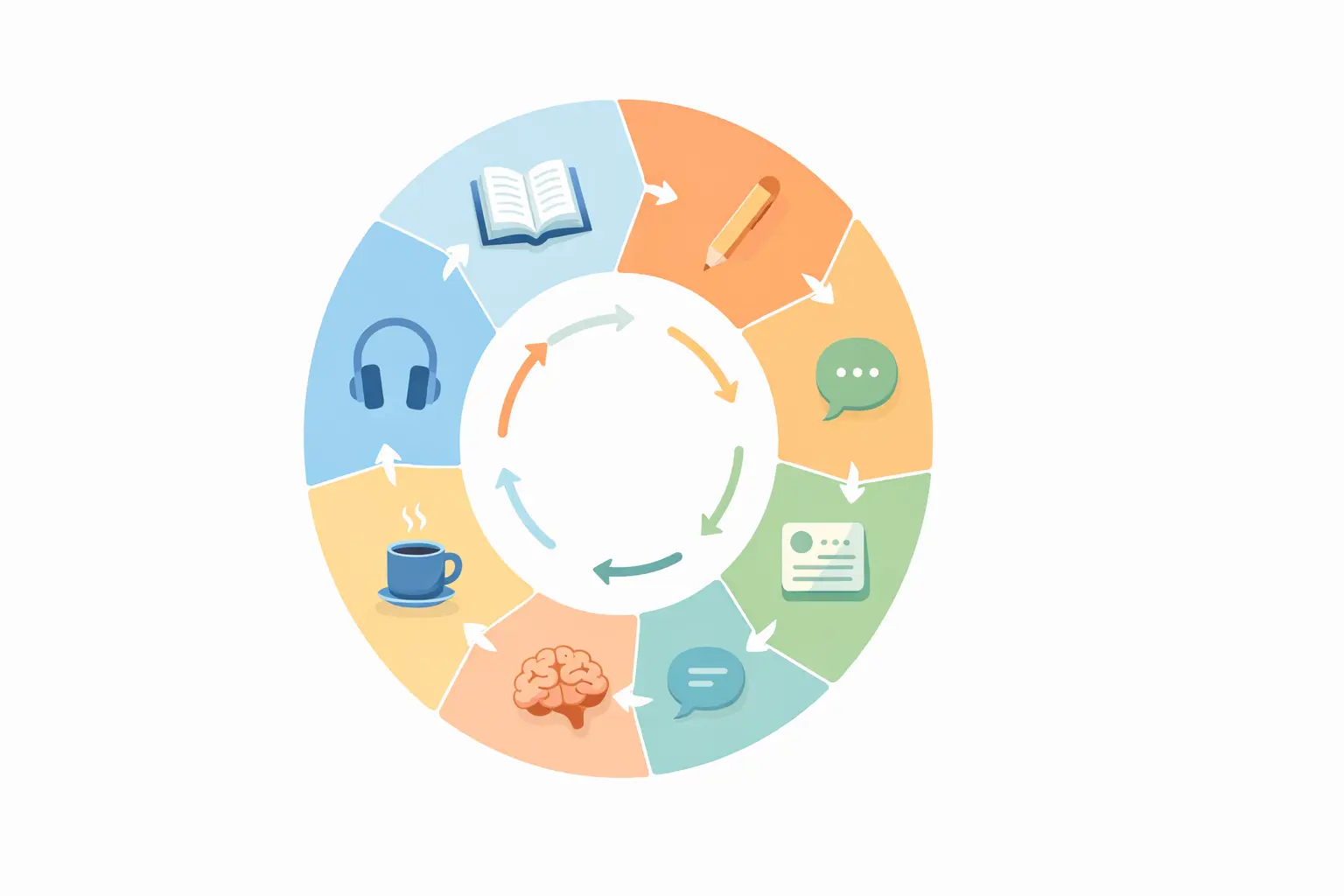
| 日期 | 活動 | 時間 |
|---|---|---|
| 週一 | 閱讀一個IELTS段落,保存10個未知單字 | 30分鐘 |
| 週二 | 複習保存的單字,用每個寫3個句子 | 20分鐘 |
| 週三 | 用目標詞彙練習寫作Task 2 | 40分鐘 |
| 週四 | 聽IELTS音頻,記下新詞彙 | 30分鐘 |
| 週五 | 口說練習:用新單字回答3個話題 | 20分鐘 |
| 週六 | 在Linglify中全面詞彙複習 | 15分鐘 |
| 週日 | 休息或輕鬆閱讀 | — |
詞彙片段——開始建立你的IELTS單字庫
將這些必備IELTS單字保存到你的 Linglify 詞典。這個選擇涵蓋從6分到9分的單字。
significant
形容詞
重要的
範例
- Significant improvement shows in student test scores.
- Significant investment required for business expansion plan.
fundamental
形容詞
基本的, 根本的
範例
- Reading and writing are fundamental skills for academic success.
- There are fundamental differences between the two political parties' policies.
sustainable
形容詞
可持續的
範例
- Company implements sustainable business model for long-term success.
- Sustainable farming practices protect soil and water resources.
innovation
名詞
創新
範例
- Technological innovation has transformed the way we communicate and work.
- The company's latest innovation will revolutionize the healthcare industry.
consequently
副詞
因此
範例
- He missed several classes and consequently fell behind in his studies.
- The weather was terrible, and consequently the outdoor concert was cancelled.
demonstrate
動詞
示範, 證明, 展現
範例
- Protesters demonstrate outside the government building every Friday afternoon.
- The teacher will demonstrate the proper technique for the science experiment.
eliminate
動詞
消除
範例
- Regular exercise can help eliminate stress and improve mental health.
- The competition will eliminate half of the contestants each week.
enhance
動詞
提升
範例
- New software will enhance the computer's performance and processing speed.
- Regular exercise can enhance both physical health and mental wellbeing.
enormous
形容詞
巨大的
範例
- She has an enormous collection of books from around the world.
- The enormous elephant walked slowly through the African savanna grasslands.
environment
名詞
環境, 周遭
範例
- Protecting the environment is essential for future generations of people.
- The classroom environment affects how well students learn and behave.
establish
動詞
建立, 創立
範例
- Police work to establish the facts about what happened during incidents.
- The university will establish a new research center for medical studies.
evaluate
動詞
評估, 估價
範例
- Companies evaluate job candidates based on experience, skills, and personality.
- Teachers evaluate student progress through tests, projects, and classroom participation.
evidence
名詞
證據, 證明
範例
- Scientific evidence supports the theory that exercise improves mental health significantly.
- The police collected evidence from the crime scene for investigation.
illustrate
動詞
說明
範例
- The children's book uses colorful pictures to illustrate the story.
- This example will illustrate how the new system works in practice.
implement
動詞
實施
範例
- It takes time and effort to implement significant changes successfully.
- The company will implement new security measures next month.
implication
名詞
暗示
範例
- Scientists are studying the implications of climate change for future generations.
- The implication of his statement was that he disagreed with the policy.
inevitable
形容詞
不可避免的, 必然的
範例
- Change is inevitable in life, and we must learn to adapt.
- The inevitable result of poor planning is confusion and failure.
perspective
名詞
觀點
範例
- Different perspective helps solve complex problems creatively.
- Historical perspective reveals patterns in human behavior.
phenomenon
名詞
現象
範例
- Aurora borealis is beautiful natural phenomenon.
- Social media phenomenon changes how people communicate.
priority
名詞
優先權
範例
- Family safety is top priority during emergency.
- Student education should be national funding priority.
proportion
名詞
比例
範例
- Large proportion of students choose science majors.
- Recipe requires proper proportion of ingredients for taste.
revolution
名詞
革命
範例
- Digital revolution changes how people communicate and.
- Industrial revolution transformed society and economy completely.
strategy
名詞
策略
範例
- Chess strategy requires thinking several moves ahead.
- Marketing strategy targets specific customer demographics effectively.
substantial
形容詞
實質的
範例
- Substantial improvement shows in student test scores.
- Substantial investment creates new business opportunities today.
transform
動詞
轉變, 改變
範例
- Education can transform person's life opportunities completely.
- Technology will transform how people work communicate.
undertake
動詞
承擔, 著手
範例
- Company will undertake major expansion project next.
- Students undertake research projects during final semester.
常見IELTS詞彙錯誤
- 在沒有搭配詞的情況下記憶單字。 知道「significant」是不夠的——你需要「a significant impact」、「significant improvement」、「significant proportion」。
- 在寫作中使用非正式單字。 避免「lots of」、「gonna」、「things」。使用「numerous」、「a considerable number of」、「factors」。
- 在口說中過度使用大詞。 如果每個句子都有一個C2單字,聽起來不自然。混合水平。
- 忽略單字形式。 學習所有形式:significance(名詞)、significant(形容詞)、significantly(副詞)。IELTS在閱讀和聽力中測試這個。
- 平等地學習所有單字。 優先學習高頻單字。6分單字出現的頻率是9分單字的10倍。
接下來做什麼
所有IELTS詞彙文章
- IELTS 6分詞彙清單附例子
- IELTS 7分詞彙:造成差異的300個單字
- IELTS寫作Task 1詞彙:圖表和地圖的單字
- IELTS寫作Task 2詞彙:得高分的學術單字
- IELTS口說詞彙:按話題分類的單字清單
- IELTS同義詞:200+個7-9分的改述單字
常見問題
IELTS需要知道多少個單字?
沒有官方數字。對於6分,大約5,000個單字是紮實的基礎。對於7分,目標是6,000-8,000個。對於8分+,你需要8,000-10,000+個單字,具有強大的主動掌握學術詞彙。
我應該為IELTS記憶單字清單嗎?
不應該作為你的主要策略。單字清單作為參考很有用,但當你在語境中學習單字並定期複習時,詞彙才會留下來。使用清單來識別要學習的單字,然後通過閱讀、寫作和口說練習。
快速學習IELTS詞彙的最佳方法是什麼?
結合三種技巧:每天閱讀IELTS水平的文本(在語境中看到單字),將未知單字保存到間隔重複系統(保留它們),並寫作或口說使用它們(激活它們)。這個週期比任何單一方法更有效。
學術詞彙對IELTS和TOEFL是一樣的嗎?
有顯著的重疊——兩個測試都使用學術英語。然而,IELTS包括更多英式英語並測試學術和普通詞彙,而TOEFL專注於北美學術語境。
詞彙對寫作還是口說更重要?
兩個部分通過詞彙資源標準都將詞彙加權在25%。然而,寫作需要更正式和精確的詞彙,而口說獎勵自然、靈活的單字使用。你需要針對每個部分的不同詞彙策略。
只用基本詞彙可以達到7分嗎?
這非常不可能。7分明確要求「足夠範圍的詞彙以允許一定的靈活性和精確性」。如果你依賴「good」、「bad」、「important」和「many」等基本單字,考官會將你的詞彙資源分數上限設為6分。


