
Sinónimos de Palabras Comunes en Inglés: 200+ Alternativas Más Expresivas
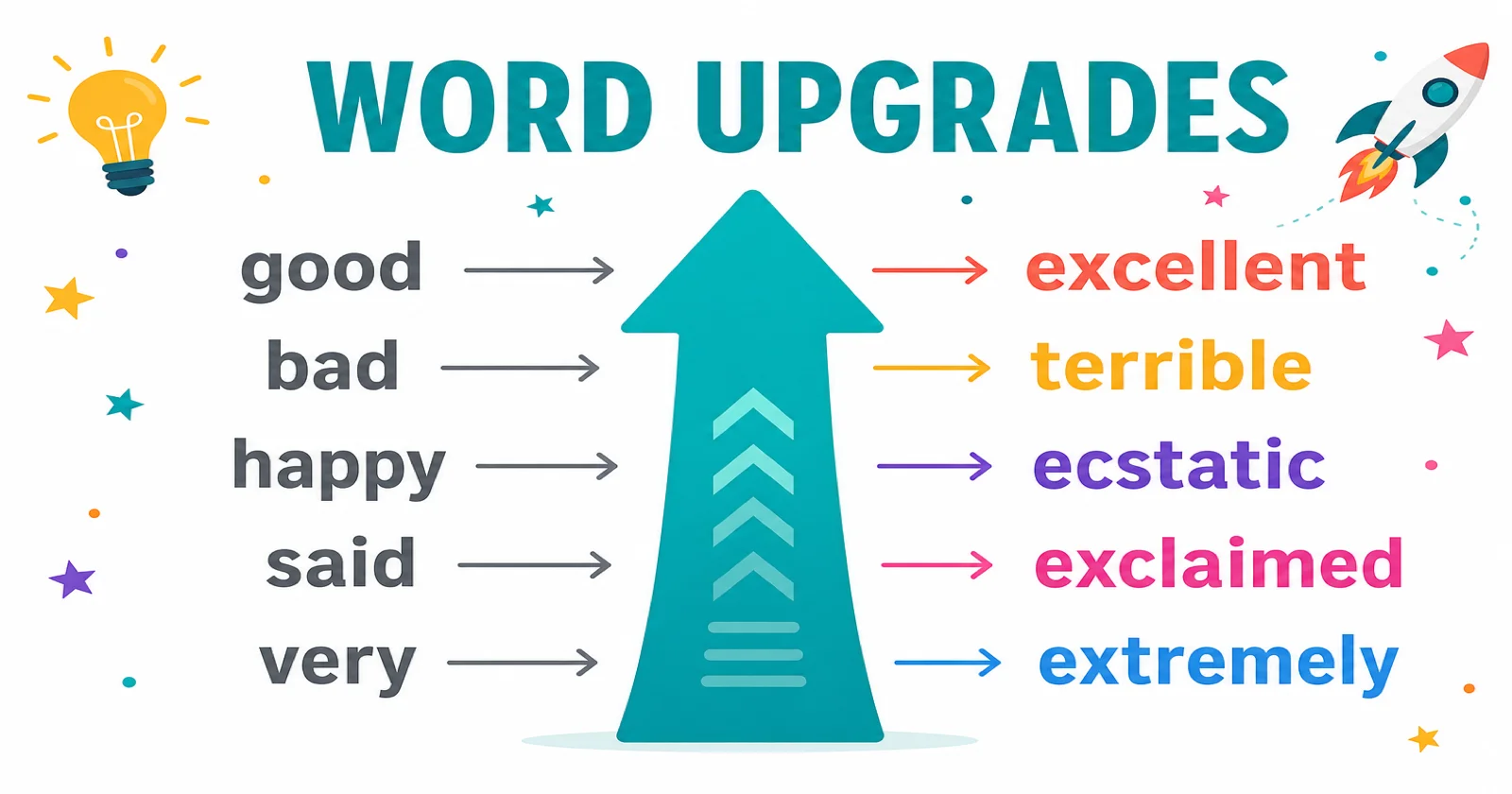
Todo estudiante de inglés llega a un punto en el que conoce suficientes palabras para comunicarse — pero sigue usando las mismas diez palabras en cada oración. «Good», «bad», «nice», «interesting», «very», «said». Estas palabras funcionan, pero hacen que tu inglés suene plano, repetitivo y vago.
La diferencia entre el inglés básico y el inglés fluido no es la gramática — es la elección de las palabras. Un estudiante que escribe «The movie was good» comunica significado. Un estudiante que escribe «The movie was gripping» comunica significado y demuestra dominio del idioma. En la escritura del IELTS, esta es la diferencia entre el Band 6 y el Band 7+. En los correos electrónicos profesionales, es la diferencia entre sonar competente y sonar pulido.
Esta guía te ofrece 200+ sinónimos de las 20 palabras más sobreutilizadas del inglés. Cada sinónimo incluye una definición, el nivel de formalidad y una oración de ejemplo — para que sepas no solo qué decir, sino cuándo decirlo.
- Total: 200+ sinónimos mejorados
- Organizado por: 20 palabras sobreutilizadas
- Formato: Sinónimo → Definición → Formalidad → Ejemplo
- Nivel: B1–C1
- Para: mejorar la escritura, preparación para IELTS/TOEFL, comunicación profesional
Cómo usar esta guía
- Encuentra la palabra que sobreutilizas — revisa las secciones a continuación.
- Elige 2–3 sinónimos que correspondan a tu nivel de formalidad (informal, neutro o formal).
- Lee las oraciones de ejemplo — el contexto importa más que las definiciones.
- Practica inmediatamente — usa tus nuevas palabras en la escritura o la conversación hoy mismo.
Advertencia: No todos los sinónimos son intercambiables. «Big» y «enormous» se superponen en significado, pero puedes decir «my big sister» — no puedes decir «my enormous sister». Comprueba siempre el contexto antes de intercambiar palabras.
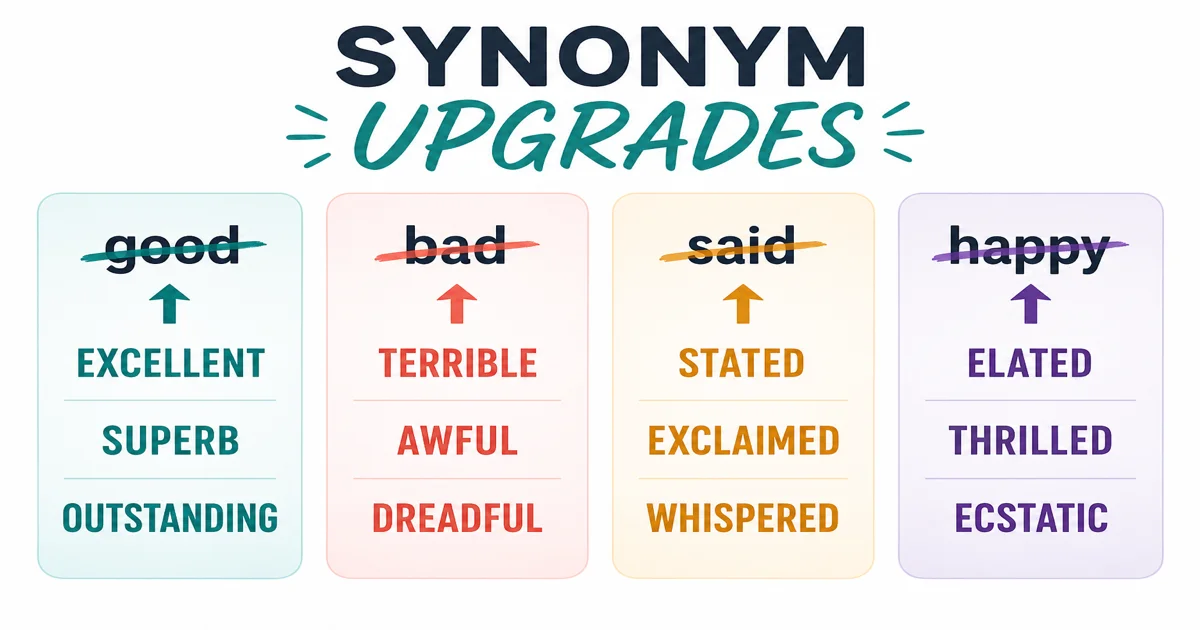
Sinónimos de «Good»
La palabra más sobreutilizada del inglés. «Good» puede significar cualquier cosa — lo que significa que no dice casi nada.
| Sinónimo | Significado | Registro | Ejemplo |
|---|---|---|---|
| excellent | extremadamente bueno | neutro | She did an excellent job on the report. |
| outstanding | excepcionalmente bueno | formal | His outstanding performance earned a promotion. |
| superb | impresionantemente bueno | neutro | The restaurant has superb pasta. |
| remarkable | que merece atención | formal | The team made remarkable progress this quarter. |
| wonderful | que produce deleite | neutro | We had a wonderful time at the party. |
| terrific | extremadamente bueno | informal | That’s a terrific idea — let’s try it! |
| fantastic | extraordinariamente bueno | informal | The concert was fantastic from start to finish. |
| exceptional | inusualmente excelente | formal | She is an exceptional student. |
| admirable | que merece respeto | formal | His dedication is truly admirable. |
| first-rate | de la más alta calidad | neutro | They provide first-rate customer service. |
| splendid | magnífico | formal | What a splendid view from this balcony! |
Sinónimos de «Bad»
Otra palabra que se ha estirado para cubrir desde «ligeramente decepcionante» hasta «catastrófico».
| Sinónimo | Significado | Registro | Ejemplo |
|---|---|---|---|
| terrible | extremadamente malo | neutro | The weather has been terrible all week. |
| awful | muy malo o desagradable | informal | The movie was awful — we left early. |
| dreadful | que causa gran sufrimiento o miedo | formal | The living conditions were dreadful. |
| appalling | escandalosamente malo | formal | The error rate is appalling. |
| atrocious | horrible y muy malo | formal | The quality of work was atrocious. |
| inferior | de menor calidad | formal | The cheaper model uses inferior materials. |
| mediocre | promedio, no suficientemente bueno | neutro | The food was mediocre at best. |
| poor | por debajo del estándar aceptable | neutro | She received poor marks on the exam. |
| substandard | por debajo del nivel esperado | formal | The construction was found to be substandard. |
| lousy | de muy mala calidad | informal | I had a lousy day at work. |
Sinónimos de «Happy»
«Happy» abarca un espectro desde la tranquila satisfacción hasta la alegría desbordante. Tu elección de sinónimo sitúa la emoción con precisión.
| Sinónimo | Significado | Registro | Ejemplo |
|---|---|---|---|
| delighted | muy complacido | neutro | I’m delighted to hear the news! |
| thrilled | extremadamente emocionado y complacido | neutro | She was thrilled to get the job offer. |
| ecstatic | abrumadoramente feliz | neutro | The fans were ecstatic after the win. |
| content | pacíficamente satisfecho | neutro | He felt content sitting by the fire. |
| elated | extremadamente feliz y con energía | formal | We were elated by the results. |
| overjoyed | extremadamente alegre | neutro | They were overjoyed at the birth of their child. |
| cheerful | notablemente feliz y positivo | neutro | She’s always cheerful in the morning. |
| blissful | supremamente feliz | formal | They spent a blissful week at the beach. |
| grateful | agradecido y reconocido | neutro | I’m grateful for your help. |
| euphoric | intensamente feliz (a menudo brevemente) | formal | The crowd was euphoric after the announcement. |
Sinónimos de «Sad»
| Sinónimo | Significado | Registro | Ejemplo |
|---|---|---|---|
| unhappy | no feliz | neutro | She seemed unhappy with the decision. |
| miserable | extremadamente infeliz | neutro | The cold rain made everyone miserable. |
| heartbroken | devastado emocionalmente | neutro | He was heartbroken when she left. |
| devastated | abrumado por el dolor | neutro | The community was devastated by the loss. |
| gloomy | oscuro y deprimente | neutro | The gloomy weather matched her mood. |
| melancholy | tristeza profunda y reflexiva | formal | A melancholy tone runs through the novel. |
| sorrowful | lleno de dolor | formal | She gave a sorrowful farewell speech. |
| downcast | que se siente derrotado o abatido | formal | He looked downcast after receiving the news. |
| despondent | con el ánimo bajo por falta de esperanza | formal | After months of rejection, she grew despondent. |
| dejected | triste y decepcionado | formal | The team walked off the field dejected. |
Sinónimos de «Interesting»
Una palabra que no dice nada específico al lector. ¿Por qué es interesante?
| Sinónimo | Significado | Registro | Ejemplo |
|---|---|---|---|
| fascinating | intensamente interesante | neutro | She told a fascinating story about her travels. |
| captivating | que capta la atención por completo | formal | The speaker gave a captivating presentation. |
| compelling | poderosamente interesante | formal | The evidence is compelling. |
| engaging | que capta la atención agradablemente | neutro | The workshop was engaging and well-organized. |
| intriguing | que despierta la curiosidad | neutro | That’s an intriguing idea — tell me more. |
| stimulating | que fomenta el pensamiento o la discusión | formal | The debate was intellectually stimulating. |
| thought-provoking | que te hace reflexionar profundamente | neutro | The documentary was thought-provoking. |
| absorbing | que capta la atención por completo | neutro | I found the book absolutely absorbing. |
| riveting | del que no puedes apartar los ojos | neutro | The trial was riveting from start to finish. |
| gripping | emocionante y que mantiene la atención | neutro | The thriller was gripping — I read it in one sitting. |
Sinónimos de «Important»
| Sinónimo | Significado | Registro | Ejemplo |
|---|---|---|---|
| crucial | extremadamente importante, decisivo | neutro | Timing is crucial in this market. |
| essential | absolutamente necesario | neutro | Sleep is essential for good health. |
| vital | de importancia crítica | neutro | Clean water is vital for survival. |
| significant | suficientemente grande como para importar | formal | There was a significant increase in sales. |
| critical | de gran importancia en un momento clave | neutro | This is a critical phase of the project. |
| fundamental | que forma la base de todo | formal | Trust is fundamental to any relationship. |
| pivotal | punto de inflexión; central | formal | Her testimony was pivotal in the trial. |
| paramount | por encima de todos los demás en importancia | formal | Safety is paramount in our industry. |
| indispensable | absolutamente necesario | formal | She became indispensable to the team. |
| key | de importancia primaria | neutro | Education is key to reducing inequality. |
Sinónimos de «Big»
| Sinónimo | Significado | Registro | Ejemplo |
|---|---|---|---|
| enormous | extremadamente grande | neutro | They live in an enormous house. |
| massive | muy grande y pesado | neutro | The storm caused massive flooding. |
| huge | extremadamente grande | informal | That’s a huge difference in price. |
| vast | inmensamente grande en área o cantidad | neutro | The Sahara is a vast desert. |
| immense | extremadamente grande o importante | formal | The project required immense effort. |
| substantial | grande en tamaño o valor | formal | She received a substantial pay raise. |
| colossal | extraordinariamente grande | formal | The statue was colossal — visible from miles away. |
| tremendous | muy grande en cantidad | neutro | The team made tremendous progress. |
| gigantic | extremadamente grande | neutro | They built a gigantic shopping mall. |
| considerable | notablemente grande en cantidad | formal | There is considerable debate on this topic. |
Sinónimos de «Small»
| Sinónimo | Significado | Registro | Ejemplo |
|---|---|---|---|
| tiny | muy pequeño | neutro | She lives in a tiny apartment. |
| minute | extremadamente pequeño | formal | There were minute differences between the two. |
| compact | pequeño pero eficiente | neutro | The kitchen is compact but well-designed. |
| modest | relativamente pequeño o limitado | neutro | They made a modest profit this year. |
| negligible | tan pequeño que carece de importancia | formal | The side effects are negligible. |
| slight | pequeño en grado | neutro | There was a slight delay in shipping. |
| miniature | versión muy pequeña de algo | neutro | She collects miniature furniture. |
| trivial | sin importancia o menor | formal | Don’t waste time on trivial details. |
| marginal | muy pequeño, en el límite | formal | The marginal cost increase is acceptable. |
Sinónimos de «Said»
En los diálogos escritos, «said» desaparece — pero en los ensayos y narraciones, variarlo añade tono y precisión.
| Sinónimo | Significado | Registro | Ejemplo |
|---|---|---|---|
| stated | dijo formalmente | formal | The CEO stated that profits rose 12%. |
| mentioned | se refirió brevemente | neutro | She mentioned the meeting in her email. |
| declared | dijo firme y públicamente | formal | He declared his candidacy this morning. |
| explained | dijo dando razones | neutro | «The process takes two weeks», she explained. |
| announced | dijo públicamente o oficialmente | neutro | The company announced a new product line. |
| argued | dijo dando razones en contra | neutro | Critics argued that the policy was flawed. |
| insisted | dijo firmemente, sin ceder | neutro | «I didn’t do it», he insisted. |
| whispered | dijo muy suavemente | neutro | «Be careful», she whispered. |
| exclaimed | dijo con emoción repentina | neutro | «That’s incredible!» he exclaimed. |
| muttered | dijo tranquila e ininteligiblemente | neutro | He muttered something under his breath. |
Sinónimos de «Very»
«Very» es un intensificador débil. Reemplázalo con una palabra más fuerte o elimínalo por completo.
| En lugar de… | Usa | Ejemplo |
|---|---|---|
| very happy | ecstatic, thrilled | She was thrilled with the results. |
| very sad | devastated, heartbroken | He was devastated by the news. |
| very big | enormous, massive | The crowd was enormous. |
| very small | tiny, minute | A tiny crack appeared in the wall. |
| very tired | exhausted, drained | After the hike, we were exhausted. |
| very hungry | starving, ravenous | I’m starving — I haven’t eaten all day. |
| very cold | freezing, bitter | It’s freezing outside — grab a coat. |
| very hot | scorching, boiling | The sand was scorching under our feet. |
| very scared | terrified, petrified | She was terrified of the dark. |
| very angry | furious, livid | He was furious when he found out. |
| very beautiful | stunning, gorgeous | The view was absolutely stunning. |
| very ugly | hideous, grotesque | The building was hideous from every angle. |
Sinónimos de «Nice»
Otra palabra que no dice nada específico. ¿Buen tiempo? ¿Buena persona? ¿Buena idea? Reemplázala.
| Sinónimo | Significado | Registro | Ejemplo |
|---|---|---|---|
| pleasant | agradable y ameno | neutro | We had a pleasant conversation. |
| lovely | hermoso y agradable | neutro | What a lovely surprise! |
| kind | generoso y considerado | neutro | That was very kind of you. |
| charming | deliciosamente atractivo | neutro | The village has a charming town center. |
| thoughtful | que muestra cuidado por los demás | neutro | What a thoughtful gift! |
| gracious | cortés y amable | formal | She was gracious in accepting the award. |
| amiable | amistoso y agradable | formal | He’s an amiable colleague to work with. |
| delightful | muy agradable | neutro | The garden was absolutely delightful. |
| warm | amistoso y acogedor | neutro | She gave us a warm welcome. |
Sinónimos de «Difficult» / «Hard»
| Sinónimo | Significado | Registro | Ejemplo |
|---|---|---|---|
| challenging | difícil de forma estimulante | neutro | The course was challenging but rewarding. |
| demanding | que requiere gran esfuerzo | neutro | Teaching is a demanding profession. |
| complex | con muchas partes interconectadas | formal | The problem is more complex than it appears. |
| arduous | que requiere esfuerzo sostenido y duro | formal | The climb was long and arduous. |
| strenuous | que requiere gran esfuerzo físico | neutro | Avoid strenuous activity after surgery. |
| grueling | extremadamente agotador y difícil | neutro | The marathon was absolutely grueling. |
| formidable | que infunde miedo o respeto | formal | She is a formidable opponent. |
| taxing | física o mentalmente agotador | neutro | The negotiations were mentally taxing. |
| tough | difícil, que requiere fortaleza | informal | It’s been a tough year for everyone. |
| daunting | que parece difícil e intimidante | neutro | The task ahead looks daunting. |
Sinónimos de «Beautiful»
| Sinónimo | Significado | Registro | Ejemplo |
|---|---|---|---|
| stunning | extremadamente impresionante o atractivo | neutro | The sunset was absolutely stunning. |
| gorgeous | muy hermoso | informal/neutro | She looked gorgeous at the event. |
| breathtaking | asombrosamente hermoso | neutro | The mountain scenery was breathtaking. |
| magnificent | extremadamente hermoso e impresionante | formal | The cathedral is truly magnificent. |
| exquisite | extremadamente hermoso y delicado | formal | The craftsmanship is exquisite. |
| elegant | con una belleza elegante | formal | She wore an elegant black dress. |
| radiant | que resplandece de belleza o salud | neutro | The bride looked radiant. |
| picturesque | visualmente encantador (lugares) | neutro | The village is picturesque in autumn. |
| dazzling | deslumbrantemente hermoso o impresionante | neutro | She gave a dazzling performance. |
| striking | que llama la atención por ser inusual | neutro | He has striking blue eyes. |
Sinónimos de «Fast» / «Quick»
| Sinónimo | Significado | Registro | Ejemplo |
|---|---|---|---|
| rapid | que ocurre en poco tiempo | neutro | There has been rapid growth in the sector. |
| swift | que se mueve u ocurre rápidamente | formal | She made a swift decision. |
| prompt | que se hace sin demora | formal | Thank you for your prompt reply. |
| speedy | que ocurre rápidamente | informal | We wish you a speedy recovery. |
| brisk | rápido y enérgico | neutro | They set a brisk pace through the park. |
| hasty | hecho demasiado rápido (negativo) | neutro | Don’t make a hasty decision. |
| immediate | que ocurre ahora mismo | neutro | We need an immediate response. |
Sinónimos de «Show» / «Give»
| Sinónimo | Significado | Registro | Ejemplo |
|---|---|---|---|
| demonstrate | mostrar claramente | formal | The data demonstrates a clear trend. |
| illustrate | mostrar con ejemplos | formal | Let me illustrate my point with a chart. |
| reveal | dar a conocer algo oculto | neutro | The report reveals surprising findings. |
| indicate | señalar, sugerir | formal | The evidence indicates a shift in behavior. |
| exhibit | mostrar una cualidad o comportamiento | formal | The patient exhibited symptoms of fatigue. |
| display | mostrar abiertamente | neutro | She displayed remarkable patience. |
| convey | comunicar un significado o sentimiento | formal | His expression conveyed deep concern. |
| present | mostrar u ofrecer formalmente | formal | She presented the findings to the board. |
Sinónimos de «Think» / «Believe»
| Sinónimo | Significado | Registro | Ejemplo |
|---|---|---|---|
| consider | pensar cuidadosamente sobre | neutro | Please consider the alternatives. |
| assume | pensar sin pruebas | neutro | I assumed he would be there. |
| suppose | pensar que algo es probable | neutro | I suppose we should start early. |
| reckon | pensar o calcular | informal | I reckon it’ll take about two hours. |
| contemplate | pensar profundamente sobre | formal | She contemplated a career change. |
| speculate | pensar basándose en información incompleta | formal | Analysts speculate that prices will rise. |
| presume | asumir que es verdad | formal | I presume you’ve read the report? |
| maintain | afirmar firmemente como creencia propia | formal | He maintains that the decision was correct. |
Cómo elegir el sinónimo correcto
Conocer 200+ sinónimos es inútil si eliges el incorrecto. Tres factores determinan la elección correcta:
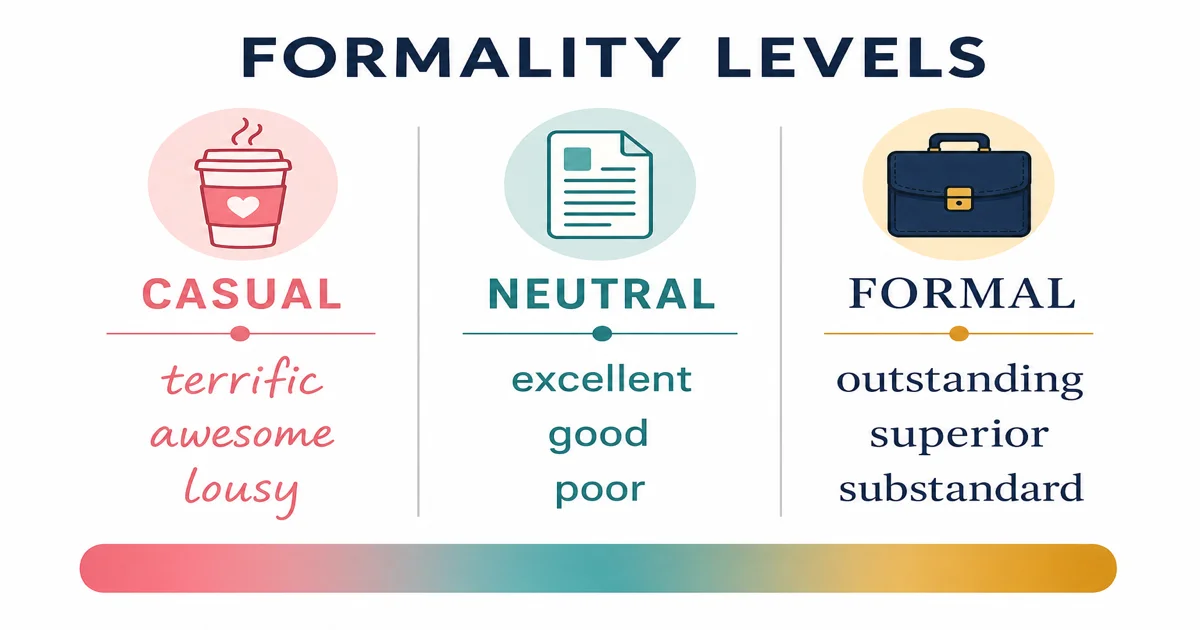
1. Nivel de formalidad. «Furious» funciona en un correo electrónico a un amigo. «Incensed» funciona en un artículo de noticias. «Livid» funciona en cualquier lugar. Adáptate a tu audiencia.
2. Connotación (positiva/negativa/neutra). «Slim» y «skinny» ambos significan «delgado», pero «slim» es un cumplido y «skinny» puede ser un insulto. Comprueba siempre la connotación, no solo la definición.
3. Colocaciones (combinaciones de palabras). «Heavy rain» es inglés natural. «Weighty rain» no lo es — aunque «heavy» y «weighty» son sinónimos. Aprende las palabras en sus combinaciones naturales.
| Prueba | Pregunta que hacerse | Ejemplo |
|---|---|---|
| Formalidad | ¿Estoy escribiendo de forma formal o informal? | Usa «outstanding» en informes, «awesome» con amigos |
| Connotación | ¿Es esta palabra positiva, negativa o neutra? | «Childlike» (positivo) vs. «childish» (negativo) |
| Colocación | ¿Va esta palabra naturalmente con las palabras de alrededor? | «Make a decision» (correcto) vs. «do a decision» (incorrecto) |
Palabras para practicar
Añade estos sinónimos esenciales a tu diccionario de Linglify para la práctica con repetición espaciada.
boom
sustantivo
auge, explosión
Ejemplos
- The boom of thunder echoed across the valley.
- The technology boom created many new millionaires.
cooperate
verbo
colaborar, trabajar juntos
evaluate
verbo
evaluar, valor, valoración
Ejemplos
- Companies evaluate job candidates based on experience, skills, and personality.
- Teachers evaluate student progress through tests, projects, and classroom participation.
graduate
verbo
graduar
Ejemplos
- She will graduate from university next year with a degree in engineering.
- Students must complete all requirements before they can graduate from high school.
horizon
sustantivo
horizonte, línea de visión, línea de horizonte
Ejemplos
- The sun disappeared behind the horizon as evening approached.
- Traveling broadens your horizon and exposes you to new cultures.
prejudice
sustantivo
prejuicio, sesgo
Ejemplos
- Education helps overcome prejudice and promotes understanding.
- Racial prejudice damages communities and individuals alike.
resolve
verbo
resolver, solucionar, determinar
Ejemplos
- Mediator helps parties resolve dispute through negotiation.
- Technical team will resolve software problems quickly.
discourage
verbo
desalentar
Ejemplos
- Don't let one failure discourage you from pursuing your dreams.
- High prices discourage many people from buying organic food products.
donate
verbo
donar, contribuir
Ejemplos
- Many people donate money to charities that help homeless individuals.
- She decided to donate blood to help patients in emergency situations.
firmly
adverbio
firmemente, con firmeza
Ejemplos
- Hold the rope firmly while climbing down the steep mountain slope.
- The manager firmly believed in treating all employees with respect.
indispensable
adjetivo
indispensable, esencial, necesario
Ejemplos
- Clean water is indispensable for human survival and good health.
- Her experience and skills make her indispensable to the research team.
jury
sustantivo
jurado
Ejemplos
- The jury deliberated for several hours before reaching a verdict.
- The talent show jury consisted of professional musicians and entertainers.
lifelong
adjetivo
de por vida, para siempre
Ejemplos
- Learning is a lifelong process that never truly ends.
- Their lifelong friendship began during elementary school years.
motivated
adjetivo
motivado, inspirado, entusiasmado
Ejemplos
- Motivated employee seeks additional responsibilities and challenges at work.
- Success requires being motivated even when facing difficult obstacles.
normally
adverbio
normalmente
Ejemplos
- Heart normally beats between sixty and hundred times per minute.
- Students normally arrive at school before morning bell rings.
off
adjetivo
fuera, apagado, desactivado
Ejemplos
- Please turn off the lights before leaving the room.
- The dog ran off into the forest chasing wild rabbits.
stress
verbo
estresar, tensar, presionar
Ejemplos
- Heavy workload may stress employees beyond limits.
- Teacher will stress importance of homework completion.
total
adjetivo
total, completo, global
Ejemplos
- Total cost includes all fees and expenses.
- Total silence fills room during meditation session.
tragedy
sustantivo
tragedia, catástrofe, desgracia
Ejemplos
- Natural tragedy affects thousands of innocent people.
- Personal tragedy changes person's life perspective completely.
union
sustantivo
sindicato, asociación, alianza
Ejemplos
- Labor union protects worker rights and interests.
- Marriage union joins two people in partnership.
voyage
sustantivo
viaje, excursión, trayecto
Ejemplos
- Space exploration represents humanity's greatest voyage into the unknown.
- The ocean voyage from Europe to America took several weeks in the past.
candidate
sustantivo
candidato
Ejemplos
- Each presidential candidate presented their policy plans to voters.
- The job candidate impressed the interview panel with her experience.
guide
verbo
guiar, dirigir, orientar
Ejemplos
- Parents should guide their children to make responsible decisions.
- The experienced hiker will guide the group through the mountain trail safely.
humorous
adjetivo
gracioso, humorístico, cómico
Ejemplos
- She writes humorous articles about everyday life and family experiences.
- The humorous speech made everyone laugh and lightened the serious mood.
admission
sustantivo
admisión, entrada
Ejemplos
- Her admission to the prestigious medical school was the result of hard work.
- The museum offers free admission on the first Sunday of every month.
Qué hacer a continuación
-
Elige tus 3 palabras más sobreutilizadas. Sé honesto — la mayoría de las personas sobreutiliza «good», «very» e «interesting». Encuéntralas en esta guía y selecciona 2–3 reemplazos para cada una.
-
Escribe tres oraciones usando tus nuevos sinónimos ahora mismo. La práctica inmediata consolida el aprendizaje.
-
Añade sinónimos a Linglify para la repetición espaciada. Etiquétalos con la palabra sobreutilizada que reemplazan («upgrade-good», «upgrade-said») para poder repasarlos en sesiones enfocadas.
-
Aprende también las palabras opuestas — 500+ Palabras Opuestas en Inglés complementa el conocimiento de sinónimos con pares de antónimos.
Preguntas frecuentes
¿Cuáles son los mejores sinónimos de «good»?
El mejor reemplazo depende del contexto. Para la calidad: excellent, superb, outstanding. Para el carácter moral: virtuous, honorable, admirable. Para la comida: delicious, tasty, superb. Para el rendimiento: exceptional, remarkable, first-rate. En lugar de «a good movie», di «a gripping movie» o «an entertaining movie» — estas palabras dicen al lector cómo es buena.
¿Cuál es la diferencia entre sinónimos y palabras similares?
Los verdaderos sinónimos pueden sustituirse mutuamente en al menos algunos contextos sin cambiar el significado (couch/sofa, begin/start). Las palabras similares comparten significado pero difieren en connotación, formalidad o uso (slim/skinny, house/home, ask/demand). La clave está en entender qué contextos se adaptan a cada palabra.
¿Cómo elijo entre sinónimos formales e informales?
Adáptate a tu audiencia y medio. Los trabajos académicos y los informes empresariales necesitan sinónimos formales (considerable, substantial, significant). Los correos electrónicos a compañeros pueden ser neutros (big, important, fast). Los mensajes de texto y el habla informal pueden ser informales (huge, awesome, quick). Ante la duda, elige el neutro — funciona en casi cualquier contexto.
¿Cuántos sinónimos debo aprender para cada palabra?
Empieza con 2–3 sinónimos por palabra sobreutilizada — eso es suficiente para eliminar la repetición. Para la preparación de exámenes (IELTS, TOEFL), amplía a 5–6 por palabra para maximizar tu puntuación en Lexical Resource. La calidad importa más que la cantidad.
¿Usar sinónimos mejorará mi puntuación en el IELTS?
Sí, directamente. El criterio Lexical Resource del IELTS (25% de las puntuaciones de escritura y speaking) recompensa específicamente el uso de sinónimos, el vocabulario variado y la elección precisa de palabras. Los examinadores buscan la paráfrasis — reformular ideas usando palabras diferentes. Reemplazar «important» por «crucial» en un párrafo y «essential» en el siguiente demuestra el rango de vocabulario que obtiene el Band 7+.


