
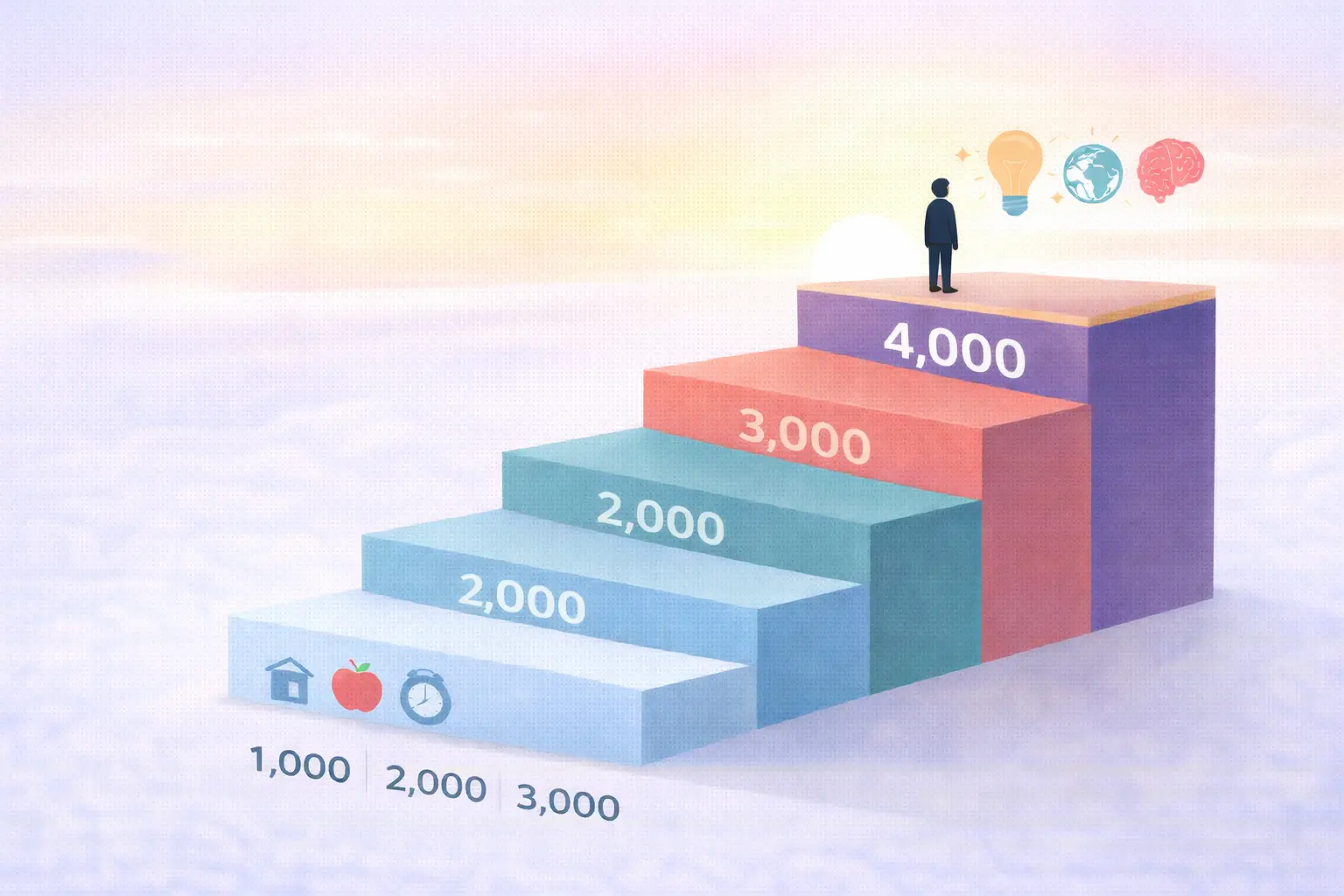
英語必須4000語:完全学習ガイド
語彙研究にはマジックナンバーがあります:4,000語族。これは日常英語のおよそ95%を理解できるようになるポイントです — 会話、ニュース記事、テレビ番組、ほとんどの文章。4,000語以下だと常に推測に頼ることになります。4,000語を超えると、周りの文がすでに理解できるため、文脈から新しい単語を自然に覚えられるようになります。
このガイドは、4,000語の壁を突破するための完全な学習計画です。4段階のレベルに分け、各段階のサンプル単語を示し、6ヶ月で到達するための現実的なスケジュールを提供します。
- 目標語彙数: 4,000語族
- 対象レベル: A1 → A2 → B1 → B2
- 所要期間: 5〜6ヶ月(1日20語ペース)
- こんな人に最適: 中級学習者、独学、IELTS/TOEFL対策、総合的な流暢さ
なぜ4,000語なのか? 数字の科学的根拠
語彙研究者たちは、英語で不自由なく機能するために何語必要かを研究してきました。結果は数十の研究で一貫しています:
| 知っている語数 | できること |
|---|---|
| 500 | 旅行者として最低限生き残れる — あいさつ、簡単な買い物、道案内 |
| 1,000 | 基本的な日常会話ができる — 天気、家族、食べ物、時間 |
| 2,000 | 日常会話の90%を理解できる — A2レベル相当 |
| 4,000 | 日常会話の95%とほとんどの文章を理解できる — B2レベル |
| 6,000 | 新聞や学術テキストが快適に読める — C1レベル |
| 10,000 | ほぼすべてが理解できる — C2 / ネイティブ並み |
理解度が90%から95%に上がるのは小さな差に聞こえますが、実際には劇的に変わります。90%の理解度では10語に1語がわからない — つまり1文に2〜3語の未知語があります。95%なら20語に1語で、たいていの場合は文脈から推測できます。これが、毎段落で辞書を引く段階から、読書やリスニングで自然に新しい単語を身につけられる段階への転換点です。
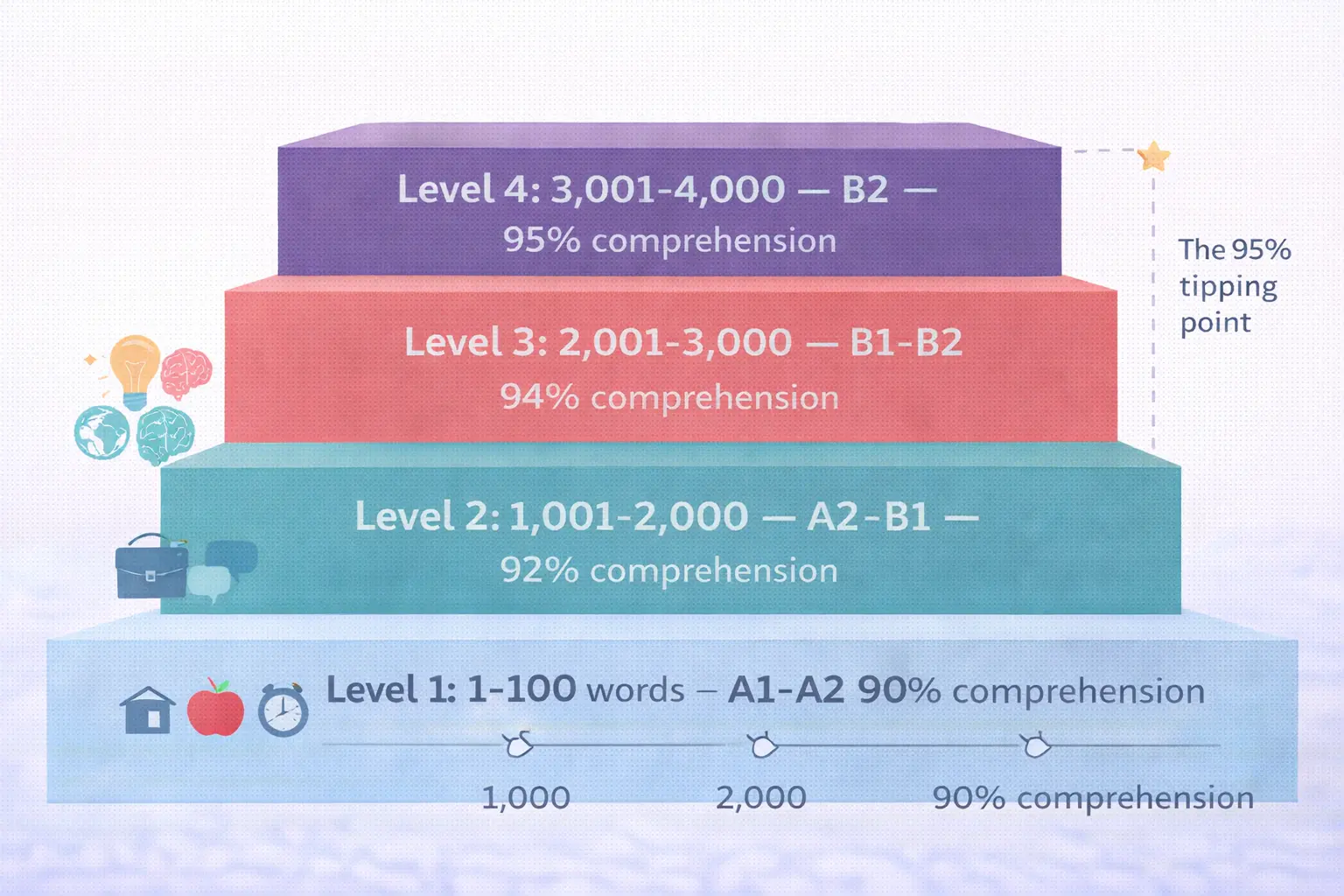
ここで「語族(word families)」という概念が重要です。語族とは、基本語とその一般的な派生形を含みます:「develop」「development」「developing」「developed」「developer」で1つの語族です。研究者が4,000と言うとき、4,000語族を意味し、これは個々の語形に換算するとおよそ12,000〜16,000語になります。
4,000語の構成
4,000語を最も効率的に学ぶ方法は、頻度順 — よく使う単語から先に学ぶことです。このガイドでは英語での出現頻度に基づき4段階に分けています:
| レベル | 単語 | CEFR | 説明 |
|---|---|---|---|
| レベル1 | 1〜1,000語 | A1〜A2 | 絶対必須 — 機能語、基本名詞、頻出動詞 |
| レベル2 | 1,001〜2,000語 | A2〜B1 | 日常語彙 — 仕事、健康、社交、意見表明 |
| レベル3 | 2,001〜3,000語 | B1〜B2 | 学術・ビジネス語彙 — 抽象概念、フォーマルな動詞、精密な形容詞 |
| レベル4 | 3,001〜4,000語 | B2 | 上級日常語彙 — ニュアンス、正確さ、出現頻度は低いが重要な単語 |
各レベルは前のレベルの上に積み上がります。レベル1を確実にする前にレベル3に飛ばないでください — 頻度順学習は、覚えた1語ごとに次の100語が理解しやすくなるからこそ効果を発揮します。
レベル1:1〜1,000語(A1〜A2)
英語の土台となる単語です。機能語(the, is, in, at, with)、基本動詞、頻出名詞、よく使う形容詞が含まれます。多くの学習者はすでにこの60〜70%を知っています — 目標は穴を埋めることです。
高頻度の動詞
| 単語 | 意味 | 例文 |
|---|---|---|
| agree | 同意する | I agree with your suggestion.(あなたの提案に賛成です。) |
| belong | 〜のものである;所属する | This book belongs to the school library.(この本は学校の図書館のものです。) |
| contain | 含む | The box contains all the documents you need.(箱には必要な書類がすべて入っている。) |
| describe | 描写する | Can you describe the person you saw?(見かけた人の特徴を教えてもらえますか?) |
| expect | 期待する、予想する | I expect the results will be ready by Friday.(金曜までに結果が出ると思います。) |
| follow | 後について行く;従う | Follow the signs to the exit.(出口の標識に従ってください。) |
| improve | 改善する | She improved her English by reading every day.(毎日読書することで英語が上達した。) |
| mention | 言及する | He mentioned the meeting during lunch.(昼食中に会議のことを話題にした。) |
| realize | 気づく | I realized I had left my wallet at home.(財布を家に忘れたことに気づいた。) |
| suppose | 〜だと思う | I suppose you are right about that.(その点についてはあなたが正しいと思う。) |
日常の名詞
| 単語 | 意味 | 例文 |
|---|---|---|
| advantage | 利点 | Living near the office is a big advantage.(職場の近くに住むのは大きな利点だ。) |
| attempt | 試み | She passed the exam on her second attempt.(2回目の挑戦で試験に受かった。) |
| bottom | 底;最下部 | The answer is at the bottom of the page.(答えはページの下にある。) |
| century | 世紀(100年) | The church was built in the 18th century.(教会は18世紀に建てられた。) |
| crowd | 群衆 | A crowd gathered outside the stadium.(スタジアムの外に群衆が集まった。) |
| demand | 要求;需要 | There is a growing demand for online courses.(オンライン講座の需要が増えている。) |
| effort | 努力 | Learning a language requires daily effort.(言語の習得には毎日の努力が必要だ。) |
| journey | 旅、移動 | The journey from London to Paris takes two hours by train.(ロンドンからパリまで電車で2時間かかる。) |
| opinion | 意見 | In my opinion, the second option is better.(私の意見では、2つ目の選択肢のほうが良い。) |
| purpose | 目的 | The purpose of this meeting is to discuss the budget.(この会議の目的は予算の議論です。) |
よく使う形容詞
| 単語 | 意味 | 例文 |
|---|---|---|
| available | 利用可能な | The manager is not available until 3 PM.(マネージャーは午後3時まで不在です。) |
| certain | 確かな;特定の | I am certain she will arrive on time.(彼女は時間通りに来ると確信している。) |
| entire | 全体の | He read the entire book in one day.(1日で本をまるごと読んだ。) |
| familiar | よく知っている | This place looks familiar — have we been here before?(ここ、見覚えがある——前に来たことある?) |
| necessary | 必要な | It is necessary to bring your passport to the interview.(面接にはパスポートが必要です。) |
| ordinary | 普通の | It was just an ordinary day — nothing unusual happened.(ただの普通の日だった——特に変わったことはなかった。) |
| previous | 以前の | My previous job was at a marketing agency.(前の仕事はマーケティング会社だった。) |
| recent | 最近の | Have you read any good books recently?(最近何か良い本を読みましたか?) |
| separate | 別々の | The house has a separate entrance for guests.(その家にはゲスト用の別の入口がある。) |
| worth | 価値がある | The museum is worth visiting if you have time.(時間があればその博物館は行く価値がある。) |
レベル1ではスピードが大切です。ほとんどの単語はシンプルで具体的な意味を持っています。1日30語を目指しましょう。約5週間でレベル1を完了できます。
レベル2:1,001〜2,000語(A2〜B1)
このレベルでは語彙がより具体的になります。意見・感情・仕事・健康・社交場面の単語を学びます。「生き延びる」から「コミュニケーションする」へのステップです。
意見とコミュニケーション
| 単語 | 意味 | 例文 |
|---|---|---|
| claim | 主張する(しばしば異議がある) | He claims he was not at the scene.(彼は現場にいなかったと主張している。) |
| confirm | 確認する | Can you confirm the time of the appointment?(予約の時間を確認してもらえますか?) |
| convince | 納得させる | She convinced her boss to approve the project.(上司を説得してプロジェクトを承認させた。) |
| deny | 否定する | The company denied any involvement in the scandal.(会社はスキャンダルへの関与を否定した。) |
| distinguish | 区別する | It is hard to distinguish between the two products.(2つの製品を区別するのは難しい。) |
| express | 表現する | He expressed his gratitude in a letter.(手紙で感謝を表した。) |
| indicate | 示す | The data indicates a significant change.(データは大きな変化を示している。) |
| persuade | 説得する | They persuaded the council to build a new park.(議会を説得して新しい公園を作らせた。) |
| recommend | 推薦する | I recommend reading this book before the course starts.(講座が始まる前にこの本を読むことをお勧めします。) |
| warn | 警告する | The sign warns drivers about the sharp curve.(標識が急カーブについて運転者に警告している。) |
仕事と職業
| 単語 | 意味 | 例文 |
|---|---|---|
| achieve | 達成する | She achieved her sales target three months early.(3ヶ月早く売上目標を達成した。) |
| budget | 予算 | The project went over budget by $50,000.(プロジェクトは5万ドル予算オーバーした。) |
| colleague | 同僚 | My colleague helped me finish the report.(同僚が報告書を仕上げるのを手伝ってくれた。) |
| deadline | 締め切り | The deadline for the application is March 15.(申請の締め切りは3月15日です。) |
| employ | 雇う;使う | The factory employs over 500 people.(その工場は500人以上を雇用している。) |
| invest | 投資する | She invested in a small startup company.(小さなスタートアップに投資した。) |
| promote | 昇進させる;宣伝する | He was promoted to regional manager last month.(先月、地域マネージャーに昇進した。) |
| resign | 辞職する | She resigned after ten years with the company.(10年勤めた会社を辞めた。) |
| qualify | 資格を得る | You need 3 years of experience to qualify for the role.(その役職に応募するには3年の経験が必要です。) |
| supervise | 監督する | She supervises a team of 12 engineers.(12人のエンジニアチームを監督している。) |
健康と幸福
| 単語 | 意味 | 例文 |
|---|---|---|
| cure | 治療法 | There is still no cure for the common cold.(風邪の治療法はまだ見つかっていない。) |
| diagnose | 診断する | The doctor diagnosed him with a vitamin deficiency.(医者はビタミン不足と診断した。) |
| exhaust | 疲れ果てさせる;使い尽くす | The long flight exhausted everyone on the team.(長時間のフライトでチーム全員が疲れ果てた。) |
| immune | 免疫のある | Vaccination makes you immune to certain infections.(ワクチンにより特定の感染症に免疫ができる。) |
| injury | けが | He missed the season because of a knee injury.(膝のけがでシーズンを欠場した。) |
| nutrition | 栄養 | Good nutrition is essential for children’s development.(良い栄養は子供の成長に不可欠です。) |
| recover | 回復する | It took her six weeks to recover from surgery.(手術から回復するのに6週間かかった。) |
| symptom | 症状 | Headache and fever are common symptoms of the flu.(頭痛と熱はインフルエンザの一般的な症状です。) |
| therapy | 治療、療法 | Physical therapy helped him walk again after the accident.(理学療法のおかげで事故後に再び歩けるようになった。) |
| treat | 治療する;扱う | The hospital treats over 1,000 patients per day.(その病院は1日1,000人以上を治療している。) |
レベル2では、多くの単語が複数の意味を持ちます(「treat」= 治療する AND 扱う)。定義だけでなく、文脈やコロケーションに注目し始めましょう。
レベル3:2,001〜3,000語(B1〜B2)
ここから英語がアカデミックに感じ始めます。レベル3の単語は新聞、大学の講義、ビジネスメール、IELTSやTOEFLなどの標準テストに頻出します。より抽象的で、ラテン語やギリシャ語由来のものが多くなります。
学術・分析系
| 単語 | 意味 | 例文 |
|---|---|---|
| alternative | 代替案 | We need to consider alternative solutions.(代替案を検討する必要がある。) |
| contribute | 貢献する | Several factors contributed to the company’s success.(いくつかの要因が会社の成功に貢献した。) |
| evaluate | 評価する | The committee will evaluate all proposals next week.(委員会は来週すべての提案を評価する。) |
| implement | 実施する | The school implemented a new grading system.(学校が新しい成績評価システムを導入した。) |
| investigate | 調査する | Police are investigating the cause of the fire.(警察が火事の原因を調査している。) |
| maintain | 維持する;主張する | The city maintains over 200 parks and green spaces.(市は200以上の公園と緑地を管理している。) |
| obtain | 入手する | You can obtain a visa at the embassy.(大使館でビザを取得できます。) |
| perspective | 視点 | The article offers a fresh perspective on the debate.(その記事は議論に新鮮な視点を提供している。) |
| reveal | 明らかにする | The study revealed surprising results.(その研究は驚くべき結果を明らかにした。) |
| significant | 重要な;かなりの | There has been a significant improvement in air quality.(大気質がかなり改善された。) |
社会と文化
| 単語 | 意味 | 例文 |
|---|---|---|
| circumstance | 状況 | Under the circumstances, we had no other choice.(その状況下では、他に選択肢がなかった。) |
| conflict | 対立、紛争 | The conflict between the two countries lasted for years.(両国の紛争は何年も続いた。) |
| demonstrate | 実証する;デモを行う | The experiment demonstrates how gravity works.(実験が重力の仕組みを実証している。) |
| ethnic | 民族の | The city is home to many ethnic communities.(その都市には多くの民族コミュニティがある。) |
| generation | 世代 | This generation of students grew up with smartphones.(この世代の学生はスマートフォンとともに育った。) |
| inequality | 不平等 | Income inequality is a growing concern worldwide.(所得格差は世界的に深刻化している。) |
| migrate | 移住する | Millions of people migrate to cities for better opportunities.(何百万人もがより良い機会を求めて都市に移住する。) |
| poverty | 貧困 | Nearly 700 million people live in extreme poverty.(約7億人が極度の貧困の中で暮らしている。) |
| reform | 改革する | The government announced major education reforms.(政府は大規模な教育改革を発表した。) |
| tradition | 伝統 | Exchanging gifts is a holiday tradition in many cultures.(贈り物の交換は多くの文化で祝日の伝統です。) |
科学と技術
| 単語 | 意味 | 例文 |
|---|---|---|
| calculate | 計算する | The app calculates your daily calorie intake.(アプリが1日のカロリー摂取量を計算する。) |
| component | 構成部品 | The engine has over 300 individual components.(エンジンには300以上の部品がある。) |
| data | データ | The researchers collected data from 10,000 participants.(研究者は10,000人の参加者からデータを収集した。) |
| device | 機器、デバイス | Smartphones are the most widely used electronic devices.(スマートフォンは最も広く使われている電子機器だ。) |
| efficient | 効率的な | The new system is 40% more energy-efficient.(新しいシステムはエネルギー効率が40%高い。) |
| generate | 生成する | Wind turbines generate electricity without emissions.(風力タービンは排出ゼロで電力を生成する。) |
| innovation | 革新 | The company is known for innovation in battery technology.(その会社はバッテリー技術の革新で知られている。) |
| precise | 正確な | The measurements need to be precise to within 0.1 mm.(測定は0.1mm以内の精度が必要です。) |
| resource | 資源 | Water is the most precious natural resource.(水は最も貴重な天然資源です。) |
| sustain | 持続する;支える | The country cannot sustain this level of economic growth.(この国はこの水準の経済成長を持続できない。) |
レベル3は多くの学習者がペースダウンする段階です。単語が抽象的でイメージしにくくなります。定義だけでなく、例文やコロケーションを使いましょう。「contribute」は単に「give」ではありません — 「to」と結びついて(contribute to success)、物理的な物ではなく抽象的なアイデアに使います。
レベル4:3,001〜4,000語(B2)
最後の1,000語は正確さとニュアンスを加えます。「話せる人」と「本当に流暢な人」を分ける単語です。IELTSでバンド7以上を取る語彙、上級リーディングの鍵がここにあります。
精密動詞
| 単語 | 意味 | 例文 |
|---|---|---|
| accumulate | 蓄積する | He accumulated a huge collection of rare books.(希少本の膨大なコレクションを蓄積した。) |
| allocate | 割り当てる | The government allocated $2 billion to infrastructure.(政府はインフラに20億ドルを割り当てた。) |
| compensate | 補償する | The company compensated workers for the overtime.(会社は残業代を労働者に支払った。) |
| diminish | 減少する | Her enthusiasm did not diminish despite the setbacks.(挫折にもかかわらず情熱は衰えなかった。) |
| eliminate | 排除する | The new policy aims to eliminate food waste in schools.(新方針は学校での食品廃棄の根絶を目指す。) |
| fluctuate | 変動する | Oil prices fluctuate depending on global demand.(石油価格は世界的な需要に応じて変動する。) |
| inhibit | 抑制する | Fear of failure inhibits creativity.(失敗への恐れが創造性を抑制する。) |
| manipulate | 操作する | The data was manipulated to show better results.(より良い結果を見せるためにデータが操作された。) |
| reinforce | 強化する | The study reinforces the link between sleep and memory.(この研究は睡眠と記憶の関連を裏付けている。) |
| utilize | 活用する | The company utilizes AI to improve customer service.(その会社はカスタマーサービス向上にAIを活用している。) |
抽象名詞
| 単語 | 意味 | 例文 |
|---|---|---|
| bureaucracy | 官僚制度 | The project was delayed by government bureaucracy.(政府の官僚制度でプロジェクトが遅れた。) |
| consensus | 合意 | The committee reached a consensus after three hours.(委員会は3時間で合意に達した。) |
| ideology | イデオロギー | Political ideology shapes how people view the world.(政治的イデオロギーが世界の見方を形作る。) |
| integrity | 誠実さ | She is known for her professional integrity.(彼女は仕事における誠実さで知られている。) |
| phenomenon | 現象 | Social media addiction is a modern phenomenon.(SNS依存は現代の現象だ。) |
| prosperity | 繁栄 | The country enjoyed a period of unprecedented prosperity.(その国は前例のない繁栄の時代を享受した。) |
| stereotype | 固定観念 | We should challenge stereotypes rather than accept them.(固定観念は受け入れるのではなく疑うべきだ。) |
| threshold | 閾値、境界 | The pain threshold varies from person to person.(痛みの閾値は人によって異なる。) |
| transition | 移行 | The transition from school to work can be challenging.(学校から社会への移行は大変なこともある。) |
| vulnerability | 脆弱性 | The report highlighted the vulnerability of coastal cities.(報告書は沿岸都市の脆弱性を指摘した。) |
上級形容詞
| 単語 | 意味 | 例文 |
|---|---|---|
| ambiguous | 曖昧な | The contract language was deliberately ambiguous.(契約の文言は意図的に曖昧だった。) |
| compelling | 説得力のある | She made a compelling argument for renewable energy.(再生可能エネルギーについて説得力のある議論をした。) |
| comprehensive | 包括的な | The report provides a comprehensive analysis of the market.(報告書は市場の包括的な分析を提供している。) |
| inevitable | 避けられない | Change is inevitable in any growing organization.(成長する組織では変化は避けられない。) |
| legitimate | 正当な | Citizens have legitimate concerns about data privacy.(市民にはデータプライバシーに関する正当な懸念がある。) |
| predominant | 支配的な | English is the predominant language in international business.(英語は国際ビジネスの支配的な言語だ。) |
| subtle | 微妙な | There is a subtle difference between “effect” and “affect.”(”effect”と”affect”には微妙な違いがある。) |
| sustainable | 持続可能な | Sustainable farming practices protect the soil for future generations.(持続可能な農法は将来の世代のために土壌を守る。) |
| trivial | 些細な | Do not waste time on trivial details — focus on the big picture.(些細なことに時間を費やさず、全体像に集中しよう。) |
| unprecedented | 前例のない | The pandemic caused unprecedented disruption to global trade.(パンデミックは世界貿易に前例のない混乱を引き起こした。) |
レベル4の単語は日常会話にはめったに出てきませんが、ニュース・学術テキスト・ビジネスコミュニケーションでは常に登場します。IELTS、TOEFL、大学での学習を目指すなら、これらは必須語彙です。
6ヶ月学習計画
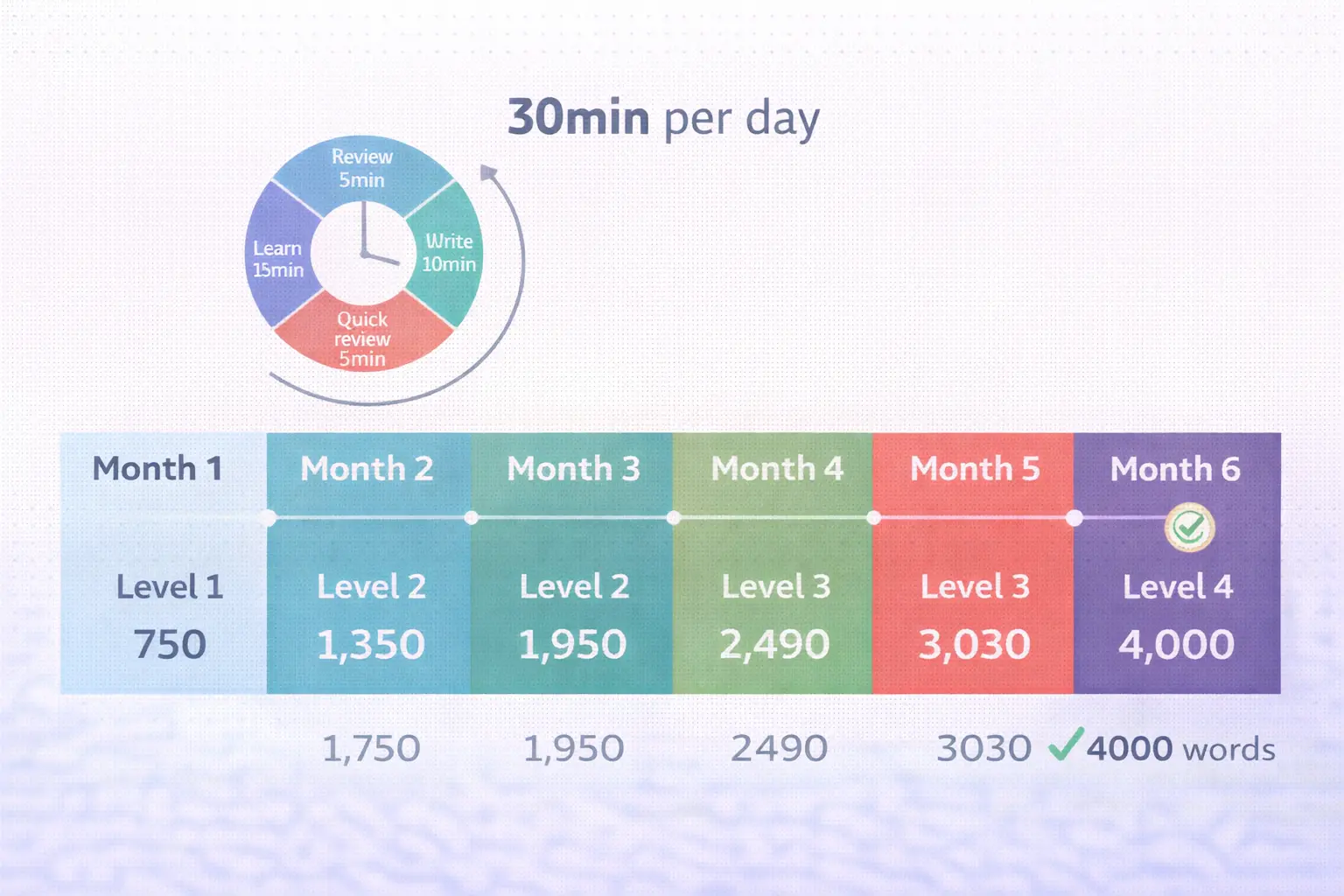
ゼロから4,000語を学ぶための現実的なスケジュールです。1日30〜45分の学習と、忘却を防ぐ間隔反復を前提としています。
| 月 | レベル | 1日の新語数 | 月の新語合計 | 累計 |
|---|---|---|---|---|
| 1ヶ月目 | レベル1(1〜1,000語) | 25 | 約750 | 750 |
| 2ヶ月目 | レベル1 → レベル2 | 20 | 約600 | 1,350 |
| 3ヶ月目 | レベル2(1,001〜2,000語) | 20 | 約600 | 1,950 |
| 4ヶ月目 | レベル3(2,001〜3,000語) | 18 | 約540 | 2,490 |
| 5ヶ月目 | レベル3 → レベル4 | 18 | 約540 | 3,030 |
| 6ヶ月目 | レベル4(3,001〜4,000語)+復習 | 18 | 約540 + 復習 | 約3,570 + 既存知識 |
なぜぴったり4,000語ではないのか? すでに多くのレベル1の単語を知っているからです(あいさつ、数字、色、曜日など)。大人の学習者のほとんどは、本格的に勉強を始める前に500〜1,000語は知っています。この計画はその穴を埋めるものです。
1日の学習ルーティン(30分)
| 時間 | 活動 |
|---|---|
| 5分 | 昨日の単語を間隔反復で復習(Linglifyのフラッシュカード) |
| 10分 | 18〜25語の新単語を学ぶ:単語・意味・例文を読む |
| 10分 | アクティブ練習:今日の新単語を使って5文書く |
| 5分 | 3日前と7日前の単語を素早く復習(間隔反復サイクル) |
週末の復習セッション(土曜または日曜、20分)
その週に学んだすべての単語を確認します。各単語について:意味を思い出せるか? 文で使えるか? をテスト。忘れた単語にはマークをつけて、翌週の日次復習に追加しましょう。
練習用ボキャブラリー
4つのレベルすべてから選んだ必須単語25語です。Linglifyの辞書に追加して間隔反復で練習を始めましょう。
finance
動詞
資金を調達する, 融資する
例
- Many students need loans to finance their college education expenses.
- The bank agreed to finance the construction of the new shopping center.
executive
形容詞
経営の, 役員の
例
- Executive decisions require careful consideration of multiple factors and consequences.
- The executive branch of government is responsible for implementing laws.
valid
形容詞
有効な, 妥当な, 正当な
例
- Valid argument supports logical reasoning and conclusion.
- Valid passport allows international travel without problems.
flexible
形容詞
柔軟な, 弾力のある
例
- Flexible working arrangements help employees balance work and family life.
- The flexible plastic tube can bend without breaking or cracking.
transmit
動詞
送る, 伝える, 伝送する
例
- Disease may transmit through contact with surfaces.
- Satellites transmit signals across vast distances effectively.
culmination
名詞
頂点, 最高潮
例
- The graduation ceremony was the culmination of four years of hard study.
- Winning the championship represented the culmination of the team's efforts.
gulp
動詞
飲み込む, ぐっと飲む
例
- She had to gulp nervously before giving her presentation to the board.
- The thirsty runner gulped down an entire bottle of cold water.
tribe
名詞
部族
例
- Ancient tribe lived in harmony with nature.
- Indigenous tribe preserves traditional customs and languages.
cherished
形容詞
大切にされた, 愛された, 宝物の
例
- His cherished dream of becoming a pilot finally came true.
- The old photograph was her most cherished possession from childhood.
fate
名詞
運命, 宿命
例
- She believes that fate brought them together at the right moment.
- The explorer's fate remained unknown after he disappeared in the jungle.
territory
名詞
領土, 地域, 土地
例
- Animal territory provides food and shelter resources.
- National territory requires protection from foreign invasion.
payable
形容詞
支払われるべき, 支払可能な, 支払い義務のある
例
- All dues are payable at the end of the month.
- The invoice is payable within 30 days.
serenity
名詞
平静, 静けさ, 落ち着き
例
- She maintained her serenity despite the chaos.
- The serenity of the lake was calming.
classy
形容詞
上品な, 洗練された
例
- Classy restaurant serves gourmet food in elegant dining atmosphere.
- Her classy appearance impressed everyone at formal business meeting.
revolt
動詞
反乱, 蜂起, 叛乱
例
- A revolt broke out in the city center last night.
- The workers decided to revolt against the unfair conditions.
rethink
動詞
再考する, 見直す, 再検討する
例
- He decided to rethink his position on the issue.
- We need to rethink our strategy for the project.
gypsy
名詞
ジプシー, ロマ
例
- Traditional gypsy music features violin and passionate vocals.
- Wandering gypsy caravan traveled through European countryside.
buffoon
名詞
お笑い芸人, 道化, ばか
例
- Court buffoon entertained royal family with silly performances.
- Don't act like buffoon during important business presentation.
execution
名詞
実行, 処刑, 執行
例
- Perfect execution of the dance routine impressed judges and audience members.
- The execution of the business plan requires careful coordination and timing.
spellbound
形容詞
魅了された, 夢中の, 心を奪われた
例
- Audience sits spellbound during magical performance tonight.
- Children remain spellbound by storyteller's fascinating tales.
pet
形容詞
ペットの
例
- Pet project receives extra attention and resources.
- Pet theory explains professor's research focus area.
master
名詞
師匠, マスター
例
- Apprentices learn traditional crafts from experienced master craftsmen.
- The chess master defeated opponents using brilliant strategic moves.
salvage
名詞
救助, 回収
例
- Antique dealer specializes in salvage from demolished buildings.
- Divers recovered valuable salvage from sunken merchant ship.
4,000語学習でよくある間違い
1. 一度に多すぎる単語を学ぼうとする。 1日50語は生産的に見えますが、復習なしでは1週間で80%を忘れます。毎日の間隔反復付き18〜25語のほうが、復習なしの50語に勝ります。
2. 文脈なしで単語を覚える。 「allocate = distribute」と暗記するだけでは不十分。「allocate」が「budget」「resources」「funds」「time」と結びつくことを知る必要があります。必ず例文から学びましょう。
3. レベルを飛ばす。 レベル3・4の単語のほうが印象的ですが、レベル1・2に穴があると全体的な理解度は低いままです。頻出語の確実な土台のほうが、上級単語をいくつか知っていることより重要です。
4. 受容的知識だけで終わる。 読んで認識できることと、スピーチやライティングで使えることは別物です。受容的に5語覚えるごとに、少なくとも2語は能動的に使う練習を — 自分で文を書くか話すかして。
5. 復習をしない。 忘却曲線は急です:復習なしでは新しい単語の50%を24時間以内に、80%を1週間以内に忘れます。間隔反復はオプションではなく、学習システム全体の核心です。
次のステップ
-
適切なレベルから始める。 すでに1,000語以上知っていればレベル2から。IELTS対策ならレベル3・4に集中 — バンド6からバンド7以上への飛躍を支える単語です。レベル別のボキャブラリーライブラリはこちら:
-
学習システムを構築する。 語彙学習のステップバイステップガイドで、間隔反復を取り入れた毎日のルーティンを設定しましょう。
-
文ごと覚える。 単語は文の中で覚えるともっと使えるようになります。日常で使える簡単な英語の文で200以上のすぐ使えるフレーズを学びましょう。
-
実証済みの記憶術を活用する。 語彙力を向上させる方法で、間隔反復・文脈学習・キーワード法など研究で裏付けされた10の方法を学びましょう。
-
試験に備える。 IELTS対策なら、IELTS語彙完全ガイドで単語をバンドスコア別に整理しています。最新の一般語彙は2026年の新しい英単語をチェック。
よくある質問
英語の4,000語は無料で学べる?
はい。単語リスト自体は広く公開されています。General Service List(GSL)やAcademic Word List(AWL)のような頻度順リストは無料でよく研究されています。リストよりも重要なのは学習法です:間隔反復、文脈での学習、能動的な使用。Linglifyは間隔反復を組み込んだ無料の語彙練習を提供しています。このガイドは、どんな4,000語リストでも効果的に学ぶための構造を示しています。
4,000語を覚えるのにどのくらいかかる?
1日20語の新語ペースで毎日復習すれば、5〜6ヶ月で4,000語を学べます。1日30語以上のペースが速い学習者なら4ヶ月で完了可能です。鍵はスピードではなく継続性です。6ヶ月間毎日20語は、空白期間ありの週100語に勝ります。
「4000 Essential English Words」とAcademic Word Listの違いは?
「4000 Essential English Words」シリーズ(Paul Nation著、Compass Publishing刊)はすべてのトピックにわたる一般的な高頻度語をカバーしています。Academic Word List(AWL)は大学レベルのテキストに頻出する570の語族の別リストです。約30%が重複しています。IELTS Academicや大学での学習を目指すなら、両方学びましょう。
4,000語はIELTSバンド7に十分?
4,000語族で強固なB2レベルの語彙力が身につき、多くの受験者にとってIELTSバンド6〜6.5に相当します。バンド7には5,000〜6,000語族に加え、学術語彙の強力なアクティブコマンドが必要です。4,000語のベースを超える具体的な単語はIELTS バンド7 語彙ガイドをご覧ください。
単語はアルファベット順と頻度順、どちらで学ぶべき?
頻度順 — 常に。アルファベット順では「aardvark」が「about」より先に来ますが、「about」は英語で最もよく使う単語の一つで、「aardvark」はほぼ使いません。頻度順学習なら、学ぶすべての単語が実生活で最大限役立ちます。このガイドのレベル別構成は頻度順に従っています。
4,000語を学ぶのに最適なアプリは?
間隔反復を使い、単語を文脈(例文付き)で学べるアプリが最適です。単語と定義のペアだけでは不十分。Linglifyは両方を組み合わせています:個人辞書に単語を保存し、実際の文で確認し、間隔反復スケジュールで復習できます。