日常英語で最も使われる句動詞50選:意味と例文付き
英語には10,000以上の句動詞の組み合わせがありますが、そのすべてを覚える必要はありません。たった50の句動詞で、ネイティブスピーカーが日常会話で使うフレーズの大半をカバーできます。この50個を身につければ、映画、ポッドキャスト、職場での会話、カジュアルなメッセージに出てくる句動詞のほとんどが理解できるようになります。
この記事では、基本動詞ごとに整理しています — GET、TAKE、GO、PUT、TURN、LOOKなど。句動詞は「動詞ファミリー」でまとめて覚えると記憶に残りやすいからです。各項目には意味と、実際の日常会話から取った2つの例文を載せています。
- 句動詞の数: 50
- レベル: A2〜B2(初級〜中上級)
- こんな人に最適: 日常会話、IELTSスピーキング、全般的な流暢さの向上
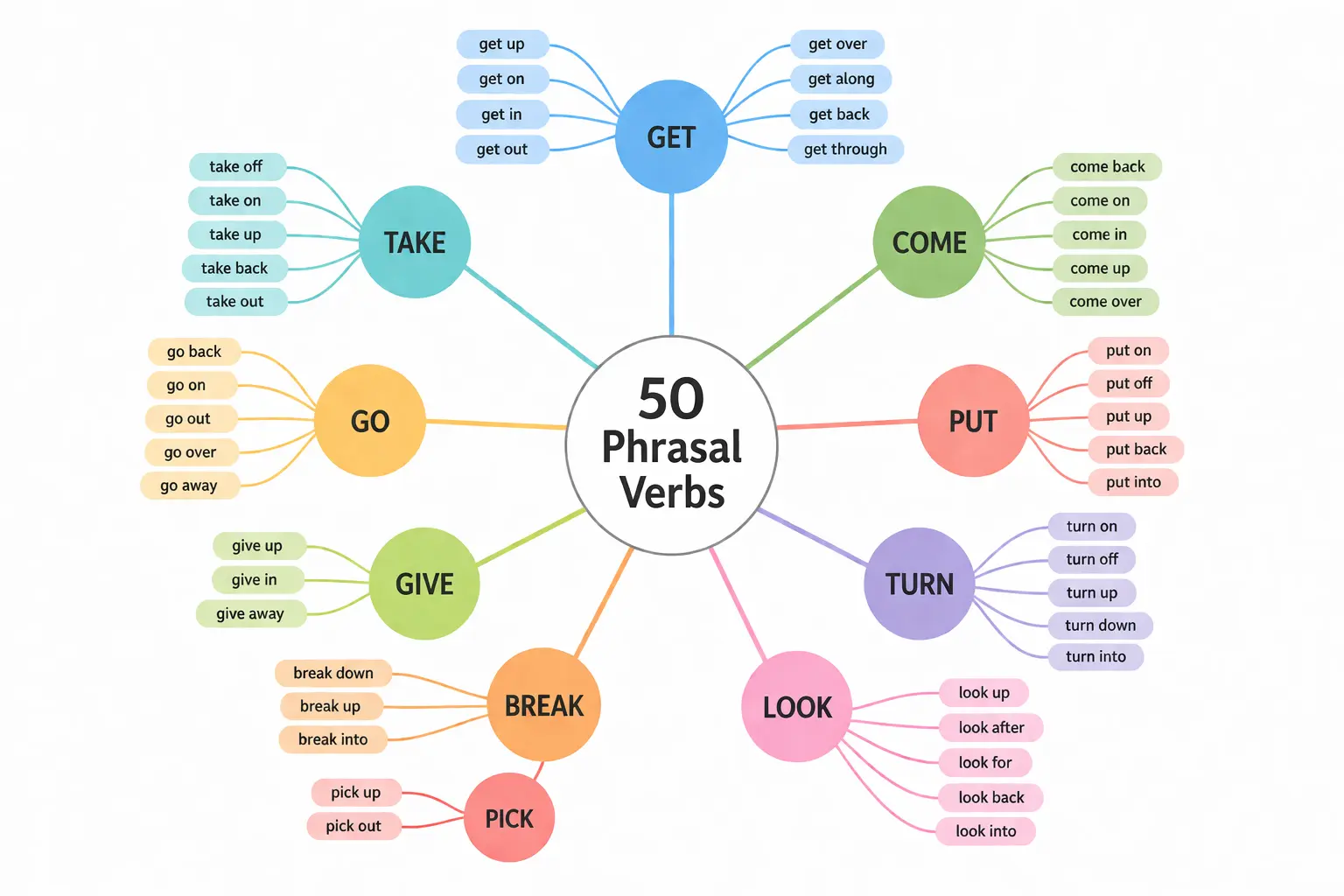
- 整理方法: 基本動詞別(10の動詞ファミリー)
なぜ基本動詞別に学ぶのか?
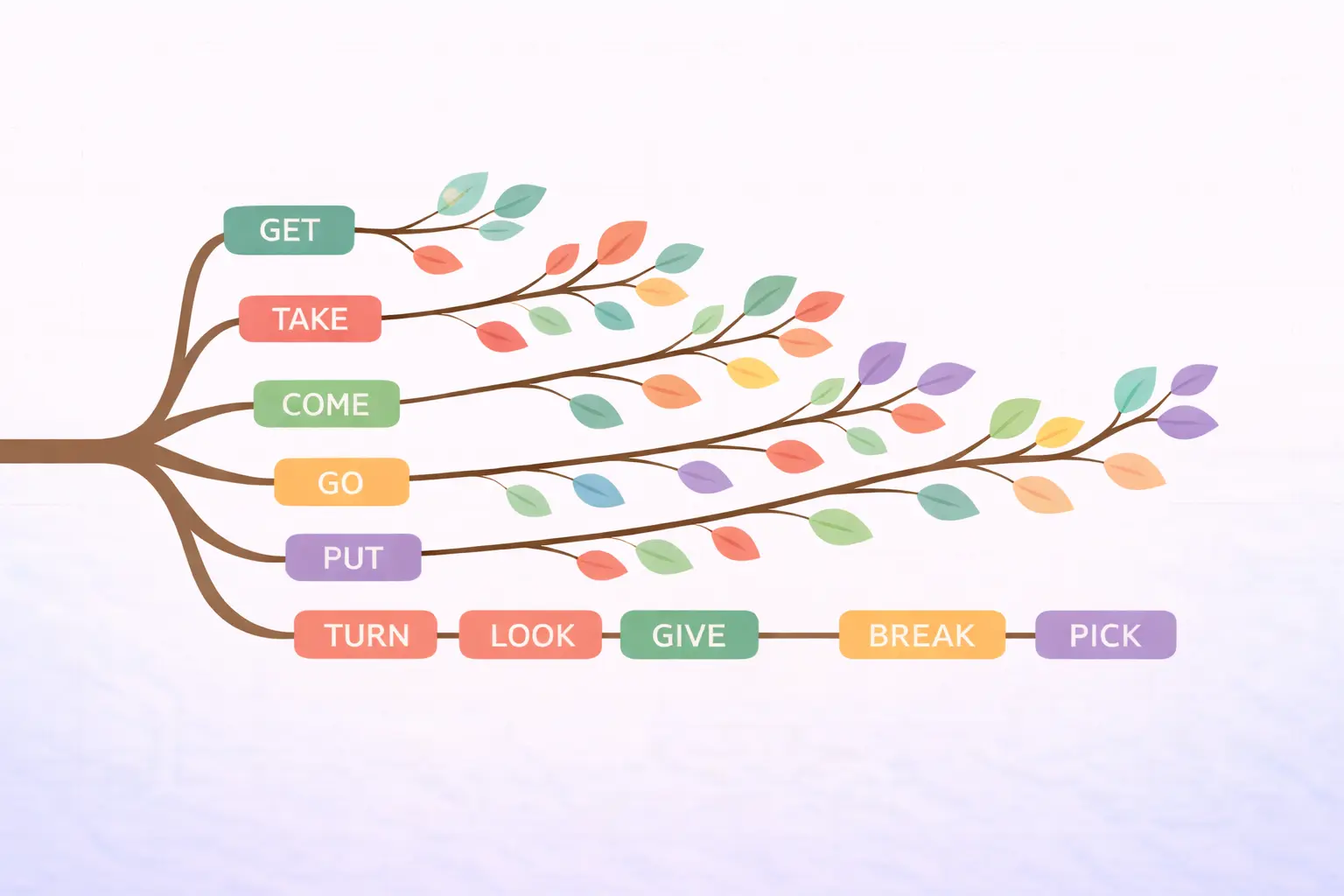
多くの句動詞リストは、100個の動詞をランダムに表に並べているだけです。それでは覚えにくい。基本動詞でグループ化すると、パターンが見えてきます:
- GET = 移動、状態の変化、入手
- TAKE = 取り除く、受け入れる、始める
- GO = 移動する、続ける、変わる
- PUT = 置く、耐える、延期する
- TURN = 方向や状態を変える
「get up」「get on」「get off」「get over」をまとめて覚えれば、アルファベット順でバラバラに学ぶよりずっと速く身につきます。脳が同じ語幹に結びつけるので、新しい句動詞がどんどん覚えやすくなります。
GET — 最も万能な動詞
GETは、英語のどの動詞よりも多くの句動詞を生み出します。この8つはほぼすべての会話に登場します。
| # | 句動詞 | 意味 | 例文 |
|---|---|---|---|
| 1 | get up | 起きる;立ち上がる | I get up at 6:30 every morning for work.(毎朝6:30に起きて仕事に行く。)/ She got up from her chair and walked to the window.(彼女は椅子から立ち上がり、窓の方へ歩いた。) |
| 2 | get on | 乗り物に乗る;(人と)うまくやる | We got on the bus just as it was about to leave.(出発直前にバスに乗った。)/ How do you get on with your new neighbours?(新しいご近所とはうまくやっていますか?) |
| 3 | get off | 乗り物を降りる;仕事が終わる | Get off at the third stop — the library is right there.(3つ目の停留所で降りて——図書館はすぐそこです。)/ What time do you get off work today?(今日は何時に仕事が終わりますか?) |
| 4 | get along with | 仲良くやっていく | She gets along with everyone in the office.(彼女はオフィスの全員と仲が良い。)/ My cat does not get along with the new dog.(うちの猫は新しい犬と仲良くできない。) |
| 5 | get over | (病気・ショックなどから)回復する | It took him weeks to get over the flu.(インフルエンザから回復するのに数週間かかった。)/ She finally got over the shock of losing her job.(彼女はようやく失業のショックから立ち直った。) |
| 6 | get back | 戻る;取り戻す | What time did you get back from the trip?(旅行から何時に戻りましたか?)/ I lent him my book a month ago and still have not got it back.(1ヶ月前に本を貸したが、まだ返ってこない。) |
| 7 | get into | 中に入る;興味を持ち始める | He got into the car without saying a word.(彼は一言も言わず車に乗り込んだ。)/ She got into photography during the lockdown.(ロックダウン中に写真に興味を持ち始めた。) |
| 8 | get rid of | 処分する、取り除く | We need to get rid of this old sofa — it is falling apart.(この古いソファを処分しないと——ボロボロだ。)/ I finally got rid of those annoying pop-up ads on my phone.(やっとスマホの迷惑なポップアップ広告を消した。) |
注目パターン: GETはほとんどの場合「変化」を意味します — 位置の変化(get up, get on, get off)、状態の変化(get over, get into)、所有の変化(get back, get rid of)。
TAKE — 取り除く、受け入れる、始める
TAKEの句動詞は、何かを取り除く・責任を引き受ける・活動を始めることに関連します。
| # | 句動詞 | 意味 | 例文 |
|---|---|---|---|
| 9 | take off | 衣服を脱ぐ;(飛行機が)離陸する;急に成功する | Take off your jacket — it is warm inside.(ジャケットを脱いで——中は暖かいよ。)/ The plane took off 20 minutes late because of the weather.(天候のせいで飛行機は20分遅れて離陸した。) |
| 10 | take on | 仕事・責任を引き受ける;雇う | She took on the project even though she was already busy.(忙しいのにそのプロジェクトを引き受けた。)/ The company is taking on 50 new employees this quarter.(会社は今四半期に50人の新入社員を採用する。) |
| 11 | take up | 新しい趣味・活動を始める;場所や時間を占める | He took up running last year and has already done a marathon.(去年ランニングを始めて、もうマラソンを走った。)/ This table takes up too much space in the kitchen.(このテーブルはキッチンで場所を取りすぎる。) |
| 12 | take care of | 世話をする;処理する | Can you take care of the kids while I go to the dentist?(歯医者に行く間、子供たちの面倒を見てくれる?)/ Do not worry about the invoice — I will take care of it.(請求書のことは心配しないで——私が対応するよ。) |
| 13 | take out | 中から取り出す;レストランなどに連れて行く | He took out his wallet and paid for the meal.(財布を取り出して食事代を払った。)/ I am taking my parents out for dinner on their anniversary.(両親の記念日にディナーに連れて行く。) |
注目パターン: TAKEは「ある場所・状態から取り除く」ことを意味することが多い。服を脱ぐ(take off)、財布を出す(take out)、仕事を引き受ける(take on = 他の人の山から取り除く)。
COME — 到着する、起こる、発見する
COMEの句動詞は、到着・発生・予想外の発見を表します。
| # | 句動詞 | 意味 | 例文 |
|---|---|---|---|
| 14 | come back | 戻る | She went to Australia for a year but came back because she missed her family.(1年間オーストラリアに行ったが、家族が恋しくて戻ってきた。)/ When are you coming back from lunch?(ランチからいつ戻る?) |
| 15 | come in | 部屋や建物に入る | Come in and sit down — the meeting is about to start.(入って座って——会議が始まるよ。)/ The door was open, so I just came in.(ドアが開いていたので入った。) |
| 16 | come up | 話題に上がる;生じる | Something urgent came up at work, so I will be late.(仕事で急用ができて遅くなる。)/ Your name came up in the conversation.(会話であなたの名前が出た。) |
| 17 | come up with | アイデア・計画・解決策を思いつく | She came up with a creative solution to the problem.(彼女は創造的な解決策を思いついた。)/ We need to come up with a name for the new product.(新商品の名前を考えないと。) |
| 18 | come across | 偶然見つける;〜な印象を与える | I came across your article while researching online.(ネットで調べている時にあなたの記事を見つけた。)/ He comes across as confident, but he is actually quite shy.(自信があるように見えるが、実はかなり内気だ。) |
注目パターン: COMEは「話し手に向かう、あるいは結果に向かう動き」を表します。come back(戻る)、come up(注意に上がる)、come across(自分の道に現れる)。
GO — 移動する、続ける、変わる
GOの句動詞は、離れる動き・継続・変化を表します。
| # | 句動詞 | 意味 | 例文 |
|---|---|---|---|
| 19 | go on | 続ける;起こる | Please go on — I did not mean to interrupt you.(続けてください——邪魔するつもりはなかった。)/ What is going on here? Why is everyone shouting?(何が起きてるの?なぜみんな叫んでいる?) |
| 20 | go out | 外出する;(火などが)消える | We go out for dinner every Friday night.(毎週金曜の夜は外食する。)/ The candle went out because of the wind.(風でろうそくが消えた。) |
| 21 | go ahead | 進める;始める | Go ahead and start without me — I will catch up.(先に始めて——後から追いつくから。)/ The concert will go ahead despite the rain.(雨でもコンサートは予定通り行われる。) |
| 22 | go back | 戻る;以前の状態に戻る | I left my phone at the office and had to go back for it.(オフィスにスマホを忘れて取りに戻った。)/ Once you send the email, you cannot go back and change it.(メールを送信したら、戻って変更することはできない。) |
| 23 | go through | つらい経験をする;注意深く調べる | She went through a very tough period after the divorce.(離婚後、非常につらい時期を過ごした。)/ The lawyer went through every clause in the contract.(弁護士は契約書のすべての条項を確認した。) |
注目パターン: GOは「現在の位置から離れる動き」を表します。go out(出る)、go back(元の場所に戻る)、go through(困難な経験を通り抜ける)。
PUT — 置く、延期する、耐える
PUTの句動詞は、物を置くこと・延期すること・状況に対処することに関連します。
| # | 句動詞 | 意味 | 例文 |
|---|---|---|---|
| 24 | put on | 着る;(音楽・番組を)かける | Put on a warm coat — it is freezing outside.(暖かいコートを着て——外は凍えるよ。)/ She put on some music to help her concentrate.(集中するために音楽をかけた。) |
| 25 | put off | 延期する;やる気をなくさせる | Do not put off the dentist appointment again — you need to go.(歯医者の予約をまた延期しないで——行かないと。)/ The long commute put me off taking the job.(通勤時間の長さでその仕事を受ける気がなくなった。) |
| 26 | put up with | 不快なことに耐える | I cannot put up with his constant complaining anymore.(彼の絶え間ない不満にはもう耐えられない。)/ How do you put up with the noise from the construction site?(工事現場の騒音にどうやって耐えているの?) |
| 27 | put away | 元の場所に戻す・片付ける | Please put away the dishes after you dry them.(乾いたら食器を片付けてね。)/ The kids need to put away their toys before bedtime.(寝る前におもちゃを片付けなさい。) |
| 28 | put down | 表面に置く;けなす | He put down his phone and looked at me.(スマホを置いて私を見た。)/ Stop putting yourself down — your work is excellent.(自分を卑下するのはやめて——あなたの仕事は素晴らしいよ。) |
注目パターン: PUTは「何かをどこかに置く」ことを意味します — 文字通り(put on = 服を着る、put away = 片付ける、put down = 置く)にも、比喩的(put off = 未来に置く、put up with = 不快なものの下に身を置く)にも使われます。
TURN — 方向や状態を変える
TURNの句動詞は、切り替え・変化・変容を表します。
| # | 句動詞 | 意味 | 例文 |
|---|---|---|---|
| 29 | turn on | (機器を)つける | Turn on the air conditioning — it is too hot in here.(エアコンをつけて——暑すぎる。)/ She turned on the laptop and checked her emails.(ノートパソコンをつけてメールを確認した。) |
| 30 | turn off | (機器を)消す;道を曲がる | Please turn off the lights when you leave the room.(部屋を出るときは電気を消してね。)/ Turn off at the next exit to reach the hotel.(ホテルへは次の出口で降りて。) |
| 31 | turn out | 結果的に〜になる;〜だとわかる | The party turned out to be much more fun than I expected.(パーティーは思ったよりずっと楽しかった。)/ It turned out that he had been lying the whole time.(彼がずっと嘘をついていたことがわかった。) |
| 32 | turn up | (突然)現れる;音量を上げる | She turned up at the party without telling anyone.(誰にも言わずにパーティーに現れた。)/ Can you turn up the volume? I cannot hear the news.(音量を上げてくれる?ニュースが聞こえない。) |
| 33 | turn down | 断る;音量を下げる | She turned down the job offer because the salary was too low.(給料が低すぎるのでその求人を断った。)/ Turn down the music — the baby is sleeping.(音楽の音量を下げて——赤ちゃんが寝てる。) |
注目パターン: TURNは常に「状態の変化」を含みます。ON/OFF = 動作状態。UP/DOWN = レベル。OUT = 最終的な状態。DOWN(断る)= 提供されたものから離れる。
LOOK — 探す、見守る、期待する
LOOKの句動詞は、見る・探す・注意を向けることに関連します。
| # | 句動詞 | 意味 | 例文 |
|---|---|---|---|
| 34 | look for | 〜を探す | I am looking for my car keys — have you seen them?(車の鍵を探しているんだけど——見た?)/ She has been looking for a new apartment for three months.(3ヶ月間新しいアパートを探している。) |
| 35 | look after | 世話をする | My mother looks after the children when I am at work.(仕事中は母が子供の面倒を見ている。)/ You need to look after your health — you have been working too hard.(健康に気をつけて——働きすぎだよ。) |
| 36 | look up | 情報を調べる;良くなる | Look up the word in a dictionary if you do not know it.(知らない単語は辞書で調べて。)/ Business has been looking up since the new manager arrived.(新しいマネージャーが来てから業績が上向いている。) |
| 37 | look forward to | 〜を楽しみにする | I am looking forward to the weekend.(週末が楽しみだ。)/ We look forward to meeting you at the interview.(面接でお会いできることを楽しみにしています。) |
| 38 | look out | 気をつける;危険に注意する | Look out! There is a step right in front of you.(気をつけて!目の前に段差がある。)/ Look out for pickpockets in crowded tourist areas.(混雑した観光地ではスリに注意して。) |
注目パターン: LOOKは常に「注意を向ける」ことを意味します。FOR = 欲しいものに向かって。AFTER = あなたを必要とする人に向かって。UP = 情報源に向かって。FORWARD TO = 未来に向かって。OUT = 潜在的な危険に向かって。
GIVE — やめる、返す、配る
| # | 句動詞 | 意味 | 例文 |
|---|---|---|---|
| 39 | give up | 諦める;やめる | She gave up smoking three years ago.(3年前にタバコをやめた。)/ The puzzle is impossible — I give up.(このパズルは無理だ——諦める。) |
| 40 | give back | 返す | Can you give back the tools you borrowed last week?(先週借りた工具を返してくれる?)/ The charity works to give back to the community.(その慈善団体は地域社会に還元する活動をしている。) |
| 41 | give away | 寄付する;秘密をばらす | We gave away our old furniture when we moved.(引っ越しの時に古い家具を寄付した。)/ Do not give away the ending of the movie!(映画の結末をばらさないで!) |
BREAK — 終わる、壊れる、入る
| # | 句動詞 | 意味 | 例文 |
|---|---|---|---|
| 42 | break up | 別れる;電波が途切れる | They broke up after dating for two years.(2年間付き合った後に別れた。)/ You are breaking up — I will call you back on a better connection.(電波が悪いよ——いい接続で掛け直すね。) |
| 43 | break down | 故障する;感情が崩れる | The car broke down in the middle of the highway.(高速道路の真ん中で車が故障した。)/ She broke down in tears when she heard the news.(その知らせを聞いて泣き崩れた。) |
| 44 | break into | 押し入る;急に始める | Someone broke into the house while they were on holiday.(休暇中に誰かが家に押し入った。)/ He broke into a run when he saw the bus leaving.(バスが出るのを見て走り出した。) |
PICK — 選ぶ、拾う、覚える
| # | 句動詞 | 意味 | 例文 |
|---|---|---|---|
| 45 | pick up | 迎えに行く;自然に覚える;良くなる | I will pick you up at the station at 5 PM.(5時に駅に迎えに行くよ。)/ She picked up some Spanish while living in Barcelona.(バルセロナに住んでいる間にスペイン語を少し覚えた。) |
| 46 | pick out | 選ぶ;見分ける | She picked out a dress for the wedding.(結婚式のドレスを選んだ。)/ Can you pick out the best candidate from these CVs?(これらの履歴書から一番良い候補者を選べる?) |
SET と BRING — 始める、紹介する
| # | 句動詞 | 意味 | 例文 |
|---|---|---|---|
| 47 | set up | 準備する;設立する | He set up his own business after leaving the bank.(銀行を辞めて自分のビジネスを立ち上げた。)/ Can you help me set up the projector for the presentation?(プレゼン用にプロジェクターを準備するのを手伝ってくれる?) |
| 48 | set off | 出発する;(アラームなどを)作動させる | We set off early to avoid the morning traffic.(朝の渋滞を避けるために早く出発した。)/ The alarm was set off by a cat walking past the sensor.(猫がセンサーの前を通ってアラームが鳴った。) |
| 49 | bring up | 話題にする;育てる | He brought up the salary issue during the meeting.(彼は会議で給料の問題を持ち出した。)/ She was brought up in a small village in the south of France.(フランス南部の小さな村で育った。) |
| 50 | bring back | 返す;思い出させる | Please bring back the library books before Friday.(金曜日までに図書館の本を返してね。)/ This song brings back memories of my school days.(この曲を聞くと学生時代を思い出す。) |
クイックリファレンス:50句動詞の一覧
| 基本動詞 | 句動詞 | 数 |
|---|---|---|
| GET | get up, get on, get off, get along with, get over, get back, get into, get rid of | 8 |
| TAKE | take off, take on, take up, take care of, take out | 5 |
| COME | come back, come in, come up, come up with, come across | 5 |
| GO | go on, go out, go ahead, go back, go through | 5 |
| PUT | put on, put off, put up with, put away, put down | 5 |
| TURN | turn on, turn off, turn out, turn up, turn down | 5 |
| LOOK | look for, look after, look up, look forward to, look out | 5 |
| GIVE | give up, give back, give away | 3 |
| BREAK | break up, break down, break into | 3 |
| PICK | pick up, pick out | 2 |
| SET | set up, set off | 2 |
| BRING | bring up, bring back | 2 |
| 合計 | 50 |
練習用ボキャブラリー
以下の25語は、句動詞とセットでよく使われる単語です。Linglifyの辞書に追加して、間隔反復で練習しましょう。
finance
動詞
資金を調達する, 融資する
例
- Many students need loans to finance their college education expenses.
- The bank agreed to finance the construction of the new shopping center.
executive
形容詞
経営の, 役員の
例
- Executive decisions require careful consideration of multiple factors and consequences.
- The executive branch of government is responsible for implementing laws.
valid
形容詞
有効な, 妥当な, 正当な
例
- Valid argument supports logical reasoning and conclusion.
- Valid passport allows international travel without problems.
culmination
名詞
頂点, 最高潮
例
- The graduation ceremony was the culmination of four years of hard study.
- Winning the championship represented the culmination of the team's efforts.
transmit
動詞
送る, 伝える, 伝送する
例
- Disease may transmit through contact with surfaces.
- Satellites transmit signals across vast distances effectively.
gulp
動詞
飲み込む, ぐっと飲む
例
- She had to gulp nervously before giving her presentation to the board.
- The thirsty runner gulped down an entire bottle of cold water.
cherished
形容詞
大切にされた, 愛された, 宝物の
例
- His cherished dream of becoming a pilot finally came true.
- The old photograph was her most cherished possession from childhood.
fate
名詞
運命, 宿命
例
- She believes that fate brought them together at the right moment.
- The explorer's fate remained unknown after he disappeared in the jungle.
spellbound
形容詞
魅了された, 夢中の, 心を奪われた
例
- Audience sits spellbound during magical performance tonight.
- Children remain spellbound by storyteller's fascinating tales.
pet
形容詞
ペットの
例
- Pet project receives extra attention and resources.
- Pet theory explains professor's research focus area.
master
名詞
師匠, マスター
例
- Apprentices learn traditional crafts from experienced master craftsmen.
- The chess master defeated opponents using brilliant strategic moves.
payable
形容詞
支払われるべき, 支払可能な, 支払い義務のある
例
- All dues are payable at the end of the month.
- The invoice is payable within 30 days.
serenity
名詞
平静, 静けさ, 落ち着き
例
- She maintained her serenity despite the chaos.
- The serenity of the lake was calming.
classy
形容詞
上品な, 洗練された
例
- Classy restaurant serves gourmet food in elegant dining atmosphere.
- Her classy appearance impressed everyone at formal business meeting.
revolt
動詞
反乱, 蜂起, 叛乱
例
- A revolt broke out in the city center last night.
- The workers decided to revolt against the unfair conditions.
rethink
動詞
再考する, 見直す, 再検討する
例
- He decided to rethink his position on the issue.
- We need to rethink our strategy for the project.
gypsy
名詞
ジプシー, ロマ
例
- Traditional gypsy music features violin and passionate vocals.
- Wandering gypsy caravan traveled through European countryside.
buffoon
名詞
お笑い芸人, 道化, ばか
例
- Court buffoon entertained royal family with silly performances.
- Don't act like buffoon during important business presentation.
execution
名詞
実行, 処刑, 執行
例
- Perfect execution of the dance routine impressed judges and audience members.
- The execution of the business plan requires careful coordination and timing.
territory
名詞
領土, 地域, 土地
例
- Animal territory provides food and shelter resources.
- National territory requires protection from foreign invasion.
tribe
名詞
部族
例
- Ancient tribe lived in harmony with nature.
- Indigenous tribe preserves traditional customs and languages.
resolve
動詞
解決する, 決意する
例
- Mediator helps parties resolve dispute through negotiation.
- Technical team will resolve software problems quickly.
flexible
形容詞
柔軟な, 弾力のある
例
- Flexible working arrangements help employees balance work and family life.
- The flexible plastic tube can bend without breaking or cracking.
この50の句動詞の学習方法
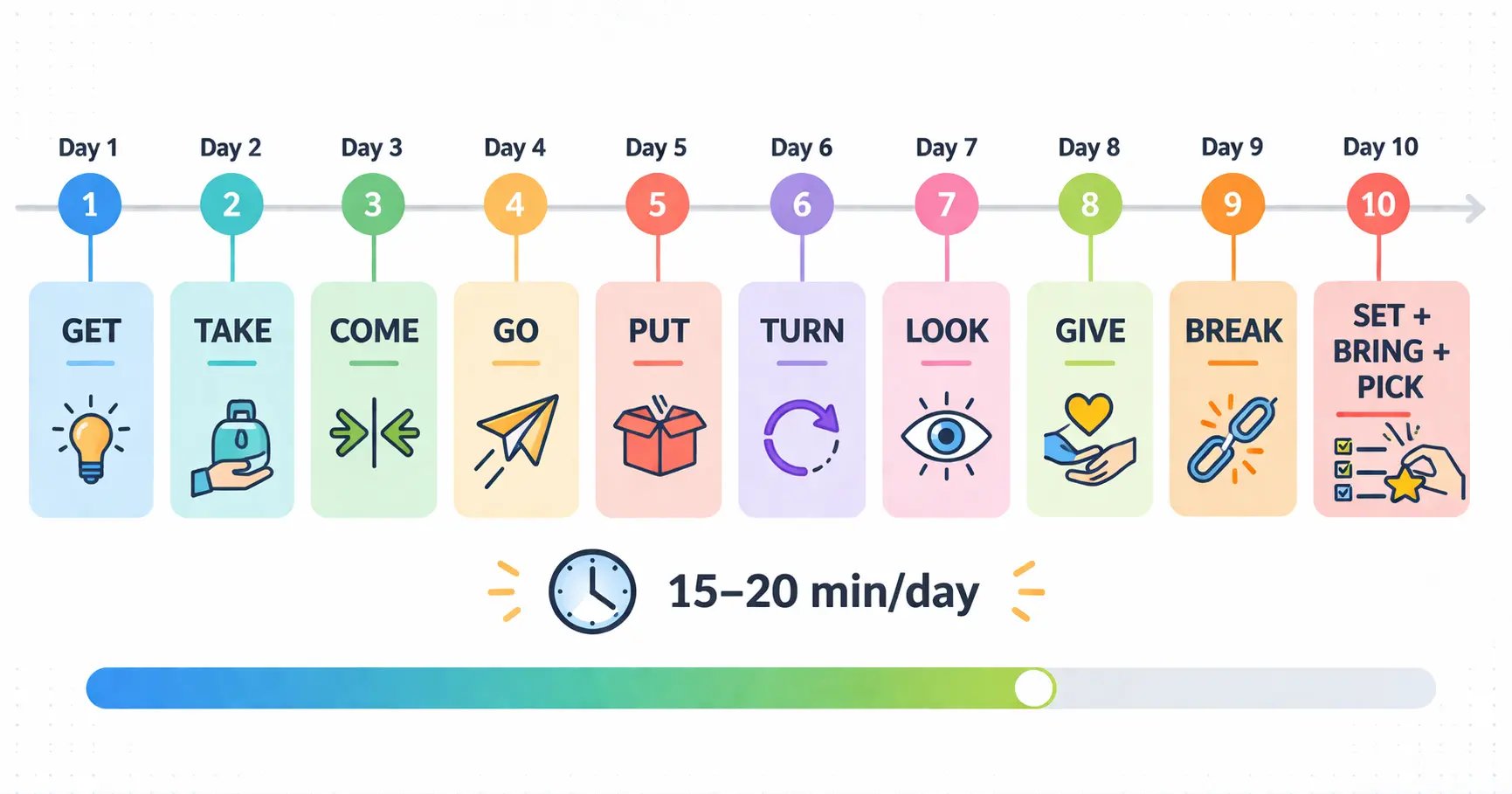
1. 1日1つの動詞ファミリーを学ぶ。 月曜日はGET。火曜日はTAKE。水曜日はCOME。10日間で50個すべてをカバーできます。1ファミリーあたり15〜20分。
2. 自分の生活について文を書く。 例文を読むだけでなく、自分で書いてみましょう。「今朝7時に起きた(I got up at 7 today)」「古いスマホを処分しないと(I need to get rid of my old phone)」。自分に関する文は、教科書の例文より記憶に残ります。
3. 「置き換えてアップグレード」法を使う。 1日だけ、普段の基本動詞を句動詞に置き換えてみましょう。「I started running(走り始めた)」の代わりに「I took up running」。「I returned(戻った)」の代わりに「I came back」。意識的な置き換えが習慣を作ります。
4. 字幕付きの英語コンテンツを見る。 テレビ番組やYouTubeチャンネルを選び、1エピソードでこの50の句動詞をいくつ聞き取れるか数えてみましょう。ほとんどのエピソードには15〜20個が含まれています。
5. 基本動詞でセルフテスト。 意味の列を隠して、各句動詞の意味を思い出してみましょう。次に句動詞の列を隠して、意味から句動詞を作ってみましょう。両方向の練習がより強い記憶を作ります。
語彙学習の体系的な方法については、英語の語彙力を向上させる方法をお読みください。
次のステップ
-
100に拡大。 この50に慣れたら、トピック別に整理された100の句動詞(意味と例文付き)で必須リストを完成させましょう。
-
特定の動詞を深掘り。 MAKEを使った全句動詞の詳細な解説(「make up」だけで5つ以上の意味!)は、MAKEの句動詞ガイドをご覧ください。
-
上級レベルへ。 学術英語やビジネス英語で使われるC1〜C2レベルの句動詞は、上級句動詞ガイドをお読みください。
-
仕事で活用。 会議、メール、ビジネスコミュニケーションに特化した句動詞は、ビジネス句動詞ガイドをチェックしてください。
-
毎日の学習習慣を作る。 語彙学習の体系的システムに従って、2週間でこの50個を使えるボキャブラリーにしましょう。
よくある質問
英語で最もよく使われる句動詞トップ10は?
頻度データに基づくと、トップ10は get up、go on、come back、find out、give up、turn out、pick up、look for、take off、go out です。これらは話し言葉の英語で100万語あたり数千回出現します。10個だけ覚えるなら、この10個にしましょう。
この記事のリストと100の句動詞リストの違いは?
この記事は50の句動詞を基本動詞別(GET, TAKE, COMEなど)に整理し、各ファミリーに2つの例文とパターン解説を付けています。100の句動詞リストはトピック別(日常生活、仕事、旅行、感情)に整理し、各1例文で倍の数をカバーしています。パターンを学ぶならこの記事を、リファレンスとして使うなら100リストを活用してください。
50の句動詞を覚えるのにどのくらいかかる?
集中的に毎日学習すれば、2〜3週間で覚えられます。1日1つの動詞ファミリー(15〜20分)を学び、新しいファミリーに進む前に前日分を復習します。10日間の学習後、さらに1週間はライティングやスピーキングで積極的に使う練習をしましょう。
これらの句動詞はイギリス英語とアメリカ英語で同じ?
はい。この50の句動詞はイギリス英語でもアメリカ英語でも使われます。わずかな好みの違いはあります — アメリカ人は「get rid of」をイギリス人より多く使い、イギリス人は「dispose of」も使う傾向がありますが、50個すべてが両方の英語で広く理解され使用されています。
これらの句動詞をIELTSのライティングで使える?
一部はIELTSライティングに適しています:「carry out」「go through」「come up with」「set up」はエッセイで効果的です。「hang out」や「get rid of」はスピーキング向きです。IELTS特有の句動詞アドバイスは、IELTS語彙完全ガイドをご覧ください。
なぜ句動詞はそんなに覚えにくいの?
3つの理由があります:(1) 意味が単語の組み合わせから予測しにくい — 「put up with」が「耐える」を意味するのは論理的ではない。(2) 多くの句動詞に複数の意味がある — 「take off」は「服を脱ぐ」「離陸する」「急に成功する」の意味がある。(3) 文法が厄介 — 分離可能なもの(「turn the light off」)と不可能なもの(「look after the kids」であって「look the kids after」ではない)がある。この記事の基本動詞別の整理は、理由(1)のパターン認識に役立ちます。