英語の反対語500選:A〜Z対義語リスト(意味と例文付き)
ある単語の反対語を知れば、語彙力は倍になります。「brave」を覚えるとき、同時に「cowardly」も覚えれば、1つではなく2つの単語が手に入ります。さらに、意味のメンタルマップが構築され、両方の単語の定着率が高まります。これは理論だけの話ではありません。研究によると、単語をペア(同義語・対義語をセット)で学ぶと、個別に覚える場合と比べて記憶定着率が30〜40%向上します。
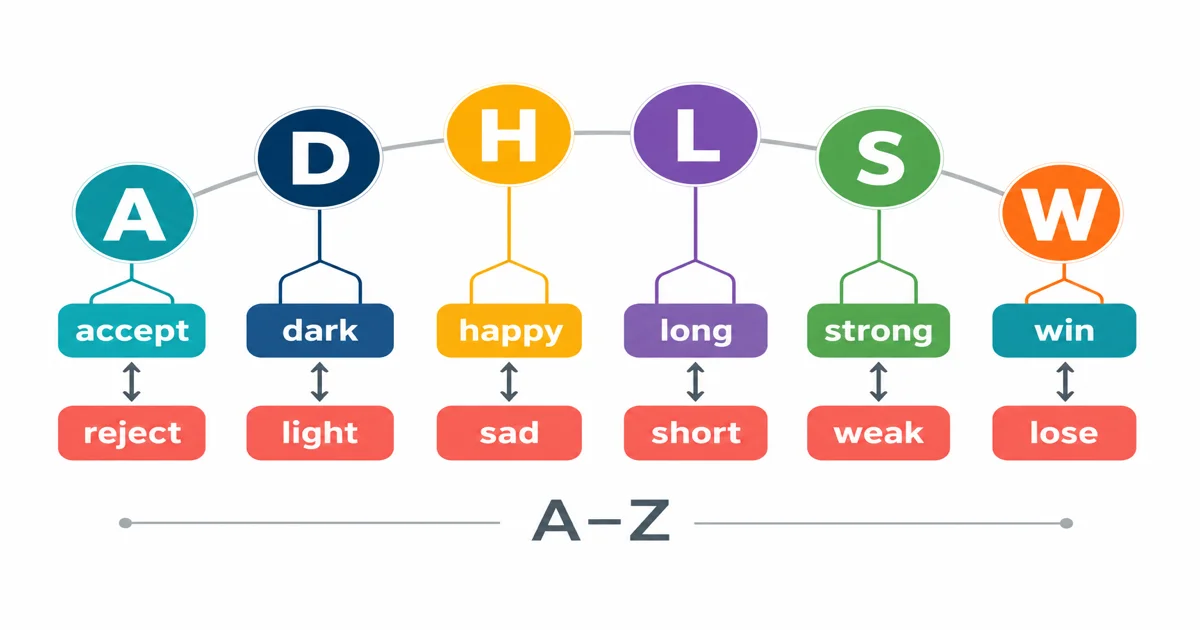
このリストでは、500以上の英語の反対語ペアをアルファベット順で紹介します。各ペアに、両方の単語を文脈の中で示す例文が付いています。学習の参考書、試験対策の資料、ライティングのツールとしてご活用ください。
- 収録数: 500以上の反対語ペア
- 形式: 単語 ↔ 反対語 + 例文
- 整理方法: A〜Zアルファベット順
- 対象レベル: A1〜C1
- こんな方に: 語彙力強化、IELTS/TOEFL対策、エッセイ、日常の流暢さ
同義語と対義語の総合ガイドは、英語の同義語と対義語:完全ガイドをご覧ください。
対義語とは?
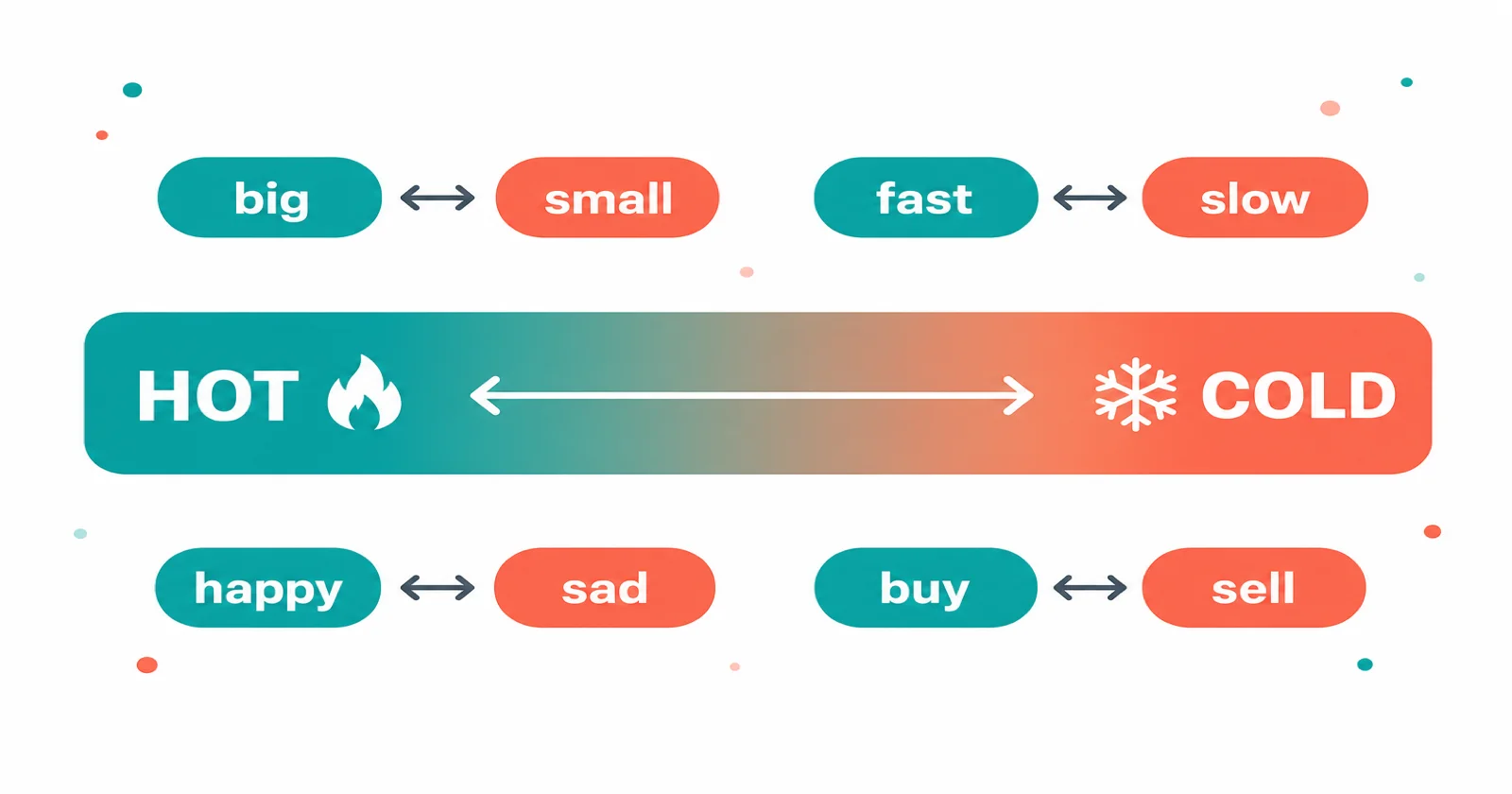
対義語(アントニム)とは、他の単語と反対の意味を持つ単語です。語源はギリシャ語の anti-(反対)+ onoma(名前)— 文字通り「反対の名前」です。
| 単語 | 対義語 |
|---|---|
| hot | cold |
| big | small |
| fast | slow |
| happy | sad |
| begin | end |
対義語の3つのタイプ
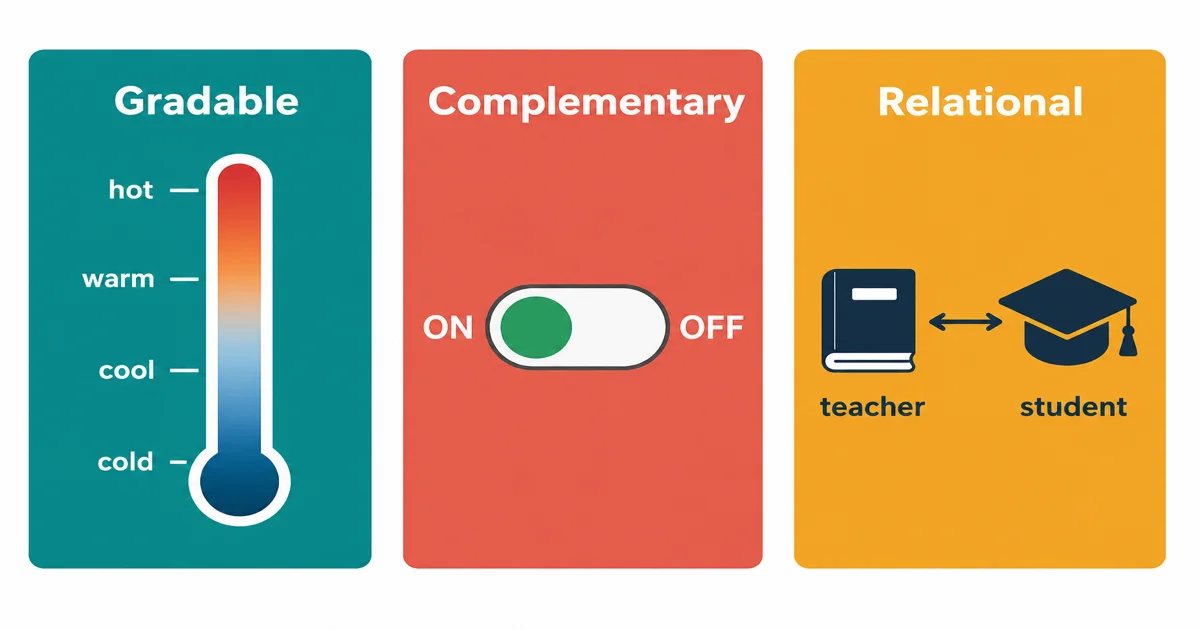
| タイプ | 説明 | 例 |
|---|---|---|
| 段階的 | スケール上の反対;程度がある | hot–cold, big–small, fast–slow |
| 相補的 | どちらか一方;中間はない | alive–dead, true–false, on–off |
| 関係的 | 一方が他方を含意する | teacher–student, buy–sell, parent–child |
このリストの大半は段階的対義語です — スケールの両端を表し、間に多くのポイントがあります(「warm」は「hot」と「cold」の間に位置します)。
反対語: A–B
| # | 単語 | 反対語 | 例文 |
|---|---|---|---|
| 1 | above — 上に | below — 下に | The painting hangs above the fireplace; the shoes are below the bench. |
| 2 | absent — 欠席の | present — 出席の | Three students were absent; the rest were present. |
| 3 | abstract — 抽象的な | concrete — 具体的な | Abstract ideas need concrete examples to be understood. |
| 4 | accept — 受け入れる | reject — 拒否する | She decided to accept the offer rather than reject it. |
| 5 | accurate — 正確な | inaccurate — 不正確な | The report was accurate, but the summary was inaccurate. |
| 6 | active — 能動的な | passive — 受動的な | An active learner asks questions; a passive learner just listens. |
| 7 | add — 足す | subtract — 引く | Add the tax, then subtract the discount. |
| 8 | admit — 認める | deny — 否定する | He admitted the mistake instead of denying it. |
| 9 | advance — 前進する | retreat — 後退する | The army advanced in the morning and retreated by evening. |
| 10 | after — 後に | before — 前に | The meeting is after lunch, not before. |
| 11 | agree — 同意する | disagree — 反対する | I agree with the first point but disagree with the conclusion. |
| 12 | alive — 生きている | dead — 死んでいる | The plant looked dead, but it was still alive. |
| 13 | allow — 許可する | forbid — 禁止する | The school allows casual clothes on Fridays but forbids them on exam days. |
| 14 | always — いつも | never — 決して~ない | She always arrives early; he never does. |
| 15 | ancient — 古代の | modern — 現代の | Ancient ruins stand next to modern skyscrapers. |
| 16 | appear — 現れる | disappear — 消える | Stars appear at night and disappear at dawn. |
| 17 | approve — 承認する | disapprove — 不承認する | The board approved the budget but disapproved the staffing plan. |
| 18 | arrive — 到着する | depart — 出発する | Guests arrive at 6 PM and depart by 10 PM. |
| 19 | artificial — 人工の | natural — 自然の | The flowers looked real but were artificial, not natural. |
| 20 | ascend — 上る | descend — 下る | We ascended the mountain in the morning and descended before dark. |
| 21 | ask — 質問する | answer — 答える | She asked a question, and I answered immediately. |
| 22 | asleep — 眠っている | awake — 起きている | The baby was asleep, but the dog was wide awake. |
| 23 | attack — 攻撃する | defend — 守る | The lawyer attacked the claim, and the witness tried to defend it. |
| 24 | attractive — 魅力的な | unattractive — 魅力のない | The package design was attractive; the old one was unattractive. |
| 25 | backward — 後方へ | forward — 前方へ | Take one step backward, then two steps forward. |
| 26 | bad — 悪い | good — 良い | The food was bad at that restaurant, but the service was good. |
| 27 | beautiful — 美しい | ugly — 醜い | The sunset was beautiful; the building next to it was ugly. |
| 28 | begin — 始める | end — 終わる | Classes begin in September and end in June. |
| 29 | beneficial — 有益な | harmful — 有害な | Exercise is beneficial to health; smoking is harmful. |
| 30 | best — 最高の | worst — 最悪の | This is the best pizza I’ve had — and that was the worst. |
| 31 | big — 大きい | small — 小さい | She lives in a big house; I live in a small apartment. |
| 32 | bitter — 苦い | sweet — 甘い | The coffee was bitter without sugar; add some to make it sweet. |
| 33 | bold — 大胆な | timid — 臆病な | She gave a bold speech; he was too timid to speak at all. |
| 34 | boring — 退屈な | exciting — わくわくする | The first half was boring, but the second half was exciting. |
| 35 | brave — 勇敢な | cowardly — 臆病な | The brave firefighter ran in; the cowardly bystander ran away. |
| 36 | break — 壊す | fix — 直す | He managed to break the machine, and she managed to fix it. |
| 37 | bright — 明るい | dim — 薄暗い | The living room was bright; the hallway was dim. |
| 38 | broad — 幅広い | narrow — 狭い | The river is broad at the delta but narrow near the source. |
| 39 | build — 建てる | destroy — 壊す | It takes years to build trust and seconds to destroy it. |
| 40 | busy — 忙しい | free — 暇な | I’m busy on Monday, but I’m free on Tuesday. |
| 41 | buy — 買う | sell — 売る | I want to buy a car; she wants to sell hers. |
反対語: C–D
| # | 単語 | 反対語 | 例文 |
|---|---|---|---|
| 42 | calm — 穏やかな | anxious — 不安な | She remained calm while everyone else was anxious. |
| 43 | careful — 注意深い | careless — 不注意な | A careful driver avoids accidents; a careless one causes them. |
| 44 | cheap — 安い | expensive — 高い | The generic brand is cheap; the designer version is expensive. |
| 45 | cheerful — 陽気な | gloomy — 陰鬱な | Her cheerful attitude brightened the gloomy office. |
| 46 | clean — きれいな | dirty — 汚い | The kitchen was clean this morning but dirty by evening. |
| 47 | clear — 明確な | unclear — 不明確な | The instructions were clear; the footnotes were unclear. |
| 48 | clever — 賢い | foolish — 愚かな | A clever strategy beats a foolish one every time. |
| 49 | close — 閉める | open — 開ける | Close the window if it’s cold; open it if it’s warm. |
| 50 | cold — 冷たい | hot — 熱い | The soup was too cold; the tea was too hot. |
| 51 | combine — 結合する | separate — 分離する | Combine the ingredients first, then separate the mixture into two bowls. |
| 52 | common — 一般的な | rare — まれな | Pigeons are common in the city; eagles are rare. |
| 53 | complex — 複雑な | simple — 単純な | The tax code is complex; the instructions should be simple. |
| 54 | confident — 自信のある | insecure — 自信のない | She seems confident in meetings, but she feels insecure inside. |
| 55 | constant — 一定の | variable — 変動する | The speed was constant; the direction was variable. |
| 56 | construct — 建設する | demolish — 解体する | They plan to construct a new building after they demolish the old one. |
| 57 | continue — 続ける | stop — 止める | Continue reading if you enjoy it; stop if you don’t. |
| 58 | correct — 正しい | incorrect — 間違った | Your first answer was correct; the second was incorrect. |
| 59 | create — 創る | destroy — 破壊する | Artists create; wars destroy. |
| 60 | cruel — 残酷な | kind — 優しい | The villain was cruel; the hero was kind. |
| 61 | cry — 泣く | laugh — 笑う | The children cry during sad movies and laugh during comedies. |
| 62 | curious — 好奇心のある | indifferent — 無関心な | She was curious about the results; he was completely indifferent. |
| 63 | dangerous — 危険な | safe — 安全な | The old bridge is dangerous; the new one is safe. |
| 64 | dark — 暗い | light — 明るい | The basement was dark, but the attic was full of light. |
| 65 | deep — 深い | shallow — 浅い | The ocean is deep in the center and shallow near the shore. |
| 66 | defeat — 敗北 | victory — 勝利 | After years of defeat, they finally tasted victory. |
| 67 | different — 異なる | similar — 似ている | The twins look similar but have very different personalities. |
| 68 | difficult — 難しい | easy — 簡単な | The first question was easy; the last one was difficult. |
| 69 | divide — 分ける | unite — 統一する | Conflict divides people; shared goals unite them. |
| 70 | domestic — 国内の | foreign — 外国の | Domestic sales are strong, but foreign markets are growing faster. |
| 71 | doubt — 疑う | trust — 信頼する | I doubt his intentions, but I trust his ability. |
| 72 | dry — 乾いた | wet — 濡れた | The towel was dry this morning and wet by afternoon. |
| 73 | dull — 鈍い | sharp — 鋭い | A dull knife is more dangerous than a sharp one. |
反対語: E–L
| # | 単語 | 反対語 | 例文 |
|---|---|---|---|
| 74 | early — 早い | late — 遅い | I arrived early; he arrived late. |
| 75 | earn — 稼ぐ | spend — 使う | You need to earn money before you can spend it. |
| 76 | east — 東 | west — 西 | The sun rises in the east and sets in the west. |
| 77 | easy — 簡単な | hard — 難しい | The first part was easy, but the second was hard. |
| 78 | efficient — 効率的な | inefficient — 非効率な | The new system is efficient; the old one was inefficient. |
| 79 | empty — 空の | full — 満杯の | The glass was empty; I filled it until it was full. |
| 80 | encourage — 励ます | discourage — やる気を削ぐ | Good teachers encourage students; bad feedback can discourage them. |
| 81 | enemy — 敵 | friend — 友 | Yesterday’s enemy can become tomorrow’s friend. |
| 82 | enormous — 巨大な | tiny — ごく小さい | The cathedral was enormous; the chapel was tiny. |
| 83 | enter — 入る | exit — 出る | Please enter through the front door and exit through the back. |
| 84 | equal — 平等な | unequal — 不平等な | All employees deserve equal treatment, not unequal pay. |
| 85 | expand — 膨張する | contract — 収縮する | Metals expand when heated and contract when cooled. |
| 86 | export — 輸出 | import — 輸入 | Japan exports cars and imports oil. |
| 87 | external — 外部の | internal — 内部の | The external walls are stone; the internal walls are plaster. |
| 88 | fact — 事実 | fiction — フィクション | It’s hard to tell fact from fiction in the news. |
| 89 | fail — 失敗する | succeed — 成功する | You may fail ten times before you succeed once. |
| 90 | fair — 公平な | unfair — 不公平な | The decision seemed fair to some but unfair to others. |
| 91 | fake — 偽物の | genuine — 本物の | The painting was fake; the signature was genuine. |
| 92 | famous — 有名な | unknown — 無名の | She went from unknown to famous in a single year. |
| 93 | far — 遠い | near — 近い | The airport is far from the city, but the train station is near. |
| 94 | fast — 速い | slow — 遅い | Internet in the office is fast; at home it’s slow. |
| 95 | few — 少ない | many — 多い | A few people came early; many arrived late. |
| 96 | find — 見つける | lose — 失う | I always find my keys where I’m most likely to lose them. |
| 97 | finish — 終える | start — 始める | We need to start the project today if we want to finish by Friday. |
| 98 | first — 最初の | last — 最後の | She was the first to arrive and the last to leave. |
| 99 | flexible — 柔軟な | rigid — 固い | The company has a flexible schedule, not a rigid one. |
| 100 | float — 浮く | sink — 沈む | Wood floats; iron sinks. |
| 101 | forget — 忘れる | remember — 覚えている | Don’t forget your passport — remember to check before you leave. |
| 102 | formal — フォーマルな | informal — カジュアルな | The dinner is formal; the lunch is informal. |
| 103 | free — 自由な | captive — 捕らわれた | The bird was captive for years before being set free. |
| 104 | freeze — 凍る | melt — 溶ける | Water freezes at 0°C and ice melts above it. |
| 105 | fresh — 新鮮な | stale — 古くなった | The bread was fresh in the morning and stale by night. |
| 106 | full — 満杯の | empty — 空の | The restaurant was full at 7 PM and empty by 10 PM. |
| 107 | gain — 得る | lose — 失う | You gain experience by working; you lose it by staying idle. |
| 108 | general — 一般的な | specific — 具体的な | Give me a specific answer, not a general one. |
| 109 | generous — 寛大な | selfish — 利己的な | She’s generous with her time; he’s selfish with his. |
| 110 | gentle — 優しい | rough — 荒い | Handle the glass with gentle hands, not rough ones. |
| 111 | give — 与える | take — 取る | It’s better to give than to take. |
| 112 | glad — 嬉しい | sad — 悲しい | I’m glad you came; I’d be sad if you hadn’t. |
| 113 | good — 良い | bad — 悪い | The news was good in the morning and bad in the evening. |
| 114 | grateful — 感謝している | ungrateful — 感謝しない | Be grateful for what you have, not ungrateful for what you lack. |
| 115 | grow — 成長する | shrink — 縮む | The economy grew last year but may shrink this year. |
| 116 | guilty — 有罪の | innocent — 無罪の | The jury found him guilty, though he claimed to be innocent. |
| 117 | happy — 幸せな | sad — 悲しい | She looked sad in the morning but happy by afternoon. |
| 118 | hard — 硬い | soft — 柔らかい | The mattress was too hard; I prefer a softer one. |
| 119 | hate — 嫌う | love — 愛する | Some people hate mornings; others love them. |
| 120 | healthy — 健康な | unhealthy — 不健康な | A balanced diet is healthy; fast food daily is unhealthy. |
| 121 | heavy — 重い | light — 軽い | The suitcase was heavy; the backpack was light. |
| 122 | hide — 隠す | reveal — 明らかにする | She tried to hide her disappointment, but her face revealed it. |
| 123 | high — 高い | low — 低い | Prices are high in the city and low in the countryside. |
| 124 | hire — 雇う | fire — 解雇する | The company plans to hire 50 people this year, not fire anyone. |
| 125 | honest — 正直な | dishonest — 不誠実な | An honest answer is always better than a dishonest one. |
| 126 | hope — 希望 | despair — 絶望 | Where there is hope, there is no despair. |
| 127 | huge — 巨大な | tiny — 極小の | The difference was huge — not tiny. |
| 128 | humble — 謙虚な | arrogant — 傲慢な | The best leaders are humble, not arrogant. |
| 129 | impossible — 不可能な | possible — 可能な | What seems impossible today may be possible tomorrow. |
| 130 | improve — 改善する | worsen — 悪化する | The situation will improve if we act; it will worsen if we don’t. |
| 131 | include — 含む | exclude — 除外する | The price includes breakfast but excludes dinner. |
| 132 | increase — 増加する | decrease — 減少する | Sales increased in Q1 and decreased in Q2. |
| 133 | inside — 内側 | outside — 外側 | It’s warm inside but freezing outside. |
| 134 | intelligent — 知的な | stupid — 愚かな | An intelligent decision saves time; a stupid one wastes it. |
| 135 | join — 合流する | separate — 分かれる | The rivers join at the delta and separate upstream. |
| 136 | junior — 下位の | senior — 上位の | She started as a junior developer and became a senior in three years. |
| 137 | keep — 保つ | discard — 捨てる | Keep the important files and discard the rest. |
| 138 | kind — 親切な | cruel — 残酷な | A kind word heals; a cruel one wounds. |
| 139 | knowledge — 知識 | ignorance — 無知 | Knowledge leads to understanding; ignorance leads to fear. |
| 140 | large — 大きい | small — 小さい | We ordered a large pizza, not a small one. |
| 141 | laugh — 笑う | cry — 泣く | The audience would laugh one moment and cry the next. |
| 142 | lazy — 怠惰な | hardworking — 勤勉な | He’s too lazy to study; his sister is incredibly hardworking. |
| 143 | lead — 導く | follow — 従う | Some people lead; others prefer to follow. |
| 144 | legal — 合法の | illegal — 違法の | Driving at 60 mph is legal here; 90 is illegal. |
| 145 | less — より少ない | more — より多い | Spend less time worrying and more time acting. |
| 146 | long — 長い | short — 短い | The movie was too long; the trailer was too short. |
| 147 | loud — うるさい | quiet — 静かな | The music was loud downstairs and quiet upstairs. |
| 148 | love — 愛 | hate — 憎しみ | Thin line between love and hate, they say. |
| 149 | loyal — 忠実な | disloyal — 不忠実な | A loyal friend stays; a disloyal one leaves. |
| 150 | lucky — 幸運な | unlucky — 不運な | She was lucky to win; he was unlucky to miss by one point. |
反対語: M–Z
| # | 単語 | 反対語 | 例文 |
|---|---|---|---|
| 151 | major — 主要な | minor — 些細な | The major issues are fixed; only minor ones remain. |
| 152 | majority — 多数派 | minority — 少数派 | The majority agreed; the minority dissented. |
| 153 | many — 多い | few — 少ない | Many applied, but few were selected. |
| 154 | maximum — 最大 | minimum — 最小 | The maximum speed is 120 km/h; the minimum is 60. |
| 155 | modern — 現代的な | traditional — 伝統的な | The design blends modern elements with traditional ones. |
| 156 | narrow — 狭い | wide — 広い | The hallway was narrow; the lobby was wide. |
| 157 | natural — 自然の | artificial — 人工の | The flavoring is natural, not artificial. |
| 158 | negative — 否定的な | positive — 肯定的な | A negative attitude produces negative results; a positive one attracts opportunities. |
| 159 | new — 新しい | old — 古い | The new policy replaces the old one. |
| 160 | night — 夜 | day — 昼 | Owls hunt at night; hawks hunt during the day. |
| 161 | normal — 正常な | abnormal — 異常な | The test results were normal, not abnormal. |
| 162 | obey — 従う | disobey — 逆らう | Children who obey rules learn discipline; those who disobey learn consequences. |
| 163 | obvious — 明白な | hidden — 隠された | The answer was obvious to some but hidden from others. |
| 164 | old — 年老いた | young — 若い | The old generation learns from experience; the young from technology. |
| 165 | open — 開いている | closed — 閉じている | The shop is open on weekdays and closed on Sundays. |
| 166 | optimistic — 楽観的な | pessimistic — 悲観的な | She’s optimistic about the future; he’s pessimistic. |
| 167 | order — 秩序 | chaos — 混沌 | The system brought order to what was previously chaos. |
| 168 | ordinary — 普通の | extraordinary — 並外れた | What seemed like an ordinary day became an extraordinary one. |
| 169 | over — 上に | under — 下に | The bridge goes over the river; the tunnel goes under it. |
| 170 | pass — 合格する | fail — 不合格になる | She managed to pass the exam, while many others failed. |
| 171 | past — 過去 | future — 未来 | Learn from the past and plan for the future. |
| 172 | patient — 忍耐強い | impatient — せっかちな | A patient teacher gets better results than an impatient one. |
| 173 | peace — 平和 | war — 戦争 | Nations choose between peace and war. |
| 174 | permanent — 永続的な | temporary — 一時的な | The fix is temporary; we need a permanent solution. |
| 175 | polite — 礼儀正しい | rude — 無礼な | A polite email gets a better response than a rude one. |
| 176 | poor — 貧しい | rich — 裕福な | The gap between poor and rich continues to widen. |
| 177 | powerful — 強力な | weak — 弱い | A powerful argument beats a weak one. |
| 178 | practical — 実践的な | theoretical — 理論的な | The course has both practical and theoretical components. |
| 179 | praise — 称賛する | criticize — 批判する | It’s easy to criticize and hard to praise. |
| 180 | private — 私的な | public — 公的な | The meeting was private; the announcement was public. |
| 181 | profit — 利益 | loss — 損失 | The first year showed a profit; the second showed a loss. |
| 182 | proud — 誇りに思う | ashamed — 恥じている | She was proud of her work; he was ashamed of his. |
| 183 | push — 押す | pull — 引く | Push the door to open it; pull to close it. |
| 184 | quick — 速い | slow — 遅い | Send a quick reply — don’t be slow. |
| 185 | raise — 上げる | lower — 下げる | Raise your hand to ask a question; lower it when done. |
| 186 | real — 本物の | fake — 偽の | Is the diamond real or fake? |
| 187 | receive — 受け取る | give — 与える | To receive, you must first be willing to give. |
| 188 | reduce — 減らす | increase — 増やす | We need to reduce costs and increase efficiency. |
| 189 | reliable — 信頼できる | unreliable — 信頼できない | The old system was unreliable; the new one is much more reliable. |
| 190 | remember — 覚えている | forget — 忘れる | Remember your password — don’t forget it again. |
| 191 | reveal — 明かす | conceal — 隠す | The investigation revealed what they tried to conceal. |
| 192 | right — 正しい | wrong — 間違った | There’s a right way and a wrong way to apologize. |
| 193 | rise — 上がる | fall — 下がる | Prices rise in summer and fall in winter. |
| 194 | rough — ざらざらした | smooth — なめらかな | The surface was rough on one side and smooth on the other. |
| 195 | rural — 田舎の | urban — 都市の | Life in rural areas differs greatly from urban areas. |
| 196 | safe — 安全な | dangerous — 危険な | The neighborhood is safe during the day but dangerous at night. |
| 197 | same — 同じ | different — 違う | We have the same goal but very different methods. |
| 198 | save — 節約する | waste — 無駄にする | Save your energy — don’t waste it on arguments. |
| 199 | serious — 真面目な | playful — 遊び心のある | He’s always serious; she’s naturally playful. |
| 200 | short — 低い | tall — 背が高い | The short child stood next to the tall teenager. |
| 201 | show — 見せる | hide — 隠す | Show your strengths; don’t hide them. |
| 202 | sick — 病気の | healthy — 健康な | She was sick last week but is healthy now. |
| 203 | simple — 単純な | complicated — 複雑な | The idea is simple, but the execution is complicated. |
| 204 | slow — 遅い | fast — 速い | The download was slow; the upload was fast. |
| 205 | speak — 話す | listen — 聞く | A good leader knows when to speak and when to listen. |
| 206 | start — 始める | finish — 終える | Let’s start now so we can finish early. |
| 207 | strength — 強さ | weakness — 弱さ | Knowing your strengths and weaknesses is key to growth. |
| 208 | strict — 厳しい | lenient — 寛大な | The new teacher is strict; the old one was lenient. |
| 209 | strong — 強い | weak — 弱い | The coffee was strong in the morning and weak by the afternoon. |
| 210 | succeed — 成功する | fail — 失敗する | If you prepare, you will succeed; if not, you may fail. |
| 211 | success — 成功 | failure — 失敗 | Success teaches confidence; failure teaches resilience. |
| 212 | support — 支持する | oppose — 反対する | Half the team supports the plan; the other half opposes it. |
| 213 | sweet — 甘い | sour — 酸っぱい | The fruit was sweet on the outside and sour on the inside. |
| 214 | temporary — 一時的な | permanent — 永久的な | This is a temporary fix; we need a permanent solution. |
| 215 | thick — 厚い | thin — 薄い | The walls were thick downstairs and thin upstairs. |
| 216 | together — 一緒に | apart — 別々に | They worked together for years, then moved apart. |
| 217 | true — 真実の | false — 虚偽の | Is the statement true or false? |
| 218 | trust — 信頼 | distrust — 不信 | There’s a deep distrust in politics where there should be trust. |
| 219 | ugly — 醜い | beautiful — 美しい | The caterpillar was ugly; the butterfly was beautiful. |
| 220 | unique — 独自の | common — ありふれた | This design is unique; the other is common. |
| 221 | unite — 団結する | divide — 分裂する | Great leaders unite; poor leaders divide. |
| 222 | unknown — 不明の | known — 既知の | The cause is still unknown; the effect is well known. |
| 223 | up — 上へ | down — 下へ | Prices went up last month and came down this month. |
| 224 | urban — 都市の | rural — 地方の | Urban life is fast; rural life is slower. |
| 225 | useful — 有用な | useless — 無用な | A sharp knife is useful; a broken one is useless. |
| 226 | valuable — 価値のある | worthless — 価値のない | The painting is valuable; the frame is worthless. |
| 227 | victory — 勝利 | defeat — 敗北 | They celebrated victory while we accepted defeat. |
| 228 | visible — 見える | invisible — 見えない | The moon was visible last night; tonight it’s invisible behind clouds. |
| 229 | warm — 温かい | cool — 涼しい | The coffee was warm; the juice was cool. |
| 230 | wealth — 富 | poverty — 貧困 | Wealth without purpose feels like poverty of the soul. |
| 231 | wet — 濡れた | dry — 乾いた | Hang the wet clothes outside until they’re dry. |
| 232 | wide — 広い | narrow — 狭い | The highway is wide; the side street is narrow. |
| 233 | wild — 野生の | tame — 飼いならされた | The horse was wild at first but became tame after training. |
| 234 | win — 勝つ | lose — 負ける | You win some, you lose some. |
| 235 | wise — 賢明な | foolish — 愚かな | A wise investment grows; a foolish one shrinks. |
| 236 | wrong — 間違った | right — 正しい | If something feels wrong, it probably isn’t right. |
接頭辞で作る対義語
多くの英語の対義語は、元の単語に接頭辞を付けることで作られます。これらの接頭辞を覚えれば、対義語を自動的に生成できるようになります。
un-
| 単語 | 対義語 | 例文 |
|---|---|---|
| happy | unhappy | The results made everyone unhappy. |
| fair | unfair | The decision was unfair. |
| comfortable | uncomfortable | The seats were uncomfortable. |
| likely | unlikely | A comeback seems unlikely. |
in-/im-/il-/ir-
| 単語 | 対義語 | 例文 |
|---|---|---|
| possible | impossible | Finishing by Friday is impossible. |
| polite | impolite | Interrupting is impolite. |
| legal | illegal | Parking here is illegal. |
| responsible | irresponsible | That was an irresponsible decision. |
dis-
| 単語 | 対義語 | 例文 |
|---|---|---|
| agree | disagree | I completely disagree. |
| appear | disappear | The fog made the bridge disappear. |
| honest | dishonest | His answers were dishonest. |
| advantage | disadvantage | The main disadvantage is the cost. |
mis-
| 単語 | 対義語 | 例文 |
|---|---|---|
| understand | misunderstand | Don’t misunderstand my intention. |
| lead | mislead | The headline was misleading. |
| inform | misinform | Social media can misinform the public. |
対義語を効果的に覚える方法
必ずペアで覚える
単語を孤立させて覚えないでください。「generous」を語彙に追加するとき、同時に「selfish」も追加しましょう。脳はバラバラの概念より、関連づけられた概念をより効率的に保存します。
接頭辞戦略を使う
un-、in-/im-、dis-、mis-を覚えれば、個別に暗記しなくても何百もの単語の対義語を生成できます。上の表の対義語列を隠して、接頭辞で反対語を作る練習をしてみましょう。
「反対の文」を練習する
任意の文を取り、反対の意味に書き換えます:
- The meeting was long and boring. → The meeting was short and exciting.
- She always arrives early. → She never arrives late.
この練習により、対義語ペアで考える力が鍛えられ、想起速度が向上します。
間隔反復に追加する
単語ペアをLinglifyの辞書に追加しましょう。「antonyms」タグを付けてセットで復習できるようにします。復習時に両方の単語が一緒に表示されることで、つながりが強化されます。
練習用の単語
以下の25語は、自然な英語で対義語と一緒によく登場する単語です。Linglifyの辞書に追加して間隔反復で覚えましょう。
boom
名詞
急増, ブーム, 爆発
例
- The boom of thunder echoed across the valley.
- The technology boom created many new millionaires.
cooperate
動詞
協力する, 協働する
evaluate
動詞
評価する, 査定する
例
- Companies evaluate job candidates based on experience, skills, and personality.
- Teachers evaluate student progress through tests, projects, and classroom participation.
graduate
動詞
卒業する
例
- She will graduate from university next year with a degree in engineering.
- Students must complete all requirements before they can graduate from high school.
horizon
名詞
地平線
例
- The sun disappeared behind the horizon as evening approached.
- Traveling broadens your horizon and exposes you to new cultures.
indispensable
形容詞
不可欠な
例
- Clean water is indispensable for human survival and good health.
- Her experience and skills make her indispensable to the research team.
jury
名詞
陪審団, 陪審
例
- The jury deliberated for several hours before reaching a verdict.
- The talent show jury consisted of professional musicians and entertainers.
lifelong
形容詞
一生の, 生涯の
例
- Learning is a lifelong process that never truly ends.
- Their lifelong friendship began during elementary school years.
motivated
形容詞
やる気のある
例
- Motivated employee seeks additional responsibilities and challenges at work.
- Success requires being motivated even when facing difficult obstacles.
normally
副詞
通常は, 普通は, ふつうは
例
- Heart normally beats between sixty and hundred times per minute.
- Students normally arrive at school before morning bell rings.
off
副詞
離れて, 切れて, 休みの
例
- Please turn off the lights before leaving the room.
- The dog ran off into the forest chasing wild rabbits.
prejudice
名詞
偏見, 先入観, 差別
例
- Education helps overcome prejudice and promotes understanding.
- Racial prejudice damages communities and individuals alike.
resolve
動詞
解決する, 決意する
例
- Mediator helps parties resolve dispute through negotiation.
- Technical team will resolve software problems quickly.
stress
動詞
強調する, 緊張させる
例
- Heavy workload may stress employees beyond limits.
- Teacher will stress importance of homework completion.
total
形容詞
全体の, 総合的な, 完全な
例
- Total cost includes all fees and expenses.
- Total silence fills room during meditation session.
tragedy
名詞
悲劇
例
- Natural tragedy affects thousands of innocent people.
- Personal tragedy changes person's life perspective completely.
union
名詞
連合, 結合, 協会
例
- Labor union protects worker rights and interests.
- Marriage union joins two people in partnership.
voyage
名詞
航海, 旅行
例
- Space exploration represents humanity's greatest voyage into the unknown.
- The ocean voyage from Europe to America took several weeks in the past.
candidate
名詞
候補者, 志願者
例
- Each presidential candidate presented their policy plans to voters.
- The job candidate impressed the interview panel with her experience.
discourage
動詞
落胆させる, 思いとどまらせる, 意欲をなくさせる
例
- Don't let one failure discourage you from pursuing your dreams.
- High prices discourage many people from buying organic food products.
donate
動詞
寄付する
例
- Many people donate money to charities that help homeless individuals.
- She decided to donate blood to help patients in emergency situations.
firmly
副詞
しっかりと, 堅く
例
- Hold the rope firmly while climbing down the steep mountain slope.
- The manager firmly believed in treating all employees with respect.
guide
動詞
案内する
例
- Parents should guide their children to make responsible decisions.
- The experienced hiker will guide the group through the mountain trail safely.
humorous
形容詞
ユーモラスな, 面白い, 滑稽な
例
- She writes humorous articles about everyday life and family experiences.
- The humorous speech made everyone laugh and lightened the serious mood.
admission
名詞
入場, 入学, 認めること
例
- Her admission to the prestigious medical school was the result of hard work.
- The museum offers free admission on the first Sunday of every month.
次のステップ
-
自分をテストする。「反対語」列を隠して、記憶から対義語を言えるか試してみましょう。
-
接頭辞パターンを覚える。 un-、in-/im-/il-/ir-、dis-、mis-を知っていれば、何百もの単語の対義語を生成できます。毎日10個の新しい単語で練習しましょう。
-
ペアをLinglifyに追加して間隔反復で覚えましょう。ペア(単語+反対語)で復習すると、両方の単語が同時に強化されます。
-
完全ガイドを読む — 英語の同義語と対義語:1000以上のペアで、同義語と対義語を合わせて学べます。
-
ライティングで対義語を使う。 IELTSやTOEFLのエッセイでは、対義語が対比を明確に表現するのに役立ちます。
FAQ
対義語とは何ですか?5つの例を教えてください。
対義語とは、他の単語と反対の意味を持つ単語です。5つの一般的な例:(1) hot–cold、(2) big–small、(3) fast–slow、(4) happy–sad、(5) buy–sell。対義語には3つのタイプがあります:段階的(hot–coldのようにスケール上のもの)、相補的(alive–deadのようにどちらか一方のもの)、関係的(teacher–studentのような対の役割)。
接頭辞で対義語を作るには?
最も一般的な対義語の接頭辞は4つです:un-(happy → unhappy)、in-/im-/il-/ir-(possible → impossible, legal → illegal, responsible → irresponsible)、dis-(agree → disagree)、mis-(understand → misunderstand)。どの接頭辞を使うかは単語の語源と音声特性によります。普遍的なルールはないため、それぞれ覚える必要がありますが、「un-」はほとんどの形容詞に使える安全なデフォルトです。
対義語は常に正確な反対語ですか?
必ずしもそうではありません。多くの対義語は「段階的」で、間に程度のあるスケールの両端を表します。「hot」と「cold」は対義語ですが、その間に「warm」「cool」「lukewarm」「tepid」があります。「相補的」対義語だけが真の二者択一です:alive–dead、true–false、on–off。この区別を理解すると、求める意味のニュアンスに合った正確な単語を選べるようになります。
IELTSやTOEFLの対策に対義語を学ぶべき理由は?
IELTSもTOEFLも語彙の幅を評価します。対義語の知識は3つの点で役立ちます:(1) 言い換えで単語の繰り返しを避けられる(「advantages and disadvantages」を「benefits and drawbacks」に)。(2) 比較エッセイに不可欠な対比を表現できる。(3) 読解問題では、文脈の中で反対の意味を識別できるかがよく問われる。200〜300の対義語ペアで大半の試験シーンに対応できます。