
품사별 영어 단어: 전체 목록과 예문
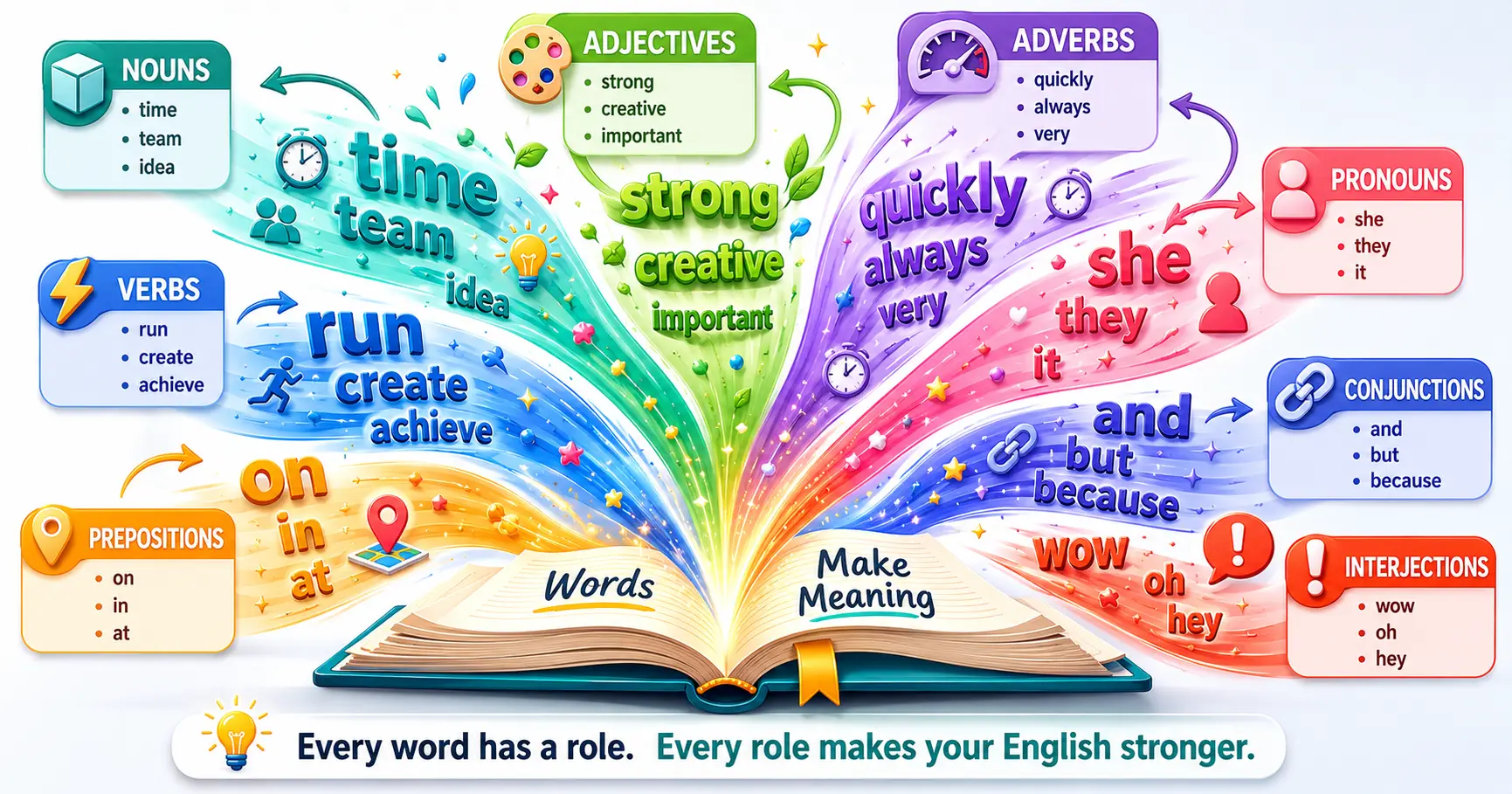
영어 단어는 모두 적어도 하나의 품사에 속합니다. 뉴스 기사를 읽거나 이메일을 쓰거나 시험을 볼 때 마주치는 모든 문장은 같은 여덟 가지 범주, 즉 명사, 동사, 형용사, 부사, 대명사, 전치사, 접속사, 감탄사로 이루어집니다. 품사를 이해하는 것은 단순한 문법 연습이 아닙니다. 어휘를 체계적으로 늘리고 단어를 바르게 사용하는 열쇠입니다.
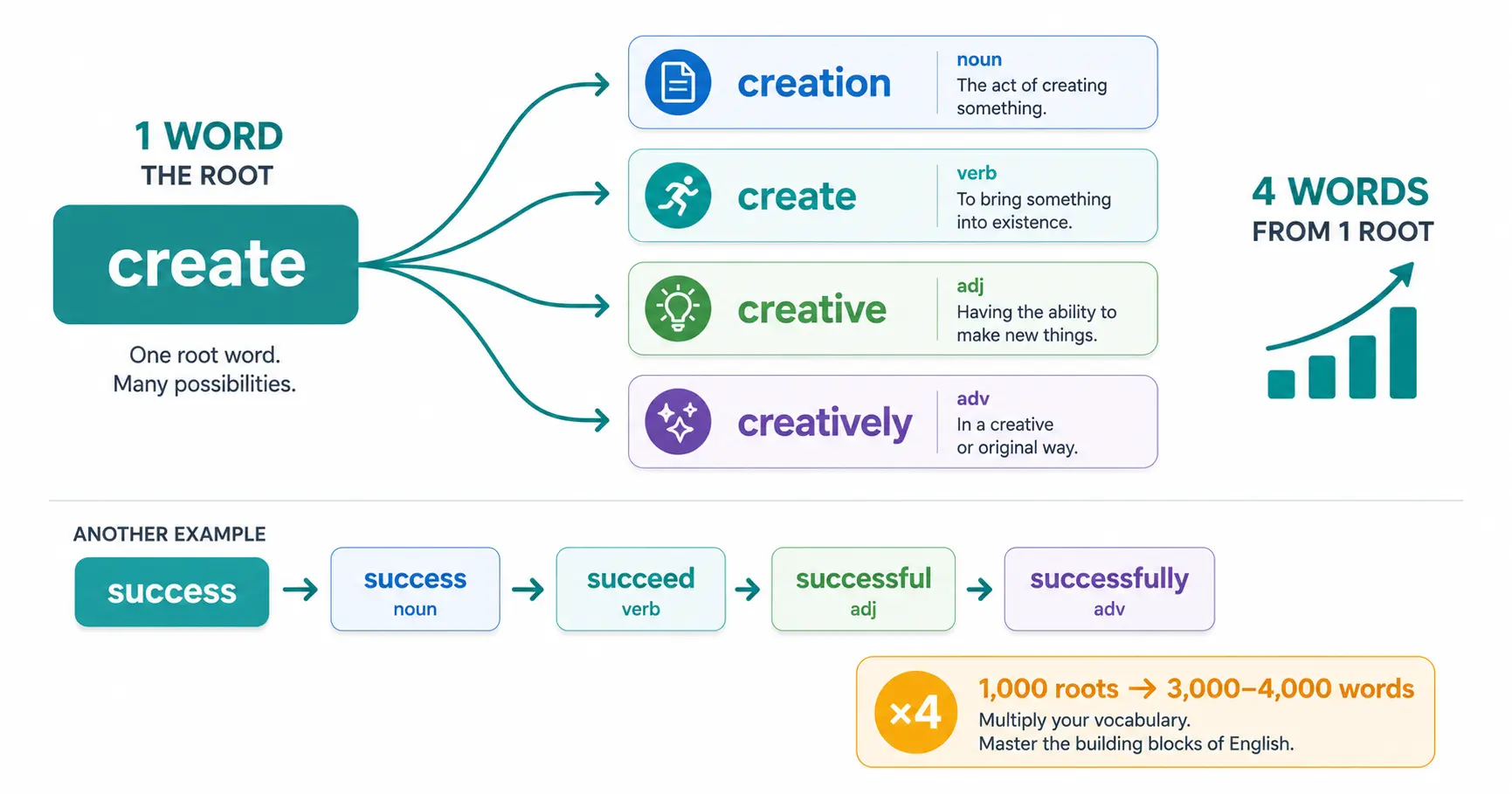
대부분의 학습자는 어휘를 따로따로 외웁니다. 단어와 뜻, 예문 하나 정도를 익힙니다. 하지만 단어가 어느 품사인지 알면 그 단어가 문장에서 어디에 오는지, 어떤 단어와 결합하는지, 형태를 어떻게 바꾸는지 알 수 있습니다. Success는 명사, succeed는 동사, successful은 형용사, successfully는 부사입니다. 어근은 같지만 문장 안에서 맡는 역할은 네 가지로 다릅니다. 품사를 혼동하면 문장이 무너집니다.
이 가이드에서는 다음 내용을 다룹니다.
- 영어의 8개 품사를 명확한 정의와 예시로 설명
- 수준과 빈도에 따라 정리한 품사별 단어 목록
- 어떤 문장에서든 품사를 판별하는 방법
- 품사를 활용해 어휘를 더 빠르게 늘리는 방법
- 동사, 형용사, 부사 등의 상세 단어 목록으로 연결되는 링크
품사란 무엇인가요?
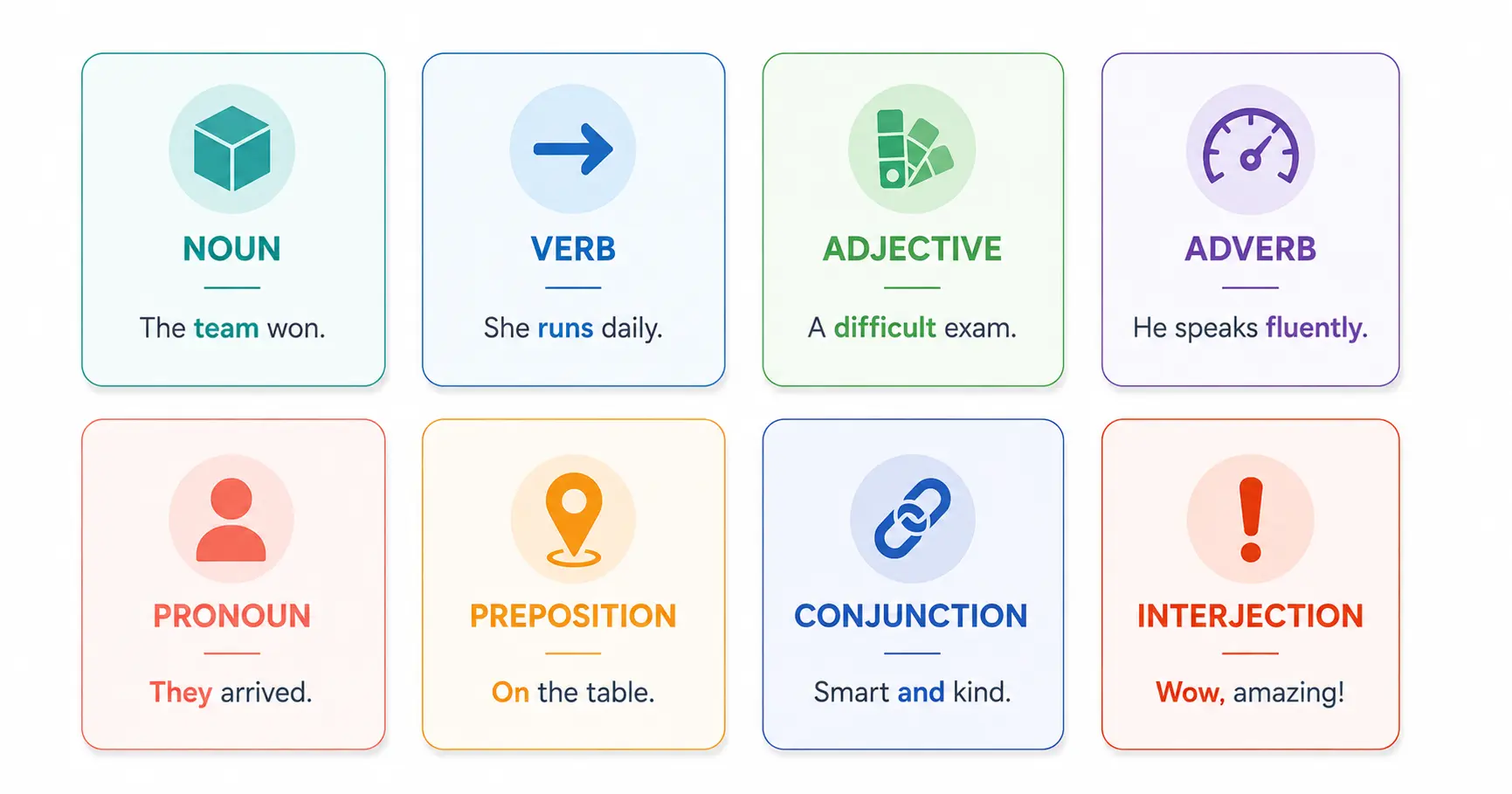
품사는 문장 안에서 단어가 하는 역할에 따라 단어를 분류한 범주입니다. 영어에는 여덟 가지 품사가 있습니다.
| 품사 | 기능 | 예문 |
|---|---|---|
| 명사 | 사람, 장소, 사물, 생각의 이름을 나타냄 | The team won the game. |
| 동사 | 행동이나 상태를 나타냄 | She runs every morning. |
| 형용사 | 명사를 꾸며 줌 | That was a difficult exam. |
| 부사 | 동사, 형용사 또는 다른 부사를 꾸며 줌 | He speaks fluently. |
| 대명사 | 명사를 대신함 | They arrived early. |
| 전치사 | 단어 사이의 관계를 나타냄 | The book is on the table. |
| 접속사 | 단어, 구, 절을 연결함 | I studied and passed. |
| 감탄사 | 감정을 표현함 | Wow, that was fast! |
이 여덟 범주는 영어의 모든 단어에 적용됩니다. 문맥에 따라 여러 품사로 쓰이는 단어도 있습니다. Run은 동사(I run daily)일 수도 있고 명사(a morning run)일 수도 있습니다. 이러한 유연성을 이해하는 것도 영어 어휘를 제대로 익히는 과정입니다.
명사: 문장의 구성 요소
명사는 가장 흔한 품사입니다. 사람, 장소, 사물, 생각, 개념의 이름을 나타냅니다. 일반적인 영어 문장에는 명사가 적어도 한두 개 들어갑니다.
명사의 종류
| 종류 | 가리키는 것 | 예시 |
|---|---|---|
| 보통명사 | 일반적인 사물 | city, teacher, idea, computer |
| 고유명사 | 특정한 이름(첫 글자를 대문자로 씀) | London, Dr. Smith, Monday, Toyota |
| 추상명사 | 만질 수 없는 것 | freedom, happiness, knowledge, courage |
| 구체명사 | 감각으로 인식할 수 있는 것 | table, music, rain, chocolate |
| 가산명사 | 셀 수 있는 것 | book/books, apple/apples, idea/ideas |
| 불가산명사 | 셀 수 없는 것 | water, information, furniture, advice |
| 집합명사 | 집단 | team, family, audience, committee |
명사 판별법
명사는 보통 다음과 같이 쓰입니다.
- 관사 뒤에 옵니다: a report, the meeting, an idea
- 형용사 뒤에 옵니다: a new report, the important meeting
- 복수형을 만들 수 있습니다: report → reports, idea → ideas
- 소유 한정사 앞에 올 수 있습니다: my suggestion, their decision
수준별 고빈도 명사
A1–A2 (초급): name, time, day, year, people, way, man, woman, child, world, life, hand, part, place, case, week, company, system, program, question
B1–B2 (중급): environment, government, development, experience, opportunity, community, relationship, responsibility, technology, education, situation, organization, performance, population, communication
C1–C2 (고급): infrastructure, paradigm, phenomenon, implication, bureaucracy, jurisdiction, pragmatism, sustainability, accountability, methodology, stakeholder, discourse, trajectory, scrutiny, resilience
일상에서 쓰는 명사와 필수 어휘는 가장 많이 쓰이는 영어 단어 1,000개에서 확인하세요. 전체 목록의 약 30%가 명사입니다.
동사: 행동을 나타내는 단어
동사는 모든 문장의 엔진입니다. 영어 문장은 동사 없이 완성되지 않습니다. 행동(run, write, build), 상태(be, seem, exist), 사건(happen, become, change)을 나타냅니다.
동사의 종류
| 종류 | 기능 | 예시 |
|---|---|---|
| 동작 동사 | 신체적·정신적 행동 | write, think, run, calculate |
| 상태 동사 | 행동이 아닌 상태 | know, believe, own, prefer |
| 연결 동사 | 주어와 주어를 설명하는 말을 연결 | be, seem, appear, become, feel |
| 조동사 | 본동사를 도움 | have (eaten), is (running), do (not go) |
| 법조동사 | 가능성, 능력, 허가를 표현 | can, could, may, might, should, must |
| 구동사 | 동사와 불변화사(들)가 결합해 새로운 뜻을 만듦 | give up, look after, carry out |
모든 학습자가 알아야 할 동사 형태
영어 동사는 최대 다섯 가지 형태를 가집니다. 시제를 익히고 문법적으로 정확하게 쓰려면 동사 형태를 숙달해야 합니다.
| 기본형 | 3인칭 단수형 | 단순 과거형 | 과거분사 | 현재분사 |
|---|---|---|---|---|
| work | works | worked | worked | working |
| write | writes | wrote | written | writing |
| go | goes | went | gone | going |
| begin | begins | began | begun | beginning |
규칙 동사의 과거형은 -ed를 붙여 만듭니다(worked, played, decided). 불규칙 동사는 이 규칙을 따르지 않으며, 그 수가 200개가 넘습니다.
→ 불규칙 동사 전체 목록: 과거형이 있는 동사 200개
수준별 고빈도 동사
A1–A2 (초급): be, have, do, say, go, get, make, know, think, take, see, come, want, look, use, find, give, tell, work, call
B1–B2 (중급): achieve, consider, develop, establish, indicate, maintain, obtain, produce, require, suggest, involve, assume, contribute, demonstrate, generate
C1–C2 (고급): undermine, scrutinize, encompass, exacerbate, facilitate, substantiate, alleviate, circumvent, perpetuate, consolidate, elicit, stipulate, supersede, transcend, corroborate
→ 영어 동사 목록: 가장 중요한 동사 300개 보기 → Linglify에서 동사 어휘 연습하기
구동사는 학습자가 특히 어려워하는 범주입니다. 동사에 불변화사 한두 개가 붙어 완전히 새로운 뜻을 만듭니다. Look up(정보를 찾아보다)은 위쪽을 바라본다는 뜻과 관계가 없습니다. 기본 동사별로 구동사 300개 이상을 정리한 구동사 가이드를 참고하세요.
형용사: 설명하는 단어
형용사는 명사를 꾸밉니다. “어떤 종류?”, “몇 개?”, “어느 것?”과 같은 질문에 답합니다. 형용사 없이도 기본적인 의사소통은 가능하지만, 형용사를 사용하면 정확하고 생생하며 설득력 있게 표현할 수 있습니다.
형용사의 종류
| 종류 | 기능 | 예시 |
|---|---|---|
| 성상 형용사 | 성질을 설명 | tall, beautiful, expensive, interesting |
| 수량 형용사 | 양을 나타냄 | many, few, several, enough, some |
| 지시 형용사 | 특정 명사를 가리킴 | this, that, these, those |
| 소유 형용사 | 소유 관계를 나타냄 | my, your, his, her, their, our |
| 의문 형용사 | 질문을 함 | which, what, whose |
| 비교급 | 두 대상을 비교 | taller, more expensive, better |
| 최상급 | 가장 높은 정도를 나타냄 | tallest, most expensive, best |
형용사의 어순
여러 형용사가 같은 명사를 꾸밀 때 영어에서는 어순이 정해져 있습니다. 원어민은 직관적으로 따르지만 학습자는 외워야 합니다.
의견 → 크기 → 나이 → 모양 → 색깔 → 출신 → 재료 → 용도
| 순서 | 범주 | 예시 |
|---|---|---|
| 1 | 의견 | beautiful, ugly, amazing |
| 2 | 크기 | big, small, tiny, enormous |
| 3 | 나이 | old, new, young, ancient |
| 4 | 모양 | round, flat, rectangular |
| 5 | 색깔 | red, blue, dark, bright |
| 6 | 출신 | British, Japanese, European |
| 7 | 재료 | wooden, metal, cotton, glass |
| 8 | 용도 | cooking (pot), sleeping (bag) |
따라서 a beautiful large old round brown Italian wooden dining table이라고 해야 합니다. 다른 순서는 자연스럽지 않습니다. 실제로는 형용사를 두세 개 이상 연달아 쓰는 일이 드물지만, 어순을 알면 어색한 표현을 피할 수 있습니다.
수준별 고빈도 형용사
A1–A2 (초급): good, new, big, small, long, old, young, different, important, possible, last, first, next, early, great, little, high, free, right, sure
B1–B2 (중급): available, significant, appropriate, effective, relevant, essential, substantial, consistent, comprehensive, fundamental, competitive, sufficient, legitimate, subsequent, compatible
C1–C2 (고급): ubiquitous, ostensible, unprecedented, innocuous, pejorative, idiosyncratic, perfunctory, unequivocal, recalcitrant, commensurate, ephemeral, indefatigable, quintessential, perspicacious, superfluous
→ 영어 형용사 500개 전체 목록: 기초부터 고급까지 보기 → Linglify에서 형용사 어휘 연습하기
부사: 꾸며 주는 단어
부사는 동사, 형용사, 다른 부사 또는 문장 전체를 꾸밉니다. “어떻게?”, “언제?”, “어디서?”, “얼마나 자주?”, “어느 정도로?”와 같은 질문에 답합니다.
부사의 종류
| 종류 | 질문 | 예시 |
|---|---|---|
| 방법 | 어떻게? | quickly, carefully, fluently, well |
| 시간 | 언제? | now, yesterday, soon, already, recently |
| 장소 | 어디서? | here, there, everywhere, outside, nearby |
| 빈도 | 얼마나 자주? | always, usually, sometimes, rarely, never |
| 정도 | 얼마나? | very, extremely, quite, fairly, barely |
| 문장 부사 | 말하는 사람의 태도는 어떠한가? | fortunately, obviously, apparently, frankly |
부사 만들기
대부분의 부사는 형용사에 -ly를 붙여 만듭니다.
| 형용사 | 부사 |
|---|---|
| quick | quickly |
| careful | carefully |
| comfortable | comfortably |
| easy | easily |
| dramatic | dramatically |
하지만 자주 쓰이는 부사 중에는 불규칙형도 있어 -ly 규칙을 따르지 않습니다.
| 형용사 | 부사 | 흔한 오류 |
|---|---|---|
| good | well |
|
| fast | fast |
|
| hard | hard |
|
| late | late |
|
부사의 위치
영어에서는 부사 종류에 따라 위치가 달라집니다.
| 부사 종류 | 일반적인 위치 | 예문 |
|---|---|---|
| 방법 | 동사나 목적어 뒤 | She speaks English fluently. |
| 빈도 | 본동사 앞 | I always check my email first. |
| 시간 | 문장 앞이나 끝 | Yesterday we had a meeting. |
| 정도 | 꾸미는 단어 앞 | This is extremely important. |
| 문장 부사 | 문장 맨 앞 | Unfortunately, the flight was cancelled. |
수준별 고빈도 부사
A1–A2 (초급): very, also, often, always, sometimes, never, here, there, now, today, already, still, just, really, well, too, only, then, again, enough
B1–B2 (중급): significantly, approximately, essentially, increasingly, primarily, consequently, furthermore, specifically, relatively, inevitably, typically, ultimately, presumably, simultaneously, predominantly
C1–C2 (고급): ostensibly, inadvertently, unequivocally, paradoxically, categorically, indiscriminately, exponentially, disproportionately, unconditionally, retrospectively
→ 영어 부사 목록: 범주별 단어 200개 이상 보기 → Linglify에서 부사 어휘 연습하기
대명사: 명사를 대신하는 말
대명사는 반복을 피하기 위해 명사를 대신합니다. “Sarah said Sarah would bring Sarah’s laptop to Sarah’s office” 대신 “Sarah said she would bring her laptop to her office”라고 합니다.
대명사의 종류
| 종류 | 기능 | 예시 |
|---|---|---|
| 인칭 대명사 | 특정 사람이나 사물을 대신함 | I, you, he, she, it, we, they |
| 목적격 대명사 | 동작의 대상이 됨 | me, you, him, her, it, us, them |
| 소유 대명사 | 소유 관계를 나타냄 | mine, yours, his, hers, ours, theirs |
| 재귀 대명사 | 주어를 다시 가리킴 | myself, yourself, himself, herself, ourselves |
| 지시 대명사 | 특정 사물을 가리킴 | this, that, these, those |
| 관계 대명사 | 절을 연결함 | who, whom, which, that, whose |
| 의문 대명사 | 질문함 | who, what, which, whom, whose |
| 부정 대명사 | 불특정한 사물을 가리킴 | someone, anyone, everyone, nobody, each, both |
대명사 참고표
| 주격 | 목적격 | 소유 한정사 | 소유 대명사 | 재귀형 |
|---|---|---|---|---|
| I | me | my | mine | myself |
| you | you | your | yours | yourself |
| he | him | his | his | himself |
| she | her | her | hers | herself |
| it | it | its | — | itself |
| we | us | our | ours | ourselves |
| they | them | their | theirs | themselves |
흔한 대명사 오류
- it’s와 its: it’s는 it is 또는 it has의 줄임말입니다. Its는 그것에 속한다는 뜻입니다. The company changed its name. (회사는 이름을 바꿨다.)
- who와 whom: who는 주어이고 whom은 목적어입니다. “Who called?”(누가 전화했나요?)와 “To whom did you speak?”(누구와 이야기했나요?)를 비교해 보세요.
- 단수형 they: 현대 영어에서는 성별을 모르는 사람 한 명을 가리키는 단수 대명사로 they를 널리 인정합니다. If a student has a question, they should ask. (학생에게 질문이 있으면 질문해야 한다.)
전치사: 관계를 연결하는 말
전치사는 보통 시간, 장소, 방향, 방법과 관련해 단어 사이의 관계를 보여 줍니다. 짧은 단어지만 영향은 매우 큽니다. on을 in이나 at으로 바꾸면 의미가 완전히 달라집니다.
범주별 전치사
시간:
| 전치사 | 용법 | 예시 |
|---|---|---|
| at | 특정 시각 | at 3 PM, at midnight, at noon |
| on | 요일과 날짜 | on Monday, on July 4th, on my birthday |
| in | 월, 연도, 계절, 하루의 일부 | in March, in 2026, in summer, in the morning |
| by | 마감 시한 | by Friday, by next week |
| during | 일정 기간 내내 | during the meeting, during summer |
| since | 과거의 특정 시점부터 | since 2020, since Monday |
| for | 지속 시간 | for three hours, for a long time |
장소:
| 전치사 | 용법 | 예시 |
|---|---|---|
| at | 특정 지점이나 장소 | at the airport, at home, at the corner |
| on | 표면이나 선 위 | on the table, on the wall, on Main Street |
| in | 둘러싸인 공간 안 | in the room, in Tokyo, in a box |
| between | 두 기준점 사이 | between the bank and the post office |
| among | 집단 안에서 | among the students, among friends |
방향:
| 전치사 | 용법 | 예시 |
|---|---|---|
| to | 목적지를 향함 | go to school, fly to Paris |
| into | 안으로 이동함 | walk into the room, dive into the water |
| out of | 밖으로 이동함 | get out of the car, move out of the city |
| through | 안을 통과해 빠져나감 | walk through the park, drive through the tunnel |
| across | 한쪽에서 다른 쪽으로 이동함 | swim across the river, walk across the street |
학습자가 가장 어려워하는 전치사
at / on / in 세 전치사는 다른 어떤 전치사보다 오류를 많이 일으킵니다. 모든 경우에 적용되는 단일 규칙은 없으므로 흔히 함께 쓰이는 표현을 익혀야 합니다.
- at work, at school, at a party, at the beginning
- on the phone, on a team, on vacation, on time
- in trouble, in charge, in a hurry, in advance
많은 전치사 표현은 고정된 단위로 외워야 합니다. 동사와 전치사의 결합 수백 가지는 영어 연어 가이드에서 확인하세요.
접속사: 문장을 만드는 연결어
접속사는 단어, 구, 절을 연결합니다. 복잡한 문장을 쓰고 원인, 대조, 추가, 시간처럼 생각 사이의 관계를 표현하는 데 꼭 필요합니다.
접속사의 세 가지 종류
등위 접속사(FANBOYS)는 동등한 요소를 연결합니다.
| 접속사 | 기능 | 예문 |
|---|---|---|
| for | 이유 | She stayed home, for she was ill. |
| and | 추가 | I study English and Japanese. |
| nor | 부정의 추가 | He does not sing, nor does he dance. |
| but | 대조 | It is old but reliable. |
| or | 선택 | Tea or coffee? |
| yet | 대조·놀라움 | Simple yet effective. |
| so | 결과 | It rained, so we stayed inside. |
종속 접속사는 종속절을 주절에 연결합니다.
| 기능 | 접속사 | 예문 |
|---|---|---|
| 시간 | when, while, before, after, until, since, as soon as | Call me when you arrive. |
| 원인 | because, since, as | I left early because traffic was bad. |
| 조건 | if, unless, provided that, as long as | I will go if you come with me. |
| 대조 | although, even though, while, whereas | Although it rained, we went outside. |
| 목적 | so that, in order that | She studies hard so that she can pass. |
상관 접속사는 짝을 이루어 사용합니다.
| 짝 | 예문 |
|---|---|
| both…and | Both Japan and Korea use TOEIC. |
| either…or | You can study either online or in class. |
| neither…nor | Neither the teacher nor the students were late. |
| not only…but also | She is not only smart but also hardworking. |
| whether…or | I cannot decide whether to stay or to go. |
글쓰기에서 사용하는 연결어를 한눈에 보려면 영어 연결어: 글쓰기에 유용한 접속 표현 100개 이상을 참고하세요.
감탄사: 감정을 나타내는 표현
감탄사는 감정을 나타내는 단어나 짧은 표현입니다. 문법적으로 독립되어 다른 문장 성분과 연결되지 않습니다. 주로 구어 영어와 비격식 글에서 사용됩니다.
| 감정 | 감탄사 | 예문 |
|---|---|---|
| 놀라움 | oh, wow, whoa | Wow, that is amazing! |
| 아픔 | ouch, ow | Ouch, that hurt! |
| 기쁨 | yay, hooray, yes | Hooray, we won! |
| 짜증 | ugh, argh, damn | Ugh, not again. |
| 망설임 | um, uh, er, hmm | Hmm, let me think about that. |
| 동의 | yeah, sure, absolutely | Sure, I can help. |
| 인사 | hi, hey, hello | Hey, how are you? |
| 이해 | oh, aha, I see | Aha, now I understand! |
감탄사는 시험과 격식 있는 글쓰기에서는 우선순위가 가장 낮은 품사입니다. 하지만 자연스러운 구어 영어를 구사하고 일상 대화, 영화, 팟캐스트를 이해하는 데 꼭 필요합니다.
품사가 어휘 확장에 도움이 되는 방법
품사를 이해하는 것은 단순한 문법 지식이 아닙니다. 어휘를 몇 배로 늘리는 방법입니다. 다음과 같이 활용할 수 있습니다.
1. 단어군으로 어휘를 네 배로 늘리세요
단어 하나를 배우면 같은 단어군에서 세네 개를 더 익힐 수 있습니다.
| 명사 | 동사 | 형용사 | 부사 |
|---|---|---|---|
| success | succeed | successful | successfully |
| creation | create | creative | creatively |
| decision | decide | decisive | decisively |
| importance | — | important | importantly |
| analysis | analyze | analytical | analytically |
| strength | strengthen | strong | strongly |
| difference | differ | different | differently |
| achievement | achieve | achievable | — |
기본 단어 1,000개와 각 단어군을 함께 익히면 실제로 사용할 수 있는 어휘가 3,000~4,000개로 늘어납니다. 이는 어휘력 향상을 위한 가장 빠른 방법 중 하나입니다.
2. 접미사로 품사를 알아볼 수 있습니다
단어의 끝부분만 보고 품사를 알아낼 수 있는 경우가 많습니다.
| 어미 | 품사 | 예시 |
|---|---|---|
| -tion, -sion, -ment, -ness, -ity | 명사 | education, decision, improvement, kindness, creativity |
| -ate, -ize, -ify, -en | 동사 | educate, realize, simplify, strengthen |
| -ous, -ive, -ful, -less, -able | 형용사 | dangerous, creative, helpful, careless, comfortable |
| -ly | 부사(대부분) | quickly, carefully, unfortunately |
읽다가 낯선 단어를 만나면 접미사를 확인하세요. -tion으로 끝나면 명사일 가능성이 높고, -ize로 끝나면 동사일 가능성이 높습니다. 이것만으로도 뜻을 추측할 때 쓸 맥락을 파악할 수 있습니다.
3. 알맞은 품사를 써야 문장이 정확해집니다
학습자 오류는 품사를 잘못 사용해서 생기는 경우가 많습니다.
| 잘못된 표현 | 올바른 표현 | 문제 |
|---|---|---|
| The important of education is clear. | The importance of education is clear. | 명사가 필요한 자리에 형용사를 사용함 |
| She success in her career. | She succeeded in her career. | 동사가 필요한 자리에 명사를 사용함 |
| He runs quick. | He runs quickly. | 부사가 필요한 자리에 형용사를 사용함 |
| This is a beauty day. | This is a beautiful day. | 형용사가 필요한 자리에 명사를 사용함 |
IELTS, TOEFL, TOEIC 같은 시험은 알맞은 단어 형태를 고르는 능력을 구체적으로 평가합니다. 품사를 알면 오류의 한 유형을 통째로 줄일 수 있습니다.
품사를 효과적으로 공부하는 방법
1단계: 여덟 가지 범주를 익히세요
이 글 맨 위의 개요 표를 활용하세요. 각 품사의 기능을 이해하고 문장에서 예를 찾아낼 수 있는지 확인하세요.
2단계: 단어를 따로 외우지 말고 단어군을 공부하세요
새 단어를 배울 때마다 다음을 확인하세요.
- 이 단어는 어떤 품사인가요?
- 다른 형태는 무엇인가요? (명사 → 동사 → 형용사 → 부사)
- 어떤 형태를 가장 자주 사용해야 하나요?
유용한 형태를 모두 Linglify 단어장에 추가하세요.
3단계: 품사 판별을 연습하세요
영어 단락 하나를 골라 각 단어에 품사를 표시해 보세요. 간단한 문장부터 시작해 점점 복잡한 문장으로 넘어가세요. 이 연습은 읽기, 쓰기, 시험 성적에 두루 도움이 되는 문법 감각을 키웁니다.
4단계: 한 번에 한 품사에 집중하세요
특정 단어 유형에 학습 시간을 할애하세요. 일주일은 동사, 다음 주는 형용사, 또 다른 주는 부사를 공부하세요. 이런 집중 학습이 여러 품사를 한꺼번에 공부하는 것보다 깊은 지식을 쌓아 줍니다.
5단계: 간격 반복을 활용하세요
품사별 태그를 달아 단어를 Linglify 단어장에 추가하세요. 복습 간격을 점차 늘리세요. 어휘 암기 방법 가이드에서 이 방법이 전통적인 학습보다 3~4배 효과적인 이유를 설명합니다.
연습할 단어
주요 품사와 여러 수준에 걸쳐 고른 단어 25개입니다. 간격 반복으로 연습하도록 Linglify 단어장에 추가하세요.
boom
명사
-
예문
- The boom of thunder echoed across the valley.
- The technology boom created many new millionaires.
cooperate
동사
-
candidate
명사
-
예문
- Each presidential candidate presented their policy plans to voters.
- The job candidate impressed the interview panel with her experience.
evaluate
동사
-
예문
- Companies evaluate job candidates based on experience, skills, and personality.
- Teachers evaluate student progress through tests, projects, and classroom participation.
indispensable
형용사
-
예문
- Clean water is indispensable for human survival and good health.
- Her experience and skills make her indispensable to the research team.
normally
부사
-
예문
- Heart normally beats between sixty and hundred times per minute.
- Students normally arrive at school before morning bell rings.
discourage
동사
-
예문
- Don't let one failure discourage you from pursuing your dreams.
- High prices discourage many people from buying organic food products.
jury
명사
-
예문
- The jury deliberated for several hours before reaching a verdict.
- The talent show jury consisted of professional musicians and entertainers.
resolve
동사
-
예문
- Mediator helps parties resolve dispute through negotiation.
- Technical team will resolve software problems quickly.
graduate
동사
-
예문
- She will graduate from university next year with a degree in engineering.
- Students must complete all requirements before they can graduate from high school.
total
형용사
-
예문
- Total cost includes all fees and expenses.
- Total silence fills room during meditation session.
donate
동사
-
예문
- Many people donate money to charities that help homeless individuals.
- She decided to donate blood to help patients in emergency situations.
firmly
부사
-
예문
- Hold the rope firmly while climbing down the steep mountain slope.
- The manager firmly believed in treating all employees with respect.
lifelong
형용사
-
예문
- Learning is a lifelong process that never truly ends.
- Their lifelong friendship began during elementary school years.
guide
동사
-
예문
- Parents should guide their children to make responsible decisions.
- The experienced hiker will guide the group through the mountain trail safely.
tragedy
명사
-
예문
- Natural tragedy affects thousands of innocent people.
- Personal tragedy changes person's life perspective completely.
motivated
형용사
-
예문
- Motivated employee seeks additional responsibilities and challenges at work.
- Success requires being motivated even when facing difficult obstacles.
prejudice
명사
-
예문
- Education helps overcome prejudice and promotes understanding.
- Racial prejudice damages communities and individuals alike.
voyage
명사
-
예문
- Space exploration represents humanity's greatest voyage into the unknown.
- The ocean voyage from Europe to America took several weeks in the past.
horizon
명사
-
예문
- The sun disappeared behind the horizon as evening approached.
- Traveling broadens your horizon and exposes you to new cultures.
off
동사
-
예문
- Please turn off the lights before leaving the room.
- The dog ran off into the forest chasing wild rabbits.
stress
동사
-
예문
- Heavy workload may stress employees beyond limits.
- Teacher will stress importance of homework completion.
union
명사
-
예문
- Labor union protects worker rights and interests.
- Marriage union joins two people in partnership.
humorous
형용사
-
예문
- She writes humorous articles about everyday life and family experiences.
- The humorous speech made everyone laugh and lightened the serious mood.
admission
명사
-
예문
- Her admission to the prestigious medical school was the result of hard work.
- The museum offers free admission on the first Sunday of every month.
피해야 할 흔한 실수
-
형용사와 부사를 혼동하기. “She sings beautiful”은 틀렸으며 “She sings beautifully”가 맞습니다. 동사는 형용사가 아니라 부사로 꾸밉니다. 어떤 행동을 어떻게 하는지 설명한다면 -ly 형태를 쓰세요.
-
문장에서 잘못된 단어 형태 사용하기. “The develop of technology” 대신 “The development of technology”라고 해야 합니다. 문장 위치에 어떤 품사가 필요한지 확인하세요(“the” 뒤에는 명사).
-
불가산명사를 가산명사처럼 취급하기. “Many informations”와 “an advice”는 틀린 표현입니다. Information, advice, furniture, equipment, research는 불가산명사이므로 복수형도 없고 a/an도 붙지 않습니다.
-
불규칙 형태를 잊기. 모든 과거형이 -ed로 끝나거나, 모든 부사가 -ly로 끝나거나, 모든 복수형이 -s로 끝나는 것은 아닙니다. 불규칙형은 외워야 합니다. 가장 중요한 동사는 불규칙 동사 목록을 참고하세요.
-
전치사 연어를 무시하기. 누군가에게 depend on(의지하다)하고, 여러 부분으로 consist of(구성되며), 어떤 것에 interested in(관심이) 있습니다. depend of, consist from, interested for는 틀린 표현입니다. 이런 결합은 고정된 표현으로 익혀야 합니다.
-
쉬운 단어를 지나치게 많이 쓰기. 글에서 모든 명사를 “thing”이라고 하고 형용사를 모두 “good”이나 “bad”라고 한다면 영어의 어휘 범위를 충분히 활용하지 못하는 것입니다. 고급 영어 단어를 공부해 표현을 더 정확하게 다듬으세요.
다음에 할 일
-
가장 어려운 품사부터 시작하세요. 동사가 가장 어렵다면 가장 중요한 영어 동사 300개 목록과 불규칙 동사 목록을 공부하세요. 형용사가 어렵다면 영어 형용사 500개 목록을 읽어 보세요.
-
위 연습 섹션의 단어 10개를 Linglify 단어장에 추가하세요. 복습할 때 범주별로 확인할 수 있도록 각각 품사 태그를 붙이세요.
-
이미 아는 단어의 단어군을 익히세요. 기존 어휘에서 단어 20개를 골라 명사, 동사, 형용사, 부사 형태를 찾아보세요. 실제로 사용할 수 있는 어휘를 바로 늘릴 수 있습니다.
-
오늘 영어 글을 읽고 첫 단락에서 품사를 찾아보세요. 5분이면 문법 감각을 기를 수 있고 그 감각은 다른 학습에도 도움이 됩니다.
-
주요 단어 유형별 어휘 가이드를 살펴보세요.
자주 묻는 질문
영어의 8개 품사는 무엇인가요?
영어의 여덟 가지 품사는 명사, 동사, 형용사, 부사, 대명사, 전치사, 접속사, 감탄사입니다. 모든 영어 단어는 적어도 하나의 범주에 속합니다. 문맥에 따라 여러 품사로 기능하는 단어도 있습니다. 예를 들어 light는 명사(the light), 동사(light a candle), 형용사(a light color)가 될 수 있습니다.
어떤 품사를 가장 먼저 배우는 것이 중요한가요?
동사와 명사를 먼저 익히세요. 두 품사가 모든 문장의 핵심을 이루며, 이 둘 없이는 의사소통할 수 없습니다. 기본 동사와 명사를 익힌 뒤 세부 정보를 더하는 형용사와 정확성을 높이는 부사를 공부하세요. 다음으로 대명사, 전치사, 접속사를 배우고, 격식 있는 학습에서는 감탄사의 우선순위가 가장 낮습니다.
단어의 품사를 어떻게 판별하나요?
문장에서 단어가 하는 역할과 형태를 살펴보세요. 무엇인가의 이름인가요(명사)? 행동을 나타내나요(동사)? 명사를 꾸미나요(형용사)? 동사를 꾸미나요(부사)? 접미사도 도움이 됩니다. -tion은 보통 명사, -ous는 형용사, -ly는 부사, -ize는 동사를 나타냅니다.
단어 하나가 여러 품사로 쓰일 수 있나요?
네, 많은 영어 단어는 여러 품사로 쓰입니다. Run은 동사(I run)이자 명사(a morning run)입니다. Fast는 형용사(a fast car)이자 부사(drive fast)입니다. Light는 명사, 동사, 형용사로 모두 쓰일 수 있습니다. 어떤 문맥에서 품사가 무엇인지는 문장이 결정합니다.
영어에는 명사, 동사, 형용사가 몇 개나 있나요?
언어가 계속 늘어나므로 정확히 셀 수는 없습니다. 추산에 따르면 영어에는 명사가 약 100,000개 이상, 동사가 25,000개 이상, 형용사가 20,000개 이상 있습니다. 하지만 학습자가 그만큼 모두 외울 필요는 없습니다. 가장 필수적인 영어 단어 4,000개는 일상 영어의 약 95%를 다루며, 여기에는 명사 약 1,200개, 동사 600개, 형용사 500개가 포함됩니다.
IELTS와 TOEFL은 왜 품사를 평가하나요?
시험에서는 문맥에 맞는 단어 형태를 사용할 수 있는지 평가합니다. the importance of education 대신 the important of education이라고 쓰면 문법을 제대로 다루지 못한다는 신호입니다. IELTS와 TOEFL 모두 빈칸 채우기, 바꾸어 쓰기, 에세이 과제를 통해 알맞은 품사를 고르는 능력을 직접 평가합니다.
형용사와 부사의 차이는 무엇인가요?
형용사는 명사를 꾸밉니다(a quick decision — 빠른 결정). 부사는 동사, 형용사, 다른 부사를 꾸밉니다(she decided quickly — 그녀는 빨리 결정했습니다). 흔한 오류는 부사가 필요한 곳에 형용사를 쓰는 것입니다. 동사 drives를 꾸미므로 “He drives careful”은 틀리고 “He drives carefully”가 맞습니다.
품사는 어휘 학습에 어떻게 도움이 되나요?
단어 하나와 그 단어군(모든 품사 형태)을 함께 익히면 어휘가 배가됩니다. 동사 create를 배우면 명사 creation, 형용사 creative, 부사 creatively도 알게 됩니다. 어근 하나로 단어 네 개를 익히는 셈입니다. 접미사를 이해하면 낯선 단어도 추측할 수 있습니다. Sustain을 알면 sustainability는 명사, sustainable은 형용사라고 짐작할 수 있습니다. 이 체계는 어휘 확장 가이드에서 더 자세히 설명합니다.


