
뜻으로 배우는 영어 구동사 300개 이상
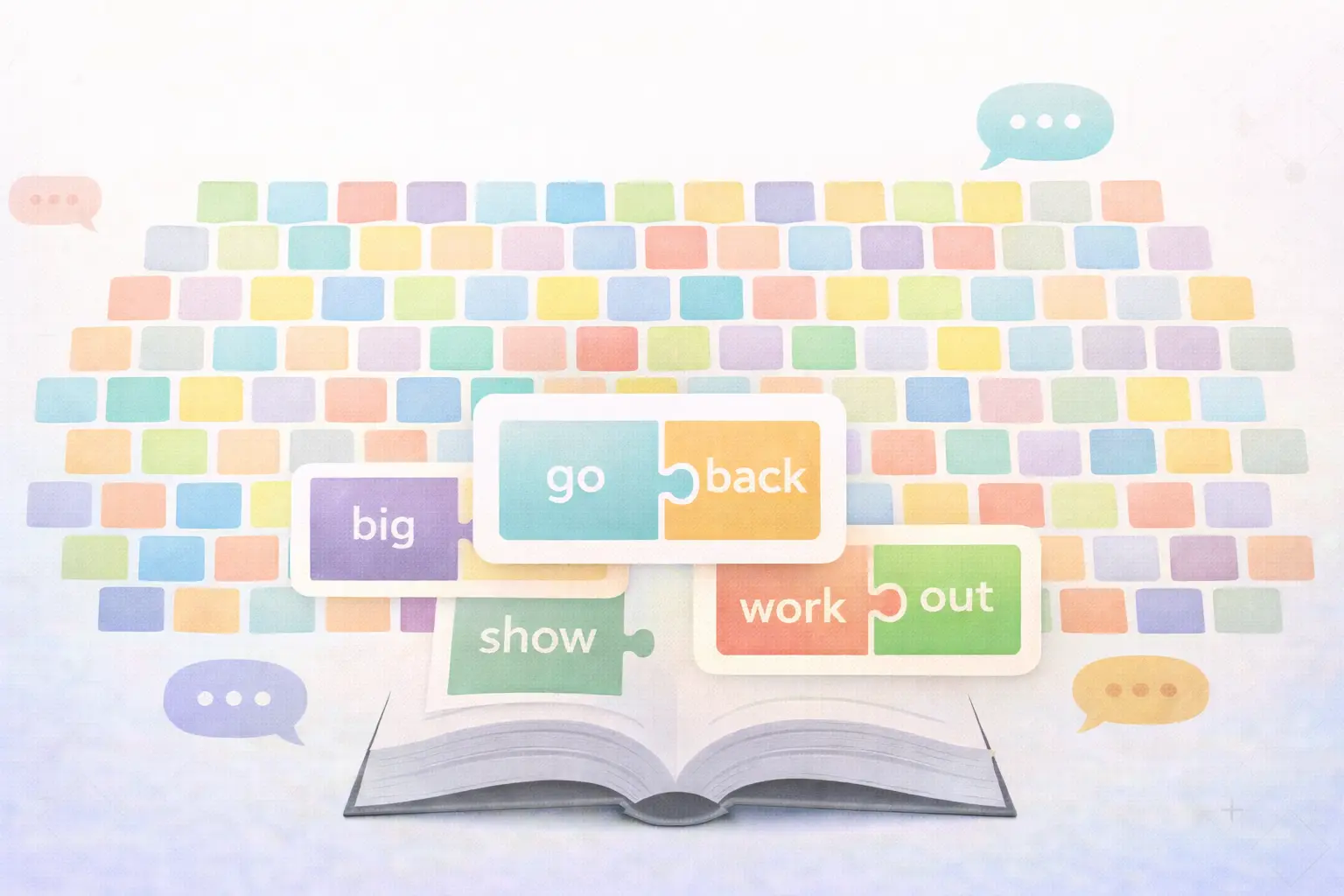
구동사는 일반 동사에 하나 이상의 짧은 불변화사가 결합한 표현입니다. get up, look after, put off가 그 예입니다. 불변화사가 뜻을 완전히 바꿀 수 있기 때문에 두 단어를 각각 번역하는 것만으로는 부족한 경우가 많습니다. 이 구동사 300개 이상 목록은 무작위 알파벳순 목록을 외우려 하지 않고도 방대한 내용을 실용적으로 정리할 방법을 제공합니다.
일주일 만에 구동사 300개를 모두 배울 필요는 없습니다. 아래에서 자주 쓰이는 묶음부터 시작하고, 실제 영어에서 해당 표현을 찾아보며 같은 기본 동사를 여러 차례 복습하세요. 이렇게 긴 구동사 목록을 실제로 쓸 수 있는 어휘로 바꿀 수 있습니다.
- 수준: A2–C1
- 중점: 일상 회화, 업무, 여행, 학습
- 추천 학습법: 기본 동사별로 관련 구동사를 익히고 직접 예문 만들기
구동사 목록 읽는 법
구동사는 분리 가능, 분리 불가 또는 자동사로 쓰일 수 있습니다. 유형에 따라 목적어의 위치가 달라지므로 이를 아는 것이 중요합니다.
| 유형 | 예시 | 알아둘 규칙 |
|---|---|---|
| 분리 가능 | turn off the light / turn the light off | 대명사는 가운데에 둡니다: turn it off. |
| 분리 불가 | look after the children | 동사와 불변화사를 붙여 씁니다. |
| 자동사 | The car broke down. | 목적어를 붙이지 않습니다. |
| 세 단어 구동사 | put up with noise | 모든 구성 요소를 함께 둡니다. |
구동사는 단순한 번역어가 아니라 전체 패턴으로 익히세요. 예를 들어 “look forward to”만 외우지 말고 look forward to + 명사 / -ing 형태로 배우세요. 전치사 to도 패턴의 일부입니다: I look forward to meeting you.

기본 동사별 고빈도 구동사
300개가 넘는 전체 목록은 기본 동사별로 복습하는 것이 가장 쉽습니다. 먼저 아래 핵심 묶음을 학습 목록으로 삼고, Linglify 구동사 라이브러리에서 같은 동사군을 확장해 보세요.
GET — 이동, 변화, 대처
| 구동사 | 뜻 | 예문 |
|---|---|---|
| get up | 침대에서 일어나다; 일어서다 | I get up before seven on weekdays. |
| get on | (탈것에) 타다; 진척되다 | We got on the train at Oxford. |
| get off | 버스, 기차, 비행기에서 내리다 | Get off at the next stop. |
| get back | 돌아오다 | I will get back to you tomorrow. |
| get over | 회복하다; 극복하다 | She got over the flu quickly. |
| get through | 마치다; 힘든 시기를 견뎌 내다 | We finally got through the report. |
| get along with | ~와 좋은 관계로 지내다 | Do you get along with your new team? |
| get rid of | 없애다, 버리다 | It is time to get rid of old files. |
GO와 COME — 이동, 시작, 등장
| 구동사 | 뜻 | 예문 |
|---|---|---|
| go on | 계속하다 | Please go on with your story. |
| go out | 여가를 위해 외출하다; (불빛이) 꺼지다 | We went out after dinner. |
| go over | 꼼꼼히 검토하다 | Let’s go over the main points again. |
| go through | 겪다; 살펴보다 | The team went through the data twice. |
| come back | 돌아오다 | The feeling came back when I heard the song. |
| come across | 우연히 발견하다; ~처럼 보이다 | I came across an old notebook. |
| come up with | 아이디어를 생각해 내다 | Can you come up with a solution? |
| come round | 방문하다; 의식을 되찾다 | Why don’t you come round on Saturday? |
TAKE와 MAKE — 시작, 수락, 창작
| 구동사 | 뜻 | 예문 |
|---|---|---|
| take off | 옷을 벗다; 비행기가 이륙하다; 성공하기 시작하다 | Her small business really took off. |
| take on | 일을 맡다; 고용하다 | I cannot take on another project this week. |
| take up | 취미를 시작하다; 시간을 차지하다 | He took up swimming last year. |
| take over | 통제권을 장악하다 | A larger firm took over the company. |
| take after | 친척을 닮다 | Maya takes after her father. |
| make up | 지어내다; 화해하다; 전체를 구성하다 | They argued, then made up. |
| make out | 간신히 알아듣다, 이해하다 | I could not make out the address. |
| make up for | 보상하다, 만회하다 | The extra day made up for the delay. |
활용도가 높은 한 동사군을 더 깊이 연습하려면 기존 TAKE 구동사 가이드와 MAKE 구동사 가이드를 살펴보세요.
PUT과 TURN — 계획과 상태의 변화
| 구동사 | 뜻 | 예문 |
|---|---|---|
| put off | 미루다 | They put off the meeting until Monday. |
| put on | 입다; 개최하다 | Put on a jacket; it is cold outside. |
| put away | 제자리에 놓다; 저축하다 | Please put away the dishes. |
| put up with | 참다, 견디다 | I cannot put up with that noise. |
| put down | 적다; 비판하다 | Put down the address before you forget. |
| turn on | 기기를 켜다 | Could you turn on the projector? |
| turn off | 기기를 끄다; 누군가가 싫어하게 만들다 | Turn it off before you leave. |
| turn out | 결과가 ~로 되다; 많은 사람이 참석하다 | The plan turned out well. |
LOOK, BRING, GIVE — 주의, 이동, 주고받기
| 구동사 | 뜻 | 예문 |
|---|---|---|
| look for | 찾으려고 하다 | I am looking for my keys. |
| look after | 돌보다 | Can you look after the cat? |
| look into | 조사하다 | We will look into the problem. |
| look forward to | 기쁜 마음으로 기다리다, 기대하다 | I look forward to hearing from you. |
| bring up | 언급하다; 아이를 키우다 | She brought up an important question. |
| bring back | 돌려주다; 기억을 떠올리게 하다 | This photo brings back memories. |
| give up | 포기하다; 하던 일을 그만두다 | Do not give up after one mistake. |
| give away | 기부하다; 비밀을 누설하다 | He gave away his old books. |
BREAK, CALL, RUN — 문제, 연락, 활동
| 구동사 | 뜻 | 예문 |
|---|---|---|
| break down | 작동을 멈추다; 감정적으로 무너지다 | The car broke down on the motorway. |
| break up | 관계를 끝내다; 흩어지다 | The meeting broke up at five. |
| break into | 강제로 침입하다; 갑자기 시작하다 | Someone broke into the office. |
| call back | 다시 전화하다 | I will call you back after lunch. |
| call off | 취소하다 | They called off the match because of rain. |
| call for | 요구하다; 데리러 들르다 | This job calls for patience. |
| run out of | ~이 다 떨어지다 | We have run out of milk. |
| run into | 우연히 만나다 | I ran into my teacher in town. |
형태, 뜻, 자주 쓰이는 패턴을 폭넓게 설명한 영어 구동사 완벽 가이드도 읽어 보세요. 목록을 확장하기 전에 가장 흔한 구동사 50개부터 시작해도 좋습니다.
불변화사는 번역이 아니라 단서입니다
불변화사는 폭넓은 의미 패턴을 만들기도 하지만, 뜻이 고정된 것은 아닙니다. Up은 완료(eat up), 증가(go up), 창설(set up)을 나타낼 수 있습니다. Out은 외출(go out), 알아냄(find out), 소진(run out of)을 뜻할 수 있습니다.
이 패턴을 기억을 돕는 단서로 사용한 뒤, 문맥에서 구동사 전체의 뜻을 확인하세요. up이 들어간 동사가 모두 같은 뜻이라고 생각하지 마세요.

구동사 300개 이상을 위한 현실적인 학습 계획
일주일에 구동사 8~10개를 공부하세요. 각 묶음의 연관성을 유지하세요. 기본 동사 하나에 해당하는 구동사 6개와 이전 묶음에서 복습할 표현 2개를 함께 학습합니다.
- 명확한 예문 하나를 소리 내어 읽습니다.
- 구동사가 분리 가능, 분리 불가, 자동사 중 어느 유형인지 기록합니다.
- 실제 사람, 장소, 과업을 넣어 자신만의 문장을 씁니다.
- 하루 뒤 복습하고, 며칠 후 다시 복습합니다.
- 짧은 메시지나 말하기 답변에 표현 두 개를 사용합니다.
한 단어짜리 번역만 외우지 마세요. Put off는 “미루다”만 기억하는 것보다 put off a meeting, put it off 패턴으로 익히는 편이 더 유용합니다. 중급 구동사 라이브러리에서 전체 패턴을 연습하세요.
어휘 스니펫: 유용한 동사부터 시작하기
먼저 소량의 단어를 저장한 다음, 내일 복습하기 전에 자신만의 예문을 추가하세요.
worthless
형용사
-
예문
- Don't let anyone make you feel worthless or unimportant.
- The broken watch became completely worthless and couldn't be repaired.
formally
부사
-
예문
- Students must formally register for classes before the semester begins.
- The new president will be formally inaugurated next month in the capital.
border
명사
-
예문
- The garden had a beautiful flower border along the path.
- They crossed the border between France and Germany.
unload
동사
-
예문
- Ship crew must unload containers at port.
- Workers unload cargo from delivery truck efficiently.
stress
동사
-
예문
- Heavy workload may stress employees beyond limits.
- Teacher will stress importance of homework completion.
willingly
부사
-
예문
- He willingly shared his knowledge with younger students.
- The volunteers worked willingly without expecting any payment.
prospect
명사
-
예문
- Economic prospect looks optimistic for next year.
- Job prospect improves with additional education training.
willingness
명사
-
예문
- Her willingness to learn impressed all the teachers.
- The company values employees' willingness to work as a team.
timeliness
명사
-
예문
- Project timeliness determines success in competitive business environment.
- Report timeliness affects decision making processes significantly.
calm
형용사
-
예문
- She remained calm despite the stressful situation at work.
- The calm ocean reflected the beautiful colors of the sunset.
bewilderment
명사
-
예문
- She stared in bewilderment at the unexpected test results.
- The tourist's bewilderment was obvious when he got lost downtown.
brick
명사
-
예문
- He's been a real brick during this crisis.
- The house was built with traditional red brick.
revise
동사
-
예문
- Author must revise manuscript before publication deadline.
- Student will revise lessons before final examination.
lap
명사
-
예문
- The cat curled up comfortably on her lap while reading.
- The runner completed another lap around the track successfully.
transfer
동사
-
예문
- Bank will transfer money between accounts quickly.
- Student may transfer to different university program.
max
명사
-
예문
- Students can borrow max of five books from library.
- The speed limit max on highway is seventy miles per hour.
exhausted
형용사
-
예문
- After running the marathon, she felt completely exhausted and needed to rest.
- The exhausted workers finally finished their twelve-hour shift at the factory.
diligent
형용사
-
예문
- Diligent students typically achieve better grades through consistent hard work.
- The diligent researcher spent years collecting data for the scientific study.
independent
형용사
-
예문
- She's very independent and prefers to solve problems on her own.
- The independent research confirmed the results of the original study.
impolitely
부사
-
예문
- He spoke impolitely to the waiter and made everyone uncomfortable.
- She impolitely refused to answer the reporter's questions.
characterize
동사
-
예문
- Honesty and integrity characterize his approach to business dealings.
- The report characterizes the current economic situation as generally stable.
yell
동사
-
예문
- Don't yell at the children when they make innocent mistakes.
- The coach had to yell instructions over the crowd noise.
aggressive
형용사
-
예문
- Some drivers become aggressive when stuck in heavy traffic for hours.
- The aggressive marketing campaign helped increase sales by thirty percent last quarter.
alphabet
명사
-
예문
- Children learn the alphabet before they can read complete sentences.
- The English alphabet has twenty-six letters from A to Z.
다음 단계
- 구동사 라이브러리에서 소규모 묶음을 연습하세요.
- 영어 구동사 완벽 가이드에서 문법 규칙을 복습하세요.
- 기존 TAKE 구동사 가이드로 학습을 심화하세요.
- 구동사 5개를 Linglify 사전에 추가하고 내일 복습하세요.
자주 묻는 질문
구동사는 처음에 몇 개나 배워야 하나요?
자신의 일상과 관련된 고빈도 표현 30~50개부터 시작하세요. 이를 알아보고 사용할 수 있게 되면 다른 기본 동사 묶음을 추가하세요. 긴 목록을 한 번 훑어보는 것보다 적극적으로 사용하는 편이 중요합니다.
불변화사만 보고 뜻을 추측해도 되나요?
불변화사가 도움이 되는 단서를 줄 때도 있지만, 그것만으로 뜻을 확실히 알 수는 없습니다. 특히 관용적 의미가 있는 경우에는 예문과 함께 구동사 전체를 익히세요.
구동사는 비격식 표현인가요?
구동사는 회화에서 흔하지만 업무 이메일, 뉴스, 중립적인 글에도 등장합니다. 상황에 맞는 표현을 선택하세요. look into는 매우 격식 있는 investigate보다 자연스러운 경우가 많습니다.
구동사를 가장 빠르게 기억하는 방법은 무엇인가요?
기본 동사별로 묶고, 자신의 상황과 연결해 간격을 두고 복습하세요. 한 번 길게 공부하는 것보다 짧게 자주 연습하는 편이 훨씬 효과적입니다.