
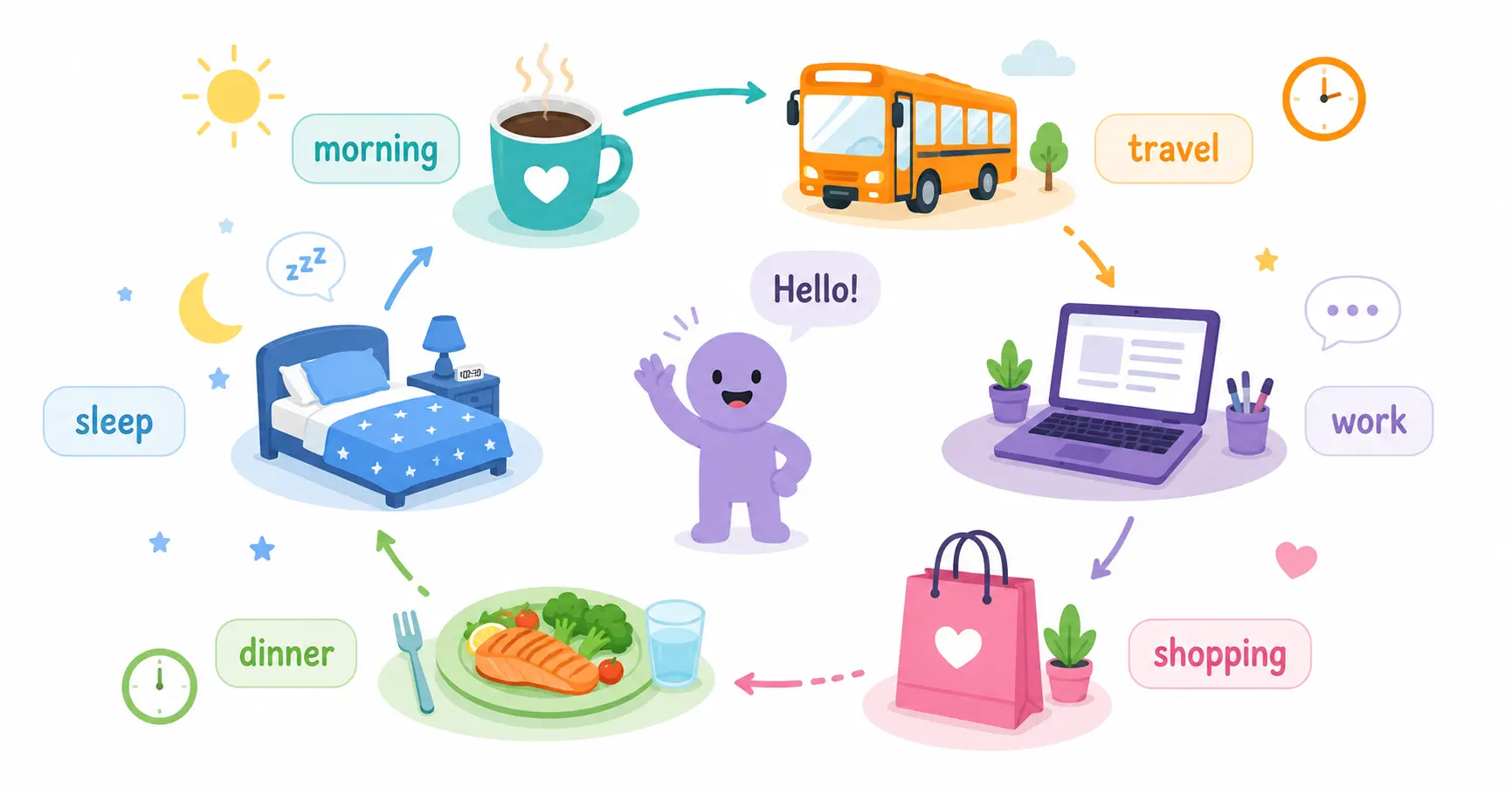
일상생활 영어 단어: 실용 어휘를 위한 종합 가이드
실제 대화를 하려고 영어 단어 50,000개를 알 필요는 없습니다. 여러 연구에 따르면 가장 흔한 단어군 2,000~3,000개가 일상 구어 영어의 약 90~95%를 다룹니다. 나머지 5~10%는 실제로 접하면서 익힐 수 있습니다.
진짜 질문은 “단어를 몇 개나 알아야 할까?”가 아니라 “어떤 단어를 알아야 할까?”입니다. 활용도 높은 고빈도 단어 500개를 알고 문장 속에서 실제로 사용할 수 있는 학습자가 무작위 어휘 목록에서 5,000개를 외웠지만 조합해서 쓰지 못하는 학습자보다 의사소통을 더 잘할 수 있습니다.
이 가이드에서는 바로 그런 단어, 즉 일상생활에서 쓰는 영어 단어 500개 이상을 실제로 필요한 상황에 따라 정리합니다. 모든 단어에 뜻과 품사, 일상에서 실제로 듣거나 말할 법한 예문을 담았습니다.
이 가이드의 구성
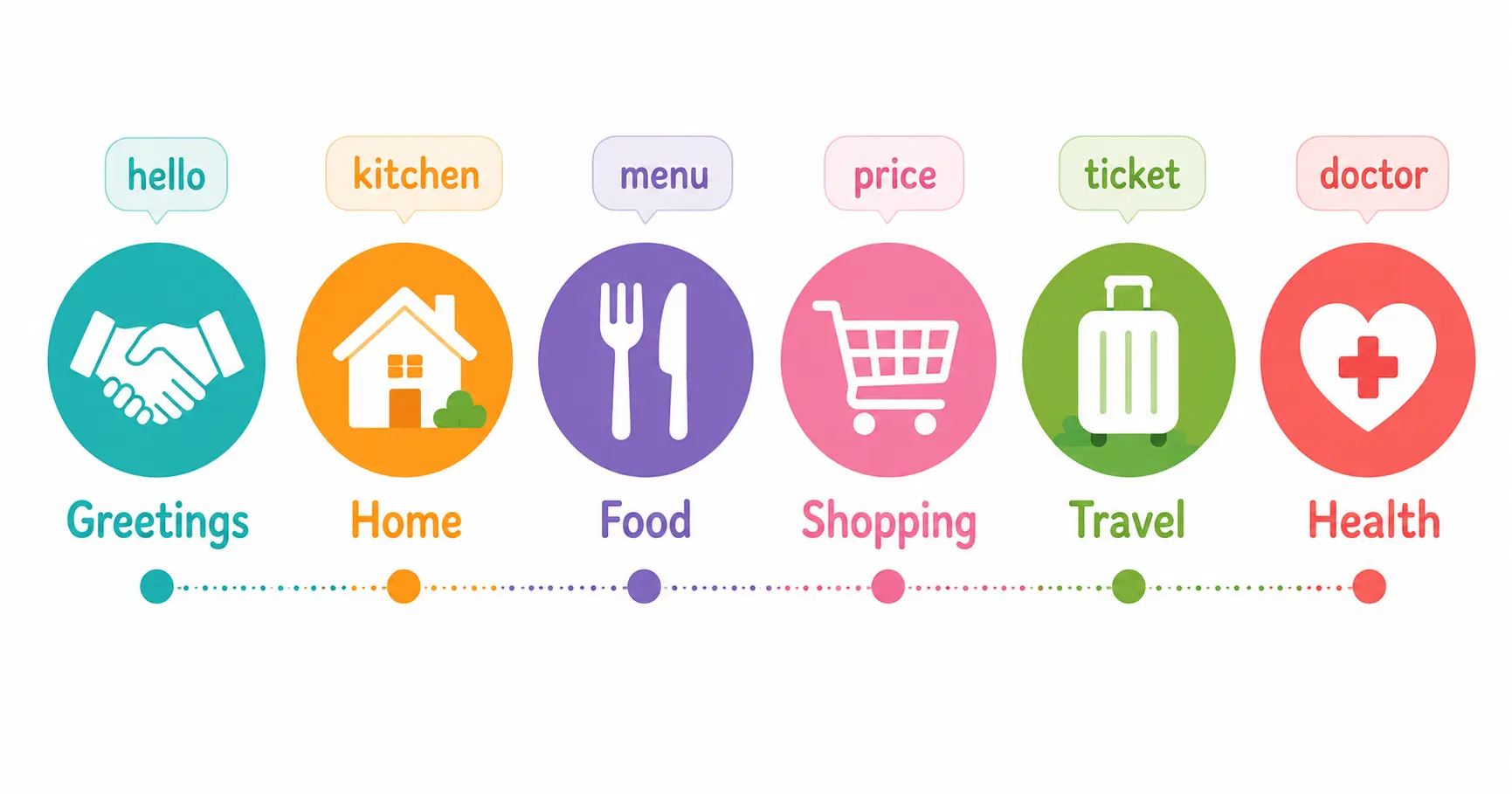
실제로 활용하기 어려운 알파벳순 대신, 단어를 일상 상황별로 정리했습니다. 실제로 영어가 필요한 맥락에 따라 찾아볼 수 있습니다.
| 섹션 | 다루는 내용 | 단어 수 |
|---|---|---|
| 인사와 가벼운 대화 | 사람 만나기, 자기소개 | 약 40개 |
| 집과 가족 | 가정생활, 일과, 친척 | 약 50개 |
| 음식과 요리 | 식사, 재료, 식당 | 약 60개 |
| 쇼핑과 돈 | 가게, 가격, 거래 | 약 40개 |
| 직장과 사무실 | 직업, 회의, 이메일 | 약 50개 |
| 여행과 교통 | 길 안내, 교통수단, 호텔 | 약 50개 |
| 건강과 신체 | 신체 부위, 증상, 의사 | 약 50개 |
| 감정과 의견 | 감정, 동의와 반대 | 약 40개 |
| 시간과 숫자 | 요일, 월, 수량 | 약 40개 |
| 기술과 의사소통 | 기기, 인터넷, 소셜 미디어 | 약 40개 |
| 날씨와 자연 | 기후, 계절, 야외 활동 | 약 30개 |
| 교육과 학습 | 학교, 공부, 시험 | 약 40개 |
섹션 1: 인사와 가벼운 대화
사람을 만나고 대화를 시작하며 기본적인 사회적 교류를 할 때 매일 처음으로 쓰는 단어들입니다.
필수 인사말
| 단어/표현 | 뜻 | 예문 |
|---|---|---|
| hello / hi | 인사 | Hi, how are you? |
| good morning | 정오 전에 하는 인사 | Good morning, everyone. |
| good afternoon | 정오가 지난 뒤 하는 인사 | Good afternoon, may I help you? |
| good evening | 저녁에 하는 인사 | Good evening, welcome to the restaurant. |
| goodbye / bye | 헤어질 때 하는 인사 | Goodbye, see you tomorrow! |
| see you later | 편하게 헤어질 때 쓰는 말 | See you later, have a good day! |
| how are you? | 상대의 상태를 묻는 말 | How are you doing today? |
| fine | 괜찮은; 만족스러운 | I’m fine, thanks for asking. |
| nice to meet you | 처음 만났을 때 하는 인사 | Nice to meet you, I’m Alex. |
| thank you / thanks | 감사 표현 | Thank you for your help. |
| please | 정중한 부탁 표현 | Can I have some water, please? |
| sorry | 사과하거나 주의를 끌 때 하는 말 | Sorry, could you repeat that? |
| excuse me | 주의를 끌거나 지나갈 때 하는 말 | Excuse me, where is the bathroom? |
가벼운 대화에 필요한 표현
| 단어 | 품사 | 뜻 | 예문 |
|---|---|---|---|
| name | 명사 | 누군가를 부르는 이름 | What’s your name? |
| from | 전치사 | 출신 장소를 나타냄 | Where are you from? |
| live | 동사 | 거주하다 | I live in Tokyo. |
| work | 동사 / 명사 | 직업이 있다; 일, 고용 | I work at a tech company. |
| like | 동사 | 좋아하다 | I like reading and cooking. |
| friend | 명사 | 알고 지내며 신뢰하는 사람 | She’s my best friend. |
| family | 명사 | 친척들로 이루어진 집단, 가족 | My family lives in Brazil. |
| busy | 형용사 | 할 일이 많은, 바쁜 | Sorry, I’ve been really busy. |
| free | 형용사 | 시간이 있는; 무료인 | Are you free this weekend? |
| enjoy | 동사 | 즐기다 | I enjoy walking in the park. |
| favorite | 형용사 | 가장 좋아하는 | What’s your favorite movie? |
| hobby | 명사 | 즐거움을 위해 하는 활동, 취미 | My hobby is photography. |
| weekend | 명사 | 토요일과 일요일, 주말 | What are your plans for the weekend? |
| holiday | 명사 | 쉬는 날; 휴가 | We’re going on holiday next month. |
| fun | 명사 / 형용사 | 즐거움; 재미있는 | The party was really fun. |
| interesting | 형용사 | 흥미를 끄는 | That’s a very interesting idea. |
섹션 2: 집과 가족
가족 구성원
| 단어 | 뜻 | 예문 |
|---|---|---|
| mother / mom | 여성 부모, 어머니 / 엄마 | My mom is a teacher. |
| father / dad | 남성 부모, 아버지 / 아빠 | My dad works from home. |
| parents | 어머니와 아버지, 부모님 | My parents live in London. |
| brother | 남자 형제 | I have an older brother. |
| sister | 여자 형제 | My sister is 12 years old. |
| husband | 남편 | Her husband is a doctor. |
| wife | 아내 | His wife works at a bank. |
| children / kids | 아들과 딸, 자녀 | They have three children. |
| son | 남자 자녀, 아들 | Their son starts school this year. |
| daughter | 여자 자녀, 딸 | Our daughter loves music. |
| grandparents | 부모의 부모, 조부모 | I visit my grandparents every Sunday. |
| uncle | 부모의 남자 형제, 삼촌·외삼촌 | My uncle lives in Canada. |
| aunt | 부모의 여자 형제, 고모·이모·숙모 | My aunt is coming to visit. |
| cousin | 삼촌이나 이모의 자녀, 사촌 | I have 10 cousins. |
| neighbor | 가까운 곳에 사는 사람, 이웃 | Our neighbor is very friendly. |
집과 일상생활
| 단어 | 품사 | 뜻 | 예문 |
|---|---|---|---|
| house / home | 명사 | 사는 곳, 집 | I’ll be home by 6 PM. |
| apartment | 명사 | 공동주택의 한 세대, 아파트 | We rent a small apartment downtown. |
| room | 명사 | 건물 안의 공간, 방 | The living room is downstairs. |
| kitchen | 명사 | 음식을 준비하는 곳, 주방 | She’s cooking in the kitchen. |
| bedroom | 명사 | 잠을 자는 곳, 침실 | The apartment has two bedrooms. |
| bathroom | 명사 | 변기와 샤워 시설이 있는 방, 욕실 | The bathroom is on the left. |
| door | 명사 | 방으로 들어가는 입구, 문 | Please close the door. |
| window | 명사 | 빛이나 공기가 들어오는 창 | Open the window — it’s hot. |
| key | 명사 | 자물쇠를 여는 도구, 열쇠 | I forgot my keys at home. |
| clean | 동사 / 형용사 | 먼지를 없애다; 깨끗한 | I clean the house every Saturday. |
| cook | 동사 | 음식을 준비하다; 요리하다 | I usually cook dinner at 7. |
| wake up | 동사 | 잠에서 깨다 | I wake up at 6:30 every morning. |
| sleep | 동사 / 명사 | 의식 없이 쉬다; 수면 | I need at least 7 hours of sleep. |
| shower | 명사 / 동사 | 물로 씻기; 샤워하다 | I take a shower after the gym. |
| breakfast | 명사 | 하루의 첫 식사, 아침 식사 | What did you have for breakfast? |
| lunch | 명사 | 한낮에 먹는 식사, 점심 | Let’s go out for lunch. |
| dinner | 명사 | 저녁에 먹는 식사, 저녁 | Dinner is ready! |
섹션 3: 음식과 요리
흔한 음식
| 단어 | 범주 | 예문 |
|---|---|---|
| bread | 곡물 식품 | I buy fresh bread every morning. |
| rice | 곡물 식품 | Rice is the main dish in many countries. |
| pasta | 곡물 식품 | She made pasta with tomato sauce. |
| chicken | 육류 | We’re having chicken for dinner. |
| beef | 육류 | This beef stew is delicious. |
| fish | 해산물 | I eat fish twice a week. |
| egg | 단백질 식품 | I’ll have two eggs for breakfast. |
| milk | 유제품 | Do you want milk in your coffee? |
| cheese | 유제품 | This cheese is from France. |
| butter | 유제품 | Spread some butter on the bread. |
| apple | 과일 | An apple a day keeps the doctor away. |
| banana | 과일 | I had a banana for a snack. |
| orange | 과일 | Would you like some orange juice? |
| tomato | 채소 | Add the tomatoes to the salad. |
| potato | 채소 | Baked potatoes are easy to make. |
| onion | 채소 | Chop the onion into small pieces. |
| salad | 요리 | I’ll have a salad for lunch. |
| soup | 요리 | Hot soup is perfect on cold days. |
| sugar | 조미료 | How much sugar do you take? |
| salt | 조미료 | The soup needs a little more salt. |
외식
| 단어/표현 | 뜻 | 예문 |
|---|---|---|
| menu | 주문할 수 있는 음식 목록, 메뉴 | Can I see the menu, please? |
| order | 음식이나 음료를 요청하다; 주문하다 | Are you ready to order? |
| waiter | 식당에서 손님을 응대하는 직원, 웨이터 | The waiter brought our drinks. |
| bill / check | 지불 요청서, 계산서 | Could we have the bill, please? |
| tip | 서비스에 대해 추가로 주는 돈, 팁 | We left a 15% tip. |
| reservation | 미리 예약한 자리 | I’d like to make a reservation for two. |
| delicious | 아주 맛있는 | The food was absolutely delicious. |
| spicy | 강하고 매운맛이 나는 | Is this dish very spicy? |
| fresh | 최근에 만들어졌거나 수확한, 신선한 | The vegetables are very fresh today. |
| hungry | 음식이 필요한, 배고픈 | I’m really hungry — let’s eat. |
| thirsty | 마실 것이 필요한, 목마른 | I’m thirsty. Can I have some water? |
| full | 충분히 먹은, 배부른 | I’m full, I can’t eat any more. |
섹션 4: 쇼핑과 돈
| 단어 | 품사 | 뜻 | 예문 |
|---|---|---|---|
| buy | 동사 | 구매하다 | I need to buy some groceries. |
| sell | 동사 | 돈을 받고 교환하다; 팔다 | They sell handmade jewelry. |
| pay | 동사 | 어떤 것의 대가로 돈을 내다 | Can I pay by card? |
| price | 명사 | 물건을 사는 데 필요한 돈, 가격 | What’s the price of this jacket? |
| cost | 동사 / 명사 | 돈이 들다; 비용 | How much does this cost? |
| cheap | 형용사 | 가격이 낮은, 싼 | The food there is cheap and good. |
| expensive | 형용사 | 가격이 높은, 비싼 | This restaurant is too expensive. |
| free | 형용사 | 비용이 들지 않는, 무료의 | Admission to the museum is free. |
| discount | 명사 | 가격 인하, 할인 | There’s a 20% discount this week. |
| sale | 명사 | 가격을 낮춰 판매하는 기간, 세일 | The store is having a big sale. |
| cash | 명사 | 실물 화폐, 현금 | Do you accept cash? |
| card | 명사 | 신용카드나 직불카드 | I’ll pay by card, please. |
| change | 명사 | 돌려받는 돈; 동전, 거스름돈 | Keep the change. |
| receipt | 명사 | 구매 증명서, 영수증 | Can I have a receipt, please? |
| size | 명사 | 물건의 크기, 치수 | What size do you wear? |
| try on | 구동사 | 옷을 시험 삼아 입어 보다 | Can I try on this shirt? |
| return | 동사 | 환불을 위해 물건을 돌려주다 | I’d like to return this item. |
| shop / store | 명사 | 물건을 사는 장소, 가게 | There’s a bookshop on the corner. |
| customer | 명사 | 물건을 사는 사람, 고객 | The customer is always right. |
| bag | 명사 | 물건을 담아 나르는 용기, 가방 | Do you need a bag? |
섹션 5: 직장과 사무실
| 단어 | 품사 | 뜻 | 예문 |
|---|---|---|---|
| job | 명사 | 보수를 받는 일, 직업 | She got a new job at Google. |
| career | 명사 | 장기간에 걸친 직업 경로, 경력 | He’s building a career in finance. |
| company | 명사 | 사업 조직, 회사 | The company has 500 employees. |
| office | 명사 | 일하는 장소, 사무실 | I go to the office three days a week. |
| boss | 명사 | 책임자, 상사 | My boss is very supportive. |
| colleague | 명사 | 함께 일하는 사람, 동료 | I’m having lunch with a colleague. |
| meeting | 명사 | 여러 사람이 모여 논의하는 회의 | We have a meeting at 10 AM. |
| deadline | 명사 | 정해진 마감 시간 | The deadline is next Friday. |
| project | 명사 | 계획된 업무 | I’m working on a big project. |
| task | 명사 | 해야 할 일, 과제 | I have three tasks to finish today. |
| schedule | 명사 / 동사 | 일정표; 일정을 잡다 | Check my schedule for tomorrow. |
| salary | 명사 | 월급이나 연봉, 급여 | The salary is competitive. |
| hire | 동사 | 고용하다 | They plan to hire 20 people. |
| resign / quit | 동사 | 자발적으로 직장을 떠나다; 사직하다 | She resigned last week. |
| promote | 동사 | 더 높은 직책을 주다; 승진시키다 | He was promoted to manager. |
| apply | 동사 | (직장에) 정식으로 지원하다 | I applied for three positions. |
| interview | 명사 / 동사 | 직장에 관한 공식 대화, 면접 | The interview went really well. |
| experience | 명사 | 직접 해 보며 얻은 지식, 경험 | She has 10 years of experience. |
| team | 명사 | 함께 일하는 집단, 팀 | Our team has eight members. |
| 명사 / 동사 | 전자 메시지; 이메일을 보내다 | I’ll send you an email tonight. | |
| report | 명사 / 동사 | 공식 문서; 알리다, 보고하다 | The report is due tomorrow. |
| client | 명사 | (전문 서비스를 받는) 고객 | We’re meeting an important client. |
섹션 6: 여행과 교통
| 단어 | 품사 | 뜻 | 예문 |
|---|---|---|---|
| airport | 명사 | 비행기가 출발하고 도착하는 곳, 공항 | We need to be at the airport by 5 AM. |
| flight | 명사 | 비행기로 하는 여행, 항공편 | The flight to London takes 7 hours. |
| ticket | 명사 | 교통 요금을 냈다는 증표, 승차권·항공권 | I booked a round-trip ticket. |
| passport | 명사 | 국제 신분증, 여권 | Don’t forget your passport. |
| luggage / baggage | 명사 | 여행 가방과 짐, 수하물 | My luggage is too heavy. |
| hotel | 명사 | 여행 중 머무는 곳, 호텔 | We booked a hotel near the beach. |
| reservation | 명사 | 예약 | I have a reservation under Smith. |
| check in | 구동사 | 호텔이나 공항에서 등록하다; 체크인하다 | You can check in from 3 PM. |
| check out | 구동사 | 호텔에서 나가다; 살펴보다 | We need to check out by 11 AM. |
| train | 명사 | 철도 차량, 기차 | The train leaves at 8:15. |
| bus | 명사 | 도로를 달리는 큰 차량, 버스 | Take bus number 42 to the center. |
| taxi / cab | 명사 | 돈을 내고 이용하는 자동차, 택시 | Let’s take a taxi to the restaurant. |
| subway / metro | 명사 | 지하 철도, 지하철 | The subway is faster than the bus. |
| station | 명사 | 기차나 버스가 서는 곳, 역 | The train station is nearby. |
| map | 명사 | 장소를 그림으로 나타낸 안내도, 지도 | Can you show me on the map? |
| direction | 명사 | 가야 할 방향; 길 안내 | Can you give me directions? |
| left / right | 방향 | Turn left at the traffic light. | | straight | 부사 | 방향을 틀지 않고 곧장 | Go straight for two blocks. | | near / far | 형용사/부사 | 가까운 / 먼 | Is the hotel far from here? | | arrival | 명사 | 도착하는 일, 도착 | Our arrival time is 3 PM. | | departure | 명사 | 떠나는 일, 출발 | Check the departure board. | | delay | 명사 / 동사 | 지연; 지연시키다 | The flight has a 2-hour delay. | | cancel | 동사 | 취소하다 | They cancelled the train due to weather. | | border | 명사 | 국가 간 경계, 국경 | We crossed the border at noon. |
섹션 7: 건강과 신체
신체 부위
| 단어 | 뜻 | 예문 |
|---|---|---|
| head | 몸의 맨 위 부분, 머리 | I have a headache. |
| face | 머리의 앞부분, 얼굴 | She has a kind face. |
| eye | 보는 기관, 눈 | My eyes are tired from the screen. |
| ear | 듣는 기관, 귀 | I have an earache. |
| nose | 냄새를 맡는 기관, 코 | My nose is running. |
| mouth | 먹고 말하는 데 쓰는 입 | Open your mouth, please. |
| tooth / teeth | 물거나 씹을 때 쓰는 이, 치아 | I brush my teeth twice a day. |
| neck | 머리와 몸을 연결하는 목 | My neck is stiff. |
| shoulder | 팔의 윗부분에 있는 어깨 | He hurt his shoulder. |
| arm | 상지, 팔 | She broke her arm skiing. |
| hand | 팔 끝에 있는 손 | Wash your hands before eating. |
| finger | 손가락 | I cut my finger chopping vegetables. |
| back | 몸의 뒤쪽, 등·허리 | My back hurts from sitting all day. |
| stomach | 소화 기관; 배 부위, 위·배 | I have a stomachache. |
| leg | 하지, 다리 | My legs are tired from running. |
| knee | 다리 가운데의 관절, 무릎 | He injured his knee playing football. |
| foot / feet | 다리 끝에 있는 발 | My feet are sore from walking. |
건강과 의료
| 단어 | 품사 | 뜻 | 예문 |
|---|---|---|---|
| sick / ill | 형용사 | 건강하지 않은, 아픈 | I feel sick today — I can’t go to work. |
| pain | 명사 | 신체적 고통, 통증 | I have a sharp pain in my chest. |
| fever | 명사 | 높은 체온, 열 | She has a high fever. |
| cold | 명사 | 흔한 질병, 감기 | I caught a cold last week. |
| cough | 명사 / 동사 | 폐에서 공기를 내보내는 기침; 기침하다 | I’ve had this cough for a week. |
| medicine | 명사 | 질병 치료에 쓰는 물질, 약 | Take this medicine twice a day. |
| doctor | 명사 | 의료 전문가, 의사 | I need to see a doctor. |
| hospital | 명사 | 의료 시설, 병원 | He was taken to the hospital. |
| appointment | 명사 | 미리 정한 방문 약속 | I have a doctor’s appointment at 3. |
| prescription | 명사 | 의사의 서면 처방, 처방전 | The doctor gave me a prescription. |
| allergy | 명사 | 어떤 것에 대한 부정적 반응, 알레르기 | I have an allergy to peanuts. |
| rest | 명사 / 동사 | 휴식; 쉬다 | You need rest — stay in bed. |
| healthy | 형용사 | 건강한 상태의 | Eating vegetables keeps you healthy. |
| exercise | 명사 / 동사 | 신체 활동; 운동하다 | Regular exercise is important. |
섹션 8: 감정과 의견
| 단어 | 품사 | 뜻 | 예문 |
|---|---|---|---|
| happy | 형용사 | 기쁨을 느끼는, 행복한 | I’m happy to see you. |
| sad | 형용사 | 슬픔을 느끼는 | The movie made me sad. |
| angry | 형용사 | 강한 불쾌감을 느끼는, 화난 | She was angry about the delay. |
| afraid / scared | 형용사 | 두려움을 느끼는 | I’m afraid of spiders. |
| surprised | 형용사 | 예상치 못한 일에 놀란 | I was surprised by the news. |
| tired | 형용사 | 휴식이 필요한, 피곤한 | I’m so tired after work. |
| excited | 형용사 | 열의와 기대를 느끼는, 신이 난 | I’m excited about the trip! |
| worried | 형용사 | 불안과 걱정을 느끼는 | I’m worried about the exam. |
| bored | 형용사 | 흥미를 느끼지 못하는, 지루한 | I’m bored — let’s do something. |
| confused | 형용사 | 이해하지 못하는, 혼란스러운 | I’m confused by these instructions. |
| proud | 형용사 | 자부심을 느끼는 | She’s proud of her daughter. |
| nervous | 형용사 | 불안감을 느끼는, 긴장한 | I’m nervous about the presentation. |
| grateful | 형용사 | 고마움을 느끼는, 감사한 | I’m grateful for your help. |
| lonely | 형용사 | 혼자라고 느끼는, 외로운 | He felt lonely in the new city. |
| hope | 동사 / 명사 | 바라다; 바람 | I hope you feel better soon. |
| agree | 동사 | 같은 의견을 가지다; 동의하다 | I agree with you completely. |
| disagree | 동사 | 다른 의견을 가지다; 동의하지 않다 | I respectfully disagree. |
| believe | 동사 | 사실이라고 받아들이다; 믿다 | I believe you’re making the right choice. |
| prefer | 동사 | 한 가지를 더 좋아하다 | I prefer coffee to tea. |
| recommend | 동사 | 좋은 선택이라고 제안하다; 추천하다 | I recommend the seafood pasta. |
| suggest | 동사 | 아이디어를 제안하다 | I suggest we leave early. |
| opinion | 명사 | 개인적인 견해, 의견 | In my opinion, this plan is better. |
섹션 9: 시간과 숫자
시간 표현
| 단어/표현 | 뜻 | 예문 |
|---|---|---|
| today | 오늘 | I have a meeting today. |
| tomorrow | 다음 날, 내일 | Let’s talk tomorrow. |
| yesterday | 전날, 어제 | I saw her yesterday. |
| now | 바로 지금 | I’m busy right now. |
| later | 미래의 어느 시점에, 나중에 | I’ll call you later. |
| soon | 가까운 미래에, 곧 | The bus should arrive soon. |
| already | 지금보다 앞서, 이미 | I’ve already eaten. |
| still | 계속해서, 아직 | Are you still at work? |
| yet | 지금까지(부정문·의문문에서), 아직 | I haven’t finished yet. |
| always | 언제나, 항상 | She always arrives on time. |
| usually | 대부분의 경우, 보통 | I usually wake up at 7. |
| sometimes | 때때로 | Sometimes I work from home. |
| never | 어느 때에도 ~않는, 결코 ~않는 | I never drink coffee after 6 PM. |
| early | 예상한 시간보다 이르게 | We arrived early for the show. |
| late | 예상한 시간보다 늦게 | Sorry I’m late — traffic was bad. |
| ago | 과거의 어느 때에, ~전에 | I moved here two years ago. |
숫자와 수량
| 단어 | 뜻 | 예문 |
|---|---|---|
| many | 많은 수의(셀 수 있는 명사와 함께) | How many people are coming? |
| much | 많은 양의(셀 수 없는 명사와 함께) | How much time do we have? |
| few | 적은 수의 | Only a few seats are left. |
| little | 적은 양의 | There’s very little milk left. |
| some | 정해지지 않은 양의 | Would you like some water? |
| any | 의문문·부정문에서 쓰임 | Do you have any questions? |
| every / each | 집단의 구성원 모두를 각각 | Every student passed the exam. |
| all | 전체 양 | All the tickets are sold out. |
| enough | 필요한 만큼의 | We have enough food for everyone. |
| half | 어떤 것의 50%, 절반 | Half the class was absent. |
| both | 두 가지 모두 | Both options are good. |
| another | 하나 더; 다른 하나 | Can I have another cup of coffee? |
섹션 10: 기술과 의사소통
| 단어 | 품사 | 뜻 | 예문 |
|---|---|---|---|
| phone | 명사 | 전화 기기, 전화기 | I left my phone at home. |
| call | 동사 / 명사 | 전화로 연락하다; 전화 | I’ll call you after work. |
| message | 명사 | 글이나 말로 전하는 내용, 메시지 | I sent you a message. |
| internet | 명사 | 전 세계를 연결하는 네트워크, 인터넷 | The internet is down again. |
| website | 명사 | 여러 웹페이지로 이루어진 사이트 | Check our website for details. |
| app | 명사 | 모바일 응용 프로그램, 앱 | Download the app for free. |
| password | 명사 | 비밀 접근 코드, 비밀번호 | I forgot my password. |
| search | 동사 / 명사 | 온라인에서 찾다; 검색 | Search for “English vocabulary” on Google. |
| download | 동사 | 인터넷에서 저장하다; 다운로드하다 | Download the file from your email. |
| upload | 동사 | 인터넷으로 보내다; 업로드하다 | Upload the photo to the cloud. |
| screen | 명사 | 화면 | My screen is cracked. |
| charge | 동사 | 배터리에 전력을 더하다; 충전하다 | I need to charge my phone. |
| update | 동사 / 명사 | 최신 상태로 만들다; 업데이트 | Update the app to the latest version. |
| share | 동사 | 다른 사람에게 접근 권한을 주다; 공유하다 | Share the link with your team. |
| connect | 동사 | 연결하거나 이어 주다 | I can’t connect to the Wi-Fi. |
| post | 동사 / 명사 | 온라인에 게시하다; 게시물 | She posted a photo on Instagram. |
| follow | 동사 | 콘텐츠를 구독하다; 팔로우하다 | Follow us on social media. |
| online / offline | 형용사/부사 | 연결된 / 연결되지 않은 | The store is available both online and offline. |
섹션 11: 날씨와 자연
| 단어 | 품사 | 뜻 | 예문 |
|---|---|---|---|
| weather | 명사 | 대기 상태, 날씨 | What’s the weather like today? |
| hot | 형용사 | 기온이 높은, 더운 | It’s very hot outside — over 35°C. |
| cold | 형용사 | 기온이 낮은, 추운 | Dress warmly — it’s cold. |
| warm | 형용사 | 기분 좋게 따뜻한 | It’s warm and sunny today. |
| cool | 형용사 | 약간 추운, 선선한 | The evenings are getting cooler. |
| rain | 명사 / 동사 | 구름에서 내리는 물, 비; 비가 오다 | It’s going to rain this afternoon. |
| snow | 명사 / 동사 | 얼어붙은 강수, 눈; 눈이 오다 | It snowed all night. |
| wind | 명사 | 움직이는 공기, 바람 | The wind is very strong today. |
| cloudy | 형용사 | 구름으로 덮인, 흐린 | It’s cloudy but not raining. |
| sunny | 형용사 | 햇빛이 밝게 비치는, 맑은 | It’s a beautiful sunny day. |
| storm | 명사 | 심한 날씨, 폭풍 | A big storm is coming tonight. |
| temperature | 명사 | 더위나 추위의 정도, 기온 | The temperature dropped to –5°C. |
| season | 명사 | 한 해의 시기, 계절 | My favorite season is autumn. |
| spring | 명사 | 겨울 다음에 오는 계절, 봄 | The flowers bloom in spring. |
| summer | 명사 | 가장 따뜻한 계절, 여름 | We’re going to the beach this summer. |
| autumn / fall | 명사 | 여름 다음에 오는 계절, 가을 | The leaves change color in autumn. |
| winter | 명사 | 가장 추운 계절, 겨울 | Winters here are long and cold. |
| sky | 명사 | 지구 위의 공간, 하늘 | The sky is perfectly clear tonight. |
섹션 12: 교육과 학습
| 단어 | 품사 | 뜻 | 예문 |
|---|---|---|---|
| school | 명사 | 교육을 받는 장소, 학교 | My kids go to school nearby. |
| university | 명사 | 고등 교육 기관, 대학교 | She studied medicine at university. |
| student | 명사 | 공부하는 사람, 학생 | There are 30 students in the class. |
| teacher | 명사 | 가르치는 사람, 교사 | Our English teacher is from Australia. |
| class / lesson | 명사 | 수업 시간 | English class starts at 9 AM. |
| course | 명사 | 여러 수업으로 이루어진 과정, 강좌 | I’m taking an online course. |
| study | 동사 | 읽거나 연습해 배우다; 공부하다 | I study English every day. |
| learn | 동사 | 지식을 얻다; 배우다 | I want to learn Japanese next. |
| practice | 동사 / 명사 | 향상하려고 반복해서 하다; 연습 | Practice makes perfect. |
| read | 동사 | 쓰인 단어를 보다; 읽다 | I read for 30 minutes before bed. |
| write | 동사 | 종이나 화면에 단어를 쓰다 | Write your name at the top. |
| speak | 동사 | 말하다 | Can you speak more slowly? |
| listen | 동사 | 소리에 주의를 기울이다; 듣다 | Listen to the recording carefully. |
| understand | 동사 | 이해하다 | I don’t understand this question. |
| exam / test | 명사 | 공식적인 평가, 시험 | The final exam is next Monday. |
| homework | 명사 | 집에서 하도록 주어진 과제, 숙제 | I have a lot of homework tonight. |
| mistake | 명사 | 오류, 실수 | Don’t be afraid of making mistakes. |
| improve | 동사 | 더 좋아지다; 향상시키다 | My English has improved a lot. |
| vocabulary | 명사 | 알고 있는 단어들의 집합, 어휘 | Building your vocabulary takes time. |
| grammar | 명사 | 언어의 규칙, 문법 | English grammar can be confusing. |
| pronounce | 동사 | 단어를 소리 내어 말하다; 발음하다 | How do you pronounce this word? |
| translate | 동사 | 언어 간에 바꾸다; 번역하다 | Can you translate this for me? |
| dictionary | 명사 | 단어의 뜻을 설명하는 책, 사전 | Look it up in the dictionary. |
연습할 어휘
고빈도 일상 단어 25개를 Linglify 단어장에 추가하고 간격 반복으로 복습하세요.
academy
형용사
-
예문
- She graduated from the military academy with honors last spring.
- The film academy recognizes outstanding achievements in cinema each year.
achievable
동사
-
예문
- Setting achievable goals is important for maintaining motivation and confidence.
- The project timeline seems achievable if we work efficiently together.
adjective
형용사
-
예문
- In English grammar, an adjective describes or modifies a noun.
- The adjective 'beautiful' comes before the noun 'garden' in this sentence.
affordable
형용사
-
예문
- The government is working to provide affordable housing for low-income families.
- This restaurant offers delicious and affordable meals for college students.
amount
명사
-
예문
- A small amount of sugar is needed to balance the acidity.
- The amount of homework assigned seems excessive for elementary school children.
assault
명사
-
예문
- The army launched a fierce assault on the enemy fortress.
- The police arrested the man for assault and battery charges.
audience
형용사
-
예문
- Television shows depend on audience ratings to determine their success.
- The speaker engaged the audience with humor and interesting stories.
beam
명사
-
예문
- A beam of sunlight streamed through the window brightening the room.
- The wooden beam supports the weight of the ceiling above.
biotechnology
형용사
-
예문
- Agricultural biotechnology helps create disease-resistant crop varieties.
- Biotechnology companies develop new medical treatments and therapies.
brewery
형용사
-
예문
- She works as a quality control manager at brewery.
- The local brewery offers tours every Saturday afternoon.
carelessness
명사
-
예문
- Her carelessness with money led to serious financial problems.
- The accident was caused by the pilot's carelessness during takeoff.
choose
형용사
-
예문
- She will choose the dress that looks best for the wedding ceremony.
- Students must choose their courses carefully for next semester's schedule.
come
동사
-
예문
- Please come to the meeting at three o'clock this afternoon.
- Spring will come early this year according to weather predictions.
continent
명사
-
curry
형용사
-
예문
- Indian curry dishes use many different spices to create complex flavors.
- She prepared a delicious chicken curry with rice for dinner.
department store
형용사
-
예문
- Holiday shopping at the department store can be crowded and stressful.
- The department store sells everything from clothing to electronics.
disco
동사
-
예문
- Disco music became extremely popular during the nineteen seventies era.
- The disco was crowded with young people dancing to energetic music.
earth
명사
-
예문
- Earth is the third planet from the sun in our solar system.
- Farmers plant seeds in rich earth to grow healthy crops.
exactly
형용사
-
예문
- That's exactly what I was thinking about this important situation too.
- The train arrived exactly on time at nine fifteen this morning.
firearm
동사
-
예문
- Police officers receive extensive training in firearm safety and usage.
- The museum displays historical firearms from different time periods.
generous
명사
-
예문
- She gave a generous portion of food to everyone at the dinner table.
- The generous donation will help fund scholarships for deserving students.
have to
형용사
-
예문
- She doesn't have to work on weekends unless there's an emergency.
- Students have to complete their homework before coming to class tomorrow.
indirect
동사
-
예문
- His indirect criticism was subtle but everyone understood his meaning.
- The indirect route takes longer but avoids the heavy traffic areas.
know
명사
-
예문
- Do you know anyone who speaks fluent Spanish or Portuguese?
- I know the answer to that difficult mathematical question.
manner
형용사
-
예문
- Children learn proper table manners through family guidance and practice.
- She speaks in confident manner that commands attention and respect.
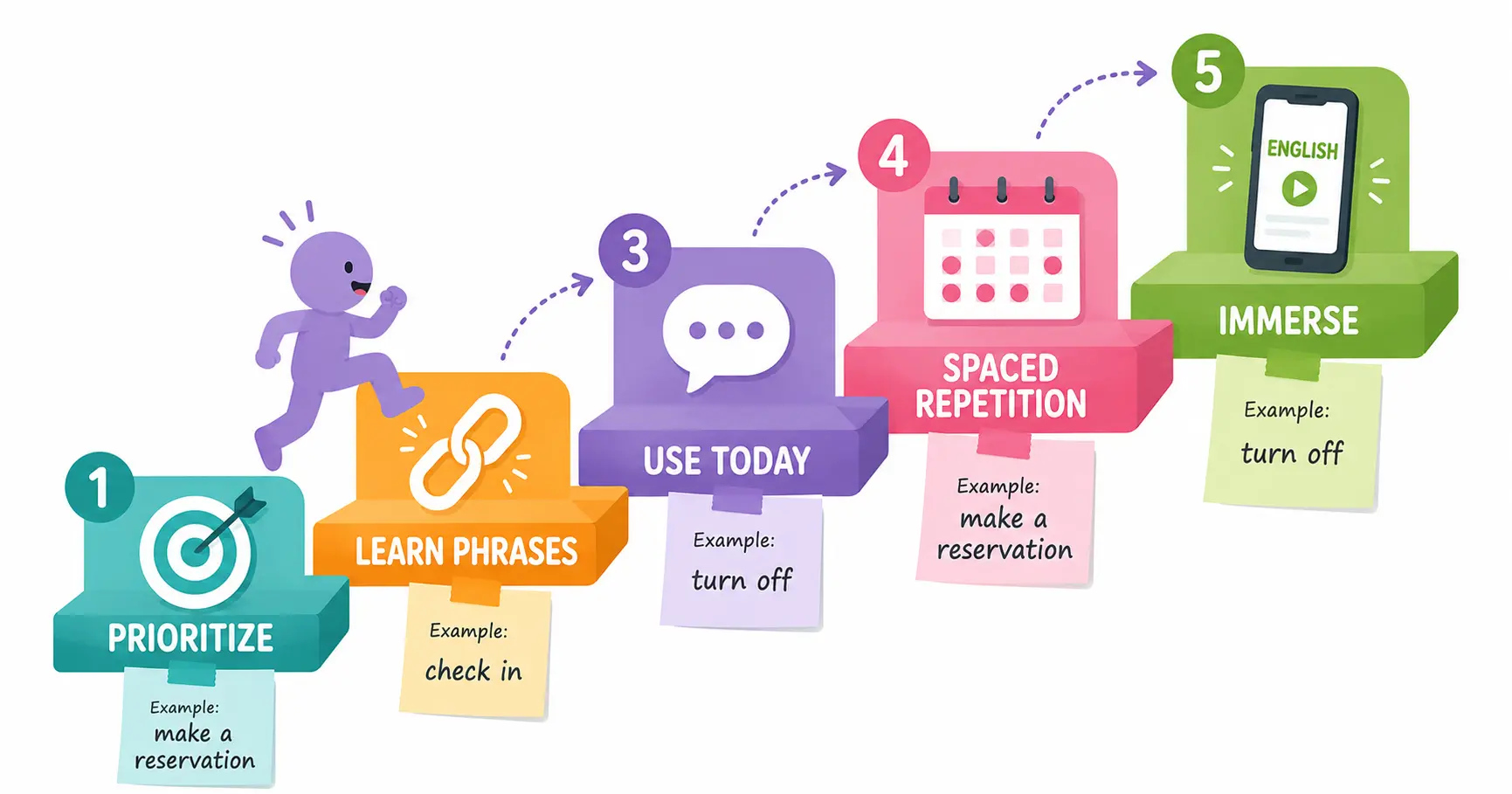
일상 어휘를 효과적으로 배우는 방법
1. 실제로 필요한 단어부터 시작하세요
사무실에서 일한다면 섹션 5를 우선 공부하세요. 여행할 예정이라면 섹션 6부터 시작하세요. 식당에서 음식을 주문하지 못하는데 날씨 어휘를 외울 필요는 없습니다. 자신의 실제 생활에 따라 순서를 정하세요.
2. 단어 하나씩이 아니라 표현 단위로 배우세요
“reservation” 하나만 외우는 것보다 “make a reservation”(예약하다)을 익히는 편이 더 유용합니다. 단어는 연어라고 하는 자연스러운 결합으로 쓰이며, 함께 배우면 기억력과 유창성이 모두 향상됩니다. 더 알아보려면 영어 연어: 자연스러운 단어 결합 익히기를 참고하세요.
3. 새 단어를 배운 당일에 사용하세요
문장을 소리 내어 말하고, 메시지에 써 보거나, 머릿속 혼잣말에서 사용하세요. 연구에 따르면 새로 배운 단어를 24시간 안에 쓰면 기억 유지가 크게 향상됩니다. 과학적 근거는 어휘 암기 방법: 과학적으로 검증된 기법에서 확인하세요.
4. 간격 반복을 활용하세요
단어를 Linglify에 추가하고 시스템이 최적의 간격으로 복습 일정을 정하도록 하세요. 자신의 생활과 가장 관련 있는 섹션에서 하루에 10~15개씩 시작하세요.
5. 주변 사물에 이름표를 붙이세요
집 안의 물건에 영어 이름표를 붙이세요. 휴대전화 언어를 영어로 바꾸고, 관심 분야의 영어 소셜 미디어 계정을 팔로우하세요. 문맥 속에서 영어 단어를 자주 볼수록 더 빠르게 익숙해집니다.
다음에 읽을 글
수준별 어휘:
- 가장 많이 쓰이는 영어 단어 1,000개 — 꼭 필요한 기초
- 필수 영어 단어 4,000개 — 중급 학습을 위한 종합 어휘
- 고급 영어 단어: C1–C2 어휘 300개 이상 — 다음 단계에 도전할 준비가 됐을 때
- CEFR 수준별 영어 어휘: A1부터 C2까지 — 숙달도별 어휘 목록
일상 영어 실력:
- 영어 구동사: 종합 가이드 — 자연스러운 대화에 꼭 필요한 표현
- 영어 관용구: 흔한 표현 500개 이상 — 원어민의 말을 이해하는 데 도움
- 영어 연어 가이드 — 더 자연스럽게 말하기
학습 전략:
자주 묻는 질문
일상 대화에는 영어 단어가 몇 개나 필요한가요?
언어학 연구에 따르면 가장 흔한 단어군 2,000~3,000개가 일상 구어 영어의 약 90~95%를 다룹니다. 영어권 국가에서 기본적인 생활을 하려면 쇼핑, 음식 주문, 길 묻기, 간단한 대화 등 흔한 일상 상황을 처리할 수 있도록 보통 500~1,000개면 충분합니다. 편안하게 유창하게 말하려면 3,000~5,000개를 실용적인 목표로 삼으세요.
가장 먼저 배워야 할 중요한 영어 단어는 무엇인가요?
기능어(the, is, are, have, do, will, can)와 일상생활에 필요한 기본 명사·동사부터 시작하세요. 인사(hello, thank you, sorry), 사람(friend, family, name), 행동(go, come, want, need, like, have), 시간(today, tomorrow, now), 기본 형용사(good, bad, big, small, new, old)가 여기에 해당합니다. 이 100~200개 단어가 거의 모든 영어 문장의 뼈대를 이룹니다.
일상생활 영어 단어를 어떻게 연습할 수 있나요?
가장 효과적인 방법은 다음과 같습니다. (1) 집 안의 물건에 영어 이름표를 붙이세요. (2) 휴대전화와 소셜 미디어를 영어로 바꾸세요. (3) 매일 새 단어를 사용해 문장 3~5개를 쓰는 어휘 일지를 만드세요. (4) 일과를 영어로 설명하며 혼잣말을 하세요. (5) Linglify 같은 간격 반복 앱으로 단어를 알맞은 간격에 복습하세요.
“흔한 단어”와 “일상생활 단어”는 어떻게 다른가요?
“흔한 단어”는 영어의 글과 말에서 얼마나 자주 나타나는지, 즉 빈도를 기준으로 합니다. “일상생활 단어”는 쇼핑, 여행, 건강처럼 구체적인 현실 상황에 필요한 실용적인 단어를 뜻합니다. 상당 부분 겹치지만, 아주 흔해도 추상적인 단어(however, therefore 등)는 당장 일상 대화에 유용하지 않을 수 있습니다. 반대로 luggage, prescription 같은 단어는 빈도순 상위 목록에 들지 않더라도 특정 상황에서는 꼭 필요합니다.
영국식 영어 단어와 미국식 영어 단어 중 어떤 것을 배워야 하나요?
일상 어휘 대부분은 두 영어에서 동일합니다. 차이는 주로 일상 표현 수십 개에 있습니다. flat(영국식)과 apartment(미국식), boot와 trunk, queue와 line, chemist와 pharmacy처럼요. 살거나 일하거나 공부할 곳에 따라 선택하세요. 선호가 없다면 미디어의 영향으로 미국식 어휘가 국제적으로 더 널리 이해됩니다. 무엇보다 일관성을 유지하고 두 체계를 무작위로 섞지 마세요.
영어 단어 500개를 배우려면 얼마나 걸리나요?
매일 새 단어 10개를 익히고 꾸준히 복습하면 약 7~8주 안에 500개를 배울 수 있습니다. 하지만 단어 학습에는 여러 단계가 있습니다. 단어를 보거나 들었을 때 이해하는 인지가 먼저 빠르게 생기고, 직접 문장에서 올바르게 쓰는 능력은 더 오래 걸립니다. 간격 반복을 활용하면 대부분의 학습자는 한 달 안에 500개를 알아볼 수 있고, 2~3개월 안에 대부분을 능동적으로 사용할 수 있습니다.


