영어 구동사 완전 가이드: 예문 200개 이상
구동사는 영어가 모국어가 아닌 사람에게 가장 답답한 부분입니다. “give”가 누군가에게 무언가를 건네는 뜻이라는 것을 배웠는데, “give up”은 포기하다, “give in”은 굴복하다, “give away”는 기부하다, “give off”는 냄새를 풍기다라는 뜻임을 알게 됩니다. 기본 동사 하나에 불변화사 네 개를 붙이면 전혀 다른 뜻 네 개가 됩니다. 영어의 흔한 동사마다 이런 조합이 있다고 생각해 보세요. 수천 개가 됩니다.
하지만 구동사를 피해 갈 수는 없습니다. 원어민은 대화, 직장, 이메일, 소셜 미디어는 물론 학술적 맥락에서도 끊임없이 사용합니다. 구동사를 피하면 일반 어휘가 아무리 풍부해도 영어가 늘 격식 있고 로봇처럼 들립니다. 구동사의 뜻을 모르면 들리는 문장의 절반을 놓칠 수 있습니다.
이 가이드에서는 구동사에 관해 알아야 할 모든 내용을 다룹니다.
- 구동사의 뜻과 문법적 작동 방식
- 분리 가능, 분리 불가, 세 단어 구동사의 차이
- 기본 동사별로 정리한 필수 구동사 200개 이상
- 모든 항목을 실제 맥락에서 보여 주는 예문
- 구동사를 읽는 데 그치지 않고 실제로 익히는 학습 체계
구동사란?
구동사는 동사와 하나 또는 두 개의 불변화사(전치사, 부사 또는 둘 다)가 결합해 원래 동사와 다른 뜻을 만드는 표현입니다.
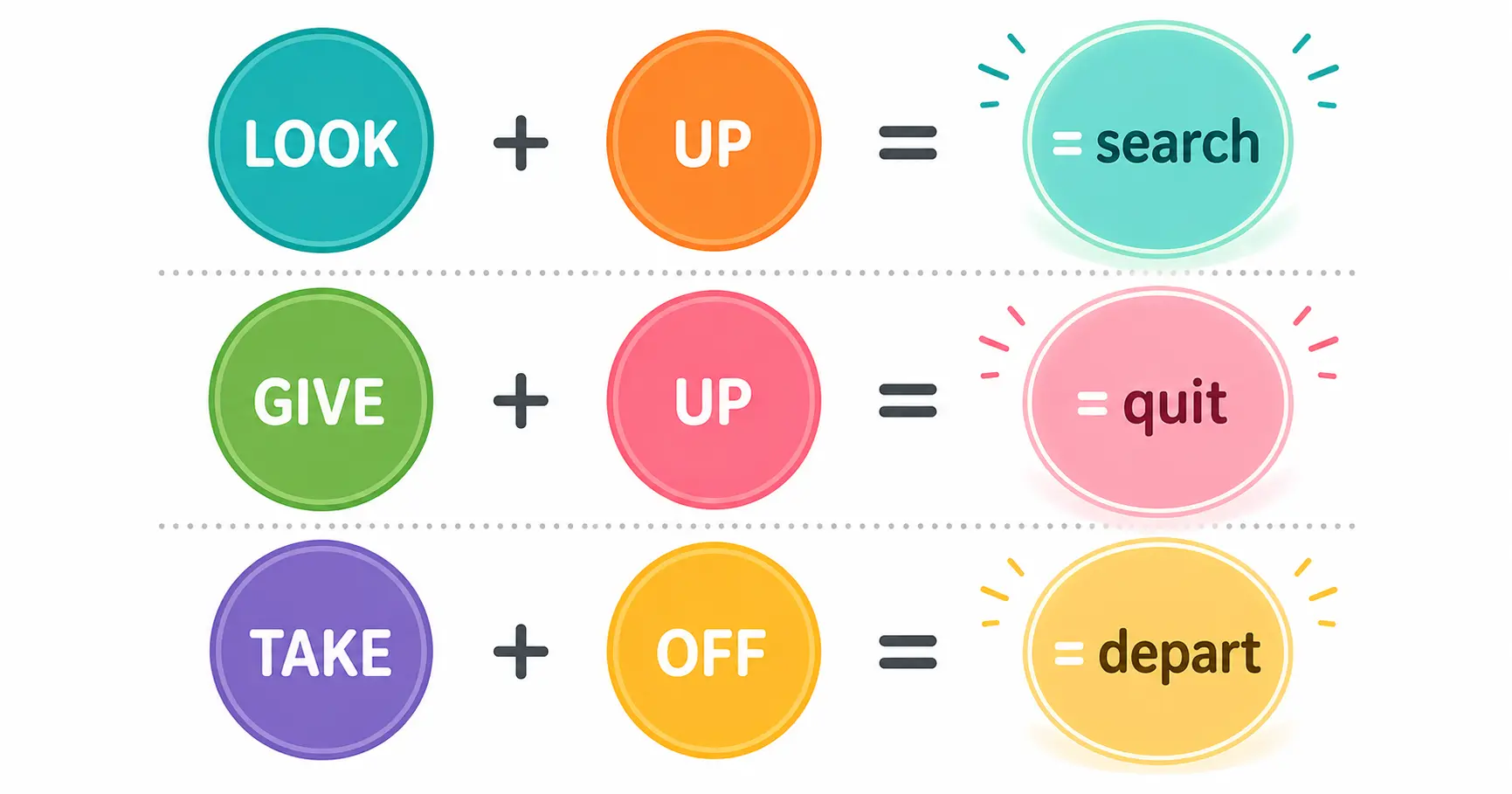
동사 단독: look = 눈으로 보다 구동사: look up = 정보를 찾아보다 구동사: look after = 돌보다 구동사: look forward to = 기쁜 마음으로 기대하다
핵심은 구동사의 뜻을 구성 요소만 보고 추측할 수 없다는 것입니다. “Look” + “up”이 논리적으로 “정보를 찾아보다”라는 뜻이 되지는 않습니다. 그래서 구동사를 배우기 어렵습니다. 단어별로 해독하려 하지 말고 완전한 표현 단위로 익혀야 합니다.
구동사와 전치사 동사의 차이
동사와 전치사가 결합했다고 모두 구동사는 아닙니다. 비교해 보세요.
| 유형 | 예문 | 판별법 |
|---|---|---|
| 구동사 | She looked up the word. | 불변화사를 빼면 의미가 달라집니다. “She looked the word”는 말이 되지 않습니다. |
| 전치사 동사 | She looked at the painting. | “Look”은 기본 의미를 유지하고 “at”은 방향만 나타냅니다. |
실용적인 차이는 구동사의 비유적 의미는 외워야 하지만 전치사 동사는 뜻을 예측할 수 있다는 점입니다.
구동사가 중요한 이유
| 상황 | 격식 있는 대안 | 구동사 |
|---|---|---|
| 일상 대화 | I need to discover the answer. | I need to find out the answer. |
| 이메일 | Could you investigate this issue? | Could you look into this issue? |
| 회의 | Let us postpone the decision. | Let’s put off the decision. |
| 뉴스 | The company terminated 200 employees. | The company laid off 200 employees. |
원어민은 대부분의 상황에서 구동사를 기본적으로 사용합니다. 격식 있는 대안은 대화에서 딱딱하게 들리고 편한 글쓰기에서는 불필요하게 복잡합니다. 문법은 맞는데 영어가 “너무 격식 있게” 느껴진다면, 구동사를 피하는 것이 원인일 수 있습니다.
구동사의 유형
구동사의 유형을 이해하는 것은 단순한 문법 이론이 아닙니다. 문장에서 목적어를 어디에 둘 수 있는지 결정하며, 이는 문장이 맞는지 틀리는지에 직접 영향을 줍니다.
유형 1: 분리 가능한 타동사 구동사
목적어는 동사와 불변화사 사이 또는 불변화사 뒤에 놓을 수 있습니다. 목적어가 대명사(it, them, her)라면 반드시 중간에 와야 합니다.
| 구동사 | 올바른 표현 | 올바른 표현 | 틀린 표현 |
|---|---|---|---|
| turn off | Turn off the TV. | Turn the TV off. |
|
| pick up | Pick up your bag. | Pick your bag up. |
|
| figure out | Figure out the answer. | Figure the answer out. |
|
대명사 규칙: 항상 분리합니다.
- Turn it off. ✓
-
Turn off it.✗
유형 2: 분리할 수 없는 타동사 구동사
동사와 불변화사는 붙어 있어야 합니다. 목적어는 항상 뒤에 옵니다.
| 구동사 | 올바른 표현 | 틀린 표현 |
|---|---|---|
| look after | Look after the children. |
|
| run into | I ran into an old friend. |
|
| get over | She got over the flu. |
|
유형 3: 자동사 구동사 (목적어 없음)
이 구동사에는 목적어가 오지 않습니다.
| 구동사 | 예문 |
|---|---|
| break down | My car broke down on the highway. |
| show up | He showed up late to the meeting. |
| pass out | She passed out from the heat. |
| grow up | I grew up in a small town. |
유형 4: 세 단어 구동사
동사 + 부사 + 전치사로 이루어집니다. 항상 분리할 수 없습니다.
| 구동사 | 뜻 | 예문 |
|---|---|---|
| look forward to | 기쁜 마음으로 기대하다 | I look forward to hearing from you. |
| put up with | 참다, 견디다 | I can’t put up with this noise anymore. |
| come up with | (아이디어를) 생각해 내다 | She came up with a brilliant solution. |
| get along with | 좋은 관계를 유지하다 | Do you get along with your colleagues? |
| look down on | 열등하다고 여기다 | He looks down on people who didn’t go to university. |
| run out of | ~이 다 떨어지다 | We’ve run out of milk. |
| keep up with | 같은 속도나 수준을 유지하다 | I can’t keep up with all the new updates. |
| look up to | 존경하다 | I’ve always looked up to my grandmother. |
분리 가능·불가 규칙과 예문은 이 영어 구동사 완전 가이드에서 확인할 수 있습니다.
기본 동사별 필수 구동사 200개 이상
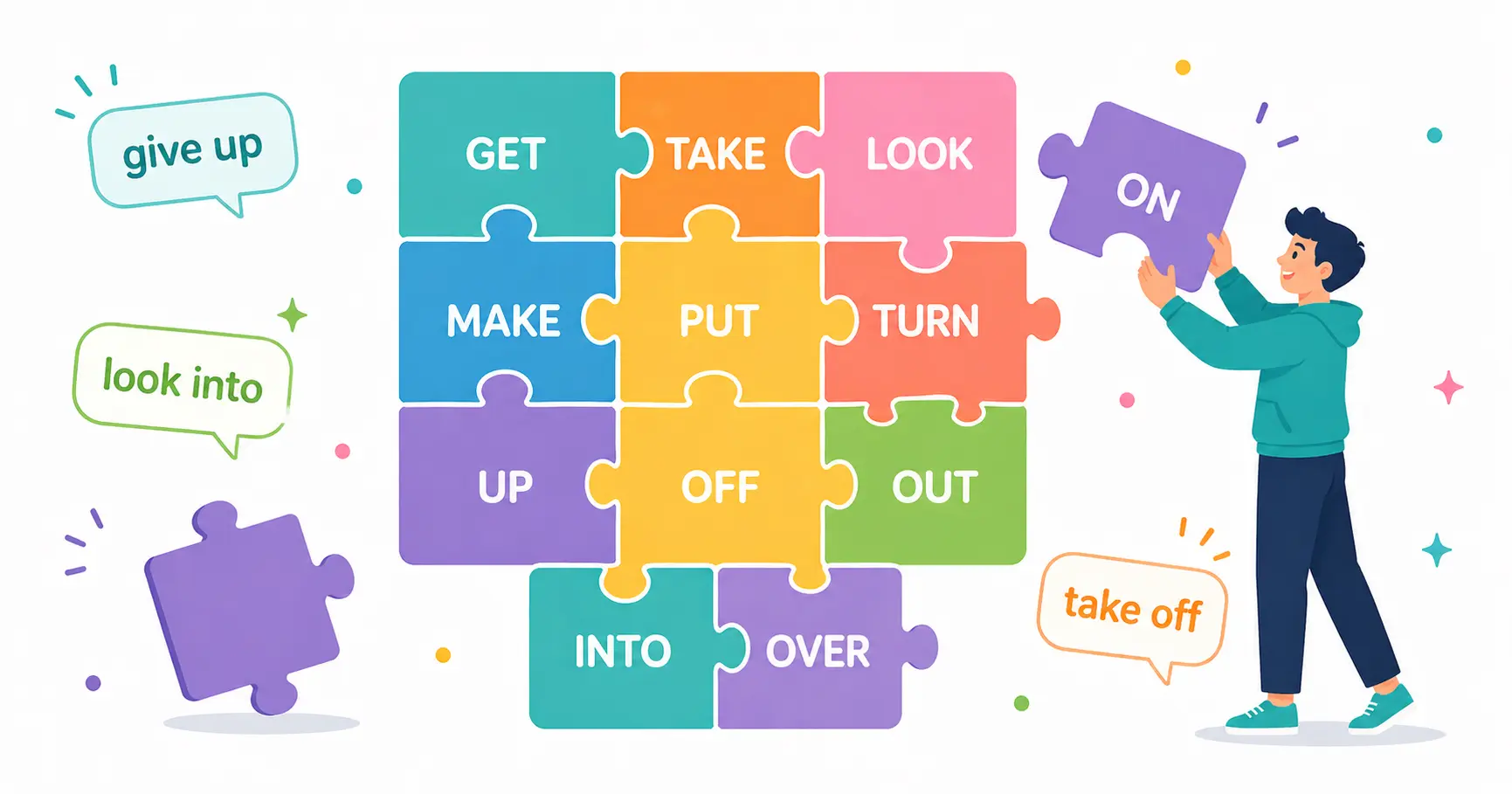
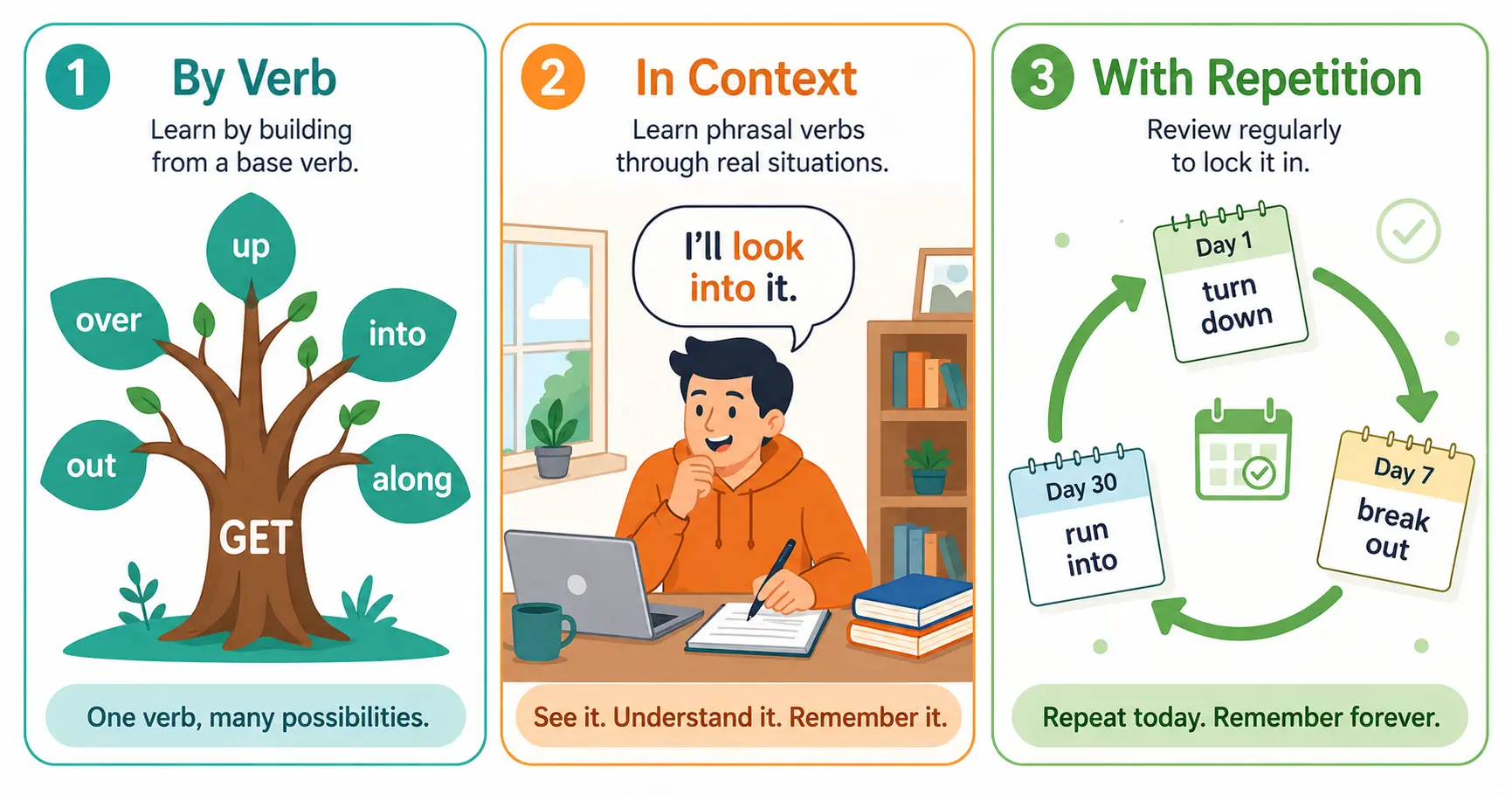
구동사를 가장 효과적으로 배우는 방법은 기본 동사별로 묶는 것입니다. 뇌에는 이미 GET, TAKE, LOOK 등의 “저장 칸”이 있기 때문입니다. 무작위 조합을 배우기보다 기존 단어 묶음에 구동사를 더하면 빠르게 익힐 수 있습니다.
GET
GET은 다른 어떤 영어 동사보다 구동사를 많이 만듭니다. 가장 먼저 익혀야 할 동사군입니다.
| 구동사 | 뜻 | 예문 |
|---|---|---|
| get up | 침대에서 일어나다; 일어서다 | I get up at 6:30 every morning. |
| get along (with) | 좋은 관계를 맺다 | My sister and I get along really well now that we are adults. |
| get over | 회복하다 | It took me weeks to get over that cold. |
| get through | 끝내다; 힘든 시기를 견디다 | I don’t know how she got through that exam — it was brutal. |
| get away | 도망치다; 떠나다 | The thief got away before the police arrived. |
| get away with | 처벌을 피하다 | He cheated on the test and got away with it. |
| get by | 제한된 자원으로 그럭저럭 살아가다 | She gets by on a very modest salary. |
| get on | (교통수단에) 타다; 진척되다 | Get on the bus at the third stop. |
| get off | (교통수단에서) 내리다; 퇴근하다 | What time do you get off work? |
| get back | 돌아오다 | I’ll get back to you tomorrow with an answer. |
| get into | 관여하게 되다; 들어가다 | She got into photography during the lockdown. |
| get out of | 무언가를 하지 않으려 피하다 | He always tries to get out of washing the dishes. |
| get rid of | 없애거나 처분하다 | I need to get rid of these old magazines. |
| get across | 생각을 명확히 전달하다 | The teacher struggled to get the concept across to the students. |
| get around | 돌아다니다; 규칙을 피할 방법을 찾다 | News gets around fast in a small town. |
모든 의미와 예문을 담은 GET 전체 목록은 GET 구동사에서 확인하세요.
TAKE
| 구동사 | 뜻 | 예문 |
|---|---|---|
| take off | (옷을) 벗다; (비행기가) 이륙하다; 성공하기 시작하다 | The plane took off 20 minutes late. / Her career really took off after the promotion. |
| take on | (일이나 책임을) 맡다; 고용하다 | The company is taking on new staff this quarter. |
| take up | (취미나 활동을) 시작하다; (시간·공간을) 차지하다 | I took up running during the pandemic. |
| take over | 통제권을 얻다 | A larger company took over the startup last year. |
| take after | (가족을) 닮다 | She takes after her mother — they have the same eyes. |
| take back | 물건을 돌려주다; 발언을 철회하다 | I take back what I said — you were right. |
| take down | 제거하다; 적거나 기록하다 | Can you take down the decorations? / Take down this number. |
| take in | (정보를) 흡수하다; 속이다 | There was so much to take in on the first day of training. |
| take apart | 분해하다 | He took the engine apart to find the problem. |
| take out | 꺼내다; 포장 음식을 사다 | Let’s take out the trash. / Do you want to eat in or take out? |
TAKE 전체 목록은 TAKE 구동사를 참고하세요.
MAKE
| 구동사 | 뜻 | 예문 |
|---|---|---|
| make up | (이야기를) 지어내다; 화장하다; 화해하다 | She made up an excuse for being late. / They argued but made up the next day. |
| make out | 어렵게 이해하다; 해내다 | I can’t make out what this handwriting says. |
| make up for | 만회하다, 보상하다 | I’ll make up for the lost time by working late. |
| make for | ~쪽으로 향하다; ~에 기여하다 | Good communication makes for a healthy relationship. |
| make do (with) | 가진 것으로 버티다 | We don’t have butter, so we’ll have to make do with margarine. |
| make off (with) | (주로 훔친 물건을 가지고) 달아나다 | The burglar made off with all the jewelry. |
연습 문제를 포함한 자세한 가이드는 MAKE 구동사를 참고하세요.
PUT
| 구동사 | 뜻 | 예문 |
|---|---|---|
| put off | 미루다; 의욕을 꺾다 | Don’t put off your homework until tomorrow. / The bad reviews put me off going. |
| put on | 옷을 입다; (체중이) 늘다; (행사를) 열다 | Put on your coat — it’s cold outside. |
| put up with | 참다, 견디다 | I can’t put up with his constant complaints. |
| put away | 보관하다; (돈을) 저축하다 | Put the groceries away, please. |
| put out | (불을) 끄다; 생산하다 | The firefighters put out the blaze in under an hour. |
| put forward | (아이디어나 계획을) 제안하다 | She put forward a proposal to reduce costs. |
| put down | 적다; 비판하다; (동물을) 안락사시키다 | He’s always putting people down with sarcastic comments. |
| put together | 조립하다 | It took three hours to put the furniture together. |
TURN
| 구동사 | 뜻 | 예문 |
|---|---|---|
| turn on/off | 기기를 켜다/끄다 | Turn off the lights when you leave. |
| turn up | 도착하다; (음량을) 높이다 | She turned up an hour late. / Turn up the music. |
| turn down | 거절하다; (음량을) 낮추다 | He turned down the job offer. |
| turn out | 결과가 ~로 드러나다; 참석하다 | The party turned out to be amazing. / Thousands turned out for the concert. |
| turn into | 변하다; ~이 되다 | The caterpillar turns into a butterfly. |
| turn around | 방향을 바꾸다; 개선하다 | The new CEO turned the company around in two years. |
| turn over | 뒤집다; 통제권을 넘기다 | Turn the page over. / He turned the business over to his daughter. |
LOOK
| 구동사 | 뜻 | 예문 |
|---|---|---|
| look up | 정보를 찾아보다 | Look up the word in a dictionary. |
| look after | 돌보다 | Who looks after your children when you work? |
| look into | 조사하다 | The police are looking into the incident. |
| look forward to | 기쁜 마음으로 기대하다 | I look forward to meeting you. |
| look out (for) | 조심하다; 살피다 | Look out — there’s a car coming! |
| look down on | 자신보다 못하다고 여기다 | She looks down on people who shop at discount stores. |
| look up to | 존경하다 | Many young athletes look up to professional players. |
| look over | 검토하다; 살펴보다 | Could you look over my essay before I submit it? |
| look through | 살펴보다; 훑어보다 | I looked through all the applications yesterday. |
COME
| 구동사 | 뜻 | 예문 |
|---|---|---|
| come up | 발생하다; 언급되다 | Something has come up — I can’t make it tonight. |
| come up with | 생각해 내다; 만들어 내다 | We need to come up with a new marketing strategy. |
| come across | 우연히 발견하다; 인상을 주다 | I came across an interesting article yesterday. / He comes across as very confident. |
| come back | 돌아오다 | When are you coming back from your trip? |
| come down with | 병에 걸리다 | I think I’m coming down with a cold. |
| come around | 마음을 바꾸다; 방문하다 | She was skeptical at first but eventually came around. |
| come out | 출시되다; 알려지다 | The new iPhone comes out next month. |
GO
| 구동사 | 뜻 | 예문 |
|---|---|---|
| go on | 계속하다; 일어나다 | Go on — tell me what happened. / What’s going on? |
| go through | 겪다; 꼼꼼히 살펴보다 | She went through a difficult divorce last year. |
| go over | 검토하다 | Let me go over the main points one more time. |
| go off | 폭발하다; (경보가) 울리다; (음식이) 상하다 | The fire alarm went off at 3 AM. |
| go ahead | 진행하다 | Go ahead and start without me. |
| go out | 외출하다; (불이) 꺼지다 | We go out for dinner every Friday. |
| go along with | 동의하다; 함께하다 | I’ll go along with whatever the team decides. |
| go back | 돌아가다 | I don’t want to go back to my old job. |
BREAK
| 구동사 | 뜻 | 예문 |
|---|---|---|
| break down | (기계가) 고장 나다; 감정적으로 무너지다; 분석하다 | The car broke down on the highway. / She broke down in tears. |
| break up | 관계를 끝내다; 흩어지다 | They broke up after five years together. |
| break out | (전쟁·화재·질병이) 갑자기 발생하다; 탈출하다 | A fire broke out on the third floor. |
| break into | 강제로 침입하다; 새로운 직업을 시작하다 | Someone broke into my apartment. / She broke into journalism after studying law. |
| break through | 장벽을 극복하다 | Scientists broke through with a new treatment for the disease. |
SET
| 구동사 | 뜻 | 예문 |
|---|---|---|
| set up | 설립하다; 준비하다 | She set up her own company at 25. |
| set off | 여정을 시작하다; 작동시키다 | We set off early to avoid traffic. / The alarm was set off by a bird. |
| set out | 의도를 갖고 시작하다; 진열하다 | He set out to prove everyone wrong. |
| set back | 진척을 늦추다 | The supply chain issues set the project back by three months. |
| set apart | 다르게 또는 특별하게 만들다 | Her attention to detail sets her apart from other candidates. |
GIVE
| 구동사 | 뜻 | 예문 |
|---|---|---|
| give up | 시도를 그만두다; 습관을 끊다 | Never give up on your dreams. / He gave up smoking last year. |
| give in | 항복하다; 양보하다 | After hours of negotiation, the company gave in to the workers’ demands. |
| give away | 기부하다; 비밀을 누설하다 | She gave away all her old clothes. / Don’t give away the ending! |
| give off | (냄새·열·빛을) 내뿜다 | The factory gives off a terrible smell. |
| give back | 돌려주다 | Can you give back the book I lent you? |
| give out | 나눠 주다; 작동을 멈추다 | They gave out free samples at the supermarket. / My legs gave out after the marathon. |
BRING
| 구동사 | 뜻 | 예문 |
|---|---|---|
| bring up | (아이를) 키우다; (주제를) 꺼내다 | She brought up three children on her own. / Don’t bring up politics at dinner. |
| bring about | 초래하다 | Technology has brought about major changes in education. |
| bring back | 돌려주다; 되살리다 | This song brings back memories of my childhood. |
| bring down | 넘어뜨리거나 실패하게 하다 | The scandal brought down the government. |
| bring out | (제품을) 출시하다; 두드러지게 하다 | They brought out a new model last month. |
CARRY
| 구동사 | 뜻 | 예문 |
|---|---|---|
| carry on | 계속하다 | Carry on with your work — I’ll wait. |
| carry out | 수행하다; 실행하다 | The team carried out the experiment successfully. |
| carry over | 다음 기간으로 이월하다 | Unused vacation days carry over to the next year. |
WORK
| 구동사 | 뜻 | 예문 |
|---|---|---|
| work out | 운동하다; 해결하다; 잘 풀리다 | I work out three times a week. / Don’t worry — it will all work out. |
| work on | 개선하려고 시간을 들이다 | I’m working on my pronunciation. |
| work through | 차근차근 해결하다 | She’s working through some personal issues. |
HOLD
| 구동사 | 뜻 | 예문 |
|---|---|---|
| hold on | 기다리다; 꽉 잡다 | Hold on — I’ll check for you. |
| hold up | 지연시키다; 강도질하다 | Sorry I’m late — I was held up in traffic. |
| hold back | 억제하다; 공유하지 않다 | She held back tears during the speech. |
RUN
| 구동사 | 뜻 | 예문 |
|---|---|---|
| run into | 우연히 만나다; (문제를) 맞닥뜨리다 | I ran into my old teacher at the supermarket. |
| run out (of) | 공급이 다 떨어지다 | We’ve run out of paper for the printer. |
| run over | (시간을) 초과하다; 차량으로 치다 | The meeting ran over by 30 minutes. |
PICK
| 구동사 | 뜻 | 예문 |
|---|---|---|
| pick up | 들어 올리다; 데리러 가다; 자연스럽게 배우다 | Pick up your clothes from the floor. / I picked up some Spanish during my trip. |
| pick out | 고르다; 알아보다 | Can you pick out a tie for my interview? |
| pick on | 괴롭히거나 부당하게 지목하다 | The bigger kids used to pick on him at school. |
CUT
| 구동사 | 뜻 | 예문 |
|---|---|---|
| cut off | 연결을 끊다; 말을 가로막다 | The phone call was cut off. |
| cut down (on) | 줄이다 | I’m trying to cut down on sugar. |
| cut out | 그만두다; 제거하다 | Cut out the junk food if you want to lose weight. |
FALL
| 구동사 | 뜻 | 예문 |
|---|---|---|
| fall behind | 뒤처지다 | If you miss classes, you’ll fall behind quickly. |
| fall apart | 산산조각 나다; 감정적으로 무너지다 | The old house is falling apart. |
| fall for | 사랑에 빠지다; 속다 | She fell for the scam and lost her savings. |
| fall through | 성사되지 않다 | Our plans for the trip fell through when the flights were cancelled. |
KEEP
| 구동사 | 뜻 | 예문 |
|---|---|---|
| keep up (with) | 같은 속도를 유지하다; 따라가다 | It’s hard to keep up with all the new slang. |
| keep on | 계속하다 | She kept on talking even after the bell rang. |
| keep away (from) | 거리를 두다 | Keep away from the edge of the cliff. |
DO
| 구동사 | 뜻 | 예문 |
|---|---|---|
| do away with | 폐지하거나 없애다 | The company did away with the dress code. |
| do up | 채우다; 개조하다 | Do up your seatbelt. / They did up the old cottage beautifully. |
| do without | ~없이 지내다 | I can’t do without my morning coffee. |
| do over | 다시 하다 | The report was full of errors, so I had to do it over. |
DO 전체 목록은 DO 구동사를 참고하세요.
주제별 구동사
IELTS, 직장, 여행처럼 특정 상황을 준비하고 있다면 주제별 분류를 통해 먼저 익힐 표현을 고를 수 있습니다.
직장과 비즈니스
| 구동사 | 뜻 | 예문 |
|---|---|---|
| carry out | 업무를 수행하다 | We carried out a thorough risk assessment. |
| set up | 설립하다 | She set up a meeting for Friday afternoon. |
| take on | 책임을 맡다 | He took on the project manager role. |
| draw up | 문서를 작성하다 | The lawyers drew up a new contract. |
| lay off | 해고하다 | The factory laid off 300 workers. |
| follow up (on) | 진행 상황을 확인하다 | I’ll follow up on your application next week. |
| step down | 직책에서 물러나다 | The CEO stepped down after the scandal. |
| bring in | 도입하다; 수익을 얻다 | The new policy brought in more revenue. |
자세한 내용은 비즈니스 구동사를 참고하세요.
여행
| 구동사 | 뜻 | 예문 |
|---|---|---|
| check in / check out | 호텔이나 공항에서 등록하다/떠나다 | We checked in at the hotel around 3 PM. |
| set off | 여정을 시작하다 | We set off at dawn to reach the summit by noon. |
| get around | 지역 안에서 이동하다 | The easiest way to get around Bangkok is by BTS train. |
| pick up | 차로 누군가를 데리러 가다 | I’ll pick you up at the airport. |
| drop off | 누군가를 장소에 데려다주다 | The taxi dropped us off at the wrong hotel. |
| stop over | 여행 중 잠시 머물다 | We stopped over in Dubai on the way to Bali. |
시험 (IELTS, TOEFL)
| 구동사 | 뜻 | 시험에서의 쓰임 |
|---|---|---|
| point out | 주의를 환기하다 | The graph points out a clear trend in urban migration. |
| account for | 설명하다; ~을 차지하다 | Rising temperatures account for the decline in glacial mass. |
| bring about | 초래하다 | Industrialization brought about major social changes. |
| break down | 부분별로 나누다 | The data can be broken down into three categories. |
| make up | 구성하다 | Women make up 52% of the total workforce. |
| stand for | 나타내다; 의미하다 | GDP stands for Gross Domestic Product. |
IELTS 스피킹에서 구동사와 함께 쓸 숙어는 IELTS 스피킹 숙어: 자연스러운 표현 50개에서 확인하세요.
연습할 어휘
구동사의 기본 동사와 관련 어휘 중 유용한 25개입니다. 능동 어휘에 추가해 간격 반복으로 익히세요.
affordable
형용사
-
예문
- The government is working to provide affordable housing for low-income families.
- This restaurant offers delicious and affordable meals for college students.
commute
동사
-
예문
- Public transportation helps people commute efficiently reducing traffic congestion.
- Workers commute daily between suburban homes and downtown offices.
demanding
형용사
-
예문
- Medical school is very demanding and requires years of intensive study.
- She has a demanding boss who expects perfection in all tasks.
DJ
형용사
-
예문
- The DJ played my favorite song.
- The DJ took song requests all night.
heritage
명사
-
예문
- She inherited a rich heritage of family traditions from her grandparents.
- The ancient castle is an important part of our cultural heritage.
leisure
명사
-
예문
- People enjoy various leisure activities during weekends and holidays.
- Reading books is popular leisure pursuit for many educated people.
luxurious
형용사
-
예문
- She dreams of owning luxurious car with leather seats and sunroof.
- The luxurious hotel suite includes marble bathroom and ocean view.
memorable
형용사
-
예문
- Graduation day was memorable occasion for entire family.
- The memorable speech inspired students to pursue their dreams.
nutritious
형용사
-
예문
- Fresh vegetables are nutritious and support overall health.
- Nutritious breakfast provides energy for productive school day.
passionate
형용사
-
예문
- Passionate speech moves audience to take action.
- Passionate teacher inspires students to learn more.
pollution
명사
-
예문
- Air pollution affects public health in cities.
- Ocean pollution threatens marine life worldwide.
privacy
명사
-
예문
- Hotel guests expect privacy during their stay.
- Internet privacy becomes increasingly important issue nowadays.
scenic
형용사
-
예문
- Scenic overlook provides perfect spot for photographs.
- Scenic route takes longer but offers beautiful.
traditional
형용사
-
예문
- Traditional cooking methods preserve authentic flavors perfectly.
- Traditional music reflects cultural history and values.
uneven
동사
-
예문
- Uneven ground makes walking difficult and dangerous.
- Uneven performance shows inconsistent skill level development.
volunteer
동사
-
예문
- Citizens volunteer time for community improvement projects.
- Students volunteer at local charity organizations regularly.
substantially
형용사
-
예문
- Her performance substantially improved after additional training and practice.
- Prices have increased substantially over the past few months.
liaison
형용사
-
예문
- Military liaison officers coordinate operations between allied forces.
- She serves as liaison between different departments.
sustainable
형용사
-
예문
- Company implements sustainable business model for long-term success.
- Sustainable farming practices protect soil and water resources.
acclaimed
형용사
-
예문
- His performance was acclaimed by critics.
- The acclaimed author received many awards for her novel.
cancellation
형용사
-
예문
- Due to weather, the flight cancellation was inevitable.
- The concert's cancellation disappointed many fans.
colour
형용사
-
예문
- She chose a bright colour for her dress.
- The colour of the sky was a deep blue.
discretion
형용사
-
예문
- He exercised discretion in his decisions.
- Use your discretion when sharing information.
indication
형용사
-
예문
- The indication of his illness was clear after the tests.
- There was no indication that she was unhappy.
serenity
형용사
-
예문
- She maintained her serenity despite the chaos.
- The serenity of the lake was calming.
구동사를 제대로 익히는 방법
대부분의 학습자는 목록으로 구동사를 외우려다 일주일 안에 잊어버립니다. 대신 다음 방법을 활용하세요.
1. 알파벳순이 아니라 기본 동사별로 익히세요
뇌에는 GET, TAKE, MAKE 등의 기본 동사별 기억 칸이 이미 있습니다. 관련 없는 조합을 외우기보다 기존 동사 묶음에 새 구동사를 추가하는 편이 훨씬 쉽습니다. 가장 자주 쓰는 GET부터 시작한 다음 TAKE와 LOOK을 익히세요.
2. 단독으로 외우지 말고 문맥에서 배우세요
“Put off = postpone”만으로는 기억하기 어렵습니다. “I keep putting off my dentist appointment”는 머릿속에 그릴 수 있는 실제 상황입니다. 구동사마다 자신의 생활에 관한 문장을 하나씩 써 보세요.
3. 먼저 가장 흔한 50개에 집중하세요
구동사 200개를 모두 알 필요는 없습니다. 가장 흔한 구동사 50개만 익혀도 일상 대화 대부분을 이해할 수 있습니다. 덜 흔한 표현으로 넘어가기 전에 먼저 50개를 익히세요.
4. 실제 사용에서 구동사를 알아차리세요
TV 프로그램을 보거나 뉴스 기사를 읽거나 팟캐스트를 들을 때 구동사가 나오면 적어 두세요. 나온 문장과 함께 기록하세요. 실제 맥락에서 접하는 것이 가장 효과적인 학습법입니다.
5. 간격 반복을 활용하세요
Linglify 같은 간격 반복 학습 도구에 구동사를 추가하세요. 연구에 따르면 단어가 자동으로 떠오르려면 8~12번 접해야 합니다. 간격 반복은 적절한 간격으로 다시 만나도록 도와줍니다.
과학에 근거한 암기 전략은 어휘를 외우는 방법을 읽어 보세요.
6. 연습 문제보다 대화로 연습하세요
빈칸 채우기 문제는 표현을 알아보는 능력만 시험할 뿐, 직접 쓰는 능력은 확인하지 못합니다. 실제로 구동사를 쓰려면 말하기 연습을 하세요. 구동사만 써서 하루를 설명하거나, 격식 있는 동사를 구동사로 바꾸어 이야기를 다시 말해 보세요.
구동사에서 흔히 하는 실수
실수 1: 분리할 수 없는 구동사를 분리하기
틀림: I ran my old friend into. 맞음: I ran into my old friend.
분리할 수 없는 구동사는 목적어가 불변화사 뒤에 와야 합니다.
실수 2: 대명사 앞에서 구동사를 분리하지 않기
틀림: Turn off it. 맞음: Turn it off.
분리 가능한 구동사에서는 대명사(it, them, her, him)를 동사와 불변화사 사이에 둬야 합니다.
실수 3: 잘못된 불변화사 쓰기
틀림: She got over the bus. (= 버스를 넘어갔다) 맞음: She got on the bus. (= 버스에 탔다)
불변화사 하나만 틀려도 뜻이 완전히 달라집니다. 그래서 구동사는 완전한 표현 단위로 익혀야 합니다.
실수 4: 구동사를 아예 피하기
일부 학습자는 look into 대신 investigate, put up with 대신 tolerate, put off 대신 postpone처럼 격식 있는 단일 동사만 씁니다. 문법적으로는 맞지만 대화에서 부자연스럽게 들리며, “자연스럽고 관용적인 언어”가 평가 기준인 IELTS 같은 시험에서도 점수에 한계가 생깁니다.
실수 5: 격식 있는 글에 구동사를 지나치게 많이 쓰기
구동사는 대화와 비격식 글쓰기에서 필수지만, 학술 에세이와 격식 있는 보고서에서는 단일 동사가 더 적절한 경우가 많습니다. 연구 논문에서는 “The study investigated the effects”가 “The study looked into the effects”보다 자연스럽습니다. 상황에 따라 알맞은 표현을 고르세요.
구동사와 격식 있는 대안: 빠른 참고표
격식 있는 글에서는 격식체를, 대화에서는 구동사를 써야 할 때가 있습니다. 이 표로 표현을 골라 보세요.
| 격식 있는 동사 | 구동사 | 격식 있는 표현을 쓸 때 |
|---|---|---|
| postpone | put off | 학술 글쓰기, 격식 있는 이메일 |
| investigate | look into | 연구 논문, 공식 보고서 |
| tolerate | put up with | 공식 항의, 법률 맥락 |
| eliminate | get rid of | 과학 글쓰기, 정책 문서 |
| discover | find out | 학술 논문 |
| continue | carry on / go on | 격식 있는 지침, 학술 글쓰기 |
| resemble | take after | 격식 있는 묘사 |
| recover | get over | 의료 보고서 |
| submit | hand in | 공식 지침 |
| establish | set up | 비즈니스 문서, 법률 문서 |
| raise (children) | bring up | 격식 있는 전기 |
| reject | turn down | 공식 서신 |
| succeed | work out | 학술 맥락 |
| examine | look over / go through | 전문 감사, 법률 검토 |
| encounter | run into / come across | 학술 글쓰기 |
이어서 읽을 글
이 핵심 가이드에서 구동사를 이해하는 전체 틀을 살펴봤습니다. 특정 영역을 깊이 공부하려면 다음 자료를 참고하세요.
수준별:
- 일상 영어에서 가장 자주 쓰는 구동사 50개 — 중급 학습자라면 여기서 시작하세요.
- 뜻과 예문으로 익히는 구동사 100개 — 상위 50개 다음 단계
- C1–C2 고급 영어 구동사 — 중상급 및 고급 학습자용
기본 동사별:
상황별:
- 비즈니스 구동사 — 직장 영어용
- IELTS 스피킹 숙어 — 시험에서 구동사와 함께 쓰이는 숙어
어휘 학습:
- 영어 어휘 학습법 — 단계별 학습 체계
- 영어 어휘력을 향상하는 방법 — 모든 수준에 적용할 전략
자주 묻는 질문
영어에는 구동사가 몇 개나 있나요?
추정치로는 5,000개에서 10,000개가 넘는 조합이 있습니다. 하지만 일상 영어에서 자주 쓰이는 것은 약 200~300개뿐입니다. 가장 흔한 구동사 50개만 알아도 원어민이 일상 대화에서 하는 말 대부분을 이해할 수 있습니다. 우선순위를 정해 50개부터 익히고, 그다음 100개, 200개로 늘려 가세요.
구동사와 숙어는 어떻게 다른가요?
구동사는 동사와 불변화사의 조합입니다. “give up”, “look into”, “take off”가 예입니다. 숙어는 비유적인 뜻을 가진 모든 고정 표현을 말합니다. “a piece of cake”(아주 쉬운 일), “under the weather”(몸이 아픈)가 예입니다. 일부 구동사는 숙어적이지만(come across = 우연히 발견하다), 숙어는 명사구, 형용사구, 문장까지 포함하는 더 넓은 범주입니다.
IELTS를 위해 구동사를 모두 알아야 하나요?
아닙니다. IELTS 밴드 7에서는 일부 구동사를 자연스럽게 사용해 어휘의 “유연성”을 보여 주면 됩니다. 밴드 8–9에서는 스피킹에서 구동사가 능동 어휘로 사용되어야 합니다. 라이팅에서는 선택적으로 쓰세요. Task 2의 비격식 예문에는 어울리지만 격식 있는 어휘와 균형을 맞춰야 합니다. IELTS의 어느 밴드에도 구동사 50~80개를 정확히 아는 정도면 충분합니다.
구동사는 왜 익히기 어려운가요?
세 가지 이유가 있습니다. (1) 뜻을 예측할 수 없습니다. 개별 단어만 보고 “look up”이 “정보를 찾아보다”라는 뜻임을 알 수 없습니다. (2) 구동사 하나가 여러 뜻을 가질 수 있습니다. “take off”는 옷을 벗다, (비행기가) 이륙하다, 성공하기 시작하다라는 뜻입니다. (3) 분리 가능·불가 문법 규칙에 예외가 있습니다. 문법 규칙을 외우기보다 맥락과 반복적인 노출을 통해 익히는 것이 해결책입니다.
구동사는 비격식 표현인가요?
많은 구동사는 비격식 또는 중립 표현입니다(“hang out”, “give up”, “find out”). 하지만 학술 및 비즈니스 영어에 쓰이는 표현도 있습니다(“carry out”, “set up”, “account for”, “point out”). 격식 수준은 구동사라는 범주가 아니라 개별 표현에 따라 달라집니다. 일반적으로 대화에서는 자유롭게 쓰고 격식 있는 글에서는 선별해서 사용하세요.
구동사를 외우는 가장 좋은 방법은 무엇인가요?
기본 동사별로 공부하고(GET 구동사는 함께, TAKE 구동사도 함께), 실제 문장으로 문맥 속에서 익히고, 간격을 점점 늘려 복습하세요. 긴 알파벳순 목록을 외우는 것은 피하세요. 연구에 따르면 체계적이고 맥락에 맞는 학습이 기계적인 암기보다 3~4배 더 효과적입니다.
구동사 대신 격식 있는 동사만 써도 되나요?
문법적으로는 가능하지만 영어가 딱딱하고 부자연스럽게 들립니다. “I discovered the answer”와 “I found out the answer”를 비교해 보세요. 앞의 문장은 번역투처럼 들리고, 뒤의 문장이 원어민 표현에 가깝습니다. 대화에서 구동사를 피하는 것은 영어가 모국어가 아닌 사람임을 가장 크게 드러내는 요소입니다. 격식 있는 표현과 구동사를 모두 익혀 맥락에 맞는 것을 선택하세요.