숙어 예문: 뜻과 문장이 포함된 영어 숙어 200개 이상
숙어를 가장 빠르게 배우는 방법은 예문을 통해 익히는 것입니다. 정의는 숙어의 뜻을 알려 주지만, 예문은 실제 문장 속에서 구체적인 맥락과 함께 어떻게 쓰이는지 보여 줍니다. 이 글에는 바로 그런 내용이 담겨 있습니다. 숙어 200개 이상을 명확한 뜻과 함께 소개하고, 원어민이 실제로 어떻게 사용하는지 보여 주는 자연스러운 문장을 덧붙였습니다.
여기에 실린 표현은 드물게 쓰이는 문학적 표현이 아닙니다. 모든 숙어가 일상 대화, 영화, 뉴스, 비즈니스, 학술 영어에서 자주 등장합니다. IELTS, TOEFL 또는 TOEIC을 준비한다면 시험에서 이 표현들을 많이 만나게 됩니다. 직장이나 여행을 위해 영어를 배우고 있다면 매일 들을 수 있습니다.
- 총 개수: 숙어 예문 200개 이상
- 형식: 숙어 → 뜻 → 예문
- 분류 기준: 주제별 10개 범주
- 수준: A2–C1
- 대상: 시험 준비, 유창성 향상, 원어민 표현 이해
숙어 500개 이상을 다룬 전체 참고 자료는 영어 숙어 완전 가이드에서 확인하세요.
일상생활
다음 숙어는 다른 표현보다 일상 대화에서 더 자주 등장합니다.
| # | 숙어 | 뜻 | 예문 |
|---|---|---|---|
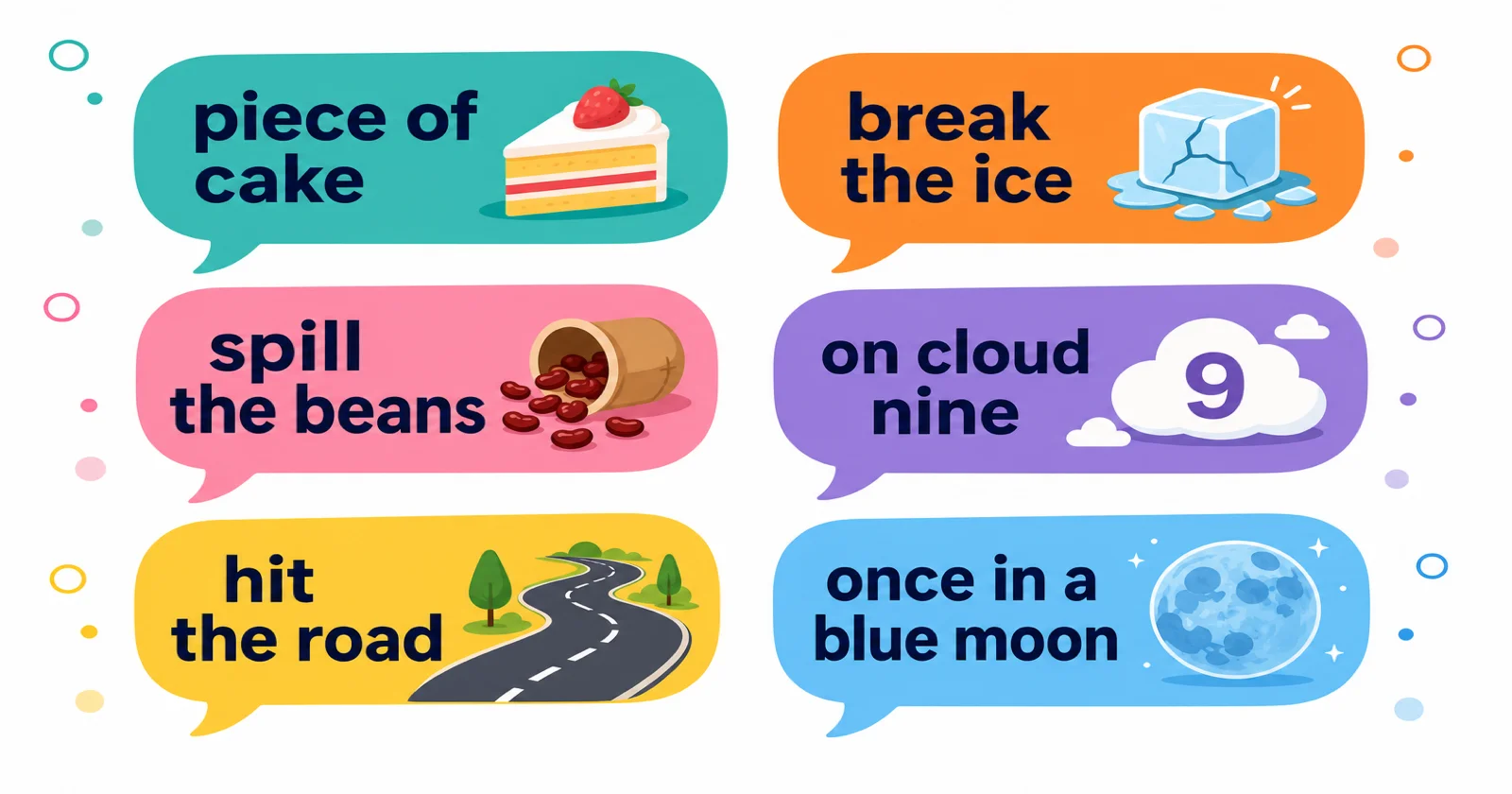
| 1 | a piece of cake | 아주 쉬운 일 | The driving test was a piece of cake — I passed on the first try. |
| 2 | break the ice | 어색한 상황에서 대화를 시작하다 | The team-building exercise helped break the ice on the first day. |
| 3 | hit the nail on the head | 정확히 맞히다 | You hit the nail on the head — that is exactly the problem. |
| 4 | under the weather | 몸이 조금 아프다 | I’m feeling a bit under the weather today, so I’ll work from home. |
| 5 | once in a blue moon | 아주 드물게 | We only eat out once in a blue moon — maybe twice a year. |
| 6 | call it a day | 그날의 일을 그만하다 | We’ve been at this for eight hours — let’s call it a day. |
| 7 | the last straw | 참을 수 없게 만드는 마지막 문제 | Being late again was the last straw — they fired him. |
| 8 | get out of hand | 통제할 수 없게 되다 | The party got out of hand after midnight. |
| 9 | in the long run | 장기적으로 보면 | Learning English is hard now, but it will pay off in the long run. |
| 10 | at the end of the day | 결국, 모든 것을 고려하면 | At the end of the day, your health is more important than your job. |
| 11 | give it a shot | 한번 해 보다 | I’ve never tried skiing, but I’ll give it a shot. |
| 12 | a blessing in disguise | 처음엔 나빠 보여도 결과적으로 좋은 일 | Losing that job was a blessing in disguise — I found a much better one. |
| 13 | better late than never | 안 하는 것보다 늦게라도 하는 편이 낫다 | You finally finished the report? Well, better late than never. |
| 14 | bite off more than you can chew | 감당할 수 있는 것보다 더 많은 일을 맡다 | She bit off more than she could chew by signing up for five courses. |
| 15 | burn the midnight oil | 밤늦게까지 일하거나 공부하다 | I’ve been burning the midnight oil to finish this project. |
| 16 | hit the road | 떠나다, 여정을 시작하다 | It’s getting late — we should hit the road. |
| 17 | on the same page | 의견이 일치하다 | Let’s make sure we’re all on the same page before the meeting. |
| 18 | the tip of the iceberg | 훨씬 더 큰 문제의 겉으로 드러난 작은 부분 | The complaints we received are just the tip of the iceberg. |
| 19 | go the extra mile | 기대되는 것보다 더 노력하다 | She always goes the extra mile for her clients. |
| 20 | a no-brainer | 쉽게 내릴 수 있는 결정 | Taking the promotion was a no-brainer — better pay, better hours. |
감정과 기분
숙어는 사람의 감정을 묘사할 때 특히 풍부하게 쓰입니다.
| # | 숙어 | 뜻 | 예문 |
|---|---|---|---|
| 21 | on cloud nine | 매우 행복한 | She’s been on cloud nine since she got the job offer. |
| 22 | over the moon | 매우 기쁜, 황홀한 | They were over the moon when they heard about the baby. |
| 23 | down in the dumps | 슬프거나 우울한 | He’s been down in the dumps since his girlfriend left. |
| 24 | have butterflies in your stomach | 긴장되다 | I always have butterflies in my stomach before interviews. |
| 25 | get cold feet | 겁이 나서 하려던 일을 망설이다 | He got cold feet and cancelled the presentation. |
| 26 | blow off steam | 스트레스나 화를 풀다 | After a tough week, I blow off steam by going to the gym. |
| 27 | keep your chin up | 힘든 상황에서도 긍정적으로 버티다 | I know you didn’t get the job, but keep your chin up. |
| 28 | on edge | 불안하고 초조한 | Everyone has been on edge since the layoff announcements. |
| 29 | sick and tired | 몹시 짜증이 나고 진절머리가 난 | I’m sick and tired of hearing excuses. |
| 30 | lose your temper | 화를 내다 | She rarely loses her temper, but today was an exception. |
| 31 | have a change of heart | 생각이나 결정을 바꾸다 | He was going to sell the house, but he had a change of heart. |
| 32 | get something off your chest | 마음에 걸리던 일을 털어놓다 | I need to get this off my chest — I disagree with the plan. |
| 33 | bite your tongue | 하고 싶은 말을 참다 | I wanted to argue, but I bit my tongue. |
| 34 | cry over spilled milk | 이미 지나간 일을 후회하며 시간을 낭비하다 | The deadline passed — there’s no point crying over spilled milk. |
| 35 | drive someone up the wall | 누군가를 몹시 짜증 나게 하다 | That constant noise is driving me up the wall. |
| 36 | have a soft spot for | ~을 특별히 좋아하다 | She has a soft spot for stray animals. |
| 37 | wear your heart on your sleeve | 감정을 숨김없이 드러내다 | He wears his heart on his sleeve — you always know how he feels. |
| 38 | a weight off your shoulders | 부담이 사라진 뒤의 안도감 | Finishing the thesis was a huge weight off my shoulders. |
| 39 | jump for joy | 기뻐서 펄쩍 뛰다 | When she heard the news, she literally jumped for joy. |
| 40 | scared stiff | 몹시 겁먹은 | I was scared stiff during the horror movie. |
직장과 비즈니스
업무 환경과 TOEIC 같은 비즈니스 영어 시험에서 꼭 알아 두면 좋은 표현입니다.
| # | 숙어 | 뜻 | 예문 |
|---|---|---|---|
| 41 | back to square one | 처음부터 다시 시작하다 | The client rejected our proposal, so it’s back to square one. |
| 42 | think outside the box | 창의적으로 생각하다 | We need to think outside the box to solve this problem. |
| 43 | get the ball rolling | 어떤 절차를 시작하다 | Let’s get the ball rolling on the new marketing campaign. |
| 44 | cut corners | 품질을 희생하면서 일을 대충 처리하다 | The builder cut corners on materials, and the roof leaked within a year. |
| 45 | in the loop | 어떤 일에 대한 정보를 계속 알고 있는 | Please keep me in the loop about any changes to the schedule. |
| 46 | pull strings | 인맥을 이용해 일을 성사시키다 | He pulled some strings to get his son the internship. |
| 47 | a game changer | 상황을 크게 바꾸는 것 | Remote work was a game changer for employee satisfaction. |
| 48 | bring to the table | 가치 있는 것을 기여하다 | What skills do you bring to the table? |
| 49 | up in the air | 불확실하거나 아직 결정되지 않은 | The project timeline is still up in the air. |
| 50 | a win-win situation | 모두에게 이득이 되는 결과 | The deal was a win-win — both companies increased their market share. |
| 51 | the bottom line | 가장 중요한 사실이나 고려 사항 | The bottom line is that we need to cut costs by 15%. |
| 52 | go back to the drawing board | 처음부터 다시 계획하다 | That approach failed completely — time to go back to the drawing board. |
| 53 | ahead of the curve | 다른 사람보다 앞서 있는 | Their use of AI puts them ahead of the curve in the industry. |
| 54 | call the shots | 결정을 내리다 | As team lead, you’ll be calling the shots on this project. |
| 55 | on the same wavelength | 같은 생각을 하다 | We finished each other’s sentences — we were on the same wavelength. |
| 56 | raise the bar | 기준을 더 높이다 | The new CEO raised the bar for product quality. |
| 57 | a steep learning curve | 처음에 익히기 어려운 것 | The new software has a steep learning curve, but it’s worth it. |
| 58 | touch base | 간단히 연락하다 | Let’s touch base next week to check progress. |
| 59 | play it by ear | 상황을 보며 즉흥적으로 결정하다 | We don’t have a fixed agenda — let’s just play it by ear. |
| 60 | burn bridges | 관계나 기회를 망치다 | Don’t burn bridges when you leave a job — you may need those contacts later. |
시간과 속도
| # | 숙어 | 뜻 | 예문 |
|---|---|---|---|
| 61 | in the nick of time | 간신히 제시간에 | The ambulance arrived in the nick of time. |
| 62 | time flies | 시간이 빠르게 지나가다 | I can’t believe it’s December already — time flies. |
| 63 | around the clock | 하루 24시간 내내, 쉬지 않고 | The team worked around the clock to meet the deadline. |
| 64 | in a heartbeat | 망설임 없이 즉시 | I’d move to Japan in a heartbeat if I got the chance. |
| 65 | against the clock | 제한 시간에 쫓기며 | We’re working against the clock to finish before Friday. |
| 66 | behind the times | 시대에 뒤처진, 구식인 | Their marketing strategy is behind the times. |
| 67 | a matter of time | 필연적으로 일어날 일 | It’s only a matter of time before they find out. |
| 68 | from time to time | 때때로 | I still think about my old school friends from time to time. |
| 69 | kill time | 기다리는 동안 별일 없이 시간을 보내다 | I was just killing time at the airport, browsing the shops. |
| 70 | at the eleventh hour | 마지막 순간에 | The agreement was reached at the eleventh hour. |
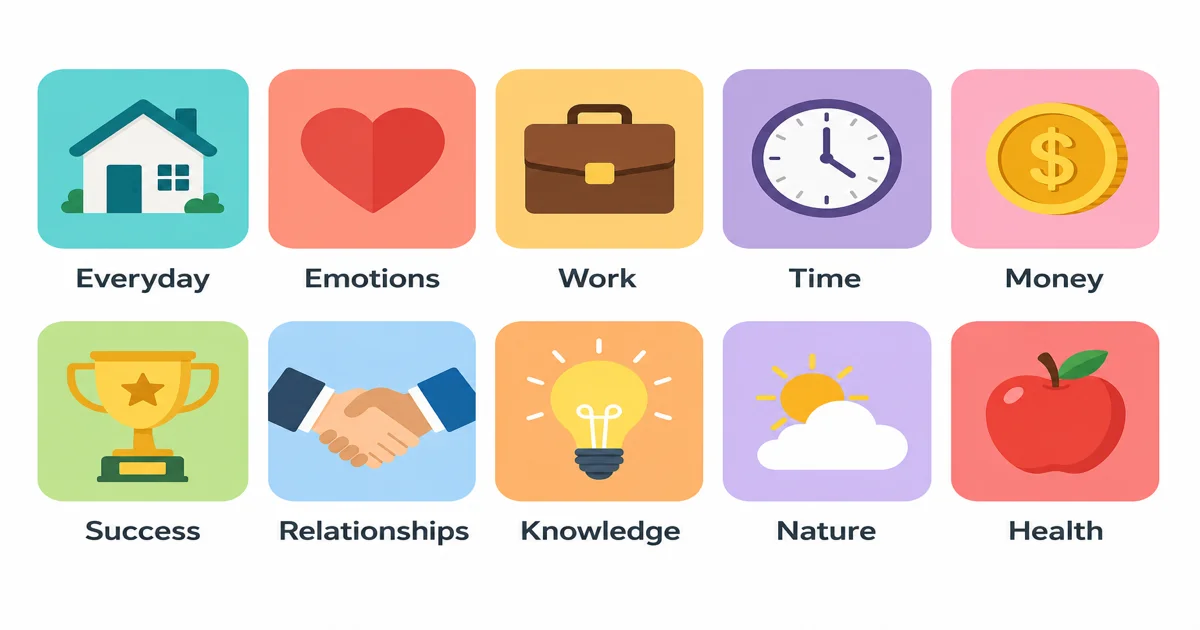
돈과 가치
| # | 숙어 | 뜻 | 예문 |
|---|---|---|---|
| 71 | cost an arm and a leg | 매우 비싸다 | The car repair cost an arm and a leg. |
| 72 | break the bank | 감당할 수 있는 것보다 더 많이 쓰다 | A weekend trip doesn’t have to break the bank. |
| 73 | a rip-off | 터무니없이 비싼 것 | $15 for a cup of coffee? That’s a rip-off. |
| 74 | make ends meet | 수입으로 간신히 생활비를 충당하다 | After losing her job, she struggled to make ends meet. |
| 75 | save for a rainy day | 미래의 비상 상황에 대비해 저축하다 | My grandmother always told me to save for a rainy day. |
| 76 | worth its weight in gold | 매우 가치 있거나 유용한 | A good mentor is worth their weight in gold. |
| 77 | penny for your thoughts | 무슨 생각을 하는지 묻는 말 | You’ve been quiet all evening — penny for your thoughts? |
| 78 | pay through the nose | 지나치게 많은 돈을 내다 | We paid through the nose for those concert tickets. |
| 79 | tighten your belt | 지출을 줄이다 | After the pay cut, the whole family had to tighten their belts. |
| 80 | money talks | 돈이 권력과 영향력을 가져다주다 | He got the best lawyer — money talks. |
| 81 | foot the bill | 비용을 지불하다 | The company will foot the bill for the team dinner. |
| 82 | bring home the bacon | 가족의 생계를 책임지다 | Both parents bring home the bacon in most families today. |
| 83 | go Dutch | 비용을 똑같이 나눠 내다 | We always go Dutch when we eat out together. |
| 84 | put your money where your mouth is | 말로만 하지 않고 행동으로 뒷받침하다 | If you really believe in the idea, put your money where your mouth is. |
| 85 | a dime a dozen | 흔하고 가치가 별로 없는 | Business ideas are a dime a dozen — execution is what matters. |
성공과 실패
| # | 숙어 | 뜻 | 예문 |
|---|---|---|---|
| 86 | hit the jackpot | 뜻밖의 큰 성공을 거두다 | We hit the jackpot with our new hire — she’s brilliant. |
| 87 | back to the drawing board | 실패한 뒤 처음부터 다시 시작하다 | The experiment failed, so it’s back to the drawing board. |
| 88 | miss the boat | 기회를 놓치다 | If you don’t apply this week, you’ll miss the boat. |
| 89 | a long shot | 성공 가능성이 낮은 일 | Getting into Harvard is a long shot, but worth trying. |
| 90 | break new ground | 혁신적인 일을 해내다 | The research team broke new ground in renewable energy. |
| 91 | on a roll | 연이어 성공을 거두고 있는 | She’s won three games in a row — she’s on a roll. |
| 92 | the sky’s the limit | 이룰 수 있는 데에 한계가 없다 | With your talent, the sky’s the limit. |
| 93 | throw in the towel | 포기하다 | After three failed attempts, he threw in the towel. |
| 94 | come up short | 목표에 도달하지 못하다 | We came up short of our sales target by just 2%. |
| 95 | fall flat | 완전히 실패하다 | The joke fell flat — nobody laughed. |
| 96 | have the upper hand | 우위를 점하다 | With more experience, she has the upper hand in negotiations. |
| 97 | make or break | 성공과 실패를 좌우하는 | This presentation is make or break for the entire project. |
| 98 | from rags to riches | 가난에서 부자가 된 | Her from-rags-to-riches story inspired millions. |
| 99 | a hard nut to crack | 해결하기 어려운 문제나 상대 | Getting planning permission was a hard nut to crack. |
| 100 | learn the ropes | 새 업무나 활동의 기본을 익히다 | It took me a few weeks to learn the ropes at the new office. |
관계와 사람
| # | 숙어 | 뜻 | 예문 |
|---|---|---|---|
| 101 | see eye to eye | 완전히 의견이 일치하다 | My sister and I rarely see eye to eye on politics. |
| 102 | stab someone in the back | 누군가를 배신하다 | I trusted him, and he stabbed me in the back. |
| 103 | give someone the cold shoulder | 일부러 누군가를 무시하다 | After the argument, she gave me the cold shoulder for a week. |
| 104 | let someone off the hook | 누군가가 책임을 피하도록 해 주다 | The teacher let him off the hook for missing the deadline. |
| 105 | break the ice | 사교적인 상황의 긴장을 풀다 | A simple joke can break the ice at a networking event. |
| 106 | hit it off | 처음 만나자마자 잘 맞다 | We hit it off the moment we met at the conference. |
| 107 | go behind someone’s back | 당사자 몰래 일을 꾸미다 | He went behind my back and complained to the manager. |
| 108 | the apple of someone’s eye | 누군가가 가장 아끼는 사람 | Their granddaughter is the apple of their eye. |
| 109 | be on thin ice | 위험하거나 불안정한 상황에 놓이다 | You’re on thin ice with the boss after missing two deadlines. |
| 110 | bend over backwards | 누군가를 돕기 위해 최선을 다하다 | She bent over backwards to make the guests feel welcome. |
| 111 | birds of a feather | 비슷한 관심사를 가진 사람들 | They’re both data nerds — birds of a feather. |
| 112 | bury the hatchet | 갈등을 끝내고 화해하다 | After years of rivalry, they finally buried the hatchet. |
| 113 | get on someone’s nerves | 누군가를 짜증 나게 하다 | His constant humming really gets on my nerves. |
| 114 | pull someone’s leg | 누군가를 놀리거나 장난치다 | Relax, I’m just pulling your leg — of course you passed. |
| 115 | a shoulder to cry on | 이야기를 들어 주고 위로해 주는 사람 | Everyone needs a shoulder to cry on sometimes. |
지식과 학습
학업 맥락과 시험에서 특히 유용한 표현입니다.
| # | 숙어 | 뜻 | 예문 |
|---|---|---|---|
| 116 | know something inside out | 어떤 것을 아주 잘 알다 | She knows the company’s policies inside out. |
| 117 | pick someone’s brain | 누군가의 지식이나 조언을 구하다 | Can I pick your brain about investing? |
| 118 | a steep learning curve | 짧은 시간 안에 많은 것을 배워야 하는 상황 | Starting a new programming language is always a steep learning curve. |
| 119 | ring a bell | 익숙하게 들리다 | The name rings a bell, but I can’t remember where I heard it. |
| 120 | the penny dropped | 갑자기 이해하게 되다 | I stared at the puzzle for an hour, and then the penny dropped. |
| 121 | do your homework | 철저히 조사하고 준비하다 | Before the interview, do your homework on the company. |
| 122 | learn by heart | 완전히 외우다 | She learned the entire poem by heart. |
| 123 | a quick study | 빨리 배우는 사람 | He’s a quick study — he picked up the software in one day. |
| 124 | have a lot on your plate | 맡은 책임이나 일이 많다 | She has a lot on her plate between work and evening classes. |
| 125 | food for thought | 진지하게 생각해 볼 만한 것 | The lecture was food for thought — I’m reconsidering my approach. |
| 126 | think on your feet | 압박 속에서 빠르게 판단하다 | Good managers need to think on their feet. |
| 127 | know the ropes | 일이 어떻게 돌아가는지 알다 | After six months, I finally know the ropes. |
| 128 | back to basics | 기본 원칙으로 돌아가다 | The team needs to go back to basics and focus on quality. |
| 129 | read between the lines | 숨은 의미를 알아차리다 | If you read between the lines, the email is actually a warning. |
| 130 | on the right track | 올바른 방향으로 나아가고 있는 | Your essay is on the right track — just needs a stronger conclusion. |
자연과 날씨
| # | 숙어 | 뜻 | 예문 |
|---|---|---|---|
| 131 | raining cats and dogs | 비가 억수같이 쏟아지다 | We can’t go out — it’s raining cats and dogs. |
| 132 | under the weather | 몸이 조금 아프다 | I’m a bit under the weather — I think I caught a cold. |
| 133 | a storm in a teacup | 사소한 일을 크게 소란스럽게 만드는 것 | The argument at the meeting was a storm in a teacup. |
| 134 | every cloud has a silver lining | 모든 나쁜 상황에도 좋은 면이 있다 | I lost my job, but I found a better one — every cloud has a silver lining. |
| 135 | break the ice | 대화 초반의 긴장을 풀다 | His joke broke the ice and everyone relaxed. |
| 136 | tip of the iceberg | 훨씬 더 큰 문제의 겉으로 드러난 작은 부분 | The accounting errors are just the tip of the iceberg. |
| 137 | when it rains, it pours | 문제가 한꺼번에 닥치는 법이다 | First the car broke down, then I lost my wallet — when it rains, it pours. |
| 138 | get wind of | 어떤 일, 특히 비밀을 알게 되다 | The press got wind of the merger before the official announcement. |
| 139 | a breath of fresh air | 신선하고 새로운 것 | Her creative approach was a breath of fresh air for the team. |
| 140 | calm before the storm | 혼란이 닥치기 전의 고요한 시기 | The office was quiet on Friday — it was the calm before the storm. |
| 141 | snowed under | 일이 너무 많아 압도된 | I’m completely snowed under this week — can we meet next Monday? |
| 142 | nip something in the bud | 문제가 커지기 전에 막다 | We need to nip this issue in the bud before it affects other departments. |
| 143 | come rain or shine | 무슨 일이 있어도 | I walk to work every day, come rain or shine. |
| 144 | twist someone’s arm | 마지못해 하려는 사람을 설득하다 | I didn’t want to go, but she twisted my arm. |
| 145 | beat around the bush | 핵심을 피해 돌려 말하다 | Stop beating around the bush and tell me what happened. |
행동과 결정
| # | 숙어 | 뜻 | 예문 |
|---|---|---|---|
| 146 | take the plunge | 위험을 감수하고 과감하게 행동하다 | After years of planning, she finally took the plunge and started her own business. |
| 147 | go the extra mile | 요구되는 것보다 더 노력하다 | He always goes the extra mile to satisfy customers. |
| 148 | cross that bridge when you come to it | 문제가 실제로 생겼을 때 해결하다 | We might not get rejected — let’s cross that bridge when we come to it. |
| 149 | sleep on it | 결정을 내리기 전에 다음 날까지 기다리다 | That’s a big commitment — why don’t you sleep on it? |
| 150 | jump on the bandwagon | 유행하는 흐름을 따라가다 | Every company is jumping on the AI bandwagon right now. |
| 151 | turn over a new leaf | 더 나은 행동을 시작하다 | After the warning, he promised to turn over a new leaf. |
| 152 | sit on the fence | 결정을 내리지 않고 망설이다 | Stop sitting on the fence and choose a direction. |
| 153 | take it with a grain of salt | 어떤 말을 전적으로 믿지 않다 | He exaggerates — take everything he says with a grain of salt. |
| 154 | put all your eggs in one basket | 모든 것을 하나의 계획에 걸다 | Don’t put all your eggs in one basket — apply to several companies. |
| 155 | let the cat out of the bag | 실수로 비밀을 말해 버리다 | I was planning a surprise, but my brother let the cat out of the bag. |
| 156 | face the music | 자신의 행동에 따른 결과를 받아들이다 | You made the mistake — now you have to face the music. |
| 157 | get your act together | 자신을 정돈하고 책임감 있게 행동하다 | If you want to pass the exam, you need to get your act together. |
| 158 | take the bull by the horns | 어려움에 정면으로 용감하게 맞서다 | Instead of waiting, she took the bull by the horns and spoke to the director. |
| 159 | a taste of your own medicine | 남에게 했던 나쁜 대우를 그대로 당하는 것 | He’s always late, so we left without him — a taste of his own medicine. |
| 160 | cut to the chase | 지체하지 않고 핵심으로 들어가다 | Let’s cut to the chase — how much will it cost? |
건강과 신체
| # | 숙어 | 뜻 | 예문 |
|---|---|---|---|
| 161 | in good shape | 건강 상태가 좋다, 순조롭게 진행되다 | The economy is in good shape despite recent challenges. |
| 162 | a clean bill of health | 건강하다는 확인 | The doctor gave her a clean bill of health. |
| 163 | feel on top of the world | 매우 건강하고 행복하게 느끼다 | After the vacation, I feel on top of the world. |
| 164 | keep body and soul together | 간신히 생계를 유지하다 | During the recession, many families struggled to keep body and soul together. |
| 165 | back on your feet | 병이나 어려움에서 회복하다 | After six months of treatment, she’s back on her feet. |
| 166 | an apple a day keeps the doctor away | 건강한 습관은 병을 예방한다 | I eat fruit every morning — an apple a day keeps the doctor away. |
| 167 | burn the candle at both ends | 쉬지 않고 지나치게 일하다 | You’re burning the candle at both ends — you need to slow down. |
| 168 | alive and kicking | 건강하고 활발한 | She’s 90 years old and still alive and kicking. |
| 169 | at death’s door | 매우 위독한 | He looked like he was at death’s door, but he recovered completely. |
| 170 | break a leg | 행운을 빌다(공연 전에 하는 말) | You’re going on stage? Break a leg! |
숙어를 효과적으로 배우는 방법
숙어 200개를 한꺼번에 외우는 것은 현실적이지 않습니다. 다음과 같은 실용적인 방법을 활용해 보세요.
1단계: 5~10개씩 묶어서 배우기
이 목록에서 감정, 직장, 돈처럼 주제 범주 하나를 고르고 숙어 5~10개를 공부하세요. 뜻을 익히고 예문을 읽은 다음, 직접 문장을 만들어 보세요.
2단계: 간격 반복 활용하기
자동 복습을 위해 Linglify 사전에 숙어를 추가하세요. 숙어는 일반적인 어휘 패턴을 따르지 않아 쉽게 잊히므로 간격 반복이 필수적입니다.
3단계: 숙어가 쓰이는 상황에 귀 기울이기
영어 영화나 TV 프로그램을 보면서 숙어를 찾아보세요. 숙어가 들리면 잠시 멈추고 뜻을 알고 있는지 확인하세요. 이렇게 하면 자연스러운 말에서 표현을 알아듣는 능력이 길러집니다.
4단계: 대화에서 직접 사용하기
매주 숙어 2~3개를 골라 말하기나 글쓰기에 의식적으로 사용해 보세요. 문맥에 맞게 숙어 하나를 올바르게 쓰는 것이 한 번도 사용하지 않을 숙어 50개의 정의를 아는 것보다 가치 있습니다.
숙어를 사용할 때 흔히 하는 실수
- 숙어를 글자 그대로 번역하기. “Break a leg”는 다른 언어로 단어 그대로 옮길 수 없습니다. 표현 전체를 하나의 단위로 익히세요.
- 비슷한 숙어를 혼동하기. “Hit the road”(떠나다)와 “hit the books”(열심히 공부하다)를 비교해 보세요. 작은 차이지만 뜻은 크게 다릅니다.
- 숙어를 지나치게 많이 쓰기. 문단 하나에 한두 개 정도면 자연스럽습니다. 한 문단에 다섯 개를 쓰면 억지스럽게 들립니다. IELTS Speaking에서는 답변 하나에 최대 1~2개만 사용하세요.
- 상황에 맞지 않는 격식 수준으로 쓰기. “no-brainer”, “rip-off” 같은 숙어는 격식이 낮아 공식적인 학술 글에 어울리지 않습니다. 반면 “in the long run”, “the bottom line”은 격식체와 비격식체 모두에서 쓸 수 있습니다.
시험에 나오는 숙어를 더 알아보려면 IELTS Speaking 숙어 가이드를 참고하세요.
연습할 단어
다음 25개 단어는 자연스러운 영어에서 숙어와 함께 자주 등장합니다. 간격 반복 학습을 위해 Linglify 사전에 추가해 보세요.
boom
명사
-
예문
- The boom of thunder echoed across the valley.
- The technology boom created many new millionaires.
cooperate
동사
-
evaluate
동사
-
예문
- Companies evaluate job candidates based on experience, skills, and personality.
- Teachers evaluate student progress through tests, projects, and classroom participation.
graduate
동사
-
예문
- She will graduate from university next year with a degree in engineering.
- Students must complete all requirements before they can graduate from high school.
horizon
명사
-
예문
- The sun disappeared behind the horizon as evening approached.
- Traveling broadens your horizon and exposes you to new cultures.
indispensable
형용사
-
예문
- Clean water is indispensable for human survival and good health.
- Her experience and skills make her indispensable to the research team.
jury
명사
-
예문
- The jury deliberated for several hours before reaching a verdict.
- The talent show jury consisted of professional musicians and entertainers.
lifelong
형용사
-
예문
- Learning is a lifelong process that never truly ends.
- Their lifelong friendship began during elementary school years.
motivated
형용사
-
예문
- Motivated employee seeks additional responsibilities and challenges at work.
- Success requires being motivated even when facing difficult obstacles.
normally
부사
-
예문
- Heart normally beats between sixty and hundred times per minute.
- Students normally arrive at school before morning bell rings.
off
동사
-
예문
- Please turn off the lights before leaving the room.
- The dog ran off into the forest chasing wild rabbits.
prejudice
명사
-
예문
- Education helps overcome prejudice and promotes understanding.
- Racial prejudice damages communities and individuals alike.
resolve
동사
-
예문
- Mediator helps parties resolve dispute through negotiation.
- Technical team will resolve software problems quickly.
stress
동사
-
예문
- Heavy workload may stress employees beyond limits.
- Teacher will stress importance of homework completion.
total
형용사
-
예문
- Total cost includes all fees and expenses.
- Total silence fills room during meditation session.
tragedy
명사
-
예문
- Natural tragedy affects thousands of innocent people.
- Personal tragedy changes person's life perspective completely.
union
명사
-
예문
- Labor union protects worker rights and interests.
- Marriage union joins two people in partnership.
voyage
명사
-
예문
- Space exploration represents humanity's greatest voyage into the unknown.
- The ocean voyage from Europe to America took several weeks in the past.
candidate
명사
-
예문
- Each presidential candidate presented their policy plans to voters.
- The job candidate impressed the interview panel with her experience.
discourage
동사
-
예문
- Don't let one failure discourage you from pursuing your dreams.
- High prices discourage many people from buying organic food products.
donate
동사
-
예문
- Many people donate money to charities that help homeless individuals.
- She decided to donate blood to help patients in emergency situations.
firmly
부사
-
예문
- Hold the rope firmly while climbing down the steep mountain slope.
- The manager firmly believed in treating all employees with respect.
guide
동사
-
예문
- Parents should guide their children to make responsible decisions.
- The experienced hiker will guide the group through the mountain trail safely.
humorous
형용사
-
예문
- She writes humorous articles about everyday life and family experiences.
- The humorous speech made everyone laugh and lightened the serious mood.
admission
명사
-
예문
- Her admission to the prestigious medical school was the result of hard work.
- The museum offers free admission on the first Sunday of every month.
다음에 할 일
-
위의 범주 하나를 고르세요. 이번 주에 숙어 10개를 배우고 각각 직접 예문을 만들어 보세요.
-
마음에 드는 숙어를 Linglify에 추가하세요. 간격 반복으로 복습할 수 있도록 “idioms” 태그를 붙여 범주별로 함께 복습하세요.
-
숙어 전체 참고 자료를 읽어 보세요. 영어 숙어: 자주 쓰이는 표현 500개 이상에서 주요 범주를 자세히 다룹니다.
-
시험 자료로 연습하세요. IELTS를 준비한다면 IELTS Speaking 숙어 가이드에서 더 높은 점수를 받기 위해 숙어를 어떻게 쓸지 확인할 수 있습니다.
-
관련 어휘도 살펴보세요. 숙어는 자연스러운 영어의 한 부분입니다. 구동사, 연어, 동의어와 반의어 가이드도 확인하세요.
자주 묻는 질문
예문이 있는 숙어란 무엇인가요?
숙어는 개별 단어만으로는 전체 뜻을 알 수 없는 고정 표현입니다. 예를 들어 “break the ice”는 실제로 얼음을 깬다는 뜻이 아니라 어색한 상황에서 대화를 시작한다는 뜻입니다. 예문: “The host told a joke to break the ice at the party.”(주최자가 파티의 어색한 분위기를 풀려고 농담을 했습니다.) 숙어의 핵심 특징은 표현 전체가 각 단어의 문자 그대로의 뜻과 다른 의미를 가진다는 점입니다.
영어에서 가장 흔한 숙어 10개는 무엇인가요?
일상 영어에서 자주 쓰이는 숙어는 다음과 같습니다. (1) a piece of cake(쉬운 일), (2) break the ice(어색한 분위기를 풀다), (3) hit the nail on the head(정확히 맞히다), (4) under the weather(몸이 아프다), (5) once in a blue moon(아주 드물게), (6) call it a day(일을 그만하다), (7) in the long run(장기적으로), (8) the last straw(참을 수 없게 만드는 마지막 문제), (9) on the same page(의견이 일치하다), (10) a no-brainer(당연한 결정)입니다.
영어에는 숙어가 몇 개나 있나요?
추정치에 따르면 영어에는 관용 표현이 25,000개 이상 있습니다. 하지만 원어민 대부분은 일상생활에서 그중 200~500개만 능동적으로 사용합니다. 학습자는 흔한 숙어 100~200개만 알아도 대부분의 대화를 이해하고 시험에서 좋은 점수를 받기에 충분합니다. 숙어 완전 가이드에서는 가장 중요한 숙어 500개 이상을 다룹니다.
숙어를 빨리 배우려면 어떻게 해야 하나요?
가장 빠른 방법은 세 가지 기법을 결합하는 것입니다. (1) 주제별로 숙어를 배우세요(돈 관련 숙어를 함께, 직장 관련 숙어를 함께). 이렇게 하면 머릿속에 연관성이 생깁니다. (2) 간격 반복으로 점점 간격을 늘리며 복습하세요. (3) 매주 숙어 2~3개를 직접 말하거나 쓸 때 사용해 보세요. 문맥을 활용한 학습은 정의만 읽는 것보다 3~4배 효과적입니다.
IELTS Writing에서 숙어를 사용해도 되나요?
IELTS Writing에서는 숙어를 아껴서 사용하세요. 에세이 하나에 최대 1~2개만 쓰고, 자연스럽게 어울리는 경우에만 사용하세요. IELTS Writing은 격식 있는 학술 표현을 높이 평가하며, 많은 숙어는 너무 비격식적입니다(“a piece of cake”, “go bananas” 등). “in the long run”, “the tip of the iceberg”, “a double-edged sword”처럼 학술 맥락에서도 쓸 수 있는 표현이 더 안전합니다. IELTS Speaking에서는 숙어가 더 적절하므로 자연스러운 영어 실력을 보여 주도록 답변 하나에 1~2개를 사용해 보세요.
숙어와 구동사의 차이는 무엇인가요?
숙어는 문자 그대로가 아닌 뜻을 가진 고정 표현입니다(“kick the bucket” = 죽다). 구동사는 동사와 불변화사가 결합해 새로운 뜻을 만드는 표현입니다(“give up” = 포기하다). 두 범주는 겹치기도 합니다. 일부 구동사는 관용적 의미를 가지며(“come across” = 우연히 발견하다), 일부 숙어에는 구동사가 들어갑니다. 실용적인 차이는 구동사가 문법 규칙을 따른다는 점입니다(“gave up”, “giving up”처럼 활용할 수 있음). 반면 숙어는 보통 변형할 수 없는 고정 구문입니다.