
GET 구동사: 모든 뜻과 예문
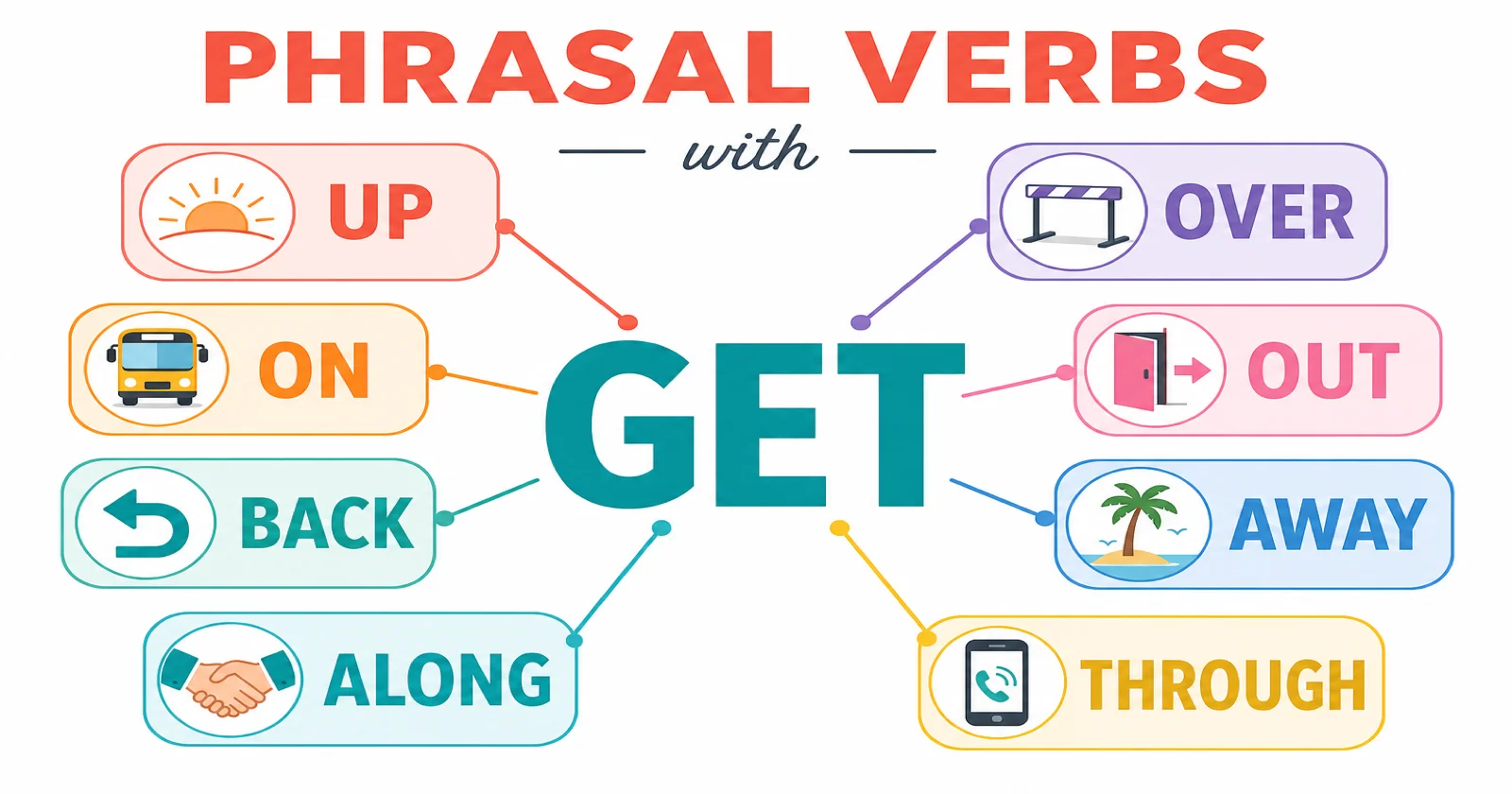
GET은 영어에서 활용 범위가 가장 넓은 동사입니다. 단독으로는 “얻다” 또는 “~이 되다”라는 뜻이지만, up, over, on, away, through, out, along, by 같은 전치사를 붙이면 의미가 완전히 달라집니다. “Get over”는 병에서 회복하다, 벽을 넘어가다, 실연의 아픔을 극복하다를 뜻할 수 있습니다. “Get out”은 장소를 떠나다, 위험에서 탈출하다, 정보가 세상에 알려지다라는 뜻이 될 수 있습니다.
원어민은 GET 구동사를 하루에도 수십 번씩, 흔히 의식하지 못한 채 사용합니다. 학습자에게는 이 때문에 간극이 생깁니다. “She couldn’t get through to him”에 나온 단어를 하나씩 모두 알아도, 문장 전체의 뜻은 개별 단어만으로 짐작한 의미와 완전히 다를 수 있습니다.
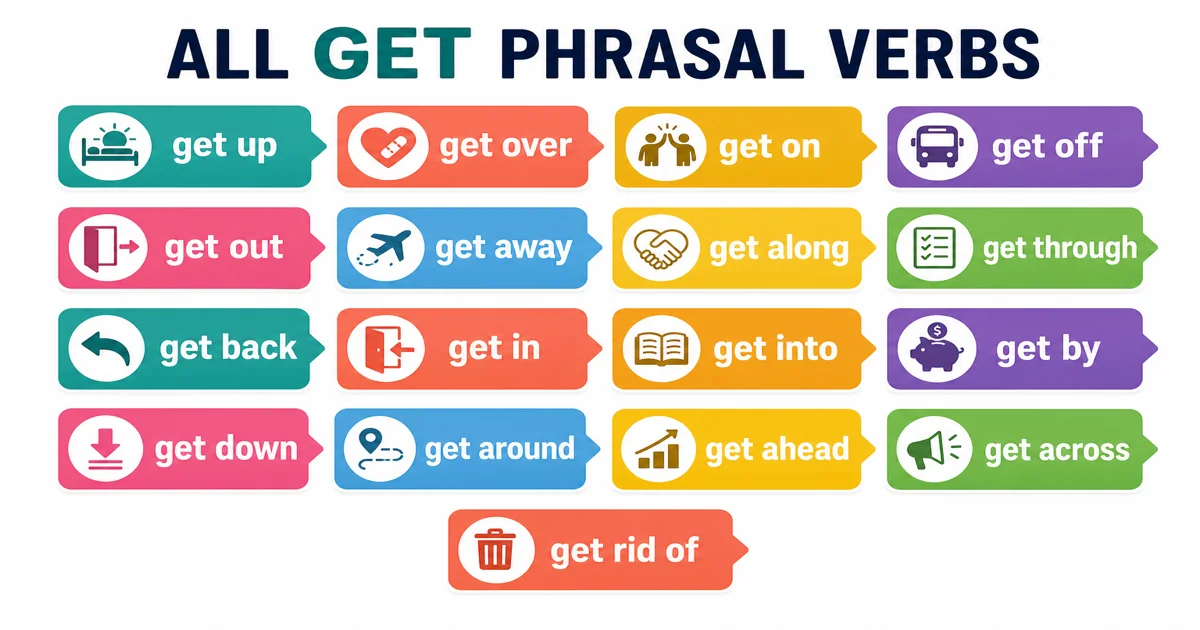
이 가이드에서는 주요 GET 구동사를 up, over, on 등의 불변화사별로 정리합니다. 각 항목에는 모든 뜻, 실제 예문, 격식 수준에 관한 참고 사항과 흔한 실수가 담겨 있습니다. 끝까지 읽고 나면 GET 구동사가 헷갈리는 표현이 아니라 직관적으로 이해되는 표현이 될 것입니다.
- 포함 구동사: 25개 이상
- 설명하는 뜻: 60개 이상
- 수준: B1–C1 (중급~고급)
- 중점: 뜻, 예문, 사용 참고 사항, 흔한 실수
영어 구동사 전체를 다루는 가이드는 영어 구동사 완벽 가이드를 참고하세요.
GET UP — 세 가지 뜻
1. 침대에서 일어나다, 잠에서 깨다
가장 흔한 의미이며 누구나 매일 사용합니다.
I get up at 6:30 every morning. She got up early to catch the first train. What time do you usually get up on weekends?
2. 앉거나 누운 자세에서 일어서다
He fell on the ice but got up quickly. The audience got up and applauded. She got up from her desk and stretched.
3. 조직하거나 준비하다 (영국 영어, 비격식)
They got up a petition to save the park. We should get up a group to visit the museum.
흔한 실수: “I got up from the bed”라고 할 때는 관사가 필요하지 않습니다. “I got up” 또는 “I got out of bed”라고 하세요.
GET OVER — 네 가지 뜻
1. (질병, 충격, 정서적 고통에서) 회복하다
가장 흔한 의미입니다. 회복에는 시간이 걸리며, “get over”는 회복 과정이 완료되었음을 암시합니다.
It took her months to get over the flu. He still hasn’t gotten over his breakup. You need time to get over the shock.
2. (문제나 어려움을) 극복하다
We need to get over this obstacle before moving forward. Once you get over the initial confusion, the software is easy to use.
3. 놀랍거나 믿기 어려운 일을 받아들이다
부정문이나 “can’t”와 함께 자주 쓰입니다.
I can’t get over how much the city has changed! She couldn’t get over the fact that she had actually won.
4. 물리적 장애물을 넘거나 기어오르다
The cat managed to get over the fence. We need to get over this hill before sunset.
흔한 실수: 회화에서 “Get over it”이라고 하면 상대를 무시하는 듯 들립니다. 상대에게 불평을 그만하라는 의미가 담기므로 신중하게 사용하세요.
GET ON — 다섯 가지 뜻
1. (버스, 기차, 비행기 등 큰 탈것에) 타다
We got on the bus at the wrong stop. Hurry — we need to get on the plane before they close the gate. She got on the train to London at 8 a.m.
2. 좋은 관계를 맺다 (영국 영어: get on, 미국 영어: get along)
Do you get on with your colleagues? They don’t get on very well — they argue constantly. I’ve always gotten on well with my neighbors.
3. 일을 계속하다; 진척을 보이다
Stop talking and get on with your work. Let’s get on with the meeting — we’re behind schedule. How are you getting on with the project?
4. 잘 지내거나 대처하다 (영국 영어)
How’s your mother getting on these days? He’s getting on well after the surgery.
5. 나이가 들다 (비격식)
She’s getting on in years, but she’s still very active. He’s getting on a bit — he’ll be 70 next month.
흔한 실수: 탈것에 쓸 때 “get on”과 “get in”은 크기에 따라 달라집니다. 큰 탈것인 버스·기차·비행기에는 GET ON, 작은 탈것인 자동차·택시에는 GET IN을 씁니다.
GET OFF — 네 가지 뜻
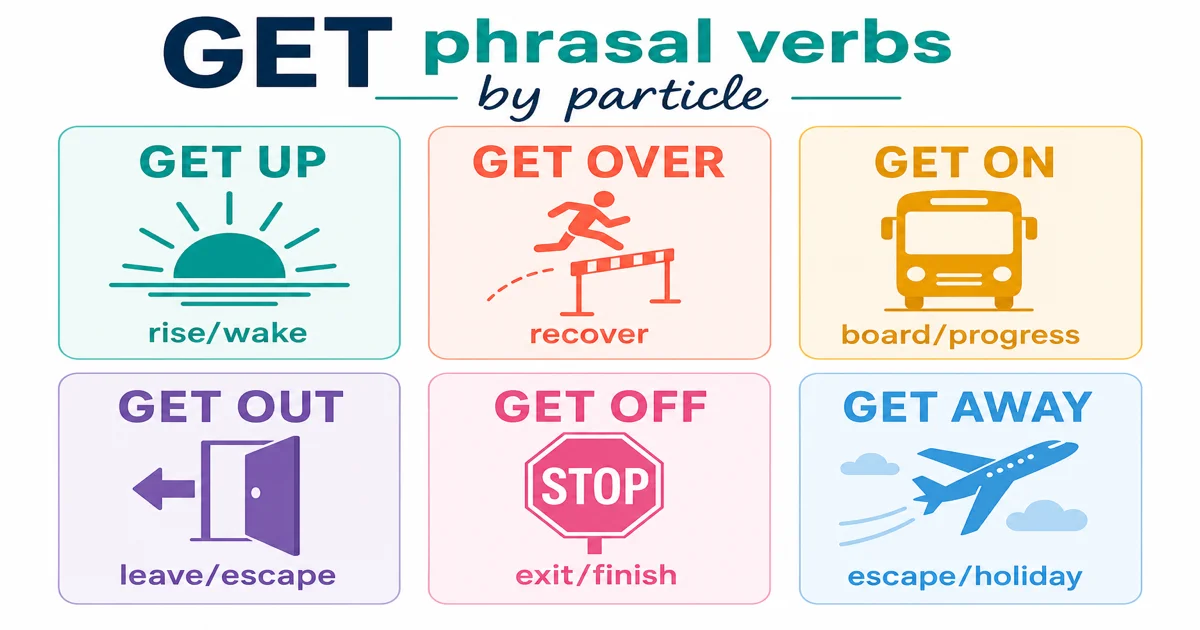
1. (버스, 기차 등 큰 탈것에서) 내리다
“get on”의 반대말입니다.
We get off at the next stop. She got off the train and walked to the office. Don’t forget to get off at Central Station.
2. 퇴근하다; 하루 일과를 마치다
What time do you get off work today? I get off at 5, so I can meet you at 5:30.
3. 처벌을 피하거나 가벼운 형을 받다
He got off with just a warning. The lawyer helped her get off the charges. He committed fraud but somehow got off scot-free.
4. 만지거나 붙잡기를 멈추다 (명령형)
Get off my phone! The sign said “Get off the grass.”
흔한 실수: “Get off FROM the bus”라고 하지 마세요. “from”은 필요하지 않으므로 “get off the bus”라고 하면 됩니다.
GET OUT — 네 가지 뜻
1. 장소를 떠나다
Get out of my house! We should get out of here before the storm hits. She got out of the car and slammed the door.
2. 탈출하다
The prisoners tried to get out through a tunnel. How did the dog get out of the yard?
3. (정보나 비밀이) 알려지다
If this information gets out, there will be a scandal. Word got out that the company was closing.
4. 무언가를 꺼내거나 제거하다
I can’t get this stain out of my shirt. She got out her wallet and paid the bill.
GET AWAY — 세 가지 뜻
1. 탈출하다, 달아나다
The thieves got away before the police arrived. The bird got away from the cat.
2. 휴가를 가다; 휴식을 위해 떠나다
We need to get away for a few days — I’m exhausted. They got away to the mountains for the weekend.
3. 결과나 처벌을 피하다 (get away with)
He cheated on the test and got away with it. You can’t get away with lying to your boss forever. She always gets away with coming to work late.
참고: 감탄사로 쓰이는 “Get away!”는 영국 비격식 영어에서 “믿을 수 없어!”라는 뜻이고, 명령형으로는 “떠나!”라는 뜻입니다.
GET ALONG — 두 가지 뜻
1. 친밀한 관계를 맺다
영국 영어의 “get on”에 해당하는 미국 영어 표현입니다. 일상 회화에서 매우 흔합니다.
Do you get along with your sister? The new employee gets along well with everyone. They didn’t get along at first, but now they’re good friends.
2. 꾸려 나가다, 살아가다
How do you get along on such a small salary? We get along fine without a car.
GET THROUGH — 네 가지 뜻
1. (일, 기간, 분량을) 끝내다, 완료하다
I got through all 500 pages in three days. How are we going to get through all this work by Friday? She finally got through the exam preparation.
2. 힘든 시기를 견뎌 내다
It was a tough year, but we got through it. Music helped me get through the lockdown.
3. 전화로 누군가와 연락이 닿다
I’ve been trying to call her all day, but I can’t get through. I finally got through to customer service after 40 minutes.
4. 누군가가 이해하게 하다
I tried to explain, but I couldn’t get through to him. How can I get through to my teenager about the importance of studying?
GET BACK — 세 가지 뜻
1. 돌아오다
What time did you get back from vacation? I’ll get back to London by Friday. She got back home late last night.
2. 무언가를 되찾다, 돌려받다
I got my money back after returning the product. Did you ever get back the book you lent him?
3. 복수하다 (get back at)
He’s trying to get back at his ex-partner. She got back at him by revealing his secret.
GET IN — 세 가지 뜻
1. 작은 탈것(자동차, 택시)에 타다
“get out of”의 반대말입니다.
Get in the car — we’re late! She got in a taxi and headed to the airport.
2. 도착하다
What time does your flight get in? The train gets in at 9:15. He got in late last night.
3. (학교, 프로그램, 행사 등에) 합격하거나 입장하다
She applied to five universities and got in to three. It’s a popular club — it’s hard to get in. Did you get in? I heard the competition was fierce.
GET INTO — 세 가지 뜻
1. ~에 관심을 갖거나 관여하게 되다
She’s really getting into photography lately. He got into cooking during the pandemic. I can’t get into this book — it’s too slow.
2. (학교, 프로그램, 직업 분야에) 들어가다
Getting into medical school is extremely competitive. How did you get into marketing?
3. 곤경에 빠지다
He keeps getting into fights at school. Don’t get into an argument with her — you won’t win. What has gotten into you today? You’re acting strange.
GET BY — 두 가지 뜻
1. 제한된 자원으로 그럭저럭 살아가다
It’s hard to get by on minimum wage. We don’t have much, but we get by. She gets by with a little help from her family.
2. 지나가다 (사람 옆을 물리적으로 통과하다)
Excuse me, could I get by? I need to reach the exit. The hallway is so narrow, it’s hard to get by.
GET DOWN — 세 가지 뜻
1. 누군가를 우울하거나 불행하게 만들다
The constant rain is really getting me down. Don’t let the criticism get you down.
2. 실제로 내려가다, 몸을 낮추다
Get down from that tree before you fall! She got down on her knees to search under the sofa.
3. 적어 두다, 기록하다
Let me get that down before I forget. Did you get down her phone number?
GET AROUND — 세 가지 뜻
1. 이곳저곳 이동하다
It’s easy to get around Tokyo by subway. How do you get around without a car?
2. (규칙이나 문제를) 피하거나 우회할 방법을 찾다
There’s no way to get around this regulation. She always finds a way to get around the rules.
3. (뉴스나 정보가) 널리 알려지다
News gets around fast in a small town. Word got around that the company was being sold.
GET AHEAD — 한 가지 뜻
특히 경력이나 삶에서 발전하다
You need to work hard to get ahead in this industry. She’s determined to get ahead in her career. It’s difficult to get ahead when you’re always playing catch-up.
GET ACROSS — 한 가지 뜻
생각을 성공적으로 전달하다
I’m trying to get my point across, but nobody seems to understand. The teacher got the concept across using simple examples. How can I get this message across to the team?
GET RID OF — 한 가지 뜻
제거하다, 버리다, 없애다
영어에서 가장 유용한 표현 가운데 하나로, 일상생활에서 끊임없이 사용됩니다.
We need to get rid of this old furniture. How do I get rid of these ants in the kitchen? She finally got rid of her cold after a week of rest.
빠른 참고표
| 구동사 | 주요 뜻 | 예문 |
|---|---|---|
| get up | 침대에서 일어나다 | I get up at 7 every day. |
| get over | 회복하다, 극복하다 | She got over the illness quickly. |
| get on | 타다; 좋은 관계를 맺다 | Get on the bus. / We get on well. |
| get off | 탈것에서 내리다; 퇴근하다 | Get off at the next stop. |
| get out | 떠나다; 탈출하다 | Get out of here! |
| get away | 탈출하다; 휴가를 가다 | The thieves got away. |
| get along | 친밀한 관계를 맺다 | Do you get along with your boss? |
| get through | 끝내다; 견뎌 내다; 전화로 연락이 닿다 | I can’t get through to her. |
| get back | 돌아오다; 되찾다 | When did you get back? |
| get in | (차에) 타다; 도착하다; 합격·입장하다 | Get in the car. |
| get into | ~에 관심을 갖게 되다 | She’s getting into yoga. |
| get by | 그럭저럭 살아가다 | We get by on a small budget. |
| get down | 우울하게 하다; 내려가다; 적다 | The news got me down. |
| get around | 이동하다; 규칙을 우회하다 | It’s easy to get around by bus. |
| get ahead | 발전하다 | Work hard to get ahead. |
| get across | 생각을 전달하다 | I couldn’t get my point across. |
| get rid of | 없애다, 버리다 | Get rid of the old files. |
GET IN과 GET ON: 어떤 탈것에 쓸까요?
거의 모든 학습자가 헷갈리는 부분입니다. 규칙은 탈것의 크기에 따라 정해집니다.
| GET ON 사용 | GET IN 사용 |
|---|---|
| bus | car |
| train | taxi |
| plane | van (small) |
| ship | truck cab |
| bicycle | canoe |
| motorcycle | helicopter |
패턴: GET ON은 안에 서 있거나 걸어 다닐 수 있는 탈것에 씁니다. GET IN은 작고 둘러싸인 공간에 몸을 넣고 앉는 탈것에 씁니다.
반대 표현: GET OFF (버스, 기차) / GET OUT OF (자동차, 택시).
GET 구동사에서 흔히 하는 실수
| 틀린 표현 | 올바른 표현 | 이유 |
|---|---|---|
|
|
get on the bus | “get on” 뒤에는 전치사를 붙이지 않습니다. |
|
|
get off the train | “from”은 필요하지 않습니다. |
|
|
I got up / I got out of bed | “bed”를 빼거나 “get out of”를 사용합니다. |
|
|
get over an illness | “get over” 뒤에는 “from”을 쓰지 않습니다. |
|
|
I can’t get through to her | 전화나 의사소통을 뜻할 때는 “to”가 필요합니다. |
연습 단어
다음 필수 구동사와 관련 어휘를 Linglify 사전에 추가하세요.
boom
명사
-
예문
- The boom of thunder echoed across the valley.
- The technology boom created many new millionaires.
cooperate
동사
-
evaluate
동사
-
예문
- Companies evaluate job candidates based on experience, skills, and personality.
- Teachers evaluate student progress through tests, projects, and classroom participation.
graduate
동사
-
예문
- She will graduate from university next year with a degree in engineering.
- Students must complete all requirements before they can graduate from high school.
horizon
명사
-
예문
- The sun disappeared behind the horizon as evening approached.
- Traveling broadens your horizon and exposes you to new cultures.
indispensable
형용사
-
예문
- Clean water is indispensable for human survival and good health.
- Her experience and skills make her indispensable to the research team.
jury
명사
-
예문
- The jury deliberated for several hours before reaching a verdict.
- The talent show jury consisted of professional musicians and entertainers.
lifelong
형용사
-
예문
- Learning is a lifelong process that never truly ends.
- Their lifelong friendship began during elementary school years.
motivated
형용사
-
예문
- Motivated employee seeks additional responsibilities and challenges at work.
- Success requires being motivated even when facing difficult obstacles.
normally
부사
-
예문
- Heart normally beats between sixty and hundred times per minute.
- Students normally arrive at school before morning bell rings.
off
동사
-
예문
- Please turn off the lights before leaving the room.
- The dog ran off into the forest chasing wild rabbits.
prejudice
명사
-
예문
- Education helps overcome prejudice and promotes understanding.
- Racial prejudice damages communities and individuals alike.
resolve
동사
-
예문
- Mediator helps parties resolve dispute through negotiation.
- Technical team will resolve software problems quickly.
stress
동사
-
예문
- Heavy workload may stress employees beyond limits.
- Teacher will stress importance of homework completion.
total
형용사
-
예문
- Total cost includes all fees and expenses.
- Total silence fills room during meditation session.
tragedy
명사
-
예문
- Natural tragedy affects thousands of innocent people.
- Personal tragedy changes person's life perspective completely.
union
명사
-
예문
- Labor union protects worker rights and interests.
- Marriage union joins two people in partnership.
voyage
명사
-
예문
- Space exploration represents humanity's greatest voyage into the unknown.
- The ocean voyage from Europe to America took several weeks in the past.
candidate
명사
-
예문
- Each presidential candidate presented their policy plans to voters.
- The job candidate impressed the interview panel with her experience.
discourage
동사
-
예문
- Don't let one failure discourage you from pursuing your dreams.
- High prices discourage many people from buying organic food products.
donate
동사
-
예문
- Many people donate money to charities that help homeless individuals.
- She decided to donate blood to help patients in emergency situations.
firmly
부사
-
예문
- Hold the rope firmly while climbing down the steep mountain slope.
- The manager firmly believed in treating all employees with respect.
guide
동사
-
예문
- Parents should guide their children to make responsible decisions.
- The experienced hiker will guide the group through the mountain trail safely.
humorous
형용사
-
예문
- She writes humorous articles about everyday life and family experiences.
- The humorous speech made everyone laugh and lightened the serious mood.
admission
명사
-
예문
- Her admission to the prestigious medical school was the result of hard work.
- The museum offers free admission on the first Sunday of every month.
다음 단계
-
가장 약한 부분을 고르세요. 위 목록을 살펴보고 헷갈리거나 전혀 사용하지 않는 GET 구동사를 찾아 먼저 집중적으로 연습하세요.
-
문장을 만들어 보세요. 각 구동사로 자신의 생활에 관한 문장을 2~3개 쓰세요. 개인적인 경험과 연결하면 어휘가 더 오래 기억에 남습니다.
-
간격 반복 학습을 위해 Linglify에 추가하세요. 구동사가 자연스럽게 떠오를 때까지 시스템이 적절한 간격으로 복습을 제시합니다.
-
구동사 완벽 가이드를 읽어 보세요. 영어 구동사 완벽 가이드에서 기본 동사 전반에 걸친 구동사 200개 이상을 다룹니다.
-
MAKE 구동사를 익히세요. MAKE가 들어간 구동사에서도 또 다른 핵심 동사를 같은 형식으로 살펴볼 수 있습니다.
자주 묻는 질문
GET이 들어간 구동사 중 가장 흔한 것은 무엇인가요?
가장 자주 쓰이는 다섯 가지는 get up(침대에서 일어나다), get on/along(좋은 관계를 맺다), get over(회복하다), get through(끝내다·견뎌 내다), get rid of(없애다·버리다)입니다. 일상 대화에서 하루에도 수십 번씩 등장합니다. 원어민은 이를 자연스럽게 사용하므로, 자연스러운 영어를 알아들으려면 이 표현들을 이해하는 것이 필수입니다.
GET에는 왜 구동사가 이렇게 많나요?
GET은 영어에서 가장 오래되고 기본적인 동사 중 하나입니다. “얻다” 또는 “~이 되다”라는 핵심 의미가 매우 유연해 거의 모든 전치사와 결합하여 새로운 뜻을 만들 수 있습니다. 역사적으로 구동사는 일상 회화에서 라틴어 계열의 긴 단어를 대신했습니다(예: “get over”가 “recover”를, “get rid of”가 “eliminate”를 대신함). 그래서 GET은 수십 가지 조합의 자연스러운 기본 동사가 되었습니다.
GET IN과 GET ON 중 무엇을 써야 하는지 어떻게 알 수 있나요?
안에서 서거나 걸어 다닐 수 있는 큰 탈것(버스, 기차, 비행기, 배)에는 GET ON을 쓰세요. 작고 둘러싸인 공간에 앉는 탈것(자동차, 택시)에는 GET IN을 씁니다. 반대 방향에도 같은 패턴이 적용됩니다. 버스에서는 GET OFF, 자동차에서는 GET OUT OF라고 합니다. 안에서 걸어 다닐 수 있으면 ON/OFF, 몸을 숙여 들어가야 하면 IN/OUT을 사용합니다.
GET 구동사는 격식체인가요, 비격식체인가요?
대부분의 GET 구동사는 중립적이거나 비격식적이며 일상 대화, 이메일, 일반적인 글에서 사용해도 적절합니다. 매우 격식 있는 학술·법률 문서에서는 라틴어 계열 동사를 선호합니다. “get over” 대신 recover, “get rid of” 대신 eliminate, “get” 대신 comprehend를 쓸 수 있습니다. 하지만 비즈니스 영어, 발표, 대부분의 직업적 상황에서는 GET 구동사를 사용해도 전혀 어색하지 않습니다.
GET 구동사 하나에 뜻이 몇 가지나 있을 수 있나요?
일부 구동사에는 서로 다른 뜻이 최대 다섯 가지까지 있습니다. “Get on”은 탈것에 타다, 좋은 관계를 맺다, 진척을 보이다, 대처하다, 나이가 들다를 뜻할 수 있습니다. “Get through”는 끝내다, 견뎌 내다, 전화로 연락이 닿다, 생각을 전달하다라는 뜻입니다. 의미는 항상 문맥에 따라 결정되며, 구동사 주변의 단어를 보면 어떤 정의가 적용되는지 알 수 있습니다. 그래서 구동사는 각각의 정의를 따로 외우는 것보다 예문과 함께 익히는 편이 훨씬 효과적입니다.


