
Palavras Básicas de Inglês para Iniciantes: Construa seu Primeiro Vocabulário
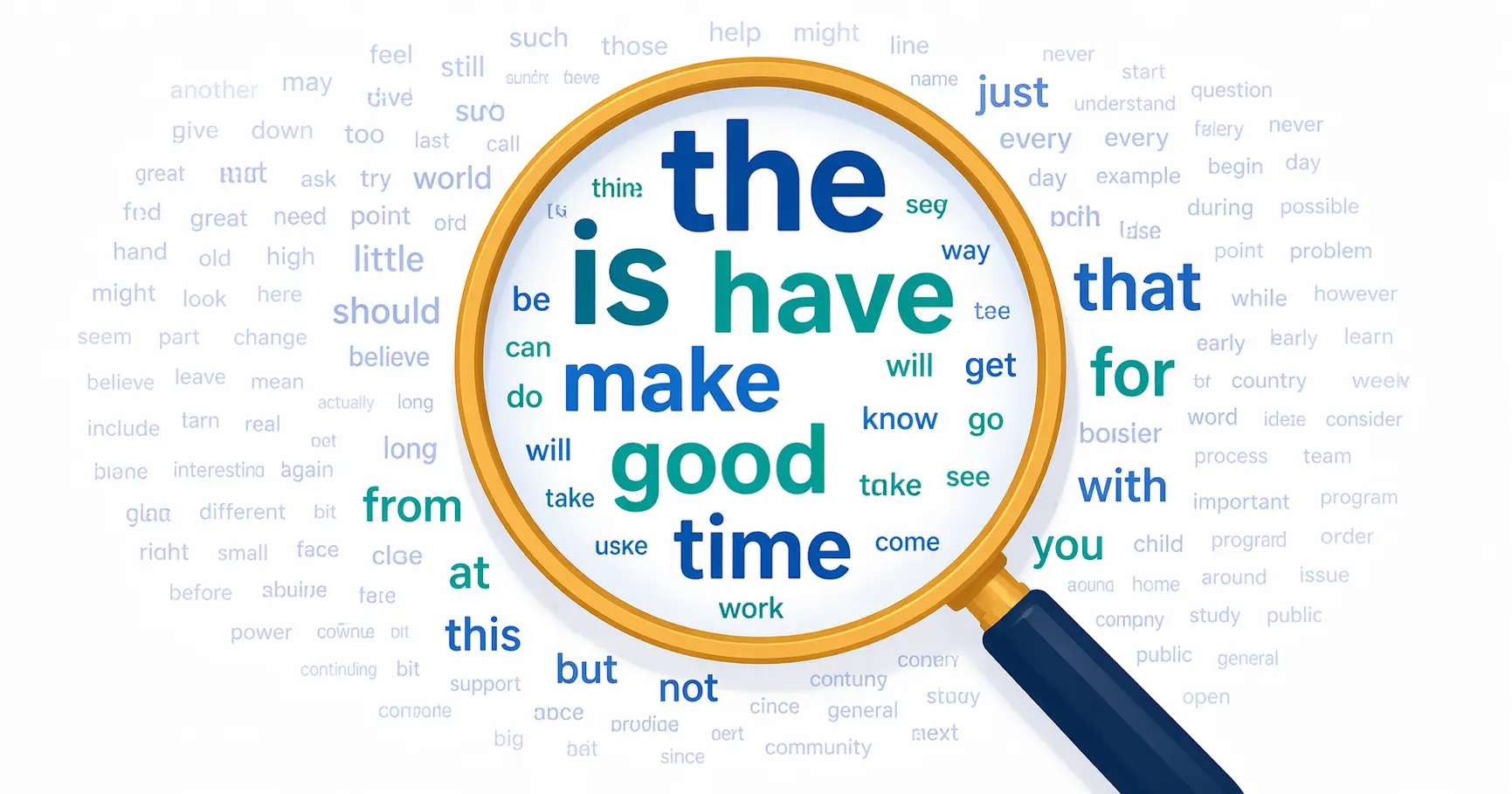
Quando você começa a estudar inglês, é tentador baixar uma lista de mil palavras aleatórias. Raramente esse é o caminho mais rápido para a comunicação. Iniciantes precisam de um vocabulário central pequeno: palavras que se combinam facilmente para descrever pessoas, fazer perguntas, fazer planos e entender frases cotidianas.
Este é um guia de palavras, não um livro de frases. Se você quer frases prontas para viagem e conversação, leia Inglês para Iniciantes: Palavras e Frases Essenciais. Aqui, você aprenderá os blocos de construção que permitem criar suas próprias frases.
- Nível: A1–A2
- Objetivo: entender e fazer frases básicas do dia a dia
- Foco: substantivos de alto uso, verbos, palavras descritivas e palavras gramaticais
- Regra de estudo: aprenda palavras em grupos curtos, nunca como uma lista alfabética
Comece com Palavras que Fazem Frases
A frase “My friend works in a small café” usa quatro tipos de vocabulário:
- pessoas e coisas: friend, café
- ações: works
- palavras descritivas: small
- palavras gramaticais: my, in, a
Aprenda esses grupos juntos. Um substantivo por si só é útil, mas um substantivo mais um verbo e uma palavra descritiva se torna comunicação.
Pessoas, Lugares e Coisas Essenciais
| Palavra | Classe gramatical | Significado | Exemplo |
|---|---|---|---|
| family | substantivo | pessoas relacionadas a você | My family lives near the city centre. |
| friend | substantivo | uma pessoa de quem você gosta e conhece bem | Her friend speaks English very clearly. |
| child | substantivo | uma pessoa jovem | The child is reading a book. |
| home | substantivo | o lugar onde você mora | I am at home today. |
| room | substantivo | uma parte de um edifício | Their room has two windows. |
| school | substantivo | um lugar para educação | The school opens at eight. |
| work | substantivo | um emprego ou a atividade de trabalhar | He has a lot of work this week. |
| shop | substantivo | um lugar onde as pessoas compram coisas | The shop is next to the station. |
| food | substantivo | coisas que as pessoas comem | This food smells good. |
| time | substantivo | minutos, horas ou um período | We do not have much time. |

Verbos Essenciais: O Que as Pessoas Fazem
Verbos dão movimento à sua frase. Aprenda a forma base primeiro, depois observe formas comuns como work / works / worked.
| Palavra | Significado | Exemplo |
|---|---|---|
| be | existir; usado para descrever | They are happy today. |
| have | possuir ou experimentar | I have a new phone. |
| do | realizar uma ação | What do you do after class? |
| go | mover-se para outro lugar | We go to the park on Sunday. |
| come | mover-se em direção a um lugar ou pessoa | Please come here for a minute. |
| want | desejar algo | I want a cup of tea. |
| need | precisar de algo | You need your passport. |
| like | gostar de algo | They like Italian food. |
| know | ter informação | Do you know her name? |
| think | ter uma opinião ou ideia | I think this answer is right. |
| make | criar ou causar algo | Let’s make dinner together. |
| take | carregar, receber ou usar | Take your bag with you. |
Palavras Descritivas que Você Usará Todo Dia
| Palavra | Significado | Exemplo |
|---|---|---|
| good | agradável, útil ou correto | That is a good idea. |
| bad | desagradável ou não bom | The weather is bad today. |
| big | grande | They live in a big house. |
| small | pequeno em tamanho | I need a small table. |
| new | recentemente feito ou obtido | Her new job starts on Monday. |
| old | não novo; que existe há muito tempo | This is an old photo. |
| easy | não difícil | The first exercise is easy. |
| important | necessário ou significativo | Sleep is important for learning. |
| happy | satisfeito | I am happy to see you. |
| tired | precisando de descanso | We are tired after the trip. |
Palavras de Pergunta e Pequenas Palavras Gramaticais
Palavras pequenas aparecem em quase toda frase. Vale a pena aprendê-las cedo porque ajudam a entender como uma frase funciona.
| Palavra | Uso | Exemplo |
|---|---|---|
| who | pergunta sobre uma pessoa | Who is that woman? |
| what | pergunta sobre uma coisa ou ação | What do you need? |
| where | pergunta sobre um lugar | Where is the bus stop? |
| when | pergunta sobre tempo | When does the film start? |
| why | pede uma razão | Why are you late? |
| how | pergunta sobre um método ou condição | How are you today? |
| this / that | aponta para uma coisa | This book is mine; that book is yours. |
| some / any | fala sobre uma quantidade | Do you have any water? |
| with | mostra conexão ou companhia | I study with my friend. |
| because | dá uma razão | I am home because it is raining. |
Construa Famílias de Palavras, Não Palavras Isoladas
Uma palavra pode desbloquear várias outras. Quando aprender help, aprenda também helpful e helper. Quando aprender teach, adicione teacher e teaching. Isso faz seu vocabulário crescer mais rápido.
| Palavra central | Palavras relacionadas | Exemplo |
|---|---|---|
| work | worker, workplace, working | My sister is a worker at a hospital. |
| learn | learner, learning | Every learner needs regular review. |
| help | helpful, helper | The receptionist was very helpful. |
| teach | teacher, teaching | Our teacher explains new words slowly. |
| use | useful, user | This app is useful for beginners. |
Uma Rotina Diária Simples
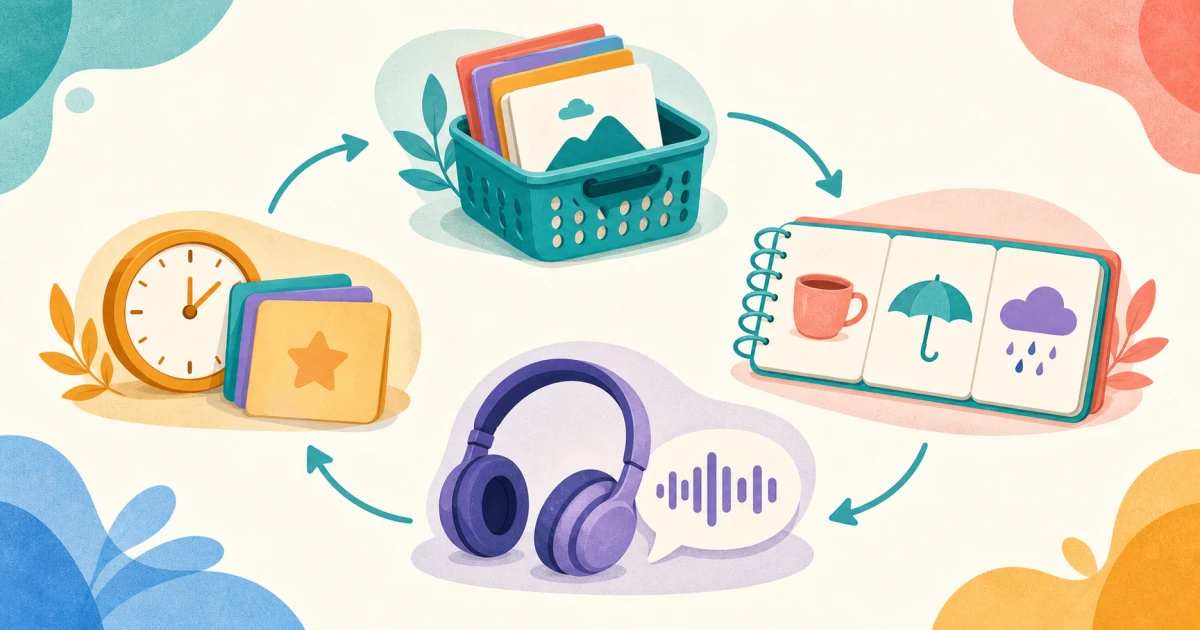
Escolha oito palavras. Pegue dois substantivos, dois verbos, dois adjetivos e duas palavras gramaticais de um tópico.
Faça quatro frases. Use as palavras em frases sobre sua vida real: sua casa, trabalho, família ou planos.
Diga as frases em voz alta. Falar revela quais palavras você consegue usar e quais você apenas reconhece.
Revise amanhã. Não adicione outras oito palavras até conseguir lembrar a maioria do grupo de hoje sem olhar.
Palavras para Praticar
abuse
substantivo
abuso
Exemplos
- It's important to report any signs of child abuse to the authorities.
- The investigation revealed serious abuse of power by government officials.
actually
advérbio
na verdade, de fato
Exemplos
- I thought the meeting was today, but it's actually scheduled for tomorrow.
- The book looks boring, but it's actually quite interesting and engaging.
affection
substantivo
afeição
Exemplos
- The child showed deep affection for his grandmother who raised him.
- Their mutual affection was evident to everyone who saw them together.
agreement
substantivo
acordo, pacto
Exemplos
- The trade agreement will benefit both countries' economic development significantly.
- There was general agreement among the committee members about the proposed changes.
airport
substantivo
aeroporto, terminal
Exemplos
- International airports handle millions of travelers and tons of cargo annually.
- We need to arrive at the airport two hours before our departure time.
alternate
adjetivo
alternativo
Exemplos
- The parking lot uses alternate spaces for cars and motorcycles.
- We need an alternate plan in case the weather doesn't cooperate.
announce
verbo
anunciar, divulgar, publicar
Exemplos
- Airlines announce flight delays through the terminal's public address system.
- The principal will announce the scholarship winners during tomorrow's assembly.
apart
advérbio
separado
Exemplos
- Please keep these chemicals apart to prevent dangerous reactions.
- The two friends lived far apart but stayed in regular contact.
apply
verbo
solicitar, aplicar
Exemplos
- Apply pressure to the wound to stop the bleeding immediately.
- Students can apply for financial aid to help pay tuition costs.
arrest
substantivo
prisão, detenção
Exemplos
- He was under arrest for suspected involvement in the robbery.
- The arrest of the criminal was reported on the evening news.
attend
verbo
comparecer, assistir
Exemplos
- All students must attend classes regularly to pass their courses.
- The nurse will attend to the patient's needs throughout the night.
ballet
substantivo
balé
Exemplos
- She studied ballet for many years before becoming a professional dancer.
- The ballet performance featured graceful movements and beautiful costumes.
basis
substantivo
base
Exemplos
- The selection process is conducted on the basis of merit alone.
- Trust forms the basis of any successful relationship or partnership.
bedroom
substantivo
quarto
Exemplos
- She decorated her bedroom with posters and colorful curtains.
- The master bedroom has a beautiful view of the garden.
biotechnology
substantivo
biotecnologia
Exemplos
- Agricultural biotechnology helps create disease-resistant crop varieties.
- Biotechnology companies develop new medical treatments and therapies.
borrow
verbo
pegar emprestado
Exemplos
- Can I borrow your pen for a few minutes?
- He had to borrow money from the bank for repairs.
browser
substantivo
navegador
Exemplos
- Chrome is the most popular web browser worldwide.
- The store welcomes browsers as well as buyers.
candidate
substantivo
candidato
Exemplos
- Each presidential candidate presented their policy plans to voters.
- The job candidate impressed the interview panel with her experience.
cat
substantivo
gato
Exemplos
- The fluffy cat sat peacefully by the warm fireplace in the evening.
- Their pet cat loves to play with colorful balls of yarn.
cherished
adjetivo
querido
Exemplos
- His cherished dream of becoming a pilot finally came true.
- The old photograph was her most cherished possession from childhood.
cloudy
adjetivo
nublado
Exemplos
- The water became cloudy after stirring up sediment from the bottom.
- The weather forecast predicts cloudy skies with possible rain this evening.
commute
verbo
deslocar-se, morar
Exemplos
- Public transportation helps people commute efficiently reducing traffic congestion.
- Workers commute daily between suburban homes and downtown offices.
confirmation
substantivo
confirmação, verificação, aprovação
Exemplos
- She received confirmation of her job application via email yesterday.
- The confirmation ceremony was held at the local church on Sunday.
correspond
verbo
corresponder
Exemplos
- She corresponds regularly with her friends who live in different countries.
- The witness testimony should correspond with the physical evidence found at the scene.
custom
substantivo
personalização
Exemplos
- It is a local custom to remove shoes before entering homes.
- The wedding ceremony followed traditional customs from their culture.
O Que Estudar a Seguir
- Use suas palavras em situações completas com Frases Simples em Inglês para Uso Diário.
- Continue com as 1000 Palavras Mais Comuns do Inglês.
- Navegue por conjuntos para iniciantes na biblioteca de vocabulário A1.
Perguntas Frequentes
Quantas palavras básicas em inglês preciso?
Por volta de 300 palavras cuidadosamente escolhidas podem ajudar a lidar com muitas situações básicas. Você não precisa memorizá-las todas em uma semana; a revisão regular importa mais.
Iniciantes devem aprender gramática ou vocabulário primeiro?
Aprenda os dois juntos em pequenas quantidades. A gramática básica ajuda a conectar as palavras que você aprende em frases úteis.
Qual é a maneira mais rápida de lembrar palavras básicas em inglês?
Use cada palavra em uma frase pessoal, diga-a em voz alta e revise após um dia, três dias e uma semana.
Palavras isoladas são suficientes para conversa?
Não. Palavras isoladas são os blocos de construção. Pratique combiná-las em frases curtas e expressões comuns.
O que devo aprender depois do vocabulário A1?
Avance para o vocabulário A2, leitura simples, prática de listening e conversas curtas. Adicione mais palavras por tópico em vez de começar uma lista aleatória.