4000個必學英文單字:完整學習指南
詞彙研究中有一個神奇的數字:4000個詞族。這是你能理解約95%日常英語的程度——對話、新聞文章、電視節目和大多數書面文字。低於4000個單字,你會不斷猜測。超過4000個,你就可以從語境中學習新單字,因為你已經理解了它們周圍的句子。
本指南是達到4000個單字門檻的完整學習計劃。它將旅程分為四個程度,在每個階段提供範例單字,並提供切實可行的6個月時間表。
- 目標詞彙量:4000個詞族
- 涵蓋程度:A1 → A2 → B1 → B2
- 完成時間:5–6個月(每天20個單字)
- 最適合:中級學習者、自學、IELTS/TOEFL備考、一般流利度提升
為什麼是4000個單字?科學依據
詞彙研究者已研究你需要多少單字才能在英語中自如運用。數十項研究的結果是一致的:
| 已知單字數 | 你能做什麼 |
|---|---|
| 500 | 作為遊客生存——問候、基本購物、簡單方向 |
| 1,000 | 處理基本日常對話——天氣、家庭、食物、時間 |
| 2,000 | 理解90%的日常口語——足夠達到A2程度 |
| 4,000 | 理解95%的口語和大多數書面文字——B2程度 |
| 6,000 | 輕鬆閱讀報紙和學術文章——C1程度 |
| 10,000 | 理解幾乎所有內容——C2/接近母語程度 |
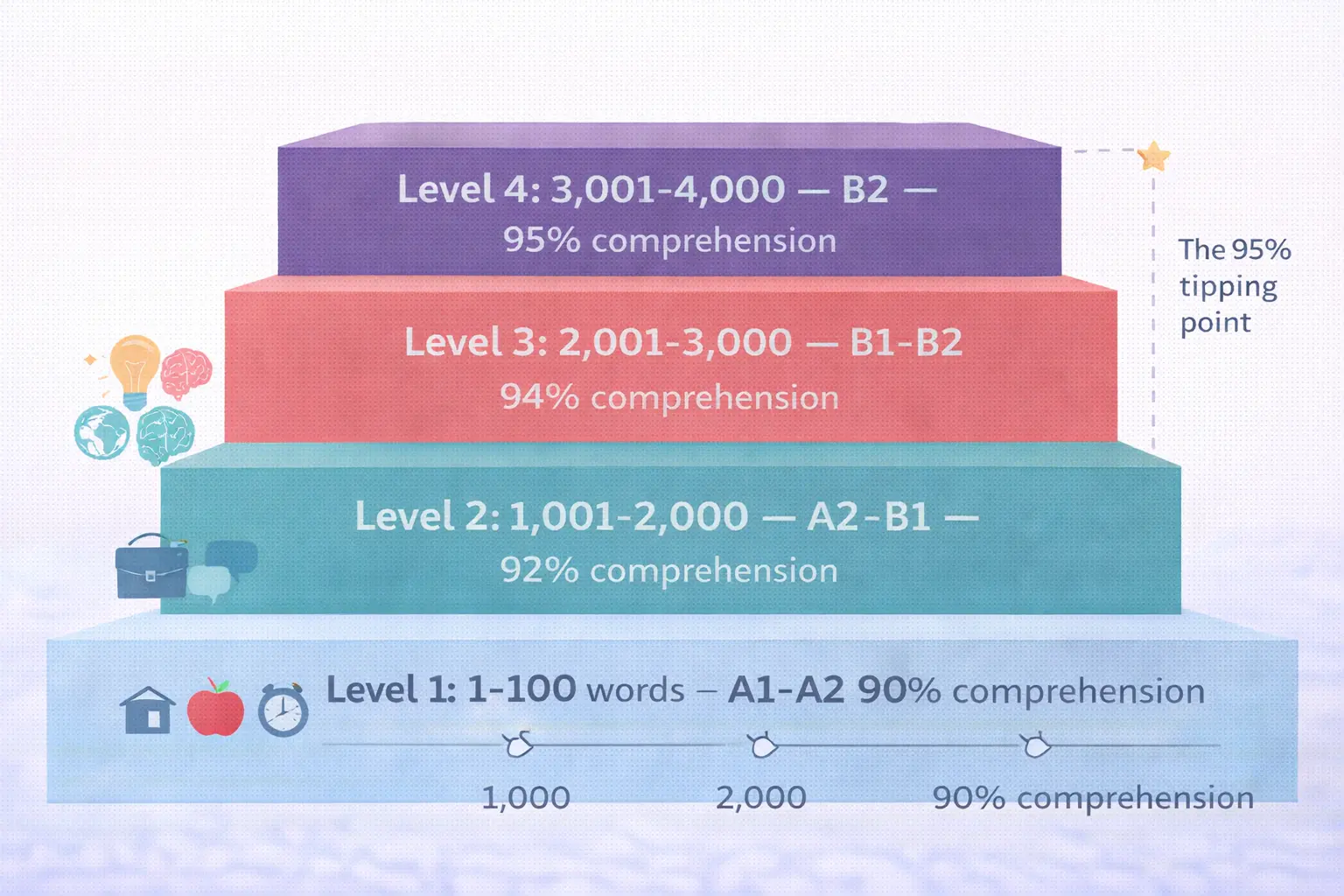
從90%到95%理解力的提升聽起來很小,但它改變了一切。在90%理解力時,你每10個單字中漏掉1個——大約每句話有2–3個未知單字。在95%時,你每20個單字中漏掉1個,通常足以從語境猜出含義。這是你不再需要為每個段落查字典、開始通過閱讀和聆聽自然學習新單字的轉折點。
「詞族」這個術語在這裡很重要。詞族包括基本單字及其常見形式:develop、development、developing、developed 和 developer 算作一個詞族。研究者說4000個時,指的是4000個詞族——換算成大約12,000–16,000個個別單字形式。
4000個單字的組織方式
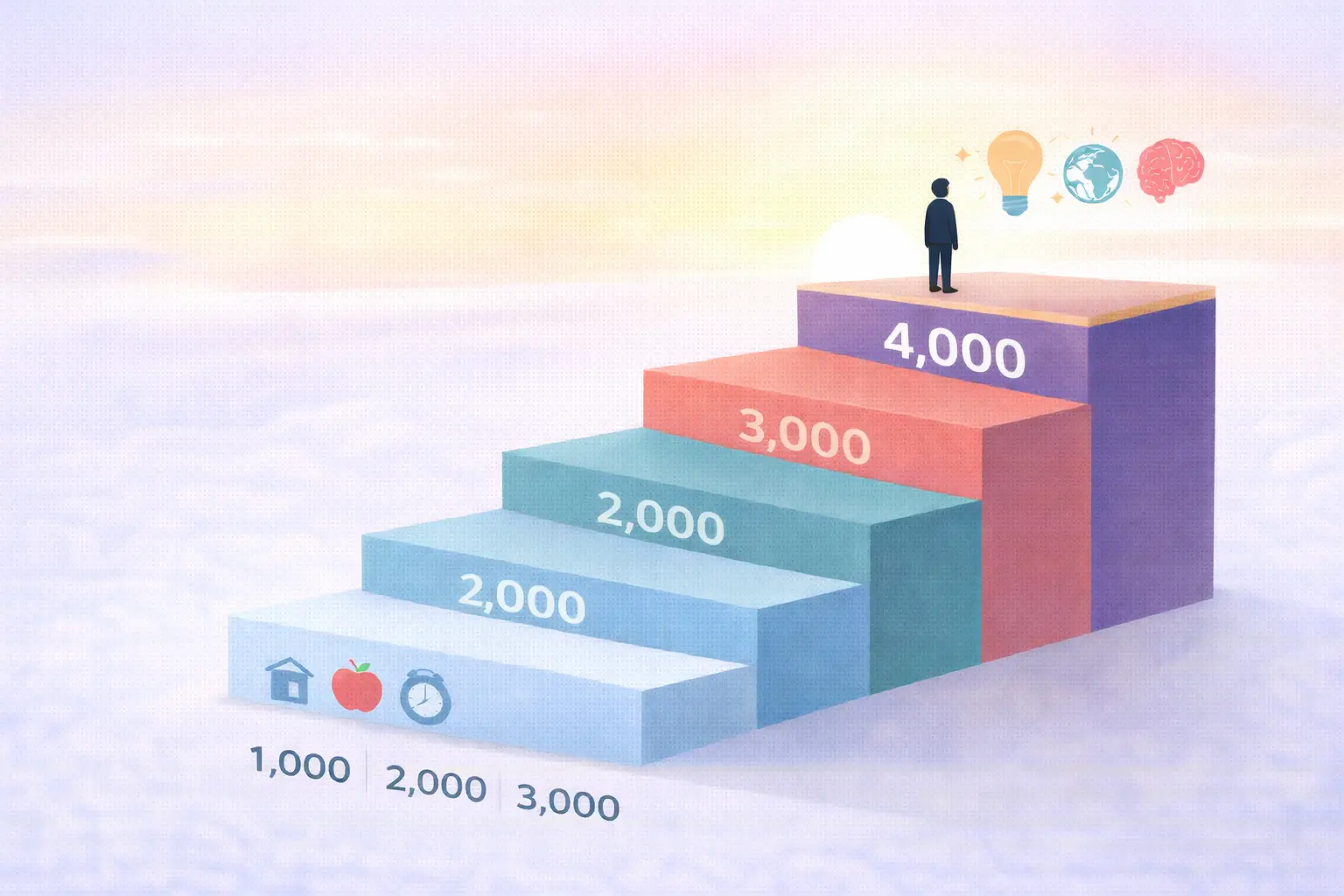
學習4000個單字最有效的方法是按頻率——最常見的單字優先。本指南根據它們在英語中出現的頻率將其分為四個程度:
| 程度 | 單字 | CEFR | 描述 |
|---|---|---|---|
| 第一程度 | 第1–1000個 | A1–A2 | 絕對必要的——功能詞、基本名詞、常用動詞 |
| 第二程度 | 第1001–2000個 | A2–B1 | 日常詞彙——工作、健康、社交生活、意見 |
| 第三程度 | 第2001–3000個 | B1–B2 | 學術和職業——抽象概念、正式動詞、精確形容詞 |
| 第四程度 | 第3001–4000個 | B2 | 高級日常——細微差別、精確度、不太常見但重要的單字 |
每個程度建立在前一個的基礎上。在你知道第一程度之前不要跳到第三程度——基於頻率的學習有效,因為你學到的每個新單字讓接下來的100個單字更容易理解。
第一程度:第1–1000個單字(A1–A2)
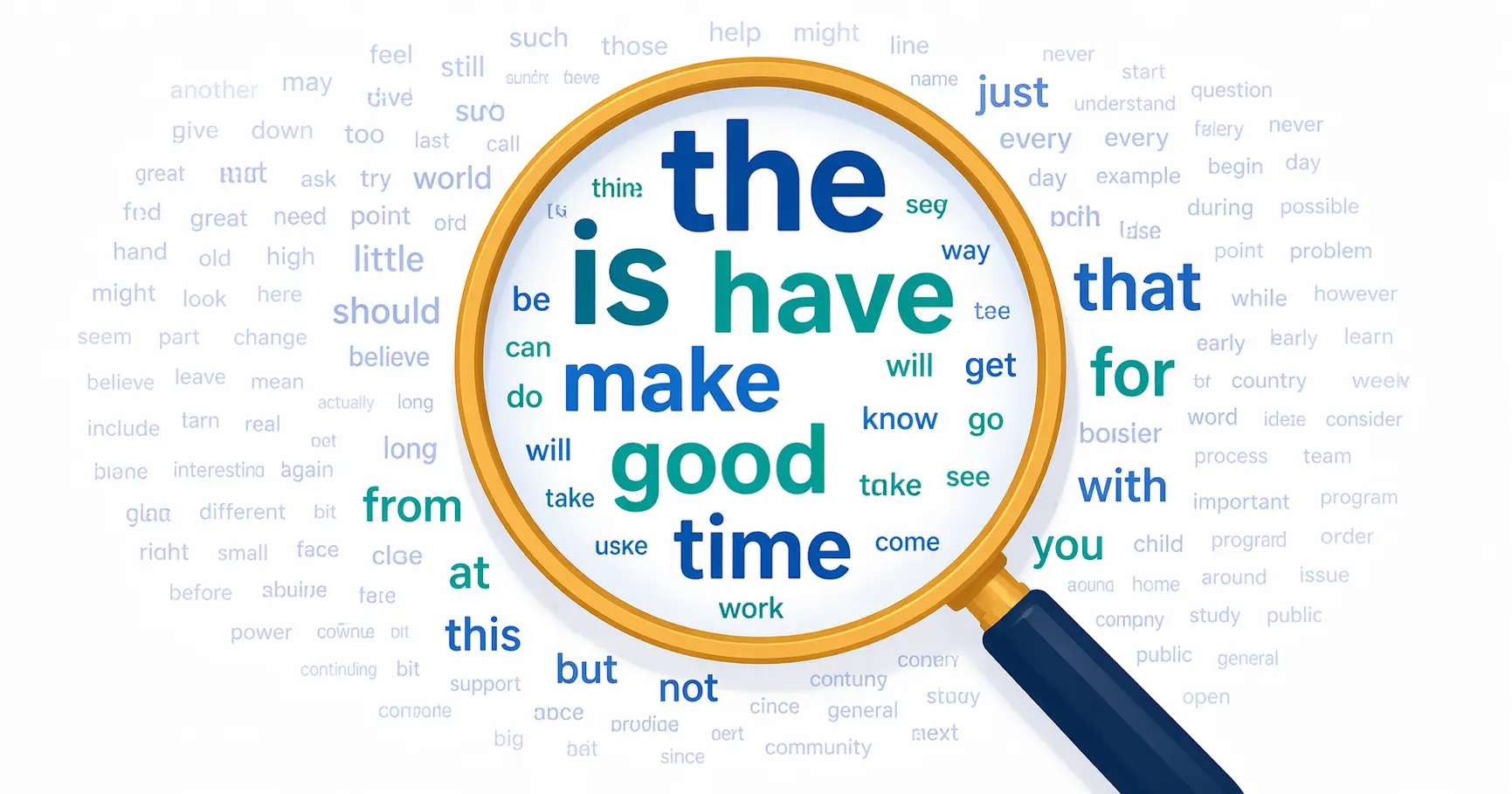
這些是英語的基本構建模塊。它們包括功能詞(the、is、in、at、with)、基本動詞、常見名詞和高頻形容詞。大多數學習者已經知道其中60–70%——目標是填補空白。
高頻動詞
| 單字 | 含義 | 例句 |
|---|---|---|
| agree | 持相同意見 | I agree with your suggestion. |
| belong | 被擁有;是某個群體的成員 | This book belongs to the school library. |
| contain | 在內部有某物 | The box contains all the documents you need. |
| describe | 說某物是什麼樣子 | Can you describe the person you saw? |
| expect | 認為某事會發生 | I expect the results will be ready by Friday. |
| follow | 跟著;在…之後 | Follow the signs to the exit. |
| improve | 使或變得更好 | She improved her English by reading every day. |
| mention | 簡短地提及某事 | He mentioned the meeting during lunch. |
| realize | 意識到某事 | I realized I had left my wallet at home. |
| suppose | 認為某事可能是真的 | I suppose you are right about that. |
日常名詞
| 單字 | 含義 | 例句 |
|---|---|---|
| advantage | 正面特質或好處 | Living near the office is a big advantage. |
| attempt | 嘗試做某事的努力 | She passed the exam on her second attempt. |
| bottom | 最低的部分 | The answer is at the bottom of the page. |
| century | 100年的時間段 | The church was built in the 18th century. |
| crowd | 大群人 | A crowd gathered outside the stadium. |
| demand | 強烈的要求;需求 | There is a growing demand for online courses. |
| effort | 用於做某事的體力或腦力 | Learning a language requires daily effort. |
| journey | 從一個地方旅行到另一個地方 | The journey from London to Paris takes two hours by train. |
| opinion | 某人對某事的想法 | In my opinion, the second option is better. |
| purpose | 做某事的原因 | The purpose of this meeting is to discuss the budget. |
常見形容詞
| 單字 | 含義 | 例句 |
|---|---|---|
| available | 能夠被使用或獲得 | The manager is not available until 3 PM. |
| certain | 確定的;特定的 | I am certain she will arrive on time. |
| entire | 整個的;完整的 | He read the entire book in one day. |
| familiar | 眾所周知的;容易辨認的 | This place looks familiar — have we been here before? |
| necessary | 需要的;必要的 | It is necessary to bring your passport to the interview. |
| ordinary | 正常的;不特別的 | It was just an ordinary day — nothing unusual happened. |
| previous | 在時間上更早的 | My previous job was at a marketing agency. |
| recent | 不久前發生的 | Have you read any good books recently? |
| separate | 未連接或相連的 | The house has a separate entrance for guests. |
| worth | 具有某個價值;值得 | The museum is worth visiting if you have time. |
在第一程度,你的目標是速度。這些單字大多數有簡單具體的含義。目標是每天30個單字——你可以在大約五週內完成第一程度。
第二程度:第1001–2000個單字(A2–B1)
在這個程度,詞彙變得更具體。你開始學習表達意見、情緒、工作、健康和社交情境的單字。這些是讓你從「生存」進步到「溝通」的單字。
意見與溝通
| 單字 | 含義 | 例句 |
|---|---|---|
| claim | 聲稱某事是真的(常有爭議) | He claims he was not at the scene. |
| confirm | 核實某事是真的 | Can you confirm the time of the appointment? |
| convince | 使某人相信某事 | She convinced her boss to approve the project. |
| deny | 說某事不是真的 | The company denied any involvement in the scandal. |
| distinguish | 辨認出兩者之間的差異 | It is hard to distinguish between the two products. |
| express | 傳達感受或想法 | He expressed his gratitude in a letter. |
| indicate | 顯示;指向 | The data indicates a significant change. |
| persuade | 通過推理使某人做某事 | They persuaded the council to build a new park. |
| recommend | 建議為好的選擇 | I recommend reading this book before the course starts. |
| warn | 告訴某人有危險 | The sign warns drivers about the sharp curve. |
工作與職業生涯
| 單字 | 含義 | 例句 |
|---|---|---|
| achieve | 成功達到目標 | She achieved her sales target three months early. |
| budget | 如何花費金錢的計劃 | The project went over budget by $50,000. |
| colleague | 與你一起工作的人 | My colleague helped me finish the report. |
| deadline | 完成某事的最後日期 | The deadline for the application is March 15. |
| employ | 給某人工作;使用某物 | The factory employs over 500 people. |
| invest | 將錢投入某物以獲得利潤 | She invested in a small startup company. |
| promote | 給某人更高的職位;廣告 | He was promoted to regional manager last month. |
| resign | 自願離職 | She resigned after ten years with the company. |
| qualify | 符合要求;取得資格 | You need 3 years of experience to qualify for the role. |
| supervise | 監督和指導工作 | She supervises a team of 12 engineers. |
健康與福祉
| 單字 | 含義 | 例句 |
|---|---|---|
| cure | 使某人恢復健康的治療 | There is still no cure for the common cold. |
| diagnose | 識別疾病或問題 | The doctor diagnosed him with a vitamin deficiency. |
| exhaust | 使極度疲憊;完全用完 | The long flight exhausted everyone on the team. |
| immune | 受到保護,不受疾病侵害 | Vaccination makes you immune to certain infections. |
| injury | 身體的物理損傷 | He missed the season because of a knee injury. |
| nutrition | 攝入食物並用於生長的過程 | Good nutrition is essential for children’s development. |
| recover | 在疾病或困難後恢復正常狀態 | It took her six weeks to recover from surgery. |
| symptom | 某事出問題的跡象(尤指疾病) | Headache and fever are common symptoms of the flu. |
| therapy | 疾病或狀況的治療 | Physical therapy helped him walk again after the accident. |
| treat | 給予醫療照護;以某種方式對待某人 | The hospital treats over 1,000 patients per day. |
在第二程度,許多單字有多種含義(「treat」= 醫療照護 AND 行為方式)。開始注意語境和搭配詞——不只是定義。
第三程度:第2001–3000個單字(B1–B2)
這是英語開始感覺學術化的地方。第三程度的單字頻繁出現在報紙、大學講座、專業電子郵件和標準化考試(如 IELTS 和 TOEFL)中。它們更抽象,通常有拉丁或希臘語根。
學術與分析
| 單字 | 含義 | 例句 |
|---|---|---|
| alternative | 另一個選項或選擇 | We need to consider alternative solutions. |
| contribute | 貢獻某物(金錢、時間、想法)以幫助 | Several factors contributed to the company’s success. |
| evaluate | 評估品質或價值 | The committee will evaluate all proposals next week. |
| implement | 將計畫或系統付諸實施 | The school implemented a new grading system. |
| investigate | 仔細審查或研究某事 | Police are investigating the cause of the fire. |
| maintain | 保持良好狀態;繼續 | The city maintains over 200 parks and green spaces. |
| obtain | 獲得或取得 | You can obtain a visa at the embassy. |
| perspective | 思考某事的特定方式 | The article offers a fresh perspective on the debate. |
| reveal | 使某事被知曉;顯示 | The study revealed surprising results. |
| significant | 重要的;大到足以有影響的 | There has been a significant improvement in air quality. |
社會與文化
| 單字 | 含義 | 例句 |
|---|---|---|
| circumstance | 與事件相關的條件或事實 | Under the circumstances, we had no other choice. |
| conflict | 嚴重的分歧或鬥爭 | The conflict between the two countries lasted for years. |
| demonstrate | 清楚地展示;公開抗議 | The experiment demonstrates how gravity works. |
| ethnic | 與有共同文化或起源的群體有關 | The city is home to many ethnic communities. |
| generation | 大約在同一時間出生的所有人 | This generation of students grew up with smartphones. |
| inequality | 缺乏平等待遇或機會 | Income inequality is a growing concern worldwide. |
| migrate | 從一個地方移動到另一個地方(永久性) | Millions of people migrate to cities for better opportunities. |
| poverty | 極度貧窮的狀態 | Nearly 700 million people live in extreme poverty. |
| reform | 透過做出改變來改善 | The government announced major education reforms. |
| tradition | 代代相傳的習俗 | Exchanging gifts is a holiday tradition in many cultures. |
科學與技術
| 單字 | 含義 | 例句 |
|---|---|---|
| calculate | 用數學確定 | The app calculates your daily calorie intake. |
| component | 更大系統的一部分 | The engine has over 300 individual components. |
| data | 收集用於分析的事實和統計數據 | The researchers collected data from 10,000 participants. |
| device | 為特定目的製造的設備 | Smartphones are the most widely used electronic devices. |
| efficient | 以最少浪費達到最大結果 | The new system is 40% more energy-efficient. |
| generate | 產生或創造 | Wind turbines generate electricity without emissions. |
| innovation | 新的想法、方法或設備 | The company is known for innovation in battery technology. |
| precise | 精確和準確 | The measurements need to be precise to within 0.1 mm. |
| resource | 有用東西的供應 | Water is the most precious natural resource. |
| sustain | 長期維持;支持 | The country cannot sustain this level of economic growth. |
第三程度是大多數學習者放慢腳步的地方——單字更抽象,更難以視覺化。使用例句和搭配詞,而不只是定義。「Contribute」不只是「give(給予)」——它與「to」搭配(contribute to success),用於抽象想法,而不是物理物體。
第四程度:第3001–4000個單字(B2)
最後1000個單字增加了精確度和細微差別。它們是區分能力說話者和真正流利者的單字——在 IELTS 中獲得7分以上或解鎖高級閱讀理解的詞彙。
精確動詞
| 單字 | 含義 | 例句 |
|---|---|---|
| accumulate | 隨時間積累 | He accumulated a huge collection of rare books. |
| allocate | 為特定目的分配 | The government allocated $2 billion to infrastructure. |
| compensate | 彌補某事;作為回報支付 | The company compensated workers for the overtime. |
| diminish | 變得更小、更少或更不重要 | Her enthusiasm did not diminish despite the setbacks. |
| eliminate | 完全移除 | The new policy aims to eliminate food waste in schools. |
| fluctuate | 在更高和更低的程度之間頻繁變化 | Oil prices fluctuate depending on global demand. |
| inhibit | 減慢或防止 | Fear of failure inhibits creativity. |
| manipulate | 巧妙地控制或影響(通常不公平地) | The data was manipulated to show better results. |
| reinforce | 強化或支持 | The study reinforces the link between sleep and memory. |
| utilize | 使用,尤其是以實際或有效的方式 | The company utilizes AI to improve customer service. |
抽象名詞
| 單字 | 含義 | 例句 |
|---|---|---|
| bureaucracy | 複雜的官方系統和程序 | The project was delayed by government bureaucracy. |
| consensus | 群體中的普遍共識 | The committee reached a consensus after three hours. |
| ideology | 一套想法和信念 | Political ideology shapes how people view the world. |
| integrity | 誠實和強烈的道德原則 | She is known for her professional integrity. |
| phenomenon | 可觀察的事件;不尋常的事情 | Social media addiction is a modern phenomenon. |
| prosperity | 成功的狀態,尤其是財務上 | The country enjoyed a period of unprecedented prosperity. |
| stereotype | 對一群人的過度簡化想法 | We should challenge stereotypes rather than accept them. |
| threshold | 某事開始發生的程度 | The pain threshold varies from person to person. |
| transition | 從一種狀態變化到另一種狀態的過程 | The transition from school to work can be challenging. |
| vulnerability | 容易受傷或被攻擊的特質 | The report highlighted the vulnerability of coastal cities. |
高級形容詞
| 單字 | 含義 | 例句 |
|---|---|---|
| ambiguous | 有多種可能含義;不清楚的 | The contract language was deliberately ambiguous. |
| compelling | 非常令人信服或有趣 | She made a compelling argument for renewable energy. |
| comprehensive | 包括一切的;徹底的 | The report provides a comprehensive analysis of the market. |
| inevitable | 必然發生的;不可避免的 | Change is inevitable in any growing organization. |
| legitimate | 合法的;合理且可接受的 | Citizens have legitimate concerns about data privacy. |
| predominant | 最常見的;有最大影響力的 | English is the predominant language in international business. |
| subtle | 不明顯的;微妙的 | There is a subtle difference between “effect” and “affect.” |
| sustainable | 能夠長期持續的 | Sustainable farming practices protect the soil for future generations. |
| trivial | 不重要的 | Do not waste time on trivial details — focus on the big picture. |
| unprecedented | 從未做過或知曉的 | The pandemic caused unprecedented disruption to global trade. |
第四程度的單字很少出現在日常對話中,但它們在新聞、學術文章和專業溝通中不斷出現。如果你在備考 IELTS、TOEFL 或大學學習,這些單字是必要的。
6個月學習計劃
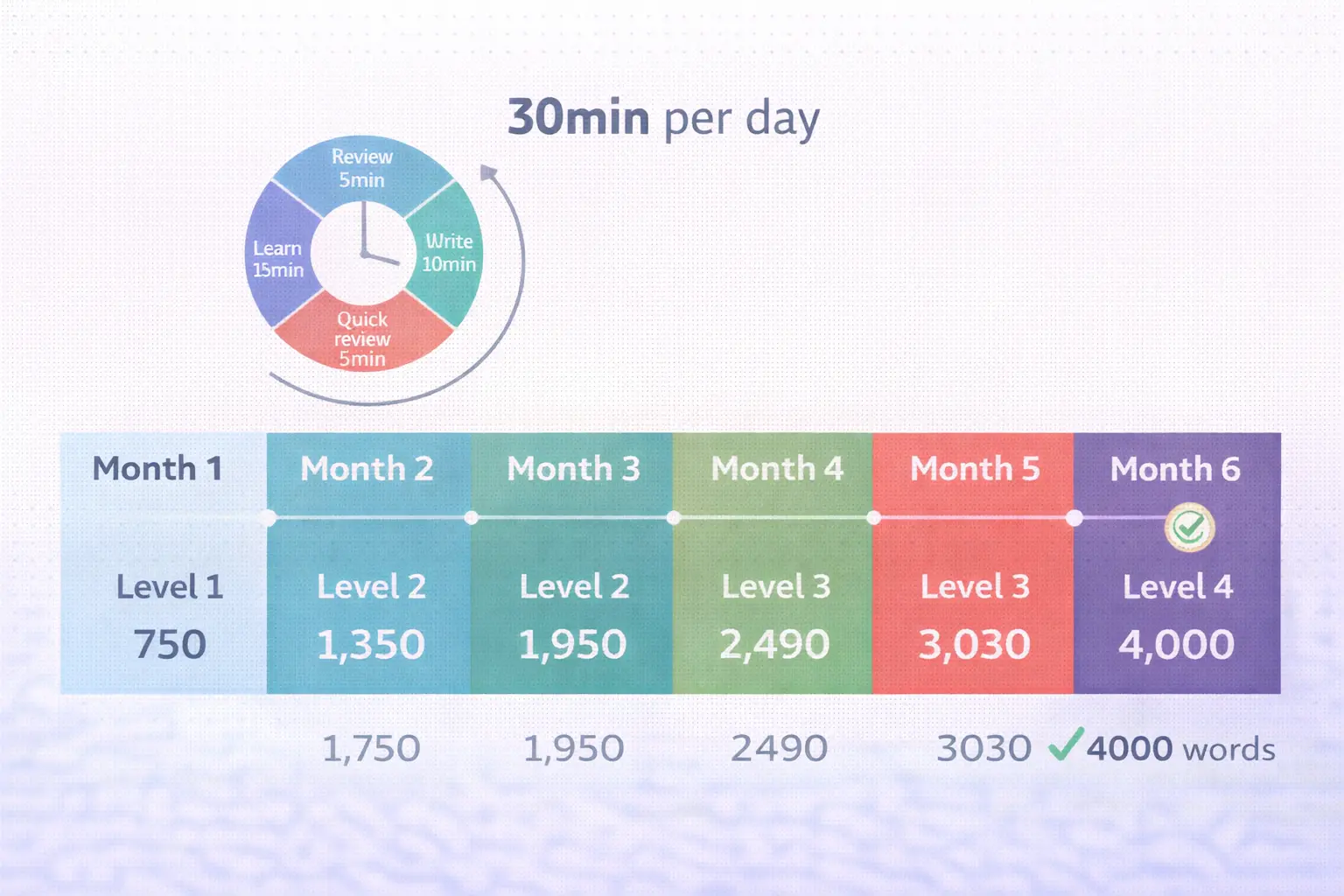
以下是從頭學習4000個單字的切實可行的時間表。假設每天學習30–45分鐘,並使用間隔重複法防止遺忘。
| 月份 | 程度 | 每日新單字 | 總新單字 | 累計 |
|---|---|---|---|---|
| 第1個月 | 第一程度(第1–1000個) | 25 | ~750 | 750 |
| 第2個月 | 第一→第二程度 | 20 | ~600 | 1,350 |
| 第3個月 | 第二程度(第1001–2000個) | 20 | ~600 | 1,950 |
| 第4個月 | 第三程度(第2001–3000個) | 18 | ~540 | 2,490 |
| 第5個月 | 第三→第四程度 | 18 | ~540 | 3,030 |
| 第6個月 | 第四程度(第3001–4000個)+ 複習 | 18 | ~540 + 複習 | ~3,570 + 既有知識 |
為什麼不是整整4000個新單字? 因為你已經知道許多第一程度的單字(問候語、數字、顏色、星期幾)。大多數成年學習者在開始認真學習之前已經知道500–1000個英文單字。這個計劃填補空白。
每日學習例行活動(30分鐘)
| 時間 | 活動 |
|---|---|
| 5分鐘 | 使用間隔重複法複習昨天的單字(Linglify 字卡) |
| 10分鐘 | 學習18–25個新單字:閱讀每個單字、其含義和例句 |
| 10分鐘 | 主動練習:用今天的新單字寫5個句子 |
| 5分鐘 | 快速複習3天前和7天前的單字(間隔重複循環) |
每週複習時段(週六或週日,20分鐘)
回顧當週學習的所有單字。對每個單字進行自我測試:你能回憶出含義嗎?你能在句子中使用它嗎?標記你忘記的單字,並將其加回每日複習中。
練習詞彙
以下是橫跨所有四個程度的25個必學單字。將它們加入你的 Linglify 字典,開始用間隔重複法練習。
finance
動詞
財務
範例
- Many students need loans to finance their college education expenses.
- The bank agreed to finance the construction of the new shopping center.
executive
形容詞
行政的
範例
- Executive decisions require careful consideration of multiple factors and consequences.
- The executive branch of government is responsible for implementing laws.
valid
形容詞
有效
範例
- Valid argument supports logical reasoning and conclusion.
- Valid passport allows international travel without problems.
flexible
形容詞
有彈性的
範例
- Flexible working arrangements help employees balance work and family life.
- The flexible plastic tube can bend without breaking or cracking.
transmit
動詞
傳送
範例
- Disease may transmit through contact with surfaces.
- Satellites transmit signals across vast distances effectively.
culmination
名詞
頂點, 高潮
範例
- The graduation ceremony was the culmination of four years of hard study.
- Winning the championship represented the culmination of the team's efforts.
gulp
動詞
吞下
範例
- She had to gulp nervously before giving her presentation to the board.
- The thirsty runner gulped down an entire bottle of cold water.
tribe
名詞
部落
範例
- Ancient tribe lived in harmony with nature.
- Indigenous tribe preserves traditional customs and languages.
cherished
形容詞
珍愛的
範例
- His cherished dream of becoming a pilot finally came true.
- The old photograph was her most cherished possession from childhood.
fate
名詞
命運
範例
- She believes that fate brought them together at the right moment.
- The explorer's fate remained unknown after he disappeared in the jungle.
territory
名詞
領土
範例
- Animal territory provides food and shelter resources.
- National territory requires protection from foreign invasion.
payable
形容詞
應付的, 到期支付的
範例
- All dues are payable at the end of the month.
- The invoice is payable within 30 days.
serenity
名詞
寧靜
範例
- She maintained her serenity despite the chaos.
- The serenity of the lake was calming.
classy
形容詞
高雅
範例
- Classy restaurant serves gourmet food in elegant dining atmosphere.
- Her classy appearance impressed everyone at formal business meeting.
revolt
動詞
反抗, 反叛
範例
- A revolt broke out in the city center last night.
- The workers decided to revolt against the unfair conditions.
rethink
動詞
重新思考, 再考慮
範例
- He decided to rethink his position on the issue.
- We need to rethink our strategy for the project.
gypsy
名詞
吉普賽人
範例
- Traditional gypsy music features violin and passionate vocals.
- Wandering gypsy caravan traveled through European countryside.
buffoon
名詞
小丑
範例
- Court buffoon entertained royal family with silly performances.
- Don't act like buffoon during important business presentation.
execution
名詞
執行
範例
- Perfect execution of the dance routine impressed judges and audience members.
- The execution of the business plan requires careful coordination and timing.
spellbound
形容詞
著迷
範例
- Audience sits spellbound during magical performance tonight.
- Children remain spellbound by storyteller's fascinating tales.
pet
形容詞
寵物
範例
- Pet project receives extra attention and resources.
- Pet theory explains professor's research focus area.
master
名詞
大師
範例
- Apprentices learn traditional crafts from experienced master craftsmen.
- The chess master defeated opponents using brilliant strategic moves.
salvage
名詞
打撈, 回收
範例
- Antique dealer specializes in salvage from demolished buildings.
- Divers recovered valuable salvage from sunken merchant ship.
學習4000個單字的常見錯誤
1. 試圖一次學太多單字。 每天50個單字聽起來很有效率,但如果不複習,一週內你會忘記其中80%。每天18–25個單字配合每日間隔重複,勝過每天50個沒有複習的單字。
2. 不在語境中學習單字。 記住「allocate = 分配」是不夠的。你需要知道「allocate」與「budget」、「resources」、「funds」和「time」搭配。始終從例句中學習。
3. 跳過程度。 第三和第四程度的單字更令人印象深刻,但如果你在第一和第二程度有空白,你的整體理解力仍然低。常用單字的紮實基礎比少數高級單字更重要。
4. 只學習被動知識。 在閱讀中認出一個單字與在口語或寫作中產出它是不同的。對你學到的每5個被動單字,至少主動練習使用其中2個——在你寫或說的句子中。
5. 不複習。 遺忘曲線很陡:如果不複習,你會在24小時內失去50%的新單字,一週內失去80%。間隔重複不是可選的——它就是整個系統。
接下來做什麼
-
從正確的程度開始。 如果你已經知道1000+個單字,跳到第二程度。如果你在備考 IELTS,專注於第三和第四程度——這些是讓你從6分進步到7分以上的單字。按程度瀏覽我們的詞彙庫:
-
建立學習系統。 使用我們的詞彙學習逐步指南建立帶間隔重複的每日例行活動。
-
也要學完整的句子。 在句子中學習的單字更有用。請見我們的日常生活簡單英文句子,有200+個現成可用的句子。
-
應用有效的記憶技巧。 閱讀如何提升詞彙量,了解10種有研究支持的方法——包括間隔重複、語境學習和關鍵字法。
-
備考。 如果你的目標是 IELTS,我們的 IELTS 詞彙指南將單字對應到特定的分數段。對於一般詞彙,請見我們關於2026年新英文單字的指南以保持最新。
常見問題
可以免費學習4000個英文單字嗎?
可以。單字清單本身廣泛可用——像一般服務詞表(GSL)和學術單字表(AWL)這樣基於頻率的單字表是免費且有充分研究支持的。比清單更重要的是學習方法:間隔重複、語境學習和主動使用。Linglify 提供內建間隔重複的免費詞彙練習。本指南為你提供有效學習任何4000個單字清單的結構。
學習4000個單字需要多長時間?
以每天20個新單字加每日複習的速度,大多數學習者可以在5–6個月內學習4000個單字。每天學習30+個單字的快速學習者可以在4個月內完成。關鍵變數不是速度——而是持續性。每天學習20個單字持續6個月,勝過每週100個單字但有間斷。
「4000個必學英文單字」和學術單字表有什麼區別?
「4000個必學英文單字」系列(Paul Nation著,Compass Publishing出版)涵蓋所有主題的一般高頻單字。學術單字表(AWL)是一個包含570個詞族的單獨清單,這些詞族在大學程度的文本中頻繁出現。兩者有重疊——約30%的AWL單字出現在4000個必學單字中。如果你在備考 IELTS Academic 或大學學習,兩者都要學。
4000個單字足以達到 IELTS 7分嗎?
4000個詞族給你紮實的B2程度詞彙,對大多數考生來說對應 IELTS 6–6.5分。要達到7分,你需要5000–6000個詞族,加上對學術詞彙的強大主動掌握。我們的 IELTS 7分詞彙指南涵蓋超出4000個基礎之外你需要的具體單字。
應該按字母順序還是按頻率學習單字?
按頻率——始終如此。按字母順序會把「aardvark」放在「about」之前,但「about」是英語中最常用的單字之一,而「aardvark」幾乎從不出現。基於頻率的學習確保你學習的每個單字都有最大的實際世界實用性。本指南中按程度的組織遵循頻率順序。
學習4000個單字最好的應用程式是什麼?
最好的應用程式是使用間隔重複並讓你在語境中(有例句)學習單字的,而不只是單字-定義對。Linglify 兩者兼備:你可以將單字儲存到個人字典,在真實句子中看到它們,並用間隔重複排程複習。如需詞彙應用程式的比較,請持續關注我們即將推出的詞彙應用指南。