1000個最常用英文單字:必學清單
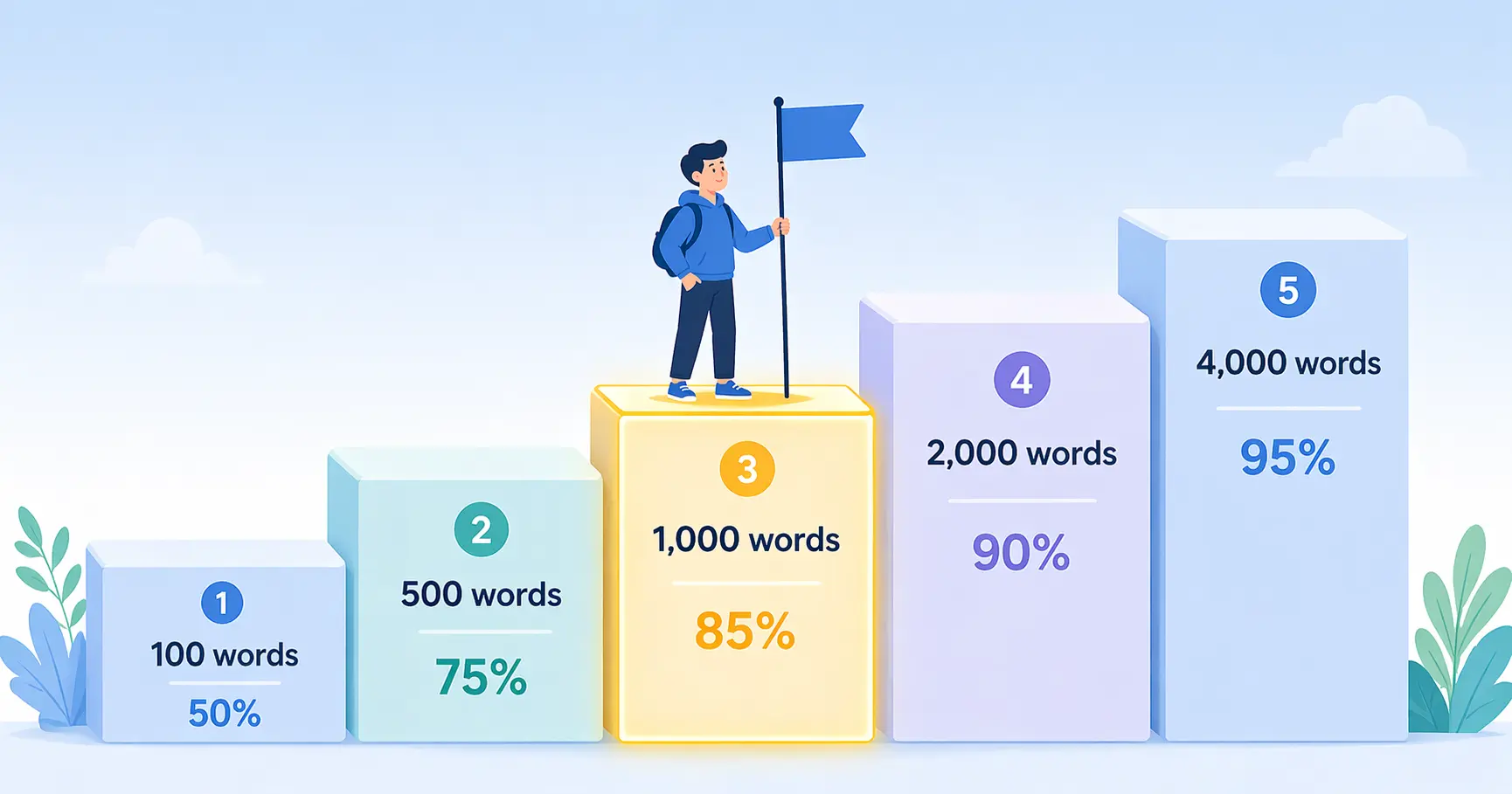
1000個最常用英文單字涵蓋了約85%的日常口語和75%的書面文字。這意味著如果你真正掌握這1000個單字——不只是認識它們,而是理解其含義、用在句子中、正確拼寫——你就能跟上大多數英語對話,閱讀基礎新聞文章,並在日常情況中溝通。
本文提供最常用英文單字的精選清單及其含義,按A到Z字母順序排列。你還會找到例句、按詞性的分類,以及切實可行的學習計劃。
為什麼前1000個單字最重要
詞彙研究一致顯示,少數單字承擔了英語的大部分工作:
| 已知單字數 | 口語理解率 | 書面理解率 |
|---|---|---|
| 100 | ~50% | ~45% |
| 500 | ~75% | ~65% |
| 1,000 | ~85% | ~75% |
| 2,000 | ~90% | ~80% |
| 4,000 | ~95% | ~90% |
前1000個單字帶給你最高的投資回報。在1000個之後,每個你學到的單字增加的理解能力越來越小。學習「available」(排名約400位)對你的理解力提升遠大於學習「ambivalent」(排名約8000位)。
這就是為什麼基於頻率的學習有效:你先學習出現最頻繁的單字,所以每小時的學習都能帶給你最大的真實世界理解力。
1000個最常用英文單字 A 到 Z
以下是每個字母中最必要的精選單字,附含義和例句。完整的1000個單字清單在每個字母組內按頻率排列。
A
| 單字 | 詞性 | 含義 | 例句 |
|---|---|---|---|
| about | 介詞/副詞 | 關於;大約 | The book is about Japanese history. There were about 50 people. |
| above | 介詞 | 高於;超過 | The temperature rose above 30 degrees. |
| accept | 動詞 | 同意接受或做 | She accepted the job offer immediately. |
| across | 介詞 | 從一側到另一側 | He walked across the bridge in the rain. |
| actually | 副詞 | 實際上;真的 | The test was actually easier than I expected. |
| add | 動詞 | 與其他東西合在一起 | Add two tablespoons of sugar to the mixture. |
| affect | 動詞 | 對…產生影響 | The weather affects my mood every winter. |
| afraid | 形容詞 | 感到恐懼 | She is afraid of flying. |
| after | 介詞/連詞 | 比…晚;在…之後 | We went for a walk after dinner. |
| again | 副詞 | 再一次 | Can you say that again, please? |
| age | 名詞 | 某人/某物的年齡 | Children start school at the age of five in most countries. |
| agree | 動詞 | 持相同意見 | I agree with everything you said. |
| ahead | 副詞 | 在前面;在未來 | The road ahead was completely empty. |
| allow | 動詞 | 給予許可 | The teacher does not allow phones in class. |
| almost | 副詞 | 幾乎;差一點 | We have almost finished the project. |
| along | 介詞/副詞 | 沿著前進;在旁邊 | We walked along the river for an hour. |
| already | 副詞 | 在現在之前;到目前為止 | I have already seen that movie twice. |
| also | 副詞 | 另外;也 | She speaks French and also a little German. |
| always | 副詞 | 隨時;每次 | He always arrives early for meetings. |
| among | 介詞 | 在…中間;屬於某個群體的一部分 | She was among the best students in her class. |
| amount | 名詞 | 某物的數量 | The recipe requires a small amount of salt. |
| appear | 動詞 | 變得可見;似乎 | Stars appear in the sky after sunset. |
| apply | 動詞 | 提出正式申請;相關 | She applied for three jobs last week. |
| area | 名詞 | 地區或地方的一部分 | This area is known for its excellent restaurants. |
| around | 介詞/副詞 | 圍繞;大約 | There are trees all around the house. |
| arrive | 動詞 | 到達目的地 | The train arrives at 6:45 PM. |
| ask | 動詞 | 說些話以獲得答案 | Can I ask you a question? |
| attention | 名詞 | 將注意力集中在某事上 | Pay attention — this part is important. |
| available | 形容詞 | 可以使用的;有空的 | The doctor is available on Tuesday afternoon. |
| avoid | 動詞 | 遠離;預防 | I avoid eating sugar before bed. |
B
| 單字 | 詞性 | 含義 | 例句 |
|---|---|---|---|
| back | 名詞/副詞 | 後部;返回 | He sat at the back of the room. |
| bad | 形容詞 | 品質差的;令人不快的 | The weather was bad all week. |
| base | 名詞/動詞 | 底部或基礎 | The company is based in London. |
| beautiful | 形容詞 | 非常有吸引力或令人愉悅 | The sunset over the ocean was beautiful. |
| because | 連詞 | 因為 | She left early because she felt sick. |
| become | 動詞 | 開始成為;成長為 | He became a doctor after years of study. |
| before | 介詞/連詞 | 早於 | Finish your homework before dinner. |
| begin | 動詞 | 開始 | The concert begins at 8 PM. |
| behind | 介詞 | 在…後面 | The car park is behind the building. |
| believe | 動詞 | 認為某事是真的;有信念 | I believe she is telling the truth. |
| below | 介詞/副詞 | 低於 | The temperature dropped below zero last night. |
| best | 形容詞/副詞 | 最高品質的 | This is the best restaurant in the city. |
| better | 形容詞/副詞 | 品質更高的;改善的 | Your English is getting better every week. |
| between | 介詞 | 在兩件事之間的空間 | The meeting is between 2 and 4 PM. |
| beyond | 介詞 | 比…更遠;超過 | The view beyond the mountains was incredible. |
| big | 形容詞 | 體積大的 | They live in a big house near the park. |
| body | 名詞 | 人或動物的身體結構 | Exercise is good for your body and mind. |
| book | 名詞/動詞 | 裝訂在一起的頁面;預訂 | I booked a hotel room for Friday night. |
| both | 限定詞/代詞 | 兩件事放在一起 | Both answers are correct. |
| bring | 動詞 | 將某物帶到某地 | Please bring your laptop to the meeting. |
| build | 動詞 | 建造;創造 | They are building a new hospital downtown. |
| business | 名詞 | 商業活動;公司 | She started her own business at 25. |
| buy | 動詞 | 付錢得到某物 | I need to buy a new phone. |
C
| 單字 | 詞性 | 含義 | 例句 |
|---|---|---|---|
| call | 動詞/名詞 | 打電話給某人;命名 | I will call you tomorrow morning. |
| care | 動詞/名詞 | 感到關心;照顧 | She cares about the environment. |
| carry | 動詞 | 拿著並移動某物 | He carried the boxes up the stairs. |
| case | 名詞 | 一種情況;一個容器 | In that case, we should leave early. |
| cause | 名詞/動詞 | 某事的原因;使發生 | What caused the delay? |
| certain | 形容詞 | 確定的;特定的 | I am certain the answer is correct. |
| change | 動詞/名詞 | 使或變得不同 | The city has changed a lot in ten years. |
| check | 動詞 | 檢查;核實 | Check your email — I sent the document an hour ago. |
| child | 名詞 | 年輕人 | Every child in the school receives free lunch. |
| choose | 動詞 | 從選項中挑選;決定 | You can choose any color you like. |
| city | 名詞 | 大城市 | Tokyo is the largest city in Japan. |
| claim | 動詞/名詞 | 聲稱某事是真的 | He claims he was at home all evening. |
| clear | 形容詞/動詞 | 容易理解的;透明的 | The instructions were clear and simple. |
| close | 動詞/形容詞 | 關閉;附近 | Please close the door. The shop is close to my house. |
| come | 動詞 | 向…移動;到達 | Come here — I want to show you something. |
| common | 形容詞 | 經常發生的;許多人共有的 | Spelling mistakes are very common among beginners. |
| community | 名詞 | 住在同一地區的人群 | The local community organized a cleanup day. |
| company | 名詞 | 商業組織 | She works for a technology company. |
| compare | 動詞 | 檢查差異和相似之處 | Compare the two products before you buy. |
| complete | 形容詞/動詞 | 完成的;擁有所有部分 | The project is now complete. |
| concern | 名詞/動詞 | 擔憂;與…有關 | Safety is our main concern. |
| consider | 動詞 | 仔細思考 | We should consider all the options before deciding. |
| continue | 動詞 | 繼續做;不停止 | She continued reading despite the noise. |
| control | 名詞/動詞 | 指揮的權力;管理 | You need to control your spending. |
| cost | 名詞/動詞 | 某物的價格 | The cost of living has increased by 8%. |
| could | 情態動詞 | 過去的能力;可能性 | She could speak three languages by age 12. |
| country | 名詞 | 國家;農村地區 | Japan is a beautiful country. |
| couple | 名詞 | 兩個;一對人 | We stayed for a couple of hours. |
| course | 名詞 | 一系列課程;方向 | She is taking an online course in marketing. |
| cover | 動詞/名詞 | 在…上放置某物;包括 | Snow covered the entire city overnight. |
| create | 動詞 | 創造新事物 | The artist created a stunning painting. |
| current | 形容詞/名詞 | 現在正在發生的;流動 | What is the current population of London? |
| cut | 動詞 | 用尖銳物品切割;減少 | The government plans to cut taxes next year. |
D–F
| 單字 | 詞性 | 含義 | 例句 |
|---|---|---|---|
| deal | 名詞/動詞 | 協議;處理 | We made a deal with the supplier. |
| decide | 動詞 | 做出選擇 | Have you decided where to go for dinner? |
| describe | 動詞 | 說某物是什麼樣子 | Can you describe the apartment? |
| develop | 動詞 | 成長;隨時間創造 | The company developed a new product. |
| different | 形容詞 | 不相同的 | The two brothers have very different personalities. |
| difficult | 形容詞 | 難以做到或理解的 | The exam was more difficult than expected. |
| discover | 動詞 | 第一次找到某事物 | Scientists discovered a new species of fish. |
| drive | 動詞/名詞 | 駕駛車輛;旅程 | She drives to work every morning. |
| drop | 動詞/名詞 | 落下;讓某物落下 | Be careful not to drop the glass. |
| during | 介詞 | 在一段時間內 | I fell asleep during the movie. |
| each | 限定詞 | 兩個或更多中的每一個 | Each student receives a textbook. |
| early | 形容詞/副詞 | 在預期時間之前 | We arrived early to get good seats. |
| easy | 形容詞 | 不難的 | The first questions were easy. |
| effect | 名詞 | 由某事引起的結果或變化 | The new law had an immediate effect on traffic. |
| enough | 限定詞/副詞 | 所需的數量 | We have enough food for everyone. |
| enter | 動詞 | 進入 | Please enter through the main door. |
| entire | 形容詞 | 整個的;完整的 | She ate the entire pizza by herself. |
| especially | 副詞 | 特別地;比平常更多 | I love all fruits, especially strawberries. |
| even | 副詞/形容詞 | 用於強調;平坦的/相等的 | Even the teacher made a mistake. |
| ever | 副詞 | 在任何時候 | Have you ever been to Australia? |
| every | 限定詞 | 全部;每一個 | I go to the gym every morning. |
| example | 名詞 | 顯示其他事物是什麼樣子的東西 | Can you give me an example? |
| expect | 動詞 | 認為某事會發生 | I expect the results tomorrow. |
| experience | 名詞/動詞 | 從做事中獲得的知識 | She has ten years of experience in marketing. |
| explain | 動詞 | 使某事清晰 | The teacher explained the grammar rule again. |
| face | 名詞/動詞 | 頭部前面;面對 | We need to face the problem directly. |
| fact | 名詞 | 真實的事情 | It is a fact that the Earth orbits the Sun. |
| far | 形容詞/副詞 | 距離很遠 | The station is not far from here. |
| fast | 形容詞/副詞 | 移動迅速 | The train is very fast — it reaches 300 km/h. |
| feel | 動詞 | 體驗情緒或身體感覺 | I feel much better today. |
| few | 限定詞/代詞 | 少量 | Only a few students passed the test. |
| fill | 動詞 | 使充滿 | She filled the glass with water. |
| finally | 副詞 | 最終;在很長時間後 | We finally found the restaurant after walking for 20 minutes. |
| find | 動詞 | 發現;找到 | I cannot find my keys. |
| finish | 動詞 | 完成;結束 | What time does the class finish? |
| follow | 動詞 | 跟著;遵守 | Follow the instructions on the screen. |
| force | 名詞/動詞 | 力量;使某人做某事 | The wind was strong enough to force the door open. |
| foreign | 形容詞 | 來自另一個國家 | She is learning two foreign languages. |
| form | 名詞/動詞 | 一種類型;形狀;創造 | Please fill in the application form. |
| free | 形容詞/動詞 | 不需要費用的;不受限制的 | Admission to the museum is free on Sundays. |
| friend | 名詞 | 你認識並喜歡的人 | She has been my best friend since school. |
| full | 形容詞 | 包含盡可能多的東西 | The bus was completely full. |
| future | 名詞/形容詞 | 尚未到來的時間 | Nobody knows what the future will bring. |
G–L
| 單字 | 詞性 | 含義 | 例句 |
|---|---|---|---|
| general | 形容詞 | 影響或涉及所有人的;不具體的 | The general opinion is that the plan will work. |
| give | 動詞 | 把某物交給某人 | She gave me her phone number. |
| government | 名詞 | 統治一個國家的群體 | The government announced new education policies. |
| great | 形容詞 | 非常好的;大的 | The concert was great — we had an amazing time. |
| group | 名詞 | 一些人或事物聚在一起 | A group of students visited the factory. |
| grow | 動詞 | 體積增加;發展 | The company has grown rapidly in three years. |
| half | 名詞/限定詞 | 兩個相等部分之一 | Half the class was absent due to illness. |
| happen | 動詞 | 發生;出現 | What happened at the meeting yesterday? |
| hard | 形容詞/副詞 | 困難的;努力地 | She works hard to support her family. |
| head | 名詞/動詞 | 身體頂部;領導 | He is the head of the marketing department. |
| help | 動詞/名詞 | 使某人更容易完成某事 | Can you help me carry these bags? |
| high | 形容詞/副詞 | 高的;在很高的程度 | The price of petrol is very high right now. |
| hold | 動詞 | 手持;舉辦 | She held the baby carefully. The event is held every June. |
| home | 名詞/副詞 | 你住的地方 | I usually get home at 6 PM. |
| hope | 動詞/名詞 | 希望某事發生 | I hope you feel better soon. |
| however | 副詞 | 儘管如此;相反地 | The hotel was expensive. However, the service was excellent. |
| human | 形容詞/名詞 | 與人有關的 | Human memory is surprisingly unreliable. |
| idea | 名詞 | 一個想法或建議 | That is a great idea — let us try it. |
| important | 形容詞 | 具有重大意義的 | Sleep is important for learning. |
| include | 動詞 | 作為更大整體的一部分包含 | The price includes breakfast and parking. |
| increase | 動詞/名詞 | 變得更大或更多 | Sales increased by 15% last quarter. |
| information | 名詞 | 關於某事的事實 | For more information, visit our website. |
| interest | 名詞/動詞 | 好奇心;存款利息 | She has a strong interest in science. |
| issue | 名詞 | 一個話題;一個問題 | Climate change is a critical issue today. |
| job | 名詞 | 有薪工作;一項任務 | He got a new job at a bank. |
| join | 動詞 | 成為群體的一部分;連接 | She joined the company last month. |
| just | 副詞 | 只是;剛才;恰好 | I just arrived — give me one minute. |
| keep | 動詞 | 繼續擁有;存放 | Keep the receipt in case you need to return it. |
| kind | 名詞/形容詞 | 一種類型;友善和關愛的 | What kind of music do you like? She is a very kind person. |
| know | 動詞 | 腦海中有資訊 | I know the answer to that question. |
| large | 形容詞 | 體積或數量大 | They need a large conference room for 50 people. |
| last | 形容詞/動詞 | 最近的;持續 | The meeting lasted two hours. I saw her last week. |
| late | 形容詞/副詞 | 在預期時間之後 | Sorry I am late — the traffic was terrible. |
| lead | 動詞/名詞 | 引導;負責 | She leads a team of 20 people. |
| learn | 動詞 | 獲得知識或技能 | She learned to speak English in two years. |
| leave | 動詞 | 離開;讓留下 | I leave the house at 7:30 every morning. |
| less | 限定詞/副詞 | 較少的數量 | I try to spend less money on things I do not need. |
| level | 名詞 | 在等級上的位置 | Her English is at an intermediate level. |
| life | 名詞 | 活著的狀態;存在 | She lived a long and happy life. |
| likely | 形容詞/副詞 | 可能的;大概 | Rain is likely this afternoon. |
| line | 名詞 | 一條細長的標記;一排人 | There was a long line outside the store. |
| list | 名詞/動詞 | 一系列一起寫的項目 | Make a list of everything you need to buy. |
| live | 動詞/形容詞 | 在某地生活;活著 | They live in a small town near the coast. |
| long | 形容詞/副詞 | 距離很長;持續很久 | The journey was long but enjoyable. |
| look | 動詞 | 用眼睛看;似乎 | Look at this photo — is that your friend? |
| lose | 動詞 | 不再擁有;輸掉 | I always lose my keys. |
| low | 形容詞 | 接近地面;數量小 | The price is surprisingly low. |
M–P
| 單字 | 詞性 | 含義 | 例句 |
|---|---|---|---|
| main | 形容詞 | 最重要的 | The main reason I moved was the job. |
| make | 動詞 | 創造;引起 | She made dinner for the whole family. |
| matter | 名詞/動詞 | 一個主題;重要 | It does not matter — either day works for me. |
| may | 情態動詞 | 可能性;許可 | It may rain later. You may leave early today. |
| mean | 動詞/形容詞 | 打算;表示;不友善的 | What does this word mean? |
| meet | 動詞 | 與…相聚;滿足 | Nice to meet you. The product meets all safety standards. |
| mind | 名詞/動詞 | 思考的部分;介意 | She changed her mind at the last minute. |
| miss | 動詞 | 未能擊中;因缺席而悲傷 | I miss my family when I travel. |
| money | 名詞 | 用於購買東西的東西 | She saves money by cooking at home. |
| most | 限定詞/副詞 | 最大的數量 | Most students passed the exam. |
| move | 動詞 | 改變位置或地方 | We moved to a new apartment in January. |
| much | 限定詞/副詞 | 大量 | How much does this cost? |
| must | 情態動詞 | 必要;強烈的可能性 | You must wear a seatbelt. She must be tired after the flight. |
| name | 名詞/動詞 | 某人或某物的稱呼 | My name is Anna. Can you name three countries in Africa? |
| natural | 形容詞 | 存在於自然中;正常的 | It is natural to feel nervous before an interview. |
| near | 介詞/形容詞 | 靠近 | The school is near the train station. |
| need | 動詞/名詞 | 需要;必要 | I need to finish this report by tomorrow. |
| never | 副詞 | 從不;在任何時候都不 | I have never been to South America. |
| new | 形容詞 | 之前不存在的;最近製作的 | She bought a new laptop for work. |
| next | 形容詞/副詞 | 緊接著之後的 | The next train leaves in 10 minutes. |
| nothing | 代詞 | 不是任何事情 | There is nothing in the fridge. |
| notice | 動詞/名詞 | 意識到 | Did you notice anything strange? |
| now | 副詞 | 在現在 | We need to leave now or we will be late. |
| number | 名詞 | 一個數學值;數量 | A large number of people attended the event. |
| offer | 動詞/名詞 | 提出接受;提案 | They offered her a higher salary. |
| often | 副詞 | 多次;頻繁地 | How often do you exercise? |
| only | 形容詞/副詞 | 不多於;單一 | There are only two tickets left. |
| open | 形容詞/動詞 | 未關閉的;使可進入 | The store is open from 9 to 6. |
| order | 名詞/動詞 | 排列;要求購買 | I ordered a coffee and a sandwich. |
| other | 形容詞/代詞 | 額外的;不同的 | Do you have any other questions? |
| outside | 介詞/名詞 | 不在裡面;外部 | It is cold outside — take a jacket. |
| own | 形容詞/動詞 | 屬於自己的;擁有 | She has her own apartment now. |
| part | 名詞 | 更大整體的一部分 | This is the hardest part of the exam. |
| pay | 動詞/名詞 | 為某物付錢 | How much do they pay you? |
| people | 名詞 | 一般的人類 | About 500 people work in this building. |
| place | 名詞/動詞 | 一個地點;放置 | This is a nice place for a picnic. |
| plan | 名詞/動詞 | 詳細提案;打算 | What are your plans for the weekend? |
| point | 名詞/動詞 | 一個想法;指向 | That is a good point. She pointed at the map. |
| possible | 形容詞 | 能夠發生或完成的 | Is it possible to change the date? |
| power | 名詞 | 控制的能力;能量 | Solar power is becoming cheaper every year. |
| present | 形容詞/名詞/動詞 | 當前的;禮物;展示 | All members were present at the meeting. |
| problem | 名詞 | 一個困難;需要解決的事 | The main problem is the lack of funding. |
| produce | 動詞 | 製造;創造 | The factory produces 500 cars per day. |
| program | 名詞 | 計劃;電視節目;軟體 | The training program lasts six weeks. |
| provide | 動詞 | 給予;供應 | The hotel provides free breakfast for guests. |
| public | 形容詞/名詞 | 為所有人的;一般公眾 | Public transport is free for children under 5. |
| put | 動詞 | 將某物移動到某個位置 | Put your bag on the table. |
Q–S
| 單字 | 詞性 | 含義 | 例句 |
|---|---|---|---|
| question | 名詞 | 你問的事情 | Can I ask a question? |
| quite | 副詞 | 相當;完全 | The movie was quite good, actually. |
| reach | 動詞 | 到達;延伸到 | We reached the hotel at midnight. |
| read | 動詞 | 看並理解書面文字 | She reads for 30 minutes before bed every night. |
| ready | 形容詞 | 準備好的 | Dinner is ready — come to the table. |
| real | 形容詞 | 實際存在的;真實的 | Is that a real diamond? |
| reason | 名詞 | 某事發生或被做的原因 | What is the reason for the delay? |
| receive | 動詞 | 得到;被給予 | I received your email this morning. |
| record | 名詞/動詞 | 儲存的資訊;最佳成就 | She broke the world record in the 100 meters. |
| remain | 動詞 | 留下;繼續存在 | Please remain seated until the plane stops. |
| remember | 動詞 | 保存在記憶中 | I remember the first day I arrived in London. |
| report | 名詞/動詞 | 對某事的敘述;描述 | The report shows a 10% increase in sales. |
| require | 動詞 | 需要;要求 | This job requires three years of experience. |
| result | 名詞 | 因為某事而發生的事 | Hard work leads to good results. |
| return | 動詞/名詞 | 回來或回去 | She returned to work after two weeks. |
| right | 形容詞/名詞/副詞 | 正確的;道德權利;方向 | That is the right answer. Turn right at the corner. |
| run | 動詞 | 快速移動;管理 | He runs 5 kilometers every morning. She runs a small business. |
| same | 形容詞 | 相同的;沒有不同的 | We take the same bus every day. |
| say | 動詞 | 說話 | She said she would call me back. |
| seem | 動詞 | 看起來像是 | He seems tired today. |
| send | 動詞 | 使某物去到另一個地方 | I sent the package yesterday. |
| serious | 形容詞 | 重要的;不開玩笑的 | This is a serious problem that needs attention. |
| serve | 動詞 | 提供食物或服務 | The restaurant serves breakfast from 7 to 10 AM. |
| set | 動詞/名詞 | 放置在某個位置;一組事物 | She set the alarm for 6 AM. |
| several | 限定詞 | 不止兩個但不太多 | I have visited that city several times. |
| share | 動詞/名詞 | 給出某物的一部分;份額 | She shared her lunch with her colleague. |
| short | 形容詞 | 不長的;不高的 | It was a short meeting — only 15 minutes. |
| should | 情態動詞 | 建議;預期 | You should see a doctor about that. |
| show | 動詞/名詞 | 讓某人看到;展示 | Can you show me how to do this? |
| similar | 形容詞 | 相似但不完全相同 | The two houses are very similar in design. |
| simple | 形容詞 | 容易理解或做的 | The recipe is simple — only five ingredients. |
| since | 介詞/連詞 | 從過去到現在;因為 | I have lived here since 2019. Since you asked, I will tell you. |
| situation | 名詞 | 特定時間的情況 | The situation is improving slowly. |
| small | 形容詞 | 體積小 | They live in a small village in the mountains. |
| social | 形容詞 | 與社會或互動有關的 | Social media has changed how we communicate. |
| some | 限定詞 | 不確定的數量 | Can I have some water, please? |
| soon | 副詞 | 在不久的將來 | The bus should arrive soon. |
| speak | 動詞 | 說話;說出詞語 | Do you speak English? |
| special | 形容詞 | 比平常更好或不同 | Today is a special day — it is her birthday. |
| spend | 動詞 | 用錢;用時間 | How much time do you spend studying? |
| stand | 動詞 | 用雙腳站立;位於 | Please stand up when the teacher enters. |
| start | 動詞/名詞 | 開始 | The movie starts at 8 PM. |
| state | 名詞/動詞 | 狀態;用言語表達 | The building is in a poor state. He stated his opinion clearly. |
| stay | 動詞 | 留在一個地方 | We stayed at a small hotel near the beach. |
| still | 副詞/形容詞 | 繼續到現在;不動的 | She still lives with her parents. |
| stop | 動詞 | 停止移動或做 | The bus stops right in front of the school. |
| strong | 形容詞 | 擁有強大力量或能力 | She has a strong opinion about education. |
| suggest | 動詞 | 提出一個想法 | I suggest we meet at 10 AM instead. |
| support | 動詞/名詞 | 幫助;支持 | Her family supports her decision to study abroad. |
| sure | 形容詞 | 確定的;有信心的 | Are you sure about that? |
| system | 名詞 | 一組共同運作的相互關聯的事物 | The education system needs reform. |
T–Z
| 單字 | 詞性 | 含義 | 例句 |
|---|---|---|---|
| take | 動詞 | 拿;攜帶;需要 | Take an umbrella — it might rain. |
| talk | 動詞/名詞 | 說話;對話 | We need to talk about the project. |
| tell | 動詞 | 對某人說;告知 | Can you tell me the time? |
| test | 名詞/動詞 | 考試;檢查某事 | She passed her driving test on the first attempt. |
| thing | 名詞 | 一個物體;事實或情況 | I have a few things to finish before I leave. |
| think | 動詞 | 使用你的思維;認為 | I think this is the right decision. |
| through | 介詞 | 從一側到另一側;因為 | We walked through the park. |
| together | 副詞 | 彼此;同時 | We worked together on the project. |
| top | 名詞/形容詞 | 最高的部分;最好的 | She graduated at the top of her class. |
| total | 形容詞/名詞 | 完全的;全部金額 | The total cost was $450. |
| toward | 介詞 | 朝向的方向 | She walked toward the exit. |
| turn | 動詞/名詞 | 改變方向;旋轉 | Turn left at the traffic lights. |
| type | 名詞/動詞 | 一種或類別 | What type of phone do you have? |
| understand | 動詞 | 知道意思;理解 | I understand the instructions now. |
| until | 介詞/連詞 | 直到某個時間 | Wait here until I come back. |
| use | 動詞/名詞 | 為某目的使用 | May I use your phone? |
| usually | 副詞 | 在大多數情況下;通常 | I usually wake up at 7 AM. |
| value | 名詞/動詞 | 某物的價值;重要性 | The value of the house has doubled. |
| very | 副詞 | 到很高的程度 | The test was very difficult. |
| view | 名詞/動詞 | 你能看到的;一個意見 | The view from the top floor is amazing. |
| voice | 名詞 | 說話時發出的聲音 | She has a very calm voice. |
| wait | 動詞 | 待到某事發生 | Please wait here — I will be right back. |
| walk | 動詞/名詞 | 步行移動 | I walk to work every day — it takes 20 minutes. |
| want | 動詞 | 渴望;希望得到 | What do you want for dinner? |
| watch | 動詞/名詞 | 長時間看;顯示時間的設備 | We watched a documentary about space last night. |
| water | 名詞 | 河流、湖泊和雨中的透明液體 | Drink at least 2 liters of water per day. |
| way | 名詞 | 方法;路線 | This is the easiest way to solve the problem. |
| week | 名詞 | 7天的時間段 | I go to the gym three times a week. |
| whole | 形容詞 | 整個的;完整的 | She read the whole book in one day. |
| without | 介詞 | 沒有;缺少 | She left without saying goodbye. |
| word | 名詞 | 語言的單位 | What does this word mean? |
| work | 動詞/名詞 | 工作;努力 | She works for an international organization. |
| world | 名詞 | 地球;所有的人 | English is spoken all over the world. |
| write | 動詞 | 在紙上或螢幕上寫文字 | Write your name at the top of the page. |
| wrong | 形容詞 | 不正確的;道德上不對的 | Something is wrong with my computer. |
| year | 名詞 | 365天的時間段 | She lived in Berlin for three years. |
| yet | 副詞/連詞 | 到目前為止;但是 | I have not finished yet. The hotel is small, yet very comfortable. |
| young | 形容詞 | 不老的 | Young people are increasingly interested in sustainability. |
這1000個單字按詞性的分類
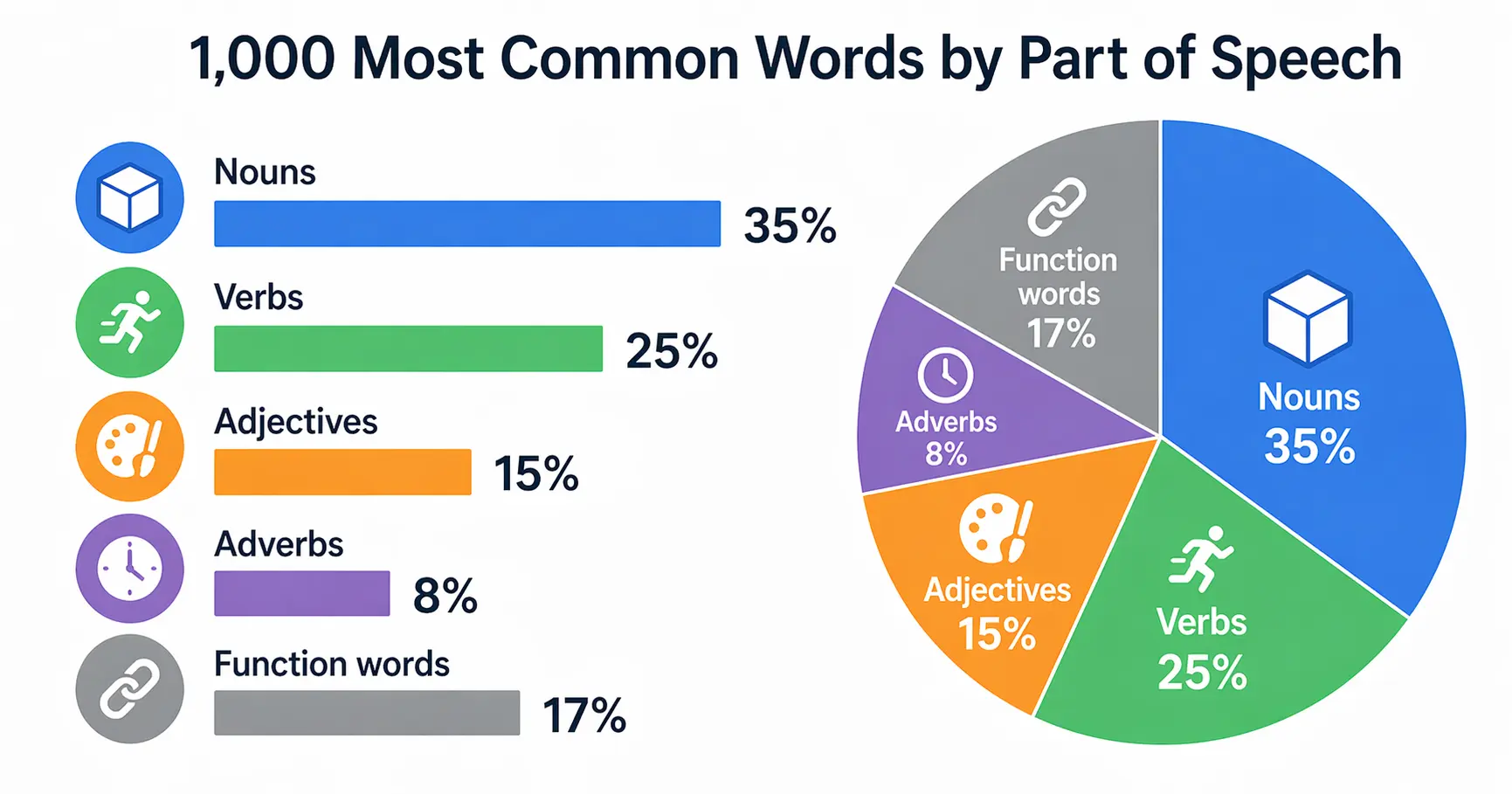
理解分佈有助於更有效地學習:
| 詞性 | 大約佔比 | 數量 | 功能 |
|---|---|---|---|
| 名詞 | 35% | ~350 | 命名事物:problem、area、information、government |
| 動詞 | 25% | ~250 | 描述動作:provide、include、continue、require |
| 形容詞 | 15% | ~150 | 描述特質:important、different、possible、strong |
| 副詞 | 8% | ~80 | 修飾方式/時間/地點:already、however、often、usually |
| 功能詞 | 17% | ~170 | 連接想法:the、in、with、because、which、although |
功能詞(介詞、連詞、限定詞、代詞)是個別出現最頻繁的單字,但按總數計算是最小的類別。你已經知道大多數了。學習者通常最大的差距在動詞和形容詞——像 require、previous、significant 和 maintain 這類在真實英語中不斷出現但在基礎課程中常被跳過的單字。
你的學習計劃:8週學完1000個單字
你不需要從頭學習全部1000個單字。大多數學習者已經知道其中400–600個。目標是有效率地填補你的空白。
第1–2週:評估和基礎
- 掃描以上清單。 標記每一個你不百分之百確定的單字——包括含義和用法。
- 盤點。 大多數學習者會發現200–400個未知或部分已知的單字。
-
分成三堆:
- 熟練掌握 — 你可以不假思索地用它造句
- 能認出但不確定 — 閱讀時能理解但無法自信使用
- 不知道 — 不熟悉或非常不清楚
將學習時間集中在「能認出但不確定」和「不知道」這兩組。
第3–6週:主動學習(每天25個單字)
| 時段 | 活動 | 時間 |
|---|---|---|
| 早上 | 快速回憶測試昨天的單字 | 5分鐘 |
| 下午 | 學習25個新單字——閱讀定義和例句,為其中5個寫自己的句子 | 15分鐘 |
| 晚上 | 複習今天的新單字 + 3天前的單字 | 10分鐘 |
每天25個單字,每週5天,4週涵蓋500個單字。其中許多是「能認出但不確定」的單字,只需幾次複習就能變得紮實。
第7–8週:複習和主動使用
- 停止學習新單字。完全專注於複習和使用。
- 測試自己在第3–6週的所有單字。
- 每天寫10個使用你覺得困難的單字的句子。
- 每天閱讀一篇英文文章,注意你遇到了多少這1000個單字中的詞。
第8週後
進階到下一個程度。我們的4000個必學英文單字學習指南從這份清單結束的地方繼續,以結構化的6個月計劃涵蓋第1001–4000個單字。
立即練習的單字
以下是這份清單中的25個必學單字。一鍵加入你的字典——間隔重複複習自動開始。
experience
名詞
經驗, 體驗
範例
- Her previous work experience made her an ideal candidate for the position.
- Traveling to different countries provides valuable cultural experience.
meeting
名詞
會議, 聚會, 集會
範例
- The business meeting discussed budget plans for next fiscal year.
- Town meeting allows residents to voice concerns about local issues.
reply
名詞
回覆
範例
- Quick reply shows professional customer service quality.
- Written reply confirms agreement terms and conditions.
create
動詞
創造
範例
- Artists create beautiful works that inspire and move people emotionally.
- The new policy will create opportunities for economic growth.
mention
動詞
提到
範例
- Please mention my name when you call about job opening.
- The report fails to mention important environmental concerns.
describe
動詞
描述
範例
- Can you describe what the suspect looked like to police officers?
- The travel guide describes many interesting places to visit in Europe.
impact
名詞
影響
範例
- Climate change has a significant impact on global weather patterns.
- The impact of the collision damaged both cars severely.
exam
名詞
考試
範例
- Students study hard for weeks before taking their final exams.
- The driving exam tests both knowledge and practical skills behind wheel.
powerful
形容詞
有力的
範例
- Powerful computer processes data very quickly.
- Powerful speech moves audience to take action.
wonderful
形容詞
美好的, 精彩的
範例
- The restaurant serves wonderful food with excellent service.
- We had a wonderful time at the beach during summer vacation.
confident
形容詞
有信心的
範例
- She felt confident about passing the difficult examination successfully.
- The confident speaker delivered an inspiring presentation to the audience.
favor
名詞
恩惠
範例
- Could you do me a favor and pick up my dry cleaning?
- The proposal gained favor among the committee members after lengthy discussion.
ambition
名詞
野心
範例
- Her ambition is to become a successful doctor and help people worldwide.
- Sometimes ambition can drive people to work too hard and neglect family.
tourist
名詞
遊客
範例
- Foreign tourist visits famous landmarks and museums.
- Tourist season brings economic benefits to region.
student
名詞
學生
範例
- Diligent student completes homework assignments on time.
- Graduate student conducts research for doctoral degree.
relaxed
形容詞
放鬆的, 輕鬆的
範例
- Relaxed atmosphere encourages open discussion among participants.
- Relaxed person handles pressure situations more effectively.
hot
形容詞
熱
範例
- Summer weather is extremely hot in desert regions around the world.
- The coffee is too hot to drink right now - let it cool down.
cool
動詞
使冷卻
orange
名詞
橘子
範例
- Fresh orange juice contains vitamin C and natural sugar.
- The sunset painted sky in beautiful shades of orange.
meat
名詞
肉類
範例
- Fresh meat should be stored in refrigerator for food safety.
- Vegetarians choose not to eat meat for ethical reasons.
football
名詞
足球
範例
- Football is the most popular sport in many countries around the world.
- The children play football in the school yard during their lunch break.
名詞
郵件
範例
- Check mail every day for important bills and official documents.
- Electronic mail has largely replaced traditional postal letters today.
father
名詞
父親
範例
- His father taught him how to ride a bicycle in the park.
- The young father proudly carried his baby daughter in his arms.
rush
名詞
衝刺
範例
- Last-minute rush creates stress and mistakes often.
- Morning rush causes traffic jams in city.
result
名詞
結果
範例
- Election result surprises political analysts and voters.
- Test result shows significant improvement in performance.
如何有效使用這份清單
不要只是閱讀——自我測試。 遮住「含義」欄,試著從記憶中定義每個單字。遮住「單字」欄,試著從定義回憶英文單字。主動回憶比被動閱讀有效得多。
注意有多種含義的單字。 1000個最常用單字中有許多有3–5種含義。「Right」意思是正確的、道德權利和方向。「Run」意思是快速移動、管理業務和操作機器。先學最常見的含義,然後再添加其他的。
注意搭配詞。 常用單字有天然的搭配:make a decision(不是”do” a decision)、take a photo(不是”make” a photo)、do homework(不是”make” homework)。學習正確的搭配詞是讓英語聽起來自然而非教科書式的關鍵。
追蹤你的未知單字。 這份清單上每一個你不知道的單字都是高優先級的學習目標。這些單字在英語中出現的頻率比任何其他單字都高——越早學會它們,你的理解力就會越快提升。
接下來讀什麼
-
進階到4000個單字。 前1000個單字給你85%的理解力。接下來的3000個帶你到95%。按照我們的4000個必學英文單字指南進行結構化計劃。
-
在句子中學習單字。 請見我們的日常生活簡單英文句子——200+個使用常用詞彙的現成句子。
-
建立記憶系統。 閱讀如何記憶詞彙,了解8種基於科學的技巧,讓單字永久留存。
-
改善整體方法。 我們關於如何提升詞彙量的指南提供10種經過驗證的長期成長策略。
常見問題
1000個最常用英文單字是哪些?
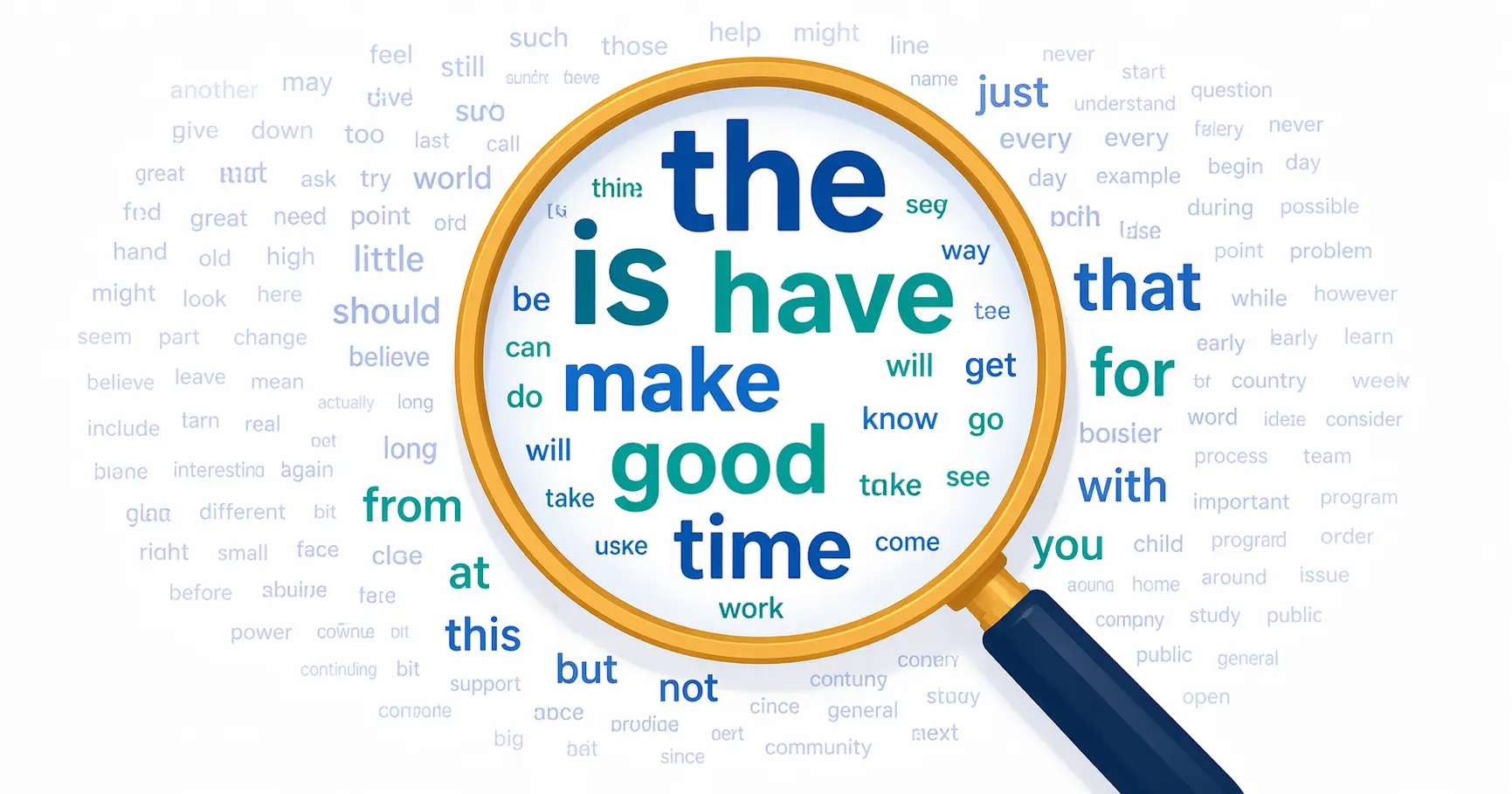
1000個最常用英文單字是在日常口語和書面語中出現最頻繁的單字。它們包括功能詞(the、is、in)、基礎動詞(make、take、give、know)、常用名詞(time、people、way、day)和必學形容詞(new、good、different、important)。合在一起,它們涵蓋了約85%的日常英語對話。本文按字母順序列出它們及其含義和例句。
1000個單字足以說英語嗎?
1000個單字為你提供了進行基礎對話的足夠詞彙——問候、日常例行活動、簡單意見、購物和旅行情況。用1000個單字可以在英語國家生存。然而,要在工作中舒適地溝通、理解新聞或通過IELTS等考試,你需要3000–5000個單字。把1000個單字看作是堅實的基礎,而不是終點線。
學習1000個英文單字需要多長時間?
如果你已經了解一些英語,你可能已經認識其中400–600個單字。以每天15–25個新單字加每日複習的速度,學習剩餘的400–600個大約需要6–8週。完全從零開始的初學者需要10–12週。關鍵不是速度而是持續性——每天15分鐘的學習勝過每週一次2小時。
學習常用英文單字最好的方法是什麼?
在語境中學習,而不是孤立地學習。對每個單字,閱讀定義,學習2–3個例句,並寫下你自己的句子。使用間隔重複法以遞增的間隔複習(1天、3天、7天、14天)。首先專注於你幾乎已知的單字——將部分知識轉化為自信使用比學習完全陌生的單字要快。
我應該按字母順序還是按頻率學習1000個最常用單字?
對於學習目的,頻率順序更有效——你首先學習影響最大的單字。本文中的A到Z排列是為了參考和快速查找而設計的。主動學習時,從你最常遇到的單字開始:基礎動詞(be、have、do、say、get、make、go、know、take、see)、常見名詞(time、year、people、way、day)和高頻形容詞(good、new、first、last、long、great、little、own、other、old)。
前1000個單字之後接下來是什麼?
下一步是擴展到2000–4000個單字,這將你從85%的理解力提升到95%——達到可以從上下文學習新單字而不需要字典的程度。我們的4000個必學英文單字指南提供按程度逐步進行的結構化計劃。你也可以專注於主題特定的詞彙:科技、工作,或通過我們的 IELTS 詞彙指南備考。