初學者必學英文單字:建立第一套核心詞彙
剛開始學英文時,很容易想下載一份隨機的一千個單字清單。然而,這通常不是最快建立溝通能力的方法。初學者需要的是一小組核心詞彙:能靈活組合,用來描述人、提出問題、安排計畫和理解日常句子的單字。
這是一篇單字指南,不是會話手冊。如果你想學旅行或對話中可直接使用的句子,請參考 English for Beginners: Essential Words and Phrases(英文)。在這裡,你會學到能讓你自己造句的基本元素。
- 程度: A1–A2
- 目標: 理解並說出基本的日常英文句子
- 重點: 常用名詞、動詞、描述性單字和文法功能詞
- 學習原則: 以小組方式學單字,不要依字母順序硬背一大串
先學能組成句子的單字
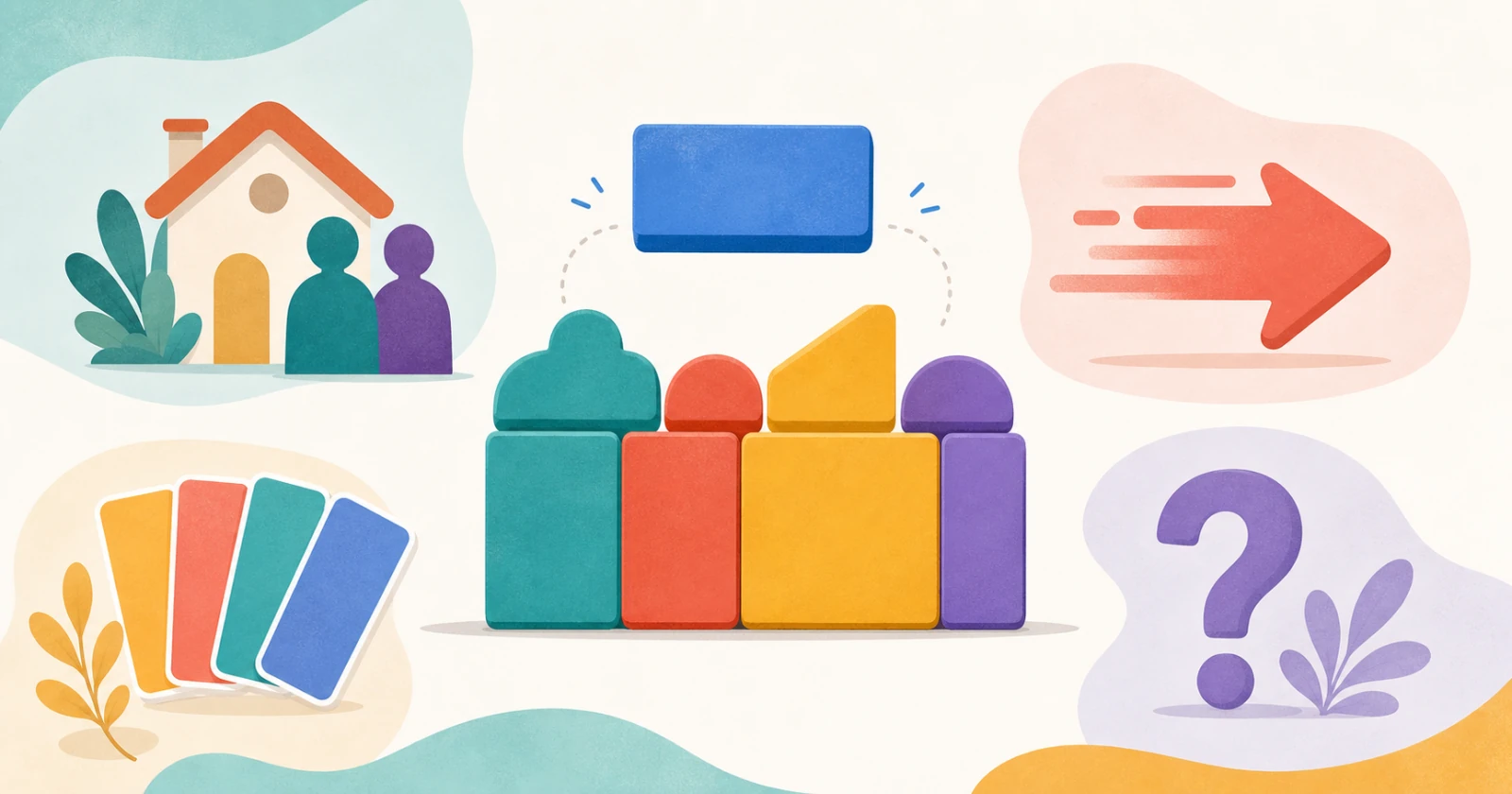
句子「My friend works in a small café」(我的朋友在一間小咖啡館工作)用了四種詞彙:
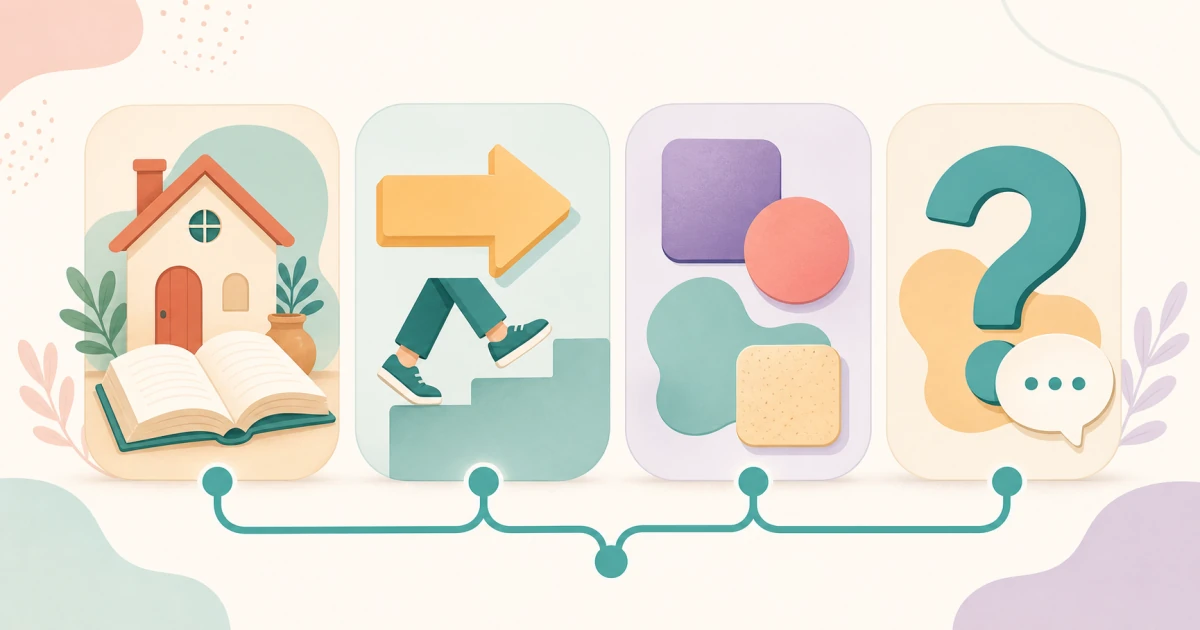
- 人與事物: friend、café
- 動作: works
- 描述性單字: small
- 文法功能詞: my、in、a
把這些詞彙組合著學。一個名詞本身固然有用,但名詞加上動詞和描述性單字,才能真正用來溝通。
必備的人、地點與事物
| 單字 | 詞性 | 意思 | 例句 |
|---|---|---|---|
| family | 名詞 | 家人;家庭成員 | My family lives near the city centre. 我的家人住在市中心附近。 |
| friend | 名詞 | 朋友 | Her friend speaks English very clearly. 她的朋友英文說得很清楚。 |
| child | 名詞 | 小孩;兒童 | The child is reading a book. 那個孩子正在看書。 |
| home | 名詞 | 家;住家 | I am at home today. 我今天在家。 |
| room | 名詞 | 房間 | Their room has two windows. 他們的房間有兩扇窗。 |
| school | 名詞 | 學校 | The school opens at eight. 學校八點開門。 |
| work | 名詞 | 工作;職業 | He has a lot of work this week. 他這週有很多工作要做。 |
| shop | 名詞 | 商店 | The shop is next to the station. 那家店在車站旁邊。 |
| food | 名詞 | 食物 | This food smells good. 這個食物聞起來很香。 |
| time | 名詞 | 時間;時段 | We do not have much time. 我們沒有多少時間。 |
必備動詞:人們做什麼
動詞讓句子有動態。先學基本形式,再留意常見變化,例如 work / works / worked。
| 單字 | 意思 | 例句 |
|---|---|---|
| be | 存在;也用來描述狀態或特徵 | They are happy today. 他們今天很開心。 |
| have | 擁有;經歷 | I have a new phone. 我有一支新手機。 |
| do | 做;執行某個動作 | What do you do after class? 下課後你做什麼? |
| go | 前往另一個地方 | We go to the park on Sunday. 我們星期日去公園。 |
| come | 朝某個地方或人移動 | Please come here for a minute. 請過來一下。 |
| want | 想要;希望得到 | I want a cup of tea. 我想要一杯茶。 |
| need | 需要 | You need your passport. 你需要你的護照。 |
| like | 喜歡;享受 | They like Italian food. 他們喜歡義大利料理。 |
| know | 知道;擁有某項資訊 | Do you know her name? 你知道她的名字嗎? |
| think | 認為;有某個想法 | I think this answer is right. 我認為這個答案是對的。 |
| make | 製作;造成 | Let’s make dinner together. 我們一起做晚餐吧。 |
| take | 帶走;接受;使用 | Take your bag with you. 把你的包包帶著。 |
每天都會用到的描述性單字
| 單字 | 意思 | 例句 |
|---|---|---|
| good | 好的;有益的;正確的 | That is a good idea. 那是個好主意。 |
| bad | 不好的;令人不愉快的 | The weather is bad today. 今天天氣不好。 |
| big | 大的 | They live in a big house. 他們住在一間大房子裡。 |
| small | 小的 | I need a small table. 我需要一張小桌子。 |
| new | 新的;最近取得的 | Her new job starts on Monday. 她的新工作星期一開始。 |
| old | 舊的;存在已久的 | This is an old photo. 這是一張舊照片。 |
| easy | 容易的 | The first exercise is easy. 第一個練習很容易。 |
| important | 重要的;必要的 | Sleep is important for learning. 睡眠對學習很重要。 |
| happy | 快樂的;高興的 | I am happy to see you. 很高興見到你。 |
| tired | 疲累的;需要休息的 | We are tired after the trip. 旅行後我們很累。 |
疑問詞與常見文法功能詞
小單字幾乎出現在每個句子裡。它們值得及早學習,因為能幫助你理解句子的結構。
| 單字 | 用法 | 例句 |
|---|---|---|
| who | 詢問人 | Who is that woman? 那位女士是誰? |
| what | 詢問事物或動作 | What do you need? 你需要什麼? |
| where | 詢問地點 | Where is the bus stop? 公車站在哪裡? |
| when | 詢問時間 | When does the film start? 電影什麼時候開始? |
| why | 詢問原因 | Why are you late? 你為什麼遲到? |
| how | 詢問方法或狀況 | How are you today? 你今天好嗎? |
| this / that | 指稱事物 | This book is mine; that book is yours. 這本書是我的;那本書是你的。 |
| some / any | 表示某個數量 | Do you have any water? 你有水嗎? |
| with | 表示連結或陪伴 | I study with my friend. 我和朋友一起讀書。 |
| because | 說明原因 | I am home because it is raining. 因為在下雨,所以我在家。 |
建立單字家族,不要只背孤立單字
一個單字可以帶出好幾個相關字。學 help 時,也一起學 helpful 和 helper;學 teach 時,加上 teacher 和 teaching。這樣不只讓你的詞彙成長更快,也能幫助你辨認不熟悉的字形。
| 核心單字 | 相關單字 | 例句 |
|---|---|---|
| work | worker、workplace、working | My sister is a worker at a hospital. 我姊姊在醫院工作。 |
| learn | learner、learning | Every learner needs regular review. 每位學習者都需要定期複習。 |
| help | helpful、helper | The receptionist was very helpful. 接待人員非常樂於幫忙。 |
| teach | teacher、teaching | Our teacher explains new words slowly. 我們的老師會慢慢解釋新單字。 |
| use | useful、user | This app is useful for beginners. 這個應用程式對初學者很有幫助。 |
簡單的每日學習流程
選八個單字。 從同一個主題中選兩個名詞、兩個動詞、兩個形容詞和兩個文法功能詞。
造四個句子。 用這些單字造和真實生活有關的句子,例如你的家、工作、家人或計畫。
把句子說出來。 開口說能讓你發現哪些單字你真的會用,哪些只是看得懂。
明天再複習。 在不看答案也能記住今天大部分單字之前,不要急著再增加八個新單字。
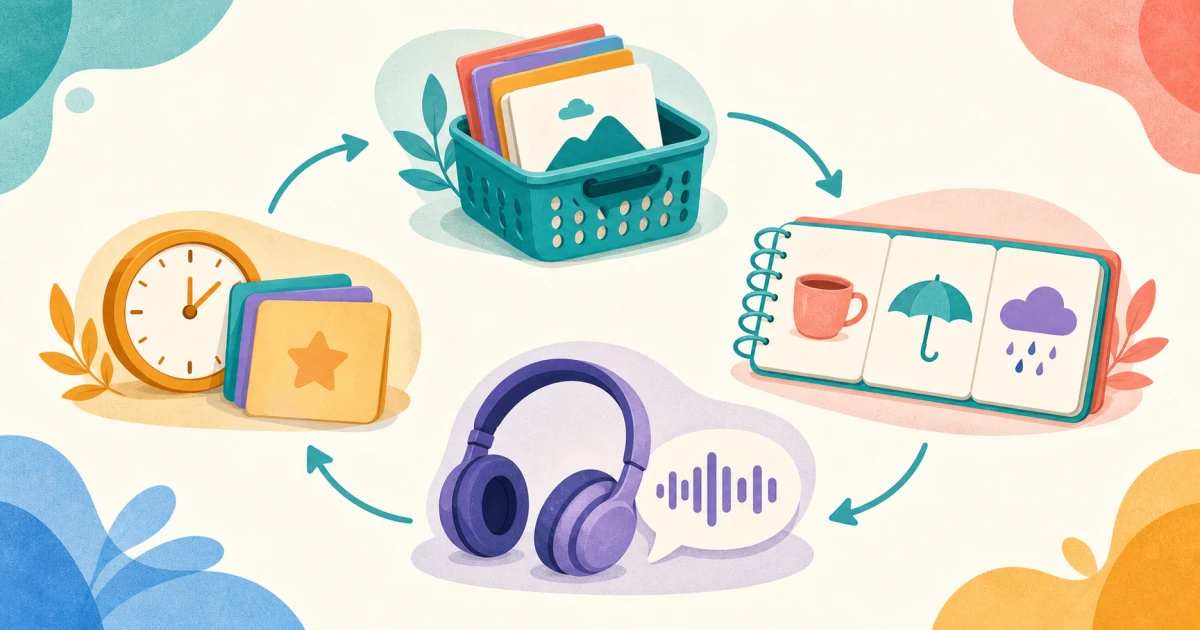
練習單字
abuse
名詞
濫用
範例
- It's important to report any signs of child abuse to the authorities.
- The investigation revealed serious abuse of power by government officials.
actually
副詞
其實
範例
- I thought the meeting was today, but it's actually scheduled for tomorrow.
- The book looks boring, but it's actually quite interesting and engaging.
affection
名詞
親情
範例
- The child showed deep affection for his grandmother who raised him.
- Their mutual affection was evident to everyone who saw them together.
agreement
名詞
協議
範例
- The trade agreement will benefit both countries' economic development significantly.
- There was general agreement among the committee members about the proposed changes.
airport
名詞
機場
範例
- International airports handle millions of travelers and tons of cargo annually.
- We need to arrive at the airport two hours before our departure time.
alternate
形容詞
交替的
範例
- The parking lot uses alternate spaces for cars and motorcycles.
- We need an alternate plan in case the weather doesn't cooperate.
announce
動詞
宣布, 公告
範例
- Airlines announce flight delays through the terminal's public address system.
- The principal will announce the scholarship winners during tomorrow's assembly.
apart
副詞
分開
範例
- Please keep these chemicals apart to prevent dangerous reactions.
- The two friends lived far apart but stayed in regular contact.
apply
動詞
申請
範例
- Apply pressure to the wound to stop the bleeding immediately.
- Students can apply for financial aid to help pay tuition costs.
arrest
名詞
逮捕, 拘留, 拘捕令
範例
- He was under arrest for suspected involvement in the robbery.
- The arrest of the criminal was reported on the evening news.
attend
動詞
參加
範例
- All students must attend classes regularly to pass their courses.
- The nurse will attend to the patient's needs throughout the night.
ballet
名詞
芭蕾舞
範例
- She studied ballet for many years before becoming a professional dancer.
- The ballet performance featured graceful movements and beautiful costumes.
basis
名詞
基礎, 根據
範例
- The selection process is conducted on the basis of merit alone.
- Trust forms the basis of any successful relationship or partnership.
bedroom
名詞
臥室
範例
- She decorated her bedroom with posters and colorful curtains.
- The master bedroom has a beautiful view of the garden.
biotechnology
名詞
生物技術, 生技, 生物工程
範例
- Agricultural biotechnology helps create disease-resistant crop varieties.
- Biotechnology companies develop new medical treatments and therapies.
borrow
動詞
借用
範例
- Can I borrow your pen for a few minutes?
- He had to borrow money from the bank for repairs.
browser
名詞
瀏覽器
範例
- Chrome is the most popular web browser worldwide.
- The store welcomes browsers as well as buyers.
candidate
名詞
候選人
範例
- Each presidential candidate presented their policy plans to voters.
- The job candidate impressed the interview panel with her experience.
cat
名詞
貓
範例
- The fluffy cat sat peacefully by the warm fireplace in the evening.
- Their pet cat loves to play with colorful balls of yarn.
cherished
形容詞
珍愛的
範例
- His cherished dream of becoming a pilot finally came true.
- The old photograph was her most cherished possession from childhood.
cloudy
形容詞
多雲
範例
- The water became cloudy after stirring up sediment from the bottom.
- The weather forecast predicts cloudy skies with possible rain this evening.
commute
動詞
通勤
範例
- Public transportation helps people commute efficiently reducing traffic congestion.
- Workers commute daily between suburban homes and downtown offices.
confirmation
名詞
確認
範例
- She received confirmation of her job application via email yesterday.
- The confirmation ceremony was held at the local church on Sunday.
correspond
動詞
符合
範例
- She corresponds regularly with her friends who live in different countries.
- The witness testimony should correspond with the physical evidence found at the scene.
custom
名詞
習俗
範例
- It is a local custom to remove shoes before entering homes.
- The wedding ceremony followed traditional customs from their culture.
接下來學什麼
- 想把單字用在完整情境中,可閱讀 Simple English Sentences for Daily Use(英文)。
- 接著學習 1000 Most Common English Words(英文)。
- 在 A1 詞彙圖書館 探索更多初學者單字組。
常見問題
我需要多少基礎英文單字?
大約 300 個精心挑選的單字,就能幫助你應付許多基本情境。你不必在一週內全背完;規律複習比一次記很多更重要。
初學者應該先學文法還是詞彙?
兩者都要,但每次少量學習。基礎文法能幫助你把新學的單字連成實用的句子。
記住基礎英文單字最快的方法是什麼?
把每個單字放進與自己有關的句子裡,說出來,並在隔天、三天後和一週後複習。
只會單字就足以對話嗎?
還不夠。單字是建構材料;你需要練習把它們組合成短句和常用片語。
學完 A1 詞彙後,下一步該學什麼?
接著學 A2 詞彙、簡單閱讀、聽力練習和短對話。請依主題擴充單字,而不是再從隨機清單開始。