英語初學者:開口說英語必備單字和短語
從零開始學英語讓人不知所措。英語語言中有超過170,000個單字。語法書有幾百頁長。每個人都告訴你「用英語看電影」——但你一句話也聽不懂。你究竟從哪裡開始?
答案是:你從涵蓋真實日常情境的300個單字和短語開始。不是隨機詞彙表。不是語法規則。不是現實生活中沒人使用的教科書對話。你從問候某人、請求幫助、買東西、介紹自己和度過你的第一次英語對話所需的特定單字開始。
本指南是你的入門套件。它按情境組織——而不是按字母順序,也不是按語法——因為這就是語言在現實生活中的工作方式。你不會想「我需要一個名詞。」你會想「我需要點餐。」
- 總計單字和短語:300+
- 程度:A1(完全初學者)
- 不需要語法:每個條目都是可以直接使用的短語
- 按:15個真實生活情境組織
- 最適合:完全初學者、旅行者、自學入門者
如何使用本指南
不要試圖一次學完所有內容。計劃如下:
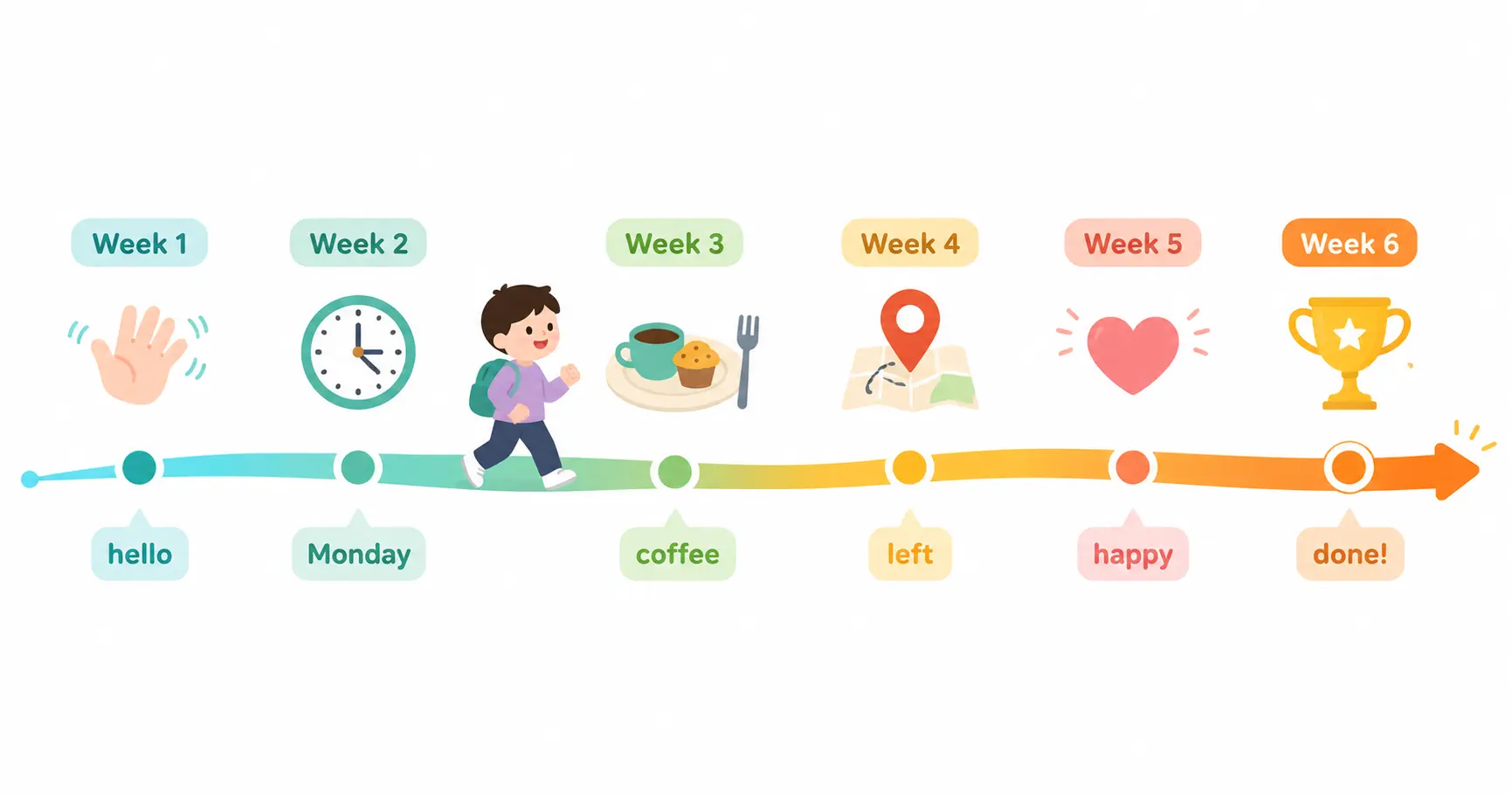
第1週:問候語 + 數字 + 自我介紹 第2週:時間和星期 + 日常例行活動 第3週:食物和飲料 + 購物 第4週:方向和旅行 + 緊急情況 第5週:感受 + 描述人和事物 第6週:複習所有內容,然後學習1000個最常見英語單字
對於每個章節,大聲讀出短語。然後關閉這個頁面,試著回想盡可能多的內容。你忘記的那些——那些是你需要再次學習的。將它們添加到你的 Linglify 字典進行間隔重複。
問候和告別
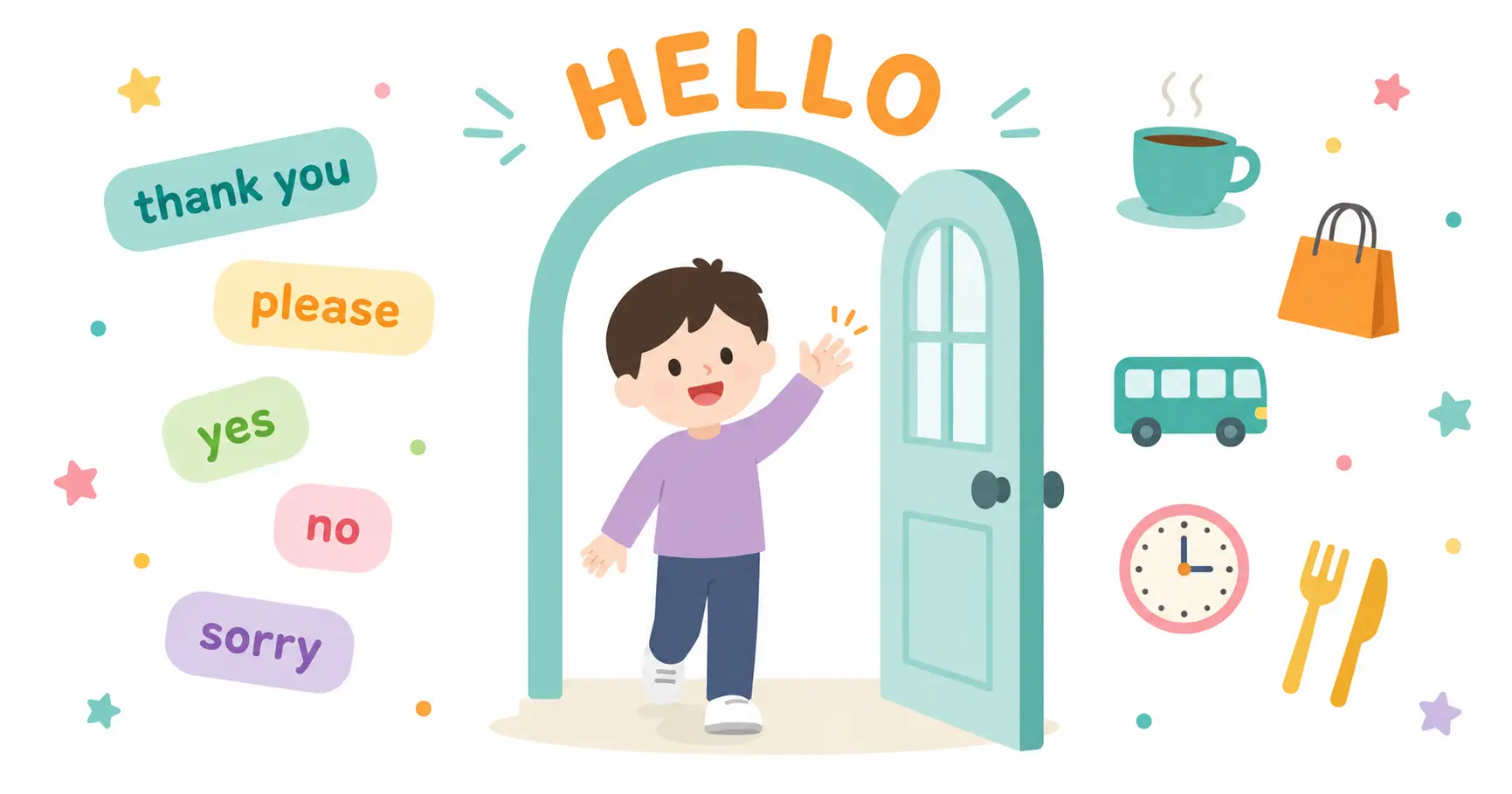
這些是你在任何英語互動中將使用的第一批短語。學習它們直到自動化。
說你好
| 短語 | 使用時機 | 說明 |
|---|---|---|
| Hello. | 任何情況 | 安全、通用 |
| Hi. | 隨意、朋友之間 | 比「hello」更輕鬆 |
| Good morning. | 中午前 | 可以對任何人使用 |
| Good afternoon. | 中午到下午5點左右 | 略微正式 |
| Good evening. | 下午5點後 | 僅作為問候——不是告別 |
| Hey! | 朋友、隨意 | 不要對陌生人或在商業場合使用 |
回應「你好嗎?」
| 短語 | 含義 |
|---|---|
| I’m fine, thank you. | 禮貌、標準 |
| I’m good, thanks. | 隨意、非常常見 |
| Not bad. | 隨意,意思是「還好」 |
| I’m great! | 積極、熱情 |
| And you? | 問回同樣的問題 |
母語者不期望詳細的答案。「I’m fine, thanks. And you?」是完整的交流。
說再見
| 短語 | 使用時機 |
|---|---|
| Goodbye. | 任何情況 |
| Bye! | 隨意 |
| See you later. | 當你將再次見面時 |
| See you tomorrow. | 當第二天見面時 |
| Have a nice day. | 禮貌,對陌生人或同事 |
| Good night. | 只在去睡覺或晚上離開時 |
| Take care. | 溫暖,對朋友或家人 |
禮貌用語(經常使用這些)
| 短語 | 使用時機 |
|---|---|
| Please. | 請求某物時 |
| Thank you. / Thanks. | 接受某物或獲得幫助後 |
| You’re welcome. | 回應「謝謝你」 |
| Excuse me. | 引起注意,或打斷前 |
| Sorry. | 道歉 |
| No problem. | 回應「對不起」或「謝謝你」 |
自我介紹
這些短語讓你可以進行你的第一次英語對話。
| 短語 | 例子 |
|---|---|
| My name is _. | My name is Maria. |
| I’m _. | I’m Takeshi. |
| Nice to meet you. | (第一次見到某人時說。) |
| I’m from _. | I’m from Brazil. |
| I live in _. | I live in Tokyo. |
| I speak _. | I speak Spanish and a little English. |
| I’m learning English. | (說這個時,人們會對你更有耐心。) |
| I’m a _. (工作) | I’m a teacher. / I’m a student. / I’m an engineer. |
| I’m _ years old. | I’m 28 years old. |
認識人時的有用問題
| 問題 | 含義 |
|---|---|
| What’s your name? | 詢問某人的名字 |
| Where are you from? | 詢問他們的國家/城市 |
| What do you do? | 詢問他們的工作 |
| Do you speak _? | 詢問他們是否說某種語言 |
數字
數字到處都是——價格、時間、地址、電話號碼、年齡。學習1–100,你幾乎可以應對任何情況。
1–20
| 數字 | 單字 | 數字 | 單字 |
|---|---|---|---|
| 1 | one | 11 | eleven |
| 2 | two | 12 | twelve |
| 3 | three | 13 | thirteen |
| 4 | four | 14 | fourteen |
| 5 | five | 15 | fifteen |
| 6 | six | 16 | sixteen |
| 7 | seven | 17 | seventeen |
| 8 | eight | 18 | eighteen |
| 9 | nine | 19 | nineteen |
| 10 | ten | 20 | twenty |
21–100(規律)
20之後,英語數字遵循一個簡單的規律:十位詞 + 個位詞。
| 十位 | 規律 | 例子 |
|---|---|---|
| 20 | twenty | twenty-one (21), twenty-two (22)… |
| 30 | thirty | thirty-five (35) |
| 40 | forty | forty-eight (48) |
| 50 | fifty | fifty-three (53) |
| 60 | sixty | sixty-seven (67) |
| 70 | seventy | seventy-nine (79) |
| 80 | eighty | eighty-four (84) |
| 90 | ninety | ninety-nine (99) |
| 100 | one hundred | — |
常見錯誤:「forty」沒有「u」——它不是「fourty」。
大數字
| 數字 | 單字 |
|---|---|
| 100 | one hundred |
| 1,000 | one thousand |
| 10,000 | ten thousand |
| 100,000 | one hundred thousand |
| 1,000,000 | one million |
時間和星期
報時
| 短語 | 含義 |
|---|---|
| What time is it? | 詢問時間 |
| It’s 3 o’clock. | 正好3:00 |
| It’s half past 3. | 3:30 |
| It’s quarter past 3. | 3:15 |
| It’s quarter to 4. | 3:45 |
| It’s 3:10. | 直接說數字 |
對於初學者,最簡單的方法:直接說數字。「It’s three fifteen」完全正確且比「quarter past three」更容易。
星期
| 星期 | 縮寫 |
|---|---|
| Monday | Mon |
| Tuesday | Tue |
| Wednesday | Wed |
| Thursday | Thu |
| Friday | Fri |
| Saturday | Sat |
| Sunday | Sun |
月份
| 月份 | 縮寫 | 月份 | 縮寫 |
|---|---|---|---|
| January | Jan | July | Jul |
| February | Feb | August | Aug |
| March | Mar | September | Sep |
| April | Apr | October | Oct |
| May | May | November | Nov |
| June | Jun | December | Dec |
時間詞
| 單字 | 含義 | 例句 |
|---|---|---|
| today | 今天 | I have a meeting today. |
| tomorrow | 明天 | See you tomorrow. |
| yesterday | 昨天 | I went shopping yesterday. |
| now | 現在 | I’m busy now. |
| later | 稍後 | I’ll call you later. |
| soon | 很快 | The bus is coming soon. |
| always | 總是 | I always drink coffee in the morning. |
| sometimes | 有時 | I sometimes walk to work. |
| never | 從不 | I never eat meat. |
日常例行活動
這些短語描述人們每天做的事情。它們是任何語言中最有用的句子之一。
| 短語 | 時間 |
|---|---|
| I wake up at 7. | 早上 |
| I take a shower. | 早上 |
| I brush my teeth. | 早上/晚上 |
| I get dressed. | 早上 |
| I have breakfast. | 早上 |
| I go to work. / I go to school. | 早上 |
| I have lunch. | 中午 |
| I finish work at 6. | 傍晚 |
| I go home. | 傍晚 |
| I cook dinner. / I eat dinner. | 傍晚 |
| I watch TV. | 傍晚 |
| I read a book. | 傍晚 |
| I go to bed. | 晚上 |
食物和飲料
在餐廳或咖啡館點餐
| 短語 | 情境 |
|---|---|
| Can I have _, please? | 點任何東西 |
| I’d like _, please. | 禮貌的點餐方式 |
| Can I see the menu? | 要求菜單 |
| What do you recommend? | 詢問建議 |
| Just water, please. | 點水 |
| The check, please. / The bill, please. | 要求結帳 |
| Can I pay by card? | 詢問付款方式 |
常見食物單字
| 類別 | 單字 |
|---|---|
| 用餐 | breakfast(早餐), lunch(午餐), dinner(晚餐), snack(小吃) |
| 飲料 | water, coffee, tea, juice, milk, beer, wine |
| 水果 | apple, banana, orange, grape, strawberry |
| 蔬菜 | tomato, potato, onion, carrot, salad |
| 蛋白質 | chicken, fish, egg, meat, beef, rice, bread |
| 口味 | sweet, salty, sour, spicy, bitter, delicious |
談論食物
| 短語 | 含義 |
|---|---|
| I’m hungry. | 我想吃東西。 |
| I’m thirsty. | 我想喝東西。 |
| I’m full. | 我吃夠了。 |
| It’s delicious! | 食物非常好。 |
| I’m vegetarian. | 我不吃肉。 |
| I’m allergic to _. | 我對某物過敏。 |
購物
| 短語 | 使用時機 |
|---|---|
| How much is this? | 詢問價格 |
| How much does this cost? | 同上,略微更正式 |
| Can I try this on? | 詢問試穿 |
| Do you have this in size _? | 詢問不同尺碼 |
| I’ll take it. | 決定購買 |
| No, thank you. Just looking. | 當你不想買的時候 |
| Where is the fitting room? | 找試衣間 |
| Can I get a receipt? | 要求收據 |
| Is there a discount? | 詢問是否有折扣 |
有用的購物單字
| 單字 | 含義 |
|---|---|
| cheap | 低價 |
| expensive | 高價 |
| sale | 打折價格 |
| cash | 紙幣和硬幣 |
| card | 信用卡或借記卡 |
| change | 付款後找回的錢 |
| size | 小(S), 中(M), 大(L), 加大(XL) |
方向和地點
詢問方向
| 短語 | 你需要的 |
|---|---|
| Excuse me, where is the _? | 找一個地方 |
| How do I get to _? | 詢問方向 |
| Is it far from here? | 詢問距離 |
| Is there a _ near here? | 找最近的地方 |
| Can you show me on the map? | 當你有地圖時 |
| I’m lost. | 當你不知道你在哪裡時 |
理解方向
| 短語 | 含義 |
|---|---|
| Go straight. | 向前走不轉彎 |
| Turn left. | 向左轉 |
| Turn right. | 向右轉 |
| It’s on the left/right. | 地方在那一側 |
| It’s next to _. | 在某物旁邊 |
| It’s across from _. | 在街的另一側 |
| It’s on the corner. | 兩條街相交處 |
| It’s two blocks away. | 短步行距離 |
重要地點
| 地點 | 是什麼 |
|---|---|
| hospital | 醫療緊急情況 |
| pharmacy | 購買藥品 |
| bank | 用於金錢 |
| supermarket | 購買食物和雜貨 |
| restaurant | 吃一頓飯 |
| hotel | 過夜住宿 |
| airport | 搭乘飛機 |
| train station | 搭乘火車 |
| bus stop | 公車停靠處 |
| bathroom / toilet | 洗手間 |
| police station | 緊急情況和犯罪 |
緊急情況和健康
這些短語可能是本指南中最重要的。請記住它們。
| 短語 | 使用時機 |
|---|---|
| Help! | 任何緊急情況 |
| Call the police! | 犯罪或危險 |
| Call an ambulance! | 醫療緊急情況 |
| I need a doctor. | 當你生病或受傷時 |
| I don’t feel well. | 當你感到不舒服時 |
| It hurts here.(指向該區域) | 顯示疼痛位置 |
| I’m allergic to _. | 警告過敏 |
| Where is the nearest hospital? | 找醫療幫助 |
| I lost my passport. | 旅行時 |
| Can you help me? | 向任何人請求幫助 |
描述健康問題
| 短語 | 含義 |
|---|---|
| I have a headache. | 我頭痛。 |
| I have a stomachache. | 我胃痛。 |
| I have a fever. | 我發燒了。 |
| I feel dizzy. | 我感到頭暈。 |
| I feel nauseous. | 我感到噁心。 |
感受和情緒
| 短語 | 含義 |
|---|---|
| I’m happy. | 我感到高興。 |
| I’m sad. | 我情緒上感到難過。 |
| I’m tired. | 我需要休息。 |
| I’m angry. | 我對某事感到憤怒。 |
| I’m scared. / I’m afraid. | 某事讓我感到恐懼。 |
| I’m excited. | 某件好事即將發生。 |
| I’m bored. | 沒有有趣的事情發生。 |
| I’m worried. | 我對某事感到焦慮。 |
| I’m confused. | 我不理解。 |
| I’m surprised. | 我沒有預料到那個。 |
顏色
| 顏色 | 顏色 | 顏色 |
|---|---|---|
| red | blue | green |
| yellow | orange | purple |
| black | white | gray |
| brown | pink | gold |
天氣
| 短語 | 含義 |
|---|---|
| What’s the weather like? | 詢問天氣 |
| It’s sunny. | 太陽出來了。 |
| It’s cloudy. | 雲彩遮蓋天空。 |
| It’s raining. | 水從天空落下。 |
| It’s snowing. | 雪在落。 |
| It’s windy. | 強風。 |
| It’s hot. | 高溫。 |
| It’s cold. | 低溫。 |
| It’s warm. | 舒適的溫度。 |
| It’s cool. | 略微涼爽,宜人。 |
請求英語幫助
這些短語在你不理解時能救你。母語者在你詢問時很感激——這顯示你在嘗試。
| 短語 | 使用時機 |
|---|---|
| Can you speak slowly, please? | 當某人說話太快時 |
| Can you repeat that, please? | 當你沒有聽到或理解時 |
| What does _ mean? | 當你不知道一個單字時 |
| How do you say _ in English? | 當你需要翻譯時 |
| How do you spell that? | 當你需要字母時 |
| I don’t understand. | 當你困惑時 |
| I don’t speak English very well. | 設定期望 |
| Can you write it down? | 當你聽不清楚時 |
| Is this correct? | 確認你說的是否正確 |
必備動詞(最有用的25個)
這25個動詞讓你可以表達幾乎任何基本想法。有了這些加上一個名詞,你可以在任何情況下溝通。
| 動詞 | 含義 | 例句 |
|---|---|---|
| be | 存在、身份 | I am a student. |
| have | 擁有 | I have a question. |
| do | 執行動作 | What do you do? |
| go | 移動到某地 | I go to school. |
| come | 向說話者移動 | Come here, please. |
| get | 獲得、到達 | I get home at 6. |
| make | 創造 | I make breakfast. |
| know | 有信息 | I know the answer. |
| want | 渴望 | I want coffee. |
| need | 需要 | I need help. |
| like | 享受 | I like music. |
| say | 說話 | She says hello. |
| see | 用眼睛看 | I see the bus. |
| give | 遞給某人 | Give me the menu, please. |
| take | 拿、使用 | Take the first left. |
| put | 放在某處 | Put it on the table. |
| eat | 吃食物 | I eat lunch at noon. |
| drink | 喝液體 | I drink water every day. |
| buy | 購買 | I want to buy a ticket. |
| work | 有工作;功能 | I work in an office. |
| open | 使可接近 | Open the door. |
| close | 關閉 | Close the window, please. |
| help | 幫助 | Can you help me? |
| wait | 等待直到某事發生 | Wait here, please. |
| try | 嘗試 | I want to try this. |
疑問詞
這七個單字讓你可以詢問任何事情。
| 單字 | 詢問什麼 | 例句 |
|---|---|---|
| What? | 事物、事實 | What is your name? |
| Where? | 地點 | Where is the station? |
| When? | 時間 | When does the store open? |
| Who? | 人 | Who is that? |
| Why? | 原因 | Why is it closed? |
| How? | 方式、方法 | How do I get there? |
| How much? | 價格、數量 | How much is this? |
練習詞彙
這25個對初學者友好的單字是你應該首先添加到主動詞彙中的。將它們儲存到你的 Linglify 字典進行間隔重複。
abuse
名詞
濫用
範例
- It's important to report any signs of child abuse to the authorities.
- The investigation revealed serious abuse of power by government officials.
actually
副詞
其實
範例
- I thought the meeting was today, but it's actually scheduled for tomorrow.
- The book looks boring, but it's actually quite interesting and engaging.
affection
名詞
親情
範例
- The child showed deep affection for his grandmother who raised him.
- Their mutual affection was evident to everyone who saw them together.
agreement
名詞
協議
範例
- The trade agreement will benefit both countries' economic development significantly.
- There was general agreement among the committee members about the proposed changes.
airport
名詞
機場
範例
- International airports handle millions of travelers and tons of cargo annually.
- We need to arrive at the airport two hours before our departure time.
alternate
形容詞
交替的
範例
- The parking lot uses alternate spaces for cars and motorcycles.
- We need an alternate plan in case the weather doesn't cooperate.
announce
動詞
宣布, 公告
範例
- Airlines announce flight delays through the terminal's public address system.
- The principal will announce the scholarship winners during tomorrow's assembly.
apart
副詞
分開
範例
- Please keep these chemicals apart to prevent dangerous reactions.
- The two friends lived far apart but stayed in regular contact.
apply
動詞
申請
範例
- Apply pressure to the wound to stop the bleeding immediately.
- Students can apply for financial aid to help pay tuition costs.
arrest
名詞
逮捕, 拘留, 拘捕令
範例
- He was under arrest for suspected involvement in the robbery.
- The arrest of the criminal was reported on the evening news.
attend
動詞
參加
範例
- All students must attend classes regularly to pass their courses.
- The nurse will attend to the patient's needs throughout the night.
ballet
名詞
芭蕾舞
範例
- She studied ballet for many years before becoming a professional dancer.
- The ballet performance featured graceful movements and beautiful costumes.
basis
名詞
基礎, 根據
範例
- The selection process is conducted on the basis of merit alone.
- Trust forms the basis of any successful relationship or partnership.
bedroom
名詞
臥室
範例
- She decorated her bedroom with posters and colorful curtains.
- The master bedroom has a beautiful view of the garden.
biotechnology
名詞
生物技術, 生技, 生物工程
範例
- Agricultural biotechnology helps create disease-resistant crop varieties.
- Biotechnology companies develop new medical treatments and therapies.
borrow
動詞
借用
範例
- Can I borrow your pen for a few minutes?
- He had to borrow money from the bank for repairs.
browser
名詞
瀏覽器
範例
- Chrome is the most popular web browser worldwide.
- The store welcomes browsers as well as buyers.
candidate
名詞
候選人
範例
- Each presidential candidate presented their policy plans to voters.
- The job candidate impressed the interview panel with her experience.
cat
名詞
貓
範例
- The fluffy cat sat peacefully by the warm fireplace in the evening.
- Their pet cat loves to play with colorful balls of yarn.
cherished
形容詞
珍愛的
範例
- His cherished dream of becoming a pilot finally came true.
- The old photograph was her most cherished possession from childhood.
cloudy
形容詞
多雲
範例
- The water became cloudy after stirring up sediment from the bottom.
- The weather forecast predicts cloudy skies with possible rain this evening.
commute
動詞
通勤
範例
- Public transportation helps people commute efficiently reducing traffic congestion.
- Workers commute daily between suburban homes and downtown offices.
confirmation
名詞
確認
範例
- She received confirmation of her job application via email yesterday.
- The confirmation ceremony was held at the local church on Sunday.
correspond
動詞
符合
範例
- She corresponds regularly with her friends who live in different countries.
- The witness testimony should correspond with the physical evidence found at the scene.
custom
名詞
習俗
範例
- It is a local custom to remove shoes before entering homes.
- The wedding ceremony followed traditional customs from their culture.
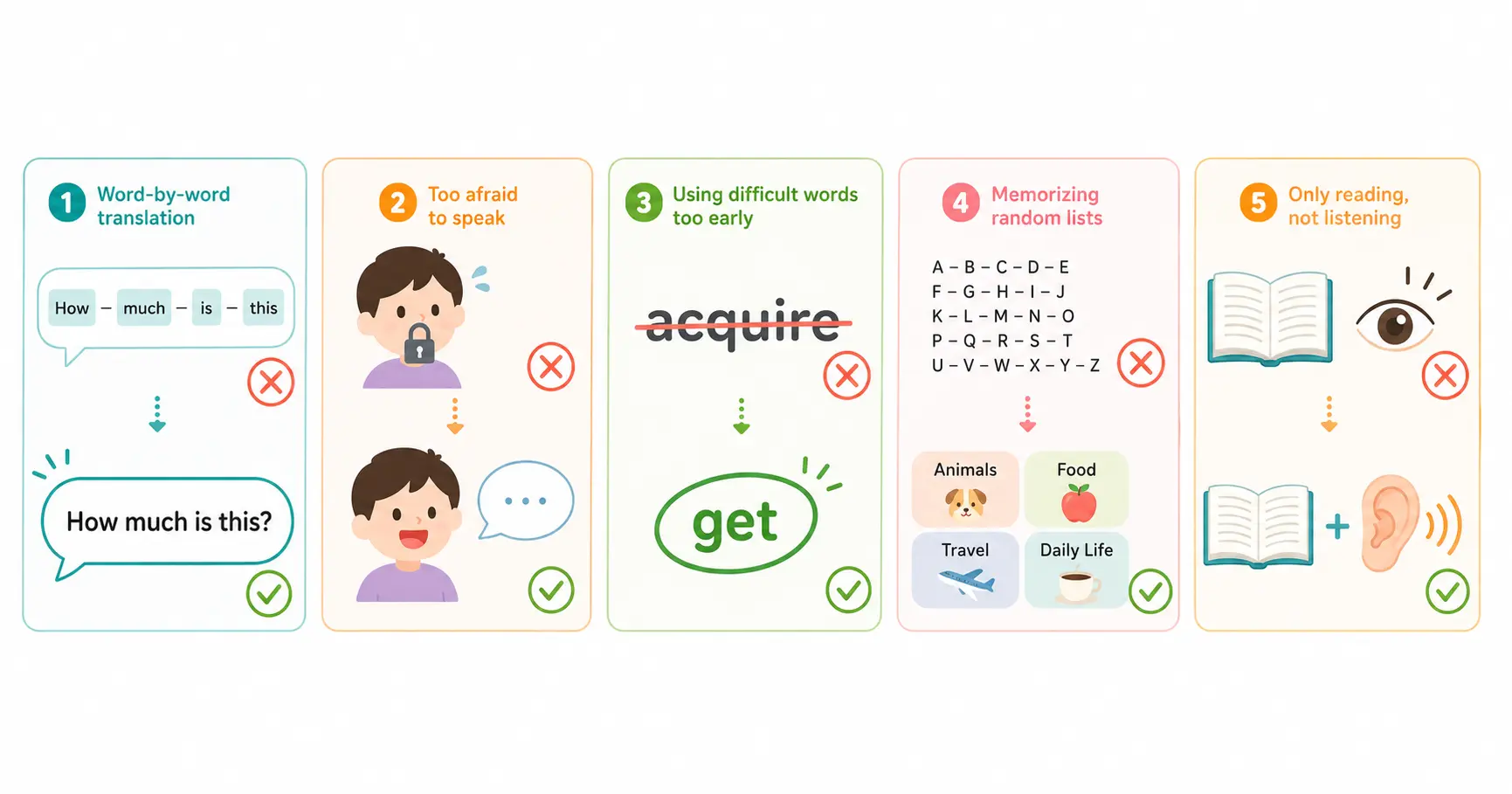
常見初學者錯誤(以及如何修正)
錯誤1:從你的語言逐字翻譯
每種語言的句子結構不同。如果你逐字翻譯,即使每個單字都是正確的,結果也會聽起來很奇怪。相反,學習完整的短語——「How much is this?」不是「How + much + is + this.」
錯誤2:在說話前試圖完美
你會犯錯誤。母語者對此有期望。他們關心溝通,而不是完美。說「Where is bank?」(缺少「the」)仍然完美地溝通了。不要等到你的語法完美——現在就開始說話。
錯誤3:在沒有語境的情況下學習單字
「Acquire」與「get」的意思相同,但沒有人在日常對話中使用「acquire」。語境很重要。本指南中的單字是為真實的日常使用而選擇的,而不是為了考試。
錯誤4:按字母順序記憶長單字表
你的大腦不是按字母表來組織語言的。它按情境組織。這就是為什麼本指南按主題對單字進行分組:你會一起記住「I’m hungry」 + 「Can I have the menu?」因為它們屬於同一個真實生活情境。
錯誤5:只學習,從不聆聽
在頁面上閱讀單字教的是識別。聆聽教的是理解。觀看初學者英語的YouTube視頻、聽英語學習者播客,或者只是聆聽英語音樂。你的耳朵也需要訓練。
本指南之後做什麼
-
擴展到1,000個單字。 1000個最常見英語單字涵蓋了85%的日常英語。這是你掌握基礎知識後的下一個里程碑。
-
用真實句子練習。 我們的日常使用的簡單英語句子指南給你200+按情境組織的即用句子。
-
建立學習系統。 隨機學習不起作用。閱讀我們的逐步詞彙學習系統設立一個真正有成效的每日例行活動。
-
了解程度。 本指南中的單字是A1程度——起點。請見按CEFR程度的英語詞彙了解從初學者到流利的完整路徑。
常見問題
學習基礎英語需要多長時間?
每天持續學習(30–60分鐘),大多數學習者可以在2–3個月內應對基本對話。這意味著問候、點餐、詢問方向和簡單的閒聊。達到舒適的對話水平(B1)通常需要6–12個月。關鍵是每天練習——每天15分鐘勝過一週一次3小時。
我應該首先學習哪些英語單字?
從生存短語開始:問候語(hello、goodbye、thank you)、數字(1–100)、基本問題(where、what、how much)和情境特定詞彙(食物、方向、緊急情況)。本指南正好涵蓋這些——處理最常見真實生活情境的300+單字和短語。之後,進入1000個最常見單字。
學英語需要幾個單字?
對於在英語環境中的基本生存,300–500個單字涵蓋問候、購物、食物、旅行和緊急情況。對於簡單的對話,你需要大約1,000個單字(涵蓋85%的日常口語)。對於舒適的流暢性,目標是3,000–4,000個單字。
學英式英語還是美式英語更好?
對於初學者,這並不重要。核心詞彙95%相同。差異主要在拼寫(colour vs color)、一些詞彙項目(lift vs elevator)和發音上。選擇你聽到最多的那種——如果你看美國節目,就學美式英語;如果你住在英國,就學英式英語。