
New English Words in 2026: 100+ Latest Additions to the Dictionary
The English language adds hundreds of new words every year. In 2026 alone, the Oxford English Dictionary added over 500 new entries. From AI technology to social media culture, these new words reflect how the world is changing — and your vocabulary needs to change with it.
In this guide, you will find over 100 of the most useful new English words and phrases, organized by topic. Each word includes its meaning and a real-world example sentence. Here is what we cover:
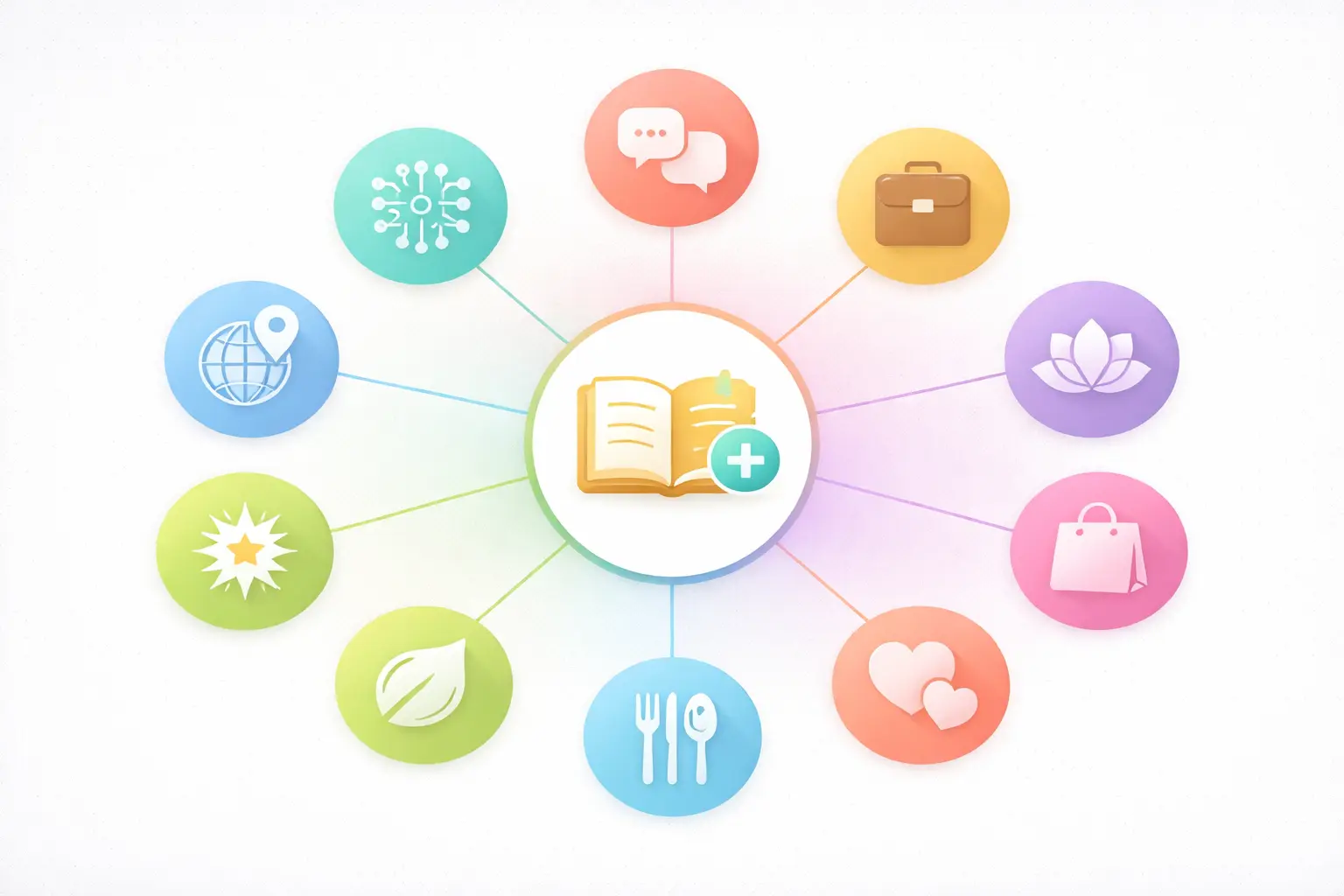
- Technology and AI vocabulary
- Social media and internet culture
- Work and career terms
- Lifestyle and wellness
- Food and drink
- Fashion and shopping
- Relationships and social life
- Environment and sustainability
- Modern slang and informal English
- Global English — words from other languages
What Makes a Word “New”?
A word becomes “new” when major dictionaries — Oxford, Merriam-Webster, Cambridge — officially add it. But the word usually existed in spoken language or online for months or years before that.
Dictionaries track how often a word appears in news, books, social media, and online searches. When a word reaches consistent, widespread use, lexicographers (the people who write dictionaries) add it. Some words get added fast — “COVID-19” entered the Cambridge Dictionary in just 37 days. Others are tracked for years before becoming official.
The words below are recent additions from 2024–2026, plus trending terms expected to be formalized soon. All of them are already in active use across English-speaking media.
Technology and AI
The fastest-growing category. As AI tools become part of daily life, the language around them is expanding rapidly.
| Word | Part of Speech | Meaning | Example |
|---|---|---|---|
| AI-washing | noun | Falsely claiming a product uses artificial intelligence | Many startups have been accused of AI-washing to attract investors. |
| deepfake | noun | AI-generated fake video or image of a real person | The deepfake of the politician went viral before it was debunked. |
| generative AI | noun | AI systems that create new text, images, or code | Generative AI tools can write essays, but they often make factual errors. |
| hallucinate | verb (new sense) | When AI confidently produces false information | The chatbot hallucinated a research paper that does not exist. |
| prompt engineering | noun | The skill of writing effective inputs for AI tools | Prompt engineering is becoming a real job title at tech companies. |
| doomscroll | verb | Scrolling through bad news for a long time without stopping | I spent an hour doomscrolling through earthquake updates last night. |
| digital nomad | noun | A person who works remotely while traveling the world | Bali is one of the most popular destinations for digital nomads. |
| fintech | noun | Technology for financial services (banking, payments, investing) | Fintech apps have made international money transfers almost instant. |
| edtech | noun | Technology for education and learning | The edtech industry grew massively during the pandemic. |
| e-waste | noun | Discarded electronic devices and their environmental impact | The city opened a new e-waste recycling center this year. |
| algorithm | noun (new cultural sense) | The system that decides what content you see on social media | The algorithm keeps showing me cooking videos because I watched one. |
| smart home | noun | A house with internet-connected devices that you can control remotely | In their smart home, the lights turn off automatically at midnight. |
For more technology-related vocabulary, explore our technology word lists.
Social Media and Internet Culture
These words started online and are now used in everyday conversation.
| Word | Part of Speech | Meaning | Example |
|---|---|---|---|
| rage bait | noun | Online content designed to make people angry so they engage | That headline is obvious rage bait — do not click on it. |
| slop | noun (new sense) | Low-quality content, often generated by AI | My feed is full of AI slop — the same recycled images everywhere. |
| deinfluencing | noun/verb | When influencers tell followers NOT to buy a product | She gained followers by deinfluencing expensive skincare that does not work. |
| content creator | noun | A person who makes videos, articles, or media for online platforms | Being a content creator is now a legitimate full-time career. |
| clickbait | noun | A misleading headline designed to get you to click | The article title was clickbait — the actual story was completely different. |
| ghosting | verb/noun | Suddenly stopping all communication with someone without explanation | He ghosted me after three dates — no message, nothing. |
| catfish | verb | Creating a fake identity online to deceive someone | She discovered her online boyfriend had been catfishing her for months. |
| dox | verb | Publishing someone’s private information online without consent | The journalist was doxed after writing a controversial article. |
| stan | verb/noun | To be an obsessive fan of someone; an obsessive fan | She stans that K-pop group — she has every album they ever released. |
| echo chamber | noun | An environment where you only hear opinions that match your own | Social media algorithms can create echo chambers that limit your worldview. |
| go viral | verb phrase | To spread very quickly across the internet | The video went viral overnight and reached 10 million views. |
Work and Career
The way people work changed dramatically after 2020, and the vocabulary followed.
| Word | Part of Speech | Meaning | Example |
|---|---|---|---|
| rage applying | verb/noun | Angrily applying to many jobs after a bad experience at work | After the meeting with my boss, I spent the evening rage applying to every job I could find. |
| loud quitting | noun | Publicly and dramatically quitting your job, often on social media | His loud quitting video got 2 million views, but no one wanted to hire him after. |
| quiet quitting | noun | Doing only the minimum required at your job, no extra effort | Quiet quitting is not about laziness — it is about protecting your boundaries. |
| monk mode | noun | A period of extreme focus where you eliminate all distractions | I went into monk mode for three weeks to finish my thesis. |
| hybrid work | noun | A work model combining office days and remote days | Our company switched to hybrid work — three days in the office, two from home. |
| gig economy | noun | A labor market based on short-term contracts and freelance work | The gig economy gives people flexibility, but no job security. |
| side hustle | noun | A job or business you do in addition to your main employment | Her side hustle selling handmade candles now earns more than her salary. |
| upskill | verb | To learn new skills to become better at your current or future job | Many workers are upskilling in data analysis to stay competitive. |
| burnout | noun | Physical and emotional exhaustion from prolonged overwork or stress | She took a month off because of severe burnout. |
| hustle culture | noun | The belief that you should always be working and productive | Hustle culture can lead to burnout if you never take breaks. |
| moonlighting | noun/verb | Having a secret second job while employed full-time | The company fired several employees for moonlighting at a competitor. |
Browse more work-related vocabulary to strengthen your professional English.

Lifestyle and Wellness
Health and self-improvement culture has produced a wave of new vocabulary.
| Word | Part of Speech | Meaning | Example |
|---|---|---|---|
| bed rotting | noun | Intentionally spending an entire day in bed doing nothing | After a stressful week, I declared Saturday a bed rotting day. |
| doom spending | noun | Spending money impulsively to cope with anxiety about the future | Doom spending on things I do not need is my worst habit. |
| mindfulness | noun | The practice of being fully aware and present in the current moment | Ten minutes of mindfulness each morning helps me focus for the rest of the day. |
| self-care | noun | Deliberate activities you do to take care of your mental and physical health | Self-care is not selfish — you cannot help others if you are exhausted. |
| plant-based | adjective | Made from plants, containing no animal products | The restaurant added a full plant-based menu last year. |
| biohacking | noun | Using science and technology to make your body work better | Biohacking ranges from simple habits like cold showers to advanced supplements. |
| dopamine detox | noun | Avoiding stimulating activities (social media, junk food) to reset your brain | I tried a 24-hour dopamine detox — no phone, no TV, no sugar. |
| cold plunge | noun | Immersing your body in very cold water for health benefits | The gym installed a cold plunge pool next to the sauna. |
| breathwork | noun | Controlled breathing exercises used for stress relief and focus | She starts every morning with 10 minutes of breathwork. |
| clean eating | noun | A diet focused on whole, unprocessed, natural foods | Clean eating does not mean expensive — rice, beans, and vegetables count. |
Food and Drink
Food trends travel globally — and their names become English vocabulary.
| Word | Part of Speech | Meaning | Example |
|---|---|---|---|
| Dubai chocolate | noun | A chocolate bar filled with filo pastry, pistachio cream, and tahini | Dubai chocolate became the most searched food item of 2025. |
| matcha | noun | Finely ground powder made from specially grown green tea leaves | She replaced her morning coffee with matcha for the antioxidants. |
| oat milk | noun | A plant-based milk made from oats, popular as a dairy alternative | Can I get a large latte with oat milk, please? |
| kombucha | noun | A fermented tea drink with a slightly sour taste, considered healthy | I started making my own kombucha at home — it is surprisingly easy. |
| charcuterie | noun | A board or platter of cured meats, cheeses, fruits, and crackers | She prepared a beautiful charcuterie board for the dinner party. |
| umami | noun | The fifth basic taste — a rich, savory flavor found in mushrooms, soy, and aged cheese | Adding a little soy sauce gives the soup that umami depth. |
| açaí | noun | A dark purple berry from Brazil, used in smoothie bowls | The café serves açaí bowls topped with granola and fresh berries. |
| bubble tea | noun | A tea-based drink with chewy tapioca pearls at the bottom | There are now three bubble tea shops on our street alone. |
| adaptogen | noun | A natural substance (herb, mushroom) believed to help the body handle stress | Ashwagandha is one of the most popular adaptogens right now. |
| sourdough | noun (revived) | Bread made with naturally fermented dough, using no commercial yeast | Everyone learned to bake sourdough during lockdown. |
Explore our food and drink vocabulary for 300+ words in this topic.
Fashion and Shopping
Consumer culture keeps inventing new concepts — and new words.
| Word | Part of Speech | Meaning | Example |
|---|---|---|---|
| wardrobing | noun | Buying clothes, wearing them once, and then returning them | Wardrobing costs fashion retailers billions of dollars every year. |
| barefoot shoe | noun | Shoes with thin, flat soles designed to mimic walking without shoes | I switched to barefoot shoes and my back pain disappeared within a month. |
| dupe | noun | A cheaper alternative to an expensive product | This $15 moisturizer is a perfect dupe for the $80 luxury brand. |
| dupe culture | noun | The trend of finding and sharing affordable alternatives to luxury items | Dupe culture is huge on TikTok — every expensive product has a cheap twin. |
| fast fashion | noun | Cheap, quickly produced clothing that copies runway trends | Fast fashion is affordable, but the environmental cost is enormous. |
| thrifting | noun/verb | Shopping at secondhand stores for used clothing and items | Thrifting has become trendy — it is both sustainable and budget-friendly. |
| capsule wardrobe | noun | A small, curated collection of versatile clothing that all works together | A capsule wardrobe of 30 pieces is all you need for every occasion. |
| athleisure | noun | Athletic clothing worn as casual everyday fashion | Athleisure blurred the line between gym clothes and street clothes. |
| greenwashing | noun | Falsely marketing a product or company as environmentally friendly | The company was fined for greenwashing — their “eco” packaging was not recyclable. |
Relationships and Social Life
Dating apps and online culture created an entire dictionary of relationship terms.
| Word | Part of Speech | Meaning | Example |
|---|---|---|---|
| situationship | noun | A romantic relationship that is not officially defined or labeled | We have been in a situationship for six months — neither of us wants to define it. |
| love-bombing | noun | Overwhelming someone with excessive affection to manipulate them | At first it felt romantic, but I realized it was love-bombing. |
| breadcrumbing | noun | Sending occasional messages to keep someone interested without real commitment | He keeps breadcrumbing me — a text every two weeks, but never plans to meet. |
| gaslighting | verb/noun | Manipulating someone into doubting their own reality and feelings | Gaslighting is a form of emotional abuse, and it is more common than people think. |
| benching | noun | Keeping someone as a backup romantic option while pursuing others | She realized he was benching her when he only texted late at night. |
| orbiting | noun | Watching and interacting with an ex’s social media without direct contact | We broke up, but he is orbiting — he likes every photo I post. |
| parasocial | adjective | Describing a one-sided emotional relationship with a media figure or celebrity | Parasocial relationships with YouTubers feel real, but the person does not know you exist. |
| red flag | noun (dating sense) | A warning sign that something is wrong in a relationship | Not introducing you to friends after a year? That is a huge red flag. |
| green flag | noun | A positive sign that a relationship is healthy | He remembered what you said three weeks ago? Absolute green flag. |
| ick | noun | A sudden feeling of disgust or repulsion toward someone you were attracted to | He ate with his mouth open and I got the ick immediately. |
Environment and Sustainability
Climate change and environmental awareness brought new vocabulary into mainstream English.
| Word | Part of Speech | Meaning | Example |
|---|---|---|---|
| polycrisis | noun | Multiple global crises happening at the same time and making each other worse | Economists warn that a polycrisis — climate, debt, conflict — could define this decade. |
| climate anxiety | noun | Persistent worry about the environmental future of the planet | Climate anxiety is increasingly common among young people. |
| carbon footprint | noun | The total amount of greenhouse gases your activities produce | Flying from London to New York adds about 1 ton to your carbon footprint. |
| upcycling | noun/verb | Transforming waste or old items into something new and more valuable | She turned old denim jeans into a beautiful upcycled bag. |
| microplastic | noun | Tiny plastic particles (under 5mm) found in water, food, and the environment | Scientists found microplastics in every sample of ocean water they tested. |
| rewilding | noun | Restoring natural ecosystems by reintroducing native plants and animals | The rewilding project brought wolves back to the national park after 50 years. |
| circular economy | noun | An economic system designed to minimize waste and reuse materials | A circular economy means your old phone gets recycled into a new one. |
| net zero | adjective | A state where carbon emissions produced equal carbon emissions removed | The UK aims to reach net zero emissions by 2050. |
| flight shaming | noun | Criticizing or feeling guilty about flying due to its environmental impact | Flight shaming has made some travelers switch to trains for shorter trips. |
| solarpunk | noun | An optimistic vision of the future based on renewable energy and sustainability | Solarpunk imagines cities covered in gardens, powered entirely by the sun. |
Modern Slang and Informal English
These words started in online communities and are now widely understood across English-speaking countries.
| Word | Part of Speech | Meaning | Example |
|---|---|---|---|
| slay | verb | To do something exceptionally well | She walked into the interview and absolutely slayed it. |
| bussin | adjective | Extremely good, especially food | This pasta is bussin — I need the recipe. |
| no cap | phrase | Honestly, I am not lying | That was the best concert I have ever been to, no cap. |
| salty | adjective (new sense) | Feeling upset, bitter, or annoyed about something | He is still salty about losing the game last week. |
| sus | adjective | Suspicious, not trustworthy | That email asking for your password is super sus. |
| vibe check | noun | An informal assessment of someone’s mood or energy | Quick vibe check — is everyone okay with pizza for dinner? |
| rizz | noun | Natural charm or charisma, especially in attracting romantic interest | He has zero rizz — every pick-up line he uses is terrible. |
| delulu | adjective | Delusional, usually in a humorous way | Thinking I will finish this project by Friday? Completely delulu. |
| main character energy | noun | Behaving as if you are the protagonist of your own life story | She walked into the room with pure main character energy. |
| it’s giving | phrase | It has the quality or appearance of… | Your outfit? It is giving “old Hollywood glamour.” |
| understood the assignment | phrase | Performed perfectly, knew exactly what was needed | The designer understood the assignment — this logo is exactly right. |
Global English: Words from Other Languages
English constantly absorbs words from other cultures. These borrowed words are now part of standard English vocabulary.
| Word | Origin | Meaning | Example |
|---|---|---|---|
| hygge | Danish | A feeling of cozy comfort and contentment | We lit candles and made hot chocolate — pure hygge. |
| ikigai | Japanese | Your reason for getting up in the morning; your life purpose | Finding your ikigai means discovering where passion and profession overlap. |
| wabi-sabi | Japanese | Finding beauty in imperfection and impermanence | The cracked ceramic bowl has a wabi-sabi charm. |
| lagom | Swedish | Just the right amount — not too much, not too little | Swedish culture values lagom — balance in everything. |
| ubuntu | Zulu/Xhosa | A philosophy meaning “I am because we are” — shared humanity | Ubuntu teaches that your success is connected to the well-being of others. |
| schadenfreude | German | Pleasure from someone else’s misfortune | I felt a little schadenfreude when my rival’s presentation went badly. |
| wanderlust | German | A strong, innate desire to travel and explore the world | After three months at home, my wanderlust was unbearable. |
| kaizen | Japanese | The philosophy of continuous, small improvements | Japanese companies use kaizen to improve processes every single day. |
| zeitgeist | German | The defining spirit or mood of a particular period | AI is definitely part of the 2026 zeitgeist. |
| sunbae | Korean | A senior person (at school or work) — someone who started before you | In Korean culture, you always show respect to your sunbae. |
How New Words Enter the English Language
New English words come from five main sources:
1. Technology — Every major invention creates new vocabulary. The internet alone produced thousands of words (blog, tweet, app, stream, cloud).
2. Blending — Combining two existing words into one: brunch (breakfast + lunch), athleisure (athletic + leisure), situationship (situation + relationship).
3. Borrowing — Taking words from other languages: kaizen from Japanese, hygge from Danish, ubuntu from Zulu.
4. Semantic shift — Existing words gain new meanings: ghost (now means to ignore someone), algorithm (now means “the thing that controls my feed”), hallucinate (now used for AI errors).
5. Social media — Online communities create slang that spreads globally in days: rizz, bussin, no cap, slay.
Understanding these patterns helps you predict and learn new vocabulary faster. For more strategies, read our guide on how to improve your vocabulary.
How to Learn New English Words and Phrases
Adding 100+ words to your knowledge takes strategy, not just reading this list once. Here is what works:
Start with words you actually need. You do not have to memorize every word on this page. Pick 10–15 that are relevant to your life — words you see on social media, hear at work, or read in the news.
Learn in context. For each word, read 2–3 real sentences. Write your own sentence using the word. This is more effective than memorizing definitions.
Group words by topic. Your brain remembers words better when they are connected. That is why this article is organized by category — and why Linglify’s topic-based vocabulary lists follow the same principle.
Review with spaced repetition. Add your favorite words to your Linglify dictionary. The app schedules reviews at optimal intervals so you do not forget what you learned.
Use them. Drop a new word into your next English conversation, email, or social media post. Active use is the fastest way to move a word from “I recognize this” to “I can use this confidently.”
New Words to Practice Right Now
Here are 25 useful B2–C1 level words to add to your vocabulary. Click any word to see its definition, examples, and pronunciation. Add them to your dictionary with one click.
inflation
noun
An increase in prices or the general rise in the cost of goods and services.
Examples
- High inflation makes it difficult for families to afford basic necessities.
- The government is taking measures to control inflation and stabilize prices.
effectively
adverb
In a way that produces the desired result or with skill.
Examples
- Technology helps teachers communicate more effectively with their students daily.
- The medicine works effectively to reduce pain and inflammation quickly.
content
noun
The information or feelings that are inside or expressed by someone or something.
setback
noun
An obstacle or problem that delays progress or success.
Examples
- Financial setback delays family vacation plans unfortunately.
- Medical setback requires additional treatment and recovery.
ban
verb
To officially prohibit or forbid something by law or authority.
Examples
- Many countries ban certain chemicals in food production for safety.
- The city decided to ban smoking in all public places.
unfamiliar
adjective
Not familiar or well known; strange.
Examples
- Unfamiliar language creates communication barriers between people.
- Unfamiliar place makes tourist feel lost confused.
export
verb
To send goods to another country for sale.
Examples
- Many companies export their products to international markets for profit.
- The country exports large quantities of oil to neighboring nations.
laser
noun
A device that produces a concentrated beam of light for cutting or measuring.
Examples
- Laser surgery provides precise treatment with minimal invasive procedures.
- The laser pointer helps teachers highlight important information on screens.
decay
verb
To break down or rot gradually over time, often referring to organic matter or structures.
Examples
- Fallen leaves decay naturally and enrich the forest soil.
- Without proper maintenance, buildings will decay over time.
prestige
noun
The respect and admiration that a person or thing earns because of their achievements or qualities.
Examples
- Professional prestige comes from expertise and experience.
- University degree brings prestige and career opportunities.
rally
verb
To come together in a large group to support or protest for a cause.
Examples
- Community members rally to help flood victims.
- Patient begins to rally after serious surgery.
console
verb
To comfort or soothe someone who is upset or sad.
Examples
- The new gaming console offers incredible graphics and immersive sound effects.
- The pilot checked all instruments on the control console before takeoff.
solo
noun
A musical or theatrical performance by one person alone.
Examples
- Guitar solo highlights rock song's dramatic climax.
- Singer performs beautiful solo during wedding ceremony.
sprint
noun
A quick run over a short distance.
Examples
- Final sprint determines race winner at finish.
- Olympic sprint requires explosive speed and power.
speculative
adjective
Based on conjecture rather than knowledge; not certain.
Examples
- His theory remains speculative without concrete experimental evidence supporting it.
- The speculative investment carried high risks but potential rewards.
fanatically
adverb
In a way that shows intense enthusiasm or zeal.
Examples
- Collector fanatically pursued rare stamps for decades.
- She exercises fanatically every single day without exception.
rider
noun
A person who rides a bicycle, motorcycle, or horse.
Examples
- Experienced rider controls horse with gentle commands.
- Motorcycle rider wears protective helmet for safety.
metric
adjective
Relating to measurement or a system of measurement.
Examples
- Metric measurements are based on units of ten for convenience.
- Most countries use metric system for measuring distance and weight.
bookish
adjective
Having a strong interest in books, reading, or literature.
Examples
- His bookish interests included philosophy and literature.
- The professor had a bookish appearance with thick glasses.
dispense
verb
To distribute or give out, often in a controlled manner.
Examples
- Good leaders know when to dispense with unnecessary formalities.
- The machine dispenses hot coffee and tea throughout day.
catalog
noun
A book or list that shows items, often with descriptions or prices.
Examples
- She browsed through the fashion catalog to choose new clothes.
- The library catalog helps students find books and research materials quickly.
index
noun
A list showing the order or importance of items or topics.
Examples
- The stock market index shows the overall performance of major companies.
- Use the index at the back of the book to find specific topics quickly.
superintendent
noun
A person who manages or oversees a place or organization.
Examples
- Building superintendent maintains property and handles repairs.
- School superintendent oversees district educational policies daily.
justifiable
adjective
Able to be justified or shown to be reasonable or right.
Examples
- His actions were justifiable given the circumstances.
- There is no justifiable reason to delay the project.
Common Mistakes When Learning New Words
1. Trying to learn all of them at once. This list has 100+ words. Do not memorize them in one sitting. Pick 5–10 per week and learn them properly.
2. Learning the word but not the context. Knowing “gaslighting” means “manipulation” is not enough. You need to know it is used in relationships, that it is a verb and a noun, and that it is a serious accusation — not a casual word.
3. Using slang in formal writing. Words like “bussin,” “rizz,” and “no cap” are fun, but they do not belong in IELTS essays or work emails. Always check the register (formal vs. informal) before using a new word.
4. Ignoring pronunciation. Many new words come from other languages: açaí (ah-sah-EE), hygge (HOO-gah), kaizen (KY-zen). Incorrect pronunciation makes you sound like you read the word but never heard it.
5. Assuming new words are temporary. Some slang fades quickly, but words like “ghosting,” “burnout,” and “algorithm” are permanent additions to English. Treat them as real vocabulary worth learning.
What to Do Next
-
Pick your topic and explore words. Start with B2 Upper-Intermediate vocabulary if you want structured word lists by level.
-
Add 5 words from this article to your dictionary. The snippet above is a good starting point — or browse any category table and pick what is relevant to you.
-
Improve your vocabulary strategy. Read our guide on how to improve your vocabulary with 10 proven methods for a complete study system.
-
Prepare for exams with modern vocabulary. If you are studying for IELTS, many of these words (burnout, hybrid work, climate anxiety, algorithm) appear in Speaking and Writing topics. Check our IELTS vocabulary guide for exam-specific word lists.
FAQ
How many new words are added to English each year?
Major dictionaries add between 500 and 1,500 new entries per year. The Oxford English Dictionary added over 500 in its 2026 updates alone. Beyond dictionaries, linguists estimate that about 5,000 new English words enter general usage every year, though most never get a dictionary entry.
Where do new English words come from?
The five main sources are technology (app, algorithm, deepfake), blending existing words (brunch, athleisure), borrowing from other languages (hygge, kaizen), semantic shifts where old words get new meanings (ghost, cloud, stream), and social media slang (rizz, bussin, slay).
What are 50 new words with meaning?
This article contains over 100 new words organized by topic, each with a clear definition and example sentence. If you want a focused list of 50 words, start with the Technology, Work, and Lifestyle sections — these three categories cover the most practically useful new vocabulary for everyday English.
Are new English words used in IELTS and TOEFL?
Yes. IELTS and TOEFL reading passages and speaking topics increasingly feature modern vocabulary. Words like “burnout,” “hybrid work,” “climate anxiety,” “carbon footprint,” “algorithm,” and “digital nomad” regularly appear in exam contexts. However, avoid slang (bussin, rizz, no cap) in academic writing sections. For exam preparation, see our IELTS vocabulary guide.
How do I remember new English words and phrases?
The most effective approach combines three things: learn words in context (not just definitions), use spaced repetition to review at optimal intervals, and actively use new words in your own sentences. Add words to your Linglify dictionary and the app handles review scheduling for you. Read our full guide on how to improve vocabulary for 10 detailed methods.
What is the newest word in English?
There is no single “newest” word because dictionaries update in batches. The most recent Oxford English Dictionary update (March 2026) added words like “sunbae” (Korean term for a senior person), “drop-ship” (to ship directly from manufacturer to customer), and hundreds of others including terms from West African, Maltese, and Korean English varieties.
Do new words replace old words?
Rarely. New words usually fill gaps — they describe concepts that did not have a word before (situationship, doomscroll, greenwashing). Old words stay in the language. English does not delete words; it just adds more. That is why English has one of the largest vocabularies of any language, with over 170,000 words in current use.