A1英語語彙:初心者に必須の500語
A1の英語語彙を、役立つ約500語まで増やすと、実用的なスタートになります。自己紹介、家族や日課の説明、食べ物の購入、簡単な質問、短いメッセージの理解ができます。大切なのは、アルファベット順のリストを丸暗記しないことです。実際の文を作れるグループで単語を学びましょう。
このガイドでは、必須の初心者語彙を日常的な使い方ごとに整理します。表は500語のA1コアから代表的な単語を示しています。小さく復習できるグループはA1語彙ライブラリで練習してください。
- レベル: A1(初級)
- 目標: 高頻度の500語
- 対象: 英語を始めたばかりの人、基礎の抜けを埋めたい人
- 学習ルール: 名詞、動詞、説明語、小さな文法語を一緒に学ぶ
A1語彙でできること
A1では抽象的な語彙は必要ありません。人、場所、物、行動、数字、時間、食べ物、簡単な感情など、すぐ必要になる言葉が必要です。小さなコアがあれば “My sister works at a café” と言い、“Where is the station?” と聞き、“The shop opens at nine” を理解できます。
単語はほかの単語と組み合わせると、より役立ちます。coffee は一語ですが、“I would like a coffee, please” はコミュニケーションです。多くの文に出てくる単語から始め、自分の生活で使いましょう。次のレベルまでの地図はCEFRレベル別の英語語彙で確認できます。
人、家、日常の物
| 単語 | 品詞 | 意味 | 例文 |
|---|---|---|---|
| family | 名詞 | 家族 | My family lives near the city centre. |
| friend | 名詞 | 友人 | Her friend is in my class. |
| child | 名詞 | 子ども | The child is reading a book. |
| home | 名詞 | 家、自宅 | I am at home today. |
| room | 名詞 | 部屋 | This room has two windows. |
| school | 名詞 | 学校 | The school is near our house. |
| shop | 名詞 | 店 | The shop closes at six. |
| phone | 名詞 | 電話 | My phone is in my bag. |
日常の行動
動詞は文に動きを与えます。まず基本形を学び、work / works / worked のようなよく使う形に気づきましょう。
| 単語 | 品詞 | 意味 | 例文 |
|---|---|---|---|
| be | 動詞 | である、説明する | They are happy today. |
| have | 動詞 | 持つ、経験する | I have a new job. |
| do | 動詞 | する | What do you do after class? |
| go | 動詞 | 行く | We go to the park on Sunday. |
| come | 動詞 | 来る | Please come here. |
| want | 動詞 | 欲しい、したい | I want a cup of tea. |
| need | 動詞 | 必要とする | You need your passport. |
| like | 動詞 | 好む | They like Italian food. |
食べ物、買い物、日常生活
| 単語 | 品詞 | 意味 | 例文 |
|---|---|---|---|
| food | 名詞 | 食べ物 | The food is very good. |
| water | 名詞 | 水 | Can I have some water, please? |
| breakfast | 名詞 | 朝食 | We have breakfast at seven. |
| money | 名詞 | お金 | I do not have much money. |
| price | 名詞 | 価格 | What is the price of this bag? |
| buy | 動詞 | 買う | I need to buy some bread. |
| pay | 動詞 | 支払う | Can I pay by card? |
| open | 動詞 | 開ける、営業を始める | The café opens at eight. |
時間、移動、場所
| 単語 | 品詞 | 意味 | 例文 |
|---|---|---|---|
| today | 副詞 | 今日 | I work from home today. |
| tomorrow | 副詞 | 明日 | See you tomorrow. |
| morning | 名詞 | 朝 | Good morning. |
| bus | 名詞 | バス | The bus is late. |
| station | 名詞 | 駅、停留所 | The station is over there. |
| street | 名詞 | 通り | Our street is quiet. |
| left | 副詞 | 左へ | Turn left at the bank. |
| near | 前置詞/副詞 | 近くに | Is there a hotel near here? |
説明語と気持ち
| 単語 | 品詞 | 意味 | 例文 |
|---|---|---|---|
| good | 形容詞 | 良い | That is a good idea. |
| big | 形容詞 | 大きい | They have a big house. |
| small | 形容詞 | 小さい | I need a small table. |
| new | 形容詞 | 新しい | Her new job starts Monday. |
| old | 形容詞 | 古い、年を取った | This is an old photo. |
| happy | 形容詞 | うれしい | I am happy to see you. |
| tired | 形容詞 | 疲れた | We are tired after the trip. |
| easy | 形容詞 | 簡単な | The first exercise is easy. |
疑問詞と文を作る語
小さな文法語はほとんどの文に出てきます。質問を理解し、自分で役立つ文を作るために早く学びましょう。
| 単語 | 使い方 | 例文 |
|---|---|---|
| who | 人について聞く | Who is that woman? |
| what | 物や行動について聞く | What do you need? |
| where | 場所について聞く | Where is the bus stop? |
| when | 時間について聞く | When does the film start? |
| why | 理由について聞く | Why are you late? |
| how | 方法や状態について聞く | How are you today? |
| because | 理由を示す | I am home because it is raining. |
| with | つながりや一緒にいる相手を示す | I study with my friend. |
ランダムなリストではなく文を作る
簡単な型を使います:人 + 行動 + 物・場所 + 時間。
- My friend works at a shop today.
- We have breakfast at home.
- I want water because I am tired.
毎回一つの部分を変えてください。小さな語彙が多くの文になり、各単語の位置も学べます。
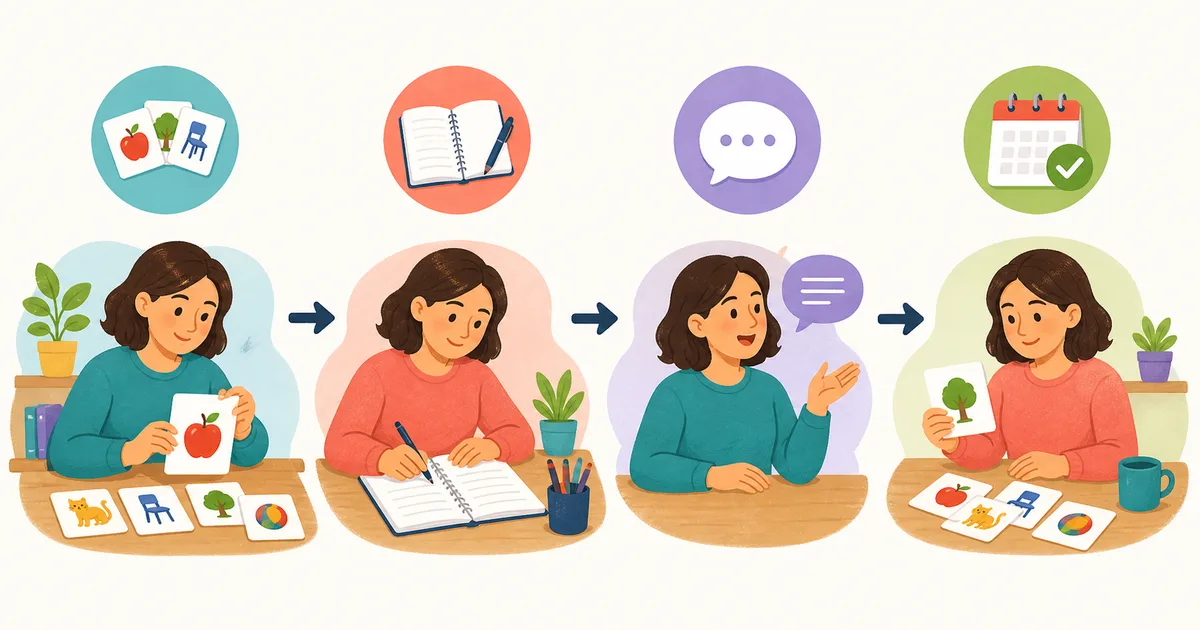
A1の500語のための6週間プラン
1〜2週目: 人、家、食べ物、頻出動詞、疑問詞を学びます。一日8〜10語を目指します。
3〜4週目: 移動、買い物、時間、服、健康、簡単な説明語を加えます。毎日、自分に関係する文を四つ作ります。
5〜6週目: 全リストを混ぜたグループで復習します。食べ物の注文、道を聞く、自己紹介、日課を話す短い会話を練習します。
昨日のグループの大部分を見ずに思い出せるまで、新しい単語を増やさないでください。Linglifyの間隔反復スケジュールなら、短い復習を続けやすくなります。
練習する語彙
これらのA1単語をLinglifyに保存し、それぞれで自分に関係する文を作りましょう。目標は完璧な翻訳ではなく、必要なときに単語を使えることです。
abuse
名詞
虐待, 乱用
例
- It's important to report any signs of child abuse to the authorities.
- The investigation revealed serious abuse of power by government officials.
actually
副詞
実際に, 本当に
例
- I thought the meeting was today, but it's actually scheduled for tomorrow.
- The book looks boring, but it's actually quite interesting and engaging.
affection
名詞
愛情, 親しみ
例
- The child showed deep affection for his grandmother who raised him.
- Their mutual affection was evident to everyone who saw them together.
agreement
名詞
合意, 協定, 契約
例
- The trade agreement will benefit both countries' economic development significantly.
- There was general agreement among the committee members about the proposed changes.
airport
名詞
空港
例
- International airports handle millions of travelers and tons of cargo annually.
- We need to arrive at the airport two hours before our departure time.
alternate
形容詞
交互の, 代わりの, 交代制の
例
- The parking lot uses alternate spaces for cars and motorcycles.
- We need an alternate plan in case the weather doesn't cooperate.
announce
動詞
発表する, 告知する, アナウンスする
例
- Airlines announce flight delays through the terminal's public address system.
- The principal will announce the scholarship winners during tomorrow's assembly.
apart
副詞
離れて, 別々に
例
- Please keep these chemicals apart to prevent dangerous reactions.
- The two friends lived far apart but stayed in regular contact.
apply
動詞
適用する, 申し込む, 適用
例
- Apply pressure to the wound to stop the bleeding immediately.
- Students can apply for financial aid to help pay tuition costs.
arrest
名詞
逮捕
例
- He was under arrest for suspected involvement in the robbery.
- The arrest of the criminal was reported on the evening news.
attend
動詞
出席する, 参加する, 世話をする
例
- All students must attend classes regularly to pass their courses.
- The nurse will attend to the patient's needs throughout the night.
ballet
名詞
バレエ
例
- She studied ballet for many years before becoming a professional dancer.
- The ballet performance featured graceful movements and beautiful costumes.
basis
名詞
基礎, 土台
例
- The selection process is conducted on the basis of merit alone.
- Trust forms the basis of any successful relationship or partnership.
bedroom
名詞
寝室
例
- She decorated her bedroom with posters and colorful curtains.
- The master bedroom has a beautiful view of the garden.
biotechnology
名詞
バイオテクノロジー
例
- Agricultural biotechnology helps create disease-resistant crop varieties.
- Biotechnology companies develop new medical treatments and therapies.
borrow
動詞
借りる
例
- Can I borrow your pen for a few minutes?
- He had to borrow money from the bank for repairs.
browser
名詞
ブラウザ
例
- Chrome is the most popular web browser worldwide.
- The store welcomes browsers as well as buyers.
candidate
名詞
候補者, 志願者
例
- Each presidential candidate presented their policy plans to voters.
- The job candidate impressed the interview panel with her experience.
cat
名詞
猫
例
- The fluffy cat sat peacefully by the warm fireplace in the evening.
- Their pet cat loves to play with colorful balls of yarn.
cherished
形容詞
大切にされた, 愛された, 宝物の
例
- His cherished dream of becoming a pilot finally came true.
- The old photograph was her most cherished possession from childhood.
cloudy
形容詞
曇った, 曇りがちな, 曇りの
例
- The water became cloudy after stirring up sediment from the bottom.
- The weather forecast predicts cloudy skies with possible rain this evening.
commute
動詞
通勤する, 通学する
例
- Public transportation helps people commute efficiently reducing traffic congestion.
- Workers commute daily between suburban homes and downtown offices.
confirmation
名詞
確認, 確証
例
- She received confirmation of her job application via email yesterday.
- The confirmation ceremony was held at the local church on Sunday.
correspond
動詞
一致する, 対応する, 通信する
例
- She corresponds regularly with her friends who live in different countries.
- The witness testimony should correspond with the physical evidence found at the scene.
custom
名詞
習慣, 慣習, カスタム
例
- It is a local custom to remove shoes before entering homes.
- The wedding ceremony followed traditional customs from their culture.
次にすること
- A1語彙ライブラリで、扱いやすいグループから始めます。
- 新しい単語を毎日使う簡単な英語文で使います。
- 次のレベルを計画する際は、CEFRレベル別の英語語彙に戻ります。
- 日常の基礎が固まったら、B2英語語彙:500語で中上級の語彙を見てみましょう。
- 今日八つの単語を追加し、明日は自分の生活について四つの文を声に出します。
よくある質問
英語A1には500語で十分ですか?
単純な文法と頻出の文型も知っていれば、高頻度の約500語で多くの基本場面に対応できます。新しい単語には出会いますが、すでにコミュニケーションを始め、文脈から学べます。
一日にA1単語をいくつ学べばよいですか?
復習して短い文を作るなら、一日8〜10語が現実的です。大量の毎日のリストを忘れるより、少ない単語をよく覚える方が良いです。
先に文法と語彙のどちらを学ぶべきですか?
両方を少しずつ一緒に学びます。文法は単語を文につなぎ、語彙は伝える意味を与えます。
A1語彙の後は何を学べばよいですか?
A2文法、日常会話、簡単なリーディングとリスニング、テーマ別語彙へ進みます。次のレベルを加えながらもA1を復習してください。強い基礎はその後のすべての学習を支えます。