
話すための基礎英語:必須の単語とフレーズ
話すための基礎英語は、長い会話を丸暗記することではありません。自分の生活に合わせて変えられる、小さな単語とフレーズの型を持つことです。いくつかの確かな型があれば、あいさつをし、助けを求め、意見を伝え、簡単な予定を立てられます。
このガイドは、最初の実際の会話で使える英語に焦点を当てます。
- レベル: A1–A2からB1へ
- 焦点: 文法用語ではなく日常会話
- 対象: 単語は分かるのに話す時にためらう学習者
- 学習目標: 一つのフレーズの型を覚え、自分の内容に変える
ゼロから始める場合は、まず初心者のための英語で土台を作りましょう。その後、A2語彙ライブラリで少量ずつ練習できます。
役立つ会話の型から始める
会話の型は、一部だけを変えられる短い構文です。毎回、文を最初から作る必要はありません。
| 型 | 使う場面 | 自分向けの例 |
|---|---|---|
| I’m from … | 出身を言う | I’m from Brazil. |
| I work as a … | 仕事を話す | I work as a designer. |
| I’m interested in … | 興味を伝える | I’m interested in photography. |
| Could you …? | 丁寧に頼む | Could you repeat that? |
| I’d like to … | したいことを言う | I’d like to practise more. |
型をゆっくり言ってから、一語だけ変えてください。この反復が、暗記した感じを出さずに流暢さを作ります。
自己紹介と日常の質問
次の表現は、短い会話を始め、続け、終える助けになります。
| フレーズ | 意味・目的 | 例文 |
|---|---|---|
| Nice to meet you. | 初対面のあいさつ | Nice to meet you. I’m Mina. |
| How’s it going? | 親しみのあるあいさつ | How’s it going today? |
| What do you do? | 仕事や勉強について聞く | What do you do for work? |
| Where are you from? | 出身を聞く | Where are you from originally? |
| What do you mean? | 説明を求める | Sorry, what do you mean? |
速く話すことが目的ではありません。一度止まり、答えを聞き、追加の質問を一つしましょう。急いで完璧な文を言うより、落ち着いた2分間の会話の方が役立ちます。
助けや説明を求める
上手な話し手でも、すぐに全てを理解するわけではありません。会話を続けるために明確なフレーズを使います。
| フレーズ | 使い方 | 例文 |
|---|---|---|
| Could you say that again? | 繰り返しを頼む | Could you say that again, please? |
| Could you speak more slowly? | ゆっくり話してもらう | Could you speak more slowly? |
| How do you spell that? | 単語や名前のつづりを確認する | How do you spell your surname? |
| I don’t understand yet. | まだ分からないと丁寧に伝える | I don’t understand yet. Could you show me? |
| Do you mean …? | 理解を確認する | Do you mean the meeting is tomorrow? |
これらのフレーズは考える時間を作ります。失敗のしるしではなく、実際の会話のための道具です。
意見と気持ちを伝える
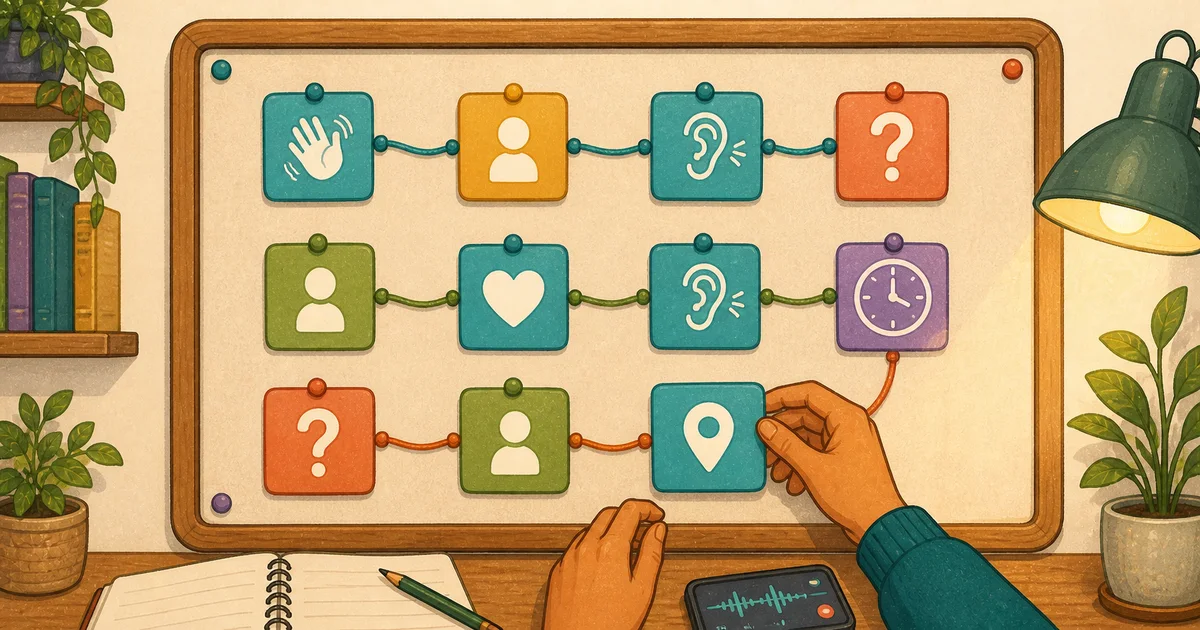
単純な意見表現があれば、語彙がまだ少なくても会話に参加できます。
| フレーズ | 意味・目的 | 例文 |
|---|---|---|
| I think … | 意見を言う | I think this film is funny. |
| In my opinion, … | 少しフォーマルに意見を言う | In my opinion, online classes are useful. |
| I agree. | 同意を示す | I agree. That sounds fair. |
| I’m not sure. | やわらかく不確かさを示す | I’m not sure. Maybe we should check. |
| That sounds great. | 前向きに答える | A walk after work? That sounds great. |
できれば短い理由を加えましょう。 “I think it is useful because it saves time.” この小さな一歩で答えが明確になり、相手も返しやすくなります。
会話を続ける方法
興味を示すために長い答えは必要ありません。短い反応に小さな追加質問を一つ付けると、相手は話し続けやすくなり、自分にも考える時間ができます。
| 短い反応 | 追加質問 | 例 |
|---|---|---|
| Really? | How was it? | “I went to a concert.” “Really? How was it?” |
| That sounds nice. | Who did you go with? | “I visited my cousin.” “That sounds nice. Who did you go with?” |
| I see. | What happened next? | “My train was late.” “I see. What happened next?” |
| Me too. | How often do you do that? | “I like cooking.” “Me too. How often do you do that?” |
| I’m not sure. | What do you think? | “Is this the best option?” “I’m not sure. What do you think?” |
このような短い組み合わせは、完璧な長文を作ろうとするより簡単です。まとまりとして覚え、相手と話題に合うものを使いましょう。
そのまま使い変えられる二つのミニ会話
短いモデルを見ると、知っている型が実際のやり取りでどうつながるかが分かります。自分の町、仕事、予定、興味に置き換えてください。
初対面のあいさつ
- A: Hi, I’m Leo. Nice to meet you.
- B: Nice to meet you too. Where are you from?
- A: I’m from Madrid. What about you?
- B: I’m from Seoul. I’m interested in photography.
予定を決める
- A: Are you free on Saturday?
- B: I think so. What time works for you?
- A: Let’s meet at three near the station.
- B: Great. That sounds good.
両方の役を声に出して読んでみましょう。その後、曜日、場所、活動、質問のどれか一つだけを変えます。少ない表現から多くの役立つ会話が作れます。
考える時間を作る簡単なつなぎ表現
英語の母語話者も考える時には間を取ります。丁寧なつなぎ表現を少し知っていると、黙り込まずに発話の順番を保てます。
| つなぎ表現 | 使う時 |
|---|---|
| Well, … | 短い意見や答えの前 |
| Let me think. | 少し考える時間が必要な時 |
| I mean, … | 考えをより明確に説明したい時 |
| How can I say this? | 内容は分かるが単語が出ない時 |
つなぎ表現を一つ使い、その後は簡単な文を続けましょう。すべての単語を思い出すまで待つ必要はありません。会話を止めない方が、たいていコミュニケーションはうまくいきます。
予定と時間を話す
会話は、時間、場所、都合といった簡単な予定の話に進むことが多いです。
| フレーズ | 使い方 | 例文 |
|---|---|---|
| Are you free on …? | 都合を聞く | Are you free on Saturday? |
| What time works for you? | 時間を決める | What time works for you? |
| Let’s meet at … | 会う時間を提案する | Let’s meet at six. |
| I’ll be there in … | 到着時刻を伝える | I’ll be there in ten minutes. |
| Can we change the plan? | 予定を変える | Can we change the plan to Sunday? |
一人で勉強している時も、予定を声に出して作ってみてください。明日の実際の予定を、時間、場所、一つの行動で説明します。
短いスピーキング練習サイクル
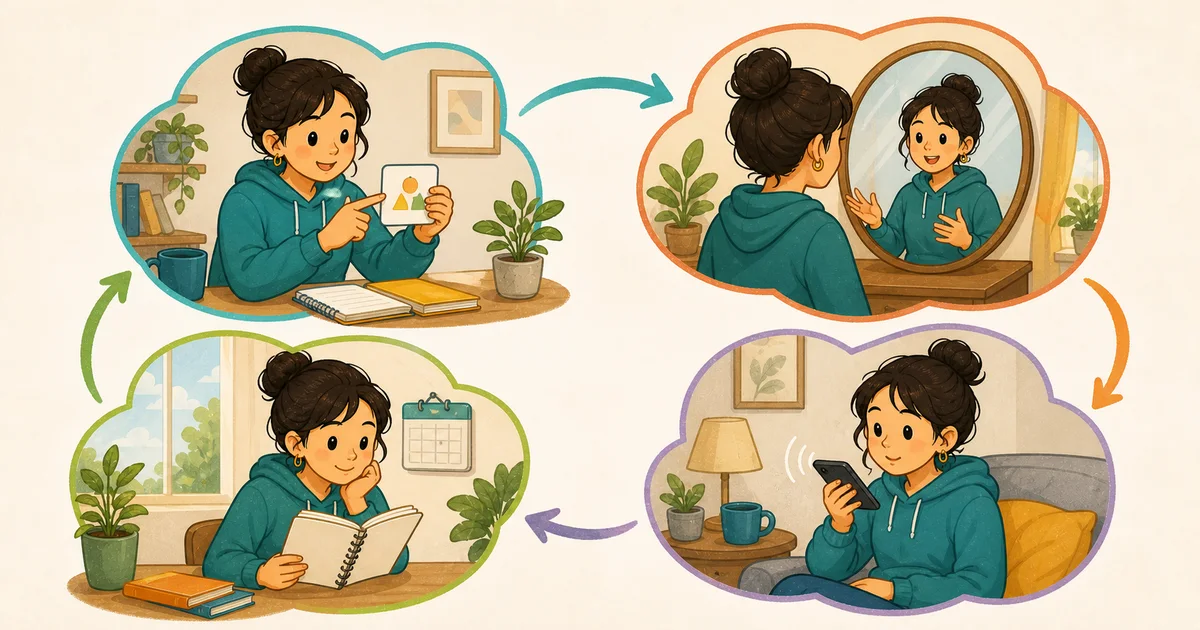
この10分のルーティンを週に4回試してみましょう。
- フレーズを三つ選ぶ。 それぞれを二回声に出して読みます。
- 自分の内容にする。 名前、住んでいる場所、仕事、予定に置き換えます。
- 短い答えを録音する。 一語ずつ直そうとせず、30秒間話します。
- 聞いて繰り返す。 一度聞き、一文を改善し、重要な語をLinglifyに保存します。
場面別の日常語彙を増やすには日常で使う英単語を使ってください。短い答えが楽になったら、B1語彙ライブラリへ進みましょう。
練習する語彙
これらの役立つ単語をLinglifyに保存し、短い会話を作りましょう。次のグループに進む前に、各語を自分についての本当の文で一度使うことを目指してください。
abuse
名詞
虐待, 乱用
例
- It's important to report any signs of child abuse to the authorities.
- The investigation revealed serious abuse of power by government officials.
actually
副詞
実際に, 本当に
例
- I thought the meeting was today, but it's actually scheduled for tomorrow.
- The book looks boring, but it's actually quite interesting and engaging.
affection
名詞
愛情, 親しみ
例
- The child showed deep affection for his grandmother who raised him.
- Their mutual affection was evident to everyone who saw them together.
agreement
名詞
合意, 協定, 契約
例
- The trade agreement will benefit both countries' economic development significantly.
- There was general agreement among the committee members about the proposed changes.
airport
名詞
空港
例
- International airports handle millions of travelers and tons of cargo annually.
- We need to arrive at the airport two hours before our departure time.
alternate
形容詞
交互の, 代わりの, 交代制の
例
- The parking lot uses alternate spaces for cars and motorcycles.
- We need an alternate plan in case the weather doesn't cooperate.
announce
動詞
発表する, 告知する, アナウンスする
例
- Airlines announce flight delays through the terminal's public address system.
- The principal will announce the scholarship winners during tomorrow's assembly.
apart
副詞
離れて, 別々に
例
- Please keep these chemicals apart to prevent dangerous reactions.
- The two friends lived far apart but stayed in regular contact.
apply
動詞
適用する, 申し込む, 適用
例
- Apply pressure to the wound to stop the bleeding immediately.
- Students can apply for financial aid to help pay tuition costs.
arrest
名詞
逮捕
例
- He was under arrest for suspected involvement in the robbery.
- The arrest of the criminal was reported on the evening news.
attend
動詞
出席する, 参加する, 世話をする
例
- All students must attend classes regularly to pass their courses.
- The nurse will attend to the patient's needs throughout the night.
ballet
名詞
バレエ
例
- She studied ballet for many years before becoming a professional dancer.
- The ballet performance featured graceful movements and beautiful costumes.
basis
名詞
基礎, 土台
例
- The selection process is conducted on the basis of merit alone.
- Trust forms the basis of any successful relationship or partnership.
bedroom
名詞
寝室
例
- She decorated her bedroom with posters and colorful curtains.
- The master bedroom has a beautiful view of the garden.
biotechnology
名詞
バイオテクノロジー
例
- Agricultural biotechnology helps create disease-resistant crop varieties.
- Biotechnology companies develop new medical treatments and therapies.
borrow
動詞
借りる
例
- Can I borrow your pen for a few minutes?
- He had to borrow money from the bank for repairs.
browser
名詞
ブラウザ
例
- Chrome is the most popular web browser worldwide.
- The store welcomes browsers as well as buyers.
candidate
名詞
候補者, 志願者
例
- Each presidential candidate presented their policy plans to voters.
- The job candidate impressed the interview panel with her experience.
cat
名詞
猫
例
- The fluffy cat sat peacefully by the warm fireplace in the evening.
- Their pet cat loves to play with colorful balls of yarn.
cherished
形容詞
大切にされた, 愛された, 宝物の
例
- His cherished dream of becoming a pilot finally came true.
- The old photograph was her most cherished possession from childhood.
cloudy
形容詞
曇った, 曇りがちな, 曇りの
例
- The water became cloudy after stirring up sediment from the bottom.
- The weather forecast predicts cloudy skies with possible rain this evening.
commute
動詞
通勤する, 通学する
例
- Public transportation helps people commute efficiently reducing traffic congestion.
- Workers commute daily between suburban homes and downtown offices.
confirmation
名詞
確認, 確証
例
- She received confirmation of her job application via email yesterday.
- The confirmation ceremony was held at the local church on Sunday.
correspond
動詞
一致する, 対応する, 通信する
例
- She corresponds regularly with her friends who live in different countries.
- The witness testimony should correspond with the physical evidence found at the scene.
custom
名詞
習慣, 慣習, カスタム
例
- It is a local custom to remove shoes before entering homes.
- The wedding ceremony followed traditional customs from their culture.
次にすること
- A2語彙ライブラリで基礎語を五つ選びます。
- 語彙の土台を固めるために初心者のための基本英単語を読みます。
- 毎日一つ短い答えを練習し、足りなかった語をLinglifyに加えます。
- 簡単な会話が続けられるようになったら、B1語彙ライブラリで表現の幅を広げます。
FAQ
単語をあまり知らなくても英語を話し始められますか?
“I’m from …”、 “I think …”、 “Could you …?” のような短い型を使いましょう。長いオリジナル文をすぐに作ろうとせず、自分の情報を加えます。反復で型が自然に出るようになります。
話すためには単語とフレーズのどちらを学ぶべきですか?
両方を一緒に学びましょう。単語は選択肢を増やし、フレーズはその単語が実際の文でどう使われるかを示します。make a plan や ask a question のようなまとまりを保存してください。
聞き取れなかった時に繰り返しを頼んでも大丈夫ですか?
もちろんです。“Could you say that again?” や “Could you speak more slowly?” は実際の会話で普通に使われます。学んでいる途中でも会話を続ける助けになります。
スピーキングはどのくらいの頻度で練習すればよいですか?
短く定期的な練習が効果的です。声に出し、個人的な例を作り、同じフレーズに後で戻るなら、週4回10分でも習慣を作れます。