日常英語に必須の英単語:場面別ボキャブラリー完全ガイド
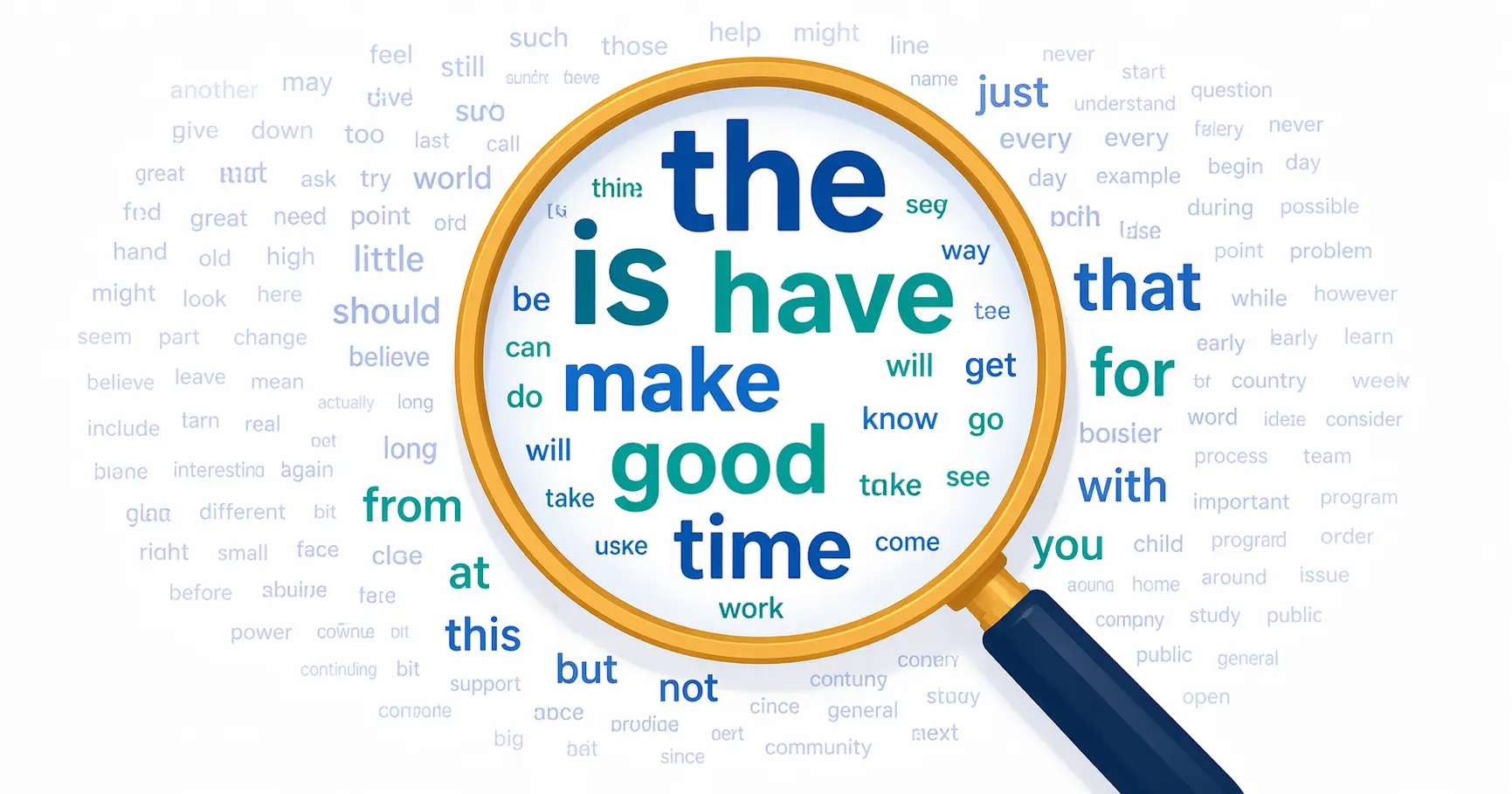
英語を話すのに5万語も覚える必要はありません。研究によると、最も頻度の高い2,000〜3,000語で、日常英会話の約90〜95%をカバーできます。残りの5〜10%は出会った時に覚えればいいのです。
本当に大切な問いは「何語必要?」ではなく「どの単語が必要?」です。実用的で頻出度の高い500語を覚えて実際に文で使える学習者は、ランダムな単語帳から5,000語を暗記しても文が作れない人より、ずっと上手にコミュニケーションできます。
このガイドでは、日常で使える英単語500語以上を、実際にその単語が必要になる場面別に整理して紹介します。すべての単語に意味、品詞、実生活で使える例文が付いています。
このガイドの構成
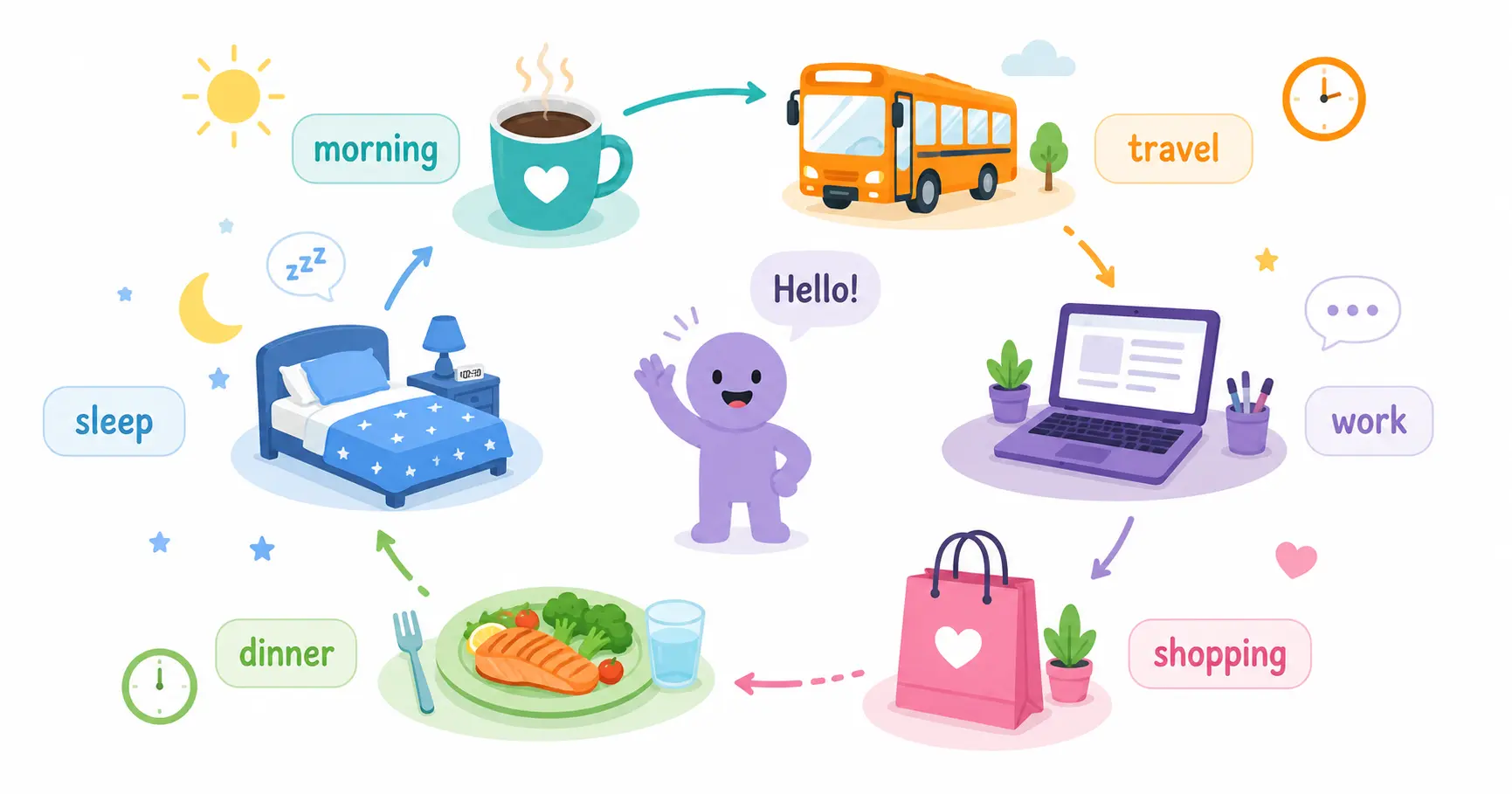
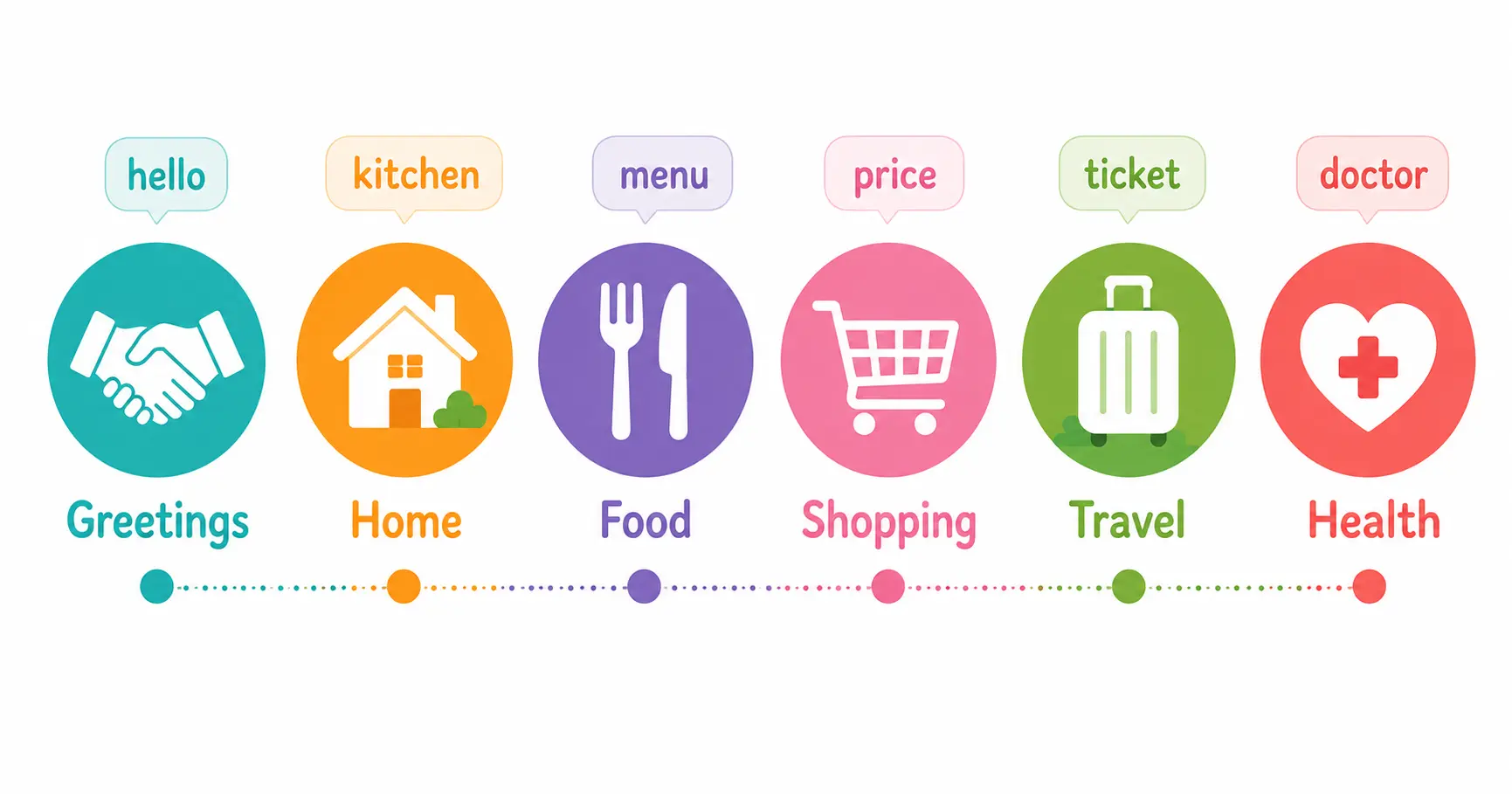
アルファベット順(実際には使いにくい)ではなく、日常生活の場面別 — 実際にその単語を使うコンテキストで分類しています:
| セクション | 内容 | 語数 |
|---|---|---|
| 挨拶・雑談 | 人と会う、自己紹介 | 約40語 |
| 家庭・家族 | 家事、日課、親族 | 約50語 |
| 食事・料理 | 食材、外食、レストラン | 約60語 |
| 買い物・お金 | 店、値段、支払い | 約40語 |
| 仕事・オフィス | 職業、会議、メール | 約50語 |
| 旅行・交通 | 道案内、乗り物、宿泊 | 約50語 |
| 健康・体 | 体の部位、症状、病院 | 約50語 |
| 感情・意見 | 気持ち、賛成/反対 | 約40語 |
| 時間・数量 | 曜日、月、量 | 約40語 |
| テクノロジー・通信 | 機器、ネット、SNS | 約40語 |
| 天気・自然 | 気候、季節、アウトドア | 約30語 |
| 教育・学習 | 学校、勉強、試験 | 約40語 |
セクション1:挨拶・雑談
毎日最初に使う言葉 — 人に会う、会話を始める、基本的な社交の場面です。
基本の挨拶
| 単語・フレーズ | 意味 | 例文 |
|---|---|---|
| hello / hi | 挨拶の言葉 | Hi, how are you? |
| good morning | 午前中の挨拶 | Good morning, everyone. |
| good afternoon | 午後の挨拶 | Good afternoon, may I help you? |
| good evening | 夕方・夜の挨拶 | Good evening, welcome to the restaurant. |
| goodbye / bye | 別れの言葉 | Goodbye, see you tomorrow! |
| see you later | カジュアルな別れの言葉 | See you later, have a good day! |
| how are you? | 相手の状態を聞く | How are you doing today? |
| fine | 元気;問題ない | I’m fine, thanks for asking. |
| nice to meet you | 初対面の挨拶 | Nice to meet you, I’m Alex. |
| thank you / thanks | 感謝を伝える | Thank you for your help. |
| please | 丁寧にお願いする時に使う | Can I have some water, please? |
| sorry | 謝罪;注意を引く | Sorry, could you repeat that? |
| excuse me | 注意を引く;通り過ぎる時 | Excuse me, where is the bathroom? |
雑談に使える表現
| 単語 | 品詞 | 意味 | 例文 |
|---|---|---|---|
| name | 名詞 | 名前 | What’s your name? |
| from | 前置詞 | 出身地 | Where are you from? |
| live | 動詞 | 住む | I live in Tokyo. |
| work | 動詞 / 名詞 | 働く;仕事 | I work at a tech company. |
| like | 動詞 | 好む | I like reading and cooking. |
| friend | 名詞 | 友人 | She’s my best friend. |
| family | 名詞 | 家族 | My family lives in Brazil. |
| busy | 形容詞 | 忙しい | Sorry, I’ve been really busy. |
| free | 形容詞 | 暇な;無料 | Are you free this weekend? |
| enjoy | 動詞 | 楽しむ | I enjoy walking in the park. |
| favorite | 形容詞 | お気に入りの | What’s your favorite movie? |
| hobby | 名詞 | 趣味 | My hobby is photography. |
| weekend | 名詞 | 週末 | What are your plans for the weekend? |
| holiday | 名詞 | 休日;休暇 | We’re going on holiday next month. |
| fun | 名詞 / 形容詞 | 楽しみ;楽しい | The party was really fun. |
| interesting | 形容詞 | 興味深い | That’s a very interesting idea. |
セクション2:家庭・家族
家族の呼び方
| 単語 | 意味 | 例文 |
|---|---|---|
| mother / mom | 母 | My mom is a teacher. |
| father / dad | 父 | My dad works from home. |
| parents | 両親 | My parents live in London. |
| brother | 兄弟 | I have an older brother. |
| sister | 姉妹 | My sister is 12 years old. |
| husband | 夫 | Her husband is a doctor. |
| wife | 妻 | His wife works at a bank. |
| children / kids | 子供 | They have three children. |
| son | 息子 | Their son starts school this year. |
| daughter | 娘 | Our daughter loves music. |
| grandparents | 祖父母 | I visit my grandparents every Sunday. |
| uncle | おじ | My uncle lives in Canada. |
| aunt | おば | My aunt is coming to visit. |
| cousin | いとこ | I have 10 cousins. |
| neighbor | 隣人 | Our neighbor is very friendly. |
家と日課
| 単語 | 品詞 | 意味 | 例文 |
|---|---|---|---|
| house / home | 名詞 | 家 | I’ll be home by 6 PM. |
| apartment | 名詞 | アパート;マンション | We rent a small apartment downtown. |
| room | 名詞 | 部屋 | The living room is downstairs. |
| kitchen | 名詞 | 台所 | She’s cooking in the kitchen. |
| bedroom | 名詞 | 寝室 | The apartment has two bedrooms. |
| bathroom | 名詞 | 浴室;トイレ | The bathroom is on the left. |
| door | 名詞 | ドア | Please close the door. |
| window | 名詞 | 窓 | Open the window — it’s hot. |
| key | 名詞 | 鍵 | I forgot my keys at home. |
| clean | 動詞 / 形容詞 | 掃除する;きれい | I clean the house every Saturday. |
| cook | 動詞 | 料理する | I usually cook dinner at 7. |
| wake up | 動詞 | 起きる | I wake up at 6:30 every morning. |
| sleep | 動詞 / 名詞 | 眠る;睡眠 | I need at least 7 hours of sleep. |
| shower | 名詞 / 動詞 | シャワー | I take a shower after the gym. |
| breakfast | 名詞 | 朝食 | What did you have for breakfast? |
| lunch | 名詞 | 昼食 | Let’s go out for lunch. |
| dinner | 名詞 | 夕食 | Dinner is ready! |
セクション3:食事・料理
よく使う食べ物
| 単語 | カテゴリ | 例文 |
|---|---|---|
| bread | 穀物 | I buy fresh bread every morning. |
| rice | 穀物 | Rice is the main dish in many countries. |
| pasta | 穀物 | She made pasta with tomato sauce. |
| chicken | 肉 | We’re having chicken for dinner. |
| beef | 肉 | This beef stew is delicious. |
| fish | 魚介 | I eat fish twice a week. |
| egg | たんぱく質 | I’ll have two eggs for breakfast. |
| milk | 乳製品 | Do you want milk in your coffee? |
| cheese | 乳製品 | This cheese is from France. |
| butter | 乳製品 | Spread some butter on the bread. |
| apple | 果物 | An apple a day keeps the doctor away. |
| banana | 果物 | I had a banana for a snack. |
| orange | 果物 | Would you like some orange juice? |
| tomato | 野菜 | Add the tomatoes to the salad. |
| potato | 野菜 | Baked potatoes are easy to make. |
| onion | 野菜 | Chop the onion into small pieces. |
| salad | 料理 | I’ll have a salad for lunch. |
| soup | 料理 | Hot soup is perfect on cold days. |
| sugar | 調味料 | How much sugar do you take? |
| salt | 調味料 | The soup needs a little more salt. |
外食
| 単語・フレーズ | 意味 | 例文 |
|---|---|---|
| menu | メニュー | Can I see the menu, please? |
| order | 注文する | Are you ready to order? |
| waiter | ウェイター | The waiter brought our drinks. |
| bill / check | 会計 | Could we have the bill, please? |
| tip | チップ | We left a 15% tip. |
| reservation | 予約 | I’d like to make a reservation for two. |
| delicious | とてもおいしい | The food was absolutely delicious. |
| spicy | 辛い | Is this dish very spicy? |
| fresh | 新鮮な | The vegetables are very fresh today. |
| hungry | 空腹な | I’m really hungry — let’s eat. |
| thirsty | のどが渇いた | I’m thirsty. Can I have some water? |
| full | 満腹の | I’m full, I can’t eat any more. |
セクション4:買い物・お金
| 単語 | 品詞 | 意味 | 例文 |
|---|---|---|---|
| buy | 動詞 | 買う | I need to buy some groceries. |
| sell | 動詞 | 売る | They sell handmade jewelry. |
| pay | 動詞 | 払う | Can I pay by card? |
| price | 名詞 | 値段 | What’s the price of this jacket? |
| cost | 動詞 / 名詞 | 費用がかかる;費用 | How much does this cost? |
| cheap | 形容詞 | 安い | The food there is cheap and good. |
| expensive | 形容詞 | 高い | This restaurant is too expensive. |
| free | 形容詞 | 無料の | Admission to the museum is free. |
| discount | 名詞 | 割引 | There’s a 20% discount this week. |
| sale | 名詞 | セール | The store is having a big sale. |
| cash | 名詞 | 現金 | Do you accept cash? |
| card | 名詞 | クレジット/デビットカード | I’ll pay by card, please. |
| change | 名詞 | おつり;小銭 | Keep the change. |
| receipt | 名詞 | レシート | Can I have a receipt, please? |
| size | 名詞 | サイズ | What size do you wear? |
| try on | 句動詞 | 試着する | Can I try on this shirt? |
| return | 動詞 | 返品する | I’d like to return this item. |
| shop / store | 名詞 | 店 | There’s a bookshop on the corner. |
| customer | 名詞 | お客 | The customer is always right. |
| bag | 名詞 | 袋 | Do you need a bag? |
セクション5:仕事・オフィス
| 単語 | 品詞 | 意味 | 例文 |
|---|---|---|---|
| job | 名詞 | 仕事 | She got a new job at Google. |
| career | 名詞 | キャリア | He’s building a career in finance. |
| company | 名詞 | 会社 | The company has 500 employees. |
| office | 名詞 | オフィス | I go to the office three days a week. |
| boss | 名詞 | 上司 | My boss is very supportive. |
| colleague | 名詞 | 同僚 | I’m having lunch with a colleague. |
| meeting | 名詞 | 会議 | We have a meeting at 10 AM. |
| deadline | 名詞 | 締め切り | The deadline is next Friday. |
| project | 名詞 | プロジェクト | I’m working on a big project. |
| task | 名詞 | タスク;作業 | I have three tasks to finish today. |
| schedule | 名詞 / 動詞 | スケジュール;予定を立てる | Check my schedule for tomorrow. |
| salary | 名詞 | 給料 | The salary is competitive. |
| hire | 動詞 | 雇う | They plan to hire 20 people. |
| resign / quit | 動詞 | 辞職する | She resigned last week. |
| promote | 動詞 | 昇進させる | He was promoted to manager. |
| apply | 動詞 | 応募する | I applied for three positions. |
| interview | 名詞 / 動詞 | 面接 | The interview went really well. |
| experience | 名詞 | 経験 | She has 10 years of experience. |
| team | 名詞 | チーム | Our team has eight members. |
| 名詞 / 動詞 | メール | I’ll send you an email tonight. | |
| report | 名詞 / 動詞 | 報告書;報告する | The report is due tomorrow. |
| client | 名詞 | 顧客 | We’re meeting an important client. |
セクション6:旅行・交通
| 単語 | 品詞 | 意味 | 例文 |
|---|---|---|---|
| airport | 名詞 | 空港 | We need to be at the airport by 5 AM. |
| flight | 名詞 | フライト | The flight to London takes 7 hours. |
| ticket | 名詞 | チケット | I booked a round-trip ticket. |
| passport | 名詞 | パスポート | Don’t forget your passport. |
| luggage / baggage | 名詞 | 荷物 | My luggage is too heavy. |
| hotel | 名詞 | ホテル | We booked a hotel near the beach. |
| reservation | 名詞 | 予約 | I have a reservation under Smith. |
| check in | 句動詞 | チェックインする | You can check in from 3 PM. |
| check out | 句動詞 | チェックアウトする;見る | We need to check out by 11 AM. |
| train | 名詞 | 電車 | The train leaves at 8:15. |
| bus | 名詞 | バス | Take bus number 42 to the center. |
| taxi / cab | 名詞 | タクシー | Let’s take a taxi to the restaurant. |
| subway / metro | 名詞 | 地下鉄 | The subway is faster than the bus. |
| station | 名詞 | 駅 | The train station is nearby. |
| map | 名詞 | 地図 | Can you show me on the map? |
| direction | 名詞 | 方向;道順 | Can you give me directions? |
| left / right | 方向 | Turn left at the traffic light. | | straight | 副詞 | まっすぐ | Go straight for two blocks. | | near / far | 形容詞/副詞 | 近い / 遠い | Is the hotel far from here? | | arrival | 名詞 | 到着 | Our arrival time is 3 PM. | | departure | 名詞 | 出発 | Check the departure board. | | delay | 名詞 / 動詞 | 遅延;遅らせる | The flight has a 2-hour delay. | | cancel | 動詞 | キャンセルする | They cancelled the train due to weather. | | border | 名詞 | 国境 | We crossed the border at noon. |
セクション7:健康・体
体の部位
| 単語 | 意味 | 例文 |
|---|---|---|
| head | 頭 | I have a headache. |
| face | 顔 | She has a kind face. |
| eye | 目 | My eyes are tired from the screen. |
| ear | 耳 | I have an earache. |
| nose | 鼻 | My nose is running. |
| mouth | 口 | Open your mouth, please. |
| tooth / teeth | 歯 | I brush my teeth twice a day. |
| neck | 首 | My neck is stiff. |
| shoulder | 肩 | He hurt his shoulder. |
| arm | 腕 | She broke her arm skiing. |
| hand | 手 | Wash your hands before eating. |
| finger | 指 | I cut my finger chopping vegetables. |
| back | 背中 | My back hurts from sitting all day. |
| stomach | 胃;お腹 | I have a stomachache. |
| leg | 脚 | My legs are tired from running. |
| knee | 膝 | He injured his knee playing football. |
| foot / feet | 足 | My feet are sore from walking. |
健康・医療
| 単語 | 品詞 | 意味 | 例文 |
|---|---|---|---|
| sick / ill | 形容詞 | 体調が悪い | I feel sick today — I can’t go to work. |
| pain | 名詞 | 痛み | I have a sharp pain in my chest. |
| fever | 名詞 | 熱 | She has a high fever. |
| cold | 名詞 | 風邪 | I caught a cold last week. |
| cough | 名詞 / 動詞 | 咳;咳をする | I’ve had this cough for a week. |
| medicine | 名詞 | 薬 | Take this medicine twice a day. |
| doctor | 名詞 | 医者 | I need to see a doctor. |
| hospital | 名詞 | 病院 | He was taken to the hospital. |
| appointment | 名詞 | 予約 | I have a doctor’s appointment at 3. |
| prescription | 名詞 | 処方箋 | The doctor gave me a prescription. |
| allergy | 名詞 | アレルギー | I have an allergy to peanuts. |
| rest | 名詞 / 動詞 | 休息;休む | You need rest — stay in bed. |
| healthy | 形容詞 | 健康な | Eating vegetables keeps you healthy. |
| exercise | 名詞 / 動詞 | 運動 | Regular exercise is important. |
セクション8:感情・意見
| 単語 | 品詞 | 意味 | 例文 |
|---|---|---|---|
| happy | 形容詞 | 幸せな | I’m happy to see you. |
| sad | 形容詞 | 悲しい | The movie made me sad. |
| angry | 形容詞 | 怒っている | She was angry about the delay. |
| afraid / scared | 形容詞 | 怖い | I’m afraid of spiders. |
| surprised | 形容詞 | 驚いた | I was surprised by the news. |
| tired | 形容詞 | 疲れた | I’m so tired after work. |
| excited | 形容詞 | ワクワクしている | I’m excited about the trip! |
| worried | 形容詞 | 心配している | I’m worried about the exam. |
| bored | 形容詞 | 退屈な | I’m bored — let’s do something. |
| confused | 形容詞 | 混乱している | I’m confused by these instructions. |
| proud | 形容詞 | 誇りに思う | She’s proud of her daughter. |
| nervous | 形容詞 | 緊張している | I’m nervous about the presentation. |
| grateful | 形容詞 | 感謝している | I’m grateful for your help. |
| lonely | 形容詞 | 孤独な | He felt lonely in the new city. |
| hope | 動詞 / 名詞 | 望む;希望 | I hope you feel better soon. |
| agree | 動詞 | 賛成する | I agree with you completely. |
| disagree | 動詞 | 反対する | I respectfully disagree. |
| believe | 動詞 | 信じる | I believe you’re making the right choice. |
| prefer | 動詞 | 〜の方を好む | I prefer coffee to tea. |
| recommend | 動詞 | 勧める | I recommend the seafood pasta. |
| suggest | 動詞 | 提案する | I suggest we leave early. |
| opinion | 名詞 | 意見 | In my opinion, this plan is better. |
セクション9:時間・数量
時間の表現
| 単語・フレーズ | 意味 | 例文 |
|---|---|---|
| today | 今日 | I have a meeting today. |
| tomorrow | 明日 | Let’s talk tomorrow. |
| yesterday | 昨日 | I saw her yesterday. |
| now | 今 | I’m busy right now. |
| later | 後で | I’ll call you later. |
| soon | もうすぐ | The bus should arrive soon. |
| already | もう;すでに | I’ve already eaten. |
| still | まだ | Are you still at work? |
| yet | まだ(否定・疑問) | I haven’t finished yet. |
| always | いつも | She always arrives on time. |
| usually | たいてい | I usually wake up at 7. |
| sometimes | 時々 | Sometimes I work from home. |
| never | 決して〜ない | I never drink coffee after 6 PM. |
| early | 早い | We arrived early for the show. |
| late | 遅い | Sorry I’m late — traffic was bad. |
| ago | 〜前に | I moved here two years ago. |
数量の表現
| 単語 | 意味 | 例文 |
|---|---|---|
| many | たくさんの(可算) | How many people are coming? |
| much | たくさんの(不可算) | How much time do we have? |
| few | 少しの(可算) | Only a few seats are left. |
| little | 少しの(不可算) | There’s very little milk left. |
| some | いくつかの | Would you like some water? |
| any | いくらかの(疑問・否定) | Do you have any questions? |
| every / each | すべての;各 | Every student passed the exam. |
| all | 全部の | All the tickets are sold out. |
| enough | 十分な | We have enough food for everyone. |
| half | 半分 | Half the class was absent. |
| both | 両方の | Both options are good. |
| another | もうひとつの;別の | Can I have another cup of coffee? |
セクション10:テクノロジー・通信
| 単語 | 品詞 | 意味 | 例文 |
|---|---|---|---|
| phone | 名詞 | 電話 | I left my phone at home. |
| call | 動詞 / 名詞 | 電話する;電話 | I’ll call you after work. |
| message | 名詞 | メッセージ | I sent you a message. |
| internet | 名詞 | インターネット | The internet is down again. |
| website | 名詞 | ウェブサイト | Check our website for details. |
| app | 名詞 | アプリ | Download the app for free. |
| password | 名詞 | パスワード | I forgot my password. |
| search | 動詞 / 名詞 | 検索する;検索 | Search for “English vocabulary” on Google. |
| download | 動詞 | ダウンロードする | Download the file from your email. |
| upload | 動詞 | アップロードする | Upload the photo to the cloud. |
| screen | 名詞 | 画面 | My screen is cracked. |
| charge | 動詞 | 充電する | I need to charge my phone. |
| update | 動詞 / 名詞 | 更新する;アップデート | Update the app to the latest version. |
| share | 動詞 | 共有する | Share the link with your team. |
| connect | 動詞 | 接続する | I can’t connect to the Wi-Fi. |
| post | 動詞 / 名詞 | 投稿する;投稿 | She posted a photo on Instagram. |
| follow | 動詞 | フォローする | Follow us on social media. |
| online / offline | 形容詞/副詞 | オンライン / オフライン | The store is available both online and offline. |
セクション11:天気・自然
| 単語 | 品詞 | 意味 | 例文 |
|---|---|---|---|
| weather | 名詞 | 天気 | What’s the weather like today? |
| hot | 形容詞 | 暑い | It’s very hot outside — over 35°C. |
| cold | 形容詞 | 寒い | Dress warmly — it’s cold. |
| warm | 形容詞 | 暖かい | It’s warm and sunny today. |
| cool | 形容詞 | 涼しい | The evenings are getting cooler. |
| rain | 名詞 / 動詞 | 雨;雨が降る | It’s going to rain this afternoon. |
| snow | 名詞 / 動詞 | 雪;雪が降る | It snowed all night. |
| wind | 名詞 | 風 | The wind is very strong today. |
| cloudy | 形容詞 | 曇りの | It’s cloudy but not raining. |
| sunny | 形容詞 | 晴れの | It’s a beautiful sunny day. |
| storm | 名詞 | 嵐 | A big storm is coming tonight. |
| temperature | 名詞 | 気温 | The temperature dropped to –5°C. |
| season | 名詞 | 季節 | My favorite season is autumn. |
| spring | 名詞 | 春 | The flowers bloom in spring. |
| summer | 名詞 | 夏 | We’re going to the beach this summer. |
| autumn / fall | 名詞 | 秋 | The leaves change color in autumn. |
| winter | 名詞 | 冬 | Winters here are long and cold. |
| sky | 名詞 | 空 | The sky is perfectly clear tonight. |
セクション12:教育・学習
| 単語 | 品詞 | 意味 | 例文 |
|---|---|---|---|
| school | 名詞 | 学校 | My kids go to school nearby. |
| university | 名詞 | 大学 | She studied medicine at university. |
| student | 名詞 | 学生 | There are 30 students in the class. |
| teacher | 名詞 | 先生 | Our English teacher is from Australia. |
| class / lesson | 名詞 | 授業 | English class starts at 9 AM. |
| course | 名詞 | コース;講座 | I’m taking an online course. |
| study | 動詞 | 勉強する | I study English every day. |
| learn | 動詞 | 学ぶ | I want to learn Japanese next. |
| practice | 動詞 / 名詞 | 練習する;練習 | Practice makes perfect. |
| read | 動詞 | 読む | I read for 30 minutes before bed. |
| write | 動詞 | 書く | Write your name at the top. |
| speak | 動詞 | 話す | Can you speak more slowly? |
| listen | 動詞 | 聞く | Listen to the recording carefully. |
| understand | 動詞 | 理解する | I don’t understand this question. |
| exam / test | 名詞 | 試験 | The final exam is next Monday. |
| homework | 名詞 | 宿題 | I have a lot of homework tonight. |
| mistake | 名詞 | 間違い | Don’t be afraid of making mistakes. |
| improve | 動詞 | 上達する | My English has improved a lot. |
| vocabulary | 名詞 | 語彙 | Building your vocabulary takes time. |
| grammar | 名詞 | 文法 | English grammar can be confusing. |
| pronounce | 動詞 | 発音する | How do you pronounce this word? |
| translate | 動詞 | 翻訳する | Can you translate this for me? |
| dictionary | 名詞 | 辞書 | Look it up in the dictionary. |
練習用ボキャブラリー
以下の頻出日常単語25語をLinglifyの辞書に追加して、間隔反復で復習しましょう。
academy
名詞
学院, アカデミー
例
- She graduated from the military academy with honors last spring.
- The film academy recognizes outstanding achievements in cinema each year.
achievable
形容詞
達成可能な
例
- Setting achievable goals is important for maintaining motivation and confidence.
- The project timeline seems achievable if we work efficiently together.
adjective
名詞
形容詞
例
- In English grammar, an adjective describes or modifies a noun.
- The adjective 'beautiful' comes before the noun 'garden' in this sentence.
affordable
形容詞
手頃な, 買いやすい
例
- The government is working to provide affordable housing for low-income families.
- This restaurant offers delicious and affordable meals for college students.
amount
名詞
量, 総量, 額
例
- A small amount of sugar is needed to balance the acidity.
- The amount of homework assigned seems excessive for elementary school children.
assault
名詞
襲撃, 攻撃
例
- The army launched a fierce assault on the enemy fortress.
- The police arrested the man for assault and battery charges.
audience
名詞
聴衆, 観客, 視聴者
例
- Television shows depend on audience ratings to determine their success.
- The speaker engaged the audience with humor and interesting stories.
beam
名詞
光線, 梁
例
- A beam of sunlight streamed through the window brightening the room.
- The wooden beam supports the weight of the ceiling above.
biotechnology
名詞
バイオテクノロジー
例
- Agricultural biotechnology helps create disease-resistant crop varieties.
- Biotechnology companies develop new medical treatments and therapies.
brewery
名詞
醸造所
例
- She works as a quality control manager at brewery.
- The local brewery offers tours every Saturday afternoon.
carelessness
名詞
不注意, 不注意さ
例
- Her carelessness with money led to serious financial problems.
- The accident was caused by the pilot's carelessness during takeoff.
choose
動詞
選ぶ
例
- She will choose the dress that looks best for the wedding ceremony.
- Students must choose their courses carefully for next semester's schedule.
come
動詞
来る
例
- Please come to the meeting at three o'clock this afternoon.
- Spring will come early this year according to weather predictions.
continent
名詞
大陸
curry
名詞
カレー, カレー料理
例
- Indian curry dishes use many different spices to create complex flavors.
- She prepared a delicious chicken curry with rice for dinner.
department store
名詞
デパート
例
- Holiday shopping at the department store can be crowded and stressful.
- The department store sells everything from clothing to electronics.
disco
名詞
ディスコ, ダンスホール
例
- Disco music became extremely popular during the nineteen seventies era.
- The disco was crowded with young people dancing to energetic music.
earth
名詞
地球, 大地, 土
例
- Earth is the third planet from the sun in our solar system.
- Farmers plant seeds in rich earth to grow healthy crops.
exactly
副詞
正確に, まさに
例
- That's exactly what I was thinking about this important situation too.
- The train arrived exactly on time at nine fifteen this morning.
firearm
名詞
火器
例
- Police officers receive extensive training in firearm safety and usage.
- The museum displays historical firearms from different time periods.
generous
形容詞
気前の良い, 寛大な
例
- She gave a generous portion of food to everyone at the dinner table.
- The generous donation will help fund scholarships for deserving students.
have to
動詞
しなければならない, ~しなくてはいけない, ~しなきゃ
例
- She doesn't have to work on weekends unless there's an emergency.
- Students have to complete their homework before coming to class tomorrow.
indirect
形容詞
間接の
例
- His indirect criticism was subtle but everyone understood his meaning.
- The indirect route takes longer but avoids the heavy traffic areas.
know
動詞
知る
例
- Do you know anyone who speaks fluent Spanish or Portuguese?
- I know the answer to that difficult mathematical question.
manner
名詞
方法, やり方, 態度
例
- Children learn proper table manners through family guidance and practice.
- She speaks in confident manner that commands attention and respect.
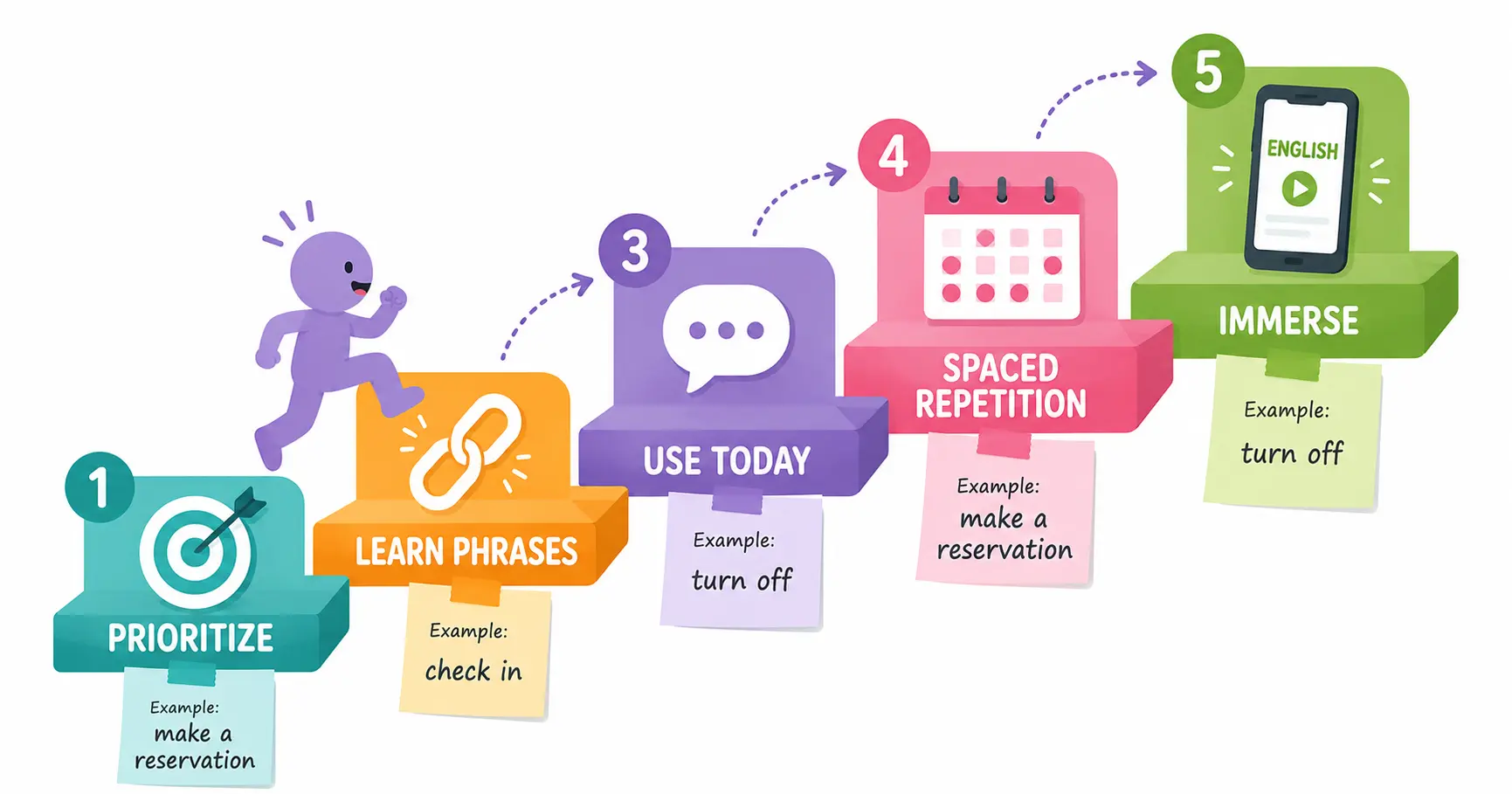
日常英単語を効果的に覚える方法
1. 自分に必要な単語から始める
オフィスで働いているなら、セクション5が優先です。旅行を控えているなら、セクション6を先に学びましょう。レストランで注文もできないのに天気の語彙を覚えても意味がありません。実生活の必要性で順番を決めましょう。
2. 単語単体ではなくフレーズで覚える
“reservation”だけより”make a reservation”の方がずっと使えます。単語には「コロケーション」と呼ばれる自然な組み合わせがあり、一緒に覚えることで記憶にも流暢さにも効果的です。詳しくは英語コロケーション:自然な単語の組み合わせをマスターするをご覧ください。
3. 新しい単語はその日のうちに使う
文で言ってみる、メッセージに書いてみる、頭の中で使ってみる。研究によると、覚えた日のうちに使うと記憶の定着率が大幅に上がります。この背景にある科学についてはボキャブラリーの暗記法:科学に基づくテクニックで解説しています。
4. 間隔反復を活用する
Linglifyに単語を追加すれば、最適なタイミングで復習スケジュールが組まれます。自分の生活に最も関連するセクションから、1日10〜15語のペースで始めましょう。
5. 身の回りを英語で埋める
家の物に英語名の付箋を貼る。スマホの言語設定を英語に変える。興味のある分野の英語SNSアカウントをフォローする。英語を文脈の中で見れば見るほど、記憶に定着しやすくなります。
次に読むべき記事
レベル別ボキャブラリー:
- 頻出英単語1000語 — 最も重要な基礎
- 必須英単語4000語 — 中級者向け完全ツールキット
- 上級英単語:C1〜C2レベル300語以上 — 次のステップへ
- CEFRレベル別英語ボキャブラリー:A1からC2まで — 習熟度別の単語整理
日常英語に役立つスキル:
- 英語の句動詞:完全ガイド — 自然な会話に必須
- 英語のイディオム:500以上の表現 — ネイティブスピーカーを理解する
- 英語コロケーションガイド — より自然な英語に
学習法:
- ボキャブラリーの上達法 — 完全学習システム
- ボキャブラリーの暗記法 — 科学に基づくテクニック
よくある質問
日常会話に必要な英単語数は?
言語学の研究によると、最も頻度の高い2,000〜3,000語族で、日常英会話の約90〜95%をカバーできます。英語圏で基本的に生活するには500〜1,000語あれば、買い物、注文、道を聞く、簡単な会話など日常の場面に対応できます。快適に会話できるレベルを目指すなら、3,000〜5,000語が現実的な目標です。
最初に覚えるべき最も重要な英単語は?
機能語(the, is, are, have, do, will, can)と日常的なニーズに対応する基本名詞・動詞:挨拶(hello, thank you, sorry)、人(friend, family, name)、動作(go, come, want, need, like, have)、時間(today, tomorrow, now)、基本形容詞(good, bad, big, small, new, old)です。これら100〜200語が、ほぼすべての英文の骨格を構成しています。
日常英単語を練習する方法は?
最も効果的な方法は:(1) 家の物に英語の付箋を貼る、(2) スマホやSNSを英語に設定する、(3) 新しい単語を使って毎日3〜5文書く語彙日記をつける、(4) 英語でひとり言を言う(日課をナレーションする)、(5) Linglifyのような間隔反復アプリで最適なタイミングで復習する。
“common words”と”daily use words”の違いは?
“Common words”は頻度を指します — 英語の話し言葉や書き言葉で全体的にどれだけ頻繁に出現するかです。”Daily use words”は特定の実生活場面(買い物、旅行、健康など)で必要な実用的な単語です。大きな重複はありますが、非常に頻度の高い単語でも抽象的なもの(”however”、”therefore”など)は日常会話にすぐ役立たない場合があり、逆に日常で使う単語(”luggage”、”prescription”など)は頻度上位リストに入っていなくても特定の場面では不可欠です。
イギリス英語とアメリカ英語、どちらを覚えるべき?
日常使用では、大半の単語は共通です。違いは主に数十語の日常用語に限られます:flat(英)vs. apartment(米)、boot vs. trunk、queue vs. line、chemist vs. pharmacy。住む・働く・学ぶ予定の場所に合わせて選びましょう。特にこだわりがなければ、メディアの影響でアメリカ英語の方が国際的に通じやすいです。最も大切なのは一貫性を保つこと — 無秩序に混ぜないようにしましょう。
英単語500語を覚えるのにどのくらいかかる?
1日10語のペースで定期的に復習すれば、約7〜8週間で500語を学べます。ただし「覚える」には段階があります:認識(見聞きした時に理解する)は早く来ますが、能動的な使用(自分の文で正しく使える)にはより時間がかかります。間隔反復を使えば、1ヶ月以内に500語を認識でき、2〜3ヶ月以内にほとんどの語を能動的に使えるようになるのが一般的です。