初心者向け英語:最初に覚えるべき単語とフレーズ300+
英語をゼロから始めるのは、とても不安なことです。英語には17万語以上の単語があります。文法書は何百ページもあります。「映画を英語で見なさい」とみんな言いますが、1文も聞き取れません。いったいどこから始めればいいのでしょうか?
答えはシンプルです。実際の日常場面で使う300の単語とフレーズから始めてください。ランダムな単語リストではありません。文法ルールでもありません。誰も使わない教科書の会話でもありません。あいさつする、助けを求める、買い物する、自己紹介する、最初の英会話を乗り切る — そのために必要な具体的な言葉から始めましょう。
このガイドはあなたのスターターキットです。アルファベット順でも文法順でもなく、場面別に整理されています。実生活ではそうやって言葉を使うからです。「名詞が必要だ」とは考えません。「食べ物を注文したい」と考えるはずです。
- 収録数: 300以上の単語とフレーズ
- レベル: A1(完全初心者)
- 文法不要: すべてそのまま使えるフレーズ
- 整理方法: 15の実生活場面
- 対象者: まったくの初心者、旅行者、独学の方、お子さんと一緒に学ぶ保護者
このガイドの使い方
一度にすべて覚えようとしないでください。以下の計画で進めましょう。
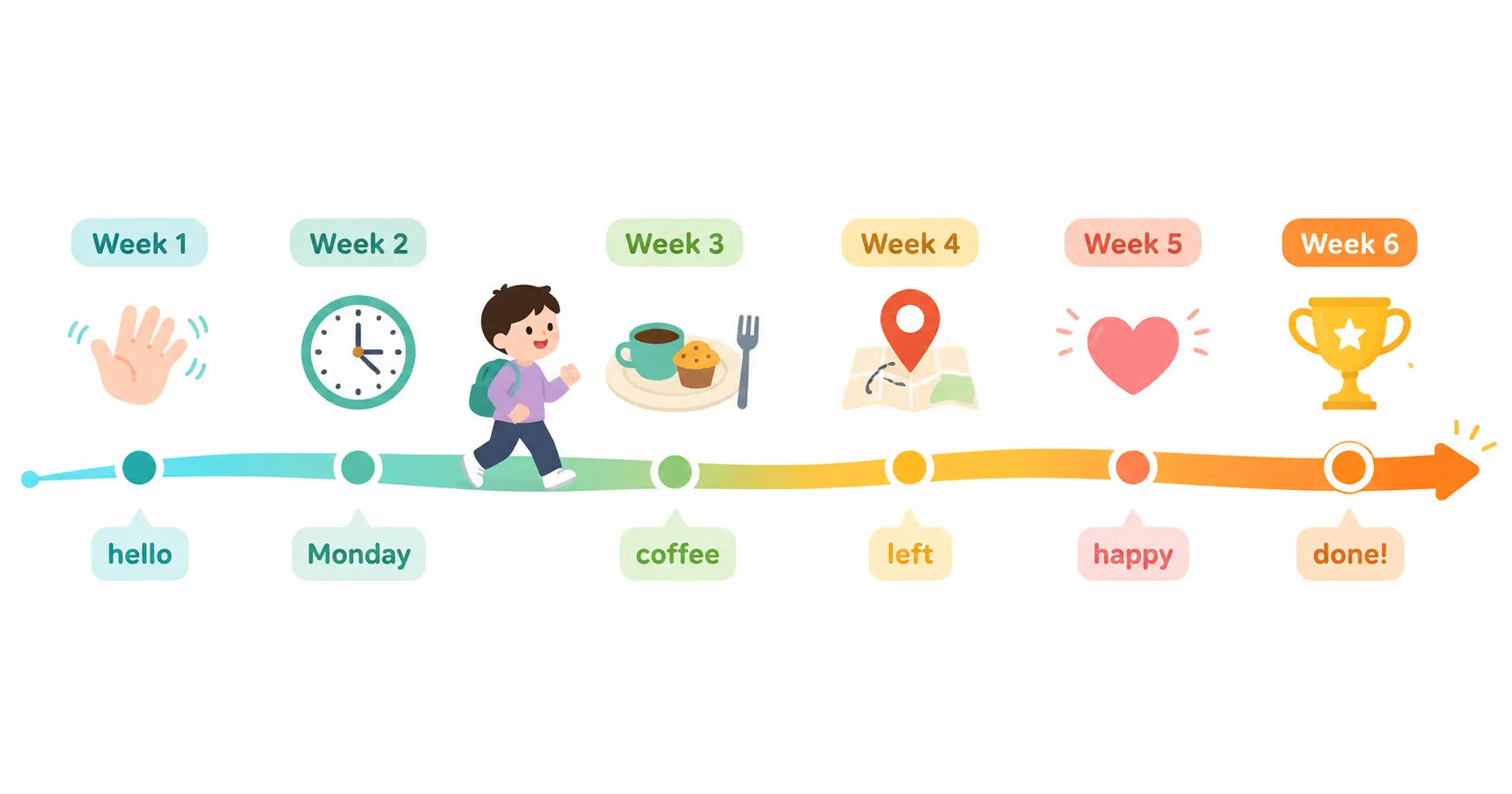
Week 1: あいさつ + 数字 + 自己紹介 Week 2: 時間と曜日 + 日常の行動 Week 3: 食べ物と飲み物 + 買い物 Week 4: 道案内と移動 + 緊急時 Week 5: 感情 + 人や物の描写 Week 6: 総復習、その後頻出英単語1000語へ進む
各セクションのフレーズを声に出して読んでください。そしてページを閉じ、できるだけ多く思い出してみてください。忘れてしまったもの — それが勉強すべき単語です。Linglifyの辞書に追加して間隔反復で学びましょう。
あいさつと別れ
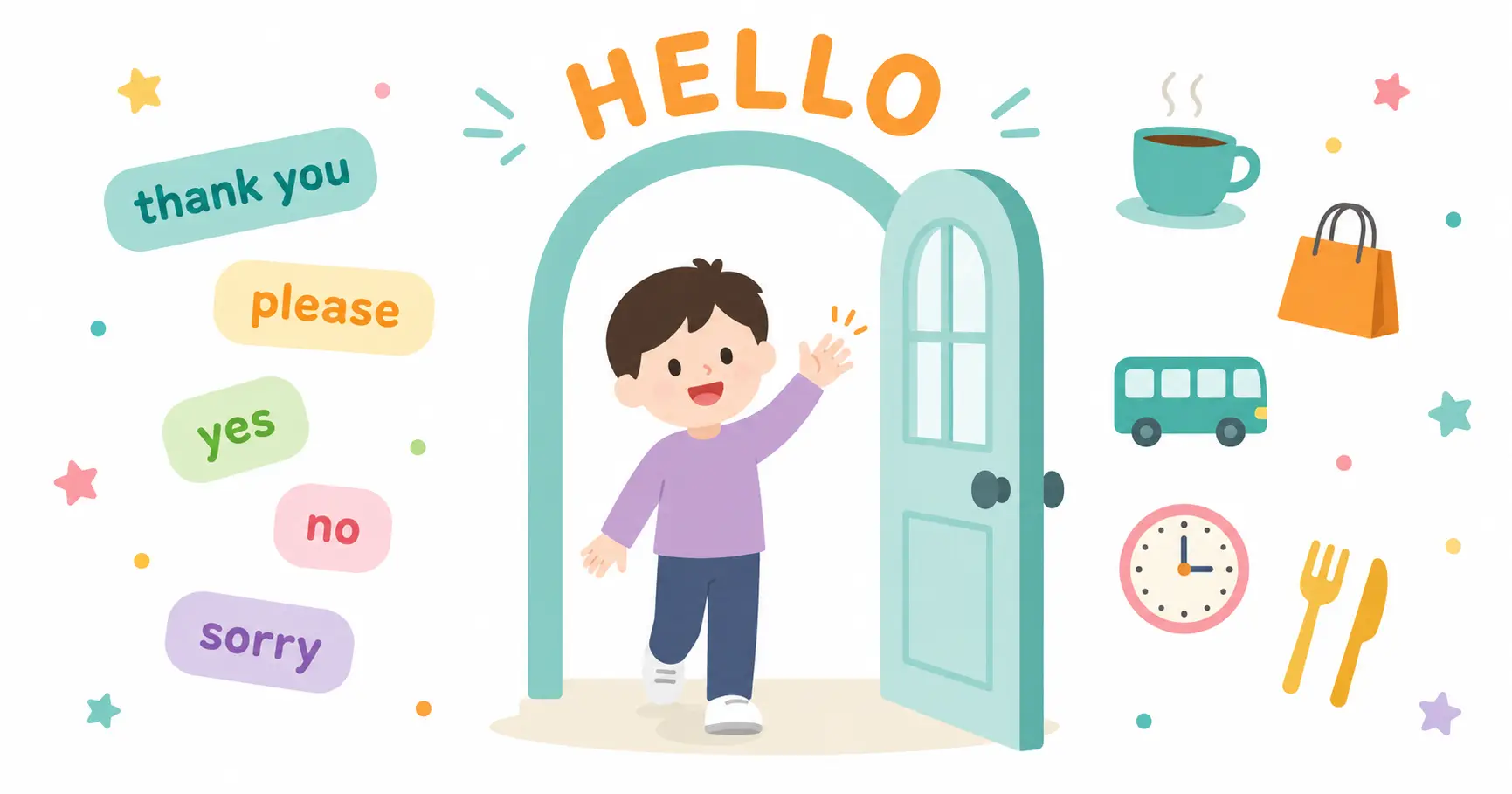
英語でのやり取りで最初に使うフレーズです。自然に口から出るまで練習しましょう。
あいさつの仕方
| フレーズ | 使う場面 | ポイント |
|---|---|---|
| Hello. | どんな場面でも | 万能で安全 |
| Hi. | 友人同士、カジュアル | helloよりくだけた表現 |
| Good morning. | 正午前 | 誰に対しても使える |
| Good afternoon. | 正午〜17時頃 | やや丁寧 |
| Good evening. | 17時以降 | あいさつのみ。別れの言葉ではない |
| Hey! | 友人同士 | 知らない人やビジネスでは使わない |
“How are you?” への返し方
| フレーズ | 意味 |
|---|---|
| I’m fine, thank you. | 丁寧な定番の返答 |
| I’m good, thanks. | カジュアル、非常によく使われる |
| Not bad. | カジュアル、「まあまあ」の意味 |
| I’m great! | ポジティブ、元気いっぱいの表現 |
| And you? | 同じ質問を相手に返す |
ネイティブは詳しい答えを期待していません。「I’m fine, thanks. And you?」で完了です。
別れ方
| フレーズ | 使う場面 |
|---|---|
| Goodbye. | どんな場面でも |
| Bye! | カジュアル |
| See you later. | また会う予定がある時 |
| See you tomorrow. | 翌日会う予定がある時 |
| Have a nice day. | 丁寧に — 店員や同僚に |
| Good night. | 寝る前、または夜に別れる時のみ |
| Take care. | 温かく — 友人や家族に |
丁寧な言葉(常に使いましょう)
| フレーズ | 使う場面 |
|---|---|
| Please. | お願いする時 |
| Thank you. / Thanks. | 何かをもらった時、助けてもらった後 |
| You’re welcome. | “thank you”への返答 |
| Excuse me. | 注意を引きたい時、話を遮る前 |
| Sorry. | 謝る時 |
| No problem. | “sorry”や”thank you”への返答 |
自己紹介
英語での最初の会話ができるフレーズです。
| フレーズ | 例 |
|---|---|
| My name is _. | My name is Yuki. |
| I’m _. | I’m Takeshi. |
| Nice to meet you. | (初めて会う人に言います。) |
| I’m from _. | I’m from Japan. |
| I live in _. | I live in Tokyo. |
| I speak _. | I speak Japanese and a little English. |
| I’m learning English. | (これを言うと、相手がゆっくり話してくれます。) |
| I’m a _. (職業) | I’m a teacher. / I’m a student. / I’m an engineer. |
| I’m _ years old. | I’m 28 years old. |
初対面で使える質問
| 質問 | 意味 |
|---|---|
| What’s your name? | お名前は? |
| Where are you from? | どちらの出身ですか? |
| What do you do? | お仕事は何ですか? |
| Do you speak _? | ~語を話しますか? |
| How old are you? | おいくつですか?(大人には失礼になることがあります) |
数字
数字はあらゆる場面で必要です — 値段、時間、住所、電話番号、年齢。1〜100を覚えれば、ほとんどの場面に対応できます。
1〜20
| 数字 | 英語 | 数字 | 英語 |
|---|---|---|---|
| 1 | one | 11 | eleven |
| 2 | two | 12 | twelve |
| 3 | three | 13 | thirteen |
| 4 | four | 14 | fourteen |
| 5 | five | 15 | fifteen |
| 6 | six | 16 | sixteen |
| 7 | seven | 17 | seventeen |
| 8 | eight | 18 | eighteen |
| 9 | nine | 19 | nineteen |
| 10 | ten | 20 | twenty |
21〜100(パターン)
20以降は簡単な規則があります:十の位 + 一の位。
| 十の位 | パターン | 例 |
|---|---|---|
| 20 | twenty | twenty-one (21), twenty-two (22)… |
| 30 | thirty | thirty-five (35) |
| 40 | forty | forty-eight (48) |
| 50 | fifty | fifty-three (53) |
| 60 | sixty | sixty-seven (67) |
| 70 | seventy | seventy-nine (79) |
| 80 | eighty | eighty-four (84) |
| 90 | ninety | ninety-nine (99) |
| 100 | one hundred | — |
よくある間違い: fortyに「u」は入りません。「fourty」ではなく「forty」です。
大きな数
| 数字 | 英語 |
|---|---|
| 100 | one hundred |
| 1,000 | one thousand |
| 10,000 | ten thousand |
| 100,000 | one hundred thousand |
| 1,000,000 | one million |
時間と曜日
時刻の言い方
| フレーズ | 意味 |
|---|---|
| What time is it? | 今何時ですか? |
| It’s 3 o’clock. | ちょうど3時 |
| It’s half past 3. | 3時半 |
| It’s quarter past 3. | 3時15分 |
| It’s quarter to 4. | 3時45分 |
| It’s 3:10. (three ten) | そのまま数字を言う |
初心者に最も簡単なのは、数字をそのまま言う方法です。「It’s three fifteen」は完全に正しく、「quarter past three」より覚えやすいです。
曜日
| 曜日 | 略 |
|---|---|
| Monday | Mon |
| Tuesday | Tue |
| Wednesday | Wed |
| Thursday | Thu |
| Friday | Fri |
| Saturday | Sat |
| Sunday | Sun |
月
| 月 | 略 | 月 | 略 |
|---|---|---|---|
| January | Jan | July | Jul |
| February | Feb | August | Aug |
| March | Mar | September | Sep |
| April | Apr | October | Oct |
| May | May | November | Nov |
| June | Jun | December | Dec |
時間に関する単語
| 単語 | 意味 | 例文 |
|---|---|---|
| today | 今日 | I have a meeting today. |
| tomorrow | 明日 | See you tomorrow. |
| yesterday | 昨日 | I went shopping yesterday. |
| now | 今 | I’m busy now. |
| later | あとで | I’ll call you later. |
| soon | まもなく | The bus is coming soon. |
| always | いつも | I always drink coffee in the morning. |
| sometimes | ときどき | I sometimes walk to work. |
| never | 一度も〜ない | I never eat meat. |
毎日の行動
毎日やることを表すフレーズです。どの言語でも最も実用的な表現の一つです。
| フレーズ | 時間帯 |
|---|---|
| I wake up at 7. | 朝 |
| I take a shower. | 朝 |
| I brush my teeth. | 朝/夜 |
| I get dressed. | 朝 |
| I have breakfast. | 朝 |
| I go to work. / I go to school. | 朝 |
| I have lunch. | 昼 |
| I finish work at 6. | 夕方 |
| I go home. | 夕方 |
| I cook dinner. / I eat dinner. | 夕方 |
| I watch TV. | 夕方 |
| I read a book. | 夕方 |
| I go to bed. | 夜 |
| I go to sleep. | 夜 |
よくある日常の行動
| フレーズ | 意味 |
|---|---|
| I drink coffee. | コーヒーを飲む |
| I check my phone. | スマホをチェックする |
| I take the bus/train. | バス/電車に乗る |
| I drive to work. | 車で通勤する |
| I walk to the store. | 歩いてお店に行く |
| I clean the house. | 家を掃除する |
| I do laundry. | 洗濯する |
| I study English. | 英語を勉強する |
食べ物と飲み物
レストランやカフェでの注文
| フレーズ | 場面 |
|---|---|
| Can I have _, please? | 何でも注文する時 |
| I’d like _, please. | 丁寧な注文の仕方 |
| Can I see the menu? | メニューを見せてもらう |
| What do you recommend? | おすすめを聞く |
| I’ll have the same. | 相手と同じものを注文する |
| Just water, please. | 水を注文する |
| The check, please. / The bill, please. | お会計をお願いする |
| Can I pay by card? | カード払いできるか聞く |
食べ物の基本単語
| カテゴリ | 単語 |
|---|---|
| 食事 | breakfast, lunch, dinner, snack |
| 飲み物 | water, coffee, tea, juice, milk, beer, wine |
| 果物 | apple, banana, orange, grape, strawberry |
| 野菜 | tomato, potato, onion, carrot, salad |
| タンパク質 | chicken, fish, egg, meat, beef, rice, bread |
| 味 | sweet, salty, sour, spicy, bitter, delicious |
食事の話
| フレーズ | 意味 |
|---|---|
| I’m hungry. | お腹がすいた。 |
| I’m thirsty. | 喉が乾いた。 |
| I’m full. | お腹いっぱい。 |
| It’s delicious! | とてもおいしい! |
| I’m vegetarian. | 肉を食べません。 |
| I’m allergic to _. | ~にアレルギーがあります。 |
買い物
| フレーズ | 使う場面 |
|---|---|
| How much is this? | 値段を聞く |
| How much does this cost? | 同じ意味、やや丁寧 |
| Can I try this on? | 試着を頼む |
| Do you have this in size _? | 別のサイズを頼む |
| Do you have this in a different color? | 別の色を頼む |
| I’ll take it. | 購入を決める |
| No, thank you. Just looking. | 買う予定がない時 |
| Where is the fitting room? | 試着室を探す |
| Can I get a receipt? | レシートをもらう |
| Is there a discount? | 割引を聞く |
買い物で使う単語
| 単語 | 意味 |
|---|---|
| cheap | 安い |
| expensive | 高い |
| sale | セール |
| cash | 現金 |
| card | カード |
| change | おつり |
| size | サイズ: small (S), medium (M), large (L), extra large (XL) |
道案内と場所
道を聞く
| フレーズ | 目的 |
|---|---|
| Excuse me, where is the _? | 場所を探す |
| How do I get to _? | 行き方を聞く |
| Is it far from here? | 距離を聞く |
| Is there a _ near here? | 最寄りの場所を探す |
| Can you show me on the map? | 地図がある時 |
| I’m lost. | 道に迷った時 |
道案内を理解する
| フレーズ | 意味 |
|---|---|
| Go straight. | まっすぐ進む |
| Turn left. | 左に曲がる |
| Turn right. | 右に曲がる |
| It’s on the left/right. | 左側/右側にある |
| It’s next to _. | ~の隣にある |
| It’s across from _. | ~の向かい側にある |
| It’s on the corner. | 角にある |
| It’s two blocks away. | 2ブロック先 |
大切な場所
| 場所 | 説明 |
|---|---|
| hospital | 病院 |
| pharmacy | 薬局 |
| bank | 銀行 |
| supermarket | スーパーマーケット |
| restaurant | レストラン |
| hotel | ホテル |
| airport | 空港 |
| train station | 駅 |
| bus stop | バス停 |
| bathroom / toilet | トイレ |
| police station | 交番、警察署 |
| post office | 郵便局 |
旅行と交通
| フレーズ | 場面 |
|---|---|
| I need a taxi. | タクシーを呼ぶ |
| How much to _? | 料金を聞く |
| One ticket to _, please. | チケットを買う |
| A round trip, please. | 往復チケット |
| What time does the _ leave? | 出発時刻を聞く |
| What time does the _ arrive? | 到着時刻を聞く |
| Which platform? | 電車のホーム |
| Where is gate _? | 空港のゲート |
| I have a reservation. | ホテルで |
| I’d like to check in. | ホテルのチェックイン |
| I’d like to check out. | ホテルのチェックアウト |
| Is Wi-Fi available? | Wi-Fiがあるか聞く |
緊急時と健康
このガイドで最も重要なフレーズかもしれません。暗記しましょう。
| フレーズ | 使う場面 |
|---|---|
| Help! | 緊急時全般 |
| Call the police! | 犯罪や危険 |
| Call an ambulance! | 医療の緊急事態 |
| I need a doctor. | 体調が悪い時 |
| I don’t feel well. | 気分が悪い時 |
| It hurts here. (場所を指す) | 痛い場所を示す |
| I’m allergic to _. | アレルギーを伝える |
| Where is the nearest hospital? | 病院を探す |
| I lost my passport. | 旅先で |
| I lost my wallet. | 財布を紛失した時 |
| Can you help me? | 誰かに助けを求める |
体調の説明
| フレーズ | 意味 |
|---|---|
| I have a headache. | 頭が痛い。 |
| I have a stomachache. | お腹が痛い。 |
| I have a fever. | 熱がある。 |
| I feel dizzy. | めまいがする。 |
| I feel nauseous. | 吐き気がする。 |
感情
| フレーズ | 意味 |
|---|---|
| I’m happy. | 嬉しい。 |
| I’m sad. | 悲しい。 |
| I’m tired. | 疲れた。 |
| I’m angry. | 怒っている。 |
| I’m scared. / I’m afraid. | 怖い。 |
| I’m excited. | ワクワクしている。 |
| I’m bored. | 退屈だ。 |
| I’m worried. | 心配だ。 |
| I’m confused. | 混乱している。 |
| I’m surprised. | 驚いた。 |
人と物の描写
人
| 単語 | 意味 | 例文 |
|---|---|---|
| tall / short | 背が高い/低い | He is tall. She is short. |
| young / old | 若い/年配の | She is young. He is old. |
| friendly | 親しみやすい | The teacher is very friendly. |
| funny | おもしろい | My brother is really funny. |
| smart | 賢い | She is a smart student. |
| kind | 親切な | My neighbor is very kind. |
| quiet | 静かな | He is a quiet person. |
| busy | 忙しい | I’m busy today. |
物
| 単語 | 意味 | 反対語 |
|---|---|---|
| big / small | 大きさ | big ↔ small |
| hot / cold | 温度 | hot ↔ cold |
| fast / slow | 速さ | fast ↔ slow |
| new / old | 新しさ | new ↔ old |
| easy / hard | 難しさ | easy ↔ hard |
| good / bad | 質 | good ↔ bad |
| beautiful / ugly | 見た目 | beautiful ↔ ugly |
| clean / dirty | 清潔さ | clean ↔ dirty |
| open / closed | 状態 | open ↔ closed |
| right / wrong | 正しさ | right ↔ wrong |
色
| 色 | 色 | 色 |
|---|---|---|
| red | blue | green |
| yellow | orange | purple |
| black | white | gray |
| brown | pink | gold |
天気
| フレーズ | 意味 |
|---|---|
| What’s the weather like? | 天気はどう? |
| It’s sunny. | 晴れている。 |
| It’s cloudy. | 曇っている。 |
| It’s raining. | 雨が降っている。 |
| It’s snowing. | 雪が降っている。 |
| It’s windy. | 風が強い。 |
| It’s hot. | 暑い。 |
| It’s cold. | 寒い。 |
| It’s warm. | 暖かい。 |
| It’s cool. | 涼しい。 |
英語が聞き取れない時のフレーズ
理解できない時に使うフレーズです。聞き返すことは恥ずかしいことではなく、頑張っている証拠としてネイティブに好印象を与えます。
| フレーズ | 使う場面 |
|---|---|
| Can you speak slowly, please? | 話すスピードが速い時 |
| Can you repeat that, please? | 聞き取れなかった時 |
| What does _ mean? | 単語の意味がわからない時 |
| How do you say _ in English? | 英語での言い方を聞く |
| How do you spell that? | スペルを確認する |
| I don’t understand. | 理解できない時 |
| I don’t speak English very well. | 相手に期待値を伝える |
| Can you write it down? | 聞き取れない時に書いてもらう |
| Is this correct? | 自分の言い方が正しいか確認する |
最重要動詞25選
この25個の動詞で、ほぼすべての基本的な考えを表現できます。動詞 + 名詞で、どんな場面でもコミュニケーションが取れます。
| 動詞 | 意味 | 例文 |
|---|---|---|
| be | ~である | I am a student. |
| have | 持っている | I have a question. |
| do | する | What do you do? |
| go | 行く | I go to school. |
| come | 来る | Come here, please. |
| get | 手に入れる、着く | I get home at 6. |
| make | 作る | I make breakfast. |
| know | 知っている | I know the answer. |
| want | 欲しい | I want coffee. |
| need | 必要とする | I need help. |
| like | 好き | I like music. |
| say | 言う | She says hello. |
| see | 見る、見える | I see the bus. |
| give | 与える | Give me the menu, please. |
| take | 取る、使う | Take the first left. |
| put | 置く | Put it on the table. |
| eat | 食べる | I eat lunch at noon. |
| drink | 飲む | I drink water every day. |
| buy | 買う | I want to buy a ticket. |
| work | 働く | I work in an office. |
| open | 開ける | Open the door. |
| close | 閉める | Close the window, please. |
| help | 助ける | Can you help me? |
| wait | 待つ | Wait here, please. |
| try | 試す | I want to try this. |
疑問詞
この7つの単語で、何でも質問できます。
| 単語 | 何を聞く? | 例文 |
|---|---|---|
| What? | 物、事実 | What is your name? |
| Where? | 場所 | Where is the station? |
| When? | 時間 | When does the store open? |
| Who? | 人 | Who is that? |
| Why? | 理由 | Why is it closed? |
| How? | 方法 | How do I get there? |
| How much? | 値段、量 | How much is this? |
練習用の単語
以下の25個の初心者向け単語は、最初に覚えたいものばかりです。Linglifyの辞書に保存して間隔反復で学びましょう。
abuse
名詞
虐待, 乱用
例
- It's important to report any signs of child abuse to the authorities.
- The investigation revealed serious abuse of power by government officials.
actually
副詞
実際に, 本当に
例
- I thought the meeting was today, but it's actually scheduled for tomorrow.
- The book looks boring, but it's actually quite interesting and engaging.
affection
名詞
愛情, 親しみ
例
- The child showed deep affection for his grandmother who raised him.
- Their mutual affection was evident to everyone who saw them together.
agreement
名詞
合意, 協定, 契約
例
- The trade agreement will benefit both countries' economic development significantly.
- There was general agreement among the committee members about the proposed changes.
airport
名詞
空港
例
- International airports handle millions of travelers and tons of cargo annually.
- We need to arrive at the airport two hours before our departure time.
alternate
形容詞
交互の, 代わりの, 交代制の
例
- The parking lot uses alternate spaces for cars and motorcycles.
- We need an alternate plan in case the weather doesn't cooperate.
announce
動詞
発表する, 告知する, アナウンスする
例
- Airlines announce flight delays through the terminal's public address system.
- The principal will announce the scholarship winners during tomorrow's assembly.
apart
副詞
離れて, 別々に
例
- Please keep these chemicals apart to prevent dangerous reactions.
- The two friends lived far apart but stayed in regular contact.
apply
動詞
適用する, 申し込む, 適用
例
- Apply pressure to the wound to stop the bleeding immediately.
- Students can apply for financial aid to help pay tuition costs.
arrest
名詞
逮捕
例
- He was under arrest for suspected involvement in the robbery.
- The arrest of the criminal was reported on the evening news.
attend
動詞
出席する, 参加する, 世話をする
例
- All students must attend classes regularly to pass their courses.
- The nurse will attend to the patient's needs throughout the night.
ballet
名詞
バレエ
例
- She studied ballet for many years before becoming a professional dancer.
- The ballet performance featured graceful movements and beautiful costumes.
basis
名詞
基礎, 土台
例
- The selection process is conducted on the basis of merit alone.
- Trust forms the basis of any successful relationship or partnership.
bedroom
名詞
寝室
例
- She decorated her bedroom with posters and colorful curtains.
- The master bedroom has a beautiful view of the garden.
biotechnology
名詞
バイオテクノロジー
例
- Agricultural biotechnology helps create disease-resistant crop varieties.
- Biotechnology companies develop new medical treatments and therapies.
borrow
動詞
借りる
例
- Can I borrow your pen for a few minutes?
- He had to borrow money from the bank for repairs.
browser
名詞
ブラウザ
例
- Chrome is the most popular web browser worldwide.
- The store welcomes browsers as well as buyers.
candidate
名詞
候補者, 志願者
例
- Each presidential candidate presented their policy plans to voters.
- The job candidate impressed the interview panel with her experience.
cat
名詞
猫
例
- The fluffy cat sat peacefully by the warm fireplace in the evening.
- Their pet cat loves to play with colorful balls of yarn.
cherished
形容詞
大切にされた, 愛された, 宝物の
例
- His cherished dream of becoming a pilot finally came true.
- The old photograph was her most cherished possession from childhood.
cloudy
形容詞
曇った, 曇りがちな, 曇りの
例
- The water became cloudy after stirring up sediment from the bottom.
- The weather forecast predicts cloudy skies with possible rain this evening.
commute
動詞
通勤する, 通学する
例
- Public transportation helps people commute efficiently reducing traffic congestion.
- Workers commute daily between suburban homes and downtown offices.
confirmation
名詞
確認, 確証
例
- She received confirmation of her job application via email yesterday.
- The confirmation ceremony was held at the local church on Sunday.
correspond
動詞
一致する, 対応する, 通信する
例
- She corresponds regularly with her friends who live in different countries.
- The witness testimony should correspond with the physical evidence found at the scene.
custom
名詞
習慣, 慣習, カスタム
例
- It is a local custom to remove shoes before entering homes.
- The wedding ceremony followed traditional customs from their culture.
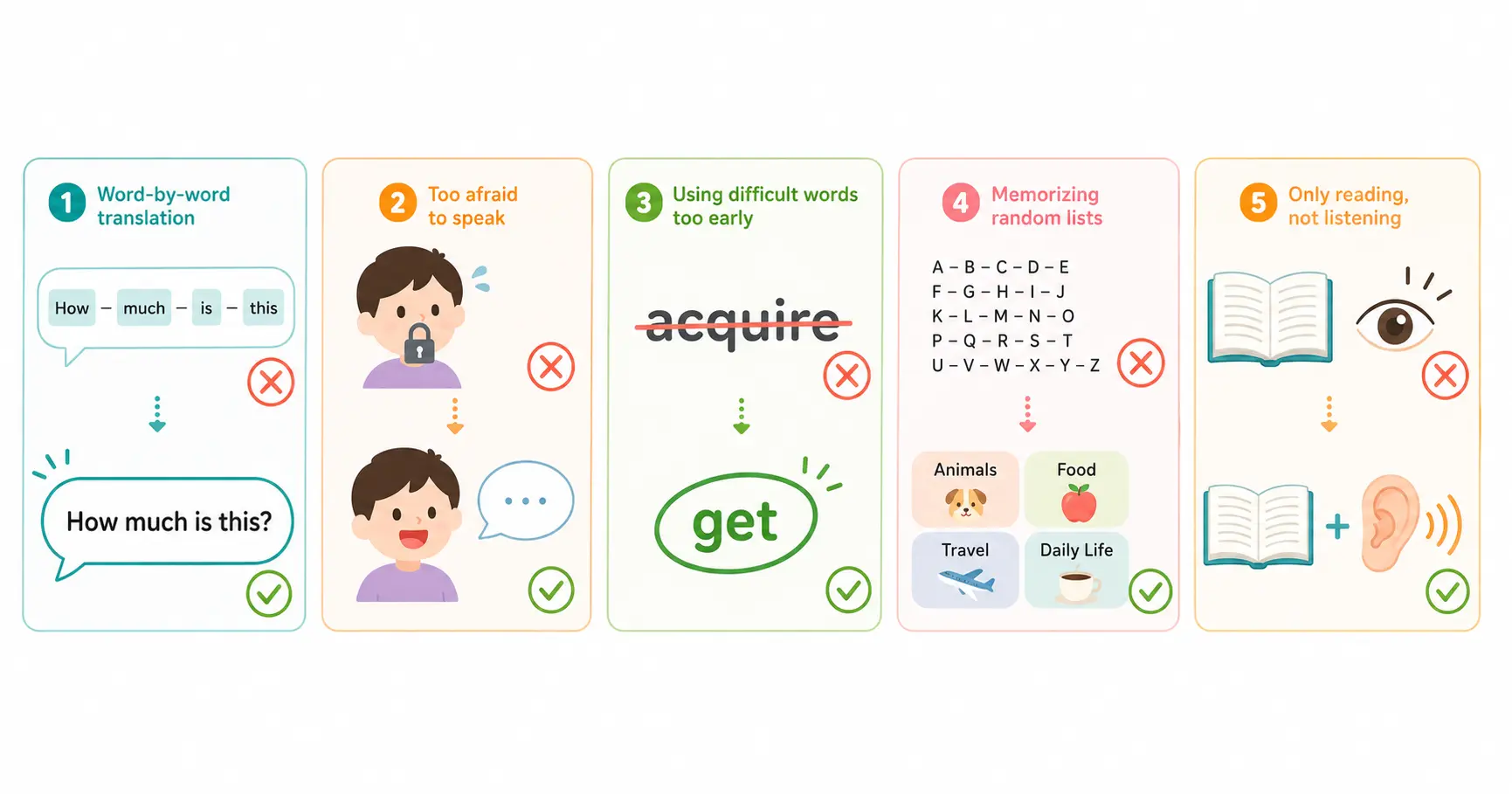
初心者がやりがちな5つの間違い(と対策)
間違い1:母語から一語一語直訳する
言語によって文の組み立て方は異なります。一語ずつ訳すと、たとえ各単語が正しくても不自然な英語になります。完成したフレーズで覚えましょう — 「How much is this?」を丸ごと覚えるのです。日本語話者は特に語順の違い(主語-動詞-目的語 vs 主語-目的語-動詞)に注意が必要です。
間違い2:完璧になるまで話さない
間違いは必ずします。ネイティブもそれはわかっています。大切なのは完璧さではなく伝わることです。「Where is bank?」(theが抜けている)でも問題なく通じます。文法が完璧になるのを待たず、今すぐ話し始めましょう。
間違い3:文脈なしで単語を覚える
「acquire」は「get」と同じ意味ですが、日常会話では使いません。文脈が大切です。このガイドの単語は実際の日常場面で使うものだけを選んでいます。
間違い4:アルファベット順の長いリストを丸暗記する
脳はアルファベット順で言語を整理しません。場面ごとに整理します。だからこそこのガイドはトピック別に単語をまとめています。「I’m hungry」と「Can I have the menu?」は同じ実生活場面に属するので、一緒に覚えられます。
間違い5:読むだけでリスニングをしない
ページ上の単語を読むと「認識力」は鍛えられます。しかし音を聞くことで「理解力」が鍛えられます。初心者向けのYouTube動画を見たり、英語学習ポッドキャストを聞いたり、英語の音楽を聴いたりしてください。耳にもトレーニングが必要です。
このガイドの次に何をすべきか
このガイドは最初の語彙を提供します。ここからのロードマップです。
-
1,000語に増やす。 頻出英単語1000語は日常英語の85%をカバーします。この基礎編を終えた後の次のマイルストーンです。
-
実際の文で練習する。 日常で使えるシンプル英文集では200以上の場面別フレーズを収録しています。
-
学習システムを作る。 場当たり的な勉強では効果が出ません。語彙学習のステップバイステップガイドで毎日のルーティンを構築してください。
-
レベルを理解する。 このガイドの単語はA1レベル — 出発点です。CEFRレベル別英語語彙で初心者から上級までの全体像を把握しましょう。
-
4,000語を目指す。 研究によると4,000語族で日常英語の95%を理解できます。必須英単語4000語ガイドで6か月の計画を立てましょう。
-
暗記テクニックを学ぶ。 科学的な方法で語彙を定着させましょう。語彙の暗記ガイドで効果的な方法を学べます。
よくある質問
基本的な英語を覚えるのにどれくらいかかる?
毎日30〜60分の継続的な学習で、ほとんどの人が2〜3か月で基本的な会話に対応できるようになります。あいさつ、食事の注文、道を聞く、簡単な雑談ができるレベルです。快適な会話レベル(B1)に達するには通常6〜12か月かかります。大切なのは毎日の継続で、毎日15分のほうが週1回3時間よりも効果的です。
最初に覚えるべき英単語は?
「サバイバルフレーズ」から始めましょう:あいさつ(hello, goodbye, thank you)、数字(1〜100)、基本的な質問(where, what, how much)、場面別の語彙(食べ物、方向、緊急時)。このガイドはまさにこれらの場面をカバーしています。その後、頻出1000語に進んでください。
文法を勉強しなくても英語は学べる?
初心者レベルなら可能です。子どもは文法を習う前に話すことを覚えます。大人も同じアプローチが取れます。完成フレーズで覚えて(「I would like coffee」であり、「I + would + like + 名詞」ではなく)、文法パターンは自然に身につきます。文法学習が本当に役立つのは中級レベル(B1〜B2)で複雑な考えを表現したい時です。今はルールではなく、フレーズに集中してください。
初心者に必要な英単語数は?
英語環境での基本的なサバイバルには300〜500語で、あいさつ・買い物・食事・交通・緊急時をカバーできます。簡単な会話には約1,000語(日常会話の85%をカバー)。快適な会話には3,000〜4,000語が目標です。このガイドは最も必要な300語以上を、実際に使う場面ごとに整理しています。
イギリス英語とアメリカ英語、どちらを学ぶべき?
初心者には関係ありません。基本的な語彙は95%同じです。違いは主にスペリング(colour / color)、一部の単語(lift / elevator)、発音にあります。よく聞く方を選んでください。アメリカのドラマを見るならアメリカ英語、イギリスに住んでいるならイギリス英語。初心者レベルでは、アクセントではなくコミュニケーションに集中しましょう。
完全初心者が英語を最も早く習得する方法は?
科学的に証明された最速の方法は3つの要素の組み合わせです:(1) 頻出単語を優先的に覚える — このガイドの300語、次に1,000語 — なぜなら聞こえる英語の大部分をカバーするから。(2) 毎日練習する。たとえ15分でも。(3) 間隔反復法(Linglifyなど)を使い、忘れかける直前に復習する。言語環境への浸り方も効果的です — スマートフォンの言語を英語に変え、家の物に英語のラベルを貼り、初心者向けポッドキャストを聴きましょう。