C1–C2英語の文法と語彙:上級者のための学習ガイド
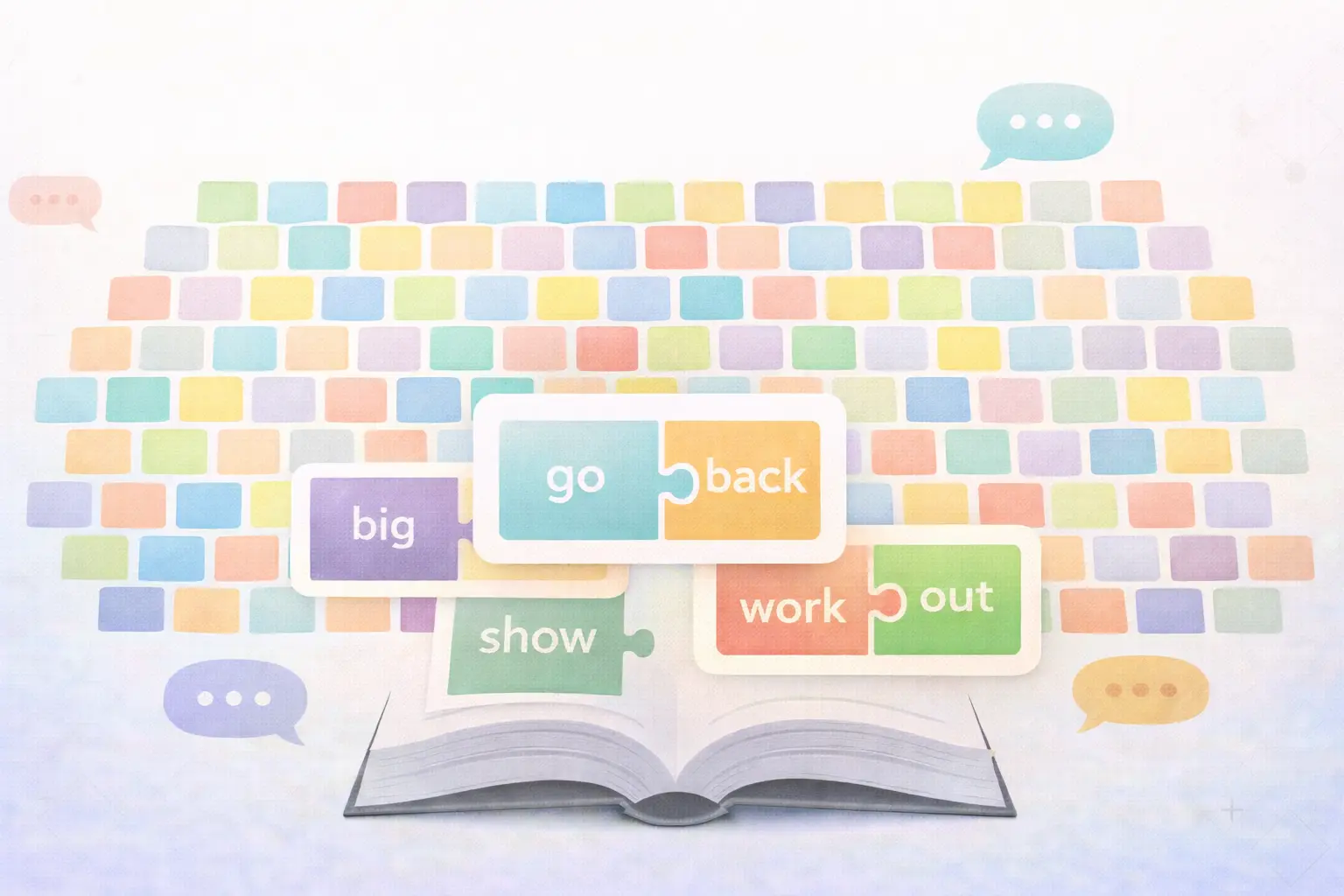
C1–C2の文法と語彙は一緒に学ぶのが効果的です。上級文法は、対比、強調、距離感、慎重さ、論理的なつながりという形を考えに与えます。上級語彙はその考えを正確にします。単語リストだけを学ぶと文が基本的なままになり、文法規則だけを学ぶと、精密に伝える内容が不足しがちです。
このガイドは、C1–C2の文法と語彙を練習したい人、または教科書中心のルーティンに代わるオンラインの構造化された学習法を探す人のための無料の道筋です。特定の教材をコピーするものではありません。上級者に必要な言語システム、それと結びつく語彙、両方を練習する四週間の方法を示します。C1ライブラリとC2ライブラリで、語彙を無理のないセットとして復習してください。
- レベル: 自信のあるC1から柔軟なC2 proficiencyへ
- 焦点: 複雑な文法の選択、正確な語彙、能動的なアウトプット
- 対象: 上級試験、学習、専門的なコミュニケーションに取り組む人
- 学習目標: 規則を一語ずつ訳さずに、正確に書き話す
語彙バンクが必要なら、C2 proficiency語彙を使ってください。C1の土台から始める場合は、C1英語語彙が適しています。
C1とC2のコントロールの違い
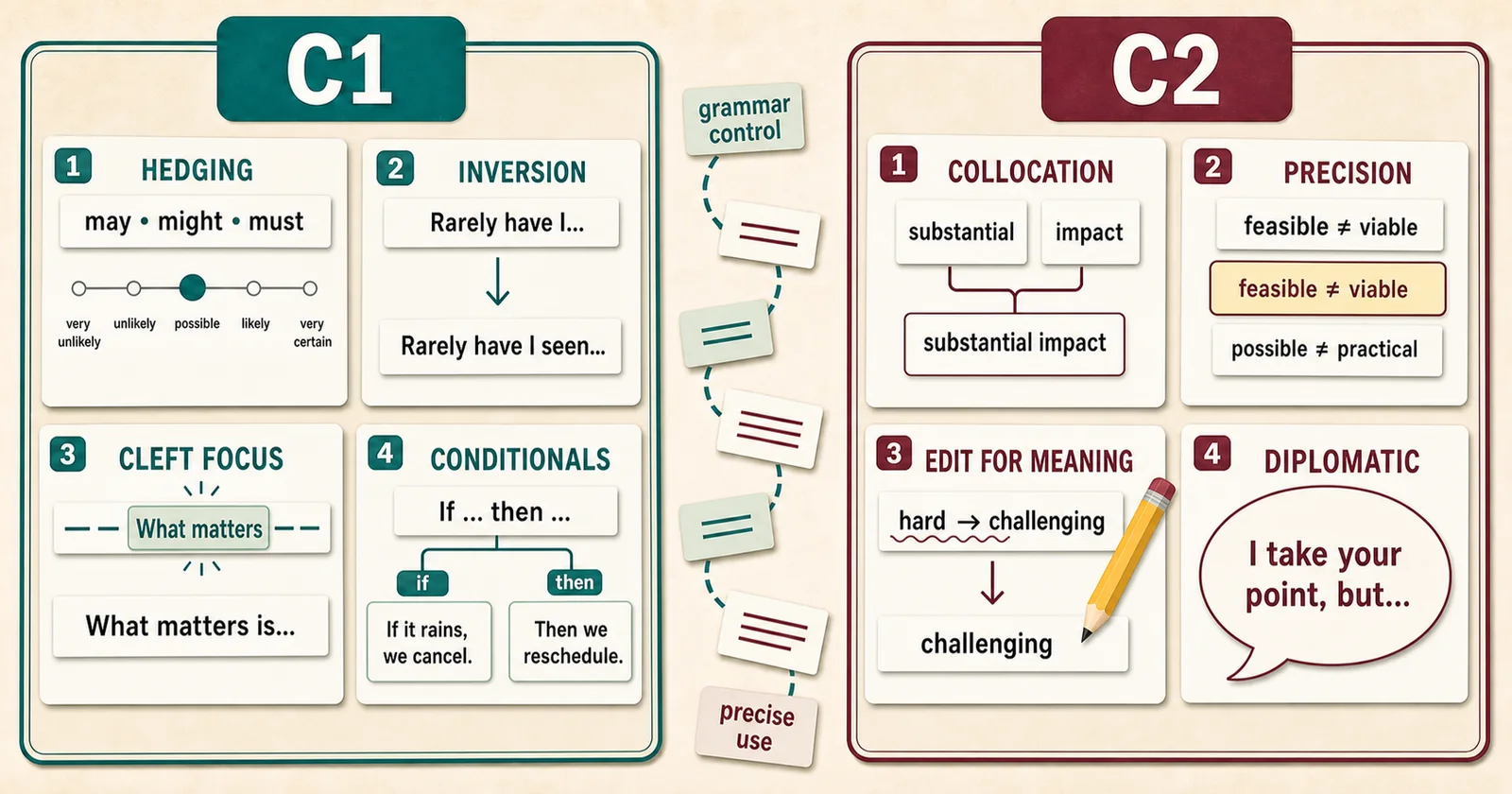
C1では、複雑な考えを説明し、広い言語範囲を使い、多くの誤りを自分で直せます。C2では、その範囲からより速く、正確に、柔軟に選べます。同じメッセージを、フォーマルな報告書、慎重な議論、くだけた会話に調整しても、要点を失いません。
| 領域 | C1のコントロール | C2のコントロール |
|---|---|---|
| 文法 | 複雑な構文をほとんど正確に使う | 強調、トーン、微妙な意味のために構文を選ぶ |
| 語彙 | 上級語とコロケーションを使う | 近い意味を区別し、レジスターを自然に変える |
| ライティング | 明確な論証を展開する | ニュアンス、例外、非常に一貫した論理を管理する |
| スピーキング | 意見を説明し守る | 柔軟に反応し、主張を限定し、滑らかに言い換える |
目的はすべての簡単な語をなくすことではありません。基本語が十分に正確でない時に、選択肢を持つことです。“The plan is bad” は短いチャットなら完璧です。報告書なら “The plan is not financially viable” や “The plan may be counterproductive in the long term.” の方が正確かもしれません。
文法1:ヘッジ、モダリティ、確実性の程度
上級英語では、慎重な主張が必要になることが多いです。助動詞と報告動詞で、どの程度確信しているか、提案をどの強さで伝えるかを示せます。
| 目的 | 便利な型 | 例文 |
|---|---|---|
| 過去について強く推論する | must have + past participle | They must have overlooked the message. |
| 弱い可能性を示す | may / might well + verb | The change might well affect demand. |
| 慎重に一般化する | tend to + verb | Small errors tend to accumulate over time. |
| 根拠に基づく見解 | appear / seem to + verb | The results appear to support the proposal. |
| 控えめな勧め | it would be advisable to + verb | It would be advisable to review the policy. |
| 起こりそうなこと | there is likely to be + noun | There is likely to be some resistance. |
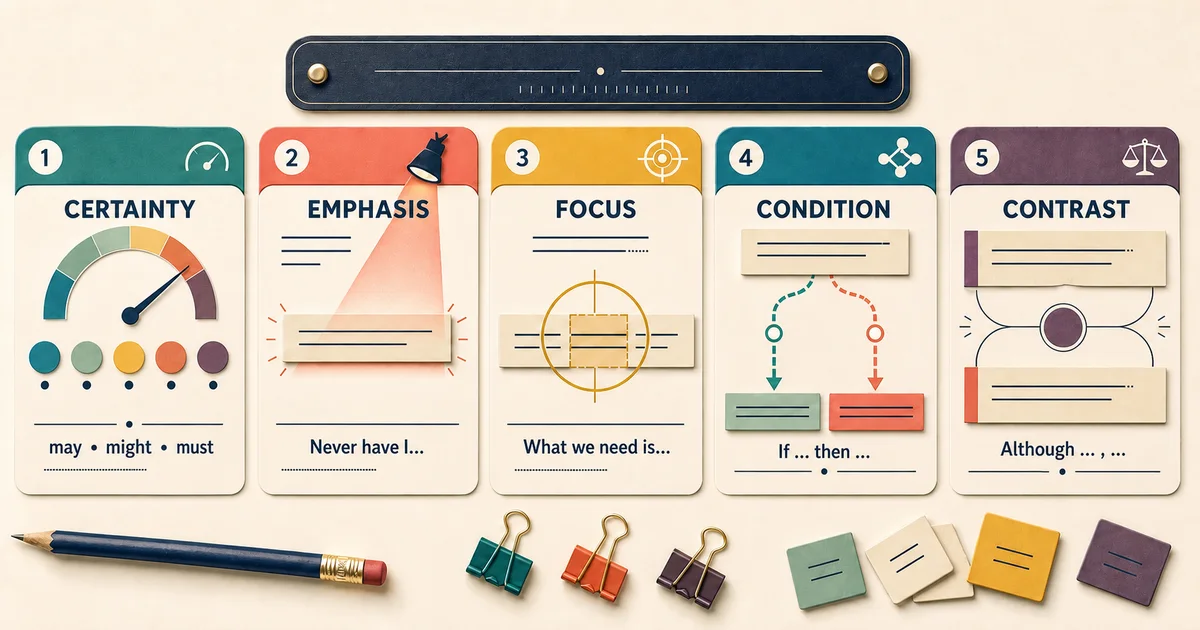
文法は読み手との距離を変えます。“This will fail” は断定です。“This may prove unworkable unless…” は明確さを保ちながら、根拠と条件の余地を残します。plausible, tentative, inherent, likely などの語彙と組み合わせましょう。
文法2:倒置と強調
倒置は、フォーマルまたは強調したスタイルを作りたい時に使います。整った文章や準備したスピーチでは有効ですが、カジュアルな会話では使いすぎないでください。
| 通常の文 | 上級の強調 | 使う場面 |
|---|---|---|
| We rarely see such a result. | Rarely do we see such a result. | フォーマルな文で強く強調する |
| We understood the scale only then. | Only then did we understand the scale. | 大切な転換点 |
| The plan will work only if funding continues. | Only if funding continues will the plan work. | 厳しい条件 |
| I had never felt so prepared. | Never had I felt so prepared. | 強い個人的・物語的な点 |
| The team not only reduced costs; it also improved quality. | Not only did the team reduce costs, but it also improved quality. | バランスの取れた対比 |
助動詞を確認してください。Rarely do we see であり、“Rarely we see” ではありません。倒置は飾りではなく意味の選択です。一つの適切な構文は強調を生みますが、短い段落で五つ使うと不自然です。
文法3:cleft sentenceと焦点のコントロール
Cleft sentenceは、最も重要な情報を前に出す構文です。思い込みを直す、または区別を明らかにする時に特に役立ちます。
| 型 | 例文 | 効果 |
|---|---|---|
| What + clause + be … | What we need is a realistic timetable. | 必要な結果を強調する |
| It is/was + focus + that/who … | It was the final review that revealed the error. | 一つの原因や人物を強調する |
| The thing that … is … | The thing that concerns me is the lack of evidence. | 抽象的な心配を明確にする |
| All + clause + be … | All I am asking for is a clear answer. | 抑えた丁寧なトーンを作る |
“We need a realistic timetable” と “What we need is a realistic timetable” を比べてください。多くの選択肢が議論されている時、二つ目は優先事項をはっきり示せます。
文法4:条件、譲歩、仮定の距離
上級学習者には基本の if パターン以上のものが必要です。現実と異なる過去の決定、現在への影響、予想外の対比を話すための構文です。
| 目的 | 型 | 例文 |
|---|---|---|
| 過去の原因、現在の結果 | If + past perfect, would + infinitive | If we had planned earlier, we would have more time now. |
| 現在の状態、過去の結果 | If + past simple, would have + past participle | If I were more confident, I would have applied. |
| フォーマルな条件 | Were + subject + to + verb | Were demand to fall, we would revise the forecast. |
| フォーマルな否定条件 | Had + subject + past participle | Had they known, they might have acted differently. |
| 譲歩 | much as / however + adjective | Much as I value speed, accuracy matters more. |
| 予想外の結果 | even if / even though | The policy may help even if costs remain high. |
難しい条件文を、上級に見せるためだけに使わないでください。時間関係が本当に混ざっている時に使います。“If I had left earlier, I would be there now” は過去の決定と現在の結果を結ぶので、mixed conditionalに意味があります。
文法5:分詞構文と情報の密度
Participle clauseは、行動や考えを結び、文章をコンパクトにします。報告書、要約、フォーマルな説明に有用です。
| 完全な節 | よりコンパクトな表現 | 意味 |
|---|---|---|
| Because the team had reviewed the data, it noticed an error. | Having reviewed the data, the team noticed an error. | 先の行動が後の行動を説明する |
| The device was designed for beginners, so it is easy to use. | Designed for beginners, the device is easy to use. | 説明が背景を示す |
| The proposal affects several teams and requires further discussion. | Affecting several teams, the proposal requires further discussion. | 同時の事実または理由 |
| If it is used carefully, the method can be effective. | Used carefully, the method can be effective. | 条件 |
主語を明確にしなければなりません。“Having reviewed the data, the error was noticed” は、errorがデータを確認したように見えるため誤りです。“Having reviewed the data, the team noticed the error.” とします。
語彙1:難しさではなく意味をアップグレードする
最も役に立つ上級語彙は、より正確な意味を与えます。一つの長いリストではなく、小さな対比セットを作りましょう。
| 基本語 | 正確な選択肢 | 意味の違い |
|---|---|---|
| important | crucial, substantial, indispensable | crucial は成功に必要、substantial は大きく重要、indispensable は欠かせない |
| problem | issue, obstacle, drawback, discrepancy | それぞれ異なる種類の困難を表す |
| change | shift, transition, fluctuation, deterioration | 方向、過程、パターンを示す |
| show | demonstrate, indicate, reveal, corroborate | 根拠の強さや情報源を変える |
| possible | feasible, viable, plausible, conceivable | 実行可能、成り立つ、もっともらしい、想像可能 |
| bad | detrimental, counterproductive, flawed, unsustainable | 害、逆効果、論理の弱さ、長期的に続かないこと |
違いが見える文を作ってください。“The idea is plausible” は合理的に聞こえるということです。“The idea is viable” は実際に機能しうることです。これらはいつも置き換えられるわけではありません。
語彙2:上級の論証のためのコロケーション
コロケーションは上級のライティングとスピーキングを自然にします。周囲の文法も含めてフレーズ全体を学びましょう。
| 機能 | コロケーション | 例文 |
|---|---|---|
| 主張を示す | put forward an argument | The article puts forward a convincing argument. |
| 注意を加える | acknowledge a limitation | We should acknowledge a limitation in the sample. |
| 根拠を検討する | draw a conclusion | It is too early to draw a conclusion. |
| 影響を話す | have far-reaching implications | The decision may have far-reaching implications. |
| 原因を説明する | give rise to concerns | The delay has given rise to concerns. |
| 目標を両立させる | reconcile competing priorities | Leaders must reconcile competing priorities. |
| さらなる検討を勧める | warrant further investigation | The findings warrant further investigation. |
| リスクを表す | pose a significant risk | Weak security can pose a significant risk. |
| 進展を示す | make tangible progress | The team has made tangible progress. |
| 総合的に評価する | on balance, … | On balance, the benefits outweigh the cost. |
自然な組み合わせをさらに学ぶなら、上級英語コロケーションを利用してください。コロケーションは無作為に挿入するためのフレーズではなく、考えを正確かつ自然にする語と語のなじみある結びつきです。
C1–C2の四週間学習プラン
規則をたまに読むより、短くても定期的にアウトプットする方が有用です。このサイクルでは文法と語彙に同じ重みを置きます。
| 週 | 文法の焦点 | 語彙の焦点 | 能動的な課題 |
|---|---|---|---|
| 1 | ヘッジとモダリティ | 確実性、根拠、評価 | 150語のバランスのある意見を書く |
| 2 | 倒置とcleft sentence | 対比と強調のコロケーション | 二分間のプレゼン開始を録音する |
| 3 | mixed conditionalと譲歩 | 変化、リスク、結果 | 基本的な段落を正確なつながりで書き直す |
| 4 | 分詞構文と編集 | 自分の苦手な語の復習 | 古い文章を編集し、各変更を説明する |
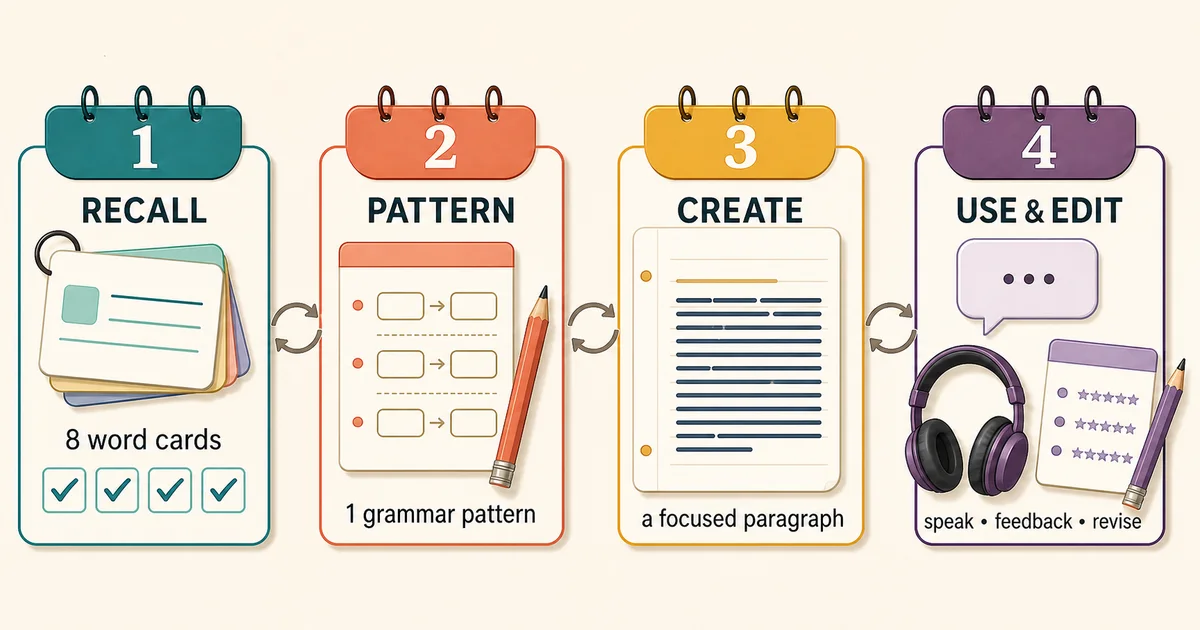
学習日ごとに、Linglifyで少量の語彙を想起する時間を10分、一つの文法パターンを学ぶ時間を10分、言語を作る時間を10分取ります。メッセージ、段落、音声メモ、質問への回答のどれでも構いません。選んだ文法が意図した意味を変えているかに気づくことが大切です。
上級学習者によくある間違い
- すべての複雑な構文を一度に使うこと。 一つの目的に一つの構文を選び、明確さを第一にします。
- フォーマルと上級を同じだと考えること。 上級語でも、カジュアルな場面では不自然なことがあります。
- 規則だけを覚え、使わないこと。 パターンを学んだら、自分にとって本当の文を三つ書くか言います。
- コロケーションを無視すること。 pose a risk を pose だけでなく覚え、substantial evidence を substantial だけでなく覚えます。
- 文法だけを直すこと。 文を編集した後、より正確な動詞、名詞、接続語が考えを改善しないか確認します。
練習する語彙
選んだ上級セットをLinglifyに追加します。その後、このガイドの文法パターン一つと組み合わせ、短く意味のある回答を作ってください。
alleviate
動詞
和らげる, 軽減する, 緩和する
例
- Government programs aim to alleviate poverty in rural communities.
- The medication will alleviate pain and reduce inflammation significantly.
ambiguous
形容詞
曖昧な, あいまいな
例
- The politician's ambiguous statement confused voters about his actual position.
- The test question was ambiguous and could be interpreted in multiple ways.
coherent
形容詞
一貫した, 首尾一貫した
例
- After the accident, he wasn't coherent enough to answer police questions.
- The professor gave a coherent explanation of the complex scientific theory.
concede
動詞
認める, 譲る, 白旗を上げる
例
- He had to concede that his opponent made some valid points during the debate.
- The candidate decided to concede defeat after losing the election clearly.
tycoon
名詞
大富豪, 実業家
例
- Media tycoon owns newspapers and television stations worldwide.
- Oil tycoon donated millions to educational and charitable causes.
detest
動詞
嫌う, ひどく嫌う, 憎む
例
- Many people detest the sound of nails scratching on chalkboard.
- She absolutely detests dishonesty and deception in any form.
portrayal
名詞
描写, 演技, 表現
例
- Critic praised actor's nuanced portrayal of troubled protagonist.
- Film's portrayal of war emphasizes human cost over glory.
fury
名詞
怒り, 激怒, 憤り
例
- His fury was evident after hearing the news.
- She lost her fury when she saw the damage.
grumpy
形容詞
不機嫌な, 怒った, むっつり
例
- His grumpy attitude made it hard to work with him.
- She looked grumpy after waking up late.
superficial
形容詞
表面的な, 浅い
例
- His knowledge of the subject was superficial and incomplete.
- The wound appeared serious but was actually quite superficial.
impeccable
形容詞
完璧な, 申し分ない, 非の打ち所のない
例
- Hotel provides impeccable service ensuring guest satisfaction and comfort.
- Professional maintains impeccable reputation for honesty and integrity.
precaution
名詞
予防策, 注意喚起, 安全策
例
- Take the necessary precautions before starting.
- Wearing a helmet is a safety precaution.
insular
形容詞
孤立した, 島国の
例
- His insular thinking prevents him from considering alternative perspectives.
- Insular community rarely interacts with outside world effectively.
plausible
形容詞
もっともらしい, 納得できる
例
- His explanation sounds plausible but lacks supporting evidence.
- Scientists seek plausible theories to explain observed phenomena.
reconstruction
名詞
再建, 復興, 修復
例
- Historical reconstruction helps us understand the past.
- The reconstruction of the building took two years.
enterprising
形容詞
積極的な, 意欲的な, 起業家的な
例
- Enterprising entrepreneur identified market gap and created innovative solution.
- Enterprising students organize fundraising events for school improvement projects.
substantial
形容詞
かなりの, 実質的な, 重要な
例
- Substantial improvement shows in student test scores.
- Substantial investment creates new business opportunities today.
subtle
形容詞
微妙な, 繊細な
例
- Subtle flavor enhances dish without overpowering taste.
- Subtle hint suggests solution without direct statement.
verify
動詞
確認する, 検証する, 証明する
例
- Please verify the information before publishing.
- They need to verify the results of the experiment.
occupant
名詞
居住者, 占有者, 入居者
例
- Building occupant reported strange noises during night hours.
- Car crash injured both driver and passenger occupants.
tell sb/sth apart
句動詞
よく似た物事や人の違いを見分ける
例
- It's hard to tell the twins apart.
- Can you tell the difference between these two paintings?
次にすること
- C1語彙ライブラリで基礎を作り、強くなったセットをC2ライブラリへ進めます。
- C2 proficiency語彙で正確な語とニュアンスを学びます。
- 上級英語コロケーションで自然な上級フレーズを練習します。
- 基本の構文がまだ不安定なら、B2文法と語彙に戻ります。
よくある質問
C1–C2文法は難しい規則ばかりですか?
いいえ。主に選択とコントロールの問題です。正確さには身近な文法が必要で、上級構文は強調、距離、条件、対比、考えのより精密な関係を示す助けになります。
上級単語リストを覚えるだけでC2に到達できますか?
単語リストは役立ちますが、それだけでは足りません。C2には、柔軟な使用、レジスターの選択、自然なコロケーション、そして実際の読解・ライティング・リスニング・スピーキングでの正確な文法との結びつきが必要です。
C1文法とC2語彙のどちらを先に学ぶべきですか?
両方を一緒に学びますが、弱い方から始めます。文法のために文章が不明確なら、一つの文法パターンと、それを使える少量の語彙を選びます。文は正確でも繰り返しが多いなら、正確な動詞、名詞、コロケーションに焦点を当てます。
これはC1–C2の教科書の代わりですか?
これは特定の本のコピーや代替ではなく、自主学習のためのオンラインガイドです。すでに使っているコース、先生、試験教材と並行して、構造化された練習の道筋として使ってください。
上級文法はどのくらいの頻度で練習すべきですか?
各回にアウトプットと復習を含めれば、週に三回の短い学習で十分です。一つの構文で定期的に書き、話し、編集する方が、月に一度たくさんの規則を読むより効果的です。