
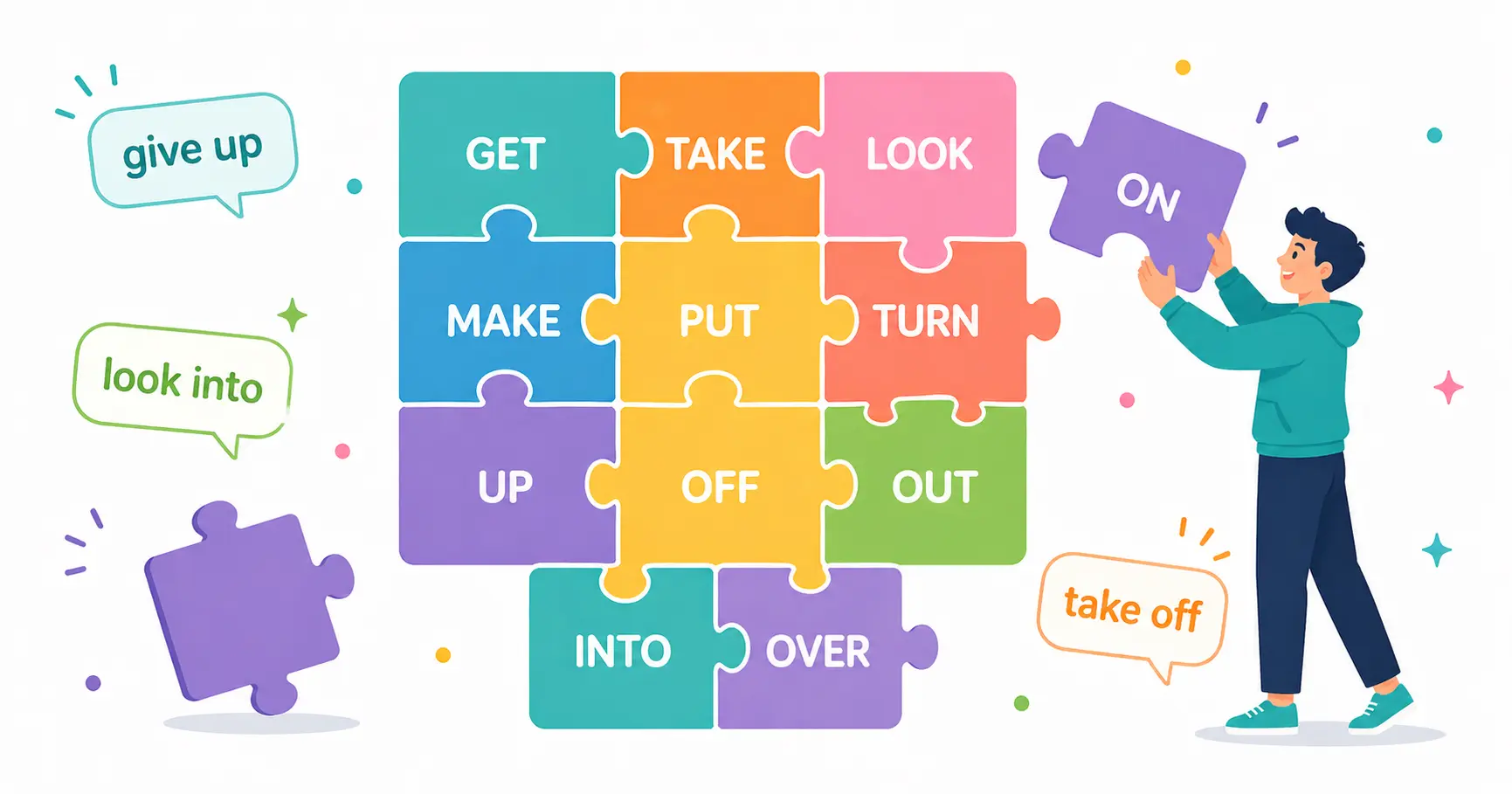
英語フレーザルバーブ完全ガイド:200以上の例文付き
フレーザルバーブ(句動詞)は、英語を母語としない人にとって最もフラストレーションがたまるポイントと言っても過言ではありません。「give」が「与える」だと覚えたのに、「give up」は「やめる」、「give in」は「屈服する」、「give away」は「配る」、「give off」は「放つ」だとわかる。ひとつの基本動詞に4つの小辞、まったく異なる4つの意味。これを英語のすべての主要動詞で掛け算したら、何千もの組み合わせになります。
でも実はこれが現実です:フレーザルバーブは避けられません。ネイティブスピーカーは日常会話でも、仕事でも、メールでも、SNSでも、学術的な場面でもフレーザルバーブを絶えず使っています。フレーザルバーブを避ければ、どれだけ語彙力があっても、英語は常に堅苦しくロボットのように聞こえます。そして理解できなければ、聞いたことの半分の意味を取り逃がします。
このガイドでは、フレーザルバーブについて知っておくべきすべてをカバーします:
- フレーザルバーブとは何か、文法的にどう機能するか
- 分離可能・不分離・3語フレーザルバーブの違い
- 基本動詞別に整理した200以上の重要フレーザルバーブ
- 各エントリーに実際の文脈での例文
- 実際に覚えるための学習法(読んで終わりにしないために)
フレーザルバーブとは?
フレーザルバーブとは、動詞と1〜2つの小辞(前置詞、副詞、またはその両方)の組み合わせで、元の動詞とは異なる意味を生み出すものです。
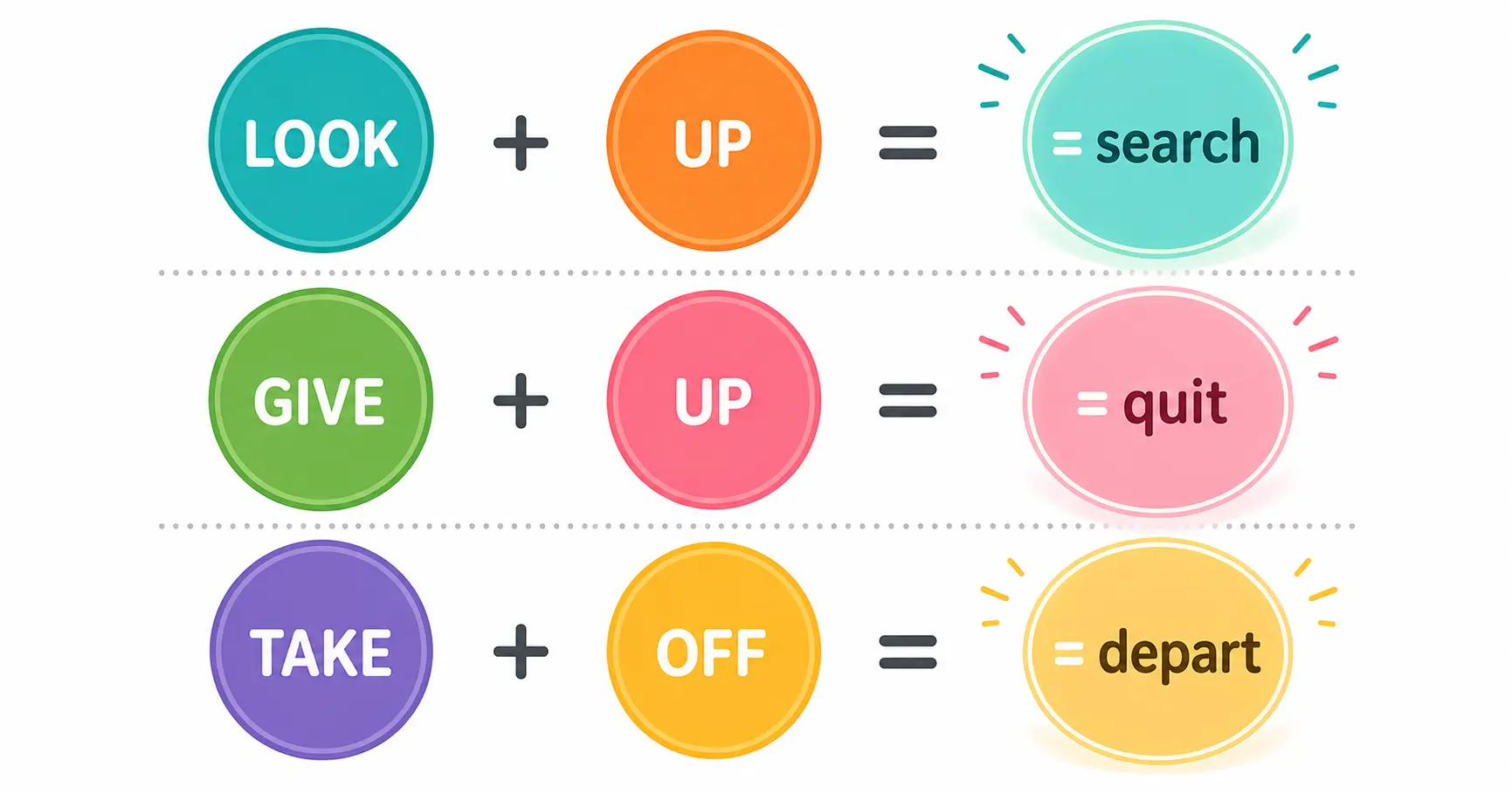
動詞単体: look = 見る フレーザルバーブ: look up = 情報を調べる フレーザルバーブ: look after = 世話をする フレーザルバーブ: look forward to = 楽しみに待つ
重要なポイント:フレーザルバーブの意味は構成要素から推測できません。「look」+「up」は論理的に「情報を調べる」にはなりません。だからこそフレーザルバーブは難しい — そしてだからこそ、単語ごとに解読しようとせず、ひとつのまとまりとして覚える必要があるのです。
フレーザルバーブ vs. 前置詞付き動詞
「動詞+前置詞」の組み合わせがすべてフレーザルバーブとは限りません。比較してみましょう:
| タイプ | 例 | 見分け方 |
|---|---|---|
| フレーザルバーブ | She looked up the word. | 小辞を取ると意味が崩れる。「She looked the word」は意味不明。 |
| 前置詞付き動詞 | She looked at the painting. | 「look」は元の意味を保ち、「at」は方向を示すだけ。 |
実用的な違い:フレーザルバーブには覚えるしかない慣用的な意味があります。前置詞付き動詞は予測可能です。
なぜフレーザルバーブが大切か
| 場面 | フォーマルな代替語 | フレーザルバーブ |
|---|---|---|
| 日常会話 | I need to discover the answer. | I need to find out the answer. |
| ビジネスメール | Could you investigate this issue? | Could you look into this issue? |
| 会議 | Let us postpone the decision. | Let’s put off the decision. |
| ニュース | The company terminated 200 employees. | The company laid off 200 employees. |
ネイティブスピーカーはほとんどの場面でフレーザルバーブをデフォルトで使います。フォーマルな代替語は会話では堅苦しく、カジュアルな文章では大げさに聞こえます。文法は正しいのに英語が「フォーマルすぎる」と感じるなら、フレーザルバーブを避けていることが原因の可能性が高いです。
フレーザルバーブの種類
種類を理解することは文法理論にとどまりません。種類によって目的語を文中のどこに置けるかが決まり、これは文の正しさに直結します。
タイプ1:分離可能な他動詞型
目的語は動詞と小辞の間にも、小辞の後にも置けます。ただし目的語が代名詞(it, them, herなど)の場合、必ず間に入れなければなりません。
| フレーザルバーブ | 正しい | 正しい | 間違い |
|---|---|---|---|
| turn off | Turn off the TV. | Turn the TV off. |
|
| pick up | Pick up your bag. | Pick your bag up. |
|
| figure out | Figure out the answer. | Figure the answer out. |
|
代名詞のルール: 必ず分離する。
- Turn it off. ✓
-
Turn off it.✗
タイプ2:不分離の他動詞型
動詞と小辞は分離不可。目的語は常に後に来ます。
| フレーザルバーブ | 正しい | 間違い |
|---|---|---|
| look after | Look after the children. |
|
| run into | I ran into an old friend. |
|
| get over | She got over the flu. |
|
タイプ3:自動詞型(目的語なし)
目的語を取らないフレーザルバーブです。
| フレーザルバーブ | 例 |
|---|---|
| break down | My car broke down on the highway. — 車が高速道路で故障した。 |
| show up | He showed up late to the meeting. — 彼は会議に遅刻して現れた。 |
| pass out | She passed out from the heat. — 暑さで気を失った。 |
| grow up | I grew up in a small town. — 小さな町で育った。 |
タイプ4:3語フレーザルバーブ
「動詞 + 副詞 + 前置詞」の組み合わせ。常に不分離です。
| フレーザルバーブ | 意味 | 例 |
|---|---|---|
| look forward to | 楽しみに待つ | I look forward to hearing from you. — ご連絡をお待ちしております。 |
| put up with | 我慢する | I can’t put up with this noise anymore. — この騒音にはもう耐えられない。 |
| come up with | 思いつく | She came up with a brilliant solution. — 彼女は素晴らしい解決策を思いついた。 |
| get along with | うまくやる | Do you get along with your colleagues? — 同僚とうまくやっていますか? |
| look down on | 見下す | He looks down on people who didn’t go to university. — 彼は大学に行かなかった人を見下す。 |
| run out of | 〜がなくなる | We’ve run out of milk. — 牛乳が切れた。 |
| keep up with | ついていく | I can’t keep up with all the new updates. — 更新に追いつけない。 |
| look up to | 尊敬する | I’ve always looked up to my grandmother. — いつも祖母を尊敬してきた。 |
200以上の重要フレーザルバーブ:基本動詞別
フレーザルバーブを学ぶ最も効果的な方法は基本動詞別に学ぶこと。脳にはすでにGET、TAKE、LOOKなどの「フォルダ」があります。既存のフォルダにフレーザルバーブを追加する方がバラバラの組み合わせを覚えるより速い。
GET
GETは英語で最も多くのフレーザルバーブを生む動詞。最初にマスターすべきファミリーです。
| フレーザルバーブ | 意味 | 例 |
|---|---|---|
| get up | 起きる、立ち上がる | I get up at 6:30 every morning. — 毎朝6時半に起きる。 |
| get along (with) | うまくやる | My sister and I get along really well now. — 姉とは今とても仲が良い。 |
| get over | 回復する、乗り越える | It took me weeks to get over that cold. — あの風邪から回復するのに何週間もかかった。 |
| get through | 乗り越える、なんとか切り抜ける | I don’t know how she got through that exam. — あの試験をどうやって乗り切ったのか分からない。 |
| get away | 逃げる、離れる | The thief got away before the police arrived. — 泥棒は警察が来る前に逃げた。 |
| get away with | 罰を免れる | He cheated and got away with it. — カンニングしたのにお咎めなしだった。 |
| get by | なんとかやりくりする | She gets by on a very modest salary. — わずかな給料でなんとかやっている。 |
| get on | 乗る(乗り物)、進む | Get on the bus at the third stop. — 3つ目の停留所でバスに乗ってください。 |
| get off | 降りる(乗り物)、仕事を終える | What time do you get off work? — 何時に仕事が終わりますか? |
| get back | 戻る | I’ll get back to you tomorrow. — 明日改めてご連絡します。 |
| get into | はまる、入る | She got into photography during the lockdown. — ロックダウン中に写真にはまった。 |
| get out of | 〜を免れる、逃れる | He always tries to get out of washing the dishes. — 彼はいつも皿洗いから逃れようとする。 |
| get rid of | 処分する、取り除く | I need to get rid of these old magazines. — この古い雑誌を処分しないと。 |
| get across | 伝える(考えを) | The teacher struggled to get the concept across. — 先生はその概念を伝えるのに苦労した。 |
| get around | 移動する、回避する | News gets around fast in a small town. — 小さな町ではニュースがすぐ広まる。 |
TAKE
| フレーザルバーブ | 意味 | 例 |
|---|---|---|
| take off | 脱ぐ、離陸する、うまくいく | The plane took off 20 minutes late. / Her career really took off. — 飛行機は20分遅れで離陸した。/ 彼女のキャリアは一気に飛躍した。 |
| take on | 引き受ける、雇う | The company is taking on new staff. — 会社は新しいスタッフを採用している。 |
| take up | 始める(趣味)、占める(時間/空間) | I took up running during the pandemic. — パンデミック中にランニングを始めた。 |
| take over | 支配権を握る | A larger company took over the startup. — 大手企業がそのスタートアップを買収した。 |
| take after | 似ている(家族に) | She takes after her mother. — 彼女は母親似だ。 |
| take back | 返す、撤回する | I take back what I said — you were right. — さっき言ったことは撤回する。君が正しかった。 |
| take down | 外す、書き留める | Take down this number. — この番号をメモして。 |
| take in | 理解する、吸収する | There was so much to take in on the first day. — 初日は消化しきれないほどの情報量だった。 |
| take apart | 分解する | He took the engine apart. — 彼はエンジンを分解した。 |
| take out | 持ち出す、テイクアウトする | Let’s take out the trash. — ゴミを出そう。 |
MAKE
| フレーザルバーブ | 意味 | 例 |
|---|---|---|
| make up | でっち上げる、仲直りする、化粧する | She made up an excuse. / They argued but made up the next day. — 彼女は言い訳をでっち上げた。/ 喧嘩したけど翌日仲直りした。 |
| make out | なんとか判読する | I can’t make out what this handwriting says. — この手書き文字が読めない。 |
| make up for | 埋め合わせる | I’ll make up for the lost time. — 失った時間を埋め合わせる。 |
| make for | 〜に向かう、〜に寄与する | Good communication makes for a healthy relationship. — 良いコミュニケーションは健全な関係につながる。 |
| make do (with) | 間に合わせる | We’ll have to make do with margarine. — マーガリンで間に合わせるしかない。 |
| make off (with) | 持ち逃げする | The burglar made off with all the jewelry. — 強盗がすべての宝石を持ち逃げした。 |
PUT
| フレーザルバーブ | 意味 | 例 |
|---|---|---|
| put off | 延期する、やる気をなくす | Don’t put off your homework. — 宿題を先延ばしにするな。 |
| put on | 着る、つける | Put on your coat — it’s cold. — コートを着て。寒いよ。 |
| put up with | 我慢する | I can’t put up with his complaints. — 彼の愚痴にはもう耐えられない。 |
| put away | 片付ける、貯める | Put the groceries away. — 食料品を片付けて。 |
| put out | 消す(火) | The firefighters put out the blaze. — 消防士が火を消し止めた。 |
| put forward | 提案する | She put forward a proposal. — 彼女は提案を出した。 |
| put down | 書き留める、けなす | He’s always putting people down. — 彼はいつも人をけなしている。 |
| put together | 組み立てる | It took three hours to put the furniture together. — 家具の組み立てに3時間かかった。 |
TURN
| フレーザルバーブ | 意味 | 例 |
|---|---|---|
| turn on/off | つける/消す | Turn off the lights when you leave. — 出るとき電気を消して。 |
| turn up | 現れる、音量を上げる | She turned up an hour late. — 彼女は1時間遅れて現れた。 |
| turn down | 断る、音量を下げる | He turned down the job offer. — 彼はその仕事のオファーを断った。 |
| turn out | 結果的に〜になる、参加する | The party turned out to be amazing. — パーティーは最高だった。 |
| turn into | 変わる、変化する | The caterpillar turns into a butterfly. — 毛虫が蝶に変わる。 |
| turn around | 方向転換する、好転させる | The new CEO turned the company around. — 新CEOが会社を立て直した。 |
| turn over | ひっくり返す、引き渡す | He turned the business over to his daughter. — 彼はビジネスを娘に引き渡した。 |
LOOK
| フレーザルバーブ | 意味 | 例 |
|---|---|---|
| look up | 調べる | Look up the word in a dictionary. — 辞書で単語を調べて。 |
| look after | 世話をする | Who looks after your children? — お子さんの面倒は誰が見ていますか? |
| look into | 調査する | The police are looking into the incident. — 警察がその事件を調査している。 |
| look forward to | 楽しみに待つ | I look forward to meeting you. — お会いできるのを楽しみにしています。 |
| look out (for) | 気をつける | Look out — there’s a car coming! — 気をつけて!車が来てる! |
| look down on | 見下す | She looks down on people who shop at discount stores. — 彼女はディスカウントストアで買い物する人を見下す。 |
| look up to | 尊敬する | Many young athletes look up to professional players. — 多くの若いアスリートはプロ選手を尊敬している。 |
| look over | 目を通す、チェックする | Could you look over my essay? — 私のエッセイに目を通してもらえますか? |
| look through | ざっと見る | I looked through all the applications. — すべての応募書類に目を通した。 |
COME
| フレーザルバーブ | 意味 | 例 |
|---|---|---|
| come up | 持ち上がる、話題に出る | Something has come up — I can’t make it. — 急用ができて行けなくなった。 |
| come up with | 思いつく | We need to come up with a new strategy. — 新しい戦略を考えないと。 |
| come across | 偶然見つける、印象を与える | I came across an interesting article. — 面白い記事を見つけた。 |
| come back | 戻る | When are you coming back? — いつ帰ってくるの? |
| come down with | 〜にかかる(病気) | I think I’m coming down with a cold. — 風邪を引きそうだ。 |
| come around | 考えを変える、立ち寄る | She was skeptical but eventually came around. — 最初は懐疑的だったが結局考えを変えた。 |
| come out | 発売される、明るみに出る | The new iPhone comes out next month. — 新しいiPhoneは来月発売だ。 |
GO
| フレーザルバーブ | 意味 | 例 |
|---|---|---|
| go on | 続ける、起こる | What’s going on? — 何が起こっているの? |
| go through | 経験する、精査する | She went through a difficult divorce. — 彼女はつらい離婚を経験した。 |
| go over | 復習する、確認する | Let me go over the main points. — 主なポイントを確認させてください。 |
| go off | 爆発する、鳴る(アラーム)、腐る(食べ物) | The fire alarm went off at 3 AM. — 火災報知器が午前3時に鳴った。 |
| go ahead | どうぞ、進めてください | Go ahead and start without me. — 先に始めてください。 |
| go out | 外出する、消える | We go out for dinner every Friday. — 毎週金曜に外食する。 |
| go along with | 同意する | I’ll go along with whatever the team decides. — チームの決定に従います。 |
BREAK、SET、GIVE、BRING、その他
| フレーザルバーブ | 意味 | 例 |
|---|---|---|
| break down | 故障する、泣き崩れる、分析する | The car broke down. / She broke down in tears. — 車が故障した。/ 彼女は泣き崩れた。 |
| break up | 別れる | They broke up after five years. — 5年付き合って別れた。 |
| break out | 勃発する、脱出する | A fire broke out on the third floor. — 3階で火事が起きた。 |
| break into | 押し入る、新しい分野に入る | Someone broke into my apartment. — 誰かがアパートに押し入った。 |
| break through | 壁を突破する | Scientists broke through with a new treatment. — 科学者たちが新しい治療法で突破口を開いた。 |
| set up | 設立する、準備する | She set up her own company at 25. — 彼女は25歳で自分の会社を設立した。 |
| set off | 出発する、作動させる | We set off early to avoid traffic. — 渋滞を避けるため早めに出発した。 |
| give up | あきらめる、やめる | He gave up smoking last year. — 昨年タバコをやめた。 |
| give in | 折れる、屈する | The company gave in to the workers’ demands. — 会社が労働者の要求に折れた。 |
| give away | 配る、ネタバレする | Don’t give away the ending! — 結末をバラさないで! |
| give off | 発する(匂い、熱) | The factory gives off a terrible smell. — 工場がひどい匂いを発している。 |
| bring up | 育てる、話題に出す | Don’t bring up politics at dinner. — 夕食の席で政治の話を持ち出さないで。 |
| bring about | 引き起こす | Technology has brought about major changes. — テクノロジーが大きな変化をもたらした。 |
| carry on | 続ける | Carry on with your work. — 仕事を続けてください。 |
| carry out | 実行する | The team carried out the experiment. — チームが実験を実施した。 |
| work out | 運動する、解決する、うまくいく | It will all work out. — きっとうまくいく。 |
| hold on | 待つ、つかまる | Hold on — I’ll check for you. — 待ってください、調べます。 |
| hold up | 遅らせる | I was held up in traffic. — 渋滞に巻き込まれた。 |
| run into | 偶然出会う | I ran into my old teacher. — 昔の先生にばったり会った。 |
| run out (of) | なくなる | We’ve run out of paper. — 紙がなくなった。 |
| pick up | 拾う、迎えに行く、覚える | I picked up some Spanish on my trip. — 旅行中にスペイン語を少し覚えた。 |
| cut off | 遮断する | The phone call was cut off. — 電話が切れた。 |
| cut down (on) | 減らす | I’m trying to cut down on sugar. — 砂糖を控えようとしている。 |
| fall behind | 遅れを取る | If you miss classes, you’ll fall behind. — 授業を休むと遅れを取る。 |
| fall apart | 崩れる、壊れる | The old house is falling apart. — 古い家が崩れかけている。 |
| fall for | 恋に落ちる、騙される | She fell for the scam. — 彼女は詐欺に騙された。 |
| keep up (with) | ついていく | It’s hard to keep up with new slang. — 新しいスラングについていくのは大変だ。 |
| do away with | 廃止する | The company did away with the dress code. — 会社がドレスコードを廃止した。 |
| do without | なしで済ませる | I can’t do without my morning coffee. — 朝のコーヒーなしではいられない。 |
テーマ別フレーザルバーブ
特定の場面(IELTS、仕事、旅行)に向けて準備するなら、テーマ別の整理が優先順位をつけるのに役立ちます。
仕事・ビジネス
| フレーザルバーブ | 意味 | 例 |
|---|---|---|
| carry out | 業務を遂行する | We carried out a risk assessment. — リスク評価を実施した。 |
| set up | 設定する、手配する | She set up a meeting for Friday. — 金曜の会議を手配した。 |
| take on | 引き受ける | He took on the project manager role. — プロジェクトマネージャーの役割を引き受けた。 |
| draw up | 書類を作成する | The lawyers drew up a new contract. — 弁護士が新しい契約書を作成した。 |
| lay off | 解雇する | The factory laid off 300 workers. — 工場が300人を解雇した。 |
| follow up (on) | 進捗を確認する | I’ll follow up on your application. — 応募の状況を確認します。 |
| step down | 辞任する | The CEO stepped down. — CEOが辞任した。 |
ビジネスフレーザルバーブの詳しいガイドはビジネスフレーザルバーブをご覧ください。
旅行
| フレーザルバーブ | 意味 | 例 |
|---|---|---|
| check in / check out | チェックイン/チェックアウト | We checked in at the hotel around 3 PM. — 午後3時頃ホテルにチェックインした。 |
| set off | 出発する | We set off at dawn. — 夜明けに出発した。 |
| get around | 移動する | The easiest way to get around Bangkok is by BTS. — バンコクでの移動はBTSが一番便利だ。 |
| pick up | 車で迎えに行く | I’ll pick you up at the airport. — 空港に迎えに行くよ。 |
| drop off | 降ろす | The taxi dropped us off at the wrong hotel. — タクシーが間違ったホテルの前で降ろした。 |
試験(IELTS、TOEFL)
| フレーザルバーブ | 意味 | 使い方 |
|---|---|---|
| point out | 指摘する | The graph points out a clear trend. — グラフは明確な傾向を示している。 |
| account for | 説明する、占める | Asia accounted for 40% of emissions. — アジアが排出量の40%を占めた。 |
| bring about | 引き起こす | Industrialization brought about social changes. — 産業化が社会変革をもたらした。 |
| break down | 分解する | The data can be broken down into three categories. — データは3つのカテゴリーに分解できる。 |
| make up | 構成する | Women make up 52% of the workforce. — 女性が労働力の52%を構成している。 |
IELTSでフレーザルバーブと一緒に使えるイディオムについてはIELTSスピーキング用イディオムをご覧ください。
練習用ボキャブラリー
フレーザルバーブと関連の深い25語です。Linglifyの辞書に保存して間隔反復で練習しましょう。
affordable
形容詞
手頃な, 買いやすい
例
- The government is working to provide affordable housing for low-income families.
- This restaurant offers delicious and affordable meals for college students.
commute
動詞
通勤する, 通学する
例
- Public transportation helps people commute efficiently reducing traffic congestion.
- Workers commute daily between suburban homes and downtown offices.
demanding
形容詞
要求の多い, 厳しい
例
- Medical school is very demanding and requires years of intensive study.
- She has a demanding boss who expects perfection in all tasks.
DJ
名詞
DJ(ディージェイ), ディスクジョッキー
例
- The DJ played my favorite song.
- The DJ took song requests all night.
heritage
名詞
遺産, 文化遺産
例
- She inherited a rich heritage of family traditions from her grandparents.
- The ancient castle is an important part of our cultural heritage.
leisure
名詞
余暇
例
- People enjoy various leisure activities during weekends and holidays.
- Reading books is popular leisure pursuit for many educated people.
luxurious
形容詞
豪華な, 贅沢な
例
- She dreams of owning luxurious car with leather seats and sunroof.
- The luxurious hotel suite includes marble bathroom and ocean view.
memorable
形容詞
記憶に残る, 忘れられない, 印象的な
例
- Graduation day was memorable occasion for entire family.
- The memorable speech inspired students to pursue their dreams.
nutritious
形容詞
栄養のある
例
- Fresh vegetables are nutritious and support overall health.
- Nutritious breakfast provides energy for productive school day.
passionate
形容詞
情熱的な, 熱烈な
例
- Passionate speech moves audience to take action.
- Passionate teacher inspires students to learn more.
pollution
名詞
汚染
例
- Air pollution affects public health in cities.
- Ocean pollution threatens marine life worldwide.
privacy
名詞
プライバシー, 私生活
例
- Hotel guests expect privacy during their stay.
- Internet privacy becomes increasingly important issue nowadays.
scenic
形容詞
景色の良い
例
- Scenic overlook provides perfect spot for photographs.
- Scenic route takes longer but offers beautiful.
traditional
形容詞
伝統的な
例
- Traditional cooking methods preserve authentic flavors perfectly.
- Traditional music reflects cultural history and values.
uneven
形容詞
不均一な, でこぼこした
例
- Uneven ground makes walking difficult and dangerous.
- Uneven performance shows inconsistent skill level development.
volunteer
動詞
志願する
例
- Citizens volunteer time for community improvement projects.
- Students volunteer at local charity organizations regularly.
substantially
副詞
実質的に, かなり, 大幅に
例
- Her performance substantially improved after additional training and practice.
- Prices have increased substantially over the past few months.
liaison
名詞
連絡, 連携, 調整役
例
- Military liaison officers coordinate operations between allied forces.
- She serves as liaison between different departments.
sustainable
形容詞
持続可能な, 持続的な
例
- Company implements sustainable business model for long-term success.
- Sustainable farming practices protect soil and water resources.
acclaimed
形容詞
称賛された, 絶賛された, 高く評価された
例
- His performance was acclaimed by critics.
- The acclaimed author received many awards for her novel.
cancellation
名詞
キャンセル, 取り消し, 中止
例
- Due to weather, the flight cancellation was inevitable.
- The concert's cancellation disappointed many fans.
colour
名詞
色彩, 色合い, 色調
例
- She chose a bright colour for her dress.
- The colour of the sky was a deep blue.
discretion
名詞
判断力, 裁量, 慎重さ
例
- He exercised discretion in his decisions.
- Use your discretion when sharing information.
indication
名詞
兆候, 指示, サイン
例
- The indication of his illness was clear after the tests.
- There was no indication that she was unhappy.
serenity
名詞
平静, 静けさ, 落ち着き
例
- She maintained her serenity despite the chaos.
- The serenity of the lake was calming.
フレーザルバーブの覚え方(本当に身につける方法)
ほとんどの学習者はリストからフレーザルバーブを暗記しようとして、1週間で忘れてしまいます。代わりに効果的なのはこちら。
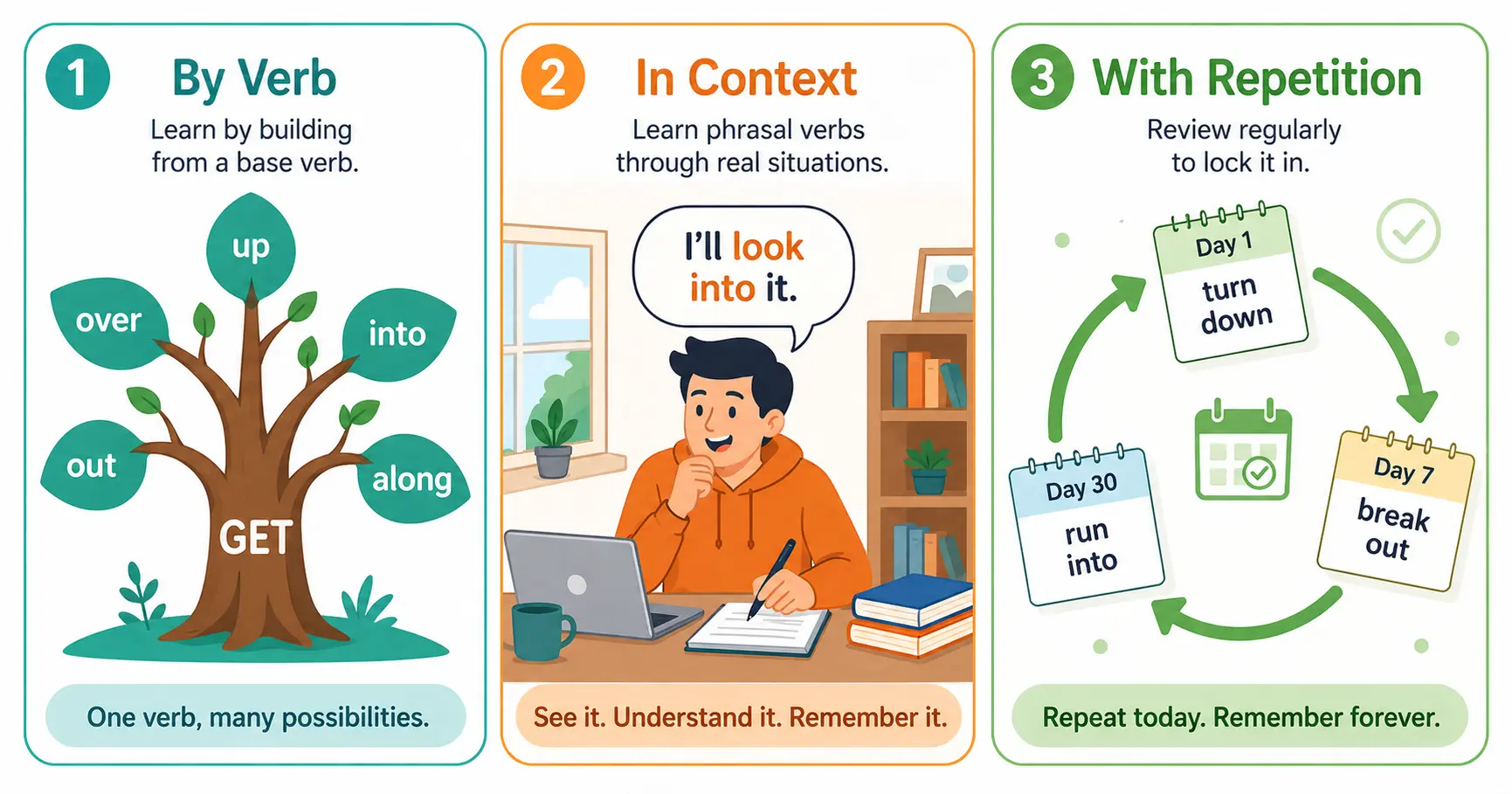
1. アルファベット順ではなく基本動詞別に学ぶ
脳にはすでにGET、TAKE、MAKEのメンタルフォルダがあります。既存のフォルダに追加する方がバラバラの組み合わせを覚えるよりずっと楽です。まずGET(最頻出)、次にTAKE、次にLOOK。
2. 単独ではなく文脈で学ぶ
「Put off = 延期する」だけでは覚えにくい。「I keep putting off my dentist appointment(歯医者の予約をずっと先延ばしにしている)」なら想像できる現実の場面。フレーザルバーブごとに、自分の生活に関する文を1つ書きましょう。
3. まず最頻出の50個から
200個のフレーザルバーブを覚える必要はありません。最頻出50のフレーザルバーブが日常会話の大部分をカバーしています。それをマスターしてから、頻度の低いものに広げましょう。
4. 生の英語でフレーザルバーブに気づく
ドラマを見ているとき、記事を読んでいるとき、ポッドキャストを聞いているとき、出てきたフレーザルバーブに注目しましょう。その文ごと書き留めてください。実際の文脈に触れることが最も強力な学習ツールです。
5. 間隔反復を使う
フレーザルバーブをLinglifyのような間隔反復システムに追加しましょう。研究によると、単語が自動的に使えるようになるまでに8〜12回の接触が必要です。間隔反復はその接触を最適なタイミングで起こしてくれます。
科学的に裏付けられた暗記法については語彙の暗記法をご覧ください。
6. 練習問題ではなく会話で練習する
穴埋め問題は「認識」を鍛えるだけで、「使用」は鍛えません。フレーザルバーブを実際に使うには、話す練習をしましょう。フレーザルバーブだけを使って一日を描写したり、フォーマルな動詞をフレーザルバーブに置き換えて話を再現してみましょう。
フレーザルバーブのよくある間違い
間違い1:不分離のフレーザルバーブを分離する
間違い: I ran my old friend into. 正しい: I ran into my old friend.
間違い2:代名詞で分離しない
間違い: Turn off it. 正しい: Turn it off.
間違い3:小辞を間違える
間違い: She got over the bus.(= バスを乗り越えた) 正しい: She got on the bus.(= バスに乗った)
小辞をひとつ間違えるだけで意味がまったく変わります。フレーザルバーブをひとつのまとまりとして覚えるべき理由がここにあります。
間違い4:フレーザルバーブを完全に避ける
フォーマルな単語だけを使う人がいます。investigateをlook intoの代わりに、tolerateをput up withの代わりに。文法的には正しいですが、会話では不自然に聞こえ、IELTS等で「自然なイディオム表現」が採点基準となる試験ではスコアも制限されます。
間違い5:フォーマルな文章に詰め込む
フレーザルバーブは話し言葉やカジュアルな文章に欠かせませんが、学術エッセイや公式な報告書では単一語の動詞が好まれることが多いです。「The study investigated the effects」は論文では「The study looked into the effects」より適切に聞こえます。
フレーザルバーブ vs. フォーマルな代替語:早見表
場面によってフォーマルな動詞(学術文章)が必要なときと、フレーザルバーブ(会話)が適切なときがあります。
| フォーマル動詞 | フレーザルバーブ | フォーマルを使う場面 |
|---|---|---|
| postpone | put off | 学術文章、フォーマルなメール |
| investigate | look into | 研究論文、公式報告書 |
| tolerate | put up with | 公式な苦情、法的文脈 |
| eliminate | get rid of | 科学論文、政策文書 |
| discover | find out | 学術論文 |
| continue | carry on / go on | フォーマルな指示、学術文章 |
| resemble | take after | フォーマルな記述 |
| recover | get over | 医療報告書 |
| establish | set up | ビジネス文書、法律文書 |
| reject | turn down | 公式な書簡 |
次に読むべき記事
このガイドはフレーザルバーブの全体像を提供します。各分野の詳細ガイドはこちら:
レベル別:
- 最頻出フレーザルバーブ50選 — 中級者はここから
- フレーザルバーブ100選:意味と例文 — 50個の次のステップ
- 上級フレーザルバーブ(C1〜C2) — 中上級〜上級者向け
基本動詞別:
- MAKEのフレーザルバーブ — 20以上の組み合わせと練習問題
場面別:
- ビジネスフレーザルバーブ — ビジネス英語向け
- IELTSスピーキング用イディオム — 試験でフレーザルバーブと一緒に使えるイディオム
語彙学習:
- 英語の語彙の学び方 — ステップバイステップの学習法
- 語彙力を向上させる方法 — すべてのレベル向け戦略
FAQ
英語にはフレーザルバーブがいくつある?
推定で5,000〜10,000以上の組み合わせがあります。ただし日常英語で頻繁に使われるのは200〜300程度。最頻出の50個がネイティブの日常会話の大部分をカバーします。まず50個、次に100個、そして200個と広げていきましょう — 網羅性ではなく頻度を基準に。
フレーザルバーブとイディオムの違いは?
フレーザルバーブは「動詞 + 小辞」の組み合わせ:「give up」「look into」「take off」。イディオムは比喩的な意味を持つ固定表現:「a piece of cake」(=簡単なこと)、「under the weather」(=体調が悪い)。重なる部分もあり、一部のフレーザルバーブは慣用的(「come across」=偶然見つける)ですが、イディオムはより広いカテゴリーで名詞句、形容詞句、文全体を含みます。
IELTSにはすべてのフレーザルバーブが必要?
いいえ。バンド7には「語彙の柔軟性」の一部としていくつかのフレーザルバーブを自然に使えればOKです。バンド8〜9ではスピーキングの能動語彙の一部であるべきです。ライティングでは選択的に使いましょう。50〜80個をしっかり使いこなせれば、どのバンドにも十分です。
フレーザルバーブが難しい理由は?
3つの理由:(1) 意味が予測不能 — 「look up」が「情報を調べる」とは推測できない;(2) ひとつのフレーザルバーブに複数の意味がある — 「take off」=服を脱ぐ、離陸する、成功する;(3) 文法ルール(分離可能 vs 不分離)に例外がある。解決策は文法ルールからではなく、文脈と繰り返しの接触を通じて学ぶことです。
フレーザルバーブはカジュアル?
多くはカジュアルまたは中立(「hang out」「give up」「find out」)ですが、学術的・ビジネス的な場面で使われるものもあります(「carry out」「set up」「account for」「point out」)。カジュアルかどうかはフレーザルバーブというカテゴリーではなく、個々のフレーザルバーブによります。会話では自由に、フォーマルな文章では選択的に使いましょう。
フレーザルバーブを覚える一番いい方法は?
基本動詞別に(GETをまとめて、TAKEをまとめて)、文脈の中で(定義だけでなく実際の文で)、間隔反復を使って学びましょう。長いアルファベット順リストは避けてください — 研究によると、体系的な文脈学習は丸暗記の3〜4倍効果的です。
フレーザルバーブの代わりにフォーマルな動詞だけ使える?
技術的にはイエスですが、英語が不自然で堅くなります。比較:「I discovered the answer」vs.「I found out the answer」。前者は翻訳調、後者はネイティブの自然な話し方。会話でフレーザルバーブを避けることは、非ネイティブの最大の目印です。目標は、フォーマルとフレーザルの両方を持ち、文脈に応じて適切な方を選べるようになることです。