
会話で使う英語語彙:覚えておきたい単語と表現
よい会話には、たくさんの単語を知っているだけでは不十分です。話題の始め方、自分の意見の説明、相手の発言への反応、自然な追加質問の仕方も知っておく必要があります。このガイドでは、会話での役割ごとに英語の語彙をまとめています。
- レベル: A2~C1
- テーマ: 日常会話、意見、反応、描写
- 対象: もっと明確で自然に話したい英語学習者
会話で使う語彙リストの活用方法
いくつかの表現を選び、まとまりのある回答を作る練習をしましょう。役立つ型は答え+理由+例です。自分の考えを伝え、その理由を説明し、短い例を加えます。こうすると、覚えたリストを読み上げるような話し方にならずに、新しい語彙を使えます。
以下の例文はモデルであり、そのまま繰り返すための台本ではありません。自分の経験に合わせて使い、くだけた表現とよりフォーマルな表現の違いにも注目してください。基礎を練習するには、会話のための基本英語をご覧ください。
会話を始めて続ける
| 単語・表現 | 品詞 | 意味 | 例文 |
|---|---|---|---|
| actually | 副詞 | 意外な情報を加えたり、誤りを訂正したりするときに使う | Actually, I have visited that museum before. |
| by the way | 表現 | 関連する新しい話題を切り出すときに使う | By the way, have you tried the new café? |
| conversation | 名詞 | カジュアルまたはフォーマルな意見のやり取り | We had a long conversation about travel. |
| curious | 形容詞 | 何かを学んだり知ったりしたいと思っている | I am curious about how you chose your career. |
| experience | 名詞 | 人が経験する出来事 | It was a useful experience for both of us. |
| interesting | 形容詞 | もっと知りたいと思わせる | That is an interesting way to solve the problem. |
| mention | 動詞 | 何かについて簡単に話す | She mentioned a book I might enjoy. |
| recently | 副詞 | 最近、少し前に | I recently started learning how to cook. |
| topic | 名詞 | 人々が話し合うテーマ | Music is an easy topic for us to talk about. |
| what about…? | 表現 | 相手の意見を聞いたり、選択肢を提案したりするときに使う | I prefer tea. What about you? |
| I was wondering… | 表現 | 質問を丁寧に切り出す言い方 | I was wondering how you heard about the event. |
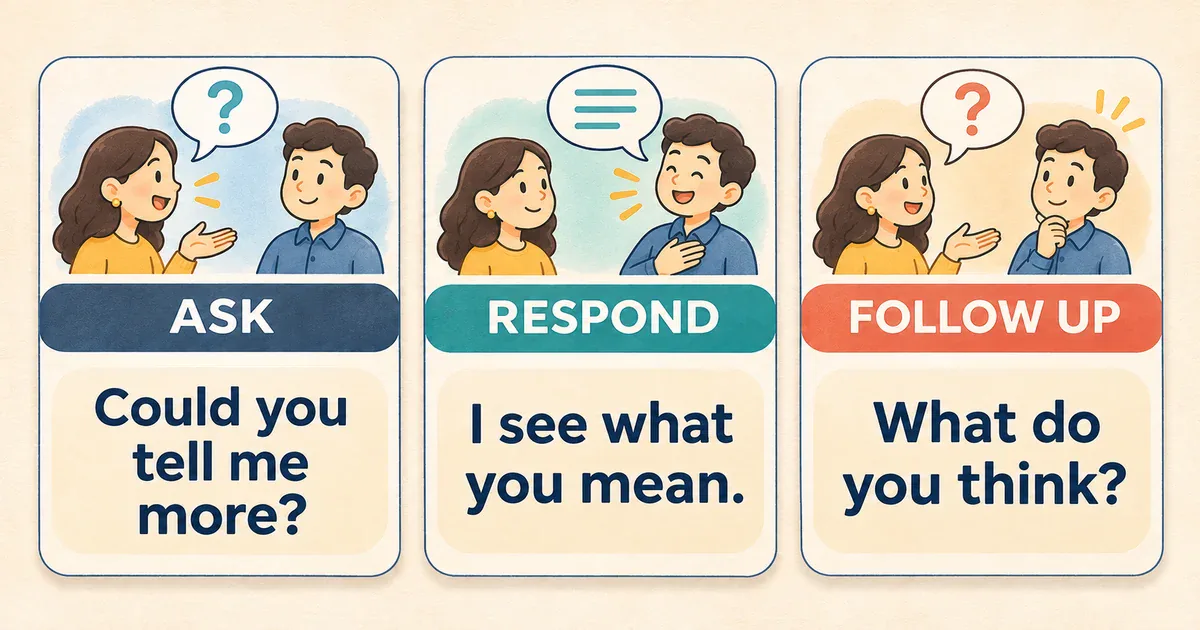
| tell me more | 表現 | さらに詳しく話してほしいと頼む言い方 | That sounds exciting. Tell me more. |
自分の意見を伝える
| 単語・表現 | 品詞 | 意味 | 例文 |
|---|---|---|---|
| believe | 動詞 | 何かが本当、またはありそうだと思う | I believe public parks make cities better. |
| consider | 動詞 | 何かについてじっくり考える | I consider learning a language a useful challenge. |
| feel | 動詞 | 特定の意見や印象を持つ | I feel that the second option is more practical. |
| in my view | 表現 | 個人的な意見を述べるときに使う | In my view, the story has a hopeful ending. |
| it seems to me | 表現 | 印象や判断を述べるときに使う | It seems to me that the plan needs more time. |
| prefer | 動詞 | ある選択肢を別のものより好む | I prefer walking because it helps me relax. |
| point of view | 名詞句 | あるテーマについての人の考え方 | I understand your point of view. |
| probably | 副詞 | 確実ではないが、可能性が高いことを表す | I will probably stay home this evening. |
| recommend | 動詞 | 何かがよい選択だと勧める | I recommend the book because it is easy to follow. |
| suppose | 動詞 | 何かがありそうだと思う、または状況を想像する | I suppose we could meet after lunch. |
| tend to | 動詞句 | ある行動をする、またはあることが起きる傾向がある | I tend to read before I go to bed. |
| to be honest | 表現 | 率直な意見を伝えるときに使う | To be honest, I found the ending confusing. |
賛成する、反対する、返答する
| 単語・表現 | 品詞 | 意味 | 例文 |
|---|---|---|---|
| absolutely | 副詞 | 完全に。強い賛成を示すときに使う | Absolutely, a short break would help. |
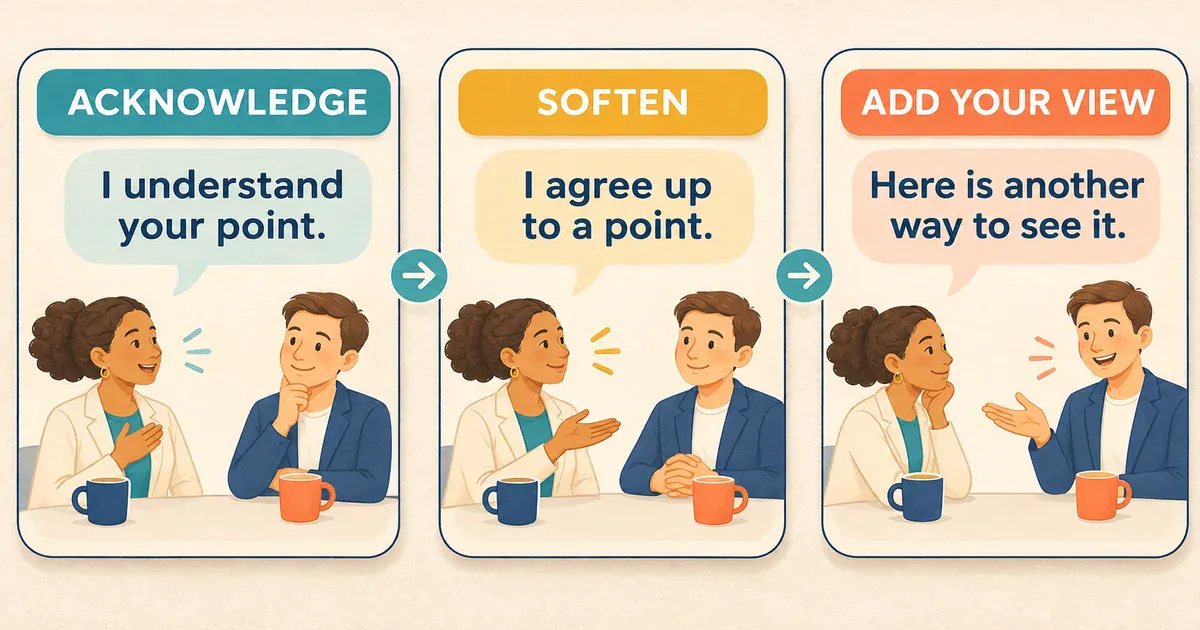
| I see what you mean | 表現 | 相手の考えを理解したと示すときに使う | I see what you mean about the travel time. |
| fair point | 表現 | 相手の主張にもっともな点があると認める返答 | Fair point; I had not considered the extra cost. |
| exactly | 副詞 | 完全に賛成していることを示すときに使う | Exactly, that is the reason I chose it. |
| I agree up to a point | 表現 | 一部に賛成しつつ、別の意見も保つときに使う | I agree up to a point, but the schedule is still too tight. |
| however | 副詞 | 前の考えと対照的な考えを導入するときに使う | The room is small. However, it is close to work. |
| in contrast | 表現 | 違いを示すときに使う | In contrast, my old neighborhood was very quiet. |
| perhaps | 副詞 | 迷いを示したり、控えめに提案したりするときに使う | Perhaps we can try a different approach. |
| on the other hand | 表現 | 反対側の見方を紹介するときに使う | It is expensive. On the other hand, it should last for years. |
| respectfully | 副詞 | 礼儀正しく、相手に配慮して | I respectfully disagree with that conclusion. |
| that is true | 表現 | 主張の一部を認めるときに使う | That is true, although the route is longer. |
| understandable | 形容詞 | 理由があると納得できる | It is understandable that you want more time. |
人、場所、経験を描写する
| 単語・表現 | 品詞 | 意味 | 例文 |
|---|---|---|---|
| convenient | 形容詞 | 使いやすい、または状況に適している | The station is convenient for my office. |
| crowded | 形容詞 | 多くの人で混み合っている | The market was crowded on Saturday morning. |
| delightful | 形容詞 | とても楽しく、心地よい | We had a delightful afternoon by the sea. |
| demanding | 形容詞 | 多くの努力や注意を必要とする | The course is demanding but rewarding. |
| familiar | 形容詞 | 以前の経験から知っている、なじみがある | The neighborhood feels familiar now. |
| memorable | 形容詞 | 記憶に残す価値がある | The concert was a memorable experience. |
| peaceful | 形容詞 | 静かで落ち着いている | The garden is peaceful in the early morning. |
| reliable | 形容詞 | 信頼できる | The bus service is reliable most days. |
| spacious | 形容詞 | 広々としている | The apartment is bright and spacious. |
| surroundings | 名詞 | ある場所の周囲にある地域やもの | I like the green surroundings of the house. |
| unusual | 形容詞 | 普通や予想とは異なる | We saw an unusual bird beside the path. |
| worthwhile | 形容詞 | 時間や努力をかけるだけの価値がある | The class was worthwhile because we practiced every week. |
気持ちや反応について話す
| 単語・表現 | 品詞 | 意味 | 例文 |
|---|---|---|---|
| amazed | 形容詞 | 素晴らしいものにとても驚いている | I was amazed by the view from the hill. |
| annoyed | 形容詞 | 少し怒ったり、いら立ったりしている | He was annoyed when the train was cancelled. |
| confident | 形容詞 | 自分の能力や判断に自信がある | I feel more confident when I prepare a few ideas. |
| disappointed | 形容詞 | 期待どおりにならず、がっかりしている | We were disappointed that the gallery was closed. |
| embarrassed | 形容詞 | 気まずさや恥ずかしさを感じている | I felt embarrassed when I forgot her name. |
| excited | 形容詞 | とても楽しみにしていて、わくわくしている | They are excited about moving to a new city. |
| frustrated | 形容詞 | 難しかったり、うまくいかなかったりしていら立っている | I was frustrated by the slow internet connection. |
| grateful | 形容詞 | 感謝している | I am grateful for your thoughtful advice. |
| relieved | 形容詞 | 心配が終わって安心している | She felt relieved when the interview was over. |
| surprised | 形容詞 | 予想外のことが起きたと感じている | I was surprised by the kind message. |
| that makes sense | 表現 | 説明に筋が通っていると示すときに使う | That makes sense; the shop closes early on Sundays. |
| what a shame | 表現 | 残念なことについて気持ちを表すときに使う | What a shame that you could not stay longer. |
短い話をする
| 単語・表現 | 品詞 | 意味 | 例文 |
|---|---|---|---|
| at first | 表現 | 状況の最初の時点で | At first, I did not know anyone at the class. |
| eventually | 副詞 | しばらくして最後には | We eventually found a quiet restaurant. |
| fortunately | 副詞 | よい結果を紹介するときに使う | Fortunately, the rain stopped before the match. |
| meanwhile | 副詞 | 同じ時間の間に | I made dinner; meanwhile, Sam set the table. |
| one day | 表現 | 過去または未来の、特定されていないある時に | One day, I would like to visit Iceland. |
| suddenly | 副詞 | 急に、予想外に | Suddenly, the lights went out. |
| the next thing I knew | 表現 | 次に起きた意外な出来事を紹介するときに使う | The next thing I knew, the whole class was singing. |
| to begin with | 表現 | 最初の理由や考えを示すときに使う | To begin with, the apartment was near the station. |
| unfortunately | 副詞 | 残念な結果を紹介するときに使う | Unfortunately, I left my notebook at home. |
| while | 接続詞 | 別のことが起きている間に | I listened to a podcast while I walked. |
| as soon as | 接続詞 | 何かが起きた直後に | Call me as soon as you arrive. |
| in the end | 表現 | すべてが起きたあとで、最終的に | In the end, we decided to stay another night. |
会話を続けるための便利な質問
よい追加質問は相手への関心を示し、話を続けやすくします。次の型は、カジュアルな会話にも仕事の場面にも役立ちます。
- How did you get interested in that? どうしてそれに興味を持つようになったのか尋ねる。
- What was that like? どんな経験だったのか話してもらう。
- What happened next? 話の続きを促す。
- What do you like most about it? 具体的な感想を尋ねる。
- Would you do it again? もう一度やりたいか、経験を振り返ってもらう。
- How does that compare with…? 違いを説明してもらう。
- Could you give me an example? もっと分かりやすい説明を求める。
- What would you recommend? おすすめを尋ねる。
練習に使える会話の英語語彙
役立つ単語を、短い回答や追加質問の中で練習しましょう。
abuse
名詞
虐待, 乱用
例
- It's important to report any signs of child abuse to the authorities.
- The investigation revealed serious abuse of power by government officials.
actually
副詞
実際に, 本当に
例
- I thought the meeting was today, but it's actually scheduled for tomorrow.
- The book looks boring, but it's actually quite interesting and engaging.
affection
名詞
愛情, 親しみ
例
- The child showed deep affection for his grandmother who raised him.
- Their mutual affection was evident to everyone who saw them together.
agreement
名詞
合意, 協定, 契約
例
- The trade agreement will benefit both countries' economic development significantly.
- There was general agreement among the committee members about the proposed changes.
airport
名詞
空港
例
- International airports handle millions of travelers and tons of cargo annually.
- We need to arrive at the airport two hours before our departure time.
alternate
形容詞
交互の, 代わりの, 交代制の
例
- The parking lot uses alternate spaces for cars and motorcycles.
- We need an alternate plan in case the weather doesn't cooperate.
announce
動詞
発表する, 告知する, アナウンスする
例
- Airlines announce flight delays through the terminal's public address system.
- The principal will announce the scholarship winners during tomorrow's assembly.
apart
副詞
離れて, 別々に
例
- Please keep these chemicals apart to prevent dangerous reactions.
- The two friends lived far apart but stayed in regular contact.
apply
動詞
適用する, 申し込む, 適用
例
- Apply pressure to the wound to stop the bleeding immediately.
- Students can apply for financial aid to help pay tuition costs.
arrest
名詞
逮捕
例
- He was under arrest for suspected involvement in the robbery.
- The arrest of the criminal was reported on the evening news.
attend
動詞
出席する, 参加する, 世話をする
例
- All students must attend classes regularly to pass their courses.
- The nurse will attend to the patient's needs throughout the night.
ballet
名詞
バレエ
例
- She studied ballet for many years before becoming a professional dancer.
- The ballet performance featured graceful movements and beautiful costumes.
basis
名詞
基礎, 土台
例
- The selection process is conducted on the basis of merit alone.
- Trust forms the basis of any successful relationship or partnership.
bedroom
名詞
寝室
例
- She decorated her bedroom with posters and colorful curtains.
- The master bedroom has a beautiful view of the garden.
biotechnology
名詞
バイオテクノロジー
例
- Agricultural biotechnology helps create disease-resistant crop varieties.
- Biotechnology companies develop new medical treatments and therapies.
borrow
動詞
借りる
例
- Can I borrow your pen for a few minutes?
- He had to borrow money from the bank for repairs.
browser
名詞
ブラウザ
例
- Chrome is the most popular web browser worldwide.
- The store welcomes browsers as well as buyers.
candidate
名詞
候補者, 志願者
例
- Each presidential candidate presented their policy plans to voters.
- The job candidate impressed the interview panel with her experience.
cat
名詞
猫
例
- The fluffy cat sat peacefully by the warm fireplace in the evening.
- Their pet cat loves to play with colorful balls of yarn.
cherished
形容詞
大切にされた, 愛された, 宝物の
例
- His cherished dream of becoming a pilot finally came true.
- The old photograph was her most cherished possession from childhood.
cloudy
形容詞
曇った, 曇りがちな, 曇りの
例
- The water became cloudy after stirring up sediment from the bottom.
- The weather forecast predicts cloudy skies with possible rain this evening.
commute
動詞
通勤する, 通学する
例
- Public transportation helps people commute efficiently reducing traffic congestion.
- Workers commute daily between suburban homes and downtown offices.
confirmation
名詞
確認, 確証
例
- She received confirmation of her job application via email yesterday.
- The confirmation ceremony was held at the local church on Sunday.
correspond
動詞
一致する, 対応する, 通信する
例
- She corresponds regularly with her friends who live in different countries.
- The witness testimony should correspond with the physical evidence found at the scene.
custom
名詞
習慣, 慣習, カスタム
例
- It is a local custom to remove shoes before entering homes.
- The wedding ceremony followed traditional customs from their culture.
毎日できる短いスピーキング練習
- 食べ物、仕事、旅行など、テーマを一つ選びます。
- キーワードを三つと、伝えたい意見を一つ書き出します。
- 答え+理由+例の型を使って、一分間話します。
- 録音を聞き、追加質問をするとよかった箇所を見つけます。
- より明確で的確な表現を使って、もう一度答えます。
テーマ別の英語語彙で語彙を練習し、仕事に関する語彙ライブラリで表現を復習できます。
会話の語彙でよくある間違い
- どの回答にも慣用表現を入れる。 合わない表現をいくつも使うより、自然な表現を一つ使うほうが効果的です。
- すべての文で “I think” を繰り返す。 in my view、I believe、または直接的な言い方も使いましょう。
- よく分からない難しい単語を選ぶ。 意味が分かり、無理なく発音できる単語を使いましょう。
- 理由を添えずに意見だけを述べる。 理由や例を加えると、回答がより明確になります。
- 回答全体を暗記する。 便利な表現を準備し、実際に聞かれた質問に合わせましょう。
次にすること
- 一つのセクションを選び、表現を五つ覚えます。
- それぞれを自分に関する文で使います。
- 一分間の回答と追加質問を練習します。
- 会話のための基本英語を読みます。
- テーマ別の英語語彙で単語を増やします。
よくある質問
英会話の語彙を増やすにはどうすればよいですか?
単語を一つずつ訳語として覚えるのではなく、表現や場面の中で役立つ語彙を学びましょう。短い回答、例文、追加質問で練習し、実際の会話ですぐ思い出せるよう定期的に復習してください。
毎日、新しい単語をいくつ学ぶとよいですか?
復習して正しく使える量を選びましょう。自分で作った文の中で使う五つの表現は、一度読むだけの長い単語リストより役立つことが多いです。
英語の会話でもっと自然に話すにはどうすればよいですか?
場面に合った一般的な表現を使い、相手の発言に応じて返答し、適切な追加質問をしましょう。自然な会話は双方向なので、回答をいつも長く複雑にする必要はありません。
話すときに上級語彙を使うべきですか?
伝えたいことを正確に表すのに役立つ場合は、適切な単語を使いましょう。不自然に聞こえたり、使い方を間違えたりすれば、難しい単語を使っても回答はよくなりません。
話している途中で単語を忘れたら、どうすればよいですか?
別の言い方で説明したり、例を挙げたり、もっと簡単な単語を使ったりしましょう。少し間を置いて、考える時間をもらうこともできます。正確な単語を思い出せなくても、会話は続けられます。