トピック別英語語彙:20以上のテーマ別単語リスト
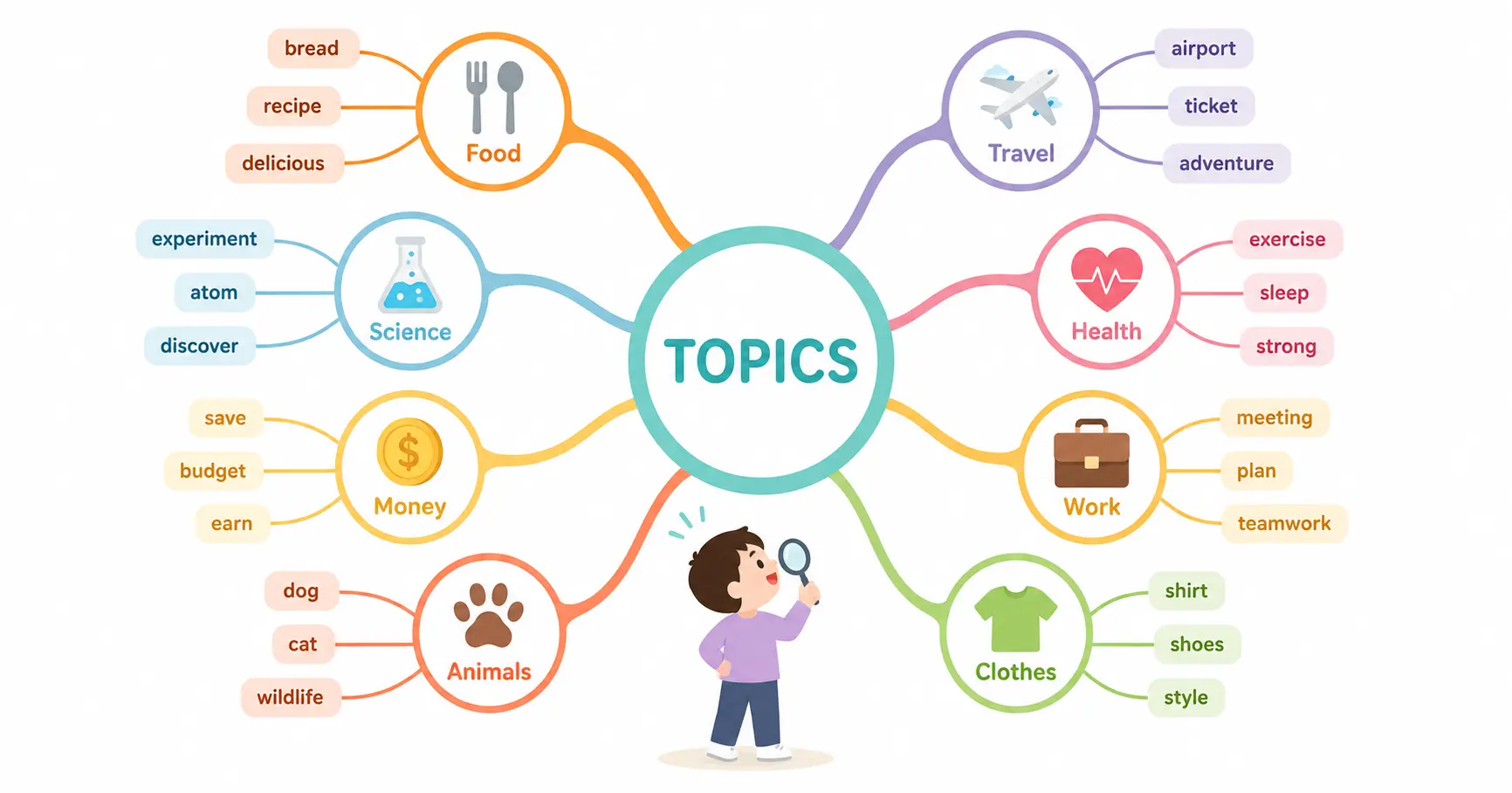
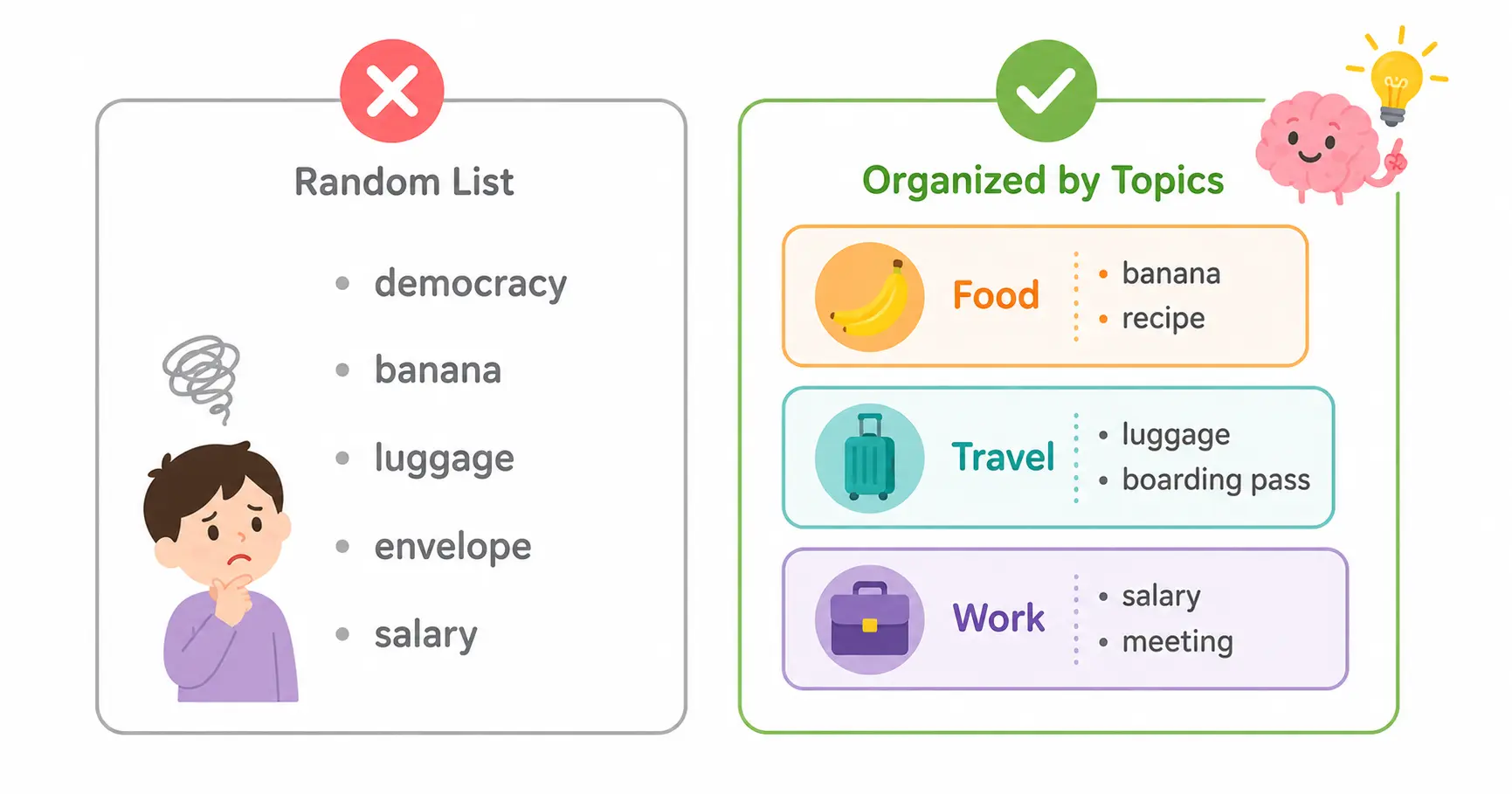
英語の語彙をトピック別に学ぶのは、最も効率的な学習法の一つです。食べ物、旅行、健康、仕事 — テーマごとにまとめて覚えると、共通の文脈でつながるため脳が自然に結びつけてくれます。「boarding pass」は「gate」「departure」「luggage」の隣にあるほうが、「democracy」と「envelope」の間にあるよりもずっと覚えやすいのです。
認知言語学の研究もこれを裏付けています。意味的ネットワーク(関連する意味のグループ)に保存された単語は、孤立して覚えた単語より速く正確に思い出せます。ネイティブスピーカーが語彙を脳内で整理する方法もまさにこれ — アルファベット順ではなく、トピックと連想によるものです。
このガイドでは、20以上の語彙トピックをそれぞれ15〜20語のサンプル付きで紹介します。日常の基礎(A1〜A2)から、上級の専門分野・学術分野(B2〜C1)まで整理しています。各セクションにはキーワード、意味、例文の表を掲載。このページをハブとして、必要なトピックを見つけ、サンプルを学び、リンク先のフルガイド(200〜300語以上)に進んでください。
- トピック数: 20以上
- 1トピックの語数: 15〜20語(サンプル。フルリストは専用記事で)
- レベル: A1からC1まで
- 対象者: 体系的な語彙構築、試験対策(IELTS・TOEFL・TOEIC)、弱点テーマの補強
トピック別語彙の活用法
単語リストに入る前に、トピック別学習を効果的にする4つの原則を押さえましょう。
1. 今必要なトピックから始める。 来月旅行に行くならTravelから。IELTS対策ならSpeaking Part 2に頻出するテーマ — Health、Environment、Education、Technology — から。20トピックを同時に学ぼうとしないでください。
2. 1回10〜15語ずつ学ぶ。 研究によると、1回の学習で効果的に記憶できるのは10〜15語が上限です。1ブロックを学んだら翌日に復習し、それから次のブロックを追加してください。詳しいプロセスは語彙学習のステップバイステップガイドで解説しています。
3. 必ず文脈の中で覚える。 以下のすべての単語に例文がついています。文を読み、場面を想像し、自分でも文を作ってみてください。文脈のない単語は忘れる単語です。
4. 間隔反復で定着させる。 各トピックの学習後、単語をLinglifyの辞書に追加してください。間隔反復システムが忘れかける直前に各単語を表示します — 最も時間効率のよい語彙定着法です。
日常生活のトピック(A1〜A2)
すべての英語学習者が最初に学ぶトピックです。家、お店、街で毎日遭遇する場面をカバーしています。初心者はここから始めてください。
1. あいさつと自己紹介
どの言語でも最初に必要になる言葉です。最初の会話を乗り切るフレーズです。
| 単語 / フレーズ | 意味 | 例文 |
|---|---|---|
| hello | あいさつ | Hello, my name is Sara. |
| goodbye | 別れの言葉 | Goodbye, see you tomorrow. |
| please | お願いの言葉 | Can I have some water, please? |
| thank you | 感謝の言葉 | Thank you for helping me. |
| sorry | 謝罪の言葉 | Sorry, I’m late. |
| nice to meet you | 初対面のあいさつ | Nice to meet you. I’m Alex. |
| excuse me | 注意を引く / 通り過ぎる時 | Excuse me, where is the bank? |
| how are you | 相手の調子を聞く | How are you? — I’m fine, thanks. |
| my name is… | 自己紹介 | My name is Kenji. |
| welcome | 到着した人へのあいさつ | Welcome to our office. |
200以上の初心者向けフレーズは初心者向け英語:基本単語とフレーズで詳しく紹介しています。
2. 数字・時間・曜日
数字と時間の表現は、スケジュール、価格、日付、予約に欠かせません。
| 単語 / フレーズ | 意味 | 例文 |
|---|---|---|
| one, two, three… | 数える数 | I need three tickets. |
| hundred | 100 | There are a hundred students. |
| thousand | 1,000 | The phone costs two thousand dollars. |
| today | 今日 | I have a meeting today. |
| tomorrow | 明日 | The exam is tomorrow. |
| yesterday | 昨日 | I saw her yesterday. |
| Monday – Sunday | 曜日 | The class is on Wednesday. |
| January – December | 月 | My birthday is in March. |
| morning | 朝 | I exercise in the morning. |
| evening | 夕方 | We eat dinner in the evening. |
| o’clock | ちょうど(時刻) | It’s 3 o’clock. |
| half past | 30分過ぎ | It’s half past six. |
3. 食べ物と飲み物
最も大きな語彙トピックの一つで、英語圏のどの国でも最初に必要になります。
| 単語 | 意味 | 例文 |
|---|---|---|
| bread | パン | Can I have some bread, please? |
| rice | 米 | I eat rice every day. |
| chicken | 鶏肉 | I ordered grilled chicken. |
| fish | 魚 | The fish is very fresh. |
| water | 水 | Just water, please. |
| coffee | コーヒー | I drink coffee every morning. |
| vegetable | 野菜 | You should eat more vegetables. |
| fruit | 果物 | I had fruit for breakfast. |
| sugar | 砂糖 | Do you take sugar in your tea? |
| salt | 塩 | The soup needs more salt. |
| menu | メニュー | Can I see the menu? |
| delicious | とてもおいしい | This pasta is delicious! |
| hungry | 空腹の | I’m so hungry right now. |
| recipe | レシピ | I found a great recipe online. |
| dessert | デザート | What’s for dessert? |
4. 衣服とファッション
衣服の語彙は買い物、人の描写、日常会話に欠かせません。
| 単語 | 意味 | 例文 |
|---|---|---|
| shirt | シャツ | He’s wearing a white shirt. |
| pants / trousers | ズボン | These pants are too long. |
| dress | ワンピース、ドレス | She wore a beautiful dress. |
| shoes | 靴 | I need new running shoes. |
| jacket | ジャケット、上着 | Bring a jacket — it’s cold outside. |
| hat | 帽子 | She always wears a hat in summer. |
| socks | 靴下 | I packed three pairs of socks. |
| belt | ベルト | His belt matches his shoes. |
| scarf | スカーフ、マフラー | I wore a warm scarf in winter. |
| size | サイズ | What size do you wear? |
| try on | 試着する | Can I try on this jacket? |
| fit | サイズが合う | This shirt fits perfectly. |
| cotton | 綿 | This T-shirt is 100% cotton. |
| casual | カジュアルな | The dress code is casual. |
| formal | フォーマルな | You need formal clothes for the interview. |
5. 家と毎日のルーティン
住まいと毎日の行動に関する単語です。
| 単語 | 意味 | 例文 |
|---|---|---|
| bedroom | 寝室 | The apartment has two bedrooms. |
| kitchen | キッチン | I cook dinner in the kitchen. |
| bathroom | バスルーム | The bathroom is on the second floor. |
| furniture | 家具 | We need new furniture. |
| key | 鍵 | Don’t forget your keys. |
| wake up | 起きる | I wake up at 7 AM. |
| take a shower | シャワーを浴びる | I take a shower every morning. |
| cook | 料理する | My father cooks dinner on weekends. |
| clean | 掃除する | I clean the apartment on Saturdays. |
| sleep | 寝る | I usually sleep 8 hours. |
| alarm | 目覚まし | My alarm goes off at 6:30. |
| neighbor | 隣人 | Our neighbors are very friendly. |
6. 家族と人間関係
| 単語 | 意味 | 例文 |
|---|---|---|
| mother / father | 母 / 父 | My mother is a teacher. |
| brother / sister | 兄弟 / 姉妹 | I have two brothers and one sister. |
| son / daughter | 息子 / 娘 | Their daughter starts school this year. |
| husband / wife | 夫 / 妻 | My wife works at a hospital. |
| friend | 友人 | She’s my best friend from school. |
| grandparents | 祖父母 | My grandparents live in the countryside. |
| uncle / aunt | おじ / おば | My uncle lives in London. |
| cousin | いとこ | I have 12 cousins. |
| wedding | 結婚式 | The wedding is in June. |
| baby | 赤ちゃん | The baby is sleeping now. |
実用的な場面のトピック(A2〜B1)
英語の実社会をナビゲートし始める時に必要なトピック — 旅行、病院、お金の管理など。
7. 旅行と観光
空港、ホテル、英語圏での移動に欠かせない語彙です。
| 単語 | 意味 | 例文 |
|---|---|---|
| passport | パスポート | Don’t forget your passport. |
| ticket | チケット | I booked a one-way ticket. |
| flight | フライト | The flight to London takes 11 hours. |
| boarding pass | 搭乗券 | Please show your boarding pass. |
| luggage / baggage | 荷物 | My luggage weighs 23 kilos. |
| departure | 出発 | The departure time is 8:15 AM. |
| arrival | 到着 | Check the arrival board for your train. |
| reservation | 予約 | I have a reservation for two nights. |
| hotel | ホテル | The hotel is near the city center. |
| sightseeing | 観光 | We went sightseeing in Rome. |
| customs | 税関 | You must go through customs. |
| currency | 通貨 | The local currency is the euro. |
| guidebook | ガイドブック | I bought a guidebook before the trip. |
| souvenir | お土産 | I got a souvenir for my mother. |
8. 方向と交通
| 単語 | 意味 | 例文 |
|---|---|---|
| left / right | 左 / 右 | Turn left at the traffic light. |
| straight | まっすぐ | Go straight for 200 meters. |
| corner | 角 | The café is on the corner. |
| bus stop | バス停 | The bus stop is across the street. |
| train station | 駅 | How do I get to the train station? |
| map | 地図 | Can you show me on the map? |
| crosswalk | 横断歩道 | Use the crosswalk to cross safely. |
| traffic | 交通、渋滞 | There’s heavy traffic on this road. |
| parking | 駐車場 | Is there parking near the museum? |
| subway / underground | 地下鉄 | Take the subway to downtown. |
9. 買い物とお金
| 単語 | 意味 | 例文 |
|---|---|---|
| price | 価格 | What’s the price of this? |
| discount | 割引 | There’s a 20% discount today. |
| receipt | レシート | Can I get a receipt, please? |
| cash | 現金 | Do you accept cash? |
| credit card | クレジットカード | I’ll pay by credit card. |
| change | おつり | Here’s your change — $3.50. |
| refund | 返金 | Can I get a refund? |
| sale | セール | The store is having a sale. |
| expensive | 高い | This restaurant is too expensive. |
| cheap | 安い | The market has cheap vegetables. |
| customer | 客 | The customer asked for help. |
| store / shop | 店 | There’s a shoe store on that street. |
10. 健康と体
医者にかかる時、薬の説明を読む時、体調を伝える時に必要な語彙です。
| 単語 | 意味 | 例文 |
|---|---|---|
| headache | 頭痛 | I have a terrible headache. |
| fever | 発熱 | She has a high fever. |
| cough | 咳 | I can’t stop coughing. |
| medicine | 薬 | Take this medicine twice a day. |
| doctor | 医者 | You should see a doctor. |
| hospital | 病院 | He was taken to the hospital. |
| pain | 痛み | I have a pain in my back. |
| allergy | アレルギー | I have a nut allergy. |
| prescription | 処方箋 | The pharmacy needs a prescription. |
| symptom | 症状 | What are your symptoms? |
| blood | 血液 | The nurse took a blood sample. |
| surgery | 手術 | He had knee surgery last month. |
| recover | 回復する | It takes time to fully recover. |
| healthy | 健康な | Eating vegetables keeps you healthy. |
11. 天気と自然
| 単語 | 意味 | 例文 |
|---|---|---|
| sunny | 晴れた | It’s sunny and warm today. |
| cloudy | 曇った | It was cloudy all morning. |
| rain | 雨 | Bring an umbrella — it might rain. |
| snow | 雪 | It snows a lot in December here. |
| wind | 風 | The wind is very strong today. |
| storm | 嵐 | A storm is coming tonight. |
| temperature | 気温 | The temperature dropped to 5°C. |
| fog | 霧 | The fog made driving difficult. |
| season | 季節 | Autumn is my favorite season. |
| sunrise / sunset | 日の出 / 日の入り | The sunset was beautiful. |
| ocean | 海 | We live near the ocean. |
| mountain | 山 | They went hiking in the mountains. |
| forest | 森 | The forest is full of wildlife. |
12. 動物
| 単語 | 意味 | 例文 |
|---|---|---|
| dog | 犬 | My dog loves playing in the park. |
| cat | 猫 | The cat is sleeping on the sofa. |
| bird | 鳥 | I hear birds singing every morning. |
| fish | 魚 | There are tropical fish in the tank. |
| horse | 馬 | She has been riding horses since age 5. |
| elephant | ゾウ | We saw elephants at the zoo. |
| lion | ライオン | The lion is called the king of the jungle. |
| pet | ペット | Do you have any pets? |
| wild | 野生の | Wild animals should stay in their habitat. |
| endangered | 絶滅危惧の | Many species are endangered. |
| insect | 昆虫 | Butterflies are beautiful insects. |
| farm | 農場 | The farm has cows, chickens, and sheep. |
学術・ビジネスのトピック(B1〜B2)
試験、学術的な文章、ビジネス環境で重要なトピックです。語彙はより専門的になります。
13. 教育と学校
| 単語 | 意味 | 例文 |
|---|---|---|
| university | 大学 | She studies at the University of Tokyo. |
| degree | 学位 | He has a degree in engineering. |
| exam | 試験 | The final exam is next Monday. |
| lecture | 講義 | The professor gave a lecture on economics. |
| assignment | 課題 | The assignment is due on Friday. |
| research | 研究 | She is doing research on climate change. |
| scholarship | 奨学金 | He received a full scholarship. |
| graduate | 卒業する | I graduated in 2024. |
| tuition | 学費 | Tuition fees are increasing every year. |
| curriculum | カリキュラム | The curriculum includes math and science. |
| semester | 学期 | I’m taking 5 courses this semester. |
| campus | キャンパス | The campus has a beautiful library. |
14. 仕事とビジネス
| 単語 | 意味 | 例文 |
|---|---|---|
| salary | 給与 | The salary is paid monthly. |
| interview | 面接 | I have a job interview tomorrow. |
| résumé / CV | 履歴書 | Update your résumé before applying. |
| deadline | 締め切り | The project deadline is next week. |
| colleague | 同僚 | My colleague helped me with the report. |
| meeting | 会議 | We have a team meeting at 10. |
| promotion | 昇進 | She got a promotion to manager. |
| client | クライアント | The client approved the design. |
| budget | 予算 | The marketing budget is $50,000. |
| profit | 利益 | The company made a good profit this year. |
| contract | 契約 | Read the contract before signing. |
| remote | リモートの | I work remotely three days a week. |
15. テクノロジーとコンピュータ
| 単語 | 意味 | 例文 |
|---|---|---|
| software | ソフトウェア | We installed new software yesterday. |
| hardware | ハードウェア | The hardware needs an upgrade. |
| download | ダウンロードする | I downloaded the file in 2 minutes. |
| upload | アップロードする | Please upload your photo to the website. |
| password | パスワード | Change your password regularly. |
| Wi-Fi | Wi-Fi | Is there free Wi-Fi here? |
| app | アプリ | This app translates text instantly. |
| update | アップデート | Install the latest update. |
| cloud | クラウド | I saved the document to the cloud. |
| website | ウェブサイト | Visit our website for more information. |
| data | データ | The company collects user data. |
| cybersecurity | サイバーセキュリティ | Cybersecurity is a growing field. |
16. 犯罪と法律
| 単語 | 意味 | 例文 |
|---|---|---|
| crime | 犯罪 | Crime rates have decreased in the area. |
| law | 法律 | The new law takes effect in January. |
| police | 警察 | The police are investigating the case. |
| judge | 裁判官 | The judge gave a fair sentence. |
| court | 裁判所 | The case will go to court next month. |
| evidence | 証拠 | The evidence was presented to the jury. |
| guilty | 有罪の | The jury found him guilty. |
| innocent | 無罪の | She was found innocent of all charges. |
| lawyer | 弁護士 | You should consult a lawyer. |
| arrest | 逮捕する | The suspect was arrested yesterday. |
| witness | 証人 | The witness described what happened. |
| sentence | 判決 | He received a 5-year prison sentence. |
17. お金と金融
| 単語 | 意味 | 例文 |
|---|---|---|
| bank account | 銀行口座 | I opened a bank account last week. |
| savings | 貯金 | I’m building my savings for a car. |
| loan | ローン | She took out a student loan. |
| interest | 利子 | The interest rate is 4.5%. |
| investment | 投資 | Real estate can be a good investment. |
| tax | 税金 | Income tax is deducted from your salary. |
| debt | 借金 | I’m trying to pay off my debt. |
| inflation | インフレ | Inflation is affecting food prices. |
| budget | 予算 | We need to stick to our monthly budget. |
| income | 収入 | Her annual income is $60,000. |
| expense | 出費 | My biggest expense is rent. |
| exchange rate | 為替レート | What’s the exchange rate today? |
上級・専門トピック(B2〜C1)
学術エッセイ、IELTS/TOEFLのWriting・Speaking、上級のビジネス環境で求められるトピックです。
18. 環境とエコロジー
IELTS Writing Task 2やSpeaking Part 3で頻出のトピックです。
| 単語 | 意味 | 例文 |
|---|---|---|
| pollution | 汚染 | Air pollution is a serious problem in cities. |
| climate change | 気候変動 | Climate change affects every country. |
| renewable | 再生可能な | Solar power is a renewable energy source. |
| carbon footprint | 炭素排出量 | We should reduce our carbon footprint. |
| deforestation | 森林破壊 | Deforestation destroys animal habitats. |
| ecosystem | 生態系 | Coral reefs are fragile ecosystems. |
| biodiversity | 生物多様性 | Biodiversity is declining worldwide. |
| sustainable | 持続可能な | Sustainable farming protects the soil. |
| recycle | リサイクルする | We recycle paper, plastic, and glass. |
| conservation | 保全 | Wildlife conservation is essential. |
| emissions | 排出 | The factory reduced its emissions by 30%. |
| fossil fuel | 化石燃料 | Fossil fuels include oil, coal, and gas. |
19. 科学と研究
| 単語 | 意味 | 例文 |
|---|---|---|
| experiment | 実験 | The students conducted an experiment. |
| hypothesis | 仮説 | The hypothesis was confirmed by the data. |
| theory | 理論 | The theory of evolution is well-established. |
| atom | 原子 | Water is made of hydrogen and oxygen atoms. |
| cell | 細胞 | The human body has trillions of cells. |
| species | 種 | Many species are threatened by habitat loss. |
| DNA | DNA | DNA determines many physical traits. |
| energy | エネルギー | Solar panels convert sunlight into energy. |
| gravity | 重力 | Gravity keeps us on the ground. |
| microscope | 顕微鏡 | We observed the cells under a microscope. |
| data | データ | The data shows a clear trend. |
| laboratory | 実験室 | The laboratory has modern equipment. |
200以上の科学用語のフルリストは科学英語語彙ガイドで紹介しています。
20. メディアとコミュニケーション
| 単語 | 意味 | 例文 |
|---|---|---|
| news | ニュース | I read the news every morning. |
| article | 記事 | I read an interesting article about AI. |
| journalist | ジャーナリスト | The journalist interviewed the president. |
| broadcast | 放送する | The match will be broadcast live. |
| social media | ソーシャルメディア | Social media influences public opinion. |
| advertisement | 広告 | I saw an advertisement for the new phone. |
| headline | 見出し | The headline shocked everyone. |
| subscribe | 登録する | Subscribe to our newsletter for updates. |
| content | コンテンツ | The website has great educational content. |
| audience | 視聴者、読者 | The show has a large audience. |
| viral | バイラルな | The video went viral overnight. |
| podcast | ポッドキャスト | I listen to English podcasts on my commute. |
21. 感情と心理学
| 単語 | 意味 | 例文 |
|---|---|---|
| anxiety | 不安 | She suffers from anxiety before exams. |
| confidence | 自信 | His confidence has grown this year. |
| motivation | モチベーション | I need more motivation to study. |
| stress | ストレス | Work stress is affecting my sleep. |
| empathy | 共感 | Good leaders show empathy. |
| frustration | フラストレーション | His frustration was visible. |
| resilience | レジリエンス、回復力 | Resilience is key to long-term success. |
| self-esteem | 自尊心 | Positive feedback improves self-esteem. |
| mindset | マインドセット | A growth mindset leads to better learning. |
| habit | 習慣 | Reading is a healthy habit. |
| therapy | セラピー | Therapy helped her manage stress. |
| well-being | ウェルビーイング | Exercise improves overall well-being. |
22. スポーツとフィットネス
| 単語 | 意味 | 例文 |
|---|---|---|
| exercise | 運動 | I exercise three times a week. |
| coach | コーチ | The coach designed a new training plan. |
| score | スコア、得点 | The final score was 3–1. |
| match | 試合 | The tennis match lasted three hours. |
| tournament | トーナメント | She won the regional tournament. |
| gym | ジム | I go to the gym after work. |
| opponent | 対戦相手 | His opponent was very experienced. |
| championship | 選手権 | The world championship starts next week. |
| marathon | マラソン | She completed her first marathon. |
| injury | ケガ | He missed the season due to a knee injury. |
| warm up | ウォームアップ | Always warm up before running. |
| stamina | スタミナ | Swimming builds stamina. |
練習用の単語
以下の25語はさまざまなトピックとレベルにまたがっています。Linglifyの辞書に追加して間隔反復で学びましょう。
accomplish
動詞
成し遂げる, 達成する
例
- She was able to accomplish all her goals before the deadline.
- Working together, the team can accomplish much more than individuals working alone.
admire
動詞
賞賛する, 敬う
例
- I really admire people who volunteer their time to help others.
- Tourists often stop to admire the stunning architecture of the ancient cathedral.
agonize
動詞
苦しむ, もだえる, 悩む
例
- Don't agonize too much about past mistakes that you cannot change.
- She continued to agonize over the difficult decision for weeks.
ambiguity
名詞
曖昧さ, あいまいさ
例
- Legal documents should be written clearly to avoid any ambiguity.
- The contract's ambiguity led to disagreements between the two companies.
anxiously
副詞
不安そうに, 心配して
例
- Students anxiously checked their phones for exam results.
- The family waited anxiously for news about their missing relative.
artery
名詞
動脈
例
- The blocked artery required immediate surgical intervention to save his life.
- This highway is a major artery connecting the city to surrounding areas.
attainable
形容詞
達成可能な, 手の届く
例
- Setting realistic and attainable goals helps maintain motivation for success.
- With proper training, running a marathon is an attainable objective.
badly
副詞
ひどく, 下手に, 不十分に
例
- She badly wanted to visit Paris before the end of summer.
- The team played badly and lost the championship game.
bathroom
名詞
浴室, トイレ
例
- Excuse me, could you tell me where the bathroom is located?
- The hotel bathroom was spacious and beautifully decorated.
bestseller
名詞
ベストセラー
例
- Her novel became an international bestseller within six months.
- The bookstore has a special section dedicated to current bestsellers.
bless
動詞
祝う
例
- She felt blessed to have such wonderful friends.
- The priest blessed the newborn baby during the ceremony.
bottom
形容詞
最下の, 最低の
例
- She keeps her shoes on the bottom shelf.
- The bottom line is that we need more funding.
broadcast
名詞
放送, 放送番組
例
- Millions watched the live broadcast of the event.
- The news broadcast revealed shocking new information.
buy
動詞
買う
例
- She decided to buy organic vegetables at the local farmer's market.
- We plan to buy a new car before our summer vacation trip.
cardboard
名詞
段ボール
例
- Children made creative art projects using colored cardboard and glue.
- The moving boxes were made of sturdy corrugated cardboard material.
century
名詞
世紀
例
- Medical advances in the past century have greatly improved human health.
- The ancient castle was built in the fourteenth century by local nobles.
choir
名詞
合唱団
例
- She joined the school choir to improve her singing skills and confidence.
- The church choir performed beautiful hymns during the Sunday service.
coastal
形容詞
沿岸の, 海岸の, 海辺の
例
- Coastal towns often depend on fishing and tourism for their economy.
- The coastal erosion threatens many beachfront properties and buildings.
compile
動詞
編集する, コンパイルする
例
- Programmer must compile source code before executing software application.
- Research team will compile data from multiple studies and sources.
conservative
名詞
保守派
例
- Many conservatives oppose rapid changes to established social institutions.
- She is a conservative who believes in maintaining traditional family values.
corona
名詞
コロナ, 冠状, 王冠
critic
名詞
批評家, 評論家
例
- Even his harshest critic admitted that the plan had merit.
- The restaurant critic wrote a positive review of the new establishment.
dash
名詞
突進, ダッシュ
例
- Add just a dash of salt to improve the soup's flavor.
- She made a mad dash for the door when it started raining.
deliberately
副詞
意図的に, わざと
例
- She deliberately arrived late to avoid the crowded opening ceremony.
- The artist deliberately used bright colors to create emotional impact.
devote
動詞
献身する, 捧げる, 専念する
例
- Parents devote much time and energy to raising their children properly.
- She will devote her entire weekend to studying for final examinations.
トピック別語彙の学習システム
このページのどのトピックにも使えるステップバイステップのアプローチです。
ステップ1:トピックを選ぶ
今の自分の生活に必要な1トピックを選んでください。就職活動中ならWork and Business、旅行予定があるならTravel、IELTS対策ならEnvironment、Education、Technology、Health、Crimeが頻出です。
ステップ2:1回10〜15語ずつ学ぶ
1トピックの15〜20語を一度に全部覚えようとしないでください。10〜12語を取り出し、例文付きで学び、自分でテストします。覚えられなかった単語はLinglifyの辞書に追加してください。
ステップ3:自分で文を作る
各単語について、自分の生活から1文を書いてみてください。「pollution」→「東京の空気は最近よくなった」は、教科書のどんな例文より記憶に残ります。自分の経験と結びつくからです。
ステップ4:間隔反復で復習する
翌日、同じ単語に戻ってください。忘れた単語はどれですか?それが追加の復習が必要な単語です。Linglifyの間隔反復システムが自動的にスケジュールを組みます。
ステップ5:次のトピックへ
1トピックの単語を80%以上思い出せるようになったら、次へ進みましょう。完璧を目指さず、前に進むことが大切です。
全7ステップの完全システムは語彙学習のステップバイステップガイドで紹介しています。
試験別のトピック語彙
IELTS
IELTS SpeakingとWritingは、さまざまなトピックについて話す力を測ります。頻出トピックはこのページの語彙と直接対応しています。
| IELTSトピック | 対応セクション |
|---|---|
| 健康・フィットネス | 健康と体、スポーツとフィットネス |
| 教育 | 教育と学校 |
| 環境 | 環境とエコロジー |
| テクノロジー | テクノロジーとコンピュータ |
| 犯罪 | 犯罪と法律 |
| 仕事 | 仕事とビジネス |
| 旅行・観光 | 旅行と観光 |
| メディア | メディアとコミュニケーション |
| 食事・栄養 | 食べ物と飲み物 |
試験特化の語彙はIELTS語彙ガイドをご覧ください。
TOEFL
TOEFLのReadingとListeningは学術トピックが中心です — 特にScience、Environment、Education、History。上級・専門セクションの語彙がTOEFLの文章に直接対応しています。TOEFL専用の単語リストはTOEFL準備ガイドをご覧ください。
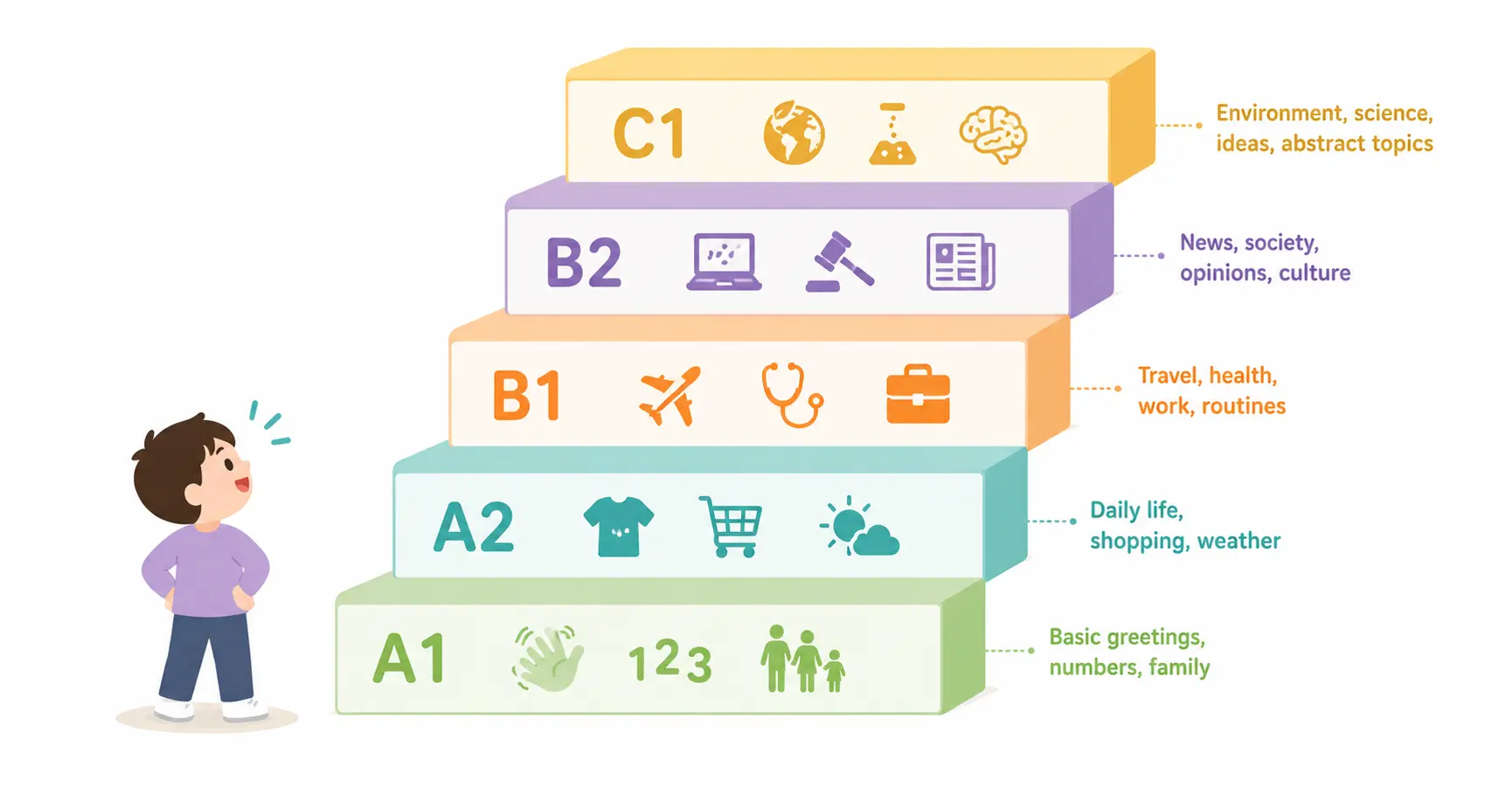
トピックとCEFRレベルの対応
各語彙トピックは大まかに特定のCEFRレベルに対応しています。
| CEFRレベル | 学ぶべきトピック |
|---|---|
| A1(入門) | あいさつ、数字、家族、家、動物、基本の食べ物 |
| A2(初級) | 衣服、買い物、方向、天気、毎日のルーティン |
| B1(中級) | 旅行、健康、教育、基本の仕事、スポーツ |
| B2(中上級) | テクノロジー、犯罪、金融、メディア、上級の仕事 |
| C1(上級) | 環境、科学、心理学、専門ビジネス |
各レベルの語彙についてはCEFRレベル別英語語彙をご覧ください。
次に学ぶべきこと
このページでは各トピックのサンプルを紹介しました。さらに深く学ぶ方法です。
-
日常語彙を固める。 最も実用的な単語から始めたい方は、日常英語の必須単語ガイドで500語以上を場面別に学べます。
-
頻出単語をマスターする。 頻出英単語1000語は日常会話の85%をカバーします。トピックを深掘りする前の土台です。
-
正しい勉強法を選ぶ。 トピック別学習は正しいシステムと組み合わせることで最大の効果を発揮します。語彙学習ガイドで7ステップのプロセスを学びましょう。
-
自分のレベルを把握する。 どのトピックから学ぶべきか迷ったら、まずレベルを確認してください。CEFRレベル別語彙ガイドで各段階の目安がわかります。
-
4,000語を目指す。 研究によると、4,000語族で日常英語の95%を理解できます。必須英単語4000語ガイドで全体のロードマップを確認しましょう。
-
暗記テクニックを活用する。 科学的な方法で語彙を定着させましょう。語彙の暗記ガイドで効果的な方法を学べます。
よくある質問
初心者に最適な語彙トピックは?
毎日使うトピックから始めましょう:あいさつ、数字、食べ物、家族、家、衣服。最も頻繁に遭遇する場面をカバーしており、すぐに練習できる単語が手に入ります。上の「あいさつ」と「食べ物」セクションが良い出発点で、初心者向け英語ガイドでさらに詳しく紹介しています。
1日に何語のトピック語彙を覚えるべき?
研究によると、1回の学習で最適なのは10〜15語です。それ以上は忘れにつながります。量より質を重視してください。各単語の意味、発音、例文をセットで覚えましょう。新しい単語を追加する前に前日の単語を復習してください。このペースなら1トピック(15〜20語)を1週間で無理なくマスターできます。
IELTSで最も出るトピックは?
頻出トピックはEnvironment、Education、Health、Technology、Crime、Work、Mediaです。Speaking Part 2・3、Writing Task 2で定期的に出題されます。このページの該当セクションを学び、さらにIELTS語彙ガイドで試験特化の単語とコロケーションを深掘りしてください。
トピック別と頻度別、どちらの学習法がいい?
どちらも有効で、最も効果的なのは両方の組み合わせです。まず頻出1000語(頻度ベース)で基礎を固め、その後トピック別学習で特定分野の弱点を補ってください。例えば、一般的な単語は知っているけれど病院で困るなら、Healthトピックを集中的に学びましょう。
トピック語彙を長期的に覚えるには?
3つの方法が最も効果的です:(1) 単語を孤立した訳語ではなく、例文の中で覚える。(2) 間隔反復法を使う — 間隔を空けて復習する。Linglifyの辞書に追加すれば自動的にスケジュールされます。(3) 単語を能動的に使う — 文を書く、声に出す、記事やポッドキャストで見つける。受動的な認識は薄れていきますが、能動的な使用は永続的な記憶を作ります。