GETの句動詞:全ての意味と例文を完全解説
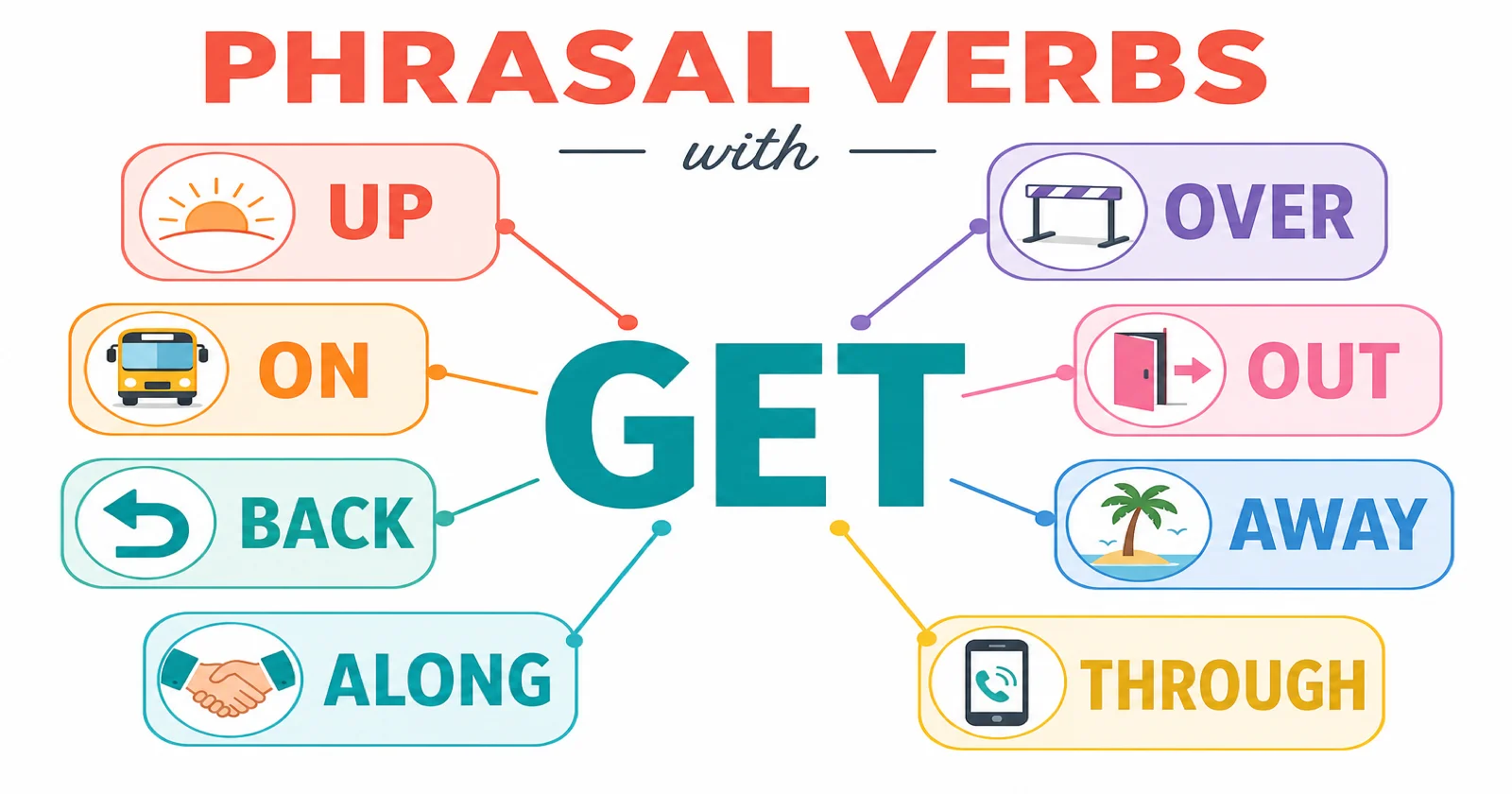
GETは英語で最も万能な動詞です。単体では「得る」や「〜になる」を意味しますが、前置詞を加えると — up、over、on、away、through、out、along、by — 意味が完全に変わります。「Get over」は病気から回復する、壁を乗り越える、失恋を乗り越えるなどの意味があります。「Get out」は場所を出る、危険から逃れる、情報が公になるなどです。
ネイティブスピーカーはGETの句動詞を1日に何十回も使いますが、多くの場合それを意識していません。学習者にとって、これはギャップを生みます。「She couldn’t get through to him」の各単語は理解できても、文全体の意味は個々の単語が示すものとはまったく異なります。
このガイドでは、GETのすべての主要な句動詞を、助詞(up、over、onなど)別にまとめています。各項目には全ての意味、実際の例文、フォーマル度の注記、よくある間違いが含まれています。
- 句動詞数:25以上
- 解説した意味:60以上
- レベル:B1〜C1
- フォーカス:意味、例文、使い方、よくある間違い
英語の句動詞の完全ガイドは English Phrasal Verbs: Complete Guide をご覧ください。
GET UP — 3つの意味
1. ベッドから起きる;目を覚ます
最も一般的な意味です。毎日誰もが使います。
I get up at 6:30 every morning. She got up early to catch the first train. What time do you usually get up on weekends?
2. 立ち上がる(座った状態や横になった状態から)
He fell on the ice but got up quickly. The audience got up and applauded. She got up from her desk and stretched.
3. 準備する、企画する(イギリス英語、インフォーマル)
They got up a petition to save the park. We should get up a group to visit the museum.
よくある間違い:「I got up from the bed」— 冠詞は不要です。「I got up」または「I got out of bed」と言いましょう。
GET OVER — 4つの意味
1. 回復する(病気、ショック、感情的な痛みから)
最も一般的な意味です。回復には時間がかかり、「get over」はプロセスが完了したことを暗示します。
It took her months to get over the flu. He still hasn’t gotten over his breakup. You need time to get over the shock.
2. 克服する(問題や困難を)
We need to get over this obstacle before moving forward. Once you get over the initial confusion, the software is easy to use.
3. 驚きや信じがたいことを受け入れる
否定形や「can’t」とともに使われることが多いです。
I can’t get over how much the city has changed! She couldn’t get over the fact that she had actually won.
4. 物理的な障害物を越える
The cat managed to get over the fence. We need to get over this hill before sunset.
よくある間違い:「Get over it」は会話では軽蔑的に聞こえます。注意して使いましょう — 「文句を言うな」という含みがあります。
GET ON — 5つの意味
1. 乗る(バス、電車、飛行機、大型の乗り物に)
We got on the bus at the wrong stop. Hurry — we need to get on the plane before they close the gate. She got on the train to London at 8 a.m.
2. 良い関係にある(イギリス英語;アメリカ英語ではget along)
Do you get on with your colleagues? They don’t get on very well — they argue constantly. I’ve always gotten on well with my neighbors.
3. 続ける;進捗する
Stop talking and get on with your work. Let’s get on with the meeting — we’re behind schedule. How are you getting on with the project?
4. やりくりする(イギリス英語)
How’s your mother getting on these days? He’s getting on well after the surgery.
5. 年を取る(インフォーマル)
She’s getting on in years, but she’s still very active. He’s getting on a bit — he’ll be 70 next month.
よくある間違い:「Get on」は乗り物のサイズによります。大型(バス/電車/飛行機)にはGet ON。小型(車/タクシー)にはGet IN。
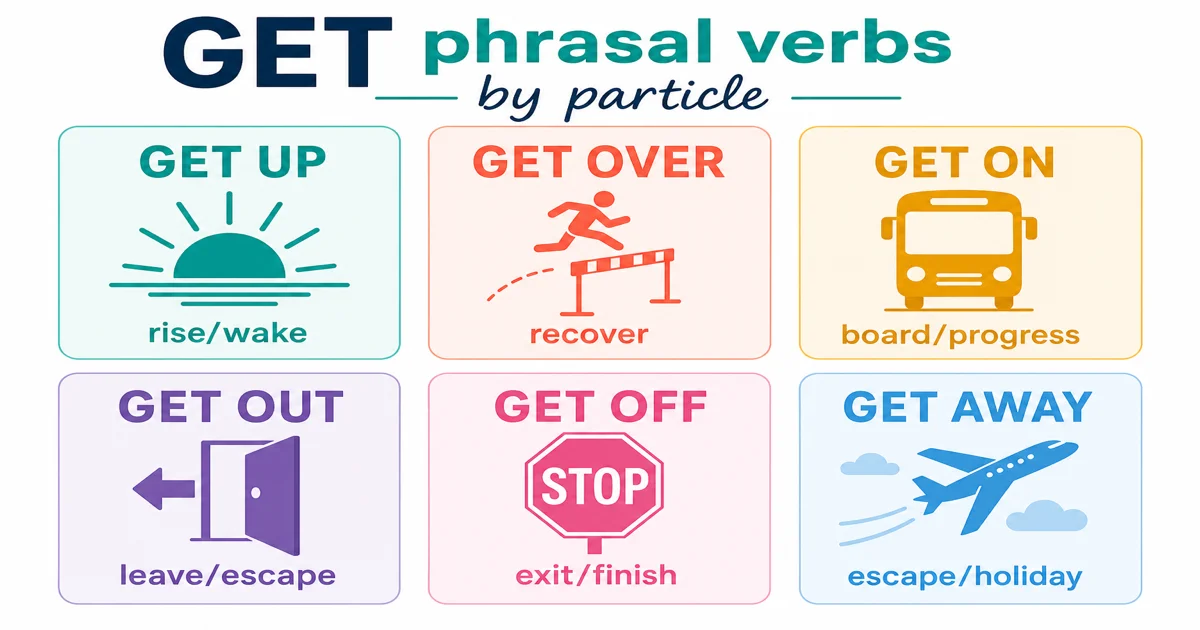
GET OFF — 4つの意味
1. 降りる(バス、電車、大型の乗り物から)
「get on」の反対です。
We get off at the next stop. She got off the train and walked to the office. Don’t forget to get off at Central Station.
2. 仕事を終える;退勤する
What time do you get off work today? I get off at 5, so I can meet you at 5:30.
3. 罰を免れる、軽い処分で済む
He got off with just a warning. The lawyer helped her get off the charges. He committed fraud but somehow got off scot-free.
4. 手を離す;離れる(命令形)
Get off my phone! The sign said “Get off the grass.”
よくある間違い:「Get off FROM the train」— 「from」は不要です。「get off the train」と言いましょう。
GET OUT — 4つの意味
1. 場所を出る
Get out of my house! We should get out of here before the storm hits. She got out of the car and slammed the door.
2. 逃げる
The prisoners tried to get out through a tunnel. How did the dog get out of the yard?
3. 知れ渡る(情報や秘密が)
If this information gets out, there will be a scandal. Word got out that the company was closing.
4. 取り出す
I can’t get this stain out of my shirt. She got out her wallet and paid the bill.
GET AWAY — 3つの意味
1. 逃げる、逃走する
The thieves got away before the police arrived. The bird got away from the cat.
2. 休暇に出かける
We need to get away for a few days — I’m exhausted. They got away to the mountains for the weekend.
3. 罰を免れる(get away with)
He cheated on the test and got away with it. You can’t get away with lying to your boss forever. She always gets away with coming to work late.
注意:「Get away!」は感嘆詞として「まさか!信じられない!」(イギリス英語インフォーマル)または「離れろ!」(命令)を意味します。
GET ALONG — 2つの意味
1. 仲良くする
イギリス英語の「get on」のアメリカ英語版です。日常会話で非常によく使われます。
Do you get along with your sister? The new employee gets along well with everyone. They didn’t get along at first, but now they’re good friends.
2. なんとかやっていく
How do you get along on such a small salary? We get along fine without a car.
GET THROUGH — 4つの意味
1. 終わらせる、こなす(仕事、期間、量を)
I got through all 500 pages in three days. How are we going to get through all this work by Friday? She finally got through the exam preparation.
2. 困難な時期を乗り越える
It was a tough year, but we got through it. Music helped me get through the lockdown.
3. 電話がつながる
I’ve been trying to call her all day, but I can’t get through. I finally got through to customer service after 40 minutes.
4. 理解させる、伝える
I tried to explain, but I couldn’t get through to him. How can I get through to my teenager about the importance of studying?
GET BACK — 3つの意味
1. 戻る
What time did you get back from vacation? I’ll get back to London by Friday. She got back home late last night.
2. 取り戻す
I got my money back after returning the product. Did you ever get back the book you lent him?
3. 仕返しする(get back at)
He’s trying to get back at his ex-partner. She got back at him by revealing his secret.
GET IN — 3つの意味
1. 小さな乗り物に乗る(車、タクシー)
「get out of」の反対です。
Get in the car — we’re late! She got in a taxi and headed to the airport.
2. 到着する
What time does your flight get in? The train gets in at 9:15. He got in late last night.
3. 合格する、入る(学校、プログラム、イベントに)
She applied to five universities and got in to three. It’s a popular club — it’s hard to get in. Did you get in? I heard the competition was fierce.
GET INTO — 3つの意味
1. 興味を持つ、はまる
She’s really getting into photography lately. He got into cooking during the pandemic. I can’t get into this book — it’s too slow.
2. 入学する、就く(学校、職業に)
Getting into medical school is extremely competitive. How did you get into marketing?
3. トラブルに巻き込まれる
He keeps getting into fights at school. Don’t get into an argument with her — you won’t win. What has gotten into you today? You’re acting strange.
GET BY — 2つの意味
1. なんとか生活する
It’s hard to get by on minimum wage. We don’t have much, but we get by. She gets by with a little help from her family.
2. 通り抜ける(物理的に人のそばを通る)
Excuse me, could I get by? I need to reach the exit. The hallway is so narrow, it’s hard to get by.
GET DOWN — 3つの意味
1. 気分を落ち込ませる
The constant rain is really getting me down. Don’t let the criticism get you down.
2. 降りる、身を低くする
Get down from that tree before you fall! She got down on her knees to search under the sofa.
3. 書き留める
Let me get that down before I forget. Did you get down her phone number?
GET AROUND — 3つの意味
1. 移動する、あちこち行く
It’s easy to get around Tokyo by subway. How do you get around without a car?
2. 回避する(ルールや問題を)
There’s no way to get around this regulation. She always finds a way to get around the rules.
3. 広まる(ニュースや情報が)
News gets around fast in a small town. Word got around that the company was being sold.
GET AHEAD — 1つの意味
前進する、出世する(キャリアや人生で)
You need to work hard to get ahead in this industry. She’s determined to get ahead in her career. It’s difficult to get ahead when you’re always playing catch-up.
GET ACROSS — 1つの意味
考えをうまく伝える
I’m trying to get my point across, but nobody seems to understand. The teacher got the concept across using simple examples. How can I get this message across to the team?
GET RID OF — 1つの意味
取り除く、処分する、排除する
英語で最も便利なフレーズの一つで、日常的に使われます。
We need to get rid of this old furniture. How do I get rid of these ants in the kitchen? She finally got rid of her cold after a week of rest.
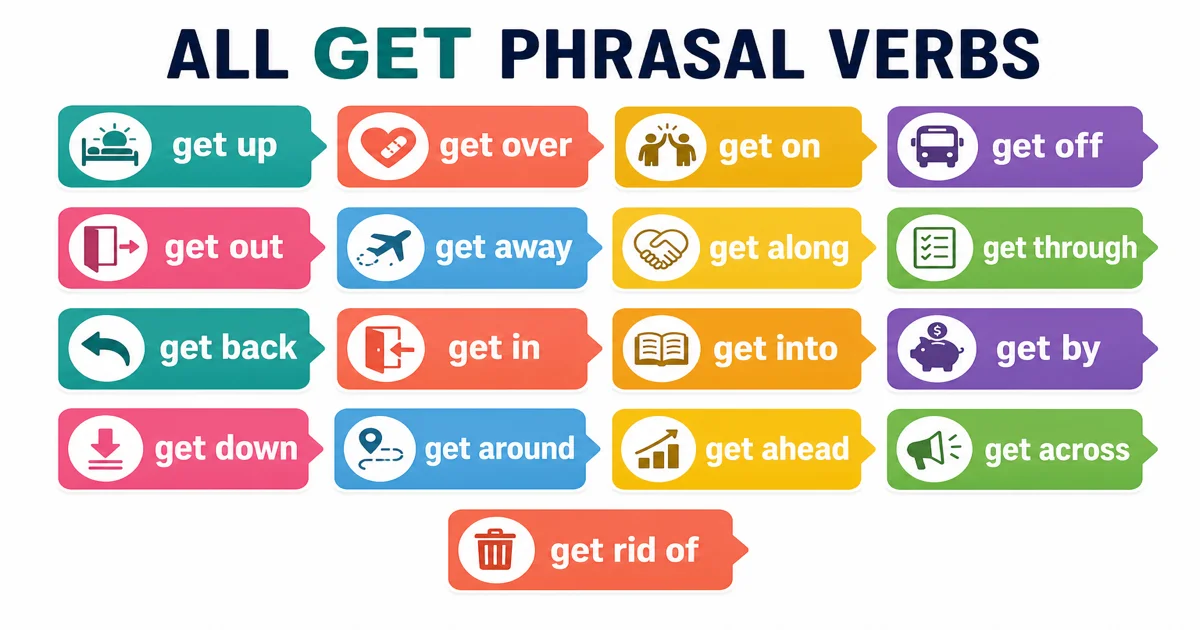
まとめ表
| 句動詞 | 主な意味 | 例文 |
|---|---|---|
| get up | 起きる | I get up at 7 every day. |
| get over | 回復する | She got over the illness quickly. |
| get on | 乗る;仲良くする | Get on the bus. / We get on well. |
| get off | 降りる;退勤する | Get off at the next stop. |
| get out | 出る;逃げる | Get out of here! |
| get away | 逃げる;休暇に出る | The thieves got away. |
| get along | 仲良くする | Do you get along with your boss? |
| get through | 終わらせる;乗り越える;電話がつながる | I can’t get through to her. |
| get back | 戻る;取り戻す | When did you get back? |
| get in | 乗る(車);到着する;合格する | Get in the car. |
| get into | はまる | She’s getting into yoga. |
| get by | なんとかやっていく | We get by on a small budget. |
| get down | 落ち込ませる;降りる;書き留める | The news got me down. |
| get around | 移動する;回避する | It’s easy to get around by bus. |
| get ahead | 前進する | Work hard to get ahead. |
| get across | 伝える | I couldn’t get my point across. |
| get rid of | 取り除く | Get rid of the old files. |
GET IN vs. GET ON:どの乗り物?
ほぼすべての英語学習者を混乱させるポイントです。ルールは乗り物のサイズに基づいています。
| GET ON | GET IN |
|---|---|
| bus(バス) | car(車) |
| train(電車) | taxi(タクシー) |
| plane(飛行機) | van(小型バン) |
| ship(船) | truck cab(トラックの運転台) |
| bicycle(自転車) | canoe(カヌー) |
| motorcycle(バイク) | helicopter(ヘリコプター) |
パターン: GET ON = 中で立って歩ける。GET IN = 小さな閉じた空間に座り込む。
反対形:GET OFF(バス、電車)/ GET OUT OF(車、タクシー)。
GETの句動詞でよくある間違い
| 間違い | 正しい形 | 理由 |
|---|---|---|
|
|
get on the bus | 「get on」の後に前置詞は不要 |
|
|
get off the train | 「from」は不要 |
|
|
I got up / I got out of bed | 「bed」なしか「get out of」を使う |
|
|
get over an illness | 「get over」の後に「from」は不要 |
|
|
I can’t get through to her | 電話/コミュニケーションには「to」が必要 |
練習用の単語
boom
名詞
急増, ブーム, 爆発
例
- The boom of thunder echoed across the valley.
- The technology boom created many new millionaires.
cooperate
動詞
協力する, 協働する
evaluate
動詞
評価する, 査定する
例
- Companies evaluate job candidates based on experience, skills, and personality.
- Teachers evaluate student progress through tests, projects, and classroom participation.
graduate
動詞
卒業する
例
- She will graduate from university next year with a degree in engineering.
- Students must complete all requirements before they can graduate from high school.
horizon
名詞
地平線
例
- The sun disappeared behind the horizon as evening approached.
- Traveling broadens your horizon and exposes you to new cultures.
indispensable
形容詞
不可欠な
例
- Clean water is indispensable for human survival and good health.
- Her experience and skills make her indispensable to the research team.
jury
名詞
陪審団, 陪審
例
- The jury deliberated for several hours before reaching a verdict.
- The talent show jury consisted of professional musicians and entertainers.
lifelong
形容詞
一生の, 生涯の
例
- Learning is a lifelong process that never truly ends.
- Their lifelong friendship began during elementary school years.
motivated
形容詞
やる気のある
例
- Motivated employee seeks additional responsibilities and challenges at work.
- Success requires being motivated even when facing difficult obstacles.
normally
副詞
通常は, 普通は, ふつうは
例
- Heart normally beats between sixty and hundred times per minute.
- Students normally arrive at school before morning bell rings.
off
副詞
離れて, 切れて, 休みの
例
- Please turn off the lights before leaving the room.
- The dog ran off into the forest chasing wild rabbits.
prejudice
名詞
偏見, 先入観, 差別
例
- Education helps overcome prejudice and promotes understanding.
- Racial prejudice damages communities and individuals alike.
resolve
動詞
解決する, 決意する
例
- Mediator helps parties resolve dispute through negotiation.
- Technical team will resolve software problems quickly.
stress
動詞
強調する, 緊張させる
例
- Heavy workload may stress employees beyond limits.
- Teacher will stress importance of homework completion.
total
形容詞
全体の, 総合的な, 完全な
例
- Total cost includes all fees and expenses.
- Total silence fills room during meditation session.
tragedy
名詞
悲劇
例
- Natural tragedy affects thousands of innocent people.
- Personal tragedy changes person's life perspective completely.
union
名詞
連合, 結合, 協会
例
- Labor union protects worker rights and interests.
- Marriage union joins two people in partnership.
voyage
名詞
航海, 旅行
例
- Space exploration represents humanity's greatest voyage into the unknown.
- The ocean voyage from Europe to America took several weeks in the past.
candidate
名詞
候補者, 志願者
例
- Each presidential candidate presented their policy plans to voters.
- The job candidate impressed the interview panel with her experience.
discourage
動詞
落胆させる, 思いとどまらせる, 意欲をなくさせる
例
- Don't let one failure discourage you from pursuing your dreams.
- High prices discourage many people from buying organic food products.
donate
動詞
寄付する
例
- Many people donate money to charities that help homeless individuals.
- She decided to donate blood to help patients in emergency situations.
firmly
副詞
しっかりと, 堅く
例
- Hold the rope firmly while climbing down the steep mountain slope.
- The manager firmly believed in treating all employees with respect.
guide
動詞
案内する
例
- Parents should guide their children to make responsible decisions.
- The experienced hiker will guide the group through the mountain trail safely.
humorous
形容詞
ユーモラスな, 面白い, 滑稽な
例
- She writes humorous articles about everyday life and family experiences.
- The humorous speech made everyone laugh and lightened the serious mood.
admission
名詞
入場, 入学, 認めること
例
- Her admission to the prestigious medical school was the result of hard work.
- The museum offers free admission on the first Sunday of every month.
次のステップ
-
弱点を見つけましょう。 上のリストを見て、混乱する句動詞や使ったことのない句動詞を特定しましょう。まずそれらに集中してください。
-
自分の文を作りましょう。 各句動詞について、自分の生活に関連する2〜3つの文を書きましょう。個人的なつながりが語彙の定着を助けます。
-
Linglifyに追加 して間隔反復で学習しましょう。最適な間隔でテストされ、句動詞が自動的に出てくるようになります。
-
句動詞の完全ガイドを読みましょう — English Phrasal Verbs: Complete Guide はすべての基本動詞の200以上の句動詞をカバーしています。
-
MAKEの句動詞も学びましょう — Phrasal Verbs with MAKE は同じフォーマットで別の重要な動詞を解説しています。
FAQ
GETの最もよく使われる句動詞は何ですか?
最も頻繁に使われる5つは、get up(起きる)、get on/along(仲良くする)、get over(回復する)、get through(終わらせる/乗り越える)、get rid of(取り除く)です。これらは日常会話で1日に何十回も登場します。ネイティブスピーカーは自動的に使うため、理解することが自然な英語を聞き取るために不可欠です。
なぜGETにはこんなに多くの句動詞があるのですか?
GETは英語で最も古く基本的な動詞の一つです。その核となる意味 —「得る」や「〜になる」— は非常に柔軟で、ほぼすべての前置詞と組み合わせて新しい意味を作ることができます。歴史的に、句動詞は日常会話でラテン語由来の長い単語に取って代わりました(例:「get over」が「recover」に、「get rid of」が「eliminate」に代わった)。そのため、GETは何十もの組み合わせの自然な基盤となりました。
GET INとGET ONはどう使い分けますか?
GET ONは、中で立って歩ける大型の乗り物(バス、電車、飛行機、船)に使います。GET INは、小さな閉じた空間に座り込む小型の乗り物(車、タクシー)に使います。同じパターンが逆にも適用されます:GET OFF(バス、電車)、GET OUT OF(車、タクシー)。中を歩き回れるならON/OFF、乗り込むために身をかがめるならIN/OUTです。
GETの句動詞はフォーマルですか、カジュアルですか?
ほとんどのGETの句動詞はニュートラルからインフォーマルで、日常会話、メール、一般的なライティングに完全に適切です。非常にフォーマルな学術的または法的な文章では、ラテン語由来の動詞が好まれます。recover(「get over」の代わりに)、eliminate(「get rid of」の代わりに)、comprehend(「get」の代わりに)。しかし、ビジネス英語、プレゼンテーション、ほとんどの専門的な場面では、GETの句動詞は完全に受け入れられ、自然に聞こえます。
一つのGET句動詞にはいくつの意味がありますか?
5つ以上の異なる意味を持つものもあります。「Get on」はバスに乗る、人と仲良くする、作業を続ける、やりくりする、年を取るなどを意味できます。「Get through」は終わらせる、乗り越える、電話がつながる、考えを伝えるを意味します。文脈が常に意味を決定します — 句動詞の周りの言葉がどの定義が当てはまるかを教えてくれます。だからこそ、孤立した定義を暗記するよりも、例文つきで句動詞を学ぶほうがはるかに効果的です。