
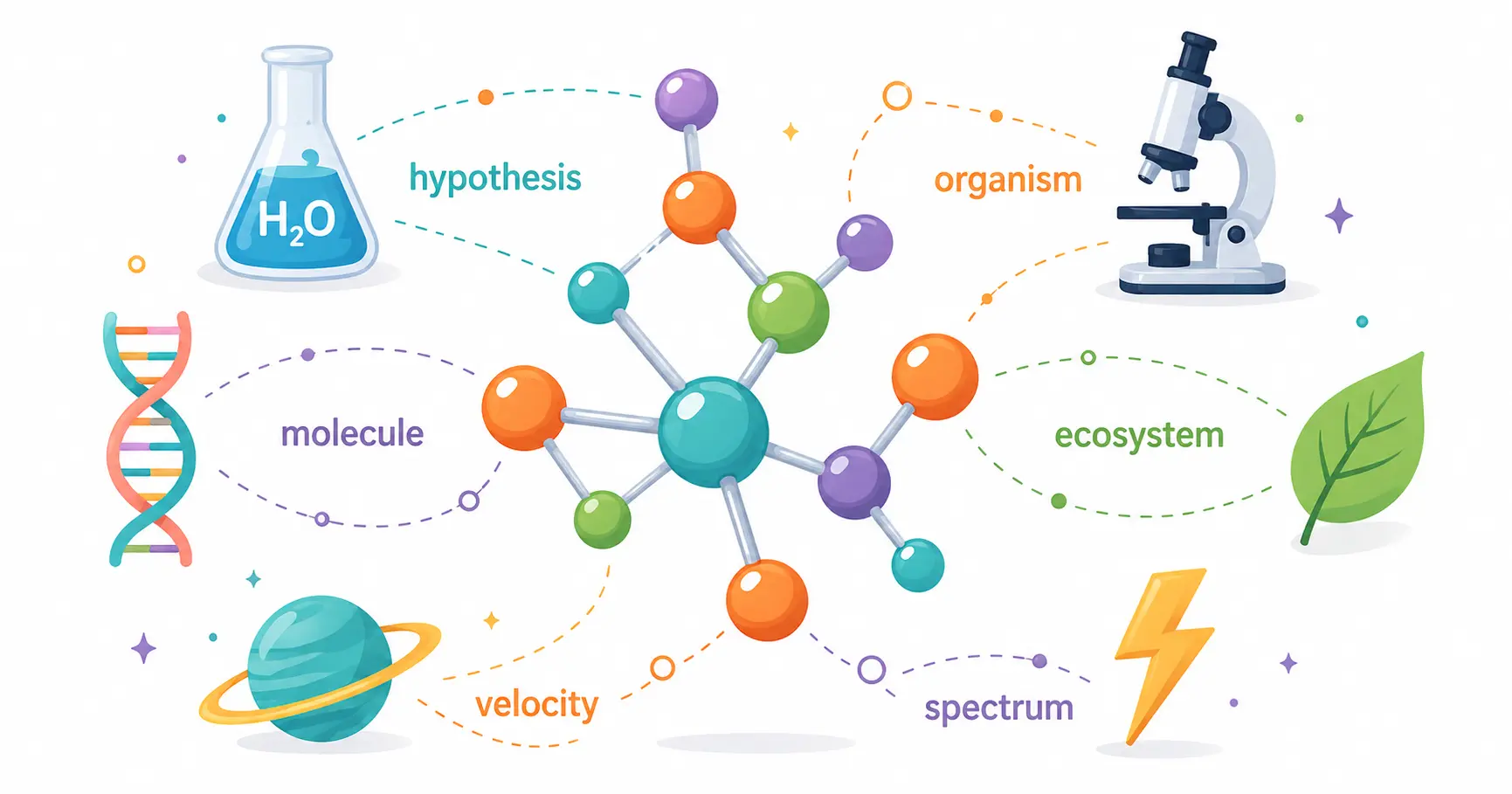
科学英単語200語以上:分野別に意味と例文で解説
科学には独自の言語があります。教科書を読むにも、実験レポートを書くにも、IELTS Academicの準備をするにも、ドキュメンタリーを観るにも、日常英語では出てこない単語が必要になります。「photosynthesis」は夕食の会話には出てきません。「catalyst」が雑談に登場することもほとんどありません。でも、理系の授業や論文、試験の場では — どこにでも出てきます。
このガイドでは、200以上の重要な科学英単語を分野別にまとめました。各単語に明確な定義と、実際の科学的な文脈での例文をつけています。学校や大学、標準テスト、専門的な場面で科学英語が必要な学習者のために選んだ単語です。
- 総語数: 200語以上
- 対象分野: 一般科学、生物学、化学、物理学、地球科学、宇宙、環境、科学的方法
- レベル: B1〜C1(中級〜上級)
- こんな人に最適: IELTS Academic、TOEFL、大学準備、英語での理系授業、ESL学習者
科学英語が大切な理由
アカデミック目的で英語を学んでいるなら、科学用語は避けて通れません。こんな場面で必ず出くわします:
| 場面 | 科学英語が大切な理由 |
|---|---|
| IELTS Academic Reading | パッセージの30〜40%が科学系(気候、生物、テクノロジー) |
| TOEFL Reading & Listening | 科学の講義や論文が主要コンテンツ |
| 大学の授業 | 講義、教科書、試験で専門語彙が飛び交う |
| 科学ドキュメンタリー | BBC、Netflix、YouTubeの科学コンテンツで頻出 |
| ニュース・メディア | 気候変動、健康、テクノロジーの記事に科学リテラシーが不可欠 |
科学者になる必要はありません。これらの単語を読んで認識でき、聞いて理解でき、よく使うものを自分で書けるようになれば十分です。
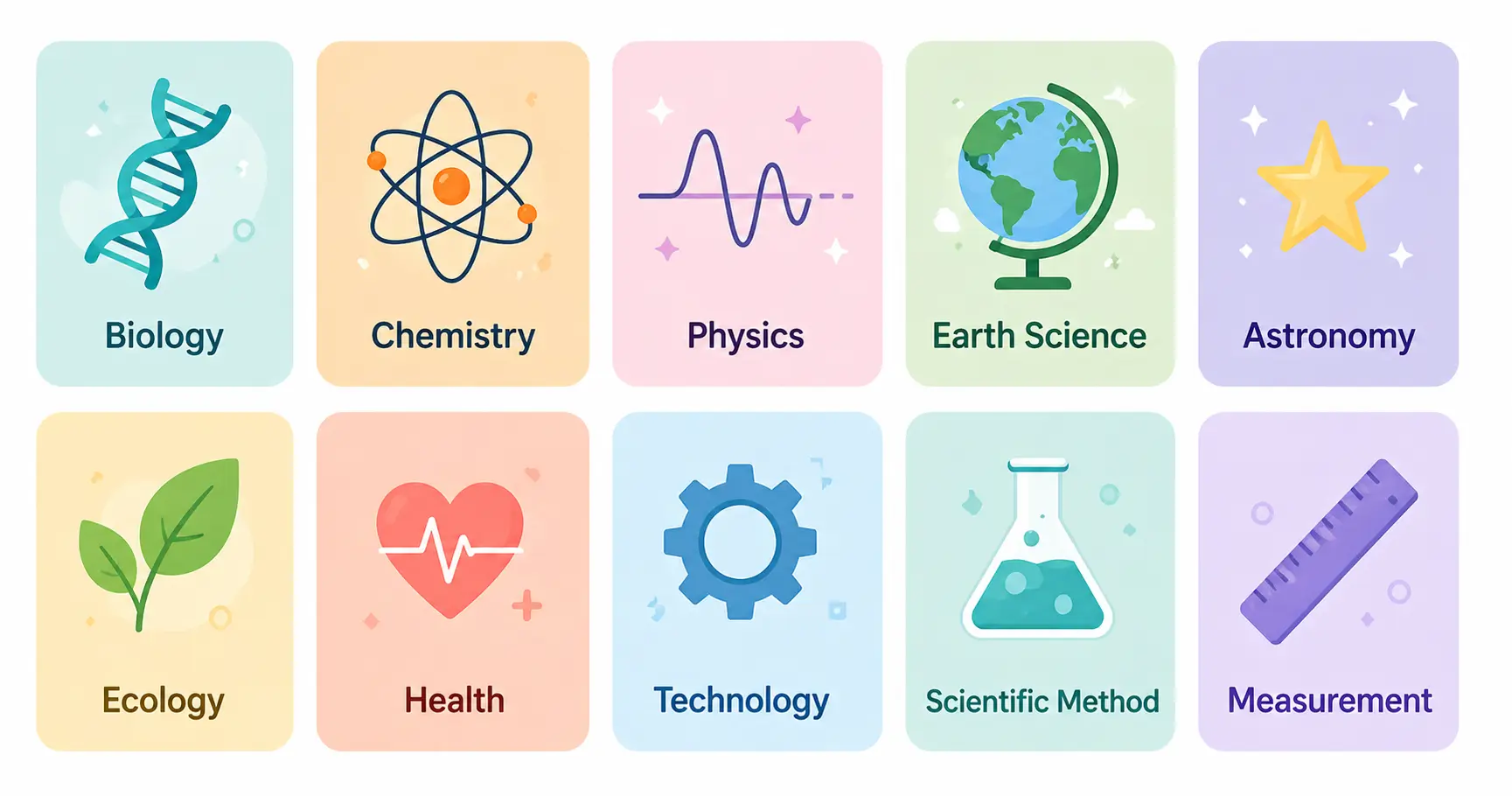
一般的な科学用語
あらゆる科学分野で共通して使われる、科学的思考そのものの言葉です。
| # | 単語 | 品詞 | 意味 | 例文 |
|---|---|---|---|---|
| 1 | hypothesis | 名詞 | 検証するために立てる仮説 | The hypothesis predicted that plants grow faster under blue light. — 仮説では、青い光の下で植物がより速く成長すると予測された。 |
| 2 | theory | 名詞 | 証拠に裏付けられた十分に検証された説明 | The theory of evolution explains how species change over time. — 進化論は、種がどのように変化するかを説明する。 |
| 3 | experiment | 名詞 | 仮説を検証する管理された実験 | The experiment showed that temperature affects the rate of reaction. — 実験により、温度が反応速度に影響することが示された。 |
| 4 | variable | 名詞 | 実験で変化しうる要因 | The independent variable was the amount of fertilizer used. — 独立変数は、使用した肥料の量だった。 |
| 5 | data | 名詞 | 調査中に収集した事実や数値 | The data was analyzed using statistical software. — データは統計ソフトで分析された。 |
| 6 | evidence | 名詞 | 主張を裏付けまたは反証する情報 | There is strong evidence that exercise reduces the risk of heart disease. — 運動が心臓病のリスクを下げる確かなエビデンスがある。 |
| 7 | observation | 名詞 | 注意深く観察して記録すること | Through careful observation, Darwin noticed differences between finch beaks. — ダーウィンは注意深い観察を通じて、フィンチのくちばしの違いに気づいた。 |
| 8 | conclusion | 名詞 | 研究や実験の最終的な結論 | The conclusion was that the new drug is effective against the virus. — 結論は、その新薬がウイルスに有効だということだった。 |
| 9 | analysis | 名詞 | 何かを理解するための詳細な調査 | A chemical analysis revealed high levels of lead in the water. — 化学分析により、水中の鉛濃度が高いことが判明した。 |
| 10 | phenomenon | 名詞 | 観察可能な事象、特に珍しいもの | Northern lights are a natural phenomenon caused by solar particles. — オーロラは太陽粒子によって引き起こされる自然現象だ。 |
| 11 | species | 名詞 | 交配可能な生物のグループ | Over 8 million species live on Earth, but most have not been identified. — 地球上には800万種以上が生息しているが、ほとんどは未確認だ。 |
| 12 | sample | 名詞 | 検査用に採取した少量の一部 | The scientist collected a water sample from the river. — 科学者は川から水サンプルを採取した。 |
| 13 | research | 名詞/動詞 | 新しい知識を発見するための体系的な研究 | Recent research suggests that gut bacteria affect mental health. — 最近の研究では、腸内細菌が精神的な健康に影響することが示唆されている。 |
| 14 | significant | 形容詞 | 重要な影響をもたらすほど大きい | The results showed a significant difference between the two groups. — 結果は、2つのグループ間に有意な差があることを示した。 |
| 15 | accuracy | 名詞 | 測定値が真の値にどれだけ近いか | The accuracy of the thermometer was tested before the experiment. — 実験前に温度計の精度をテストした。 |
科学的方法
科学者がどのように研究を進めるか — 問いの設定から結果の公表まで。
| # | 単語 | 品詞 | 意味 | 例文 |
|---|---|---|---|---|
| 16 | method | 名詞 | 体系的なやり方 | The scientific method involves observation, hypothesis, testing, and conclusion. — 科学的方法は、観察、仮説、検証、結論からなる。 |
| 17 | procedure | 名詞 | 順序立てて行う一連の手順 | Follow the procedure exactly to get reliable results. — 信頼できる結果を得るために、手順を正確に守ること。 |
| 18 | control group | 名詞 | 実験で変化を加えないグループ | The control group received a placebo instead of the actual drug. — 対照群には本物の薬ではなくプラセボが投与された。 |
| 19 | independent variable | 名詞 | 科学者が意図的に変える要因 | The independent variable was the temperature of the water. — 独立変数は水の温度だった。 |
| 20 | dependent variable | 名詞 | 実験で測定される要因 | The dependent variable was the growth rate of the bacteria. — 従属変数は細菌の増殖速度だった。 |
| 21 | trial | 名詞 | 実験の1回の試行 | After 50 trials, the results were consistent. — 50回の試行後、結果は一貫していた。 |
| 22 | replicate | 動詞 | 信頼性のために実験を繰り返す | Other labs could not replicate the original findings. — 他の研究室では元の結果を再現できなかった。 |
| 23 | predict | 動詞 | 何が起こるかを予測する | The model predicts a 2°C rise in global temperatures by 2050. — モデルは2050年までに世界の気温が2℃上昇すると予測している。 |
| 24 | classify | 動詞 | カテゴリーに分類する | Biologists classify living organisms into kingdoms, phyla, and classes. — 生物学者は生物を界・門・綱に分類する。 |
| 25 | measure | 動詞 | 大きさ・量・程度を測定する | We measured the pH level of each solution. — 各溶液のpH値を測定した。 |
| 26 | investigate | 動詞 | 注意深く調査・研究する | Scientists are investigating the link between diet and cancer. — 科学者たちは食事とがんの関連を調査している。 |
| 27 | conclude | 動詞 | 証拠に基づいて結論を出す | The team concluded that the treatment was not effective. — チームは、その治療法が効果的でないと結論づけた。 |
| 28 | peer review | 名詞 | 他の科学者による研究の評価 | The paper was accepted after peer review by three experts. — 論文は3人の専門家による査読を経て受理された。 |
| 29 | bias | 名詞 | 公正な判断を妨げる偏り | Confirmation bias leads researchers to favor data that supports their hypothesis. — 確証バイアスにより、研究者は自分の仮説を支持するデータを好む傾向がある。 |
| 30 | correlation | 名詞 | 2つの事象の間の相関関係 | There is a correlation between sleep quality and academic performance. — 睡眠の質と学業成績の間には相関関係がある。 |
生物学の語彙
細胞、遺伝学、生態系、人体の仕組みなど、生物を研究するための単語。
| # | 単語 | 品詞 | 意味 | 例文 |
|---|---|---|---|---|
| 31 | cell | 名詞 | すべての生物の基本単位 | The human body contains approximately 37 trillion cells. — 人体にはおよそ37兆個の細胞がある。 |
| 32 | organism | 名詞 | あらゆる生物 — 植物、動物、細菌 | A single-celled organism can survive in extreme environments. — 単細胞生物は極限環境でも生存できる。 |
| 33 | DNA | 名詞 | 遺伝情報を担う分子 | DNA contains the instructions for building proteins. — DNAにはタンパク質を作るための指示が含まれている。 |
| 34 | gene | 名詞 | 形質を制御する遺伝の基本単位 | Scientists identified the gene responsible for eye color. — 科学者たちは目の色を決定する遺伝子を特定した。 |
| 35 | mutation | 名詞 | DNAの変化による変異 | A random mutation can sometimes give an organism a survival advantage. — ランダムな突然変異が生存に有利に働くことがある。 |
| 36 | evolution | 名詞 | 時間の経過に伴う種の漸進的な変化 | Evolution by natural selection explains the diversity of life on Earth. — 自然選択による進化は、地球上の生命の多様性を説明する。 |
| 37 | natural selection | 名詞 | 適応した生物が生き残り繁殖する過程 | Through natural selection, birds with stronger beaks survived and passed on their genes. — 自然選択を通じて、くちばしの丈夫な鳥が生き残り遺伝子を伝えた。 |
| 38 | photosynthesis | 名詞 | 植物が日光を栄養に変換する過程 | Photosynthesis requires sunlight, water, and carbon dioxide. — 光合成には日光、水、二酸化炭素が必要だ。 |
| 39 | ecosystem | 名詞 | 生物とその環境の共同体 | Coral reefs are one of the most diverse ecosystems on the planet. — サンゴ礁は地球上で最も多様な生態系のひとつだ。 |
| 40 | habitat | 名詞 | 生物が自然に生息する環境 | Deforestation is destroying the habitat of thousands of species. — 森林伐採が何千もの種の生息地を破壊している。 |
| 41 | biodiversity | 名詞 | 特定の地域における生命の多様性 | Tropical rainforests have the highest biodiversity of any land ecosystem. — 熱帯雨林は陸上の生態系で最も高い生物多様性を持つ。 |
| 42 | metabolism | 名詞 | 生物体内のすべての化学反応 | Your metabolism slows down as you age. — 加齢とともに代謝は低下する。 |
| 43 | protein | 名詞 | アミノ酸からなる細胞機能に不可欠な分子 | Proteins are involved in nearly every process inside a cell. — タンパク質は細胞内のほぼすべてのプロセスに関わっている。 |
| 44 | bacteria | 名詞 | あらゆる場所に存在する単細胞生物 | Not all bacteria are harmful — some help us digest food. — すべての細菌が有害なわけではない。消化を助けるものもある。 |
| 45 | virus | 名詞 | 細胞内で複製する微小な感染性因子 | A virus cannot reproduce on its own — it needs a host cell. — ウイルスは単独では増殖できず、宿主細胞を必要とする。 |
| 46 | immune system | 名詞 | 体を病気から守る防御システム | The immune system recognizes and attacks foreign invaders. — 免疫系は外来の侵入者を認識して攻撃する。 |
| 47 | chromosome | 名詞 | DNAを含む細胞内の構造 | Humans have 23 pairs of chromosomes. — ヒトには23対の染色体がある。 |
| 48 | respiration | 名詞 | 食物をエネルギーに変える過程 | Cellular respiration releases energy from glucose. — 細胞呼吸はグルコースからエネルギーを放出する。 |
| 49 | reproduction | 名詞 | 子孫を生み出す過程 | Asexual reproduction requires only one parent organism. — 無性生殖には親が1個体だけでよい。 |
| 50 | adaptation | 名詞 | 環境での生存を助ける特性 | The thick fur of polar bears is an adaptation to cold climates. — ホッキョクグマの厚い毛皮は寒冷気候への適応だ。 |
| 51 | parasite | 名詞 | 他の生物に寄生する生物 | Malaria is caused by a parasite transmitted through mosquito bites. — マラリアは蚊に刺されて伝染する寄生虫が原因だ。 |
| 52 | symbiosis | 名詞 | 2種間の密接で長期的な関係 | The relationship between clownfish and sea anemones is an example of symbiosis. — カクレクマノミとイソギンチャクの関係は共生の一例だ。 |
| 53 | tissue | 名詞 | 機能を果たす類似した細胞の集まり | Muscle tissue contracts to produce movement. — 筋組織は収縮して運動を生み出す。 |
| 54 | organ | 名詞 | 特定の機能を果たす組織でできた構造 | The heart is an organ that pumps blood throughout the body. — 心臓は全身に血液を送るポンプの役割を果たす器官だ。 |
| 55 | extinct | 形容詞 | もはや存在しない(種として) | Dinosaurs became extinct approximately 66 million years ago. — 恐竜は約6600万年前に絶滅した。 |
化学の語彙
物質、元素、反応、分子構造を学ぶための単語。
| # | 単語 | 品詞 | 意味 | 例文 |
|---|---|---|---|---|
| 56 | element | 名詞 | 1種類の原子からなる純粋な物質 | Oxygen is an element — it cannot be broken down further by chemical means. — 酸素は元素であり、化学的手段でこれ以上分解できない。 |
| 57 | compound | 名詞 | 2種以上の元素が結合した物質 | Water (H₂O) is a compound made of hydrogen and oxygen. — 水(H₂O)は水素と酸素からなる化合物だ。 |
| 58 | molecule | 名詞 | 2つ以上の原子が結合したもの | A molecule of carbon dioxide contains one carbon and two oxygen atoms. — 二酸化炭素の分子は炭素1個と酸素2個からなる。 |
| 59 | atom | 名詞 | 元素の最小単位 | Every atom has a nucleus surrounded by electrons. — すべての原子は電子に囲まれた原子核を持つ。 |
| 60 | reaction | 名詞 | 物質が新しい物質に変わる過程 | When iron reacts with oxygen and water, the reaction produces rust. — 鉄が酸素と水と反応すると、錆が生じる。 |
| 61 | catalyst | 名詞 | 自身は消費されずに反応を速める物質 | Enzymes act as catalysts in biological reactions. — 酵素は生体反応において触媒として働く。 |
| 62 | solution | 名詞 | ある物質が別の物質に溶けた混合物 | Salt dissolved in water creates a solution. — 塩を水に溶かすと溶液になる。 |
| 63 | concentration | 名詞 | 一定量中の物質の含有量 | The concentration of salt in seawater is about 3.5%. — 海水中の塩分濃度は約3.5%だ。 |
| 64 | acid | 名詞 | pH7未満の物質 | Lemon juice is an acid with a pH of about 2. — レモン汁はpH約2の酸だ。 |
| 65 | base | 名詞 | pH7より高い物質 | Baking soda is a base commonly used in cooking and cleaning. — 重曹は調理や掃除に使われる塩基だ。 |
| 66 | pH | 名詞 | 酸性・塩基性の程度を表すスケール | The pH of pure water is 7, which is neutral. — 純水のpHは7で、中性だ。 |
| 67 | oxidation | 名詞 | 電子を失う反応 | Oxidation causes metals to rust when exposed to moisture. — 酸化により、金属は湿気にさらされると錆びる。 |
| 68 | bond | 名詞 | 原子同士を結びつける力 | A covalent bond forms when two atoms share electrons. — 共有結合は2つの原子が電子を共有するときに形成される。 |
| 69 | dissolve | 動詞 | 液体の一部になる | Sugar dissolves faster in hot water than in cold water. — 砂糖は冷水より温水に速く溶ける。 |
| 70 | evaporate | 動詞 | 液体から気体に変わる | Water evaporates from the ocean surface and forms clouds. — 水は海面から蒸発して雲を形成する。 |
| 71 | condense | 動詞 | 気体から液体に変わる | Water vapor condenses on cold surfaces, forming droplets. — 水蒸気は冷たい表面で凝結して水滴になる。 |
| 72 | periodic table | 名詞 | 全元素を整理した表 | The periodic table arranges elements by atomic number and properties. — 周期表は元素を原子番号と性質で配列する。 |
| 73 | isotope | 名詞 | 同じ元素で中性子数が異なる原子 | Carbon-14 is a radioactive isotope used for dating ancient materials. — 炭素14は古代の物質の年代測定に使われる放射性同位体だ。 |
| 74 | chemical formula | 名詞 | 化合物中の元素を示す記号 | The chemical formula for glucose is C₆H₁₂O₆. — グルコースの化学式はC₆H₁₂O₆だ。 |
| 75 | substance | 名詞 | 特定の組成をもつあらゆる物質 | The unknown substance was identified as sodium chloride. — 不明な物質は塩化ナトリウムと特定された。 |
物理学の語彙
エネルギー、力、運動、宇宙の基本法則を学ぶための単語。
| # | 単語 | 品詞 | 意味 | 例文 |
|---|---|---|---|---|
| 76 | energy | 名詞 | 仕事をしたり変化を生む能力 | Solar panels convert sunlight into electrical energy. — ソーラーパネルは日光を電気エネルギーに変換する。 |
| 77 | force | 名詞 | 運動を変えることができる押し引きの力 | Gravity is the force that pulls objects toward Earth. — 重力は物体を地球に引き寄せる力だ。 |
| 78 | gravity | 名詞 | 質量を持つ物体間の引力 | The gravity on the Moon is about one-sixth of Earth’s gravity. — 月の重力は地球の約6分の1だ。 |
| 79 | mass | 名詞 | 物体に含まれる物質の量 | The mass of an object stays the same whether it is on Earth or the Moon. — 物体の質量は地球でも月でも変わらない。 |
| 80 | velocity | 名詞 | 特定方向への速度 | The car’s velocity was 60 km/h heading north. — 車の速度は時速60kmで北向きだった。 |
| 81 | acceleration | 名詞 | 速度の変化率 | The acceleration due to gravity is approximately 9.8 m/s². — 重力加速度は約9.8 m/s²だ。 |
| 82 | friction | 名詞 | 接触する2つの面の間の抵抗 | Friction between the tires and the road allows the car to stop. — タイヤと路面の間の摩擦により車は止まれる。 |
| 83 | momentum | 名詞 | 質量と速度の積 | A moving truck has more momentum than a bicycle at the same speed. — 同じ速度なら、走るトラックは自転車より大きな運動量を持つ。 |
| 84 | wave | 名詞 | 物質や空間を通じてエネルギーを伝える振動 | Sound travels as a wave through air, water, and solid materials. — 音は波として空気、水、固体を伝わる。 |
| 85 | frequency | 名詞 | 一定時間内に何かが起こる回数 | The frequency of radio waves is measured in hertz. — 電波の周波数はヘルツで測定される。 |
| 86 | wavelength | 名詞 | 波の2つの頂点間の距離 | Visible light has a wavelength between 400 and 700 nanometers. — 可視光の波長は400〜700ナノメートルだ。 |
| 87 | radiation | 名詞 | 波動や粒子として放出されるエネルギー | The Sun emits radiation across the electromagnetic spectrum. — 太陽は電磁スペクトル全域にわたって放射線を発する。 |
| 88 | electricity | 名詞 | 電荷の流れ | Lightning is a natural discharge of electricity. — 雷は自然に起こる放電現象だ。 |
| 89 | magnetism | 名詞 | 磁石や電流が生み出す力 | Magnetism is used in MRI machines to create images of the body. — MRI装置では磁気を使って体内の画像を作る。 |
| 90 | circuit | 名詞 | 電気が流れる完全な経路 | If the circuit is broken, the light bulb will not turn on. — 回路が切れると電球は点灯しない。 |
| 91 | resistance | 名詞 | 電流の流れに対する抵抗 | Copper has low resistance, which makes it ideal for wiring. — 銅は抵抗が低いため配線に最適だ。 |
| 92 | thermodynamics | 名詞 | 熱とエネルギーの移動に関する学問 | The laws of thermodynamics govern how energy moves in the universe. — 熱力学の法則は宇宙のエネルギーの流れを支配する。 |
| 93 | quantum | 形容詞/名詞 | エネルギーの最小単位に関する | Quantum mechanics describes the behavior of particles at the atomic level. — 量子力学は原子レベルでの粒子の振る舞いを記述する。 |
| 94 | nuclear | 形容詞 | 原子核に関する | Nuclear energy is produced by splitting atoms in a process called fission. — 核エネルギーは核分裂という過程で原子を分裂させることで生み出される。 |
| 95 | spectrum | 名詞 | 特に光や放射線の全範囲 | A prism separates white light into the visible spectrum of colors. — プリズムは白色光を可視スペクトルの色に分離する。 |
地球科学の語彙
地質学、天気、気候、地球の構造に関する単語。
| # | 単語 | 品詞 | 意味 | 例文 |
|---|---|---|---|---|
| 96 | atmosphere | 名詞 | 地球を取り巻く気体の層 | The atmosphere protects us from harmful solar radiation. — 大気は有害な太陽放射から私たちを守る。 |
| 97 | climate | 名詞 | ある地域の長期的な気象パターン | The climate in Scandinavia is cold and wet for most of the year. — スカンジナビアの気候は、年間を通じて寒冷で湿潤だ。 |
| 98 | erosion | 名詞 | 水・風・氷による岩石や土壌の侵食 | Erosion by the Colorado River carved the Grand Canyon over millions of years. — コロラド川の侵食が数百万年かけてグランドキャニオンを刻んだ。 |
| 99 | fossil | 名詞 | 古代生物の保存された遺骸 | Scientists found a dinosaur fossil in the rock formation. — 科学者たちは岩層から恐竜の化石を発見した。 |
| 100 | mineral | 名詞 | 特定の化学構造を持つ天然の固体物質 | Quartz is one of the most common minerals in Earth’s crust. — 石英は地殻で最もよく見られる鉱物のひとつだ。 |
| 101 | tectonic plates | 名詞 | 地表を形成する巨大な岩盤 | Earthquakes occur when tectonic plates collide or slide past each other. — 地震はプレートが衝突したりすれ違ったりするときに発生する。 |
| 102 | volcano | 名詞 | マグマが噴出する地表の開口部 | Mount Vesuvius is an active volcano near Naples, Italy. — ヴェスヴィオ山はイタリアのナポリ近郊の活火山だ。 |
| 103 | earthquake | 名詞 | プレートの動きによる地面の急激な揺れ | The 2011 earthquake in Japan measured 9.0 on the Richter scale. — 2011年の日本の地震はリヒタースケールで9.0を記録した。 |
| 104 | sediment | 名詞 | 水や風によって堆積した小さな岩粒 | Over time, layers of sediment compress into sedimentary rock. — 時間の経過とともに堆積物の層が圧縮されて堆積岩になる。 |
| 105 | glacier | 名詞 | 陸地をゆっくり移動する巨大な氷の塊 | Glaciers contain about 69% of the world’s fresh water. — 氷河は世界の淡水の約69%を含んでいる。 |
| 106 | precipitation | 名詞 | 雨・雪・あられとして雲から落ちる水 | Annual precipitation in the Amazon Basin exceeds 2,000 mm. — アマゾン盆地の年間降水量は2,000mmを超える。 |
| 107 | humidity | 名詞 | 大気中の水蒸気の量 | High humidity makes hot temperatures feel even more uncomfortable. — 湿度が高いと暑さがさらに不快に感じられる。 |
| 108 | drought | 名詞 | 雨がほとんどまたはまったく降らない長期間 | The severe drought destroyed crops across the entire region. — 深刻な干ばつが地域全体の農作物を壊滅させた。 |
| 109 | latitude | 名詞 | 赤道からの南北の距離 | Countries near the equator (low latitude) tend to be hotter. — 赤道に近い国(低緯度)は暑い傾向がある。 |
| 110 | longitude | 名詞 | 本初子午線からの東西の距離 | The time zone changes roughly every 15 degrees of longitude. — 時差は経度15度ごとにおよそ変わる。 |
宇宙・天文学の語彙
惑星、恒星、銀河、宇宙を学ぶための単語。
| # | 単語 | 品詞 | 意味 | 例文 |
|---|---|---|---|---|
| 111 | orbit | 名詞/動詞 | 宇宙で他の天体の周りをまわる軌道 | Earth orbits the Sun once every 365.25 days. — 地球は365.25日に1回太陽の周りを公転する。 |
| 112 | galaxy | 名詞 | 恒星・ガス・塵からなる巨大な天体系 | Our solar system is in the Milky Way galaxy. — 私たちの太陽系は天の川銀河にある。 |
| 113 | solar system | 名詞 | 太陽とその周りを公転する天体すべて | The solar system has eight planets, from Mercury to Neptune. — 太陽系には水星から海王星まで8つの惑星がある。 |
| 114 | planet | 名詞 | 恒星の周りを公転する大きな天体 | Mars is the fourth planet from the Sun. — 火星は太陽から4番目の惑星だ。 |
| 115 | star | 名詞 | 光とエネルギーを生む高温ガスの巨大な塊 | The Sun is a medium-sized star about 4.6 billion years old. — 太陽は約46億年前に誕生した中型の恒星だ。 |
| 116 | black hole | 名詞 | 重力が強すぎて何も脱出できない空間の領域 | A black hole forms when a massive star collapses. — ブラックホールは巨大な恒星が崩壊するときに形成される。 |
| 117 | satellite | 名詞 | 惑星の周りを公転する天体 | The Moon is Earth’s only natural satellite. — 月は地球唯一の自然衛星だ。 |
| 118 | telescope | 名詞 | 遠くの宇宙を観測する装置 | The James Webb Space Telescope captures images of galaxies billions of light-years away. — ジェイムズ・ウェッブ宇宙望遠鏡は数十億光年先の銀河の画像を撮影する。 |
| 119 | asteroid | 名詞 | 太陽の周りを公転する小さな岩の天体 | An asteroid impact is believed to have caused the extinction of dinosaurs. — 小惑星の衝突が恐竜の絶滅を引き起こしたと考えられている。 |
| 120 | comet | 名詞 | 太陽に近づくと尾を引く氷の天体 | Halley’s Comet is visible from Earth approximately every 76 years. — ハレー彗星は約76年ごとに地球から見える。 |
| 121 | supernova | 名詞 | 巨大な恒星の爆発 | A supernova can briefly outshine an entire galaxy. — 超新星は一時的に銀河全体よりも明るく輝くことがある。 |
| 122 | light-year | 名詞 | 光が1年間に進む距離(約9.46兆km) | The nearest star to our Sun is about 4.24 light-years away. — 太陽に最も近い恒星は約4.24光年の距離にある。 |
| 123 | cosmic | 形容詞 | 宇宙に関する | Cosmic radiation reaches Earth from distant stars and galaxies. — 宇宙放射線は遠い恒星や銀河から地球に届く。 |
| 124 | nebula | 名詞 | 宇宙空間のガスと塵の雲 | New stars are born inside nebulae when gas and dust collapse under gravity. — ガスと塵が重力で崩壊すると星雲の中で新しい恒星が生まれる。 |
| 125 | rover | 名詞 | 惑星表面を探査するための車両 | NASA’s Perseverance rover is searching for signs of ancient life on Mars. — NASAのパーサヴィアランス探査車は火星で古代生命の痕跡を探している。 |
環境・生態学の語彙
人間と自然の関わり — 気候変動、保全、持続可能性に関する単語。
| # | 単語 | 品詞 | 意味 | 例文 |
|---|---|---|---|---|
| 126 | carbon dioxide (CO₂) | 名詞 | 化石燃料の燃焼で発生する温室効果ガス | Carbon dioxide levels in the atmosphere have increased by 50% since 1750. — 大気中の二酸化炭素濃度は1750年以来50%増加した。 |
| 127 | greenhouse effect | 名詞 | 大気中のガスが熱を閉じ込める現象 | The greenhouse effect is natural, but human activity has intensified it. — 温室効果は自然現象だが、人間の活動がそれを増幅させている。 |
| 128 | global warming | 名詞 | 地球の平均気温の長期的な上昇 | Global warming is causing sea levels to rise and ice caps to melt. — 地球温暖化により海面が上昇し氷冠が溶けている。 |
| 129 | renewable energy | 名詞 | 自然に補充されるエネルギー源 | Solar and wind are the fastest-growing forms of renewable energy. — 太陽光と風力は最も急速に成長している再生可能エネルギーだ。 |
| 130 | fossil fuel | 名詞 | 古代の生物から形成された燃料(石炭、石油、ガス) | Burning fossil fuels releases carbon dioxide into the atmosphere. — 化石燃料の燃焼は大気中に二酸化炭素を放出する。 |
| 131 | deforestation | 名詞 | 大規模な森林伐採 | Deforestation in the Amazon threatens thousands of species. — アマゾンの森林破壊は何千もの種を脅かしている。 |
| 132 | pollution | 名詞 | 有害物質による環境汚染 | Air pollution causes an estimated 7 million premature deaths per year. — 大気汚染により年間推定700万人が早期死亡している。 |
| 133 | conservation | 名詞 | 自然資源と野生生物の保護 | Conservation efforts have helped the bald eagle recover from near extinction. — 保全活動がハクトウワシを絶滅の危機から救った。 |
| 134 | sustainability | 名詞 | 将来の世代のために資源を枯渇させない利用 | Sustainability requires balancing economic growth with environmental protection. — 持続可能性には経済成長と環境保護のバランスが求められる。 |
| 135 | emission | 名詞 | ガス・放射線などの放出 | Governments are setting targets to reduce carbon emissions by 2030. — 各国政府は2030年までに炭素排出量を削減する目標を設定している。 |
| 136 | ozone layer | 名詞 | 紫外線を吸収する大気の層 | The ozone layer protects living organisms from harmful ultraviolet radiation. — オゾン層は有害な紫外線から生物を守る。 |
| 137 | endangered | 形容詞 | 絶滅の危機にある | The mountain gorilla is an endangered species with fewer than 1,000 remaining. — マウンテンゴリラは残り1,000頭未満の絶滅危惧種だ。 |
| 138 | carbon footprint | 名詞 | 個人や活動が排出する温室効果ガスの総量 | Flying internationally significantly increases your carbon footprint. — 国際線の利用はカーボンフットプリントを大幅に増やす。 |
| 139 | recycle | 動詞 | 廃棄物を再利用可能な素材に変換する | Recycling aluminum uses 95% less energy than producing new aluminum. — アルミニウムのリサイクルは新規生産より95%少ないエネルギーで済む。 |
| 140 | contaminate | 動詞 | 不純または有毒な状態にする | Industrial waste contaminated the local water supply. — 工業廃棄物が地元の水道を汚染した。 |
医学・健康科学の語彙
人体、疾病、医学研究を理解するための単語。
| # | 単語 | 品詞 | 意味 | 例文 |
|---|---|---|---|---|
| 141 | diagnosis | 名詞 | 病気や状態の特定 | Early diagnosis of cancer significantly improves survival rates. — がんの早期診断は生存率を大幅に向上させる。 |
| 142 | symptom | 名詞 | 病気を示す徴候 | Fever and cough are common symptoms of respiratory infections. — 発熱と咳は呼吸器感染症の一般的な症状だ。 |
| 143 | vaccine | 名詞 | 免疫系を刺激して病気を予防する物質 | The COVID-19 vaccine was developed in record time using mRNA technology. — COVID-19ワクチンはmRNA技術を使い記録的な速さで開発された。 |
| 144 | antibiotic | 名詞 | 細菌を殺す薬 | Antibiotics do not work against viruses — only against bacterial infections. — 抗生物質はウイルスには効かない。細菌感染にのみ有効だ。 |
| 145 | chronic | 形容詞 | 長期間続くまたは繰り返す | Diabetes is a chronic condition that requires lifelong management. — 糖尿病は生涯にわたる管理を要する慢性疾患だ。 |
| 146 | acute | 形容詞 | 重篤だが短期間 | Acute appendicitis requires immediate surgery. — 急性虫垂炎はただちに手術が必要だ。 |
| 147 | pathogen | 名詞 | 病気を引き起こす微生物 | Bacteria, viruses, fungi, and parasites are all types of pathogens. — 細菌、ウイルス、真菌、寄生虫はすべて病原体の一種だ。 |
| 148 | epidemic | 名詞 | 地域に広がる大規模な疾病の発生 | The flu epidemic affected millions of people across Europe. — インフルエンザの流行はヨーロッパ全域で数百万人に影響した。 |
| 149 | pandemic | 名詞 | 国や大陸を超えて広がる疾病の発生 | The COVID-19 pandemic began in 2020 and affected every country in the world. — COVID-19パンデミックは2020年に始まり世界中のすべての国に影響した。 |
| 150 | clinical trial | 名詞 | 人を対象に新しい治療法を検証する研究 | The drug is currently in phase 3 clinical trials with 10,000 participants. — その薬は現在1万人を対象にした第3相臨床試験中だ。 |
| 151 | genetic | 形容詞 | 遺伝子や遺伝に関する | Some diseases have a genetic component and run in families. — 一部の疾患には遺伝的要因があり家系内で発生する。 |
| 152 | therapy | 名詞 | 疾病や状態の治療 | Gene therapy offers potential cures for diseases once considered untreatable. — 遺伝子治療は、かつて治療不可能とされた病気の治癒の可能性を提供する。 |
| 153 | stem cell | 名詞 | 異なる種類の細胞に分化できる細胞 | Stem cell research could lead to treatments for spinal cord injuries. — 幹細胞研究は脊髄損傷の治療につながる可能性がある。 |
| 154 | dose | 名詞 | 一度に服用する薬の量 | The recommended dose is two tablets every eight hours. — 推奨用量は8時間ごとに2錠だ。 |
| 155 | contagious | 形容詞 | 人から人にうつりやすい | The flu is highly contagious and spreads through coughing and sneezing. — インフルエンザは感染力が強く、咳やくしゃみで広がる。 |
テクノロジー・応用科学の語彙
科学と工学の交差点 — イノベーションの言葉。
| # | 単語 | 品詞 | 意味 | 例文 |
|---|---|---|---|---|
| 156 | algorithm | 名詞 | 問題解決や計算のための規則の集合 | Search engines use algorithms to rank web pages by relevance. — 検索エンジンはアルゴリズムを使ってウェブページを関連性で順位付けする。 |
| 157 | artificial intelligence (AI) | 名詞 | 人間の知能を要するタスクを実行するコンピュータシステム | Artificial intelligence powers voice assistants, self-driving cars, and medical diagnosis. — 人工知能は音声アシスタント、自動運転車、医療診断を支えている。 |
| 158 | data | 名詞 | 分析のために収集された情報 | Scientists analyzed data from over 10,000 patients to find patterns. — 科学者たちは1万人以上の患者データを分析してパターンを探った。 |
| 159 | simulation | 名詞 | 実際のプロセスを模倣するコンピュータモデル | Engineers ran a simulation to test how the bridge would perform in an earthquake. — エンジニアはシミュレーションを実行して地震時の橋の挙動をテストした。 |
| 160 | prototype | 名詞 | テスト用に作る最初のバージョン | The team built a prototype of the robot before starting mass production. — チームは量産開始前にロボットの試作品を作った。 |
| 161 | innovation | 名詞 | 新しいアイデア・方法・技術 | Innovations in battery technology are making electric vehicles more affordable. — バッテリー技術の革新が電気自動車をより手頃にしている。 |
| 162 | biotechnology | 名詞 | 生物学的システムを活用して製品を開発する技術 | Biotechnology is used to develop new medicines, crops, and materials. — バイオテクノロジーは新薬、作物、素材の開発に使われている。 |
| 163 | nanotechnology | 名詞 | 原子・分子レベルの工学 | Nanotechnology enables drug delivery systems that target specific cells. — ナノテクノロジーにより特定の細胞を標的にしたドラッグデリバリーが可能になった。 |
| 164 | genome | 名詞 | 生物の遺伝物質の全セット | The Human Genome Project mapped all 3 billion base pairs of human DNA. — ヒトゲノム計画はヒトDNAの30億塩基対すべてを解読した。 |
| 165 | semiconductor | 名詞 | 導体と絶縁体の中間の電気伝導性を持つ物質 | Semiconductors like silicon are the foundation of modern computer chips. — シリコンなどの半導体は現代のコンピューターチップの基盤だ。 |
| 166 | patent | 名詞 | 発明に対する法的な権利 | The company filed a patent for its new solar panel design. — その会社は新しいソーラーパネル設計の特許を出願した。 |
| 167 | peer-reviewed | 形容詞 | 出版前に他の専門家に評価された | Only peer-reviewed studies should be cited in academic papers. — 学術論文で引用すべきは査読付き研究のみだ。 |
| 168 | calibrate | 動詞 | 精度を出すために機器を調整する | The telescope was calibrated before each night of observation. — 望遠鏡は毎晩の観測前に較正された。 |
| 169 | synthesize | 動詞 | 要素を組み合わせて新しいものを作る | Chemists synthesized a new compound with potential anti-cancer properties. — 化学者たちは抗がん作用が期待される新化合物を合成した。 |
| 170 | optimize | 動詞 | 可能な限り効果的にする | Engineers optimized the engine design to reduce fuel consumption by 15%. — エンジニアはエンジン設計を最適化し燃料消費を15%削減した。 |
測定と単位
科学における数量、スケール、精度を表す単語。
| # | 単語 | 品詞 | 意味 | 例文 |
|---|---|---|---|---|
| 171 | Celsius | 名詞 | 水の凝固点を0°、沸点を100°とする温度スケール | The average body temperature is approximately 37°C (Celsius). — 平均体温は約37℃(セルシウス)だ。 |
| 172 | Fahrenheit | 名詞 | 水の凝固点を32°、沸点を212°とする温度スケール | In the United States, weather temperatures are reported in Fahrenheit. — アメリカでは気温を華氏で報告する。 |
| 173 | kilogram | 名詞 | メートル法における質量の基本単位 | One kilogram equals approximately 2.2 pounds. — 1キログラムは約2.2ポンドに相当する。 |
| 174 | liter | 名詞 | 1,000ミリリットルに等しい体積の単位 | The human body contains about 5 liters of blood. — 人体にはおよそ5リットルの血液がある。 |
| 175 | meter | 名詞 | メートル法における長さの基本単位 | The speed of light is approximately 300,000,000 meters per second. — 光速は秒速約3億メートルだ。 |
| 176 | microscope | 名詞 | 肉眼では見えない物体を観察する装置 | Bacteria can only be seen through a microscope. — 細菌は顕微鏡を通してのみ見える。 |
| 177 | ratio | 名詞 | 2つの数値や量の関係 | The ratio of oxygen to nitrogen in Earth’s atmosphere is roughly 1:4. — 地球大気中の酸素と窒素の比率は約1対4だ。 |
| 178 | density | 名詞 | 物質の単位体積あたりの質量 | Ice floats because its density is lower than that of liquid water. — 氷は液体の水より密度が低いため浮かぶ。 |
| 179 | volume | 名詞 | 物質が占める空間の量 | The volume of the container is 500 milliliters. — 容器の体積は500ミリリットルだ。 |
| 180 | temperature | 名詞 | 何かがどれだけ熱いか冷たいかの指標 | The temperature inside the reactor reached 3,000°C. — 原子炉内の温度は3,000℃に達した。 |
科学で使う動作と過程
科学者が自分の行為や自然の現象を表すときに使う動詞。
| # | 単語 | 品詞 | 意味 | 例文 |
|---|---|---|---|---|
| 181 | absorb | 動詞 | 取り込む・吸収する | Plants absorb carbon dioxide from the air during photosynthesis. — 植物は光合成の過程で大気中の二酸化炭素を吸収する。 |
| 182 | emit | 動詞 | 放出する・発する | The factory emits 500 tons of CO₂ per year. — その工場は年間500トンのCO₂を排出している。 |
| 183 | transform | 動詞 | 形や構造を完全に変える | A caterpillar transforms into a butterfly during metamorphosis. — 毛虫は変態を経て蝶に変わる。 |
| 184 | decay | 動詞 | 自然に分解する | Radioactive atoms decay at a predictable rate measured by half-life. — 放射性原子は半減期で測定される予測可能な速度で崩壊する。 |
| 185 | extract | 動詞 | 取り出す・抽出する | The company extracts lithium from underground brine deposits. — その会社は地下のかん水鉱床からリチウムを抽出している。 |
| 186 | adapt | 動詞 | 新しい環境に適応する | Species that cannot adapt to climate change face extinction. — 気候変動に適応できない種は絶滅の危機にさらされる。 |
| 187 | mutate | 動詞 | DNAに変化が起きる | Viruses mutate rapidly, which makes vaccine development challenging. — ウイルスは急速に変異するため、ワクチン開発が困難になる。 |
| 188 | erode | 動詞 | 徐々に削り取る | Wind and water erode rock surfaces over thousands of years. — 風と水が何千年もかけて岩の表面を削り取る。 |
| 189 | fuse | 動詞 | 特に溶けることで融合する | In the Sun’s core, hydrogen atoms fuse to form helium, releasing energy. — 太陽の中心部では水素原子が融合してヘリウムになり、エネルギーを放出する。 |
| 190 | oscillate | 動詞 | 規則的なパターンで往復運動する | A pendulum oscillates at a frequency determined by its length. — 振り子はその長さで決まる周波数で振動する。 |
| 191 | contaminate | 動詞 | 有害物質で不純にする | Chemicals from the factory contaminated the groundwater. — 工場からの化学物質が地下水を汚染した。 |
| 192 | decompose | 動詞 | より単純な部分に分解する | Organic matter decomposes faster in warm, moist conditions. — 有機物は温かく湿った環境でより速く分解する。 |
| 193 | generate | 動詞 | 生成する・生み出す | Wind turbines generate electricity without burning fossil fuels. — 風力発電機は化石燃料を燃やさずに電気を生み出す。 |
| 194 | saturate | 動詞 | 完全に満たす・最大量を溶解する | The solution was saturated — no more salt could dissolve. — 溶液は飽和状態で、それ以上塩は溶けなかった。 |
| 195 | conduct | 動詞 | 熱・電気・音を伝える | Metals conduct electricity much better than wood or plastic. — 金属は木やプラスチックよりはるかによく電気を伝える。 |
| 196 | insulate | 動詞 | 熱や電気の移動を防ぐ | The walls are insulated to keep the building warm in winter. — 壁は断熱されており冬でも建物を暖かく保つ。 |
| 197 | dilute | 動詞 | 水を加えて濃度を下げる | Dilute the acid before adding it to the solution. — 溶液に加える前に酸を希釈すること。 |
| 198 | magnify | 動詞 | 実際より大きく見せる | The microscope can magnify objects up to 1,000 times their actual size. — 顕微鏡は物体を実際の大きさの最大1,000倍に拡大できる。 |
| 199 | corrode | 動詞 | 化学反応によって金属を徐々に傷める | Salt water corrodes iron much faster than fresh water. — 塩水は淡水よりはるかに速く鉄を腐食させる。 |
| 200 | propagate | 動詞 | 広がる・伝わる | Light waves propagate through space at 300,000 km per second. — 光波は秒速30万kmで空間を伝わる。 |
練習用ボキャブラリー
以下の25語はアカデミックなテキストや試験に頻出する科学英単語です。Linglifyの辞書に保存して間隔反復で練習しましょう。
agreement
名詞
合意, 協定, 契約
例
- The trade agreement will benefit both countries' economic development significantly.
- There was general agreement among the committee members about the proposed changes.
budget
名詞
予算
例
- Congress approved the new federal budget yesterday.
- The family budget allows for one vacation yearly.
contract
名詞
契約, 合意
employee
名詞
従業員, 社員
例
- Every employee receives health insurance and vacation benefits from the company.
- The dedicated employee worked overtime to complete the important project deadline.
isle
名詞
小島
例
- Poets often write about mystical isles shrouded in morning mist.
- The small isle can be reached only by boat or helicopter.
proposal
名詞
提案, 申し込み
例
- Business proposal outlines project costs and benefits.
- Marriage proposal creates emotional moment for couples.
revenue
名詞
収入, 歳入
例
- Company revenue increases significantly during holiday season.
- Government revenue funds public services and infrastructure.
schedule
名詞
予定表, スケジュール
例
- Train schedule shows departure times for passengers.
- Work schedule allows flexibility for family time.
policy
名詞
方針, 政策, 保険契約
例
- Company policy prohibits smoking in building.
- Insurance policy covers medical expenses completely.
negotiate
動詞
交渉する
例
- Business partners negotiate contract terms before signing agreement.
- Diplomats negotiate peaceful solutions to international conflicts.
requirement
名詞
要件, 必要条件
例
- Job requirement includes relevant experience and education.
- Safety requirement protects workers from dangerous workplace.
custom
名詞
習慣, 慣習, カスタム
例
- It is a local custom to remove shoes before entering homes.
- The wedding ceremony followed traditional customs from their culture.
phenomenally
副詞
驚異的に, 非常に
例
- Sales increased phenomenally after marketing campaign launch.
- Student performed phenomenally well on challenging examination.
pay
名詞
支払い
例
- Equal pay ensures fairness in workplace compensation.
- Monthly pay covers basic living expenses adequately.
solution
名詞
解決策, 溶液
例
- Chemical solution contains dissolved substances in water.
- Creative solution resolves complex business problem effectively.
complaint
名詞
苦情, 不満
例
- She filed a formal complaint with the consumer protection agency.
- The hotel manager addressed every guest complaint promptly and professionally.
analysis
名詞
分析
例
- Market analysis shows that consumer preferences are changing rapidly.
- The detailed analysis revealed several problems with the current system.
target
名詞
ターゲット, 標的
例
- Archery target requires precise aim and skill.
- Business target includes sales and profit goals.
performance
名詞
パフォーマンス, 演技, 実績
例
- Computer performance improves with memory upgrade.
- Evening performance received standing ovation from audience.
manager
名詞
マネージャー, 管理者
例
- Project managers coordinate teams and ensure deadlines are met successfully.
- The store manager handles customer complaints and employee scheduling issues.
purchase
動詞
購入する, 買う
例
- Family will purchase new car this summer.
- Online customers purchase items with credit cards.
environment
名詞
環境, 周囲, エコシステム
例
- Protecting the environment is essential for future generations of people.
- The classroom environment affects how well students learn and behave.
implication
名詞
暗示, 含意
例
- Scientists are studying the implications of climate change for future generations.
- The implication of his statement was that he disagreed with the policy.
strategy
名詞
戦略
例
- Chess strategy requires thinking several moves ahead.
- Marketing strategy targets specific customer demographics effectively.
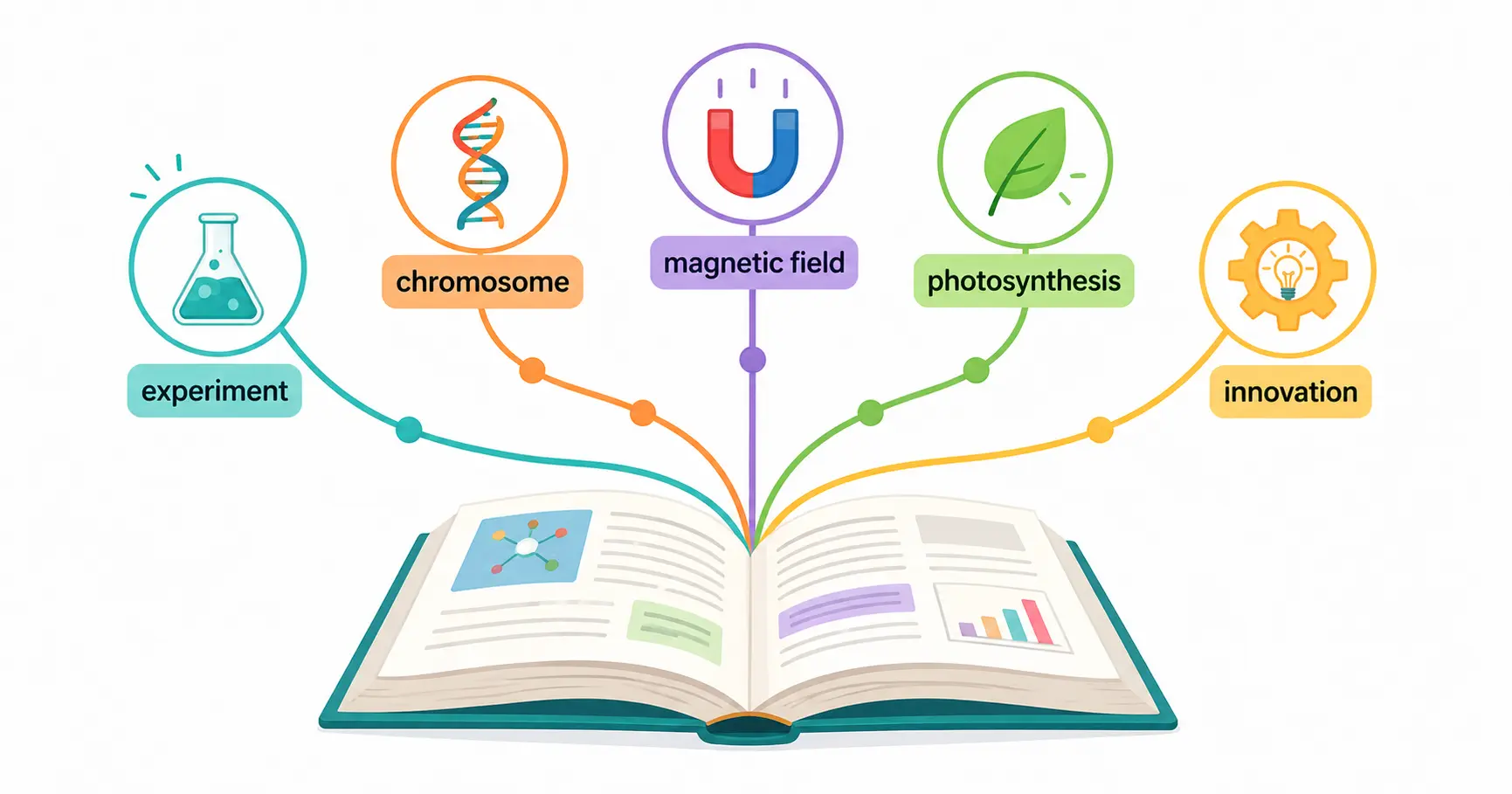
科学英単語を効果的に勉強する方法
1. アルファベット順ではなく、分野ごとにまとめて覚える。 このガイドの表がトピック別に整理されているのには理由があります。まず生物学の25語をまとめて覚え、次に化学へ。関連する単語をまとめると、脳はより強いつながりを作ります。
2. 視覚教材を活用する。 科学英語は図解と一緒の方が覚えやすいです。「evaporate」「condense」「precipitation」を覚えるとき水の循環を描いてみましょう。「nucleus」「membrane」「chromosome」を覚えるとき細胞のスケッチを描いてみましょう。
3. 英語の科学記事を読む。 BBC Science、National Geographic、New Scientistが特におすすめです。このリストの単語に出くわしたら、実際の文脈で定着が強化されます。
4. 字幕付きでドキュメンタリーを観る。 デイビッド・アッテンボローのシリーズ(Planet Earth、Blue Planet)は生物学・生態学の語彙に最適。Cosmosは物理学と天文学をカバーしています。英語字幕をつけて、知らない単語が出たら一時停止してメモしましょう。
5. 短い説明文を書く。 単語のグループを覚えた後、できるだけ多くの単語を使って3〜5文のパラグラフを書いてみましょう。例:“Photosynthesis is the process by which plants absorb carbon dioxide and convert it into glucose using sunlight. This process is essential for the ecosystem because it generates the oxygen that organisms need for respiration.”
語彙学習の総合的なシステムについては、語彙力を向上させる方法のガイドをご覧ください。
次のステップ
-
アカデミック語彙を築く。 科学英単語はAcademic Word Listと多く重なります。ステップバイステップ語彙学習ガイドで間隔反復を使った日々の学習システムを整えましょう。
-
IELTS Academicの準備。 IELTS Readingのパッセージの多くは科学的トピックを扱います。IELTS語彙完全ガイドでは全4セクションをカバーしています。
-
上級語彙を学ぶ。 この科学英単語に慣れたら、アカデミック・ビジネス英語のための300語以上のC1–C2上級英単語に進みましょう。
-
4,000語の必須単語で練習する。 科学英語はより広い学習計画の一部です。4000語の必須英単語ガイドでは6ヶ月の学習プランを紹介しています。
-
暗記テクニックを活用する。 科学用語は覚えにくいことがあります。語彙の暗記法で記憶術や間隔反復などの科学的に裏付けられたテクニックを学びましょう。
FAQ
IELTSで最も重要な科学英単語は?
IELTS Academicでは、環境・生態学の語彙(climate、emission、sustainability、renewable energy)、科学的方法の語彙(hypothesis、evidence、significant、correlation)、生物学の基本(species、ecosystem、evolution、adaptation)に注目しましょう。これらのトピックはReadingとListeningで最も頻出します。このガイドの200語以上で、よく出題される科学英単語はすべてカバーされています。
科学英単語はいくつ覚えるべき?
一般的なアカデミック英語なら、100〜150語の科学英単語を知っていれば科学関連のテキストのほとんどを理解できます。大学レベルの理系授業では300〜500語の専門用語が必要です。このガイドでは、複数の分野にまたがり標準テストにも登場する最も広く役立つ200語以上を取り上げています。
これらの科学英単語はイギリス英語とアメリカ英語で同じ?
科学英語のほぼすべてはイギリス英語とアメリカ英語で同じです。違いはスペリング(「litre」vs「liter」、「metres」vs「meters」)や一部の単位(セルシウス vs ファーレンハイト)の好みくらいです。hypothesis、photosynthesis、catalystなどの単語自体は世界共通です。
IELTS Writingでこれらの単語を使える?
はい。「significant」「evidence」「correlation」「contribute」「phenomenon」などはIELTS Writing Task 2、特に科学・テクノロジー・環境・健康に関するエッセイに最適です。Task 1では「fluctuate」「decline」「significant」がデータの傾向を表現するのに役立ちます。グラフ特有の語彙についてはIELTS Writing Task 1語彙ガイドをご覧ください。
科学用語を覚える最も効果的な方法は?
単語を語根に分解しましょう。多くの科学英単語はラテン語やギリシャ語に由来します。「photo」(光)+「synthesis」(結合)= photosynthesis。「bio」(生命)+「diversity」= biodiversity。20〜30個の主要な語根を覚えれば、何百もの科学英単語を解読できます。これに間隔反復と英語での科学コンテンツの読解を組み合わせると効果的です。
化学式も覚える必要がある?
一般的な英語やIELTSなら不要です。必要なのは英語名(CO₂ではなくcarbon dioxide)を知ることです。大学の理系授業では両方が必要になります。このガイドでは化学式ではなく英語の語彙に焦点を当てています。