Gírias Britânicas: 200+ Expressões que Você Precisa Conhecer
Se você aprendeu inglês com livros didáticos americanos mas depois assistiu a um programa de TV britânico, provavelmente entendeu cerca de 70% — não por causa do sotaque, mas do vocabulário. Quando um britânico diz “I’m absolutely knackered after that dodgy kebab, and now I need to pop to the chemist before I go to my mate’s gaff,” cada palavra é inglês, mas a frase pode muito bem ser um idioma estrangeiro para quem aprendeu inglês americano.
O inglês britânico tem seu próprio enorme vocabulário de gírias, palavras informais e expressões que raramente aparecem nos livros didáticos. Algumas são usadas em todo o Reino Unido; outras são específicas de Londres, do Norte ou da Escócia. Muitas existem há séculos; outras surgiram no ano passado.
Este guia cobre mais de 200 das gírias e expressões britânicas mais úteis, organizadas por categoria. Cada palavra inclui uma definição, uma frase de exemplo e observações sobre o quanto ela é usada. Quer você esteja planejando morar no Reino Unido, assistindo à TV britânica ou simplesmente querendo entender o que seus amigos britânicos realmente dizem, este é o seu guia de referência.
- Total: 200+ gírias britânicas
- Organizado por: 10 categorias
- Formato: Palavra → Significado → Exemplo
- Nível: B1–C2
- Para: entender o inglês britânico, preparar-se para viajar e ampliar seu conhecimento cultural
Pessoas e Relacionamentos
| # | Palavra/Expressão | Significado | Exemplo |
|---|---|---|---|
| 1 | bloke | homem, cara | He’s a nice bloke — you’d like him. |
| 2 | mate | amigo; também usado como cumprimento casual | Alright, mate? How’s it going? |
| 3 | lad | menino, rapaz | The lads are going to the pub tonight. |
| 4 | lass | menina, jovem mulher (Norte) | She’s a lovely lass from Yorkshire. |
| 5 | chap | homem (levemente antiquado, educado) | He’s a decent chap, that one. |
| 6 | bird | mulher, namorada (informal, pode ser ofensivo) | He’s been seeing some bird from Manchester. |
| 7 | missus / Mrs | esposa ou namorada | I need to check with the missus first. |
| 8 | geezer | homem (Londres) | Some geezer just knocked on the door. |
| 9 | bruv | irmão, amigo (Londres) | Thanks, bruv — I owe you one. |
| 10 | muppet | uma pessoa tola | He forgot his passport — what a muppet! |
| 11 | plonker | uma pessoa estúpida | Don’t be such a plonker, Rodney! |
| 12 | nutter | uma pessoa maluca | He jumped in the river — absolute nutter. |
| 13 | tosser | uma pessoa desagradável | The boss is a complete tosser. |
| 14 | numpty | uma pessoa tola ou incompetente (escocês) | Some numpty parked across two spaces. |
| 15 | bairn | uma criança (escocês/Norte) | She’s got three bairns under five. |
| 16 | love / luv | forma de tratamento (como “querido/a”) | What can I get you, love? |
| 17 | darling | tratamento carinhoso (usado informalmente no Sul) | Thanks, darling — that’s very kind. |
| 18 | posh | de classe alta, chique | She went to a posh school in Surrey. |
| 19 | chav | pessoa vista como de classe baixa e agressiva | The media loves stereotyping chavs. |
| 20 | punter | cliente; pessoa comum | The punters seemed happy with the show. |
Sentimentos Positivos e Aprovação
| # | Palavra/Expressão | Significado | Exemplo |
|---|---|---|---|
| 21 | brilliant | ótimo, maravilhoso | “How was the concert?” “Brilliant!” |
| 22 | lovely | ótimo, agradável | That was a lovely meal — thank you. |
| 23 | smashing | excelente, maravilhoso | We had a smashing time at the festival. |
| 24 | cracking | excelente, muito bom | She’s done a cracking job on this report. |
| 25 | proper | real, genuíno (intensificador) | That’s a proper cup of tea. |
| 26 | well | muito (intensificador) | That film was well good. |
| 27 | dead | muito (intensificador, Norte) | She’s dead funny when she wants to be. |
| 28 | mint | excelente (Norte) | “How was the match?” “Mint!” |
| 29 | sound | bom, confiável; também “ok” | He’s a sound bloke. / “I’ll be there at 7.” “Sound.” |
| 30 | chuffed | muito satisfeito, orgulhoso | She was chuffed to bits with her exam results. |
| 31 | over the moon | extremamente feliz | He was over the moon when he got the job. |
| 32 | buzzing | muito animado | I’m absolutely buzzing about the trip. |
| 33 | gobsmacked | espantado, chocado | I was gobsmacked when I heard the news. |
| 34 | ace | ótimo, brilhante | “How was the party?” “Ace!” |
| 35 | wicked | incrível, legal (informal) | That trick was wicked! |
| 36 | lush | adorável, atraente (País de Gales) | The cake was absolutely lush. |
| 37 | fit | atraente (sobre uma pessoa) | She’s well fit, isn’t she? |
| 38 | tidy | bom, arrumado (País de Gales) | “How was the gig?” “Tidy!” |
| 39 | belting | excelente (Norte) | We had a belting night out. |
| 40 | boss | excelente (Liverpool) | That goal was boss! |
Sentimentos Negativos e Desaprovação
| # | Palavra/Expressão | Significado | Exemplo |
|---|---|---|---|
| 41 | rubbish | bobagem; má qualidade | “He said he’ll be on time.” “That’s rubbish.” |
| 42 | naff | fora de moda, sem graça | That jumper is a bit naff, isn’t it? |
| 43 | pants | terrível, horrível | The film was absolutely pants. |
| 44 | dodgy | suspeito, não confiável, arriscado | That kebab looks a bit dodgy. |
| 45 | grim | desagradável, deprimente | The weather’s been grim all week. |
| 46 | manky | nojento, sujo | The kitchen was absolutely manky. |
| 47 | rank | nojento | That milk smells rank — throw it out. |
| 48 | gutted | muito desapontado | I was gutted when they cancelled the concert. |
| 49 | miffed | levemente irritado | She was a bit miffed about not being invited. |
| 50 | narked | irritado | He was well narked about the traffic. |
| 51 | minging | feio, nojento | That toilet was absolutely minging. |
| 52 | bog-standard | comum, básico | It’s just a bog-standard laptop — nothing special. |
| 53 | daft | bobo, estúpido | Don’t be daft — of course I’ll help. |
| 54 | barmy | maluco, louco | You want to swim in January? You’re barmy! |
| 55 | bonkers | maluco | The housing prices in London are bonkers. |
| 56 | mental | maluco (informal) | The traffic was mental this morning. |
| 57 | knackered | extremamente cansado | I’m absolutely knackered after that shift. |
| 58 | shattered | exausto | We walked 20 miles — I’m shattered. |
| 59 | cream-crackered | exausto (rima cockney para knackered) | I’m cream-crackered — need a kip. |
| 60 | fed up | cansado de, frustrado | I’m fed up with this rain. |
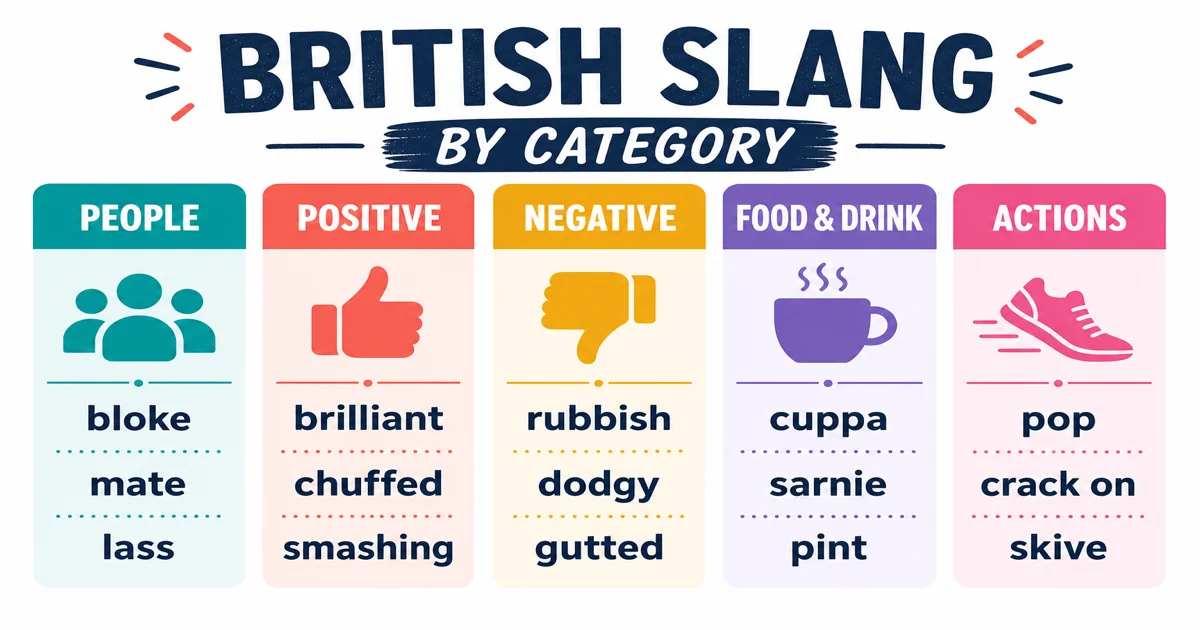
Comida e Bebida
| # | Palavra/Expressão | Significado | Exemplo |
|---|---|---|---|
| 61 | cuppa | xícara de chá | Fancy a cuppa? |
| 62 | brew | xícara de chá | Put the kettle on — I need a brew. |
| 63 | biscuit | biscoito (cookie em inglês americano) | Would you like a biscuit with your tea? |
| 64 | chips | batatas fritas | Fish and chips, please. |
| 65 | crisps | salgadinhos de batata | Pass me the crisps — salt and vinegar. |
| 66 | sarnie | sanduíche | I’ll grab a bacon sarnie for lunch. |
| 67 | butty | sanduíche (Norte) | A chip butty is a Northern classic. |
| 68 | nosh | comida; comer | Let’s grab some nosh before the film. |
| 69 | scran | comida (Norte/meio militar) | What’s for scran tonight? |
| 70 | peckish | levemente com fome | I’m a bit peckish — got any snacks? |
| 71 | starving | com muita fome (exagero) | I’m starving — can we eat soon? |
| 72 | brekkie | café da manhã | What are you having for brekkie? |
| 73 | tea | jantar (Norte) | “What’s for tea, Mum?” |
| 74 | gaffer tape | fita adesiva reforçada (duct tape) | Fix it with gaffer tape — that’ll do. |
| 75 | ploughman’s | almoço frio de pão, queijo e picles | I’ll have the ploughman’s, please. |
| 76 | pint | copo de cerveja | Let’s grab a pint after work. |
| 77 | off-licence | loja que vende bebidas alcoólicas | Pop to the off-licence and grab some wine. |
| 78 | bladdered / trolleyed | muito bêbado | He was absolutely bladdered by 9 o’clock. |
| 79 | legless | extremamente bêbado | She was legless after three cocktails. |
| 80 | pissed | bêbado (NÃO irritado, como no inglês americano) | He got pissed at the office Christmas party. |
Ações do Dia a Dia
| # | Palavra/Expressão | Significado | Exemplo |
|---|---|---|---|
| 81 | pop | ir rapidamente | I’m just going to pop to the shops. |
| 82 | nip | ir rapidamente (Norte) | I’ll nip out for some milk. |
| 83 | crack on | começar, continuar trabalhando | Right, let’s crack on with the meeting. |
| 84 | faff about | perder tempo, mexer sem objetivo | Stop faffing about and get ready! |
| 85 | have a go | tentar | I’ve never tried it, but I’ll have a go. |
| 86 | sort it | resolver, organizar | Don’t worry — I’ll sort it. |
| 87 | suss out | descobrir, investigar | I need to suss out the best route. |
| 88 | take the mickey / take the mick | provocar alguém, tirar sarro | Are you taking the mick? |
| 89 | wind someone up | irritar ou provocar alguém deliberadamente | He loves winding his sister up. |
| 90 | leg it | correr embora rapidamente | We saw the security guard and legged it. |
| 91 | skive | evitar trabalho ou escola | He skived off school to go to the cinema. |
| 92 | bunk off | faltar à escola ou ao trabalho | We used to bunk off on Fridays. |
| 93 | chat up | paquerar | He was trying to chat up the barmaid. |
| 94 | kip | uma soneca; dormir | I need a quick kip before we go out. |
| 95 | bog | banheiro | Where’s the bog? I need a wee. |
| 96 | loo | banheiro (termo educado) | Excuse me, where’s the loo? |
| 97 | ring / give a bell | telefonar | Give me a bell when you arrive. |
| 98 | nick | roubar; também “delegacia” ou “prisão” | Someone nicked my bike! |
| 99 | grass | dedurar alguém | Don’t grass on your mates. |
| 100 | chuck | jogar; também “terminar um relacionamento” | Chuck that in the bin. / She chucked him last week. |
Lugares e Coisas
| # | Palavra/Expressão | Significado | Exemplo |
|---|---|---|---|
| 101 | gaff | casa | Come round to my gaff tonight. |
| 102 | flat | apartamento | She lives in a flat in Notting Hill. |
| 103 | the tube | o metrô de Londres | Take the tube to Piccadilly Circus. |
| 104 | chemist | farmácia | I need to pop to the chemist for some paracetamol. |
| 105 | off-licence | loja de bebidas alcoólicas | Grab a bottle from the off-licence. |
| 106 | boot | porta-malas do carro | Put the bags in the boot. |
| 107 | bonnet | capô do carro | Open the bonnet — something’s rattling. |
| 108 | lorry | caminhão | A lorry broke down on the M25. |
| 109 | motorway | rodovia | Take the motorway — it’s faster. |
| 110 | pavement | calçada | Walk on the pavement, not the road. |
| 111 | zebra crossing | faixa de pedestres | Use the zebra crossing to get across. |
| 112 | roundabout | rotatória | Take the third exit at the roundabout. |
| 113 | queue | fila (de pessoas esperando) | There’s a massive queue outside the shop. |
| 114 | telly | televisão | What’s on the telly tonight? |
| 115 | mobile | celular | What’s your mobile number? |
| 116 | quid | libra (£1) | That’ll be five quid, mate. |
| 117 | fiver | nota de £5 | Have you got a fiver I can borrow? |
| 118 | tenner | nota de £10 | It only costs a tenner to get in. |
| 119 | brolly | guarda-chuva | Grab your brolly — it’s going to rain. |
| 120 | jumper | suéter | Put a jumper on — it’s freezing. |
Frases de Conversa
| # | Palavra/Expressão | Significado | Exemplo |
|---|---|---|---|
| 121 | alright? | olá, como vai? | “Alright, mate?” “Yeah, not bad.” |
| 122 | cheers | obrigado; também um brinde | Cheers for helping me with that. |
| 123 | ta | obrigado (muito informal) | “Here’s your change.” “Ta!” |
| 124 | sorted | feito, combinado, cuidado | “Is everything ready?” “Yeah, sorted.” |
| 125 | no worries | tudo bem, não se preocupe | “Sorry I’m late.” “No worries.” |
| 126 | fair enough | é razoável, aceito | “I can’t come tonight.” “Fair enough.” |
| 127 | innit | não é? (Londres) | Cold today, innit? |
| 128 | you what? | como é? quê? (surpresa ou incredulidade) | “I’m moving to Australia.” “You what?!” |
| 129 | blimey | expressão de surpresa | Blimey, that was quick! |
| 130 | bloody hell | expressão de surpresa ou frustração | Bloody hell, look at the time! |
| 131 | crikey | expressão de surpresa (antiquada) | Crikey, the prices have gone up! |
| 132 | cor blimey | expressão forte de surpresa | Cor blimey, that’s expensive! |
| 133 | bob’s your uncle | e pronto (= está feito) | Put it in the oven for 20 minutes, and Bob’s your uncle. |
| 134 | easy peasy | muito fácil | “Is it hard to make?” “No, easy peasy.” |
| 135 | spot on | exatamente certo, perfeito | Your prediction was spot on. |
| 136 | not my cup of tea | algo de que não gosto | Horror films aren’t my cup of tea. |
| 137 | taking the biscuit | passar dos limites, ser absurdo | Arriving two hours late really takes the biscuit. |
| 138 | you’re having a laugh | você deve estar brincando | £200 for a parking fine? You’re having a laugh! |
| 139 | do one | cai fora (grosseiro) | Tell him to do one. |
| 140 | get in! | isso! (comemoração) | “We won the match!” “Get in!” |
Clima e Estados de Ânimo
| # | Palavra/Expressão | Significado | Exemplo |
|---|---|---|---|
| 141 | chilly | frio (mas não congelante) | It’s a bit chilly out — grab a jacket. |
| 142 | nippy | frio | It’s nippy this morning! |
| 143 | brass monkeys | extremamente frio | It’s brass monkeys outside — stay in. |
| 144 | bucketing down | chovendo muito forte | It’s absolutely bucketing down out there. |
| 145 | drizzle | chuva fraca, garoa | It’s just a drizzle — you don’t need a brolly. |
| 146 | scorching | muito quente | It’s scorching today — 35 degrees! |
| 147 | muggy | quente e úmido | It’s so muggy — I can barely breathe. |
| 148 | miserable | desagradável (sobre o tempo) | What miserable weather we’re having. |
| 149 | moody | instável, imprevisível | The weather’s been dead moody this week. |
| 150 | right | muito, total (intensificador) | He’s a right laugh. / It’s a right mess. |
Trabalho e Dinheiro
| # | Palavra/Expressão | Significado | Exemplo |
|---|---|---|---|
| 151 | sack / get the sack | demitir / ser demitido | He got the sack for being late too often. |
| 152 | make redundant | demitir por corte de pessoal | They made 200 workers redundant. |
| 153 | do overtime | fazer hora extra | I’ve been doing overtime all month. |
| 154 | cushy | fácil, confortável (sobre um emprego) | He’s got a cushy job in the city. |
| 155 | doddle | algo muito fácil | The exam was an absolute doddle. |
| 156 | skint | sem dinheiro | I’m skint until payday. |
| 157 | loaded | muito rico | Her parents are absolutely loaded. |
| 158 | splash out | gastar muito dinheiro | We splashed out on a fancy dinner. |
| 159 | rip-off | algo caro demais, uma extorsão | £8 for a coffee? What a rip-off! |
| 160 | a steal | uma pechincha | That coat was a steal at £30. |
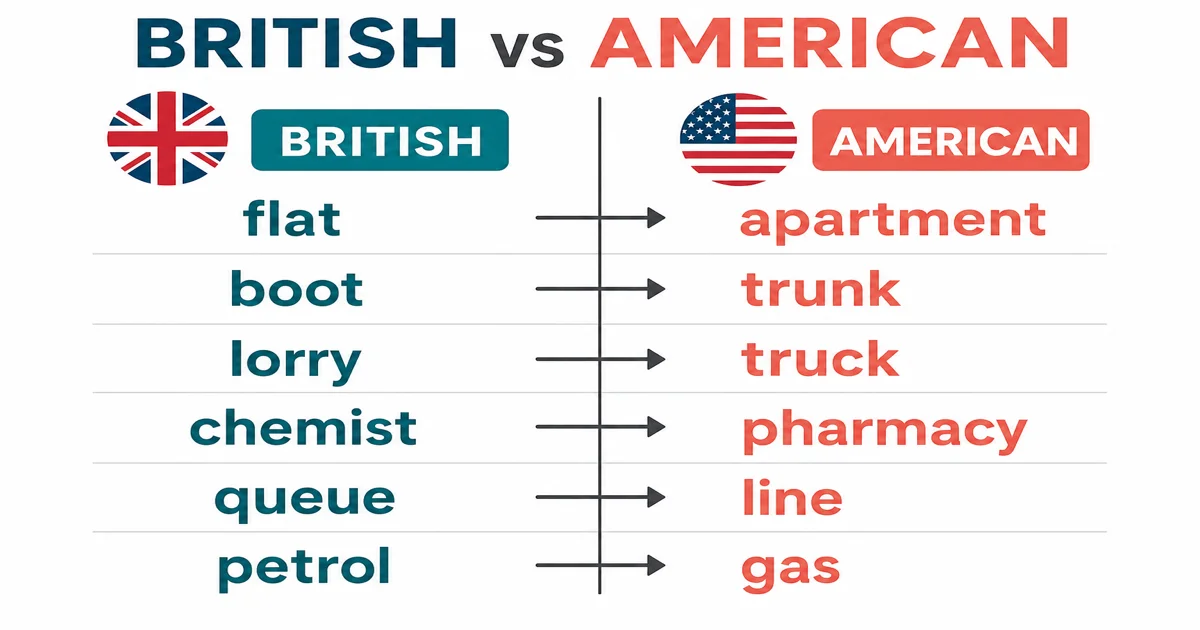
Inglês Britânico vs. Americano: Diferenças Principais
Estas não são gírias — são palavras do inglês padrão britânico que diferem do inglês americano.
| Britânico | Americano | Significado |
|---|---|---|
| flat | apartment | apartamento |
| lift | elevator | elevador |
| boot | trunk | porta-malas |
| bonnet | hood | capô do carro |
| lorry | truck | caminhão |
| petrol | gas/gasoline | combustível |
| nappy | diaper | fralda |
| dummy | pacifier | chupeta |
| cot | crib | berço |
| post | correio/cartas | |
| torch | flashlight | lanterna |
| holiday | vacation | férias |
| queue | line | fila |
| bin | trash can | lixeira |
| rubber | eraser | apaga marcas de lápis |
| autumn | fall | a estação do outono |
| football | soccer | futebol |
| trousers | pants | calças |
| pants | underwear | roupa íntima |
| trainers | sneakers | tênis |
Atenção: “Pants” significa roupa íntima em inglês britânico. Dizer “nice pants” para um britânico terá uma reação muito diferente do que nos EUA.
Variações Regionais
As gírias britânicas variam enormemente de uma região para outra:
| Região | Gíria Única | Exemplos |
|---|---|---|
| Londres | Cockney rhyming slang | dog and bone (telefone), plates of meat (pés) |
| Manchester | Mancunian | mint (ótimo), our kid (irmão/amigo próximo) |
| Liverpool | Scouse | boss (ótimo), la (rapaz, amigo) |
| Newcastle | Geordie | canny (legal), gan (ir), howay (vamos) |
| Birmingham | Brummie | bostin (brilhante), bab (querido/a, forma de tratamento) |
| Yorkshire | Yorkshire dialect | reyt (certo/muito), nowt (nada), summat (algo) |
| Escócia | Scots | braw (bom), wee (pequeno), ken (saber) |
| País de Gales | Welsh English | lush (adorável), tidy (bom), tamping (muito irritado) |
Como Entender Gírias Britânicas
1. Assista à TV britânica. Programas como Peep Show, The Inbetweeners, Derry Girls e Top Boy são minas de ouro de gírias britânicas reais em contexto.
2. Ouça o contexto. Mesmo que não conheça uma palavra, o tom e as palavras ao redor geralmente revelam se é positivo ou negativo.
3. Pergunte. Os britânicos adoram explicar suas gírias. “O que significa chuffed?” é uma pergunta perfeitamente normal.
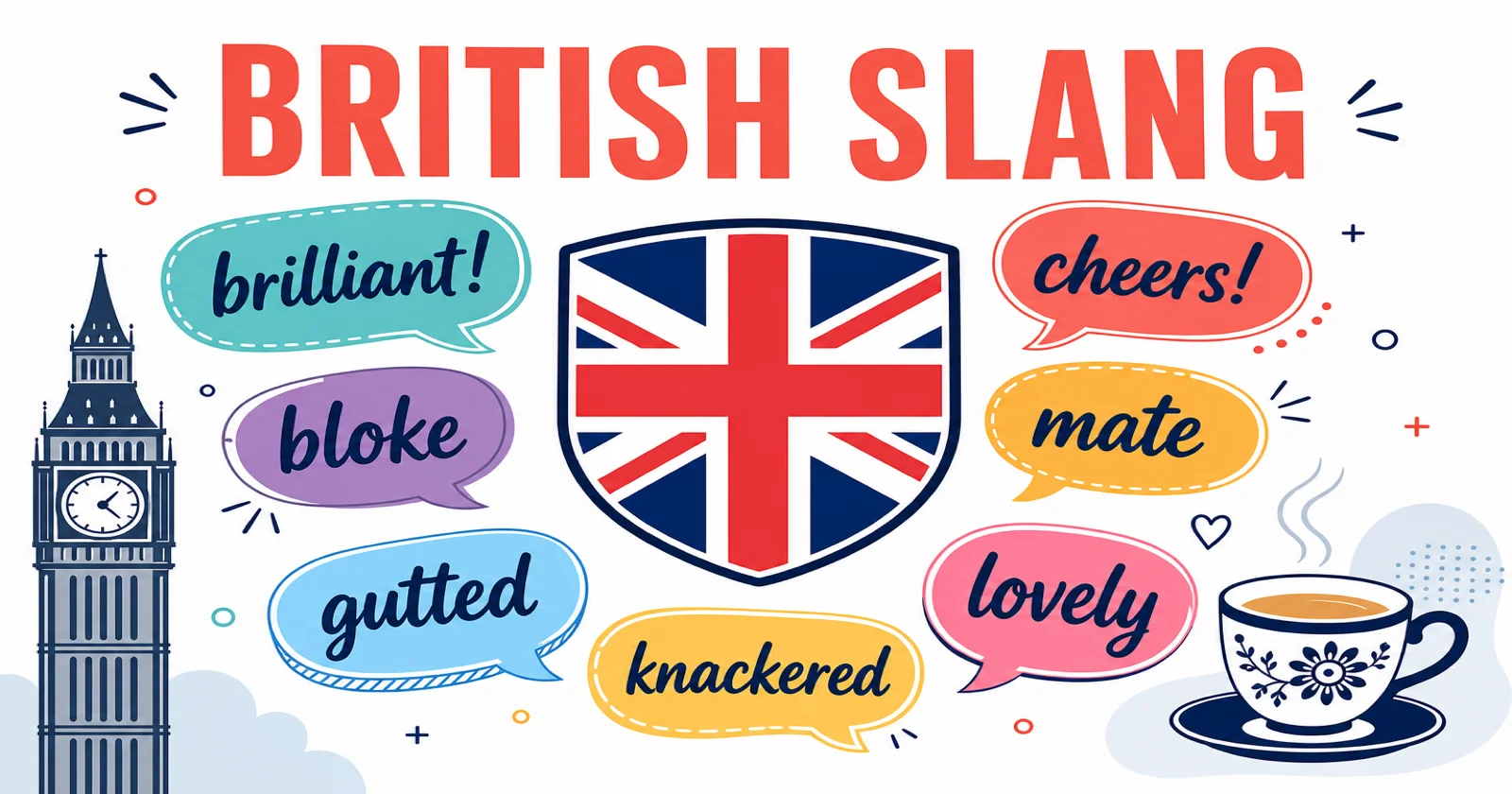
4. Comece a usar (com cuidado). Comece com palavras compreendidas em todo lugar, como brilliant, cheers, mate e lovely. Evite gírias regionais ou potencialmente ofensivas até entender o contexto social.
5. Adicione ao Linglify. Inclua gírias britânicas no seu vocabulário para praticar com repetição espaçada.
Palavras para Praticar
boom
substantivo
explosão, auge
Exemplos
- The boom of thunder echoed across the valley.
- The technology boom created many new millionaires.
cooperate
verbo
cooperar, colaborar
evaluate
verbo
avaliar, julgar
Exemplos
- Companies evaluate job candidates based on experience, skills, and personality.
- Teachers evaluate student progress through tests, projects, and classroom participation.
graduate
verbo
se formar
Exemplos
- She will graduate from university next year with a degree in engineering.
- Students must complete all requirements before they can graduate from high school.
horizon
substantivo
horizonte
Exemplos
- The sun disappeared behind the horizon as evening approached.
- Traveling broadens your horizon and exposes you to new cultures.
indispensable
adjetivo
indispensável, essencial, fundamental
Exemplos
- Clean water is indispensable for human survival and good health.
- Her experience and skills make her indispensable to the research team.
jury
substantivo
juri
Exemplos
- The jury deliberated for several hours before reaching a verdict.
- The talent show jury consisted of professional musicians and entertainers.
lifelong
adjetivo
para toda a vida
Exemplos
- Learning is a lifelong process that never truly ends.
- Their lifelong friendship began during elementary school years.
motivated
adjetivo
motivado
Exemplos
- Motivated employee seeks additional responsibilities and challenges at work.
- Success requires being motivated even when facing difficult obstacles.
normally
advérbio
normalmente
Exemplos
- Heart normally beats between sixty and hundred times per minute.
- Students normally arrive at school before morning bell rings.
off
adjetivo
fora, desligado, apagado
Exemplos
- Please turn off the lights before leaving the room.
- The dog ran off into the forest chasing wild rabbits.
prejudice
substantivo
preconceito
Exemplos
- Education helps overcome prejudice and promotes understanding.
- Racial prejudice damages communities and individuals alike.
resolve
verbo
resolver
Exemplos
- Mediator helps parties resolve dispute through negotiation.
- Technical team will resolve software problems quickly.
stress
verbo
estressar, sobrecarregar, pressionar
Exemplos
- Heavy workload may stress employees beyond limits.
- Teacher will stress importance of homework completion.
total
adjetivo
total
Exemplos
- Total cost includes all fees and expenses.
- Total silence fills room during meditation session.
tragedy
substantivo
tragédia
Exemplos
- Natural tragedy affects thousands of innocent people.
- Personal tragedy changes person's life perspective completely.
union
substantivo
união, associação
Exemplos
- Labor union protects worker rights and interests.
- Marriage union joins two people in partnership.
voyage
substantivo
viagem
Exemplos
- Space exploration represents humanity's greatest voyage into the unknown.
- The ocean voyage from Europe to America took several weeks in the past.
candidate
substantivo
candidato
Exemplos
- Each presidential candidate presented their policy plans to voters.
- The job candidate impressed the interview panel with her experience.
discourage
verbo
desencorajar
Exemplos
- Don't let one failure discourage you from pursuing your dreams.
- High prices discourage many people from buying organic food products.
donate
verbo
doar
Exemplos
- Many people donate money to charities that help homeless individuals.
- She decided to donate blood to help patients in emergency situations.
firmly
advérbio
firmemente, com firmeza
Exemplos
- Hold the rope firmly while climbing down the steep mountain slope.
- The manager firmly believed in treating all employees with respect.
guide
verbo
orientar
Exemplos
- Parents should guide their children to make responsible decisions.
- The experienced hiker will guide the group through the mountain trail safely.
humorous
adjetivo
engraçado, divertido, cômico
Exemplos
- She writes humorous articles about everyday life and family experiences.
- The humorous speech made everyone laugh and lightened the serious mood.
admission
substantivo
admissão
Exemplos
- Her admission to the prestigious medical school was the result of hard work.
- The museum offers free admission on the first Sunday of every month.
O Que Fazer a Seguir
-
Escolha 10 palavras desta lista que já ouviu mas nunca usou. Anote-as junto com seus significados.
-
Assista a um programa britânico e preste atenção a essas palavras. Observe como são usadas em conversas reais.
-
Adicione gírias britânicas ao Linglify para praticar com repetição espaçada.
-
Aprenda também expressões idiomáticas britânicas — Expressões Idiomáticas em Inglês: 500+ Expressões Comuns inclui muitas expressões específicas do inglês britânico.
-
Compare com o inglês americano — entender as diferenças evita confusões constrangedoras, especialmente com pants.
Perguntas Frequentes
Quais são as gírias britânicas mais comuns?
As mais amplamente usadas em todas as regiões são: mate (amigo), brilliant (ótimo), cheers (obrigado), lovely (agradável), rubbish (bobagem/ruim), knackered (exausto), quid (libra), dodgy (suspeito), sorted (resolvido) e bloke (homem). Essas palavras são entendidas em todo o Reino Unido e podem ser usadas com segurança na maioria das situações informais.
As gírias britânicas são consideradas rudes?
Depende da palavra e do contexto. Palavras como brilliant, lovely, cheers e mate são perfeitamente educadas. Palavras como bloody, pissed e sod off são levemente rudes. Termos como tosser e outras expressões mais fortes são ofensivos e devem ser evitados em companhia educada. Como regra geral, se você não usaria uma palavra na frente da sua avó, não a use com desconhecidos.
Todos os britânicos usam as mesmas gírias?
Não. As gírias britânicas variam enormemente por região, idade e classe social. Um adolescente de Londres usa gírias bem diferentes das de um fazendeiro de Yorkshire ou de um estudante de Edimburgo. Algumas palavras são universais (cheers, mate), enquanto outras identificam imediatamente uma região (boss = Liverpool, mint = Manchester, braw = Escócia).
Posso usar gírias britânicas no IELTS ou em situações formais?
Não. Os avaliadores do IELTS e os contextos formais exigem inglês padrão. Usar gírias em textos acadêmicos, apresentações de negócios ou entrevistas de emprego pode prejudicar sua credibilidade. Gírias britânicas são para conversas informais, mensagens de texto e situações sociais. Na prova oral do IELTS, palavras muito comuns como brilliant ou lovely são aceitáveis, mas gírias fortes como gutted ou well fit não são.
Como as gírias britânicas diferem das americanas?
As gírias britânicas e americanas se desenvolveram de forma independente, sob influências culturais diferentes. Algumas diferenças importantes: pissed significa bêbado no Reino Unido e irritado nos Estados Unidos; pants significa roupa íntima no Reino Unido e calças nos Estados Unidos; chips são batatas fritas no Reino Unido e batatas chips nos Estados Unidos; fit significa atraente no Reino Unido e em boa forma física nos Estados Unidos. Muitas gírias britânicas não têm equivalente americano (chuffed, gobsmacked, knackered) — e vice-versa.