Sinônimos para Palavras Comuns em Inglês: 200+ Alternativas Poderosas
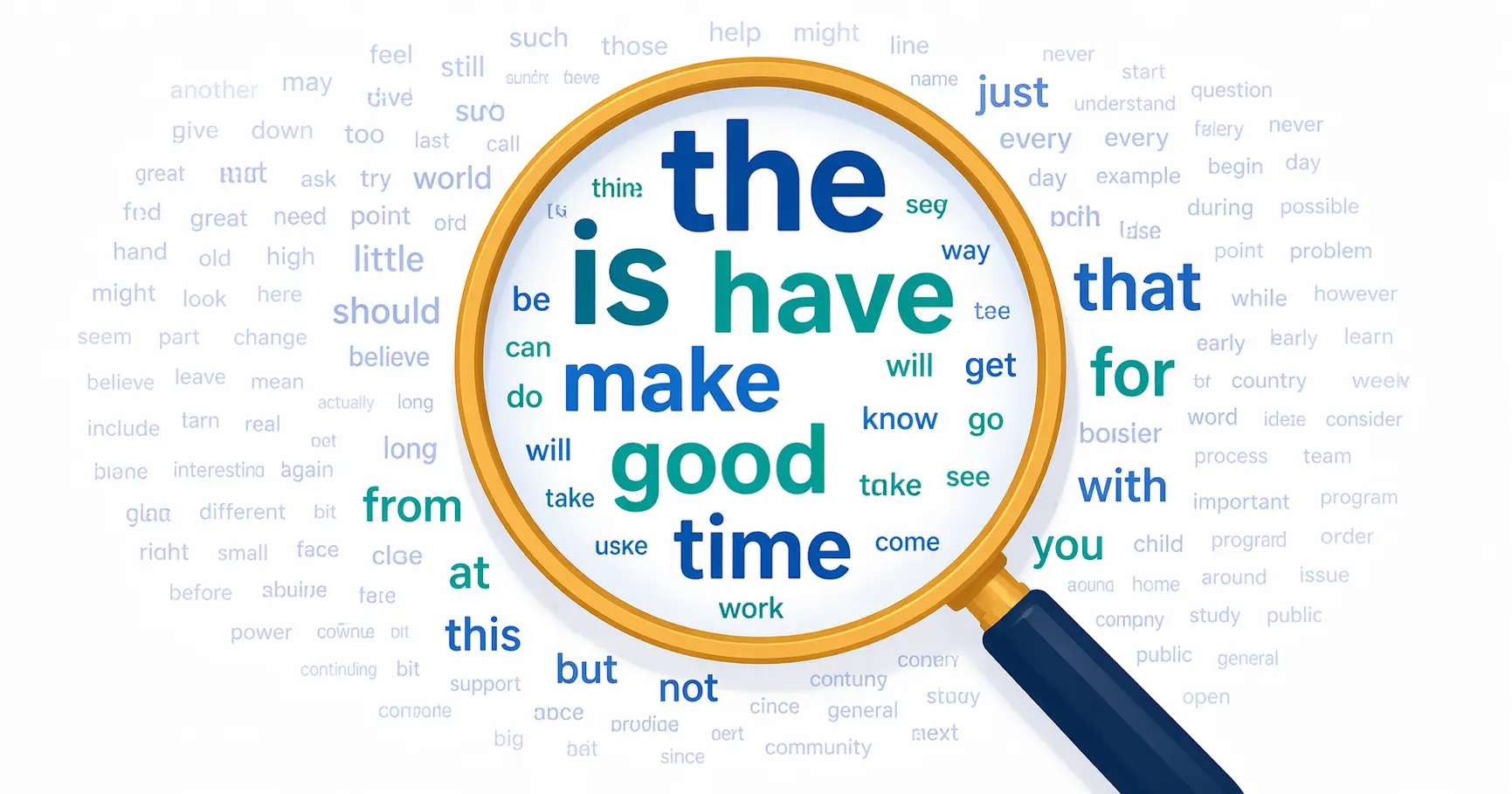
Todo estudante de inglês chega a um ponto em que conhece palavras suficientes para se comunicar — mas continua usando as mesmas dez palavras em cada frase. “Good”, “bad”, “nice”, “interesting”, “very”, “said”. Essas palavras funcionam, mas deixam o seu inglês soar vazio, repetitivo e vago.
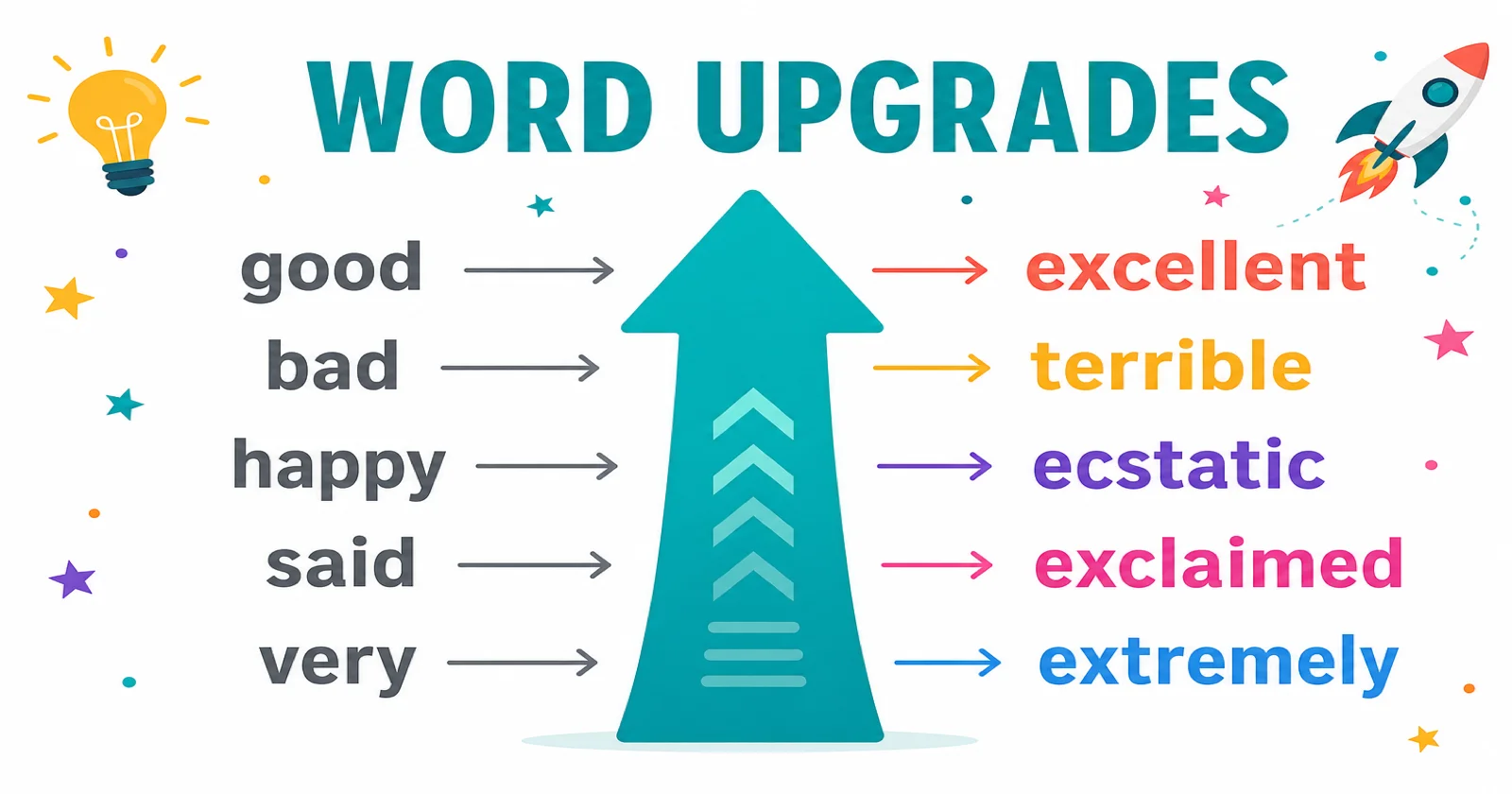
A diferença entre o inglês básico e o inglês fluente não é gramática — é a escolha das palavras. Um estudante que escreve “The movie was good” transmite significado. Um estudante que escreve “The movie was gripping” transmite significado e demonstra domínio do idioma. No IELTS, essa é a diferença entre a banda 6 e a banda 7+. Em e-mails profissionais, é a diferença entre soar competente e soar refinado.
Este guia traz 200+ sinônimos para as 20 palavras mais usadas em excesso no inglês. Cada sinônimo inclui uma definição, nível de formalidade e frase de exemplo — para que você saiba não apenas o que dizer, mas quando dizer.
- Total: 200+ upgrades de sinônimos
- Organizado por: 20 palavras usadas em excesso
- Formato: Sinônimo → Definição → Formalidade → Exemplo
- Nível: B1–C1
- Para: melhora de escrita, preparação para IELTS/TOEFL, comunicação profissional
Para o guia completo de sinônimos e antônimos, veja Sinônimos e Antônimos em Inglês: Guia Completo.
Como Usar Este Guia
- Encontre a palavra que você usa em excesso — escaneie o índice abaixo.
- Escolha 2–3 sinônimos que combinem com o seu nível de formalidade (casual, neutro ou formal).
- Leia as frases de exemplo — o contexto importa mais do que as definições.
- Pratique imediatamente — use suas novas palavras na escrita ou conversa hoje.
Aviso: Nem todos os sinônimos são intercambiáveis. “Big” e “enormous” se sobrepõem no significado, mas você pode dizer “my big sister” — você não pode dizer “my enormous sister”. Sempre verifique o contexto antes de trocar palavras.
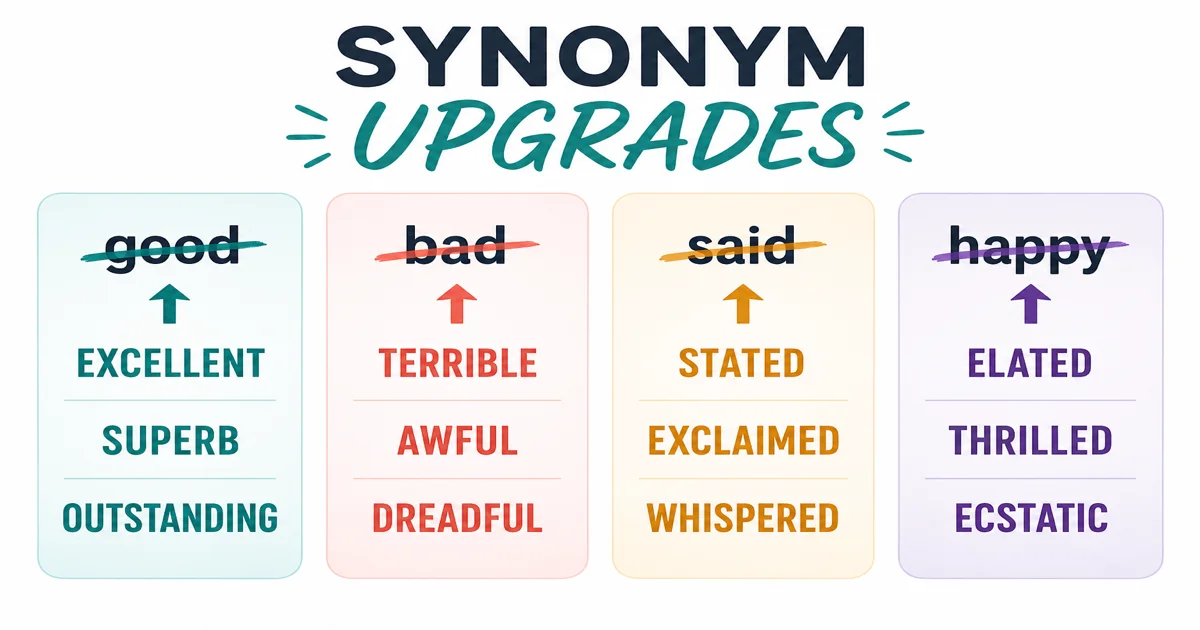
Sinônimos para “Good”
A palavra mais usada em excesso no inglês. “Good” pode significar qualquer coisa — o que significa que não diz quase nada.
| Sinônimo | Significado | Tom | Exemplo |
|---|---|---|---|
| excellent | extremamente bom | neutro | She did an excellent job on the report. |
| outstanding | excepcionalmente bom | formal | His outstanding performance earned a promotion. |
| superb | impressionantemente ótimo | neutro | The restaurant has superb pasta. |
| remarkable | digno de atenção | formal | The team made remarkable progress this quarter. |
| wonderful | que causa deleite | neutro | We had a wonderful time at the party. |
| terrific | extremamente bom | casual | That’s a terrific idea — let’s try it! |
| fantastic | extraordinariamente bom | casual | The concert was fantastic from start to finish. |
| exceptional | incomumente excelente | formal | She is an exceptional student. |
| admirable | que merece respeito | formal | His dedication is truly admirable. |
| first-rate | da mais alta qualidade | neutro | They provide first-rate customer service. |
| splendid | magnífico | formal | What a splendid view from this balcony! |
Sinônimos para “Bad”
Outra palavra que foi esticada para cobrir tudo, desde “levemente decepcionante” até “catastrófico”.
| Sinônimo | Significado | Tom | Exemplo |
|---|---|---|---|
| terrible | extremamente ruim | neutro | The weather has been terrible all week. |
| awful | muito ruim ou desagradável | casual | The movie was awful — we left early. |
| dreadful | que causa grande sofrimento ou medo | formal | The living conditions were dreadful. |
| appalling | chocantemente ruim | formal | The error rate is appalling. |
| atrocious | horrivelmente ruim | formal | The quality of work was atrocious. |
| inferior | de qualidade inferior | formal | The cheaper model uses inferior materials. |
| mediocre | mediano, não bom o suficiente | neutro | The food was mediocre at best. |
| poor | abaixo do padrão aceitável | neutro | She received poor marks on the exam. |
| substandard | abaixo do nível esperado | formal | The construction was found to be substandard. |
| lousy | de qualidade muito ruim | casual | I had a lousy day at work. |
Sinônimos para “Happy”
“Happy” abrange um espectro que vai do contentamento tranquilo à alegria avassaladora. Sua escolha de sinônimo coloca a emoção com precisão.
| Sinônimo | Significado | Tom | Exemplo |
|---|---|---|---|
| delighted | muito satisfeito | neutro | I’m delighted to hear the news! |
| thrilled | extremamente animado e satisfeito | neutro | She was thrilled to get the job offer. |
| ecstatic | extremamente feliz | neutro | The fans were ecstatic after the win. |
| content | pacificamente satisfeito | neutro | He felt content sitting by the fire. |
| elated | extremamente feliz e energizado | formal | We were elated by the results. |
| overjoyed | extremamente alegre | neutro | They were overjoyed at the birth of their child. |
| cheerful | visivelmente feliz e positivo | neutro | She’s always cheerful in the morning. |
| blissful | supremamente feliz | formal | They spent a blissful week at the beach. |
| grateful | grato e apreciativo | neutro | I’m grateful for your help. |
| euphoric | intensamente feliz (geralmente brevemente) | formal | The crowd was euphoric after the announcement. |
Sinônimos para “Sad”
| Sinônimo | Significado | Tom | Exemplo |
|---|---|---|---|
| unhappy | não feliz | neutro | She seemed unhappy with the decision. |
| miserable | extremamente infeliz | neutro | The cold rain made everyone miserable. |
| heartbroken | emocionalmente arrasado | neutro | He was heartbroken when she left. |
| devastated | dominado pela tristeza | neutro | The community was devastated by the loss. |
| gloomy | sombrio e depressivo | neutro | The gloomy weather matched her mood. |
| melancholy | tristeza profunda e reflexiva | formal | A melancholy tone runs through the novel. |
| sorrowful | cheio de tristeza | formal | She gave a sorrowful farewell speech. |
| downcast | sentindo-se derrotado ou para baixo | formal | He looked downcast after receiving the news. |
| despondent | abatido pela perda de esperança | formal | After months of rejection, she grew despondent. |
| dejected | triste e decepcionado | formal | The team walked off the field dejected. |
Sinônimos para “Interesting”
Uma palavra que não diz nada específico ao leitor. Por que é interessante?
| Sinônimo | Significado | Tom | Exemplo |
|---|---|---|---|
| fascinating | intensamente interessante | neutro | She told a fascinating story about her travels. |
| captivating | que prende a atenção completamente | formal | The speaker gave a captivating presentation. |
| compelling | poderosamente interessante | formal | The evidence is compelling. |
| engaging | que prende a atenção agradavelmente | neutro | The workshop was engaging and well-organized. |
| intriguing | que desperta curiosidade | neutro | That’s an intriguing idea — tell me more. |
| stimulating | que incentiva o pensamento ou a discussão | formal | The debate was intellectually stimulating. |
| thought-provoking | que faz você pensar profundamente | neutro | The documentary was thought-provoking. |
| absorbing | que prende toda a atenção | neutro | I found the book absolutely absorbing. |
| riveting | impossível de desviar o olhar | neutro | The trial was riveting from start to finish. |
| gripping | emocionante e que prende a atenção | neutro | The thriller was gripping — I read it in one sitting. |
Sinônimos para “Important”
| Sinônimo | Significado | Tom | Exemplo |
|---|---|---|---|
| crucial | extremamente importante, decisivo | neutro | Timing is crucial in this market. |
| essential | absolutamente necessário | neutro | Sleep is essential for good health. |
| vital | criticamente importante | neutro | Clean water is vital for survival. |
| significant | grande o suficiente para importar | formal | There was a significant increase in sales. |
| critical | de grande importância em um momento chave | neutro | This is a critical phase of the project. |
| fundamental | que forma a base de tudo | formal | Trust is fundamental to any relationship. |
| pivotal | ponto de virada; central | formal | Her testimony was pivotal in the trial. |
| paramount | acima de todos os outros em importância | formal | Safety is paramount in our industry. |
| indispensable | absolutamente necessário | formal | She became indispensable to the team. |
| key | de importância primária | neutro | Education is key to reducing inequality. |
Sinônimos para “Big”
| Sinônimo | Significado | Tom | Exemplo |
|---|---|---|---|
| enormous | extremamente grande em tamanho | neutro | They live in an enormous house. |
| massive | muito grande e pesado | neutro | The storm caused massive flooding. |
| huge | extremamente grande | casual | That’s a huge difference in price. |
| vast | imensamente grande em área ou quantidade | neutro | The Sahara is a vast desert. |
| immense | extremamente grande ou grande | formal | The project required immense effort. |
| substantial | grande em tamanho ou valor | formal | She received a substantial pay raise. |
| colossal | extraordinariamente grande | formal | The statue was colossal — visible from miles away. |
| tremendous | muito grande em quantidade | neutro | The team made tremendous progress. |
| gigantic | extremamente grande | neutro | They built a gigantic shopping mall. |
| considerable | notavelmente grande em quantidade | formal | There is considerable debate on this topic. |
Sinônimos para “Small”
| Sinônimo | Significado | Tom | Exemplo |
|---|---|---|---|
| tiny | muito pequeno | neutro | She lives in a tiny apartment. |
| minute | extremamente pequeno | formal | There were minute differences between the two. |
| compact | pequeno mas eficiente | neutro | The kitchen is compact but well-designed. |
| modest | relativamente pequeno ou limitado | neutro | They made a modest profit this year. |
| negligible | tão pequeno que é sem sentido | formal | The side effects are negligible. |
| slight | pequeno em grau | neutro | There was a slight delay in shipping. |
| miniature | versão muito pequena de algo | neutro | She collects miniature furniture. |
| petite | atraentemente pequeno (pessoas) | neutro | She’s petite but incredibly strong. |
| trivial | sem importância ou menor | formal | Don’t waste time on trivial details. |
| marginal | muito pequeno, na margem | formal | The marginal cost increase is acceptable. |
Sinônimos para “Said”
Na escrita de diálogos, “said” desaparece — mas em ensaios e narrativas, variar a palavra adiciona tom e precisão.
| Sinônimo | Significado | Tom | Exemplo |
|---|---|---|---|
| stated | disse formalmente | formal | The CEO stated that profits rose 12%. |
| mentioned | referiu-se brevemente | neutro | She mentioned the meeting in her email. |
| declared | disse com firmeza e publicamente | formal | He declared his candidacy this morning. |
| explained | disse dando razões | neutro | “The process takes two weeks,” she explained. |
| announced | disse publicamente ou oficialmente | neutro | The company announced a new product line. |
| argued | disse apresentando razões contrárias | neutro | Critics argued that the policy was flawed. |
| insisted | disse com firmeza, recusando-se a recuar | neutro | “I didn’t do it,” he insisted. |
| whispered | disse muito baixinho | neutro | “Be careful,” she whispered. |
| exclaimed | disse com emoção repentina | neutro | “That’s incredible!” he exclaimed. |
| muttered | disse baixinho e sem clareza | neutro | He muttered something under his breath. |
Sinônimos para “Very”
“Very” é um intensificador fraco. Substitua-o por uma palavra mais forte ou remova-o completamente.
| Em vez de… | Use | Exemplo |
|---|---|---|
| very happy | ecstatic, thrilled | She was thrilled with the results. |
| very sad | devastated, heartbroken | He was devastated by the news. |
| very big | enormous, massive | The crowd was enormous. |
| very small | tiny, minute | A tiny crack appeared in the wall. |
| very tired | exhausted, drained | After the hike, we were exhausted. |
| very hungry | starving, ravenous | I’m starving — I haven’t eaten all day. |
| very cold | freezing, bitter | It’s freezing outside — grab a coat. |
| very hot | scorching, boiling | The sand was scorching under our feet. |
| very scared | terrified, petrified | She was terrified of the dark. |
| very angry | furious, livid | He was furious when he found out. |
| very beautiful | stunning, gorgeous | The view was absolutely stunning. |
| very ugly | hideous, grotesque | The building was hideous from every angle. |
Sinônimos para “Nice”
Outra palavra que não diz nada específico. Tempo bom? Pessoa boa? Ideia boa? Substitua.
| Sinônimo | Significado | Tom | Exemplo |
|---|---|---|---|
| pleasant | agradável e aprazível | neutro | We had a pleasant conversation. |
| lovely | bonito e prazeroso | neutro | What a lovely surprise! |
| kind | generoso e atencioso | neutro | That was very kind of you. |
| charming | deliciosamente atraente | neutro | The village has a charming town center. |
| thoughtful | que demonstra cuidado pelos outros | neutro | What a thoughtful gift! |
| gracious | cortês e gentil | formal | She was gracious in accepting the award. |
| amiable | amigável e agradável | formal | He’s an amiable colleague to work with. |
| agreeable | agradável, fácil de conviver | formal | The weather was agreeable for outdoor activities. |
| delightful | altamente prazeroso | neutro | The garden was absolutely delightful. |
| warm | amigável e acolhedor | neutro | She gave us a warm welcome. |
Sinônimos para “Difficult” / “Hard”
| Sinônimo | Significado | Tom | Exemplo |
|---|---|---|---|
| challenging | difícil de uma forma estimulante | neutro | The course was challenging but rewarding. |
| demanding | que exige grande esforço | neutro | Teaching is a demanding profession. |
| complex | com muitas partes interconectadas | formal | The problem is more complex than it appears. |
| arduous | que exige esforço sustentado e intenso | formal | The climb was long and arduous. |
| strenuous | que exige grande esforço físico | neutro | Avoid strenuous activity after surgery. |
| grueling | extremamente cansativo e difícil | neutro | The marathon was absolutely grueling. |
| formidable | que inspira medo ou respeito | formal | She is a formidable opponent. |
| taxing | fisicamente ou mentalmente desgastante | neutro | The negotiations were mentally taxing. |
| tough | difícil, que exige força | casual | It’s been a tough year for everyone. |
| daunting | que parece difícil e intimidador | neutro | The task ahead looks daunting. |
Sinônimos para “Beautiful”
| Sinônimo | Significado | Tom | Exemplo |
|---|---|---|---|
| stunning | extremamente impressionante ou atraente | neutro | The sunset was absolutely stunning. |
| gorgeous | muito bonito | casual/neutro | She looked gorgeous at the event. |
| breathtaking | assombrosamente bonito | neutro | The mountain scenery was breathtaking. |
| magnificent | extremamente bonito e impressionante | formal | The cathedral is truly magnificent. |
| exquisite | extremamente bonito e delicado | formal | The craftsmanship is exquisite. |
| elegant | graciosamente bonito | formal | She wore an elegant black dress. |
| radiant | brilhante de beleza ou saúde | neutro | The bride looked radiant. |
| picturesque | visivelmente encantador (lugares) | neutro | The village is picturesque in autumn. |
| dazzling | deslumbrantemente bonito ou impressionante | neutro | She gave a dazzling performance. |
| striking | que chama atenção por ser incomum | neutro | He has striking blue eyes. |
Sinônimos para “Ugly”
| Sinônimo | Significado | Tom | Exemplo |
|---|---|---|---|
| unattractive | não agradável de se ver | neutro | The packaging was functional but unattractive. |
| unsightly | desagradável de se ver | neutro | The construction site left unsightly debris. |
| hideous | extremamente feio | neutro | The wallpaper was absolutely hideous. |
| grotesque | distorcido, feio de forma não natural | formal | The mask had a grotesque face. |
| repulsive | que causa extrema aversão | formal | The smell was repulsive. |
| ghastly | horrível de se ver | formal | The color combination was ghastly. |
Sinônimos para “Fast” / “Quick”
| Sinônimo | Significado | Tom | Exemplo |
|---|---|---|---|
| rapid | que acontece em pouco tempo | neutro | There has been rapid growth in the sector. |
| swift | que se move ou acontece rapidamente | formal | She made a swift decision. |
| prompt | feito sem demora | formal | Thank you for your prompt reply. |
| speedy | que acontece rapidamente | casual | We wish you a speedy recovery. |
| brisk | rápido e enérgico | neutro | They set a brisk pace through the park. |
| hasty | feito rápido demais (negativo) | neutro | Don’t make a hasty decision. |
| immediate | que acontece agora | neutro | We need an immediate response. |
Sinônimos para “Slow”
| Sinônimo | Significado | Tom | Exemplo |
|---|---|---|---|
| gradual | que acontece lentamente ao longo do tempo | neutro | Recovery was gradual but steady. |
| sluggish | mais lento do que o normal | neutro | The economy remains sluggish. |
| leisurely | relaxado, sem pressa | neutro | We took a leisurely walk along the river. |
| unhurried | calmo e sem pressa | neutro | She spoke in an unhurried tone. |
| prolonged | que continua por muito tempo | formal | Prolonged exposure can cause damage. |
| tedious | lento e entediante | neutro | The process was tedious but necessary. |
Sinônimos para “Show” / “Give”
| Sinônimo | Significado | Tom | Exemplo |
|---|---|---|---|
| demonstrate | mostrar claramente | formal | The data demonstrates a clear trend. |
| illustrate | mostrar com exemplos | formal | Let me illustrate my point with a chart. |
| reveal | tornar conhecido algo oculto | neutro | The report reveals surprising findings. |
| indicate | apontar, sugerir | formal | The evidence indicates a shift in behavior. |
| exhibit | mostrar uma qualidade ou comportamento | formal | The patient exhibited symptoms of fatigue. |
| display | mostrar abertamente | neutro | She displayed remarkable patience. |
| convey | comunicar um significado ou sentimento | formal | His expression conveyed deep concern. |
| present | mostrar ou oferecer formalmente | formal | She presented the findings to the board. |
Sinônimos para “Think” / “Believe”
| Sinônimo | Significado | Tom | Exemplo |
|---|---|---|---|
| consider | pensar cuidadosamente sobre | neutro | Please consider the alternatives. |
| assume | pensar sem provas | neutro | I assumed he would be there. |
| suppose | achar que algo é provável | neutro | I suppose we should start early. |
| reckon | achar ou calcular | casual | I reckon it’ll take about two hours. |
| contemplate | pensar profundamente sobre | formal | She contemplated a career change. |
| speculate | pensar com base em informações incompletas | formal | Analysts speculate that prices will rise. |
| presume | assumir como verdadeiro | formal | I presume you’ve read the report? |
| maintain | afirmar firmemente como crença | formal | He maintains that the decision was correct. |
Como Escolher o Sinônimo Certo
Conhecer 200+ sinônimos é inútil se você escolher o errado. Três fatores determinam a escolha certa:
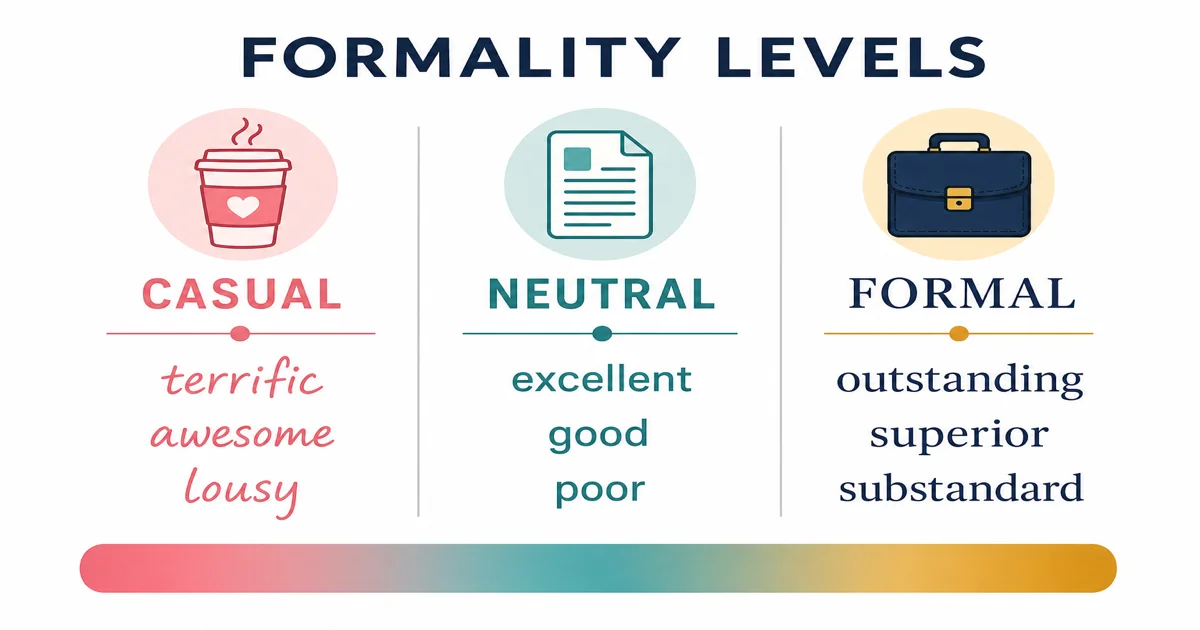
1. Nível de formalidade. “Furious” funciona em um e-mail para um amigo. “Incensed” funciona em um artigo de notícias. “Livid” funciona em qualquer lugar. Combine com o seu público.
2. Conotação (positiva/negativa/neutra). “Slim” e “skinny” ambos significam “magro”, mas “slim” é um elogio e “skinny” pode ser um insulto. Sempre verifique a conotação, não apenas a definição.
3. Colocações (parceiros de palavras). “Heavy rain” é inglês natural. “Weighty rain” não é — mesmo que “heavy” e “weighty” sejam sinônimos. Aprenda palavras em suas combinações naturais.
| Teste | Pergunta a fazer | Exemplo |
|---|---|---|
| Formalidade | Estou escrevendo formal ou casualmente? | Use “outstanding” em relatórios, “awesome” com amigos |
| Conotação | Essa palavra é positiva, negativa ou neutra? | “Childlike” (positivo) vs. “childish” (negativo) |
| Colocação | Essa palavra vai naturalmente com as palavras ao redor? | “Make a decision” (correto) vs. “do a decision” (errado) |
Palavras para Praticar
Adicione esses sinônimos essenciais ao seu dicionário Linglify para praticar com repetição espaçada.
boom
substantivo
explosão, auge
Exemplos
- The boom of thunder echoed across the valley.
- The technology boom created many new millionaires.
cooperate
verbo
cooperar, colaborar
evaluate
verbo
avaliar, julgar
Exemplos
- Companies evaluate job candidates based on experience, skills, and personality.
- Teachers evaluate student progress through tests, projects, and classroom participation.
graduate
verbo
se formar
Exemplos
- She will graduate from university next year with a degree in engineering.
- Students must complete all requirements before they can graduate from high school.
horizon
substantivo
horizonte
Exemplos
- The sun disappeared behind the horizon as evening approached.
- Traveling broadens your horizon and exposes you to new cultures.
prejudice
substantivo
preconceito
Exemplos
- Education helps overcome prejudice and promotes understanding.
- Racial prejudice damages communities and individuals alike.
resolve
verbo
resolver
Exemplos
- Mediator helps parties resolve dispute through negotiation.
- Technical team will resolve software problems quickly.
discourage
verbo
desencorajar
Exemplos
- Don't let one failure discourage you from pursuing your dreams.
- High prices discourage many people from buying organic food products.
donate
verbo
doar
Exemplos
- Many people donate money to charities that help homeless individuals.
- She decided to donate blood to help patients in emergency situations.
firmly
advérbio
firmemente, com firmeza
Exemplos
- Hold the rope firmly while climbing down the steep mountain slope.
- The manager firmly believed in treating all employees with respect.
indispensable
adjetivo
indispensável, essencial, fundamental
Exemplos
- Clean water is indispensable for human survival and good health.
- Her experience and skills make her indispensable to the research team.
jury
substantivo
juri
Exemplos
- The jury deliberated for several hours before reaching a verdict.
- The talent show jury consisted of professional musicians and entertainers.
lifelong
adjetivo
para toda a vida
Exemplos
- Learning is a lifelong process that never truly ends.
- Their lifelong friendship began during elementary school years.
motivated
adjetivo
motivado
Exemplos
- Motivated employee seeks additional responsibilities and challenges at work.
- Success requires being motivated even when facing difficult obstacles.
normally
advérbio
normalmente
Exemplos
- Heart normally beats between sixty and hundred times per minute.
- Students normally arrive at school before morning bell rings.
off
adjetivo
fora, desligado, apagado
Exemplos
- Please turn off the lights before leaving the room.
- The dog ran off into the forest chasing wild rabbits.
stress
verbo
estressar, sobrecarregar, pressionar
Exemplos
- Heavy workload may stress employees beyond limits.
- Teacher will stress importance of homework completion.
total
adjetivo
total
Exemplos
- Total cost includes all fees and expenses.
- Total silence fills room during meditation session.
tragedy
substantivo
tragédia
Exemplos
- Natural tragedy affects thousands of innocent people.
- Personal tragedy changes person's life perspective completely.
union
substantivo
união, associação
Exemplos
- Labor union protects worker rights and interests.
- Marriage union joins two people in partnership.
voyage
substantivo
viagem
Exemplos
- Space exploration represents humanity's greatest voyage into the unknown.
- The ocean voyage from Europe to America took several weeks in the past.
candidate
substantivo
candidato
Exemplos
- Each presidential candidate presented their policy plans to voters.
- The job candidate impressed the interview panel with her experience.
guide
verbo
orientar
Exemplos
- Parents should guide their children to make responsible decisions.
- The experienced hiker will guide the group through the mountain trail safely.
humorous
adjetivo
engraçado, divertido, cômico
Exemplos
- She writes humorous articles about everyday life and family experiences.
- The humorous speech made everyone laugh and lightened the serious mood.
admission
substantivo
admissão
Exemplos
- Her admission to the prestigious medical school was the result of hard work.
- The museum offers free admission on the first Sunday of every month.
O Que Fazer a Seguir
-
Escolha suas 3 palavras mais usadas. Seja honesto — a maioria das pessoas abusa de “good”, “very” e “interesting”. Encontre-as neste guia e selecione 2–3 substitutos para cada uma.
-
Escreva três frases usando seus novos sinônimos agora. A prática imediata consolida o aprendizado.
-
Adicione sinônimos ao Linglify para repetição espaçada. Marque-os com a palavra que eles substituem (“upgrade-good”, “upgrade-said”) para que você possa revisá-los em sessões focadas.
-
Leia o guia completo — Sinônimos e Antônimos em Inglês: Guia Completo aborda 1000+ pares com antônimos incluídos.
-
Aprenda palavras opostas também — 500+ Palavras Opostas em Inglês complementa o conhecimento de sinônimos com pares de antônimos.
FAQ
Quais são os melhores sinônimos para “good”?
O melhor substituto depende do contexto. Para qualidade: excellent, superb, outstanding. Para caráter moral: virtuous, honorable, admirable. Para comida: delicious, tasty, superb. Para desempenho: exceptional, remarkable, first-rate. Evite usar “good” quando existe uma palavra mais específica.
Qual é a diferença entre sinônimos e palavras semelhantes?
Verdadeiros sinônimos podem substituir um ao outro em pelo menos alguns contextos sem mudar o significado (couch/sofa, begin/start). Palavras semelhantes compartilham significado, mas diferem em conotação, formalidade ou uso (slim/skinny, house/home, ask/demand). A maioria dos chamados sinônimos são, na verdade, palavras semelhantes — elas se sobrepõem no significado, mas não são perfeitamente intercambiáveis.
Como escolho entre sinônimos formais e casuais?
Combine com seu público e meio. Artigos acadêmicos e relatórios de negócios precisam de sinônimos formais (considerable, substantial, significant). E-mails para colegas podem ser neutros (big, important, fast). Mensagens de texto e fala casual podem ser informais (huge, awesome, quick). Em caso de dúvida, escolha neutro — funciona em quase qualquer contexto.
Quantos sinônimos devo aprender para cada palavra?
Comece com 2–3 sinônimos por palavra muito usada — isso é suficiente para eliminar a repetição. Para a preparação de exames (IELTS, TOEFL), expanda para 5–6 por palavra para maximizar sua pontuação de Léxico. Qualidade importa mais do que quantidade.
O uso de sinônimos vai melhorar minha nota no IELTS?
Sim, diretamente. O critério de Lexical Resource do IELTS (25% das notas de escrita e fala) recompensa especificamente o uso de sinônimos, vocabulário variado e escolha precisa de palavras. Substituir “important” por “crucial” em um parágrafo e “essential” no próximo demonstra a variedade de vocabulário que garante a Banda 7+.