
英語同義詞和反義詞:完整指南附1000+詞對
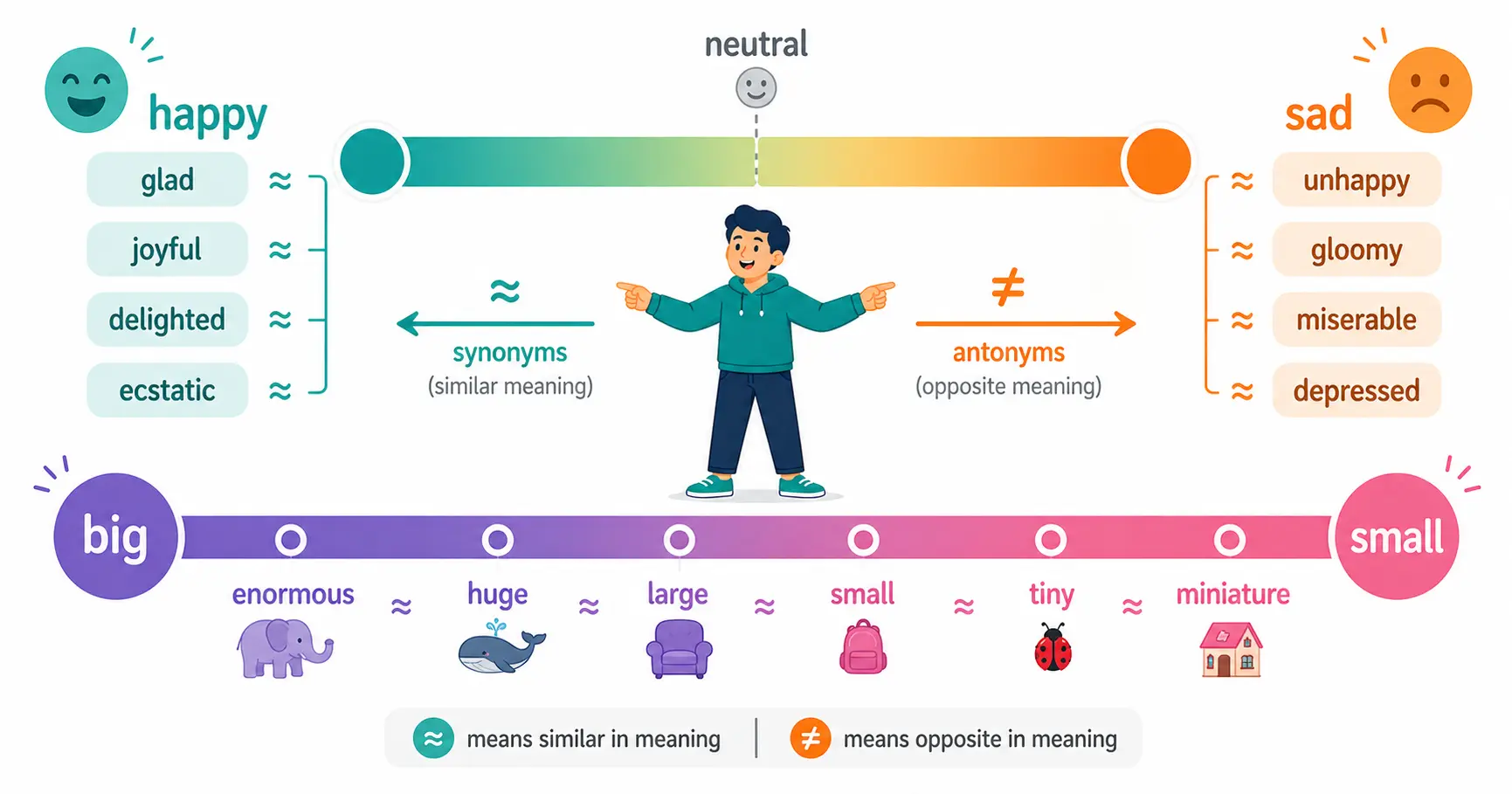
英語中的每個單字都存在於一個關係網絡中。「Happy」連接到「joyful」、「content」、「elated」和「cheerful」——共享其含義的單字。它也連接到「sad」、「miserable」、「unhappy」和「gloomy」——含義相反的單字。第一組是同義詞。第二組是反義詞。它們共同構成了詞彙靈活性的基礎——以不同方式說同樣事情的能力。
這在實際上很重要。在IELTS中,「詞彙資源」標準獎勵使用同義詞而不是重複相同單字。在學術寫作中,用同義詞改述展示了智識成熟度。
本指南涵蓋:
- 什麼是同義詞和反義詞(附清晰定義和例子),
- 1000+同義詞和反義詞詞對按主題分類,
- 精確同義詞和近義詞之間的關鍵區別,
- 100+最常見的相反詞對,
- 如何使用同義詞而不改變含義。
什麼是同義詞?
同義詞是與另一個單字含義相同或幾乎相同的單字。這個詞來自希臘語:syn-(一起)+ onoma(名字)——「相同名字」。
| 單字 | 同義詞 |
|---|---|
| big | large, huge, enormous, massive, vast |
| happy | glad, joyful, content, pleased, delighted |
| smart | intelligent, clever, bright, sharp, brilliant |
| fast | quick, rapid, swift, speedy |
| important | significant, crucial, vital, essential, key |
同義詞的含義完全相同嗎?
幾乎從不。大多數同義詞是近義詞——它們共享核心含義,但在正式程度、強度或語境上有所不同。
| 單字 | 同義詞 | 區別 |
|---|---|---|
| big | enormous | 「Enormous」比「big」強得多 |
| ask | interrogate | 「Interrogate」是正式/強烈的;「ask」是中性的 |
| old | ancient | 「Ancient」暗示數千年;「old」是一般性的 |
| thin | slim | 「Slim」是積極的;「thin」可以是中性或負面的 |
| cheap | affordable | 「Affordable」是積極的;「cheap」可能暗示低品質 |
什麼是反義詞?
反義詞是與另一個單字含義相反的單字。這個詞來自希臘語:anti-(反對)+ onoma(名字)——「相反名字」。
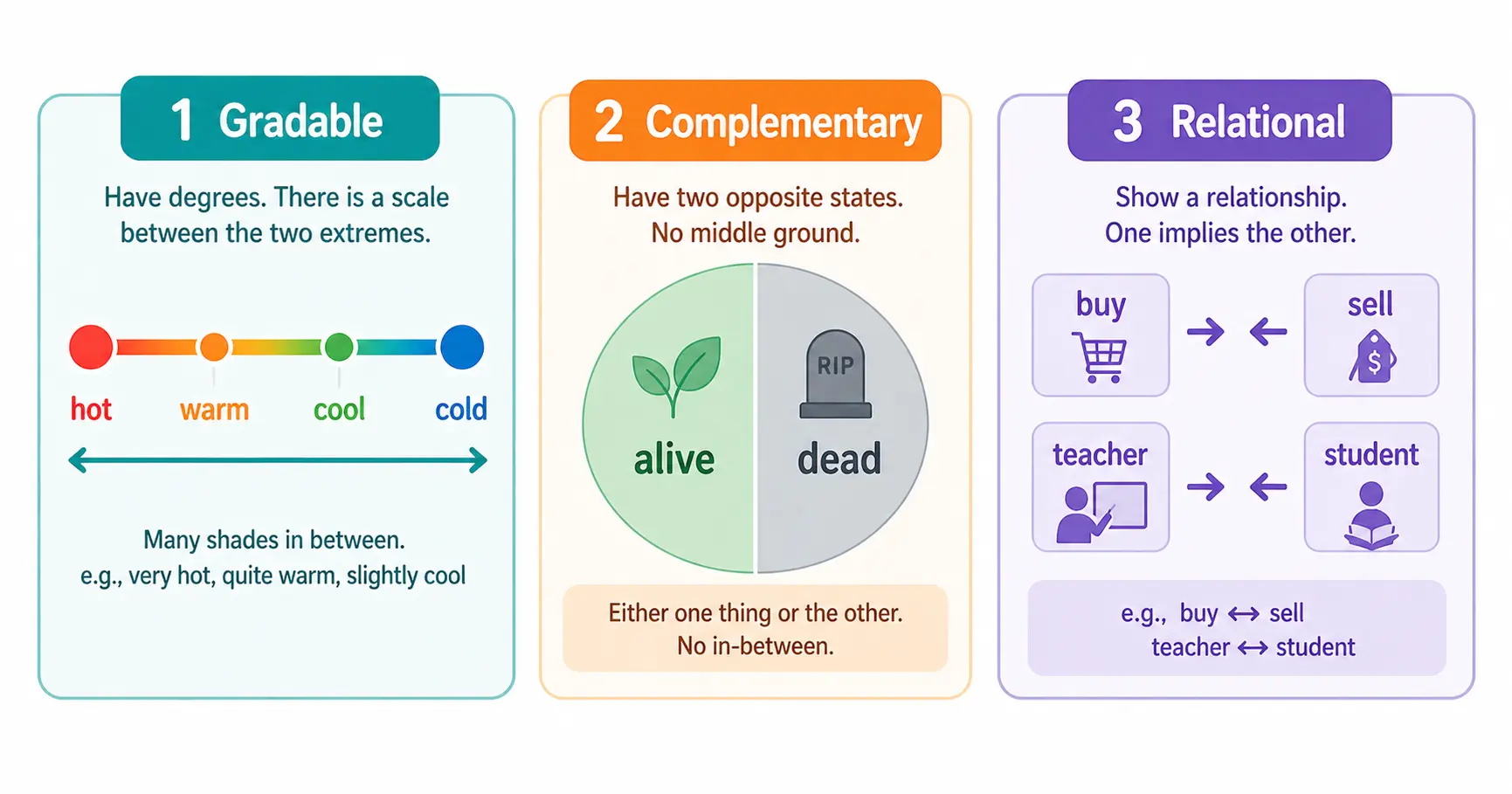
三種類型的反義詞
1. 可分級反義詞 — 在尺度上的對立,中間有程度。
- hot ↔ cold(但也有warm、cool、lukewarm)
- big ↔ small(但也有large、medium、tiny)
- happy ↔ sad(但也有content、neutral、unhappy)
2. 互補反義詞 — 沒有中間地帶的絕對對立。
- alive ↔ dead
- true ↔ false
- on ↔ off
3. 關係反義詞 — 相互依存的對立;一個沒有另一個就無法存在。
- buy ↔ sell
- teacher ↔ student
- give ↔ receive
50個最過度使用英語單字的同義詞
這些是每個學習者使用太多的單字。用同義詞替換它們是讓你聽起來更流暢的最快方法。
形容詞
Good(好)
| 同義詞 | 正式程度 | 最佳語境 | 例句 |
|---|---|---|---|
| excellent | 中性–正式 | 品質、表現 | The service was excellent. |
| outstanding | 正式 | 成就、結果 | She received outstanding reviews. |
| remarkable | 正式 | 令人印象深刻的事件 | His recovery was remarkable. |
| superb | 中性 | 品質、體驗 | The food was superb. |
| terrific | 非正式 | 熱情 | That’s a terrific idea! |
| wonderful | 中性 | 積極體驗 | We had a wonderful time. |
| decent | 中性–非正式 | 適當品質 | He makes a decent salary. |
Bad(壞)
| 同義詞 | 正式程度 | 最佳語境 | 例句 |
|---|---|---|---|
| terrible | 中性 | 強烈負面 | The traffic was terrible. |
| awful | 中性–非正式 | 強烈負面 | The movie was awful. |
| dreadful | 正式 | 非常糟糕的情況 | The conditions were dreadful. |
| poor | 中性 | 品質、表現 | The essay received a poor grade. |
| unacceptable | 正式 | 標準、行為 | This behavior is unacceptable. |
| inadequate | 正式 | 不足的品質 | The funding was inadequate. |
| mediocre | 中性 | 中等到低的品質 | The restaurant was mediocre. |
Important(重要)
| 同義詞 | 正式程度 | 最佳語境 | 例句 |
|---|---|---|---|
| significant | 正式 | 數據、研究 | The results show a significant improvement. |
| crucial | 中性–正式 | 關鍵決定 | Time management is crucial for success. |
| vital | 中性–正式 | 必不可少的事物 | Water is vital for survival. |
| essential | 中性 | 必要的事物 | Teamwork is essential in this job. |
| key | 中性 | 核心因素 | Education is a key factor in economic growth. |
| paramount | 非常正式 | 最高優先級 | Safety is paramount in this industry. |
| fundamental | 正式 | 基本原則 | Trust is fundamental to any relationship. |
Big(大)
| 同義詞 | 正式程度 | 例句 |
|---|---|---|
| large | 中性 | They live in a large house. |
| huge | 中性 | There was a huge crowd at the concert. |
| enormous | 中性 | The project requires an enormous budget. |
| massive | 中性–非正式 | The company made a massive profit. |
| vast | 正式 | The Sahara is a vast desert. |
| substantial | 正式 | There was a substantial increase in sales. |
| considerable | 正式 | She has considerable experience in the field. |
動詞
Think(思考)
| 同義詞 | 正式程度 | 例句 |
|---|---|---|
| believe | 中性 | I believe education should be free. |
| consider | 正式 | We should consider all the options. |
| assume | 中性 | I assumed you knew about the meeting. |
| contemplate | 正式 | She contemplated the offer for days. |
| maintain | 正式 | She maintains that the decision was correct. |
| contend | 非常正式 | Critics contend that the policy is flawed. |
Say(說)
| 同義詞 | 正式程度 | 例句 |
|---|---|---|
| state | 正式 | The report states that crime has decreased. |
| claim | 中性–正式 | He claims he was at home all evening. |
| argue | 中性–正式 | She argued that the policy was unfair. |
| point out | 中性 | She pointed out several errors in the report. |
| declare | 正式 | The government declared a state of emergency. |
| assert | 正式 | The CEO asserted that the company was profitable. |
Show(顯示)
| 同義詞 | 正式程度 | 例句 |
|---|---|---|
| demonstrate | 正式 | The study demonstrates a clear link. |
| illustrate | 正式 | The chart illustrates the trend. |
| indicate | 正式 | The results indicate a possible solution. |
| reveal | 中性–正式 | The investigation revealed widespread fraud. |
| highlight | 中性 | The report highlights several key challenges. |
常見形容詞反義詞對
| 單字 | 反義詞 | 例句(單字) | 例句(反義詞) |
|---|---|---|---|
| hot | cold | It’s a hot summer day. | It’s a cold winter night. |
| happy | sad | She looked happy at the party. | He seemed sad after the news. |
| fast | slow | He’s a fast runner. | The traffic was painfully slow. |
| young | old | She’s too young to drive. | The building is very old. |
| rich | poor | They live in a rich neighborhood. | Many poor families need support. |
| easy | difficult | The first question was easy. | The final exam was very difficult. |
| early | late | She arrived early for the meeting. | He’s always late. |
| strong | weak | He has a strong grip. | The signal was too weak. |
| deep | shallow | The lake is very deep. | The river is shallow here. |
| wide | narrow | The road was wide enough. | The alley was narrow and dark. |
| bright | dark | The room was bright and airy. | It was dark outside by 5 PM. |
| smooth | rough | The surface was smooth to the touch. | The road was rough and bumpy. |
| wet | dry | My shoes are still wet. | The climate here is hot and dry. |
| full | empty | The restaurant was full. | The parking lot was empty. |
| safe | dangerous | Is this neighborhood safe? | Driving in fog is dangerous. |
| clean | dirty | The kitchen was spotlessly clean. | His hands were dirty from gardening. |
| sweet | bitter | The mango was perfectly sweet. | The coffee was too bitter. |
| simple | complex | The instructions were simple. | The issue is more complex than it seems. |
| modern | ancient | The building has a modern design. | We visited an ancient temple. |
| temporary | permanent | It’s a temporary solution. | They’re looking for a permanent home. |
常見動詞反義詞對
| 單字 | 反義詞 | 例句(單字) | 例句(反義詞) |
|---|---|---|---|
| buy | sell | I bought a new laptop. | She sold her car last month. |
| start | finish | The concert starts at 8 PM. | We finished the project on time. |
| open | close | Open the window, please. | Close the door behind you. |
| arrive | leave | We arrived at 3 PM. | He left without saying goodbye. |
| win | lose | Our team won the match. | They lost the final game. |
| remember | forget | Do you remember her name? | I always forget my password. |
| accept | reject | She accepted the job offer. | The committee rejected the proposal. |
| allow | forbid | Pets are allowed in the park. | Photography is forbidden in the museum. |
| agree | disagree | I agree with your analysis. | We strongly disagree with that decision. |
| create | destroy | She created a masterpiece. | The fire destroyed the building. |
| increase | decrease | Prices have increased this year. | The population has decreased slightly. |
| borrow | lend | Can I borrow your pen? | She lent me her umbrella. |
按主題分類的同義詞和反義詞
情感
| 積極 | 同義詞 | 負面(反義詞) | 同義詞 |
|---|---|---|---|
| happy | glad, cheerful, joyful, delighted, content | sad | unhappy, sorrowful, gloomy, miserable, depressed |
| excited | thrilled, enthusiastic, eager, ecstatic | bored | uninterested, indifferent, apathetic, weary |
| calm | peaceful, serene, relaxed, tranquil | anxious | nervous, worried, tense, stressed, restless |
| confident | self-assured, certain, bold, poised | insecure | uncertain, doubtful, self-conscious, hesitant |
| brave | courageous, fearless, bold, daring | afraid | scared, frightened, terrified, fearful, timid |
| hopeful | optimistic, positive, encouraged | hopeless | pessimistic, despairing, bleak |
性格和個性
| 積極 | 同義詞 | 負面(反義詞) | 同義詞 |
|---|---|---|---|
| kind | generous, compassionate, thoughtful | cruel | harsh, ruthless, heartless, merciless |
| honest | truthful, sincere, genuine, frank | dishonest | deceitful, deceptive, untruthful |
| hardworking | diligent, industrious, dedicated | lazy | idle, inactive, lethargic, sluggish |
| intelligent | smart, clever, bright, brilliant | foolish | stupid, ignorant, unwise |
| polite | courteous, respectful, well-mannered | rude | impolite, disrespectful |
| humble | modest, unassuming, down-to-earth | arrogant | proud, conceited, vain, haughty |
學術和職業
| 正式 | 非正式同義詞 | 反義詞 |
|---|---|---|
| analyze | look at, examine | overlook(忽視) |
| demonstrate | show, prove | conceal(隱藏) |
| significant | important, notable | insignificant(微不足道) |
| comprehensive | complete, thorough | incomplete(不完整) |
| beneficial | helpful, useful, positive | harmful(有害) |
| abundant | plentiful, ample, copious | scarce(稀缺) |
| accurate | correct, precise, exact | inaccurate(不準確) |
| frequent | common, regular, repeated | rare(罕見) |
IELTS和學術寫作的同義詞
在IELTS中,重複相同的單字會降低你的詞彙資源分數。這些同義詞組涵蓋考生最常過度使用的單字。
IELTS寫作中需要替換的單字
| 過度使用的單字 | Band 7+更好的同義詞 | 例句 |
|---|---|---|
| people | individuals, citizens, residents, the population | Many individuals struggle to find affordable housing. |
| children | youngsters, minors, the younger generation | The younger generation is more technologically literate. |
| problem | issue, concern, challenge, obstacle | Air pollution is a growing concern in urban areas. |
| increase | rise, grow, escalate, surge, climb | Housing prices have surged in the last decade. |
| decrease | decline, drop, fall, diminish, plummet | Newspaper readership has declined steadily. |
| important | significant, crucial, vital, essential, paramount | Education plays a crucial role in economic development. |
| good | beneficial, positive, advantageous, favorable | Regular exercise has beneficial effects on mental health. |
| bad | detrimental, harmful, adverse, negative | Pollution has detrimental effects on public health. |
| think | believe, argue, maintain, contend, assert | Many experts contend that renewable energy is the solution. |
| very | highly, extremely, remarkably, considerably | The results were remarkably consistent across all groups. |
基於前綴的反義詞
許多英語反義詞是通過在原始單字上添加前綴形成的。
un-(不)
| 單字 | 反義詞 | 例句 |
|---|---|---|
| happy | unhappy | She seemed unhappy with the results. |
| usual | unusual | There was an unusual silence in the room. |
| fair | unfair | The decision was unfair. |
| comfortable | uncomfortable | The chair was uncomfortable. |
| expected | unexpected | The result was completely unexpected. |
| reliable | unreliable | The data source proved unreliable. |
in- / im- / il- / ir-
| 單字 | 反義詞 | 例句 |
|---|---|---|
| possible | impossible | Nothing is impossible with hard work. |
| polite | impolite | It’s impolite to interrupt someone. |
| legal | illegal | Downloading pirated software is illegal. |
| regular | irregular | The schedule is irregular. |
| responsible | irresponsible | Leaving children alone is irresponsible. |
| complete | incomplete | The application was rejected because it was incomplete. |
dis-(不)
| 單字 | 反義詞 | 例句 |
|---|---|---|
| agree | disagree | I disagree with that interpretation. |
| honest | dishonest | It would be dishonest to hide the truth. |
| advantage | disadvantage | The main disadvantage is the high cost. |
| approve | disapprove | Her parents disapproved of her career choice. |
| respect | disrespect | Disrespecting your teachers is unacceptable. |
mis-(誤)
| 單字 | 反義詞 | 例句 |
|---|---|---|
| understand | misunderstand | I think you misunderstood the instructions. |
| lead | mislead | The advertisement misled consumers. |
| behave | misbehave | The children misbehaved during the assembly. |
| inform | misinform | The public was misinformed about the risks. |
over- / under-(過/不足)
| 單字 | 反義詞 | 例句 |
|---|---|---|
| estimate | overestimate / underestimate | They overestimated the costs. / Don’t underestimate the difficulty. |
| pay | overpay / underpay | He was overpaid for the work. / Workers are underpaid. |
| value | overvalue / undervalue | The stock was overvalued. / Her contribution was undervalued. |
練習詞彙
將這25個高頻單字添加到你的 Linglify 字典進行間隔重複。
affordable
形容詞
經濟實惠
範例
- The government is working to provide affordable housing for low-income families.
- This restaurant offers delicious and affordable meals for college students.
commute
動詞
通勤
範例
- Public transportation helps people commute efficiently reducing traffic congestion.
- Workers commute daily between suburban homes and downtown offices.
conservation
名詞
保育
範例
- Water conservation becomes increasingly important during periods of severe drought.
- Wildlife conservation is essential for protecting endangered species from extinction.
demanding
形容詞
苛求的
範例
- Medical school is very demanding and requires years of intensive study.
- She has a demanding boss who expects perfection in all tasks.
heritage
名詞
遺產
範例
- She inherited a rich heritage of family traditions from her grandparents.
- The ancient castle is an important part of our cultural heritage.
leisure
名詞
休閒
範例
- People enjoy various leisure activities during weekends and holidays.
- Reading books is popular leisure pursuit for many educated people.
luxurious
形容詞
豪華的
範例
- She dreams of owning luxurious car with leather seats and sunroof.
- The luxurious hotel suite includes marble bathroom and ocean view.
memorable
形容詞
難忘的, 令人難忘的, 值得紀念的
範例
- Graduation day was memorable occasion for entire family.
- The memorable speech inspired students to pursue their dreams.
nutritious
形容詞
有營養的
範例
- Fresh vegetables are nutritious and support overall health.
- Nutritious breakfast provides energy for productive school day.
passionate
形容詞
熱情的, 充滿激情的
範例
- Passionate speech moves audience to take action.
- Passionate teacher inspires students to learn more.
pollution
名詞
污染
範例
- Air pollution affects public health in cities.
- Ocean pollution threatens marine life worldwide.
privacy
名詞
隱私
範例
- Hotel guests expect privacy during their stay.
- Internet privacy becomes increasingly important issue nowadays.
scenic
形容詞
風景優美的
範例
- Scenic overlook provides perfect spot for photographs.
- Scenic route takes longer but offers beautiful.
traditional
形容詞
傳統的
範例
- Traditional cooking methods preserve authentic flavors perfectly.
- Traditional music reflects cultural history and values.
uneven
形容詞
不平衡的
範例
- Uneven ground makes walking difficult and dangerous.
- Uneven performance shows inconsistent skill level development.
volunteer
動詞
志願
範例
- Citizens volunteer time for community improvement projects.
- Students volunteer at local charity organizations regularly.
substantially
副詞
大幅地, 實質上
範例
- Her performance substantially improved after additional training and practice.
- Prices have increased substantially over the past few months.
liaison
名詞
聯絡
範例
- Military liaison officers coordinate operations between allied forces.
- She serves as liaison between different departments.
sustainable
形容詞
可持續的
範例
- Company implements sustainable business model for long-term success.
- Sustainable farming practices protect soil and water resources.
acclaimed
形容詞
受到讚譽的
範例
- His performance was acclaimed by critics.
- The acclaimed author received many awards for her novel.
cancellation
名詞
取消, 撤銷
範例
- Due to weather, the flight cancellation was inevitable.
- The concert's cancellation disappointed many fans.
discretion
名詞
謹慎
範例
- He exercised discretion in his decisions.
- Use your discretion when sharing information.
indication
名詞
指示
範例
- The indication of his illness was clear after the tests.
- There was no indication that she was unhappy.
serenity
名詞
寧靜
範例
- She maintained her serenity despite the chaos.
- The serenity of the lake was calming.
如何學習同義詞和反義詞
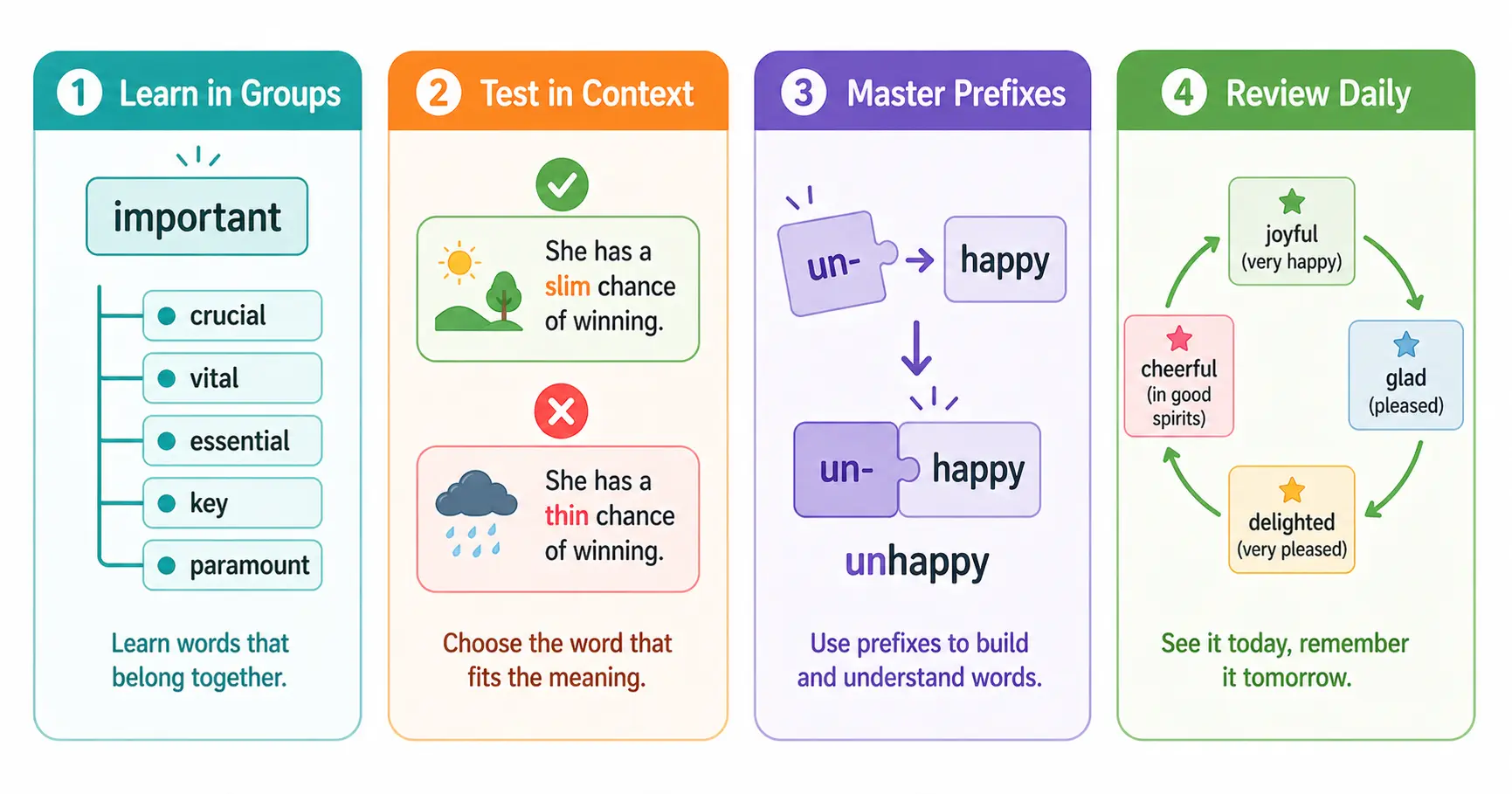
1. 以組的形式學習,而不是成對
不要只是學習「big = large」。學習完整的同義詞組:big → large → huge → enormous → massive → vast → immense。每個單字在正式程度和強度尺度上處於不同位置。
2. 始終學習語境
「Slim」和「thin」是同義詞,但「slim chance」有效而「thin chance」則不然。「Strong tea」是正確的,但「powerful tea」是錯誤的。始終在同義詞出現的句子或搭配詞中學習它。
3. 使用「替換測試」
當你學習一個新同義詞時,試著將它替換進3個不同的句子中。如果在任何一個句子中聽起來很奇怪,記下限制。
4. 學習前綴模式
學習un-、in-、dis-、mis-、over-、under-這些模式可以讓你一次預測數百個單字的反義詞。
5. 使用間隔重複
將同義詞和反義詞組添加到 Linglify 或任何間隔重複系統。以組的形式學習(「important」的完整同義詞集),而不是孤立的詞對。
接下來閱讀什麼
同義詞清單:
反義詞清單:
考試相關:
相關詞彙:
常見問題
我應該知道每個單字的多少個同義詞?
對於日常流暢性,知道100個最常見形容詞、動詞和名詞各3-5個同義詞就足夠了。
同義詞的含義完全相同嗎?
幾乎從不。大多數英語同義詞是「近義詞」——它們共享核心含義,但在正式程度、強度、語感或語境上有所不同。
學習反義詞的最佳方法是什麼?
首先學習前綴模式(un-、dis-、in-/im-/il-/ir-、mis-、over-/under-)。這六個前綴為數百個英語單字創建反義詞。之後,學習互補反義詞(alive/dead、true/false)和可分級反義詞(hot/cold、big/small)。
同義詞對IELTS重要嗎?
非常重要。IELTS詞彙資源標準特別獎勵同義詞的使用和改述。不使用同義詞幾乎肯定會導致低詞彙資源分數。