Simple English Sentences for Daily Use: 200+ Practical Examples
You can know 2,000 English words and still freeze when someone asks “How was your weekend?” The problem is not vocabulary — it is that you have never practiced complete sentences for real situations.
This guide gives you over 200 simple English sentences organized by daily situations. Each sentence is ready to use — memorize them as complete phrases, not individual words. This is the fastest way to start speaking English in real life.
- Total sentences: 200+
- Level: A1–A2 (beginners and elementary)
- Best for: daily conversations, travel, work basics, building speaking confidence
Why Learning Complete Sentences Works Better
Studying individual words teaches you vocabulary. Studying complete sentences teaches you how to communicate. When you memorize “Can I have the bill, please?” as one phrase, you do not need to think about grammar, word order, or prepositions in the moment — the sentence comes out automatically.
This approach is called “chunking” — learning groups of words as single units. Research shows that learners who study phrases and sentences reach conversational level 2–3 times faster than those who study words alone.
Greetings and Introductions
The first sentences you need in any language.
| Sentence | When to use it |
|---|---|
| Hello, how are you? | Standard greeting — works everywhere |
| I am fine, thank you. And you? | Standard response to “How are you?” |
| Nice to meet you. | When you meet someone for the first time |
| My name is… | Introducing yourself |
| Where are you from? | Asking about someone’s country or city |
| I am from… | Answering where you are from |
| What do you do? | Asking about someone’s job |
| I work as a… | Answering about your job |
| How long have you been here? | Asking how long someone has lived somewhere |
| It was nice talking to you. | Polite way to end a conversation |
| See you later! | Casual goodbye |
| Have a good day! | Friendly goodbye |
Tip: In English, “How are you?” is usually a greeting, not a real question. The expected answer is “Fine, thanks” — not a detailed description of your day.
At a Restaurant or Café
Essential sentences for ordering food and drinks.
| Sentence | When to use it |
|---|---|
| Can I see the menu, please? | When you sit down at a restaurant |
| I would like a coffee, please. | Ordering a drink |
| Can I have the chicken salad? | Ordering food |
| Is this dish spicy? | Asking about food before ordering |
| I am allergic to nuts. | Important health information |
| Could we have some water? | Requesting water for the table |
| Can I have the bill, please? | When you are ready to pay |
| Do you accept credit cards? | Asking about payment methods |
| Is the tip included? | Asking about tipping |
| The food was delicious, thank you. | Complimenting the meal |
| Could I get this to go? | Asking to take leftover food home |
| I would like to make a reservation. | Booking a table in advance |
For more food-related vocabulary, explore our food and drink word lists.
Shopping and Money
Sentences for buying things in stores and markets.
| Sentence | When to use it |
|---|---|
| How much does this cost? | Asking the price |
| Do you have this in a different size? | Asking about clothing sizes |
| Can I try this on? | Asking to use the fitting room |
| Where is the fitting room? | Finding where to try on clothes |
| I am just looking, thanks. | When a shop assistant asks if you need help |
| Do you have this in blue? | Asking for a different color |
| I will take this one. | Deciding to buy something |
| Can I get a receipt? | Asking for proof of purchase |
| Is this on sale? | Asking about discounts |
| Can I return this if it does not fit? | Asking about the return policy |
| Do you have anything cheaper? | Asking for a lower-priced option |
| Where can I find the supermarket? | Asking for directions to a store |
Asking for Directions and Travel
Sentences for getting around in an English-speaking country.
| Sentence | When to use it |
|---|---|
| Excuse me, where is the train station? | Asking for a location |
| How do I get to the airport? | Asking for directions |
| Is it far from here? | Asking about distance |
| Can you show me on the map? | Asking someone to point to a location |
| Turn left at the traffic lights. | Giving directions |
| Go straight for two blocks. | Giving directions |
| It is on the right side. | Telling someone where something is |
| How long does it take to walk there? | Asking about walking time |
| I need a taxi to the hotel. | Requesting a taxi |
| What time does the bus leave? | Asking about public transport |
| One ticket to the city center, please. | Buying a transport ticket |
| Which platform does the train leave from? | At a train station |
| I am lost. Can you help me? | When you cannot find your way |
Browse more travel vocabulary for your next trip.
At Work or School
Simple sentences for professional and academic situations.
| Sentence | When to use it |
|---|---|
| Good morning, everyone. | Greeting colleagues or classmates |
| Could you repeat that, please? | When you did not hear or understand |
| I have a question. | Before asking something in a meeting or class |
| Can you help me with this? | Asking for assistance |
| I will finish this by Friday. | Making a deadline promise |
| Sorry, I am running late. | When you are going to be late |
| Let me check and get back to you. | When you need time to find an answer |
| I agree with you. | Expressing agreement |
| I see your point, but… | Politely disagreeing |
| Could you send me that by email? | Requesting information |
| I need a day off on Monday. | Requesting time off |
| The meeting is at 3 PM in room 5. | Sharing meeting details |
| Thank you for your help. | Showing appreciation |
Strengthen your professional English with our work vocabulary lists.
Making Plans and Invitations
Sentences for organizing activities with friends and colleagues.
| Sentence | When to use it |
|---|---|
| Are you free this weekend? | Checking someone’s availability |
| Would you like to go for a coffee? | Inviting someone casually |
| What time should we meet? | Agreeing on a time |
| Let us meet at the entrance. | Suggesting a meeting point |
| That sounds great! | Accepting an invitation |
| I am sorry, I cannot make it. | Declining an invitation politely |
| Can we reschedule? | Asking to change the time |
| I will be there at 7. | Confirming your arrival time |
| Should I bring anything? | Offering to contribute |
| Let me know if the plan changes. | Staying informed about plans |
| I am looking forward to it! | Expressing excitement about a plan |
Expressing Opinions and Feelings
How to share what you think and how you feel.
| Sentence | When to use it |
|---|---|
| I think this is a good idea. | Sharing a positive opinion |
| I am not sure about that. | Expressing doubt |
| In my opinion, we should wait. | Giving a more formal opinion |
| I feel happy today. | Describing your mood |
| I am a little tired. | Saying you are tired |
| That makes me worried. | Expressing concern |
| I am really excited about this. | Showing enthusiasm |
| I do not mind. | When you have no preference |
| I would prefer the first option. | Choosing between options |
| I am sorry to hear that. | Responding to bad news |
| That is amazing! | Reacting to good news |
| I completely agree. | Strong agreement |
Phone Calls and Messages
Essential phrases for phone conversations and texting.
| Sentence | When to use it |
|---|---|
| Hello, this is [your name] speaking. | Answering a phone call formally |
| Can I speak to [name], please? | Asking for a specific person |
| Sorry, you have the wrong number. | When someone calls the wrong person |
| Can you call me back later? | Asking someone to call again |
| I will text you the address. | Promising to send information |
| Sorry, I missed your call. | Acknowledging a missed call |
| The connection is bad. Can you hear me? | When the call quality is poor |
| Let me check my schedule. | Before confirming a plan on the phone |
| I will get back to you tomorrow. | Promising to respond later |
| Thanks for calling! | Ending a phone call politely |
Health and Emergencies
Sentences you hope you will not need — but must know.
| Sentence | When to use it |
|---|---|
| I do not feel well. | When you are sick |
| I need to see a doctor. | Requesting medical help |
| I have a headache. | Describing a specific symptom |
| Where is the nearest pharmacy? | Finding medicine |
| I am allergic to [something]. | Sharing allergy information |
| Please call an ambulance. | In an emergency |
| Can you take me to the hospital? | Requesting urgent transport |
| I take medication for [condition]. | Sharing medical information |
| Is there a doctor who speaks [language]? | When you need a doctor in your language |
| It hurts here. | Pointing to where you feel pain |
Small Talk and Weather
The easiest way to start a conversation with anyone.
| Sentence | When to use it |
|---|---|
| Nice weather today, is it not? | Starting a conversation about weather |
| It is really cold today. | Commenting on the weather |
| Do you think it will rain? | Asking about weather predictions |
| Did you have a good weekend? | Monday morning conversation |
| Any plans for the weekend? | Friday afternoon conversation |
| I love this time of year. | Talking about seasons |
| Have you watched anything good recently? | Asking about TV shows or movies |
| How is your family? | Polite personal question |
| I just got back from holiday. | Sharing travel news |
| Traffic was terrible this morning. | Common small talk topic |
How to Practice These Sentences
Reading this list once will not make you fluent. Here is how to actually learn these sentences:
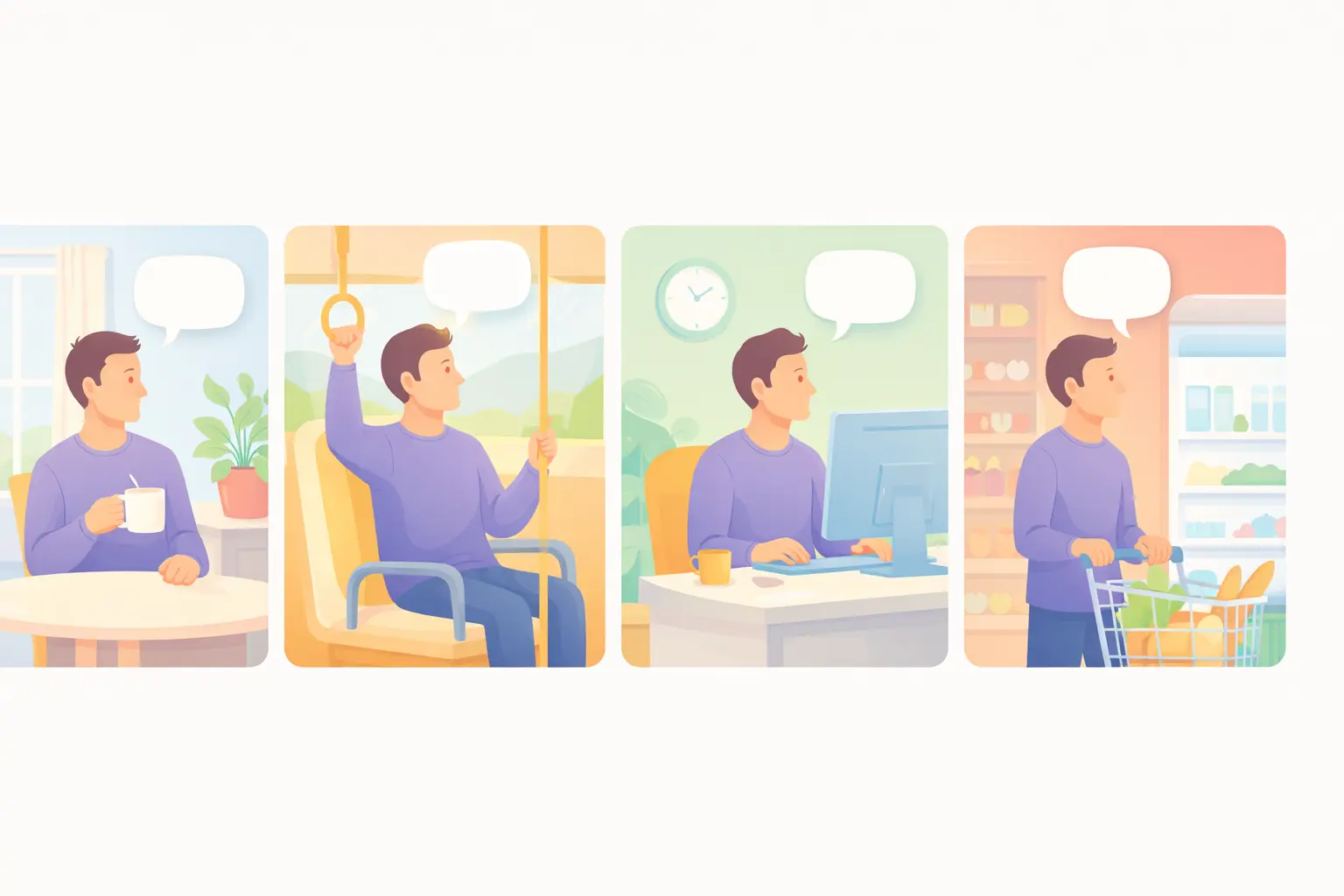
1. Pick one situation per day. Monday = greetings, Tuesday = restaurant, Wednesday = shopping. Do not try to memorize everything at once.
2. Say each sentence out loud 3 times. Your mouth needs to practice the sounds, not just your eyes. Speaking activates different memory pathways than reading.
3. Roleplay the situation. Imagine you are at a restaurant. Go through the conversation from “Can I see the menu?” to “Can I have the bill?” Practice the full flow.
4. Record yourself. Use your phone to record yourself saying 10 sentences. Listen back. Compare with how native speakers say them (YouTube has thousands of examples).
5. Use them for real. The next time you are at a café, order in English. The next time you meet someone, introduce yourself in English. Real use is the final step that makes sentences automatic.
For a complete study system, see our guide on how to learn English vocabulary step by step.
Vocabulary to Practice
Here are 25 practical A1–A2 words that appear in the sentences above. Click any word to see its definition, pronunciation, and example sentences.
experience
noun
Knowledge or skill gained from doing or experiencing something.
Examples
- Her previous work experience made her an ideal candidate for the position.
- Traveling to different countries provides valuable cultural experience.
meeting
noun
An organized gathering of people for discussion or activity.
Examples
- The business meeting discussed budget plans for next fiscal year.
- Town meeting allows residents to voice concerns about local issues.
reply
noun
A short answer or reaction to a question or statement.
Examples
- Quick reply shows professional customer service quality.
- Written reply confirms agreement terms and conditions.
result
noun
A result or effect of an action or situation.
Examples
- Election result surprises political analysts and voters.
- Test result shows significant improvement in performance.
create
verb
To bring something into existence or make something new.
Examples
- Artists create beautiful works that inspire and move people emotionally.
- The new policy will create opportunities for economic growth.
mention
verb
To refer to or briefly talk about something.
Examples
- Please mention my name when you call about job opening.
- The report fails to mention important environmental concerns.
describe
verb
To give an account of or describe something in detail.
Examples
- Can you describe what the suspect looked like to police officers?
- The travel guide describes many interesting places to visit in Europe.
impact
noun
The effect or influence of one thing on another.
Examples
- Climate change has a significant impact on global weather patterns.
- The impact of the collision damaged both cars severely.
exam
noun
A short test to see how much someone knows or can do.
Examples
- Students study hard for weeks before taking their final exams.
- The driving exam tests both knowledge and practical skills behind wheel.
powerful
adjective
Having great strength, influence, or effect.
Examples
- Powerful computer processes data very quickly.
- Powerful speech moves audience to take action.
wonderful
adjective
Extremely good or enjoyable; causing pleasure.
Examples
- The restaurant serves wonderful food with excellent service.
- We had a wonderful time at the beach during summer vacation.
confident
adjective
Feeling sure of oneself and not uncertain about one's abilities or qualities.
Examples
- She felt confident about passing the difficult examination successfully.
- The confident speaker delivered an inspiring presentation to the audience.
favor
noun
Support or approval for someone or something.
Examples
- Could you do me a favor and pick up my dry cleaning?
- The proposal gained favor among the committee members after lengthy discussion.
ambition
noun
A strong desire to achieve something or succeed.
Examples
- Her ambition is to become a successful doctor and help people worldwide.
- Sometimes ambition can drive people to work too hard and neglect family.
tourist
noun
A noun for a person who travels to a place for pleasure or sightseeing.
Examples
- Foreign tourist visits famous landmarks and museums.
- Tourist season brings economic benefits to region.
student
noun
A person who is learning at a school or college.
Examples
- Diligent student completes homework assignments on time.
- Graduate student conducts research for doctoral degree.
relaxed
adjective
Feeling calm and not worried or tense.
Examples
- Relaxed atmosphere encourages open discussion among participants.
- Relaxed person handles pressure situations more effectively.
hot
adjective
Having a high temperature or feeling very warm.
Examples
- Summer weather is extremely hot in desert regions around the world.
- The coffee is too hot to drink right now - let it cool down.
cool
verb
To make something cooler in temperature or less warm.
orange
noun
A citrus fruit that is typically round, orange in color, and eaten raw.
Examples
- Fresh orange juice contains vitamin C and natural sugar.
- The sunset painted sky in beautiful shades of orange.
meat
noun
Flesh of animals used as food.
Examples
- Fresh meat should be stored in refrigerator for food safety.
- Vegetarians choose not to eat meat for ethical reasons.
football
noun
A sport played with a round ball on a large field, where players try to score goals.
Examples
- Football is the most popular sport in many countries around the world.
- The children play football in the school yard during their lunch break.
noun
A collection of written, printed, or digital messages sent or received, often through the postal system.
Examples
- Check mail every day for important bills and official documents.
- Electronic mail has largely replaced traditional postal letters today.
father
noun
A male parent of a child.
Examples
- His father taught him how to ride a bicycle in the park.
- The young father proudly carried his baby daughter in his arms.
rush
noun
A sudden movement forward, often with urgency or speed.
Examples
- Last-minute rush creates stress and mistakes often.
- Morning rush causes traffic jams in city.
Common Mistakes with Simple Sentences
1. Translating word-by-word from your native language. English word order is Subject + Verb + Object. “I like coffee,” not “Coffee I like.” Learn sentences as complete units to avoid translation errors.
2. Forgetting “please” and “thank you.” In English-speaking countries, politeness words are not optional. “Can I have a coffee” sounds rude. “Can I have a coffee, please?” sounds normal.
3. Using “I want” instead of “I would like.” “I want a coffee” is grammatically correct but sounds too direct in most situations. “I would like a coffee” is polite and natural.
4. Not using contractions. In spoken English, “I am” becomes “I’m,” “do not” becomes “don’t,” “I would” becomes “I’d.” Using full forms in conversation sounds unnatural and robotic.
5. Overthinking grammar before speaking. At the beginner level, communication matters more than perfect grammar. “Yesterday I go to store” is understood by everyone. Perfect grammar comes with practice — getting your message across comes first.
What to Do Next
-
Start with your level. Browse our A2 Elementary vocabulary lists to build the words you need for these sentences.
-
Move to the next level. When these sentences feel easy, explore B1 Intermediate vocabulary for more complex conversations.
-
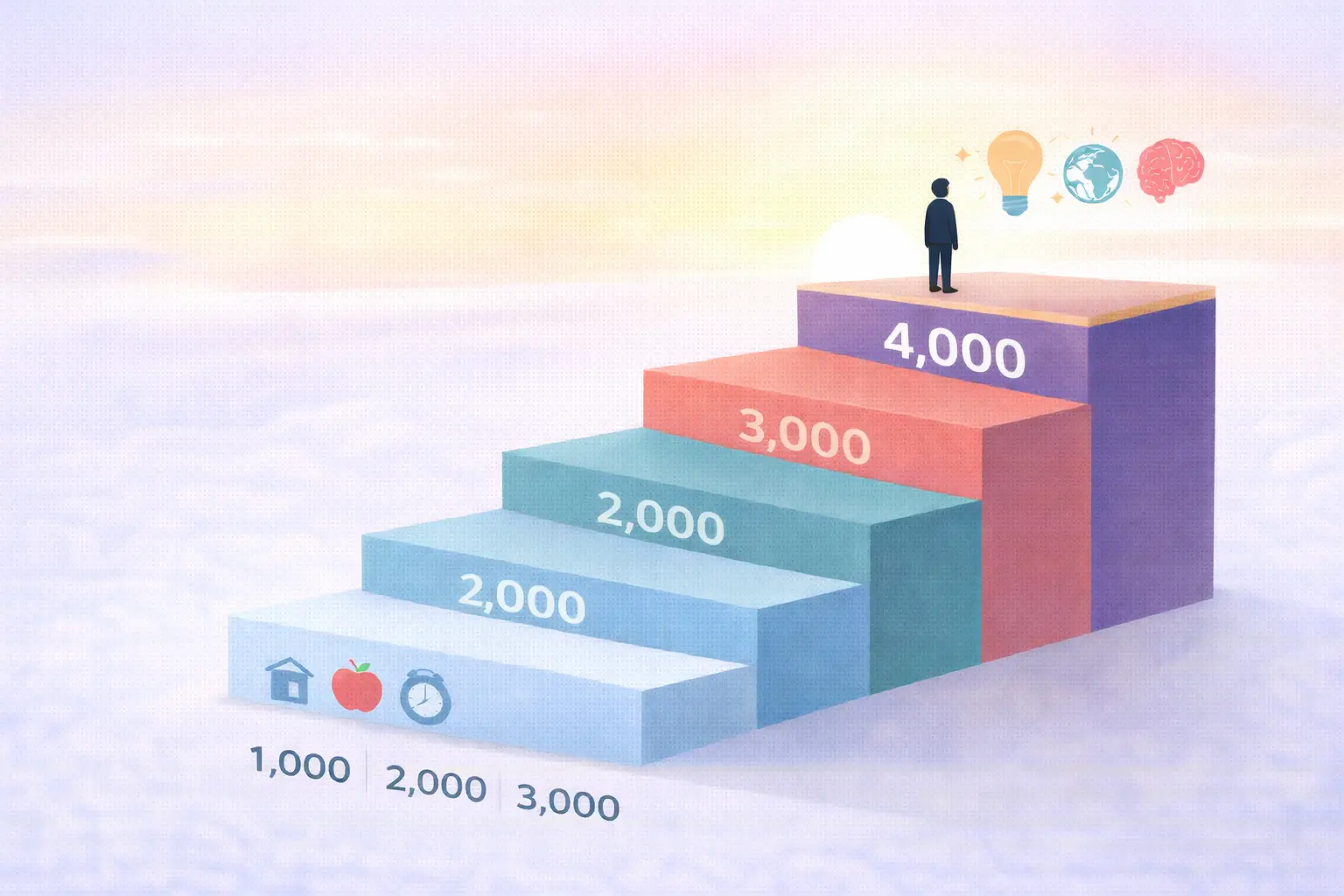
Build your word bank. Ready to go beyond sentences? Our 4000 Essential English Words guide gives you a level-by-level plan to reach fluent comprehension.
-
Build your vocabulary system. These sentences are a starting point. For long-term vocabulary growth, read our guide on how to improve your vocabulary with 10 proven methods.
-
Practice topic vocabulary. Dive deeper into specific topics: travel, food and drink, or work.
FAQ
How many sentences do I need for basic English conversation?
About 100–150 sentences cover most daily situations: greetings, ordering food, shopping, asking directions, and small talk. The 200+ sentences in this article give you a comfortable buffer for almost any everyday situation you will encounter.
What is the easiest way to memorize English sentences?
Learn them by situation, not randomly. Pick one situation per day (restaurant, shopping, travel) and practice 10–12 sentences for that scenario. Say them out loud, roleplay the conversation, and use them in real life as soon as possible. Sentences connected to real situations stick much faster than isolated phrases.
Can I use these sentences for IELTS Speaking?
These sentences are A1–A2 level — good for IELTS Band 4–5 but too simple for higher bands. For Band 6+, you need more complex vocabulary and sentence structures. Start with these for confidence, then upgrade to our IELTS vocabulary guide for exam-level language.
How long does it take to learn basic English sentences?
If you study 10–15 sentences per day and practice speaking them out loud, you can learn 200 sentences in about 2–3 weeks. However, memorizing is not the same as using. Give yourself 1–2 months of regular practice before these sentences feel natural and automatic in real conversations.
What should I learn after simple sentences?
Once you are comfortable with basic sentences, focus on three things: expanding your vocabulary (learn more words for each situation), improving grammar (past tense, questions, conditionals), and practicing longer responses (2–3 sentences instead of one). Our step-by-step vocabulary learning system will guide you through this progression.