
難しい英単語:意味と例文付き500語以上の難易度別リスト
英語にはとにかく難しい単語があります。スペルが難しい(bureaucracy=官僚制)、発音が難しい(anemone=イソギンチャク)、覚えにくい(sesquipedalian=長い言葉を使いたがる)、正しく使うのが難しい(disinterested は「無関心」ではなく「公平な」という意味)。そして、最も難しい単語こそ最も便利なことが多く、簡単な単語では表現できない正確なニュアンスを伝えることができます。
このガイドは、中級レベルを超え、上級レベルを目指す学習者のためのものです。IELTS Band 8〜9の準備、アカデミックな語彙の構築、あるいは単にもっと正確に英語を話したい方のために——意味と例文付きの500語以上の難しい英単語で、あなたの英語力を次のレベルに引き上げます。
以下の基準で整理しました:
- 何が難しいのか(スペル、発音、意味、使い方)
- トピック別(学術、文学、科学、日常)
- CEFRレベル別(B2、C1、C2)
なぜ英語の一部の単語は「難しい」のか
すべての難しい単語が同じ理由で難しいわけではありません。単語がなぜ難しいのかを理解すると、より効果的に学習できます。
| 難しさの種類 | 問題点 | 例 |
|---|---|---|
| スペルが難しい | 不規則な文字の組み合わせ、黙字、重複文字 | bureaucracy, embarrassment, occurrence |
| 発音が難しい | 直感に反する発音、特殊な音 | anemone, colonel, worcestershire |
| 意味が難しい | 抽象的・専門的な意味 | epistemology, ontological, paradigm |
| 正しく使うのが難しい | 微妙な意味の違い、似た単語と混同しやすい | disinterested ≠ uninterested, imply ≠ infer |
| 覚えにくい | 長い、珍しい、ラテン語/ギリシャ語由来 | sesquipedalian, defenestration, pneumonoultramicroscopicsilicovolcanoconiosis |
このガイドのほとんどの単語は、複数のカテゴリに該当します。例えば bureaucracy はスペルも発音も難しい単語です。日本語のカタカナ語(ビューロクラシー)とも微妙にズレるため、特に注意が必要です。
パート1:スペルが難しい単語(100語)
これらの単語は「最もスペルミスが多い単語」リストに常に登場します。発音とスペルが一致しなかったり、紛らわしい文字パターンを含んでいます。
最もスペルミスが多い英単語50語
| 単語 | よくある誤り | 意味 | 例文 |
|---|---|---|---|
| accommodate |
|
収容する;適応する | The hotel can accommodate 200 guests.(そのホテルは200名を収容できる。) |
| acquaintance |
|
知人 | She’s an acquaintance from work, not a close friend.(彼女は職場の知人で、親しい友人ではない。) |
| apparent |
|
明白な;明らかな | It was apparent that he hadn’t slept.(彼が眠れていないのは明らかだった。) |
| believe |
|
信じる | I believe we can finish this by Friday.(金曜日までに終わると思う。) |
| bureaucracy |
|
官僚制 | The bureaucracy slowed everything down.(官僚制がすべてを遅らせた。) |
| calendar |
|
カレンダー | Check the calendar for the meeting date.(会議の日をカレンダーで確認して。) |
| Caribbean |
|
カリブ海 | They went on a Caribbean cruise.(彼らはカリブ海クルーズに行った。) |
| colleague |
|
同僚 | My colleague handles the design work.(同僚がデザイン作業を担当している。) |
| committed |
|
献身的な;約束した | She’s committed to finishing her degree.(彼女は学位を取ることに全力を注いでいる。) |
| conscience |
|
良心 | His conscience wouldn’t let him lie.(良心が彼に嘘をつかせなかった。) |
| conscious |
|
意識している | She was conscious of being watched.(彼女は見られていることを意識していた。) |
| consensus |
|
合意 | We reached a consensus after long discussion.(長い議論の末、合意に達した。) |
| definitely |
|
間違いなく | I will definitely be there tomorrow.(明日は間違いなくそこにいる。) |
| desperate |
|
必死の | They made a desperate attempt to escape.(彼らは必死に逃げようとした。) |
| disappear |
|
消える | The fog made the buildings disappear.(霧でビルが見えなくなった。) |
| embarrassment |
|
恥ずかしさ | The mistake caused great embarrassment.(その間違いは大きな恥をかかせた。) |
| environment |
|
環境 | Pollution damages the environment.(汚染は環境を破壊する。) |
| exaggerate |
|
誇張する | Don’t exaggerate — it wasn’t that bad.(大げさに言わないで——そんなにひどくなかった。) |
| existence |
|
存在 | No one questions the existence of gravity.(重力の存在を疑う人はいない。) |
| fascinating |
|
魅力的な | The documentary was fascinating.(そのドキュメンタリーはとても面白かった。) |
| fluorescent |
|
蛍光の | The office had fluorescent lighting.(オフィスには蛍光灯があった。) |
| foreign |
|
外国の | She speaks three foreign languages.(彼女は3つの外国語を話す。) |
| gauge |
|
測る;計器 | It’s hard to gauge his reaction.(彼の反応を読み取るのは難しい。) |
| guarantee |
|
保証 | The product comes with a 5-year guarantee.(この製品には5年保証がついている。) |
| harass |
|
嫌がらせをする | It’s illegal to harass employees.(従業員に嫌がらせをするのは違法だ。) |
| immediately |
|
直ちに | Please respond immediately.(すぐに返答してください。) |
| independent |
|
独立した | She became financially independent at 25.(彼女は25歳で経済的に自立した。) |
| intelligence |
|
知性 | Emotional intelligence matters as much as IQ.(EQ(心の知能指数)はIQと同じくらい重要だ。) |
| jewelry |
|
宝石類 | She rarely wears jewelry.(彼女はめったにアクセサリーをつけない。) |
| knowledge |
|
知識 | Knowledge is power when applied correctly.(知識は正しく使えば力になる。) |
| leisure |
|
余暇 | He spends his leisure time reading.(彼は余暇を読書に費やしている。) |
| liaison |
|
連絡係;連携 | She served as liaison between the two teams.(彼女は2つのチームの連絡係を務めた。) |
| license |
|
免許 | You need a license to drive.(運転するには免許が必要だ。) |
| maintenance |
|
維持管理 | Regular maintenance extends the car’s life.(定期的なメンテナンスは車の寿命を延ばす。) |
| millennium |
|
千年紀 | We entered the new millennium in 2000.(2000年に新しい千年紀に入った。) |
| miniature |
|
ミニチュアの | He builds miniature model trains.(彼はミニチュアの模型列車を作っている。) |
| mischievous |
|
いたずら好きな | The mischievous child hid the remote.(いたずら好きな子供がリモコンを隠した。) |
| necessary |
|
必要な | Is it really necessary to leave now?(今出発する必要が本当にあるの?) |
| noticeable |
|
目立つ | There was a noticeable improvement.(目立った改善が見られた。) |
| occasionally |
|
たまに | I occasionally work from home.(私はたまに在宅勤務をする。) |
| occurrence |
|
出来事 | Flooding is a common occurrence here.(洪水はここでよくあることだ。) |
| perseverance |
|
忍耐力 | Her perseverance finally paid off.(彼女の忍耐力がついに実を結んだ。) |
| privilege |
|
特権 | Education should not be a privilege.(教育は特権であってはならない。) |
| pronunciation |
|
発音 | Check the pronunciation before you speak.(話す前に発音を確認しよう。) |
| questionnaire |
|
アンケート | Please complete this short questionnaire.(この短いアンケートに答えてください。) |
| receipt |
|
領収書 | Keep the receipt for your records.(記録のために領収書を保管しておいてください。) |
| recommend |
|
推薦する | I recommend this book to all students.(すべての学生にこの本を推薦する。) |
| separate |
|
分ける;別の | Separate the whites from the colors.(白い物と色物を分けて。) |
| threshold |
|
閾値;入り口 | The country has crossed the poverty threshold.(その国は貧困ラインを超えた。) |
| vacuum |
|
真空;掃除機 | Vacuum the living room, please.(リビングに掃除機をかけて。) |
さらに紛らわしいスペル50語
| 単語 | 意味 | スペルの落とし穴 |
|---|---|---|
| absence | 不在 | 語尾が “-ence” で “-ance” ではない |
| acknowledgment | 承認 | “g” の後に “e” がない(米語) |
| acquit | 無罪にする | “acq-“ で始まる |
| amateur | アマチュア | “-eur” の語尾 |
| anomaly | 異常 | “a-nom-“ で “anom-“ ではない |
| argument | 議論 | “argu-“ の後に “e” がない |
| bellwether | 先駆者;指標 | “a” がない——“bellweather” ではない |
| camouflage | カモフラージュ | フランス語由来のスペル |
| cemetery | 墓地 | 全部 E で A がない |
| changeable | 変わりやすい | “-able” の前に “e” を残す |
| connoisseur | 鑑定家 | N が2つ、S が2つ、”-eur” |
| contemptible | 軽蔑に値する | “-ible” で “-able” ではない |
| daiquiri | ダイキリ(カクテル) | 珍しい文字の並び |
| dilemma | ジレンマ | M が2つで L は1つ |
| dumbbell | ダンベル | 真ん中に B が2つ |
| ecstasy | 恍惚 | 語尾が “-asy” で “-acy” ではない |
| fiery | 燃えるような | “fiery” で “firey” ではない |
| hierarchy | 階層 | “-ie-“ で “-ei-“ ではない |
| humorous | ユーモアのある | “-ous” の前に2つ目の “o” がない |
| idiosyncrasy | 特異性 | “-asy” の語尾 |
| indispensable | 不可欠な | “-able” で “-ible” ではない |
| inoculate | 予防接種する | N が1つ、C が1つ |
| irresistible | 抗えない | “-ible” で “-able” ではない |
| kernel | 核;種 | “colonel”(大佐)とは別の単語! |
| maneuver | 作戦行動 | “-euver”(米語)/ “-oeuvre”(英語) |
| medieval | 中世の | “-ie-“ で “-ei-“ ではない |
| memento | 記念品 | “momento” ではない |
| misspell | スペルを間違える | S が2つ(皮肉!) |
| nauseous | 吐き気がする | “-eous” の語尾 |
| onomatopoeia | 擬音語 | ギリシャ語由来の複雑な語尾 |
| parallel | 平行の | L が2つ、最初は L が1つ |
| pharaoh | ファラオ | “-aoh” の語尾 |
| playwright | 劇作家 | “wright” で “write” ではない |
| pneumonia | 肺炎 | P が黙字 |
| possession | 所有 | S が2つずつ2回 |
| precede | 先行する | “-cede” で “-ceed” ではない |
| publicly | 公に | 2つ目の “l” がない |
| renaissance | ルネサンス | S が2つ、”-ance” の語尾 |
| rhythm | リズム | 子音の間に母音がない |
| sacrilegious | 冒涜的な | “religious” のスペルとは関係ない |
| sergeant | 軍曹 | “-geant” の語尾 |
| siege | 包囲 | “-ie-“ で “-ei-“ ではない |
| supersede | 取って代わる | “-sede” で “-cede” ではない |
| surveillance | 監視 | “-eill-“ |
| tyranny | 圧政 | N が2つ、R が1つ |
| unanimous | 全会一致の | “unan-“ で始まる |
| withhold | 差し控える | H が2つ |
| yacht | ヨット | 黙字だらけ |
| zealous | 熱心な | “zeal-“ で “zell-“ ではない |
パート2:発音が難しい単語(80語)
英語の発音にはほとんどルールがありません。これらの単語は学習者(そしてネイティブスピーカー)を常に悩ませます。日本語のカタカナ読みとも大きく異なるものが多いので、特に注意しましょう。
スペルと発音が全く違う単語
スペルから発音がまったく推測できない単語です。
| 単語 | 見た目 | 実際の発音 | 意味 |
|---|---|---|---|
| colonel | col-o-nel | /ˈkɜːrnl/(カーネル) | 大佐 |
| worcestershire | wor-ces-ter-shire | /ˈwʊstərʃɪr/(ウスターシャー) | ソースの一種 |
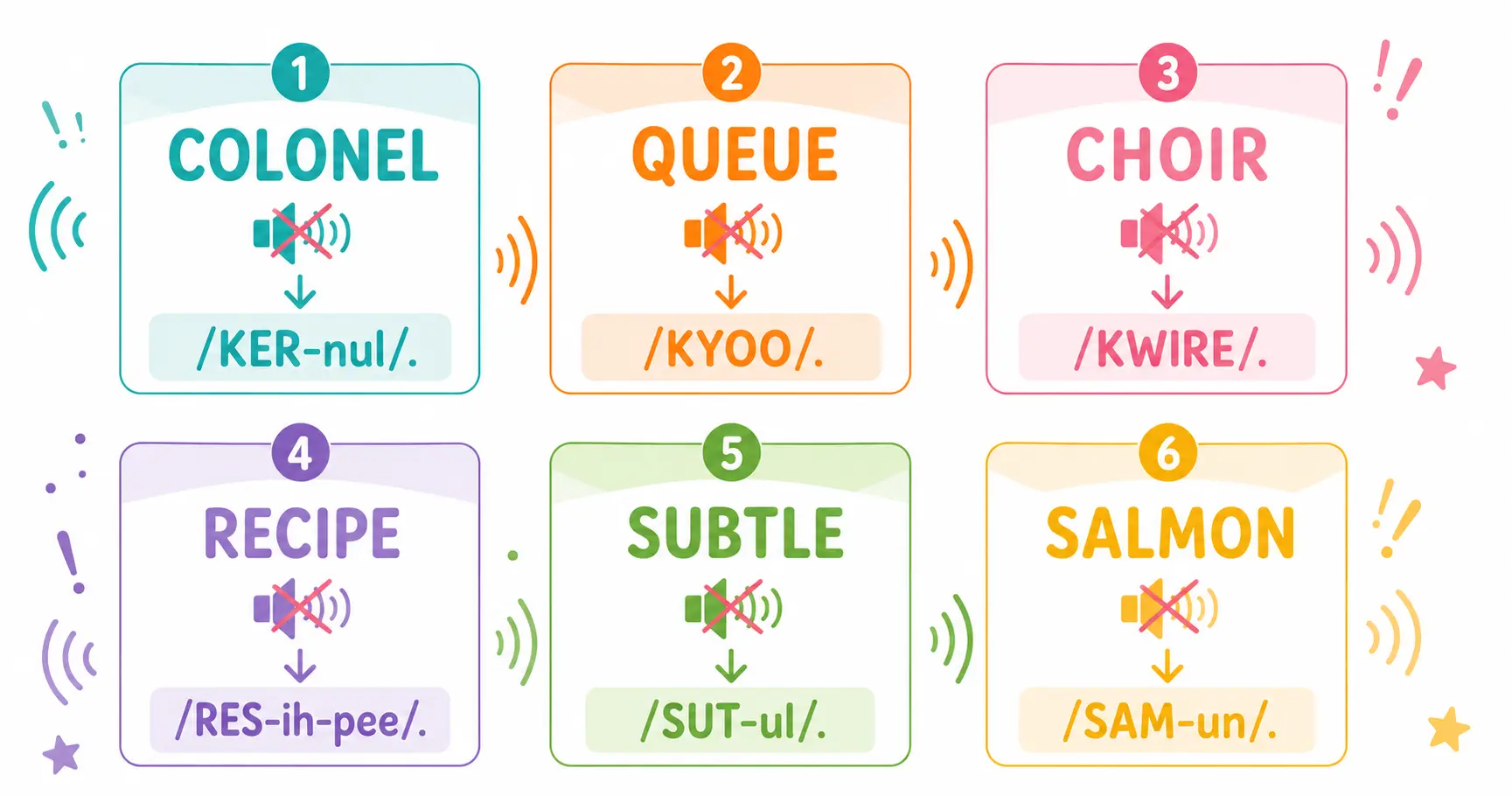
| queue | q-u-e-u-e | /kjuː/(キュー) | 行列 |
| choir | ch-oir | /kwaɪr/(クワイア) | 合唱団 |
| debut | de-but | /deɪˈbjuː/(デビュー) | 初出演 |
| recipe | re-ci-pe | /ˈresɪpi/(レシピ) | 料理の作り方 |
| anemone | a-ne-mo-ne | /əˈneməni/(アネモニ) | イソギンチャク/花 |
| epitome | e-pi-to-me | /ɪˈpɪtəmi/(イピタミ) | 典型 |
| hyperbole | hy-per-bole | /haɪˈpɜːrbəli/(ハイパーバリ) | 誇張表現 |
| isthmus | isth-mus | /ˈɪsməs/(イスマス) | 地峡 |
| quinoa | quin-oa | /ˈkiːnwɑː/(キーンワー) | キヌア |
| subtle | sub-tle | /ˈsʌtl/(サトル) | 微妙な |
| salmon | sal-mon | /ˈsæmən/(サーモン) | 鮭 |
| almond | al-mond | /ˈɑːmənd/(アーマンド) | アーモンド |
| debris | de-bris | /dəˈbriː/(デブリー) | 破片;瓦礫 |
| niche | ni-che | /niːʃ/ または /nɪtʃ/(ニーシュ/ニッチ) | ニッチ;専門分野 |
| archive | ar-chive | /ˈɑːrkaɪv/(アーカイヴ) | 記録保管庫 |
| chaos | ch-aos | /ˈkeɪɒs/(ケイオス) | 混沌 |
| draught | dr-aught | /drɑːft/(ドラフト) | すきま風(英国式) |
| quay | qu-ay | /kiː/(キー) | 波止場 |
黙字のある単語
| 単語 | 黙字 | 発音 | 意味 |
|---|---|---|---|
| knife | K | /naɪf/(ナイフ) | ナイフ |
| knight | K, GH | /naɪt/(ナイト) | 騎士 |
| pneumonia | P | /njuːˈmoʊniə/(ニューモウニア) | 肺炎 |
| psychology | P | /saɪˈkɒlədʒi/(サイコロジー) | 心理学 |
| gnaw | G | /nɔː/(ノー) | かじる |
| honest | H | /ˈɒnɪst/(オニスト) | 正直な |
| island | S | /ˈaɪlənd/(アイランド) | 島 |
| doubt | B | /daʊt/(ダウト) | 疑い |
| debt | B | /det/(デット) | 借金 |
| plumber | B | /ˈplʌmər/(プラマー) | 配管工 |
| receipt | P | /rɪˈsiːt/(リシート) | 領収書 |
| sword | W | /sɔːrd/(ソード) | 剣 |
| wrestling | W | /ˈreslɪŋ/(レスリング) | レスリング |
| muscle | C | /ˈmʌsl/(マッスル) | 筋肉 |
| fascinate | C | /ˈfæsɪneɪt/(ファシネイト) | 魅了する |
よくある発音ミス(アクセント・母音・子音)
| 単語 | よくある間違い | 正しい発音 | 意味 |
|---|---|---|---|
| mischievous | mis-CHEEV-ee-us | /ˈmɪs.tʃɪ.vəs/(ミスチヴァス・3音節) | いたずら好きな |
| February | FEB-yoo-ary | /ˈfeb.ruː.eri/(フェブルエリ) | 2月 |
| library | LI-berry | /ˈlaɪ.breri/(ライブレリ) | 図書館 |
| deteriorate | de-TEER-ee-ate | /dɪˈtɪr.i.ə.reɪt/(ディティリアレイト・5音節) | 悪化する |
| temperature | TEMP-a-ture | /ˈtem.prə.tʃər/(テンプラチャー) | 温度 |
| comfortable | com-FOR-ta-ble | /ˈkʌmf.tə.bl/(カンフタブル・3音節) | 快適な |
| vegetable | VEJ-ta-ble | /ˈvedʒ.tə.bl/(ヴェジタブル・3音節) | 野菜 |
| Wednesday | WED-nes-day | /ˈwenz.deɪ/(ウェンズデイ) | 水曜日 |
| often | OFF-ten | /ˈɒf.ən/(オフン・Tは黙字)または /ˈɒf.tən/ | しばしば |
| Antarctic | an-AR-tic | /æntˈɑːrk.tɪk/(アンタークティック) | 南極の |
| nuclear | NUKE-yoo-lar | /ˈnjuː.kli.ər/(ニュークリア) | 核の |
| specific | pa-SIFIC | /spəˈsɪf.ɪk/(スペシフィック) | 具体的な |
| espresso | EX-press-oh | /eˈspres.oʊ/(エスプレッソ) | エスプレッソ |
| etcetera | ek-SET-ra | /ˌetˈset.ər.ə/(エトセトラ) | 等々 |
| jewelry | JOO-la-ree | /ˈdʒuːəl.ri/(ジュエルリ・2〜3音節) | 宝石類 |
パート3:意味が難しい単語(120語)
これらの単語は抽象的または専門的な意味を持っています。学術論文、文学作品、質の高いジャーナリズム、IELTS/TOEFLの文章に頻出します。
学術・知的な単語
| 単語 | 品詞 | 意味 | 例文 |
|---|---|---|---|
| ambiguous | 形容詞 | 曖昧な;複数の解釈が可能な | The contract language was deliberately ambiguous.(契約の文言は意図的に曖昧だった。) |
| antithesis | 名詞 | 正反対 | War is the antithesis of peace.(戦争は平和の正反対だ。) |
| arbitrary | 形容詞 | 恣意的な;根拠のない | The decision seemed completely arbitrary.(その決定は完全に恣意的に見えた。) |
| catharsis | 名詞 | カタルシス;感情の浄化 | Writing was a catharsis for her grief.(執筆は彼女の悲しみのカタルシスだった。) |
| cognizant | 形容詞 | 認識している | Are you cognizant of the risks involved?(関連するリスクを認識していますか?) |
| conundrum | 名詞 | 難問 | The budget deficit is an ongoing conundrum.(財政赤字は継続的な難問だ。) |
| dichotomy | 名詞 | 二分法 | There’s a false dichotomy between art and science.(芸術と科学の間に誤った二分法がある。) |
| dogma | 名詞 | 教義;ドグマ | He rejected the dogma of the old school.(彼は旧学派のドグマを拒否した。) |
| eloquent | 形容詞 | 雄弁な | She gave an eloquent speech at the ceremony.(彼女は式典で雄弁なスピーチをした。) |
| empirical | 形容詞 | 経験的な;実証的な | We need empirical evidence, not guesses.(推測ではなく実証的な証拠が必要だ。) |
| enigma | 名詞 | 謎 | The origin of the signal remains an enigma.(その信号の起源は謎のままだ。) |
| ephemeral | 形容詞 | はかない;短命の | Social media trends are ephemeral by nature.(SNSのトレンドは本質的にはかない。) |
| esoteric | 形容詞 | 難解な;少数の人にしか分からない | His research is too esoteric for a general audience.(彼の研究は一般の聴衆には難解すぎる。) |
| exacerbate | 動詞 | 悪化させる | The drought exacerbated the food crisis.(干ばつが食料危機を悪化させた。) |
| facetious | 形容詞 | ふざけた;冗談めかした | He was being facetious, not serious.(彼はふざけていたのであって、真剣ではなかった。) |
| gregarious | 形容詞 | 社交的な | She has a gregarious personality.(彼女は社交的な性格だ。) |
| hegemony | 名詞 | 覇権 | Cultural hegemony shapes what we consider “normal.”(文化的覇権が「普通」の定義を形作る。) |
| idiosyncratic | 形容詞 | 独特の;特異な | His idiosyncratic teaching style confused some students.(彼の独特な教え方に戸惑う学生もいた。) |
| impetuous | 形容詞 | 衝動的な | His impetuous decision cost the company millions.(彼の衝動的な決断が会社に何百万もの損害を与えた。) |
| inevitable | 形容詞 | 避けられない | Change is inevitable in any organization.(変化はどんな組織でも避けられない。) |
| juxtaposition | 名詞 | 並置;対比 | The juxtaposition of wealth and poverty was striking.(富と貧困の対比は衝撃的だった。) |
| laconic | 形容詞 | 簡潔な;寡黙な | His laconic reply — “No” — ended the discussion.(彼の簡潔な返答「いいえ」で議論は終わった。) |
| loquacious | 形容詞 | おしゃべりな | My loquacious neighbor talks for hours.(おしゃべりな隣人は何時間も話す。) |
| magnanimous | 形容詞 | 寛大な | In victory, he was magnanimous toward his opponents.(勝利した際、彼は対戦相手に寛大だった。) |
| nonchalant | 形容詞 | 無頓着な;平然とした | She seemed nonchalant about the exam results.(彼女は試験の結果に平然としているようだった。) |
| obfuscate | 動詞 | 分かりにくくする | Politicians often obfuscate rather than clarify.(政治家はしばしば明確にするのではなく曖昧にする。) |
| paradigm | 名詞 | パラダイム;典型 | The internet created a new paradigm for communication.(インターネットはコミュニケーションの新しいパラダイムを生み出した。) |
| paradox | 名詞 | 逆説;パラドックス | It’s a paradox that standing still requires balance.(じっと立っていることにバランスが必要なのは逆説的だ。) |
| pragmatic | 形容詞 | 実用的な | We need a pragmatic solution, not an idealistic one.(理想主義的ではなく、実用的な解決策が必要だ。) |
| precarious | 形容詞 | 不安定な;危うい | The economy is in a precarious state.(経済は不安定な状態にある。) |
| prolific | 形容詞 | 多作の | She’s a prolific writer with 30 published novels.(彼女は30冊の小説を出版した多作な作家だ。) |
| quintessential | 形容詞 | 典型的な;真髄の | He is the quintessential British gentleman.(彼はまさに典型的な英国紳士だ。) |
| recalcitrant | 形容詞 | 反抗的な | The recalcitrant student refused to follow any rules.(反抗的な生徒はどんなルールにも従わなかった。) |
| resilient | 形容詞 | 回復力のある | Children are remarkably resilient.(子供は驚くほど回復力がある。) |
| rhetoric | 名詞 | レトリック;修辞法 | The speech was full of rhetoric but empty of substance.(そのスピーチはレトリックに満ちていたが中身がなかった。) |
| sanguine | 形容詞 | 楽観的な | She remained sanguine despite the setbacks.(挫折にもかかわらず彼女は楽観的でいた。) |
| scrutinize | 動詞 | 精査する | The auditor will scrutinize every transaction.(監査人はすべての取引を精査する。) |
| surreptitious | 形容詞 | こっそりした | He took a surreptitious glance at her phone.(彼は彼女の電話をこっそり見た。) |
| tenacious | 形容詞 | 粘り強い | She’s tenacious — she never gives up.(彼女は粘り強い——決して諦めない。) |
| ubiquitous | 形容詞 | どこにでもある | Smartphones have become ubiquitous.(スマートフォンはどこにでもある存在になった。) |
| unprecedented | 形容詞 | 前例のない | The pandemic created unprecedented challenges.(パンデミックは前例のない課題を生み出した。) |
| verbose | 形容詞 | 冗長な | His verbose writing style bored readers.(彼の冗長な文体は読者を退屈させた。) |
| vicarious | 形容詞 | 代理の;追体験の | She felt vicarious joy at her daughter’s graduation.(娘の卒業式で彼女は自分のことのように喜びを感じた。) |
| volatile | 形容詞 | 変わりやすい;不安定な | The stock market has been extremely volatile.(株式市場は非常に不安定だった。) |
| zealot | 名詞 | 狂信者 | He became a zealot for the new diet.(彼は新しいダイエット法の狂信者になった。) |
文学的・稀少な単語
| 単語 | 意味 | 例文 |
|---|---|---|
| ameliorate | 改善する | Medication can ameliorate the symptoms.(薬は症状を改善できる。) |
| anachronism | 時代錯誤 | A smartphone in a medieval movie is an anachronism.(中世の映画にスマートフォンがあるのは時代錯誤だ。) |
| bellicose | 好戦的な | His bellicose tone alarmed the diplomats.(彼の好戦的な口調は外交官たちを警戒させた。) |
| capricious | 気まぐれな | The weather here is capricious — sun one minute, rain the next.(ここの天気は気まぐれで、晴れたかと思えばすぐ雨が降る。) |
| conflagration | 大火 | The conflagration consumed the entire warehouse.(大火が倉庫全体を焼き尽くした。) |
| deleterious | 有害な | Smoking has deleterious effects on health.(喫煙は健康に有害な影響がある。) |
| ebullient | 元気いっぱいの | Her ebullient personality lights up any room.(彼女の快活な性格はどんな部屋も明るくする。) |
| fastidious | 几帳面な | He’s fastidious about keeping his desk organized.(彼はデスクの整理整頓に几帳面だ。) |
| garrulous | おしゃべりな | The garrulous taxi driver narrated the whole trip.(おしゃべりなタクシー運転手が旅の間中しゃべり続けた。) |
| ignominious | 不名誉な | It was an ignominious defeat for the champion.(チャンピオンにとって不名誉な敗北だった。) |
| ineffable | 言葉に表せない | The beauty of the sunset was ineffable.(夕日の美しさは言葉に表せなかった。) |
| lugubrious | 陰気な | The lugubrious music set a somber tone.(陰気な音楽が暗い雰囲気を作り出した。) |
| mendacious | 嘘つきの | The witness gave a mendacious account of events.(証人は出来事について虚偽の説明をした。) |
| nebulous | 曖昧な;漠然とした | The plan was still nebulous — no concrete details.(計画はまだ漠然としていて、具体的な詳細がなかった。) |
| obsequious | 卑屈な | His obsequious behavior annoyed his colleagues.(彼の卑屈な態度は同僚を苛立たせた。) |
| perfunctory | おざなりな | She gave a perfunctory nod and walked away.(彼女はおざなりにうなずいて立ち去った。) |
| quagmire | 泥沼;窮地 | The project became a bureaucratic quagmire.(そのプロジェクトは官僚主義の泥沼になった。) |
| recondite | 難解な | The book covers recondite aspects of medieval law.(その本は中世法の難解な側面を扱っている。) |
| soliloquy | 独白 | Hamlet’s soliloquy is the most famous in English literature.(ハムレットの独白は英文学で最も有名だ。) |
| truculent | 凶暴な;けんか腰の | The truculent teenager slammed the door.(けんか腰のティーンエイジャーがドアをバタンと閉めた。) |
パート4:正しく使うのが難しい単語(60組)
これらの単語は、見た目が似ている、発音が似ている、あるいは意味が重なっているために、よく誤用されます。正しく使い分けることが、洗練された英語の証です。日本語のカタカナ語として定着しているものの中にも、英語の本来の意味と異なるものがあるので注意しましょう。
よく混同されるペア
| 単語 | 意味 | 混同される単語 | その意味 |
|---|---|---|---|
| disinterested | 公平な;偏りのない | uninterested | 興味がない |
| imply | 暗に示す | infer | 推論する |
| literally | 文字通り |
|
(強調として誤用:”I literally died”) |
| comprise | ~から成る | compose | 構成する |
| emigrate | 出国する | immigrate | 入国する |
| farther | より遠い(物理的距離) | further | さらなる;程度がより大きい |
| fewer | より少ない(可算名詞) | less | より少ない(不可算名詞) |
| historic | 歴史的に重要な | historical | 歴史に関する |
| flout | 公然と無視する | flaunt | 見せびらかす |
| elicit | 引き出す | illicit | 違法な |
| adverse | 不利な;有害な | averse | 嫌がって |
| amoral | 道徳観念のない | immoral | 不道徳な |
| assure | 保証する(人に) | ensure | 確実にする |
| compliment | 褒め言葉 | complement | 補完するもの |
| continual | 頻繁に繰り返す | continuous | 途切れない |
| credible | 信頼できる | credulous | 信じやすい |
| defuse | (緊張を)和らげる | diffuse | 拡散する |
| deprecate | 非難する | depreciate | 価値が下がる |
| discreet | 慎重な | discrete | 別々の |
| enormity | 極悪さ(本来の意味) |
|
(「巨大さ」として誤用されがち) |
| faze | 動揺させる | phase | 段階 |
| flounder | もがく | founder | 沈没する;創設者 |
| fortuitous | 偶然の |
|
(「幸運な」という意味ではない) |
| hone | 磨く;研ぐ | home in on | ~に向かう(”hone in on” は誤り) |
| loath | 嫌がって(形容詞) | loathe | 嫌悪する(動詞) |
| militate | 不利に働く | mitigate | 軽減する |
| perquisite | 特典 | prerequisite | 前提条件 |
| prescribe | 処方する;規定する | proscribe | 禁止する |
| reticent | 寡黙な |
|
(「乗り気でない」という意味ではない) |
| tortuous | 曲がりくねった | torturous | 苦痛を与える |
パート5:トピック別の難しい単語
科学・医学
| 単語 | 意味 | 例文 |
|---|---|---|
| algorithm | アルゴリズム;手順 | Search engines use complex algorithms.(検索エンジンは複雑なアルゴリズムを使用する。) |
| carcinogen | 発がん性物質 | Asbestos is a known carcinogen.(アスベストは既知の発がん性物質だ。) |
| chromosome | 染色体 | Humans have 23 pairs of chromosomes.(人間には23組の染色体がある。) |
| diaphragm | 横隔膜 | Hiccups occur when the diaphragm contracts involuntarily.(しゃっくりは横隔膜が不随意に収縮すると起こる。) |
| hypothesis | 仮説 | The hypothesis was confirmed by experiments.(その仮説は実験で確認された。) |
| immunology | 免疫学 | She specializes in immunology research.(彼女は免疫学の研究を専門としている。) |
| mitochondria | ミトコンドリア | Mitochondria are the powerhouse of the cell.(ミトコンドリアは細胞の発電所だ。) |
| pathogen | 病原体 | The water was contaminated with a pathogen.(その水は病原体に汚染されていた。) |
| photosynthesis | 光合成 | Photosynthesis requires sunlight, water, and carbon dioxide.(光合成には日光、水、二酸化炭素が必要だ。) |
| prognosis | 予後 | The doctor gave a positive prognosis.(医師は良好な予後を告げた。) |
法律・政治
| 単語 | 意味 | 例文 |
|---|---|---|
| acquit | 無罪にする | The jury voted to acquit the defendant.(陪審員は被告を無罪にする決定を下した。) |
| amendment | 修正条項 | The first amendment protects free speech.(修正第1条は言論の自由を保護する。) |
| bipartisan | 超党派の | The bipartisan bill passed easily.(超党派の法案は容易に可決した。) |
| jurisdiction | 管轄権 | This falls outside our jurisdiction.(これは我々の管轄外だ。) |
| legislation | 法律;立法 | New legislation was introduced this week.(今週、新しい法律が導入された。) |
| precedent | 前例 | The ruling set a legal precedent.(その判決は法的前例を作った。) |
| subpoena | 召喚状 | She received a subpoena to testify.(彼女は証言のための召喚状を受け取った。) |
| usurp | 簒奪する | He attempted to usurp the throne.(彼は王位を簒奪しようとした。) |
ビジネス・金融
| 単語 | 意味 | 例文 |
|---|---|---|
| amortization | 償却 | The loan has a 30-year amortization schedule.(そのローンは30年の償却スケジュールだ。) |
| collateral | 担保 | The house served as collateral for the mortgage.(その家は住宅ローンの担保となった。) |
| depreciation | 減価償却 | The car’s depreciation was $3,000 per year.(その車の減価償却は年間3,000ドルだった。) |
| dividend | 配当金 | The company paid a quarterly dividend.(その会社は四半期ごとに配当金を支払った。) |
| fiduciary | 受託者としての | Financial advisors have a fiduciary duty to clients.(ファイナンシャルアドバイザーは顧客に対して受託者としての義務がある。) |
| liquidity | 流動性 | Real estate has lower liquidity than stocks.(不動産は株式より流動性が低い。) |
練習用の単語リスト
以下の25の難しい単語は、Linglifyの辞書に追加して間隔反復学習するのに最適です。
belly
名詞
腹, お腹
例
- After the big meal, his belly felt completely full.
- The baby laughed when his mother tickled his belly gently.
conclusion
名詞
結論, 終了, 締め
例
- In conclusion, the project was successful beyond our initial expectations.
- The research led to the conclusion that exercise improves mental health.
crash
名詞
衝突, 墜落
例
- The car crash occurred at the busy intersection during rush hour.
- The stock market crash of 1929 led to the Great Depression.
dancing
名詞
ダンス
例
- Dancing is excellent exercise that improves coordination and fitness.
- The wedding reception featured hours of dancing and celebration.
describe
動詞
説明する, 描写する, 述べる
例
- Can you describe what the suspect looked like to police officers?
- The travel guide describes many interesting places to visit in Europe.
explore
動詞
探検する, 調査する
例
- Scientists continue to explore the mysteries of the deep ocean.
- Young people should explore different career options before making decisions.
global
形容詞
地球規模の, 全世界の
例
- Climate change is a global problem that affects all countries worldwide.
- The company has expanded its operations to become a global business.
harness
名詞
鞍帯, ハーネス
例
- Rock climbers use a special harness for safety when scaling steep cliffs.
- The horse's harness was made of high-quality leather and brass fittings.
infant
名詞
幼児, 赤ちゃん, 乳児
例
- Special care is required when handling a newborn infant safely.
- The infant sleeps most of the day and wakes up only for feeding.
laundry
名詞
ランドリー, 洗濯, 洗濯物
例
- She does laundry every Sunday to prepare for upcoming week.
- The laundry basket is full of dirty clothes and towels.
memorial
名詞
記念碑, 追悼碑
例
- The memorial service celebrated her life and achievements.
- War memorial honors soldiers who died serving their country.
optimism
名詞
楽観主義
例
- Her optimism helped family through difficult financial times.
- Optimism about future motivates people to work harder.
personnel
名詞
人員
例
- Military personnel receive specialized training for duties.
- Qualified personnel ensures company operates efficiently and safely.
proven
形容詞
証明された
例
- Proven method ensures consistent successful results always.
- Proven remedy helps treat common cold symptoms.
restriction
名詞
制限, 制約, 規制
例
- Age restriction prevents minors from purchasing alcohol.
- Speed restriction protects drivers on dangerous mountain roads.
shoplifter
名詞
万引き犯, 万引き者, 盗人
例
- Experienced shoplifter knows how to avoid detection.
- Store security catches shoplifter stealing expensive items.
spell
名詞
綴り, 呪文
例
- Cold spell brings freezing temperatures to region.
- Magic spell transforms pumpkin into carriage magically.
teamwork
名詞
チームワーク
例
- Good teamwork achieves better results than individuals.
- Successful teamwork requires trust and clear communication.
too
副詞
〜も, あまりにも
例
- Student wants to participate in activity too.
- Weather seems too cold for outdoor swimming.
voice
名詞
声
例
- Clear voice helps effective communication and understanding.
- Singer's voice captivates audience during performance show.
minutiae
名詞
細部, 些細なこと, 細かい点
例
- She focused on the minutiae rather than the big picture.
- The contract's minutiae required careful examination by lawyers.
preach
動詞
説教する, 布教する
例
- Don't preach to others about lifestyle choices constantly.
- Minister will preach about compassion during Sunday service.
lust
名詞
欲望, 色欲
例
- Character's lust for power ultimately leads to downfall.
- Traveler felt intense lust for adventure in foreign countries.
emulate
動詞
模倣する, 競う
例
- Software developers emulate successful applications to create competitive products.
- Young athletes emulate professional sports stars' training techniques and dedication.
難しい英単語の学習法
1. 語根・接頭辞・接尾辞を学ぶ
英単語の60%以上にラテン語やギリシャ語の語根があります。よく使われる語根を覚えると、一度に数百の単語が理解できるようになります。日本語のカタカナ語の由来にもなっているものが多いので、関連づけて覚えるのも効果的です。
| 語根 | 意味 | 単語例 |
|---|---|---|
| bene- | 良い | benefit, benevolent, benefactor |
| mal- | 悪い | malicious, malevolent, malfunction |
| cogn- | 知る | cognizant, recognize, cognitive |
| dict- | 言う | dictate, predict, contradict |
| scrib/script- | 書く | describe, manuscript, prescription |
| spec- | 見る | inspect, spectacle, perspective |
| voc/vok- | 声、呼ぶ | vocabulary, invoke, provoke |
| chron- | 時間 | chronological, synchronize, chronic |
2. 間隔反復を活用する
難しい単語は復習しなければすぐに忘れてしまいます。Linglifyの間隔反復システムに追加して、徐々に間隔を広げながら復習しましょう。
3. 難しい読み物を読む
学術論文、質の高いジャーナリズム(The Economist、The Atlanticなど)、文学小説は、実際の文脈の中で難しい単語に触れる機会を与えてくれます。知らない単語に出会ったら、立ち止まって調べ、その文を書き留めましょう。
4. 単独ではなくコロケーションで学ぶ
“empirical” だけでは覚えにくいですが、”empirical evidence”(実証的証拠)という自然なフレーズなら記憶に残ります。このアプローチについて詳しくは英語コロケーション:自然な単語の組み合わせをマスターをご覧ください。
5. 24時間以内にその単語を使う
研究によると、新しい単語を最初の1日以内に文中で使う(書く・話す)と、記憶の定着率が劇的に向上します。毎日3つの新しい難しい単語を日記、メール、会話で使ってみましょう。
次に読むべき記事
難易度別の語彙ガイド:
- 上級英単語:C1〜C2レベル300語以上 — このガイドの一段階下のレベル
- IELTS上級語彙:Band 8〜9のための単語 — IELTS向けの難しい単語
- 最頻出英単語1000語 — このリストが難しすぎる方はこちらから
関連トピック:
- 英語の同音異義語:300以上の例 — 発音が同じで意味が異なる単語
- 英語の類義語と対義語 — 語彙の選択肢を広げる
- 語彙力を伸ばす方法 — 総合的な学習戦略ガイド
- 英語の句動詞:完全ガイド — 英語のもう一つの難しい分野
よくある質問
英語で最も難しい単語は何ですか?
最も難しい単語は、何が難しいかによって異なります。スペルでは bureaucracy、onomatopoeia、accommodation がスペルミスランキングの常連です。発音では Worcestershire、colonel、anemone が有名です。意味では sesquipedalian(「長い言葉を使いたがる」)、defenestration(「窓から人を投げ出すこと」)、antidisestablishmentarianism が難解として知られています。
1日に何語の難しい単語を覚えるべきですか?
量より質が大切です。ほとんどの学習者にとって、適切な復習(間隔反復)を伴った1日3〜5語の方が、一度に20語以上を暗記しようとするよりも効果的です。実際に使う可能性の高い単語に集中しましょう。ubiquitous を学ぶ方が defenestration を学ぶよりも実用的です。
IELTSのために難しい単語を知る必要がありますか?
Band 7以上を目指すなら、はい。IELTSのLexical Resource(語彙力)の評価基準では、正確に使える「一般的でない語彙」が評価されます。Band 8〜9では、試験官は日常語を超えた洗練された語彙を具体的に求めます。難解な古語は必要ありませんが、exacerbate、unprecedented、pragmatic、scrutinize のような単語はIELTSに最適です。詳しくはIELTS上級語彙をご覧ください。
英語で最も長い単語は何ですか?
主要な英語辞書に載っている最長の単語は pneumonoultramicroscopicsilicovolcanoconiosis(45文字)で、非常に微細なシリカ粉塵の吸入によって引き起こされる肺疾患です。ただし、この単語は意図的に長く作られたものです。一般的に使われる最長の英語単語は antidisestablishmentarianism(28文字)で、政教分離への反対を意味します。
何度も忘れてしまう難しい単語をどうすれば覚えられますか?
3つのテクニックが最も効果的です:(1)鮮明なイメージを作る——ephemeral なら、たった1日だけ生きる蝶を想像する;(2)語源とつなげる——ephemeral はギリシャ語の ephemeros(「1日だけ続く」)に由来する;(3)Linglifyのような間隔反復ソフトを使って、最適な間隔で自動的に復習する。イメージ、語源、時間を計った反復の組み合わせが、最も難しい単語でも定着させます。
難しい単語はイギリス英語とアメリカ英語で同じですか?
ほとんどの難しい単語は方言を問わず共通ですが、違いもあります。発音が方言によって異なるものがあり(例:schedule はイギリス英語で /ˈʃedjuːl/、アメリカ英語で /ˈskedʒuːl/)、スペルが異なるもの(manoeuvre と maneuver、colour と color)、一方の方言にしか存在しない単語(fortnight はイギリス英語では一般的だがアメリカ英語では稀)もあります。このガイドでは、違いがある場合は両方をカバーしています。