

見慣れない英単語:意味・例文・自然な使い方
見慣れない英単語に出会うと、文章全体が難しく感じられることがあります。しかし feasible、nuanced、substantial のような語は、思った以上に実用的です。短い言葉で正確な考えを表せます。目的は、珍しい語で人を感心させることではありません。読んだ時に理解し、最も正確な選択である時に使えることです。
このガイドでは、強いB2・C1・C2学習者向けの実践的な上級語彙を扱います。実際のコミュニケーションで必要な機能ごとに整理しました。つまり、考えを評価する、変化を説明する、根拠を議論する、慎重な提案をするための語です。C1語彙ライブラリに少量ずつ追加し、文脈の中で練習してください。
- レベル: upper-intermediate〜advanced(B2〜C2)
- 焦点: 議論、読解、ライティング、仕事のための正確な語
- 対象: 記事、授業、専門的なメッセージで知らない語に出会う人
- 学習目標: 意味、よく使う組み合わせ、適切な場面を一緒に覚える
つづり・発音・意味まで含めた広い参照には、難しい英単語も使えます。このページは、明確なコミュニケーション上の役割を持つ見慣れない語に焦点を当てます。
学ぶ価値のある見慣れない語とは
見慣れない語に時間を使う価値があるのは、三つの条件を満たす時です。第一に、信頼できる読書やリスニングで繰り返し見聞きすること。第二に、基本語では表せない精度を加えられること。第三に、自分が使う本当の文を想像できることです。
たとえば important は便利ですが、substantial は量・変化・効果が大きく重要だと伝えます。different は便利ですが、ambiguous は複数の解釈が可能だと示します。これは飾りの言い換えではなく、メッセージの違いです。
能動語彙に追加する前に、次を確認しましょう。
- この語はどんな問いに答えるのか。
- どの名詞、動詞、前置詞とよく結びつくのか。
- 会話、フォーマルな文章、または両方のどこで自然か。
- 仕事、学習、興味について本当の文を作れるか。
最後の問いが重要です。高度な語を友人とのカジュアルな会話に無理に入れる必要はありません。珍しさより、正確さとレジスターを優先しましょう。
明確に考え、慎重に評価するための語
単に「良い」「悪い」「不明確」と言うだけでは足りない時に使う語です。
| 単語 | 意味 | よく使う組み合わせ | 例文 |
|---|---|---|---|
| ambiguous | 曖昧な、複数に解釈できる | an ambiguous answer | Her answer was ambiguous, so we asked for clarification. |
| compelling | 非常に説得力がある | compelling evidence | The report provides compelling evidence for change. |
| concise | 短いが要点を押さえた | a concise summary | Please give a concise summary of the issue. |
| detrimental | 有害な | detrimental effect | Lack of sleep can have a detrimental effect on memory. |
| feasible | 実行可能な | a feasible solution | We need a solution that is feasible within our budget. |
| inevitable | 避けられない | an inevitable result | Some delays were inevitable during the move. |
| nuanced | 重要な細かな違いを含む | a nuanced view | The article gives a nuanced view of the problem. |
| plausible | もっともらしい | a plausible explanation | That is a plausible explanation, but we need more data. |
| substantial | 相当な、重要な | substantial progress | The team made substantial progress this month. |
| tentative | 暫定的な | a tentative plan | We have a tentative plan for next week. |
| viable | 成功して機能できる | a viable option | Remote training is a viable option for this group. |
| worthwhile | 努力をかける価値がある | a worthwhile investment | Learning the system is a worthwhile investment of time. |
plausible と true の違いは大切です。もっともらしい説明は合理的に聞こえますが、まだ証拠が必要です。何が分かっているかを慎重に示す時に plausible を使います。
原因、結果、変化を説明する語
これらの動詞を使うと、説明が正確になります。ニュース記事、報告書、講義、考えのある会話でよく見られます。
| 単語 | 意味 | よく使う組み合わせ | 例文 |
|---|---|---|---|
| alleviate | 問題を和らげる | alleviate pressure | A clearer process could alleviate pressure on staff. |
| exacerbate | 問題を悪化させる | exacerbate a problem | Poor communication may exacerbate the conflict. |
| facilitate | 容易にする | facilitate learning | Short reviews facilitate long-term learning. |
| hinder | 進行を妨げる | hinder progress | Technical problems hindered the presentation. |
| mitigate | 悪影響を軽減する | mitigate risk | The backup plan will mitigate the risk. |
| prompt | 引き起こす、促す | prompt a response | The message prompted an immediate response. |
| reinforce | 強める、裏づける | reinforce a point | The example reinforces the main point. |
| trigger | きっかけになる | trigger a change | The update triggered several questions. |
| undermine | 徐々に弱める | undermine confidence | Repeated errors can undermine trust. |
| yield | 結果を生む | yield results | The new approach has yielded positive results. |
これらを完全な同義語として扱わないでください。alleviate と mitigate はどちらも悪い状態を小さくしますが、alleviate は問題からの軽減に、mitigate はリスクや悪影響に特によく使われます。訳だけではなく、フレーズで覚えましょう。
根拠、研究、説明のための語
どの程度確かな考えなのかを示す時、上級語彙は特に役立ちます。曖昧すぎず、確信しすぎないための語です。
| 単語 | 意味 | よく使う組み合わせ | 例文 |
|---|---|---|---|
| coherent | 論理的で一貫した | a coherent argument | Your argument is coherent and easy to follow. |
| discern | 見分ける、気づく | discern a pattern | It is hard to discern a pattern from one example. |
| explicit | 明示的な | explicit instructions | The guide gives explicit instructions for each step. |
| inherent | 本質的に備わった | inherent risk | There is an inherent risk in any investment. |
| meticulous | 非常に綿密な | meticulous research | Her meticulous research improved the final report. |
| pervasive | 広く行き渡った | a pervasive problem | Misinformation is a pervasive problem online. |
| prevalent | よく見られる | a prevalent view | This is a prevalent view among new users. |
| rigorous | 厳密な、徹底した | rigorous testing | The product needs rigorous testing before release. |
| substantiate | 証拠で裏づける | substantiate a claim | Can you substantiate that claim with a source? |
| valid | 妥当な | a valid concern | That is a valid concern, and we should address it. |
アカデミックまたは仕事の文章では、主張し、必要なら限定し、根拠を示し、結果を説明する流れが有用です。例: “The concern is valid. The survey data substantiate it, although the sample is limited.”
決定、変化、可能性のための語
選択肢を比べたり先を計画したりする時に役立つ語です。“things changed a lot” のような曖昧な表現なしで、過程を説明できます。
| 単語 | 意味 | よく使う組み合わせ | 例文 |
|---|---|---|---|
| adapt | 適応する | adapt to change | Small businesses must adapt to changing demand. |
| contingent | 条件に左右される | contingent on approval | The launch is contingent on final approval. |
| elusive | 手に入りにくい、達成しにくい | an elusive goal | A perfect balance can be elusive. |
| obsolete | 時代遅れの | obsolete technology | The company replaced obsolete equipment. |
| pragmatic | 現実的な、実用的な | a pragmatic approach | We need a pragmatic approach, not a perfect one. |
| resilient | 困難から回復できる | a resilient system | We need a more resilient system for busy periods. |
| sustainable | 長期的に続けられる | sustainable growth | The plan must support sustainable growth. |
| versatile | 多用途の | a versatile tool | A notebook is a versatile tool for study. |
| voluntary | 自発的な、任意の | voluntary participation | Participation in the survey is voluntary. |
| widespread | 広く普及した | widespread support | The proposal received widespread support. |
feasible、viable、pragmatic は近くに現れますが、問いが違います。今、実行できるかは feasible。長く機能しうるかは viable。現実の条件に照らして合理的かは pragmatic です。
話し合いと専門的なコミュニケーションの語
これらの語を使うと、話すことや書くことがより外交的になります。アイデアを示し、制限を認め、相手に意味を明確にしてもらうために使えます。
| 単語 | 意味 | よく使う組み合わせ | 例文 |
|---|---|---|---|
| acknowledge | 認める | acknowledge a limitation | We should acknowledge the limitations of the data. |
| articulate | 明確に表現する | articulate a concern | He articulated his concern calmly. |
| clarify | 明確にする | clarify a point | Could you clarify what you mean by “urgent”? |
| concede | 一部を認める | concede that | I concede that the first option is faster. |
| elaborate | 詳しく説明する | elaborate on an idea | Could you elaborate on that suggestion? |
| emphasise | 強調する | emphasise the need | The speaker emphasised the need for patience. |
| negotiate | 交渉する | negotiate terms | They are negotiating the contract terms. |
| perspective | 観点、視点 | from a different perspective | Try to view the issue from the customer’s perspective. |
| relevant | 関連する | relevant experience | Please include only relevant experience. |
| transparent | 透明で分かりやすい | a transparent process | We need a transparent process for decisions. |
レジスターを選びましょう。“Could you clarify that point?” は会議や授業に合います。友人には “What do you mean?” の方が自然です。上級語彙は、すべての簡単なフレーズを置き換えるものではなく、選択肢を増やすものです。
見慣れない語を無理なく身につける方法
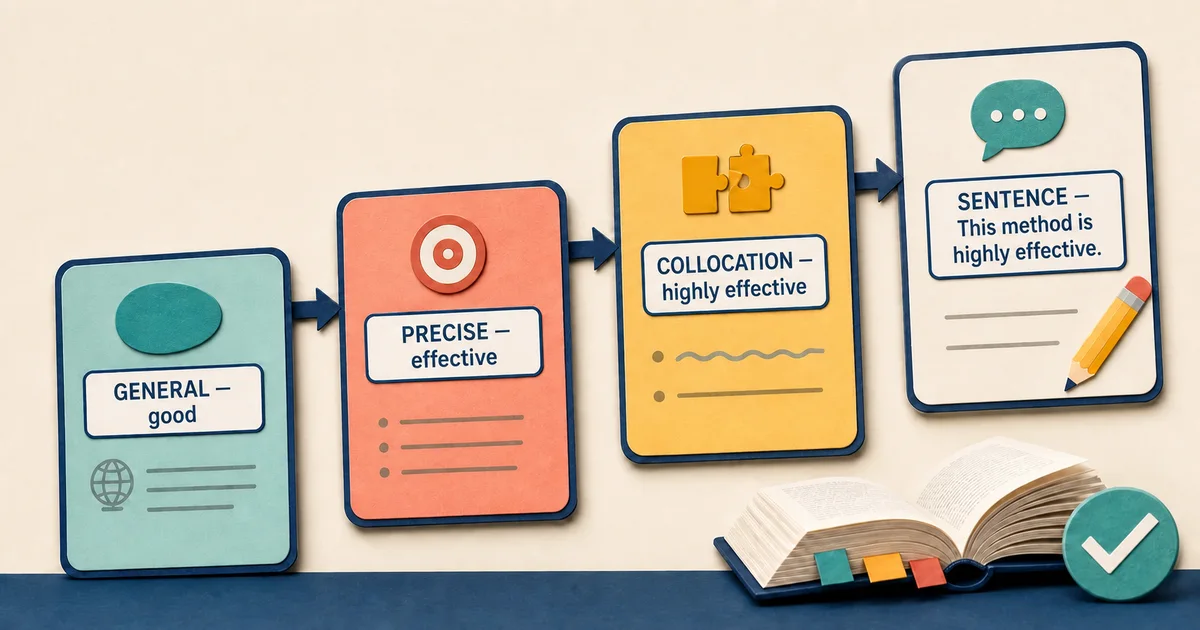
認識から使用へ進む最短の道は、短く繰り返すルーティンです。一つの記事から50語集めて全部残ると期待しないでください。自分が実際に持つ言語上の課題を解決する六〜八語を選びます。
次の四段階を試してください。
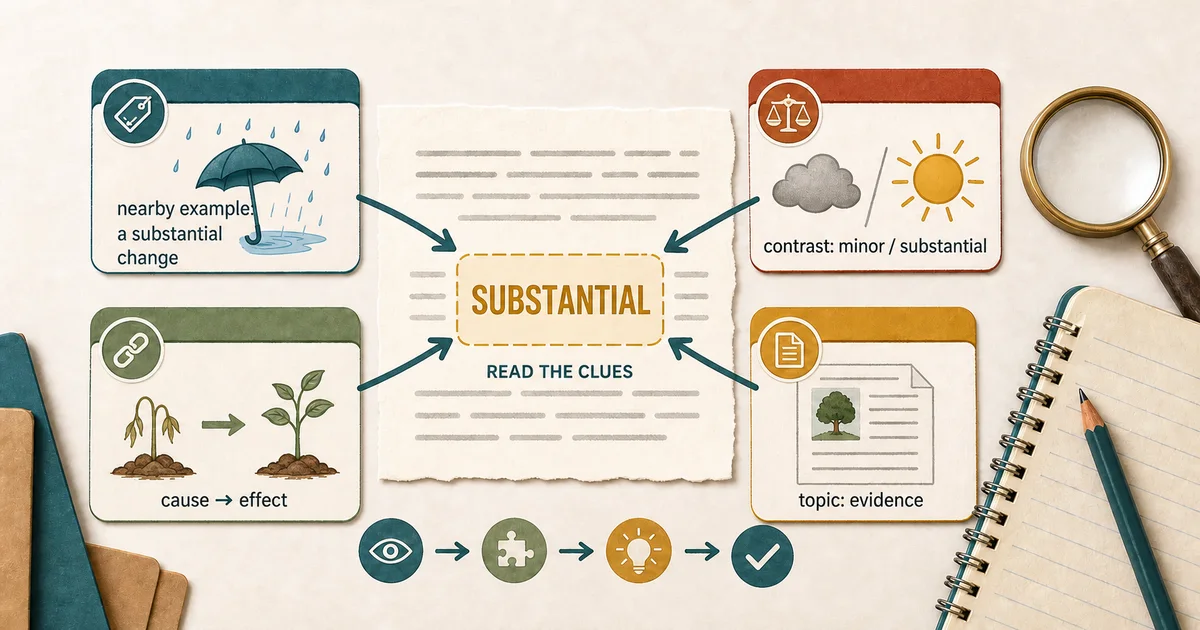
- 文脈で読む。 その語の前後の文に線を引きます。対比語、例、近くの定義を探します。
- 語族を作る。 substantial なら substantially と a substantial increase を書きます。
- 選択肢を比べる。 基本の文を書き、上級語が本当の違いを加える時だけ置き換えます。“The change was big” → “The change was substantial.”
- 別の日に再使用する。 Linglifyに追加し、一日か二日後に新しい文を作ります。まだ不自然なら、今は受動的読解語彙として残しておきます。
読書は見慣れない英単語の優れた源ですが、長い定義より文脈が重要です。構造化された上級セットには、C1英語語彙と上級英単語を組み合わせてください。
練習する語彙
焦点を絞ったセットをLinglifyの個人辞書へ追加します。カードを復習した後、実際の予定、読んだ文章、話し合い、決定について各語を使った文を作りましょう。
alleviate
動詞
和らげる, 軽減する, 緩和する
例
- Government programs aim to alleviate poverty in rural communities.
- The medication will alleviate pain and reduce inflammation significantly.
ambiguous
形容詞
曖昧な, あいまいな
例
- The politician's ambiguous statement confused voters about his actual position.
- The test question was ambiguous and could be interpreted in multiple ways.
articulate
形容詞
明瞭な, はっきりした
例
- She's very articulate and can express her thoughts clearly.
- The articulate speaker explained complex ideas in simple terms.
coherent
形容詞
一貫した, 首尾一貫した
例
- After the accident, he wasn't coherent enough to answer police questions.
- The professor gave a coherent explanation of the complex scientific theory.
concede
動詞
認める, 譲る, 白旗を上げる
例
- He had to concede that his opponent made some valid points during the debate.
- The candidate decided to concede defeat after losing the election clearly.
tycoon
名詞
大富豪, 実業家
例
- Media tycoon owns newspapers and television stations worldwide.
- Oil tycoon donated millions to educational and charitable causes.
detest
動詞
嫌う, ひどく嫌う, 憎む
例
- Many people detest the sound of nails scratching on chalkboard.
- She absolutely detests dishonesty and deception in any form.
portrayal
名詞
描写, 演技, 表現
例
- Critic praised actor's nuanced portrayal of troubled protagonist.
- Film's portrayal of war emphasizes human cost over glory.
fury
名詞
怒り, 激怒, 憤り
例
- His fury was evident after hearing the news.
- She lost her fury when she saw the damage.
grumpy
形容詞
不機嫌な, 怒った, むっつり
例
- His grumpy attitude made it hard to work with him.
- She looked grumpy after waking up late.
superficial
形容詞
表面的な, 浅い
例
- His knowledge of the subject was superficial and incomplete.
- The wound appeared serious but was actually quite superficial.
impeccable
形容詞
完璧な, 申し分ない, 非の打ち所のない
例
- Hotel provides impeccable service ensuring guest satisfaction and comfort.
- Professional maintains impeccable reputation for honesty and integrity.
precaution
名詞
予防策, 注意喚起, 安全策
例
- Take the necessary precautions before starting.
- Wearing a helmet is a safety precaution.
insular
形容詞
孤立した, 島国の
例
- His insular thinking prevents him from considering alternative perspectives.
- Insular community rarely interacts with outside world effectively.
plausible
形容詞
もっともらしい, 納得できる
例
- His explanation sounds plausible but lacks supporting evidence.
- Scientists seek plausible theories to explain observed phenomena.
reconstruction
名詞
再建, 復興, 修復
例
- Historical reconstruction helps us understand the past.
- The reconstruction of the building took two years.
enterprising
形容詞
積極的な, 意欲的な, 起業家的な
例
- Enterprising entrepreneur identified market gap and created innovative solution.
- Enterprising students organize fundraising events for school improvement projects.
substantial
形容詞
かなりの, 実質的な, 重要な
例
- Substantial improvement shows in student test scores.
- Substantial investment creates new business opportunities today.
subtle
形容詞
微妙な, 繊細な
例
- Subtle flavor enhances dish without overpowering taste.
- Subtle hint suggests solution without direct statement.
verify
動詞
確認する, 検証する, 証明する
例
- Please verify the information before publishing.
- They need to verify the results of the experiment.
occupant
名詞
居住者, 占有者, 入居者
例
- Building occupant reported strange noises during night hours.
- Car crash injured both driver and passenger occupants.
tell sb/sth apart
句動詞
よく似た物事や人の違いを見分ける
例
- It's hard to tell the twins apart.
- Can you tell the difference between these two paintings?
次にすること
- C1語彙ライブラリで十語から始めます。
- Academic Word Listでアカデミックな正確さを強化します。
- C1語が自分の文で自然になったら、C2 proficiency語彙に進みます。
- フォーマルな語彙と自然な日常表現の両方を保つために、よく使う20のイディオムも復習します。
よくある質問
見慣れない英単語とは何ですか?
まだ認識できない、または文脈で完全には理解できない語です。上級学習者にとっては、単に人を驚かせるための希少語ではなく、記事、報告書、講義、専門的な議論で使われる正確な語であることが多いです。
上級語をすべての会話で使うべきですか?
いいえ。相手と場面にとって最も明確で自然な選択である時に使ってください。短いメッセージや友人との会話では、簡単な英語の方がよいことも多いです。
一週間に何語の見慣れない語を学べばよいですか?
復習して使うなら、十〜二十語が現実的な能動語彙の目標です。読解ではさらに多くの語に受動的に出会えますが、能動語彙にはフレーズと繰り返しの練習が必要です。
feasible と viable の違いは何ですか?
feasible は今実行可能で実用的という意味です。viable は長い時間を通して機能・成功できるという意味で、計画は今日 feasible でも長期的には viable ではない場合があります。
見慣れない英単語を覚えるにはどうすればよいですか?
意味のあるフレーズ、対比、自分の例と結びつけます。その後、間隔反復で復習し、本物の読書やリスニングでもう一度出会いましょう。