Фразовые глаголы с GET: все значения и примеры
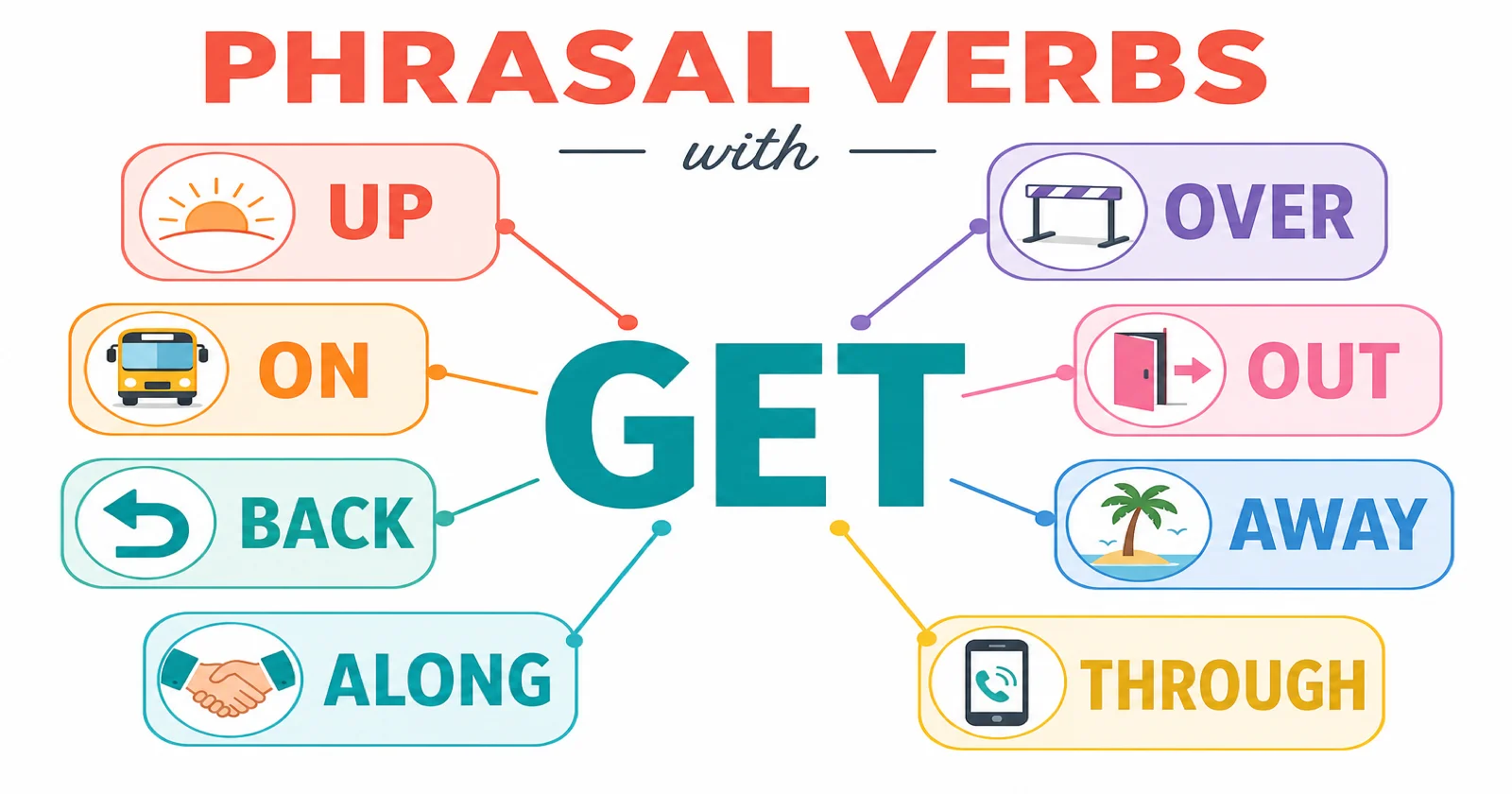
GET — самый универсальный глагол в английском языке. Сам по себе он означает «получить» или «стать». Но добавьте предлог — up, over, on, away, through, out, along, by — и значение полностью изменится. «Get over» может означать выздороветь, перелезть через стену или пережить расставание. «Get out» — уйти, сбежать или стать известным (об информации).
Носители языка используют фразовые глаголы с GET десятки раз в день, часто даже не замечая этого. Для изучающих язык это создаёт разрыв: вы понимаете каждое слово в «She couldn’t get through to him», но предложение в целом означает совсем не то, что подсказывают отдельные слова.
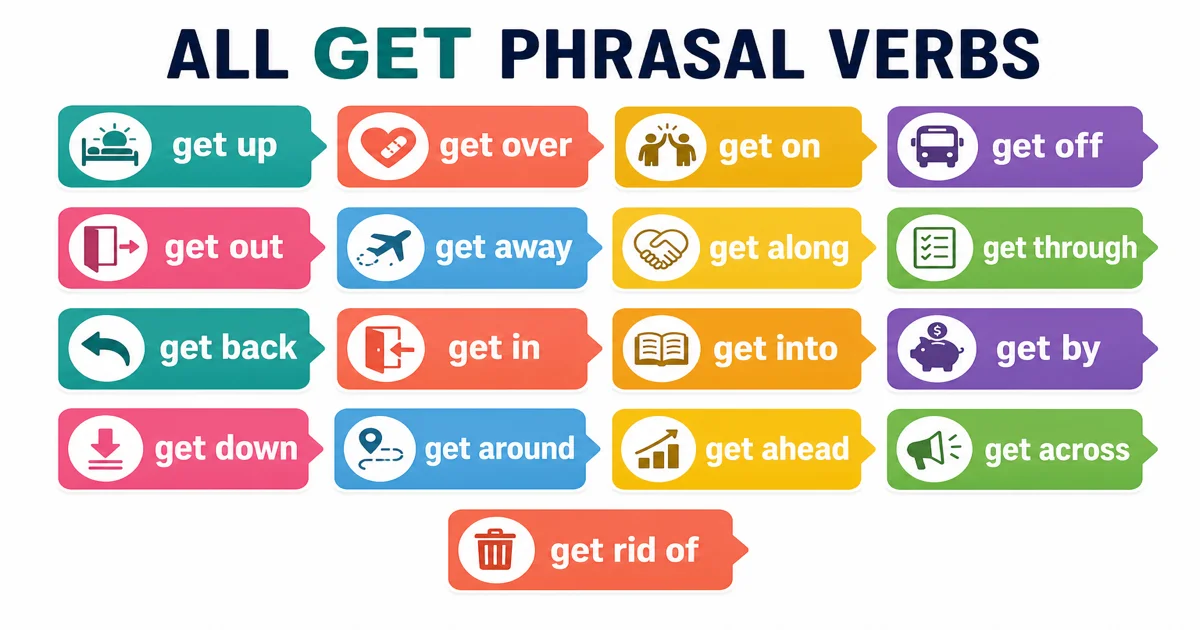
В этом справочнике разобраны все основные фразовые глаголы с GET, сгруппированные по частице (up, over, on и т.д.). Каждая статья включает все значения, примеры из жизни, пометки о формальности и типичные ошибки.
- Фразовых глаголов: 25+
- Значений разобрано: 60+
- Уровень: B1–C1
- Фокус: значения, примеры, употребление, типичные ошибки
Полный справочник по фразовым глаголам — в статье English Phrasal Verbs: Complete Guide.
GET UP — 3 значения
1. Встать с кровати; проснуться
Самое распространённое значение. Используется каждый день.
I get up at 6:30 every morning. She got up early to catch the first train. What time do you usually get up on weekends?
2. Встать (из сидячего или лежачего положения)
He fell on the ice but got up quickly. The audience got up and applauded. She got up from her desk and stretched.
3. Организовать, подготовить (брит. англ., неформ.)
They got up a petition to save the park. We should get up a group to visit the museum.
Типичная ошибка: «I got up from the bed» — артикль не нужен. Говорите «I got up» или «I got out of bed».
GET OVER — 4 значения
1. Оправиться от (болезни, шока, эмоциональной боли)
Самое частое значение. Выздоровление требует времени, и «get over» подразумевает, что процесс завершён.
It took her months to get over the flu. He still hasn’t gotten over his breakup. You need time to get over the shock.
2. Преодолеть (проблему или трудность)
We need to get over this obstacle before moving forward. Once you get over the initial confusion, the software is easy to use.
3. Принять что-то удивительное или трудно поддающееся осмыслению
Часто используется в отрицательной форме или с «can’t».
I can’t get over how much the city has changed! She couldn’t get over the fact that she had actually won.
4. Перелезть, перебраться через физическое препятствие
The cat managed to get over the fence. We need to get over this hill before sunset.
Типичная ошибка: «Get over it» звучит пренебрежительно. Используйте осторожно — подразумевается «хватит жаловаться».
GET ON — 5 значений
1. Сесть на (автобус, поезд, самолёт, крупный транспорт)
We got on the bus at the wrong stop. Hurry — we need to get on the plane before they close the gate. She got on the train to London at 8 a.m.
2. Ладить, быть в хороших отношениях (брит. англ.; амер. — get along)
Do you get on with your colleagues? They don’t get on very well — they argue constantly. I’ve always gotten on well with my neighbors.
3. Продолжить заниматься чем-то; продвигаться
Stop talking and get on with your work. Let’s get on with the meeting — we’re behind schedule. How are you getting on with the project?
4. Справляться (брит. англ.)
How’s your mother getting on these days? He’s getting on well after the surgery.
5. Стареть (неформ.)
She’s getting on in years, but she’s still very active. He’s getting on a bit — he’ll be 70 next month.
Типичная ошибка: «Get on» зависит от размера транспорта. Get ON a bus/train/plane (крупный). Get IN a car/taxi (маленький).
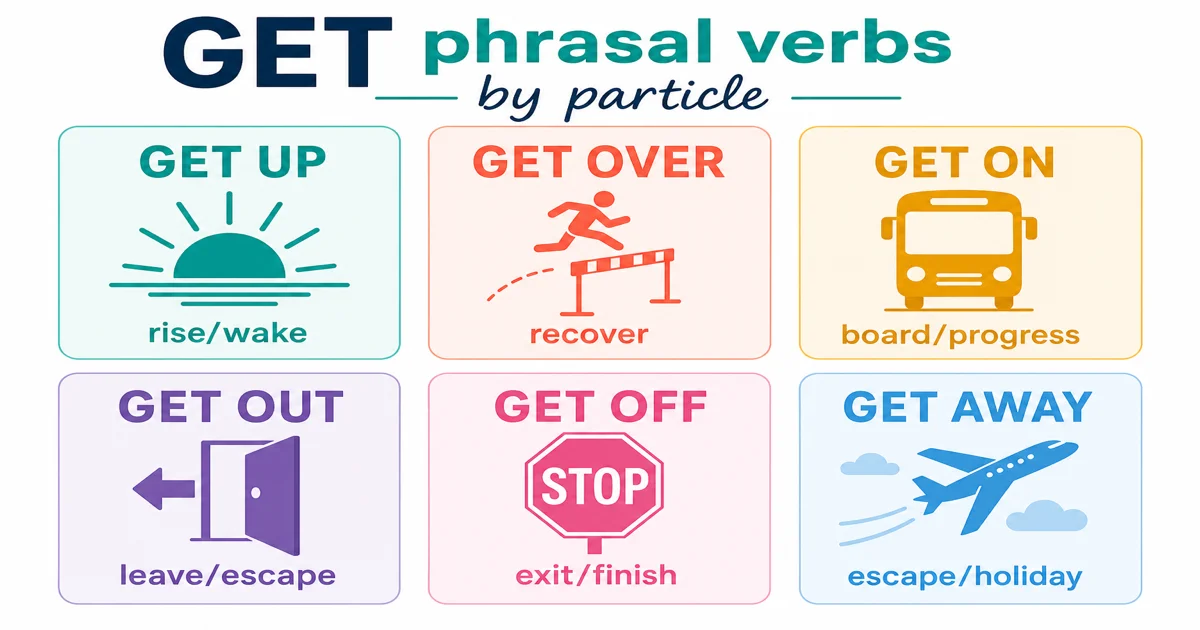
GET OFF — 4 значения
1. Выйти из (автобуса, поезда, крупного транспорта)
Противоположность «get on».
We get off at the next stop. She got off the train and walked to the office. Don’t forget to get off at Central Station.
2. Закончить работу; уйти с работы
What time do you get off work today? I get off at 5, so I can meet you at 5:30.
3. Избежать наказания или получить мягкий приговор
He got off with just a warning. The lawyer helped her get off the charges. He committed fraud but somehow got off scot-free.
4. Убрать руки; отойти (повелительное)
Get off my phone! The sign said “Get off the grass.”
Типичная ошибка: «Get off FROM the bus» — «from» не нужен. Говорите «get off the bus».
GET OUT — 4 значения
1. Уйти, покинуть место
Get out of my house! We should get out of here before the storm hits. She got out of the car and slammed the door.
2. Сбежать
The prisoners tried to get out through a tunnel. How did the dog get out of the yard?
3. Стать известным (об информации, секрете)
If this information gets out, there will be a scandal. Word got out that the company was closing.
4. Достать, извлечь
I can’t get this stain out of my shirt. She got out her wallet and paid the bill.
GET AWAY — 3 значения
1. Сбежать, скрыться
The thieves got away before the police arrived. The bird got away from the cat.
2. Уехать на отдых
We need to get away for a few days — I’m exhausted. They got away to the mountains for the weekend.
3. Избежать последствий (get away with)
He cheated on the test and got away with it. You can’t get away with lying to your boss forever. She always gets away with coming to work late.
Примечание: «Get away!» как восклицание означает «Не может быть!» (брит. неформ.) или «Уходи!» (приказ).
GET ALONG — 2 значения
1. Ладить, быть в хороших отношениях
Американский эквивалент британского «get on». Очень распространён в повседневной речи.
Do you get along with your sister? The new employee gets along well with everyone. They didn’t get along at first, but now they’re good friends.
2. Справляться, выживать
How do you get along on such a small salary? We get along fine without a car.
GET THROUGH — 4 значения
1. Закончить, осилить (задачу, период, объём)
I got through all 500 pages in three days. How are we going to get through all this work by Friday? She finally got through the exam preparation.
2. Пережить трудный период
It was a tough year, but we got through it. Music helped me get through the lockdown.
3. Дозвониться
I’ve been trying to call her all day, but I can’t get through. I finally got through to customer service after 40 minutes.
4. Достучаться, донести мысль
I tried to explain, but I couldn’t get through to him. How can I get through to my teenager about the importance of studying?
GET BACK — 3 значения
1. Вернуться
What time did you get back from vacation? I’ll get back to London by Friday. She got back home late last night.
2. Вернуть, получить обратно
I got my money back after returning the product. Did you ever get back the book you lent him?
3. Отомстить (get back at)
He’s trying to get back at his ex-partner. She got back at him by revealing his secret.
GET IN — 3 значения
1. Сесть в маленький транспорт (машину, такси)
Противоположность «get out of».
Get in the car — we’re late! She got in a taxi and headed to the airport.
2. Прибыть
What time does your flight get in? The train gets in at 9:15. He got in late last night.
3. Поступить (в вуз, программу, клуб)
She applied to five universities and got in to three. It’s a popular club — it’s hard to get in. Did you get in? I heard the competition was fierce.
GET INTO — 3 значения
1. Увлечься чем-то
She’s really getting into photography lately. He got into cooking during the pandemic. I can’t get into this book — it’s too slow.
2. Поступить (в вуз, профессию)
Getting into medical school is extremely competitive. How did you get into marketing?
3. Вляпаться, попасть в неприятности
He keeps getting into fights at school. Don’t get into an argument with her — you won’t win. What has gotten into you today? You’re acting strange.
GET BY — 2 значения
1. Выживать, сводить концы с концами
It’s hard to get by on minimum wage. We don’t have much, but we get by. She gets by with a little help from her family.
2. Протиснуться, пройти мимо
Excuse me, could I get by? I need to reach the exit. The hallway is so narrow, it’s hard to get by.
GET DOWN — 3 значения
1. Расстроить, подавить
The constant rain is really getting me down. Don’t let the criticism get you down.
2. Спуститься, слезть
Get down from that tree before you fall! She got down on her knees to search under the sofa.
3. Записать
Let me get that down before I forget. Did you get down her phone number?
GET AROUND — 3 значения
1. Передвигаться по городу/местности
It’s easy to get around Tokyo by subway. How do you get around without a car?
2. Обойти (правило, проблему)
There’s no way to get around this regulation. She always finds a way to get around the rules.
3. Распространиться (о новостях, информации)
News gets around fast in a small town. Word got around that the company was being sold.
GET AHEAD — 1 значение
Продвинуться, добиться прогресса (в карьере, жизни)
You need to work hard to get ahead in this industry. She’s determined to get ahead in her career. It’s difficult to get ahead when you’re always playing catch-up.
GET ACROSS — 1 значение
Донести мысль, объяснить
I’m trying to get my point across, but nobody seems to understand. The teacher got the concept across using simple examples. How can I get this message across to the team?
GET RID OF — 1 значение
Избавиться, убрать, устранить
Одна из самых полезных фраз в английском — используется постоянно.
We need to get rid of this old furniture. How do I get rid of these ants in the kitchen? She finally got rid of her cold after a week of rest.
Сводная таблица
| Фразовый глагол | Основное значение | Пример |
|---|---|---|
| get up | встать с кровати | I get up at 7 every day. |
| get over | оправиться от | She got over the illness quickly. |
| get on | сесть на транспорт; ладить | Get on the bus. / We get on well. |
| get off | выйти из транспорта; закончить работу | Get off at the next stop. |
| get out | уйти; сбежать | Get out of here! |
| get away | сбежать; уехать на отдых | The thieves got away. |
| get along | ладить | Do you get along with your boss? |
| get through | закончить; пережить; дозвониться | I can’t get through to her. |
| get back | вернуться; получить обратно | When did you get back? |
| get in | сесть в машину; прибыть; поступить | Get in the car. |
| get into | увлечься | She’s getting into yoga. |
| get by | сводить концы с концами | We get by on a small budget. |
| get down | расстроить; спуститься; записать | The news got me down. |
| get around | передвигаться; обойти правило | It’s easy to get around by bus. |
| get ahead | продвинуться | Work hard to get ahead. |
| get across | донести мысль | I couldn’t get my point across. |
| get rid of | избавиться | Get rid of the old files. |
GET IN vs. GET ON: какой транспорт?
Это путает почти каждого, кто учит английский. Правило основано на размере транспорта:
| GET ON | GET IN |
|---|---|
| bus (автобус) | car (машина) |
| train (поезд) | taxi (такси) |
| plane (самолёт) | van (фургон) |
| ship (корабль) | truck cab (кабина грузовика) |
| bicycle (велосипед) | canoe (каноэ) |
| motorcycle (мотоцикл) | helicopter (вертолёт) |
Паттерн: GET ON = можно встать и ходить внутри. GET IN = садитесь в маленькое закрытое пространство.
Обратная форма: GET OFF (автобус, поезд) / GET OUT OF (машина, такси).
Типичные ошибки с фразовыми глаголами GET
| Ошибка | Правильно | Почему |
|---|---|---|
|
|
get on the bus | Предлог «in» не нужен после «get on» |
|
|
get off the train | «From» не нужен |
|
|
I got up / I got out of bed | Либо без «bed», либо «get out of» |
|
|
get over an illness | «From» не нужен после «get over» |
|
|
I can’t get through to her | Нужен предлог «to» для звонка/общения |
Слова для практики
boom
существительное
бум, взрыв, процветание, грохот
Примеры
- The boom of thunder echoed across the valley.
- The technology boom created many new millionaires.
cooperate
глагол
сотрудничать, кооперироваться, содействовать
evaluate
глагол
оценивать, анализировать
Примеры
- Companies evaluate job candidates based on experience, skills, and personality.
- Teachers evaluate student progress through tests, projects, and classroom participation.
graduate
глагол
оканчивать, выпускаться
Примеры
- She will graduate from university next year with a degree in engineering.
- Students must complete all requirements before they can graduate from high school.
horizon
существительное
горизонт, кругозор
Примеры
- The sun disappeared behind the horizon as evening approached.
- Traveling broadens your horizon and exposes you to new cultures.
indispensable
прилагательное
незаменимый, необходимый
Примеры
- Clean water is indispensable for human survival and good health.
- Her experience and skills make her indispensable to the research team.
jury
существительное
жюри, суд присяжных
Примеры
- The jury deliberated for several hours before reaching a verdict.
- The talent show jury consisted of professional musicians and entertainers.
lifelong
прилагательное
пожизненный, на всю жизнь
Примеры
- Learning is a lifelong process that never truly ends.
- Their lifelong friendship began during elementary school years.
motivated
прилагательное
мотивированный
Примеры
- Motivated employee seeks additional responsibilities and challenges at work.
- Success requires being motivated even when facing difficult obstacles.
normally
наречие
обычно, нормально
Примеры
- Heart normally beats between sixty and hundred times per minute.
- Students normally arrive at school before morning bell rings.
off
наречие
выключен, прочь
Примеры
- Please turn off the lights before leaving the room.
- The dog ran off into the forest chasing wild rabbits.
prejudice
существительное
предрассудок, предубеждение
Примеры
- Education helps overcome prejudice and promotes understanding.
- Racial prejudice damages communities and individuals alike.
resolve
глагол
решать, разрешать
Примеры
- Mediator helps parties resolve dispute through negotiation.
- Technical team will resolve software problems quickly.
stress
глагол
подчёркивать
Примеры
- Heavy workload may stress employees beyond limits.
- Teacher will stress importance of homework completion.
total
прилагательное
полный
Примеры
- Total cost includes all fees and expenses.
- Total silence fills room during meditation session.
tragedy
существительное
трагедия
Примеры
- Natural tragedy affects thousands of innocent people.
- Personal tragedy changes person's life perspective completely.
union
существительное
союз
Примеры
- Labor union protects worker rights and interests.
- Marriage union joins two people in partnership.
voyage
существительное
путешествие, плавание, рейс
Примеры
- Space exploration represents humanity's greatest voyage into the unknown.
- The ocean voyage from Europe to America took several weeks in the past.
candidate
существительное
кандидат, претендент, соискатель
Примеры
- Each presidential candidate presented their policy plans to voters.
- The job candidate impressed the interview panel with her experience.
discourage
глагол
обескураживать, отговаривать
Примеры
- Don't let one failure discourage you from pursuing your dreams.
- High prices discourage many people from buying organic food products.
donate
глагол
жертвовать, дарить, передавать
Примеры
- Many people donate money to charities that help homeless individuals.
- She decided to donate blood to help patients in emergency situations.
firmly
наречие
твердо, крепко, решительно
Примеры
- Hold the rope firmly while climbing down the steep mountain slope.
- The manager firmly believed in treating all employees with respect.
guide
глагол
направлять, руководить, вести
Примеры
- Parents should guide their children to make responsible decisions.
- The experienced hiker will guide the group through the mountain trail safely.
humorous
прилагательное
юмористический, смешной
Примеры
- She writes humorous articles about everyday life and family experiences.
- The humorous speech made everyone laugh and lightened the serious mood.
admission
существительное
поступление, вход, признание
Примеры
- Her admission to the prestigious medical school was the result of hard work.
- The museum offers free admission on the first Sunday of every month.
Что делать дальше
-
Определите слабые места. Просмотрите список выше и найдите фразовые глаголы, которые вы путаете или никогда не используете. Начните с них.
-
Составьте предложения. Для каждого фразового глагола напишите 2–3 предложения о своей жизни. Личная связь помогает запоминать.
-
Добавьте в Linglify для интервального повторения. Система проверит вас через оптимальные интервалы, пока фразовые глаголы не станут автоматическими.
-
Изучите полный справочник — English Phrasal Verbs: Complete Guide охватывает 200+ фразовых глаголов.
-
Изучите фразовые глаголы с MAKE — Phrasal Verbs with MAKE построен по такому же принципу.
FAQ
Какие самые частые фразовые глаголы с GET?
Пять самых употребительных: get up (встать с кровати), get on/along (ладить), get over (оправиться), get through (закончить/пережить) и get rid of (избавиться). Они появляются в повседневной речи десятки раз в день. Носители используют их автоматически, поэтому их понимание — ключ к пониманию естественного английского.
Почему у GET так много фразовых глаголов?
GET — один из самых древних и фундаментальных английских глаголов. Его базовое значение — «получить» или «стать» — чрезвычайно гибкое, что позволяет сочетать его почти с любым предлогом. Исторически фразовые глаголы заменили длинные латинские слова в повседневной речи (например, «get over» вместо «recover», «get rid of» вместо «eliminate»), сделав GET естественной основой для десятков комбинаций.
Как понять, когда использовать GET IN, а когда GET ON?
GET ON — для крупного транспорта, где можно встать и ходить (автобус, поезд, самолёт, корабль). GET IN — для маленького, где вы садитесь в замкнутое пространство (машина, такси). Тот же принцип в обратную сторону: GET OFF — автобус, поезд; GET OUT OF — машина, такси. Если внутри можно ходить — ON/OFF. Если нужно нагнуться, чтобы войти — IN/OUT.
Фразовые глаголы с GET — формальные или неформальные?
Большинство — нейтральные или неформальные, вполне подходящие для повседневной речи, писем и обычных текстов. В очень формальном академическом или юридическом стиле предпочтительнее латинские слова: recover вместо «get over», eliminate вместо «get rid of», comprehend вместо «get». Однако в деловом английском, презентациях и большинстве профессиональных контекстов фразовые глаголы с GET совершенно уместны.
Сколько значений может быть у одного фразового глагола с GET?
До пяти и более. «Get on» может означать: сесть на транспорт, ладить, продолжить работу, справляться, стареть. «Get through» — закончить, пережить, дозвониться, донести мысль. Контекст всегда определяет значение — слова вокруг фразового глагола подсказывают, какое определение подходит. Поэтому учить фразовые глаголы с примерами предложений гораздо эффективнее, чем запоминать изолированные определения.